Category: Technology

  • AI Transformation : IndiaAI’s Second Report, Shaping the Future of Jobs, Skills, and AI Infrastructure

    AI Transformation : IndiaAI’s Second Report, Shaping the Future of Jobs, Skills, and AI Infrastructure

    AI Transformation : India is rapidly positioning itself as a global leader in artificial intelligence (AI), driven by its dynamic tech ecosystem, growing digital infrastructure, and forward-thinking government initiatives. The IndiaAI Mission’s second report highlights AI’s transformative impact on the job market, skill requirements, and infrastructure development. This blog dives into the report’s key insights, exploring how AI is reshaping employment, redefining skills, and strengthening India’s AI infrastructure to fuel innovation and economic growth.

    The AI-Driven Job Market: Opportunities and Challenges

    The IndiaAI Mission’s second report underscores AI’s dual role in India’s economy: creating new job opportunities while necessitating workforce adaptation to address automation-related challenges. AI is expected to significantly contribute to India’s economy, potentially adding $957 billion by 2035 and creating over 1 million AI-related jobs by 2026 across sectors like IT, healthcare, finance, and manufacturing.

    AI Transformation : The AI-Driven Job Market: Opportunities and Challenges
    AI Transformation : The AI-Driven Job Market: Opportunities and Challenges

    Emerging Job Roles

    AI Transformation is driving demand for specialized, high-skill roles that blend technical expertise with domain knowledge. Key roles include:

    • AI Architects: Designing scalable AI systems for enterprise use.
    • Machine Learning Engineers: Developing and deploying predictive models.
    • AI Ethics Officers: Ensuring responsible and unbiased AI applications.
    • Natural Language Processing (NLP) Specialists: Creating language models tailored to India’s multilingual landscape.
    • AI Healthcare Consultants: Applying AI for diagnostics and personalized care.

    The report notes a 46% year-on-year surge in demand for Machine Learning Engineers and a 23% increase for Full Stack AI Scientists, reflecting a shift toward specialized, interdisciplinary roles. AI is also enhancing productivity in sectors like finance and logistics, creating opportunities for professionals skilled in AI-driven data analysis and optimization.

    Addressing Job Displacement

    AI Transformation : While AI promises job creation, it also poses risks of job displacement, particularly in repetitive, low-skilled roles. Studies estimate that up to 30% of jobs in manufacturing, retail, and administrative sectors could be automated by 2030, with 24% of tasks across industries potentially fully automated. This could free up significant time for workers but requires a transition to new roles.

    To counter this, the report emphasizes reskilling and upskilling to prepare the workforce for AI-driven roles. With 61% of Indian employees expressing concerns about automation—higher than the global average of 44%—there is an urgent need to align workforce capabilities with emerging demands.

    AI Transformation : AI Healthcare Consultants: Applying AI for diagnostics and personalized care.
    AI Transformation : AI Healthcare Consultants: Applying AI for diagnostics and personalized care.

    The Skills Imperative: Preparing an AI-Ready Workforce

    AI Transformation : The report highlights that technical expertise alone is not enough for success in the AI-driven economy. Alongside technical skills, soft skills like problem-solving, creativity, emotional intelligence, and interdisciplinary knowledge are increasingly critical for roles such as AI product managers and ethicists.

    Strategies for Skill Development

    To address the skills gap, the report outlines several strategies:

    1. Industry-Academia Partnerships: Collaborations to create AI-focused curricula that meet market demands, particularly in fields like semiconductors.
    2. Reskilling Programs: Large-scale initiatives to transition workers from declining roles to AI-driven ones, with 81% of Indian employers planning to support employees in adapting to AI technologies.
    3. Focus on Non-Metro Areas: Expanding AI education and training to Tier-2 and Tier-3 cities to access diverse talent pools.
    4. AI Ethics Training: Promoting responsible AI use to address ethical and regulatory challenges, especially as 44% of Indians rely on AI chatbots for news, raising concerns about misinformation.
    5. Inclusive Hiring Practices: 67% of Indian employers are adopting skills-based hiring, such as removing degree requirements, to tap into diverse talent.

    India’s leadership in AI skill penetration, with tech talent three times more likely to report AI skills than in other countries, positions it as a global hub. However, scaling training programs to cover more than the current 100,000 workers annually is critical to meet future demand.

    AI Transformation -The Skills Imperative: Preparing an AI-Ready Workforce
    AI Transformation -The Skills Imperative: Preparing an AI-Ready Workforce

    AI Infrastructure : The Foundation of India’s AI Ambitions

    The IndiaAI Mission prioritizes robust AI infrastructure to support innovation and economic growth. Significant investments are being made to build compute capacity, data platforms, and digital ecosystems to drive AI development.

    Key Infrastructure Initiatives

    1. Compute Capacity: The mission aims to address the projected need for 30,000 GPUs by 2027 to support AI model development and deployment.
    2. IndiaAI Datasets Platform: Set to launch in January 2025, this platform will provide access to public and private datasets to fuel AI innovation in sectors like healthcare, education, and agriculture.
    3. Digital Public Infrastructure (DPI): Systems like Aadhaar, UPI, and DigiLocker enable AI applications such as fraud detection and personalized services, leveraging India’s 700 million smartphone users and low data costs.
    4. Support for Startups: The mission supports India’s 10,000+ AI-focused startups, including platforms offering localized generative AI solutions in multiple Indian languages.

    AI Transformation : Infrastructure Challenges

    AI Transformation : Despite these efforts, challenges remain:

    • Siloed Data: Large amounts of data from India’s DPI are underutilized or inaccessible, limiting AI model development.
    • Overreliance on Government: The strategy heavily depends on public funding, which may constrain scalability without increased private-sector involvement.
    • Compute Shortages: Meeting the demand for high-performance computing infrastructure requires significant investment and global partnerships.

    AI Infrastructure: The Foundation of India’s AI Ambitions
    AI Infrastructure: The Foundation of India’s AI Ambitions

    A Vision for an AI-Powered India

    The IndiaAI Mission’s second report paints an optimistic yet pragmatic picture of India’s AI future. By fostering job creation, prioritizing skill development, and investing in robust infrastructure, India is laying the groundwork to become a global AI powerhouse. However, addressing challenges like job displacement, skills gaps, and data accessibility will be critical to sustaining this momentum.

    Also Read This : How to Repost Instagram Reels Effectively : A Comprehensive Guide

    AI Transformation : As India embraces AI Transformation potential, collaboration between government, industry, and academia will be key to ensuring inclusive growth. By equipping its workforce with the right skills and building cutting-edge infrastructure, India can harness AI to drive economic prosperity and innovation for years to come.


  • Mastering Prompt Engineering : Unlocking the Power of AI in 2025

    Mastering Prompt Engineering : Unlocking the Power of AI in 2025

    In the rapidly evolving world of artificial intelligence, prompt engineering has emerged as a critical skill for maximizing the potential of large language models (LLMs) like Grok 3, ChatGPT, and other generative AI tools. By crafting precise and context-rich prompts, professionals can guide AI to deliver accurate, relevant, and high-quality outputs for tasks ranging from content creation to complex problem-solving. This blog explores what prompt engineering is, why it matters, and how to excel in this in-demand field as of July 2025.

    What is Prompt Engineering?

    Prompt engineering is the art and science of designing text-based instructions (prompts) to elicit desired responses from AI models. Whether you’re generating a blog post, coding a script, or analyzing data, well-crafted prompts ensure the AI understands your intent. For example, instead of asking, “Write a story,” a skilled prompt engineer might say, “Write a 500-word sci-fi story set in 2150 about an astronaut discovering alien ruins, using a suspenseful tone.”

    Prompt Engineering
    Prompt Engineering

    Why It Matters

    • Precision: Effective prompts reduce ambiguity, improving AI output quality.
    • Efficiency: Clear instructions save time by minimizing iterative refinements.
    • Versatility: Applicable across industries like marketing, healthcare, and software development.
    • Security: Well-designed prompts mitigate risks like prompt injection attacks, where malicious inputs manipulate AI behavior.

    Key Techniques in Prompt Engineering

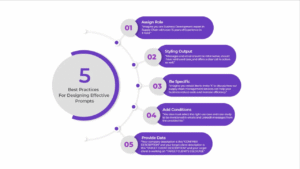
    To master prompt engineering, understanding core techniques is essential. Here are some widely used methods:

    1. Zero-Shot Prompting: Direct instructions without examples (e.g., “Summarize this article in 100 words”).
    2. Few-Shot Prompting: Providing examples to guide the AI (e.g., “Here are two professional emails. Write one in the same style”).
    3. Chain-of-Thought (CoT) Prompting: Encouraging step-by-step reasoning (e.g., “Solve this math problem and explain each step”).
    4. Role Assignment: Assigning a persona to the AI (e.g., “Act as a financial advisor and recommend investment options”).
    5. Contextualization: Adding relevant details (e.g., “Given a $500 budget, suggest a gaming laptop”).

    These techniques, when combined with natural language processing (NLP) principles, enable precise control over AI outputs.

    Skills for Aspiring Prompt Engineers

    Becoming a proficient prompt engineer requires a blend of technical and creative skills:

    • Linguistic Expertise: Strong grasp of language structure, semantics, and tone.

    • AI Knowledge: Familiarity with LLM architectures (e.g., transformers) and their limitations.

    • Analytical Thinking: Ability to analyze outputs and refine prompts iteratively.
    • Domain Knowledge: Expertise in fields like marketing, law, or tech to tailor prompts effectively.
    • Programming (Optional): Basic skills in Python or JavaScript for integrating prompts into applications.
    Prompt Engineering
    Prompt Engineering

    Real-World Applications

    Prompt engineering powers diverse AI applications:

    • Content Creation: Generating blog posts, ad copy, or social media content.
    • Customer Support: Building chatbots with natural, helpful responses.
    • Software Development: Writing code snippets or debugging with AI assistance.
    • Data Analysis: Summarizing reports or extracting insights from datasets.
    • Education: Creating personalized learning materials or tutoring systems.

    For example, a prompt engineer might design: “You are a marketing expert. Write a 200-word email promoting a $199 smartwatch with a 7-day battery life, targeting fitness enthusiasts aged 25-40, with a persuasive tone and a pre-order CTA.”

    The Future of Prompt Engineering

    As AI evolves, prompt engineering is shifting toward context engineering, focusing on managing broader datasets and complex interactions. Tools like Snorkel and Playground AI are streamlining prompt creation, while automatic prompt generation using LLMs is gaining traction. However, the demand for skilled prompt engineers remains strong, with salaries ranging from $100,000 to $300,000 annually, reflecting the role’s value in industries adopting AI.

    How to Get Started

    1. Learn the Basics: Explore free resources or courses like Vanderbilt’s Prompt Engineering Specialization on Coursera.
    2. Practice: Experiment with platforms like grok.com or x.com, where you can access Grok 3 for free (with usage quotas).
    3. Join Communities: Engage with AI communities on platforms like X to stay updated on trends.
    4. Build a Portfolio: Showcase your prompts and their outputs to demonstrate expertise.
    Prompt Engineering
    Prompt Engineering

    For advanced use, consider xAI’s SuperGrok subscription for higher usage quotas (details at https://x.ai/grok) or explore their API services for custom applications (https://x.ai/api).

    Also Read This : Avatar Movie Trailer Breakdown: Stunning Visuals, Emotional Story & Why Fans Are Excited for James Cameron’s Next Epic

    Prompt engineering is a gateway to unlocking AI’s full potential, blending creativity, technical skill, and strategic thinking. By mastering techniques like few-shot prompting, chain-of-thought, and contextualization, you can shape AI outputs to meet diverse needs. As AI continues to transform industries in 2025, prompt engineers will play a pivotal role in driving innovation. Start experimenting today, and harness the power of AI prompting to create impactful solutions.

  • The Ultimate Guide to Using Perplexity AI for High-Quality Blogging

    The Ultimate Guide to Using Perplexity AI for High-Quality Blogging

    Perplexity AI is transforming the way content creators, researchers, and professionals approach information gathering and content production. Unlike traditional search engines that return a list of links, Perplexity delivers concise, well-cited answers in real-time, making it an invaluable tool for crafting high-quality blog posts. In this guide, we’ll explore what Perplexity AI is, its key features, how to leverage it for blog writing, its benefits, limitations, and best practices to maximize its potential.

     Perplexity AI
    Perplexity AI

    What is Perplexity AI?

    Perplexity AI is an advanced conversational search engine that uses artificial intelligence, powered by models like GPT-4 and Claude 3.5, to provide direct, accurate, and sourced answers to user queries. Launched in 2022, it combines the capabilities of a search engine with the conversational interface of a chatbot, allowing users to ask questions naturally and receive comprehensive responses. Perplexity stands out by summarizing information from credible sources, citing them clearly, and offering features like real-time web searches, file uploads, and specialized focus modes. It’s available on the web, as a mobile app (iOS and Android), and as a browser extension, making it accessible for various use cases.

    Key Features of Perplexity AI for Content Creation

    Perplexity offers a suite of features that make it a powerful tool for writing detailed, well-researched blog posts:

    1. Real-Time Answers with Citations: Perplexity searches the web in real-time and provides concise answers with clickable source citations, ensuring transparency and credibility. This is ideal for bloggers who need reliable facts quickly.
    2. Pro Search: This feature breaks down complex queries into smaller steps, pulling insights from a broader range of sources for in-depth responses. Free users get limited Pro Searches, while Pro subscribers enjoy near-unlimited access.
    3. Focus Modes: Perplexity allows users to narrow searches to specific domains, such as Academic, Writing, Math, Video, or Social, ensuring relevant results tailored to the task. For example, the Writing focus mode is optimized for content creation tasks like drafting and brainstorming.
    4. Perplexity Pages: A feature that transforms research into structured, visually appealing articles. Users can create drafts, customize tone, and add visuals, making it perfect for blog post creation.
    5. File Uploads: Upload up to three documents daily (PDFs, images, etc.) for Perplexity to summarize or analyze, streamlining research for academic or professional content.
    6. Deep Research: Launched in 2025, this mode conducts expert-level research in 2-4 minutes, synthesizing hundreds of sources into comprehensive reports, ideal for detailed blog topics.
    7. Collections and Spaces: Organize research into topic-specific threads or collaborative workspaces, making it easier to manage long-term content projects.
     Perplexity AI
    Perplexity AI

    These features make Perplexity a versatile tool for bloggers aiming to produce well-researched, SEO-optimized content efficiently.

    How to Write a Blog Post Using Perplexity AI: Step-by-Step Guide

    Here’s a step-by-step process to create a detailed, engaging blog post using Perplexity AI, optimized for both quality and search engine performance:

    Step 1: Define Your Topic and Audience

    Start by identifying your blog’s topic and target audience. Be specific to get the most relevant results. For example, instead of “artificial intelligence,” ask, “What are the latest trends in AI for content marketing in 2025?” This ensures Perplexity delivers focused insights. Specify your audience (e.g., beginners, professionals) to tailor the tone.

    Prompt Example: “Create an outline for a 1000-word blog post on ‘How to Use AI Tools for Content Marketing’ aimed at small business owners.”

    Step 2: Generate an Outline

    Use Perplexity’s Writing focus mode to create a structured outline. Ask it to suggest subtopics or key points to cover. This helps organize your thoughts and ensures comprehensive coverage of the topic.

    Prompt Example: “Suggest subtopics and a detailed outline for a blog post about AI tools for content marketing, including keyword strategies and case studies.”

    Perplexity will provide a logical structure, such as:

    • Introduction to AI in content marketing
    • Benefits of AI tools for small businesses
    • Top AI tools for content creation
    • How to integrate AI into your content strategy
    • Case studies of successful AI-driven campaigns
    • Conclusion and call-to-action

    Rearrange or expand sections as needed to fit your vision.

    Step 3: Research with Perplexity

    Use Perplexity’s real-time search and Deep Research mode (if available) to gather facts, statistics, and insights. Ask specific questions to extract relevant data, such as:

    Prompt Example: “Provide recent statistics on AI adoption in content marketing for 2025, with citations from reputable sources.”

    Perplexity will summarize findings from credible sources, saving you hours of manual research. Use the Academic focus mode for scholarly articles or the Web focus mode for broader insights.

    Step 4: Draft Content with Perplexity Pages

    Leverage Perplexity Pages to generate a draft. Input your topic, select your audience, and choose a tone (e.g., conversational, professional). Perplexity will create a well-structured draft with formatted sections and suggested visuals. You can prompt it to write individual sections with specific word counts.

    Perplexity AI
    Perplexity AI

    Prompt Example: “Write a 300-word section on the benefits of AI tools for content marketing, including examples and keywords like ‘automation’ and ‘SEO optimization.’”

    Edit the draft to align with your brand voice and add personal insights.

    Step 5: Optimize for SEO

    Perplexity can suggest keywords and meta descriptions to improve search rankings. Ask it to analyze top-ranking content for your topic and extract relevant keywords.

    Prompt Example: “Identify high-performing keywords for a blog post on AI content marketing tools and suggest a meta description.”

    Incorporate these keywords naturally into your content, headings, and meta tags to boost SEO without compromising readability.

    Step 6: Refine and Edit

    Review Perplexity’s output for accuracy, clarity, and flow. AI-generated content may lack emotional depth or brand-specific tone, so add personal anecdotes, metaphors, or unique perspectives. Fact-check citations to ensure credibility, as Perplexity may occasionally produce inaccuracies.

    Step 7: Publish and Promote

    Once polished, publish your blog on your platform of choice (e.g., WordPress, Medium). Use Perplexity to generate social media posts or email snippets to promote your content.

    Prompt Example: “Create a LinkedIn post to promote a blog about AI tools for content marketing, targeting small business owners.”

    Share your post across relevant channels to maximize reach.

    Benefits of Using Perplexity AI for Blog Writing

    Perplexity offers several advantages for content creators:

    • Time Efficiency: Reduces research and drafting time by summarizing sources and generating drafts in minutes.
    • Enhanced Research: Accesses real-time data and credible sources, ensuring factual accuracy.
    • SEO Optimization: Suggests keywords and meta descriptions to improve search rankings.
    • Versatility: Supports various content types, from blog posts to reports, with customizable tones and structures.
    • Inspiration: Overcomes writer’s block by providing outlines, subtopics, and content ideas.

    These benefits make Perplexity a game-changer for bloggers aiming to scale content production without sacrificing quality.

    Limitations of Perplexity AI

    While powerful, Perplexity has some limitations:

    • Occasional Inaccuracies: AI may produce errors or “hallucinations,” requiring human fact-checking.
    • Limited Creativity: Perplexity excels at factual content but may lack the emotional depth or originality of human writing.
    • Nuanced Topics: For complex or controversial topics, Perplexity may provide generic answers if consensus is lacking.
    • Dependence on Editing: AI-generated drafts need refinement to align with brand voice and audience expectations.

    Always combine Perplexity’s output with human oversight to ensure authenticity and accuracy.

    Best Practices for Using Perplexity AI in Blog Writing

    To get the most out of Perplexity, follow these tips:

    1. Use Specific Prompts: Provide clear, detailed prompts with context, word counts, and desired outcomes. Example: “Write a 500-word blog section on AI-driven content strategies for 2025, targeting marketers, with a conversational tone.”
    2. Leverage Focus Modes: Choose the appropriate focus mode (e.g., Writing, Academic) to tailor results to your needs.
    3. Iterate and Refine: Regenerate sections or ask follow-up questions to improve responses.
    4. Add Human Touch: Infuse your personality and expertise to make content unique and engaging.
    5. Fact-Check Sources: Verify citations to ensure accuracy, especially for critical topics.
    6. Use Deep Research for Complex Topics: For in-depth blogs, use Deep Research to synthesize comprehensive reports.
    7. Maintain Brand Voice: Edit AI output to align with your brand’s tone and style.
     Perplexity AI
    Perplexity AI

    Real-World Example: Crafting a Blog with Perplexity

    Let’s say you’re writing a blog on “Sustainable Fashion Trends in 2025.” Here’s how Perplexity can help:

    • Outline: Ask, “Create an outline for a blog on sustainable fashion trends in 2025, targeting eco-conscious consumers.” Perplexity provides subtopics like eco-friendly materials, circular fashion, and consumer preferences.
    • Research: Prompt, “Provide recent statistics on sustainable fashion adoption in 2025, with sources.” Perplexity delivers data from industry reports.
    • Draft: Use Perplexity Pages to generate a draft for each section, such as “Top Sustainable Fabrics for 2025.”
    • SEO: Ask, “Suggest keywords for a sustainable fashion blog.” Incorporate terms like “eco-friendly clothing” and “sustainable fashion trends.”
    • Polish: Add personal insights, such as your take on local sustainable brands, and fact-check data.
    • Promote: Generate a Twitter post: “Discover the top sustainable fashion trends for 2025!  Read our latest blog for eco-friendly tips and insights. #SustainableFashion #EcoFriendly”

    This process results in a well-researched, engaging blog ready for publication.

    Also Read This : Jewar Airport : Latest Updates on Noida International Airport (July 2025)

    Perplexity AI is a powerful ally for bloggers, offering tools to streamline research, generate drafts, and optimize content for SEO. By combining its real-time insights, focus modes, and Perplexity AI Pages with human creativity, you can produce detailed, high-quality blog posts efficiently. While it’s not perfect—requiring fact-checking and editing—its ability to save time and provide credible information makes it a must-have for content creators. Try Perplexity AI today at www.perplexity.ai and elevate your blogging game!

  • iPhone 17 Pro Price in 2025 : Expected Cost, Features & Launch Details

    iPhone 17 Pro Price in 2025 : Expected Cost, Features & Launch Details

    iPhone 17 Pro Price : The Apple iPhone 17 Pro is one of the most anticipated smartphones of 2025, promising cutting-edge technology, a sleek design, and powerful performance. As we approach its expected launch in September 2025, tech enthusiasts are eager to know more about its price and what justifies the cost. In this blog, we’ll explore the rumored pricing of the iPhone 17 Pro in various regions, factors influencing its cost, and why it remains a premium choice for Apple fans.

    iPhone 17 Pro Price in 2025
    iPhone 17 Pro Price in 2025

    Expected Price of the iPhone 17 Pro

    Based on recent leaks and industry insights, the iPhone 17 Pro is expected to see a slight price increase compared to its predecessor, the iPhone 16 Pro, which starts at $999 in the U.S. The potential price hike is attributed to rising production costs, advanced features, and possible tariffs impacting Apple’s supply chain. Here’s a breakdown of the expected pricing in key markets:

    • India: The iPhone 17 Pro is rumored to start at approximately ₹1,45,000 to ₹1,49,990. Some sources suggest a higher starting price due to increased storage options, potentially starting at 256GB instead of 128GB.
    • United States: The starting price is expected to range from $999 to $1,099, depending on whether Apple adjusts pricing due to tariffs or enhanced features like the A19 Pro chipset and upgraded cameras.
    • Dubai: The iPhone 17 Pro is anticipated to cost around AED 4,999 to AED 5,399, reflecting its premium positioning in the Middle East market.
    • Other Regions: Prices may vary based on local taxes, import duties, and currency fluctuations. For instance, posts on X have speculated a starting price of approximately RM 5,999 in Malaysia for a 256GB model.
    iPhone 17 Pro Price in India
    iPhone 17 Pro Price in US

    These iPhone 17 Pro Price are speculative and based on leaks from credible sources like Bloomberg’s Mark Gurman and industry analysts. Apple may offset the price increase by offering enhanced features, such as a redesigned aluminum frame, a 48MP telephoto camera, and 12GB of RAM.

    Why the iPhone 17 Pro Price Increase?

    Several factors could contribute to the iPhone 17 Pro’s rumored price hike:

    1. Advanced Technology: The iPhone 17 Pro is expected to feature the A19 Pro chip, built on TSMC’s 3nm process, offering superior performance and efficiency. Additionally, a triple-lens rear camera system with a 48MP telephoto lens and a 24MP front camera will enhance photography capabilities.
    2. Design Overhaul: Leaks suggest a new aluminum frame and a redesigned horizontal camera layout, which may increase production costs. The part-aluminum, part-glass back design aims to balance durability and aesthetics while supporting MagSafe charging.
    3. Tariffs and Production Costs: Reports indicate that U.S. tariffs on components sourced from China could impact Apple’s pricing strategy. To maintain profit margins, Apple might pass some of these costs to consumers.
    4. Increased Storage Options: Rumors suggest Apple may eliminate the 128GB base model for the iPhone 17 Pro, starting at 256GB or even 512GB, which would naturally increase the base price.
    iPhone 17 Pro Price in India
    iPhone 17 Pro Price in India

    Is the iPhone 17 Pro Worth Its Price?

    The iPhone 17 Pro Price is shaping up to be a premium flagship device with several compelling features:

    • Compact Design: With a 6.3-inch OLED display and a 120Hz ProMotion refresh rate, the iPhone 17 Pro offers a compact yet immersive experience, ideal for users who prefer flagship performance in a smaller form factor.
    • Camera Upgrades: The triple-camera system, including a 48MP telephoto lens with 3.5x zoom, and a 24MP front camera will appeal to photography enthusiasts. Dual-camera video recording (front and rear simultaneously) is also rumored for Pro models.
    • Performance Boost: The A19 Pro chip, paired with 12GB of RAM and a potential vapor chamber cooling system, ensures seamless multitasking and support for Apple Intelligence features in iOS 26.
    • New Color Options: Expect bold new colors like Dark Blue, Sky Blue, and Papaya Orange, adding a fresh aesthetic to the lineup.

    For users seeking a balance of cutting-edge technology and compact design, the iPhone 17 Pro could justify its premium price. However, those on a budget might consider the iPhone 17 or the iPhone 17 Air, which are expected to start at ₹79,900 and ₹90,000 in India, respectively.

    iPhone 17 Pro Price in India
    iPhone 17 Pro Price in India

    Availability and Launch Timeline

    Apple is expected to unveil the iPhone 17 series, including the Pro model, during a keynote event on September 9 or 10, 2025. Pre-orders are likely to begin on September 12, with retail availability starting around September 19, following Apple’s traditional schedule.

    Consumers can purchase the iPhone 17 Pro through Apple’s official stores, authorized retailers, or partners like Bajaj Finserv in India, which offers EMI options for affordability.

    Also Read This : AtCoder World Tour Finals 2025 : Humanity Triumphs Over AI

    The iPhone 17 Pro Price is poised to be a game-changer in Apple’s 2025 lineup, with a premium price reflecting its advanced features and redesigned aesthetics. While the expected price increase may raise eyebrows, the combination of a powerful A19 Pro chip, upgraded cameras, and a sleek aluminum design makes it a compelling choice for tech enthusiasts. As we await official confirmation from Apple, keep an eye on trusted sources for the latest updates.

  • Tesla Launch in India 2025 : Tesla’s showroom launch gives a glimpse of EV future in India

    Tesla Launch in India 2025 : Tesla’s showroom launch gives a glimpse of EV future in India

    Tesla Launch in India : India’s electric vehicle (EV) landscape is buzzing with excitement as Tesla, the global EV giant, makes its long-awaited debut in the country. With the launch of its first showroom in Mumbai and plans for further expansion, Tesla is poised to shake up India’s automotive market. Here’s a look at the latest developments and what they mean for India’s EV future.

    Tesla in India 2025
    Tesla Launch in India 2025

    Tesla in Mumbai

    Tesla officially opened its first Indian showroom at Mumbai’s Maker Maxity Mall in Bandra Kurla Complex, marking a significant milestone for the company’s entry into one of the world’s fastest-growing automotive markets. The Tesla Model Y, the world’s best-selling electric car, takes center stage, imported as a Completely Built Unit (CBU) from Tesla’s Shanghai factory. Priced at ₹59.89 lakh (~$69,756) for the rear-wheel-drive variant and ₹67.89 lakh (~$79,074) for the long-range version, the Model Y targets India’s premium EV segment. However, high import duties of around 70% make these vehicles notably more expensive than local competitors like Tata Motors and JSW MG Motors.

    Tesla in Mumbai
    Tesla in Mumbai

    Tesla’s Mumbai launch is just the beginning. The company is already planning a second showroom in New Delhi and is actively hiring for roles in sales, service, and charging infrastructure to support its operations. The Model Y, along with the Model 3, has undergone homologation for Indian roads, ensuring compliance with local regulations. While Tesla’s premium pricing may limit its immediate reach in India’s price-sensitive market, the brand’s global appeal and cutting-edge technology are expected to attract affluent buyers and EV enthusiasts.

    Challenges and Opportunities

    India’s EV market is growing rapidly, with sales increasing by 20% in 2024 to 99,165 units, driven by government subsidies and policies aiming for 30% EV adoption by 2030. However, Tesla faces significant challenges. The premium EV segment (vehicles over $20,000) accounts for just 6.6% of India’s EV sales, with local players like Tata Motors commanding a 60% market share. Limited charging infrastructure and high import tariffs (up to 110% on some vehicles) further complicate Tesla’s strategy.

    Tesla Launch in India 2025
    Tesla Launch in India 2025

    Despite these hurdles, Tesla has an opportunity to carve out a niche in the luxury EV market, competing with brands like BMW and Mercedes-Benz. India’s restrictions on Chinese EV makers like BYD could also give Tesla a competitive edge. The government’s EV policy, introduced in March 2024, offers reduced import duties of 15% for companies investing $500 million in local production, but Tesla has yet to commit to manufacturing in India. Union Heavy Industries Minister HD Kumaraswamy noted in June 2025 that Tesla is currently focused on retail sales rather than local production, a decision that has sparked debate amid U.S.-India trade discussions.

    Tesla Launch in India 

    Tesla Launch in India 2025
    Tesla Launch in India 2025

    Tesla Launch in India : Tesla’s entry into India is a bold step, but its success will depend on navigating the country’s unique market dynamics. While the company has expressed interest in a $2-3 billion manufacturing plant and a more affordable model priced at ₹20-25 lakh, no concrete timeline has been confirmed. For now, Tesla’s focus on establishing a retail presence and building brand awareness could pave the way for future investments. As India’s EV ecosystem evolves, Tesla’s presence is likely to inspire innovation and competition, pushing the nation closer to its sustainable mobility goals.

    Also Read This : BitChat : The Future of Decentralized, Offline Messaging 2025

  • Samsung Galaxy Z Fold 7 : A Leap Forward in Foldable Innovation

    Samsung Galaxy Z Fold 7 : A Leap Forward in Foldable Innovation

    The Samsung Galaxy Z Fold 7, unveiled on July 9, 2025, at the Galaxy Unpacked event in Brooklyn, New York, marks a significant milestone in foldable smartphone technology. With a sleeker design, upgraded performance, and cutting-edge features, the Z Fold 7 aims to redefine the foldable experience. However, some decisions, like the removal of S Pen support, have sparked debate among fans. Here’s an in-depth look at what makes the Galaxy Z Fold 7 stand out, its controversies, and what it means for the future of foldables.

    A Sleeker, Lighter Design

    Samsung has pushed the boundaries of design with the Galaxy Z Fold 7, making it the thinnest and lightest foldable in its lineup yet. Measuring just 8.9mm when folded and 4.2mm when unfolded, and weighing 215 grams (24 grams lighter than the Z Fold 6), this device feels closer to a traditional smartphone. The larger 8-inch main display (up from 7.6 inches) and 6.5-inch cover screen (up from 6.3 inches) offer more screen real estate for multitasking, gaming, and media consumption. Available in Jet Black, Silver Shadow, and Blue Shadow, the Z Fold 7 combines elegance with functionality.

    Samsung Galaxy Z Fold 7
    Samsung Galaxy Z Fold 7

    Despite its slim profile, the device retains an IP48 rating for dust and water resistance, ensuring durability, though it offers limited dust protection compared to higher IP standards. The refined hinge and slimmer bezels enhance the premium feel, making it a standout in the foldable market.

    Powerhouse Performance

    Under the hood, the Galaxy Z Fold 7 is powered by the Snapdragon 8 Elite chipset, delivering blazing-fast performance for demanding tasks like gaming, video editing, and multitasking. Paired with up to 16GB of RAM and storage options of 256GB, 512GB, and 1TB, it’s built to handle anything you throw at it. The device runs on Android 16 with One UI 8, which introduces enhanced Galaxy AI features, including screen-sharing with Gemini Live for real-time AI assistance. This makes the Z Fold 7 a productivity powerhouse for professionals and creatives alike.

    Camera Upgrades

    The Z Fold 7 boasts a revamped camera system, headlined by a 200MP main camera borrowed from the Galaxy S25 Ultra. Housed in a sleek pill-shaped module, the triple-camera setup delivers stunning clarity and versatility for photography enthusiasts. The improved 10MP front camera ensures sharper selfies and better video calls, addressing a common pain point in foldables. Whether capturing landscapes or low-light shots, the Z Fold 7’s camera is designed to impress.

    Samsung Galaxy Z Fold 7
    Samsung Galaxy Z Fold 7

    Battery and Trade-Offs

    The Samsung Galaxy Z Fold 7 retains the 4,400mAh battery from its predecessor, with a rated life of 40 hours and 28 minutes, though real-world usage may vary. While this battery capacity supports a full day of moderate use, some users have expressed disappointment, hoping for a larger battery to match the device’s power-hungry features.

    A more controversial decision is the removal of S Pen support, a staple of previous Z Fold models. Samsung cites the slimmer design as the reason, but this move has drawn criticism from loyal users who valued the stylus for productivity and creativity. The trade-off for a thinner profile has left some fans questioning whether the sacrifice was worth it.

    Pricing and Availability

    The Samsung Galaxy Z Fold 7 comes with a premium price tag, reflecting its advanced technology. In Europe, prices start at €2,227 for the 256GB model and €2,309 for the 512GB variant (including 22% VAT in Italy). In India, the starting price is rumored to be around ₹1,69,990, a notable increase over the Z Fold 6. Pre-orders began on July 9, 2025, at 3 PM, with general availability set for July 25, 2025. Samsung is sweetening the deal with pre-order perks, including double storage (e.g., 512GB for the price of 256GB), up to $1,000 in trade-in credit, and a $50 accessory credit.

    The new Galaxy Club subscription offers expanded access to Google AI Pro and 2TB of cloud storage for six months at no cost, adding value for early adopters. Samsung is also showcasing the device at Galaxy Experience Spaces in Paris, London, and New York City, giving consumers a hands-on look.

    Samsung Galaxy Z Fold 7
    Samsung Galaxy Z Fold 7

    Controversies and Consumer Sentiment

    The Samsung Galaxy Z Fold 7 hasn’t been without its critics. The removal of S Pen support has been a major point of contention, with some users on social media expressing frustration that a thinner design shouldn’t preclude stylus functionality, especially when competitors manage it in slim devices. The unchanged battery capacity has also disappointed some, with reports of canceled pre-orders due to unmet expectations. The price hike, particularly in markets like India, has raised concerns about accessibility, though Samsung’s introduction of a budget-friendly Galaxy Z Flip 7 FE may address this for cost-conscious buyers.

    There’s also buzz about a potential tri-fold device teased at Unpacked. While exciting, early reports suggest concerns about sharp corners and added weight, which could impact comfort and portability.

    Why the Samsung Galaxy Z Fold 7 Matters

    The Samsung Galaxy Z Fold 7 pushes the envelope for foldable smartphones, offering a near-perfect blend of innovation and refinement. Its larger displays, powerful chipset, and upgraded camera make it a compelling choice for tech enthusiasts and professionals. However, the removal of S Pen support and the steep price may give some buyers pause. Samsung’s focus on a slimmer, lighter design shows its commitment to making foldables more mainstream, but the trade-offs highlight the challenges of balancing innovation with user expectations.

    Samsung Galaxy Z Fold 7
    Samsung Galaxy Z Fold 7

    As foldables continue to evolve, the Z Fold 7 sets a high bar for competitors. Whether you’re a multitasker, a content creator, or simply a tech lover, this device offers a glimpse into the future of mobile technology.

    Also Read This : Free Fire India : Latest Updates and What to Expect in 2025

    The Samsung Galaxy Z Fold 7 is a bold step forward, refining the foldable experience with a sleeker design and powerful performance. While it’s not without flaws, its advancements make it a standout in the 2025 smartphone landscape. If you’re considering upgrading, weigh the pros of its stunning displays and AI features against the cons of no S Pen and a higher price. The Z Fold 7 is a testament to Samsung’s innovation, but it’s clear the journey to perfecting foldables is still unfolding.

  • Google I/O 2025 : Exploring the Future of AI and Android

    Google I/O 2025 : Exploring the Future of AI and Android

    Google I/O 2025 followed by a developer-focused keynote at 1:30 PM PT. The event, held at the Shoreline Amphitheatre and live streamed globally, promises two days of groundbreaking announcements, technical sessions, and hands-on demos. If you’re not in Mountain View, you can still catch the action on Google’s YouTube channel or the official I/O website (io.google). Registering on the site lets you create a developer profile to save sessions and get personalized recommendations, making it easy to stay in the loop.

    This year’s I/O follows a dedicated Android-focused event, The Android Show: I/O Edition, held on May 13, which set the stage with major updates like the Material 3 Expressive design language for Android 16 and Wear OS 6, enhanced scam detection in Google Messages, and Gemini AI integrations across devices. With Android news already out, I/O 2025 is poised to dive deeper into AI advancements, particularly around Google’s Gemini models, and possibly tease new directions for projects like Android XR and Project Astra.

    Google I/O 2025
    Google I/O 2025

    AI Takes Center Stage

    Google has made it clear: AI is the heart of its 2025 vision. The Gemini family of AI models is expected to dominate the keynote, with updates on Gemini 2.5 Pro (I/O Edition), which boasts improved video understanding, coding capabilities, and agentic workflows. Posts on X have highlighted Gemini 2.0 Flash’s advancements in image generation, with better quality and fewer content restrictions, signaling Google’s push to make AI more versatile and developer-friendly.

    One exciting prospect is Project Astra, Google’s multimodal AI assistant introduced last year. Astra can process text, images, and video to provide contextual responses, like identifying objects in your environment or helping with coding via a phone camera. This year, we might see Astra evolve further, possibly integrating with Android XR for smart glasses or other devices. There’s also buzz about Project Mariner, an AI agent that can autonomously navigate the web to perform tasks like finding apartments based on specific criteria. These “agentic” applications could redefine how we interact with Google’s services, from Search to Workspace.

    Speaking of Search, AI Overviews, which rolled out to U.S. users last year, are likely to get an upgrade. This feature uses Gemini to deliver faster, more comprehensive search results, including video-based queries and multi-step reasoning. Imagine asking Google to plan a trip or solve a complex problem using a video you recorded—Google I/O 2025 could showcase how these capabilities are expanding globally.

    Google I/O 2025
    Google I/O 2025

    Google I/O 2025  : Android 16 and Beyond

    While The Android Show spilled the beans on Android 16’s redesign and features like Auracast support for seamless Bluetooth switching, I/O 2025 might offer more details on its rollout. Expect announcements about beta expansions to non-Pixel devices from manufacturers like OPPO, Vivo, and Xiaomi, making Android 16 more accessible. The new Material 3 Expressive design promises a vibrant, user-friendly interface, and we could see demos of how it enhances apps across phones, wearables, and even cars via Android Auto.

    Android XR, Google’s platform for augmented and mixed reality, is another hot topic. Last year, Google teased smart glasses powered by Gemini, codenamed Project Moohan in collaboration with Samsung. While hardware announcements are rare at I/O, we might get a progress report on these glasses or new partnerships to bolster the XR ecosystem. Wear OS 6, announced at The Android Show, could also get stage time, with updates on how Gemini enhances smartwatch functionality.

    Workspace and Developer Goodies

    Google I/O 2025  : Google’s Workspace suite—Gmail, Docs, Sheets, and more—is getting smarter with Gemini integrations. Expect demos of features like AI-powered email summaries, document analysis, or even an “AI Teammate” to streamline project management. These tools aim to make productivity seamless, whether you’re drafting emails or tracking tasks.

    For developers, Google I/O 2025 is a treasure trove. Sessions will cover the Gemini API, Google AI Studio, and open-source models like Gemma, empowering coders to build AI-driven apps. The Save the Date puzzle for I/O 2025, powered by Gemini 1.5 Flash, showcased AI’s creative potential with riddles and interactive gameplay, hinting at the innovative tools developers can expect. Plus, with Google Cloud offering Nvidia’s Blackwell GPUs and advancements in the AI Hypercomputer, I/O will likely highlight how these technologies accelerate AI development.

    Google I/O 2025
    Google I/O 2025

    What Else Might Surprise Us?

    Google I/O 2025  : While AI and Android are the main stars, Google has a knack for surprises. Could we see updates to NotebookLM, Google’s AI research assistant, with its new “Video Overviews” feature? Or perhaps a sneak peek at Google’s generative AI tools like Veo 2 for video creation? There’s also talk of a Pinterest-like image search feature, blending visual discovery with Gemini’s capabilities. And while hardware is unlikely, a teaser for future Pixel or Nest devices could steal the show.

    How to Stay in the Loop

    Missed the keynote? You can watch on-demand sessions on the Google I/O website or YouTube, covering topics from AI to Firebase to Flutter. Follow the #GoogleIO hashtag on social media for real-time reactions, and check out live blogs from outlets like TechCrunch, Engadget, or Gizmodo for on-the-ground insights. If you’re a developer, don’t forget to explore codelabs and workshops to get hands-on with Google’s latest tools.

    Also Read This : S-400 Air Defence System : History, Features & Global Deployments

    Google I/O 2025 is shaping up to be a defining moment for the company’s AI-first strategy. With Gemini powering everything from Search to smart glasses, and Android 16 bringing a fresh look to billions of devices, Google is doubling down on making technology smarter and more connected. Whether you’re a developer, a tech enthusiast, or just curious about the future, I/O 2025 offers a front-row seat to innovation. So, grab a coffee, tune in, and let’s see how Google plans to shape the tech landscape in 2025 and beyond!

  • S-400 Air Defence System : History, Features & Global Deployments

    S-400 Air Defence System : History, Features & Global Deployments

    S-400 Air Defence System : In an era of advanced aerial threats—think stealth jets, drones, and hypersonic missiles—nations are racing to bolster their air defenses. Enter the S-400 Triumf, Russia’s cutting-edge air defense system that’s reshaping military strategies worldwide. Known for its unparalleled range and versatility, theS-400 Air Defence System has become a game-changer in modern warfare. But what makes this system so special, and why is it at the center of global debates? Let’s dive into its history, capabilities, and impact.

    A Brief History of the S-400

    Developed by Russia’s Almaz-Antey corporation, the S-400 Air Defence System (NATO designation: SA-21 Growler) entered service in 2007 as an upgrade to the S-300 series. Designed to counter a wide range of aerial threats, it quickly became a cornerstone of Russia’s defense strategy. Its global appeal grew as countries like China, India, and Turkey signed deals to acquire it, sparking both admiration and controversy.

    S-400 Air Defence System
    S-400 Air Defence System

    Unpacking the S-400’s Capabilities

    The S-400 Air Defence System is not just another missile system; it’s a multi-layered defense network. Here’s what sets it apart:

    • Range and Reach: The system can engage targets up to 400 km away (with the 40N6 missile) and at altitudes from 10 meters to 30 km, covering everything from low-flying drones to high-altitude aircraft.
    • Versatile Missiles: It supports multiple missile types, including the 48N6 (250 km range) and 9M96 (120 km range), allowing it to tackle diverse threats simultaneously.
    • Advanced Radar: The S-400’s 91N6E radar can track up to 300 targets at once, even stealth aircraft, thanks to its anti-jamming technology.
    • Rapid Deployment: The system can be operational in just 5 minutes, making it ideal for dynamic battlefields.

    These features make the S-400 a formidable shield against modern threats, from ballistic missiles to cruise missiles.

    Global Deployments : Who’s Using the S-400?

    The S-400’s reach extends far beyond Russia. Key operators include:

    • China: Deployed S-400 systems in 2018 to protect its eastern coast, enhancing its stance in the South China Sea.
    • India: Began receiving S-400 units in 2021 under a $5.4 billion deal, bolstering defenses along its borders with China and Pakistan.
    • Turkey: Acquired the system in 2019, a move that strained its NATO ties and led to U.S. sanctions under CAATSA (Countering America’s Adversaries Through Sanctions Act).
    • Russia: Uses the S-400 extensively, including in Syria, to protect its military bases and assert regional influence.

    Other nations, like Saudi Arabia and Qatar, have expressed interest, underscoring the system’s global demand.

    S-400 Air Defence System
    S-400 Air Defence System

    Controversies and Geopolitical Tensions

    The S-400’s proliferation has sparked significant debates:

    • NATO Concerns: Turkey’s purchase raised fears that the S-400 could compromise NATO’s F-35 program, as its radar might collect sensitive data on stealth jets.
    • U.S. Sanctions: The U.S. has imposed sanctions on countries like Turkey and threatened similar measures against India, citing national security risks.
    • Strategic Balance: The S-400’s deployment in regions like South Asia and the Middle East is shifting power dynamics, forcing adversaries to rethink their air strategies.

    Despite these tensions, the S-400’s affordability (compared to systems like the U.S. Patriot) and performance make it a top choice for many nations.

    Why the S-400 Air Defence System Matters Today

    The S-400 Air Defence System transcends its role as a weapon, embodying cutting-edge technology and strategic influence on the global stage. For Russia, it’s a lucrative export and a tool to expand influence. For buyers, it’s a ticket to stronger defenses in an unpredictable world. As aerial warfare evolves, systems like the S-400 will play a pivotal role in shaping military strategies.

    Also Read This : PM Kisan Yojana : A Complete Guide to e-KYC Verification

    What’s Next?

    As hypersonic weapons and AI-driven drones emerge, the S-400 will likely evolve, with Russia already working on its successor, the S-500. For now, the Triumf remains a benchmark in air defense technology, balancing power and controversy on the global stage.

  • Top 5 High-Demand Jobs in India for 2025-2030 : Your Career Guide

    Top 5 High-Demand Jobs in India for 2025-2030 : Your Career Guide

    Top 5 High-Demand Jobs in India

    India’s job market is evolving rapidly, driven by technology, sustainability, and healthcare advancements. As industries like AI, green energy, and telemedicine expand, new career opportunities are emerging with high earning potential and long-term stability. This blog explores the top five high-demand jobs in India for 2025–2030, backed by industry trends and data, to help you plan your career. Optimized for keywords like “high-demand jobs India 2025,” “future careers India,” and “Top 5 High-Demand Jobs in India,” this guide is your roadmap to the most promising roles.

    Top 5 High-Demand Jobs in India

    1. AI/ML Engineer: Shaping the Future of Technology

    Why It’s Booming: Artificial Intelligence (AI) and Machine Learning (ML) are transforming industries like finance, retail, and healthcare. With India’s AI market projected to grow at a 20% CAGR, reaching $6.26 billion by 2024, AI/ML engineers are in high demand.
    What They Do: Build AI models, develop algorithms, and create systems for automation and predictive analytics.
    Skills Needed: Python, TensorFlow, deep learning, natural language processing (NLP).
    Salary Range: ₹8–25 LPA (entry to mid-level); senior roles up to ₹50 LPA.
    Industries: IT, e-commerce, banking, healthcare.
    Career Tip: Master tools like PyTorch and stay updated on AI advancements to stand out.

    Top 5 High-Demand Jobs in India
    Top 5 High-Demand Jobs in India

    2. Cybersecurity Analyst: Protecting the Digital World

    Why It’s Booming: Rising cyber threats and digital transformation have made cybersecurity critical. With businesses prioritizing data protection, cybersecurity roles are growing at 12% annually through 2027.
    What They Do: Monitor networks, conduct threat assessments, and implement security measures to prevent data breaches.
    Skills Needed: Ethical hacking, network security, tools like Splunk, certifications like CEH or CISSP.
    Salary Range: ₹4–12 LPA (entry-level); ₹12–20 LPA with experience.
    Industries: IT, BFSI, government, healthcare.
    Career Tip: Gain hands-on experience through bug bounty programs or cybersecurity simulations.

    Top 5 High-Demand Jobs in India
    Top 5 High-Demand Jobs in India

    3. Data Scientist : Unlocking Insights from Big Data

    Why It’s Booming: Companies rely on data to drive decisions, yet India faces a shortage of skilled data scientists. The role offers premium salaries, with entry-level positions averaging ₹11.8 LPA in global capability centers (GCCs).
    What They Do: Analyze datasets, build predictive models, and create visualizations to solve business challenges.
    Skills Needed: Python, R, SQL, machine learning, data visualization (e.g., Tableau).
    Salary Range: ₹5.7–12.75 LPA (entry to mid-level); senior roles up to ₹30 LPA.
    Industries: IT, finance, e-commerce, healthcare.
    Career Tip: Build a portfolio of data projects to showcase your analytical skills.

    Top 5 High-Demand Jobs in India
    Top 5 High-Demand Jobs in India

    4. Sustainability Analyst : Building a Greener Future

    Why It’s Booming: India’s commitment to 50% renewable energy by 2030 and corporate ESG (Environmental, Social, Governance) goals are driving demand for sustainability experts. Climate-focused roles are reshaping industries, with 47% of employers prioritizing green initiatives by 2030.
    What They Do: Advise on eco-friendly practices, assess carbon footprints, and ensure compliance with environmental regulations.
    Skills Needed: ESG frameworks, sustainability reporting, knowledge of renewable energy policies.
    Salary Range: ₹6–15 LPA (entry to mid-level); senior roles up to ₹25 LPA.
    Industries: Energy, manufacturing, real estate, consulting.
    Career Tip: Stay informed about global sustainability standards like GRI to boost credibility.

    Top 5 High-Demand Jobs in India
    Top 5 High-Demand Jobs in India

    5. Telemedicine Specialist: Revolutionizing Healthcare

    Why It’s Booming: The telemedicine market is surging due to increased digital health adoption and the need for accessible healthcare in rural areas. Healthcare roles, including telemedicine, are among India’s fastest-growing, with strong demand through 2030.
    What They Do: Deliver remote consultations, diagnose patients via telehealth platforms, and manage care plans.
    Skills Needed: Medical expertise, proficiency in telehealth tools, strong communication.
    Salary Range: ₹5–15 LPA (entry to mid-level); specialists up to ₹30 LPA.
    Industries: Healthcare, healthtech, hospitals.
    Career Tip: Develop empathy and tech fluency to excel in patient interactions.

    Top 5 High-Demand Jobs in India
    Top 5 High-Demand Jobs in India

    Why These Jobs Are Future-Proof

    These roles align with India’s key growth drivers:

    • Technology: AI, cybersecurity, and data science fuel digital transformation across sectors.
    • Sustainability: Green policies and corporate responsibility create new opportunities.
    • Healthcare: An aging population and digital health expansion ensure steady demand.

    Data Insights:

    • Technology roles dominate hiring, with AI and data science leading LinkedIn’s 2025 Jobs on the Rise list.
    • Sustainability and healthcare are emerging fast, reflecting global priorities like climate action and universal healthcare.
    • Salaries for these roles are 20–30% above average, with strong growth potential.
    Top 5 High-Demand Jobs in India
    Top 5 High-Demand Jobs in India

    How to Prepare for These Careers

    • Upskill: Enroll in online courses for AI (Python, ML), cybersecurity (ethical hacking), or sustainability (ESG certifications).
    • Certifications: Pursue AWS for AI, CEH for cybersecurity, or GRI for sustainability.
    • Networking: Join industry forums or events in tech hubs like Bengaluru and Hyderabad.
    • Portfolio: Showcase projects (e.g., AI models, data dashboards) to attract employers.
      SEO Tip: Search “best courses for AI jobs India” or “sustainability certifications 2025” for learning resources.

     Seize the Opportunity

    The next five years offer immense potential for careers in AI, cybersecurity, data science, sustainability, and telemedicine. These high-demand jobs in India combine innovation, impact, and lucrative salaries, making them ideal for ambitious professionals. Start upskilling today to secure your place in India’s future workforce.

    Also Read This : Operation Sindoor : India’s Precision Strike Against Terror After Pahalgam Attack

    Top 5 High-Demand Jobs in India : Which of these careers excites you most? Share your thoughts in the comments or tell us your dream job for 2030! Stay tuned for more career guides and industry insights.

  • Logout Movie: 3 Steps to Complete Autonomy and Audacious Steps to Take Back Your Life

    Logout Movie: 3 Steps to Complete Autonomy and Audacious Steps to Take Back Your Life

    Logout Movie: A Sombre Analysis of the Digital Era Logout is a compelling techno-thriller that examines the negative aspects of social media and online anonymity in a time when digital interactions frequently eclipse in-person relationships. The film, which was directed by Rajesh Jha, is a daring and unnerving look at the unintended consequences of our hyperconnected world. Logout is a tense, psychological experience that lasts long after the screen goes dark, and it lasts for just under two hours.

    Fundamentally, Logout tells the tale of a group of college pals who re-connect years after graduation through a private online forum. When one of the group members is discovered dead under suspicious circumstances, what starts out as a light-hearted conversation takes a sinister turn.

    logout movie
    logout movie

    Overview of the Plot

    The story deftly switches back and forth between the past and present to show how each character’s online identity conceals a secret. It is evident from Jha’s direction that Logout is more than just a mystery thriller; it is also a social commentary on digital identity and moral responsibility in the internet era. The movie plays on current anxieties, such as doxxing, cyberbullying, data privacy violations, and the psychological effects of ongoing online monitoring.

    Lead actor Raghav Sharma, who portrays Aryan, a charming but troubled tech entrepreneur, gives a remarkable performance. Aryan has the most to lose, but he also serves as the group’s glue. With a raw intensity that keeps viewers on edge, Sharma depicts his journey from self-assured innovator to suspicious suspect. The ensemble gains depth and credibility from supporting performances by Sahil Mehta as the conspiracy-driven hacker Kabir and Priya Anand as the emotionally distant Shruti.

    logout movie

    The screenplay is one of the movie’s best features. Particularly when characters face the consequences of their online behaviour, the dialogues feel authentic and frequently strike an uncomfortable chord. The eerie atmosphere is successfully enhanced by the cinematography, which is characterised by cold colour palettes and dim lighting. Technology is used in the movie not only as a background but also as a main character who is threatening, ubiquitous, and faceless.

    Logout’s psychological depth distinguishes it from other thrillers set in the digital age. The movie explores the moral and emotional costs of online behaviour rather than depending only on jump scares or plot twists. To what extent will people go in order to curate their online persona? What occurs if the mask comes off? Throughout the Logout movie, these questions plague both the audience and the characters.

    logout movie

    Music and Soundtrack

    The soundtrack, which consists of ambient noise and eerie synths, intensifies the dread. Meenal Jain, the composer, has created a score that emphasises the emotional gravity of the movie without being overbearing and fits in perfectly with its tense scenes. Another important component is sound design, which creates tension and anxiety with distorted audio and the faint pings of notifications.

    There are some issues with logout. A few character arcs feel underdeveloped, and the plot occasionally veers into predictability. These are small complaints, though, in an otherwise gripping story. In particular, the film’s last act offers a potent payoff that makes the audience reevaluate their own online conduct.

    logout movie

    Conclusion

    In summary, Logout movie is more than just a film; it’s a mirror reflecting contemporary anxieties. It challenges us to consider how much of ourselves we reveal online and whether we ever really log off. This movie serves as a terrifying reminder to anyone who has ever been concerned about their digital footprint: the internet never forgets.

    ALSO READ THIS: Beyond Gaming : How Virtual Reality Is Reshaping Our World