Category: Technology

  • Sridhar Vembu : The Quiet Revolution – From IIT to Building Zoho’s Global Empire

    Sridhar Vembu : The Quiet Revolution – From IIT to Building Zoho’s Global Empire

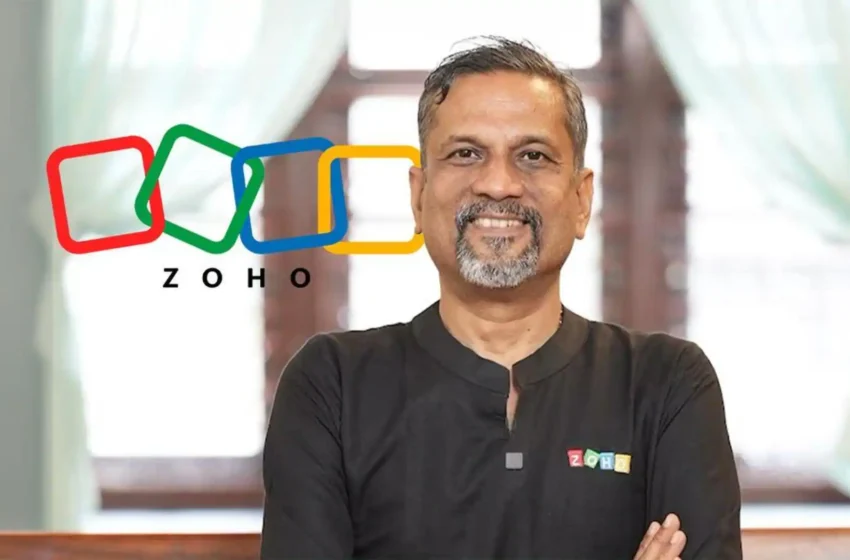
    Sridhar Vembu : In the fast-paced world of tech giants dominated by flashy valuations and Silicon Valley hype, Sridhar Vembu stands out as a beacon of understated brilliance. As the founder, chief scientist, and until recently, CEO of Zoho Corporation, Vembu has quietly built a multinational software powerhouse valued at billions without chasing IPO glory or venture capital fanfare. Born in 1968 in the culturally rich city of Thanjavur, Tamil Nadu, into a middle-class family, Vembu’s journey is a testament to resilience, innovation, and an unyielding commitment to “Made in India” ethos. Today, on October 7, 2025, as Zoho’s latest venture Arattai continues its meteoric rise with fresh endorsements from industry leaders, Vembu’s story feels more relevant than ever – a reminder that true disruption often comes from the roots, not the headlines.

    Sridhar Vembu
    Sridhar Vembu

    Roots in Rural India: A Foundation of Simplicity

    Vembu’s early life was far from the glamour of urban tech hubs. Raised in a modest household, he credits his mother’s influence for instilling values of hard work and humility. Pursuing a B.Tech in Electrical Engineering from the prestigious Indian Institute of Technology (IIT) Madras, Sridhar Vembu honed his technical acumen amid India’s burgeoning tech scene of the late 1980s. After a brief stint in the U.S., working on network management software, he returned to India with a vision: to create world-class technology that empowers local talent and solves global problems.

    In 1996, Vembu co-founded AdventNet (later rebranded as Zoho Corporation) in Chennai with his siblings, Sridharan and Radha. Starting with just a handful of employees and bootstrapped funds, the company focused on network management tools – a niche that would evolve into a suite of over 50 cloud-based applications for businesses worldwide. What began as a survival play in a competitive market has grown into a $1 billion+ revenue behemoth, serving millions of users across 150+ countries without a single dollar of external funding. Vembu and his siblings retain majority ownership, a deliberate choice to preserve independence.

    Building Zoho: Innovation Without the Noise

    Zoho’s secret sauce? Relentless R&D and a disdain for short-term trends. Under Vembu’s leadership, the company pioneered affordable, privacy-focused alternatives to giants like Salesforce, Microsoft, and Google Workspace. Tools like Zoho CRM and Zoho Mail have democratized enterprise software for small businesses, emphasizing data sovereignty and open-source ethos. “Proudly Made in India, Made for the World,” Vembu recently affirmed in a post defending Zoho’s data hosting practices, underscoring the company’s commitment to Indian infrastructure.

    Sridhar Vembu
    Sridhar Vembu

    Vembu’s philosophy extends beyond products. He’s a vocal advocate for rural innovation, establishing Zoho’s development centers in places like Tenkasi, a small town in Tamil Nadu where he now resides. Living in a modest village home far from urban luxuries, Vembu embodies “Dharmic Capitalism” – profit with purpose, blending business success with social upliftment. In a recent interview, he explained why Zoho shuns public markets: “Projects like Arattai wouldn’t exist if we had gone public,” highlighting how staying private allows bold, long-term bets on innovation over shareholder pressures.

    Milestone Year Key Achievement
    Founding 1996 Launched AdventNet for network management software.
    Rebranding 2005 Became Zoho Corporation, expanding into cloud apps.
    Global Scale 2015 Reached 25 million users; established rural dev centers.
    Billion-Dollar Club 2022 Hit $600M+ revenue; focused on AI and privacy tools.
    Leadership Shift 2025 Stepped down as CEO to focus on R&D and mentorship.

    Sridhar Vembu and the Arattai Phenomenon

    This year marks a pivotal shift for Sridhar Vembu. In January 2025, he transitioned from CEO to chief scientist, handing the operational reins to trusted lieutenants while diving deeper into research. His focus? Accelerating Zoho’s engineering depth, as evidenced by the launch of Arattai – a privacy-first messaging app billed as India’s answer to WhatsApp.

    Sridhar Vembu
    Sridhar Vembu

    Debuting in late September 2025, Arattai skyrocketed from 3,000 to 350,000 daily sign-ups, with a 100x surge in traffic within three days and reaching 7.5 million overall downloads by early October. Topping app charts and now boasting an official Android TV app – a unique feature absent in rivals like WhatsApp, Signal, or Telegram – it promises crisp calls, multilingual support for India’s linguistic diversity, and end-to-end encryption (with text E2EE on the roadmap). Vembu, ever the engineer, shared in a team huddle: “Being a dedicated engineer is like being a Rishi… Allow neither praise nor criticism nor fame to distract you, resolutely stay the course.” He emphasized the app’s deceptive simplicity, built on 20 years of homegrown tech frameworks for real-time messaging and distributed systems.

    Yet, challenges abound. Amid viral hype, users flagged lags in message delivery and contact sync issues, prompting Vembu’s hands-on fixes: “We are addressing these bottlenecks one by one.” Privacy remains paramount – no ads, no data mining – a stark contrast to global rivals. In a candid exchange with the Republic’s Arnab Goswami, Vembu urged national self-belief: “We need to believe in ourselves as a nation and people.”

    The momentum shows no signs of slowing. Just yesterday, October 6, industrialist Anand Mahindra announced he had downloaded Arattai “with pride,” prompting a grateful reply from Vembu: a simple yet heartfelt acknowledgment of the growing support for India’s digital self-reliance. Vembu’s X feed (@svembu) buzzes with this energy – from thanking early adopters to teasing refinements, all while invoking Gandhi on his Jayanti for inspiration. It’s a window into a leader who eats his own dogfood, literally using Arattai for internal chats. Even as he turns attention to broader concerns like the energy inefficiency of AI – a critical issue for India’s resource constraints – Arattai’s success underscores his vision for sustainable, indigenous innovation.

    Sridhar Vembu
    Sridhar Vembu

    The Vembu Mindset: Humility in a Hyper-Connected World

    What sets Sridhar Vembu apart isn’t just his tech wizardry but his worldview. A self-proclaimed “Rishi-engineer,” he prioritizes depth over dazzle, rural revival over red carpets. Despite billionaire status, he shuns ostentation, living simply to mentor young talent from underserved areas. Zoho’s “staying power,” he insists, stems from decades of R&D: “Recently I have moved full time to R&D and you will see many more innovations from us.”

    Critics question if Arattai can sustain its buzz against entrenched players like WhatsApp. Sridhar Vembu dismisses the noise: “We don’t worry about ‘will the excitement wear off’ – we are focused on how to offer the best experience.” It’s this resolve that has kept Zoho thriving for nearly three decades.

    Also Read This : Zoho Enters China : How an Indian Company is Making Big Moves in Tech

    A Legacy of Quiet Power

    Sridhar Vembu‘s story isn’t one of overnight unicorns or viral exits; it’s a slow-burn saga of building from the ground up, for the ground up. As Arattai refines its edges and Zoho eyes bolder horizons, Vembu reminds us that innovation flourishes in humility. In an era of fleeting apps and fleeting fame, his path – rooted in purpose, powered by persistence – is the real revolution.
  • The Sukhoi Su-57 : Russia’s Bold Leap into Fifth-Generation Air Superiority

    The Sukhoi Su-57 : Russia’s Bold Leap into Fifth-Generation Air Superiority

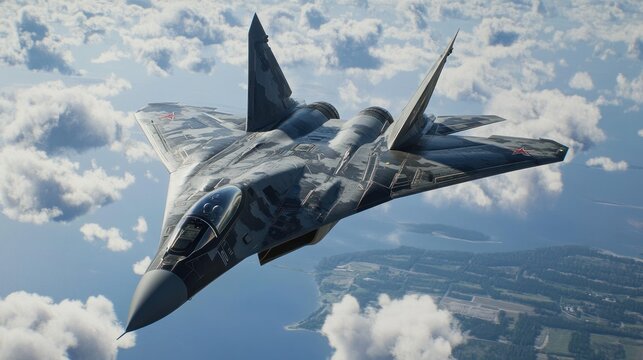
    Su-57 : In the high-stakes world of modern aerial warfare, where stealth and speed can mean the difference between victory and vulnerability, Russia’s Sukhoi Su-57 stands out as a fascinating engineering marvel. Dubbed the “Felon” by NATO, this fifth-generation multirole fighter is more than just a machine—it’s a symbol of Russia’s determination to reclaim its place among the elite in fighter jet technology. As we hit the midpoint of the 2020s, with production ramping up amid global tensions, let’s dive into what makes the Su-57 tick, from its turbulent development to its cutting-edge capabilities and real-world deployments.

    A Rocky Road to the Skies: Development and History

    The Su-57 didn’t emerge overnight. Its story begins in the late Soviet era with the ambitious I-90 program in 1979, aimed at creating a fighter for the 1990s. Economic turmoil after the USSR’s collapse stalled progress, leading to canceled prototypes like Mikoyan’s Project 1.44. Fast-forward to 1999, and Russia relaunched the effort under the PAK FA (Prospective Airborne Complex of Frontline Aviation) banner. Sukhoi clinched the contract in 2002, leveraging its Su-27 heritage, and the first prototype—the T-50—took to the skies on January 29, 2010.

    Su-57
    Su-57

    Challenges abounded: engine troubles, a 2019 crash of the first production model, and the 2018 fallout with India over the joint FGFA program (due to cost and tech-sharing disputes). Yet, perseverance paid off. Serial production kicked off in July 2019, with the first delivery to the Russian Aerospace Forces (VKS) in December 2020. By late 2025, the jet has officially entered service since December 2019, though full operational capability remains a work in progress.

    What sets the Su-57 apart? It’s Russia’s first true stealth fighter, blending low observability with supermaneuverability, supercruise speeds, and sensor fusion. Designed to phase out aging Su-27s and MiG-29s, it’s also a testbed for future stealth tech, including potential drone-swarming capabilities.

    Design and Tech: Su-57 Stealth Meets Agility

    At first glance, the Su-57’s blended wing-body design screams “stealth.” Its radar cross-section (RCS) is a mere 0.1–1 m²—dwarfed by the 10–15 m² of its predecessors—thanks to aligned edges, radar-absorbent coatings, and serpentine inlets that hide the engines from prying radars. Twin AL-41F1 turbofans (with upgrades to the more efficient AL-51F1 on the horizon) provide 3D thrust-vectoring for Cobra-like maneuvers that defy physics.

    The cockpit is a pilot’s dream: an active electronically scanned array (AESA) N036 Byelka radar, infrared search and track (IRST) for passive targeting, and modular avionics for seamless data sharing in network-centric battles. Composites make up 22–26% of the airframe, keeping it light yet tough, while internal bays ensure weapons stay hidden during stealth ops.

    Here’s a quick spec breakdown to geek out over:

    Feature Details
    Crew 1 (with two-seat variant planned)
    Dimensions Length: 20.1 m; Wingspan: 14.1 m
    Weights Empty: 18,500 kg; Max Takeoff: 35,000 kg
    Engines 2 × AL-41F1 (up to 142.2 kN afterburner)
    Top Speed Mach 2 (2,135 km/h)
    Supercruise Mach 1.3 (1,400 km/h)
    Range 3,500 km subsonic
    Ceiling 20,000 m
    Armament Payload Up to 10,000 kg (internal/external)

    Armed to the teeth, it packs R-77M air-to-air missiles, Kh-69 cruise missiles for ground strikes, and even hypersonic Kinzhal derivatives. A 30 mm GSh-30-1 cannon rounds out the close-quarters punch.

    Su-57
    Su-57

    From Syria to Ukraine: Combat Proven?

    The Su-57’s baptism by fire came in Syria in 2018, where it logged 10 sorties, firing Kh-59MK2 missiles without a hitch. But the real test? The ongoing Russo-Ukrainian War. Since late 2022, it’s been used for standoff strikes from Russian soil, avoiding frontline risks. As of October 2025, fewer than 25 are combat-ready, with Ukrainian drones reportedly damaging one in June 2024. The VKS’s 23rd Fighter Aviation Regiment at Akhtubinsk handles most ops, and recent border deployments with China signal growing interoperability.

    Production lags due to sanctions—only six deliveries in 2024—but 2025 shows promise. Leaked docs from August reveal early birds flying “lite” without full pods, but the Su-57M upgrade (with AI smarts and better engines) is in trials, eyeing a mid-decade rollout.

    Global Ambitions: Exports and Rivals

    Russia’s not keeping this bird caged. Algeria locked in an order in February 2025, and the export-tuned Su-57E turned heads at Zhuhai 2024 and Aero India 2025—parked cheek-by-jowl with the F-35. Talks for Indian co-production bubbled up in September, though Delhi’s eyeing the cheaper Su-75 Checkmate too. At LIMA 2025 in Malaysia, the Su-57M stole the show.

    Stack it against the F-35? The Su-57 wins on raw speed and range but trails in all-aspect stealth and sensor maturity. It’s a trade-off: agility for the skies versus invisibility in the electromagnetic fog.

    Also Read This : WhatsApp vs Arattai : The Ultimate Messaging App Showdown for India in 2025

    The Future Skies: What’s Next for the Felon?

    As geopolitical winds shift, the Su-57 embodies Russia’s push for self-reliance in defense tech. With upgrades like drone control and hypersonic integration, it could redefine multirole fighters. But hurdles remain—sanctions, funding, and proving itself beyond Russia’s borders.

  • Cute Durga avatars using AI prompts : Transform Your Daughter into Cute Durga Avatars, AI Prompts for a Magical Navratri

    Cute Durga avatars using AI prompts : Transform Your Daughter into Cute Durga Avatars, AI Prompts for a Magical Navratri

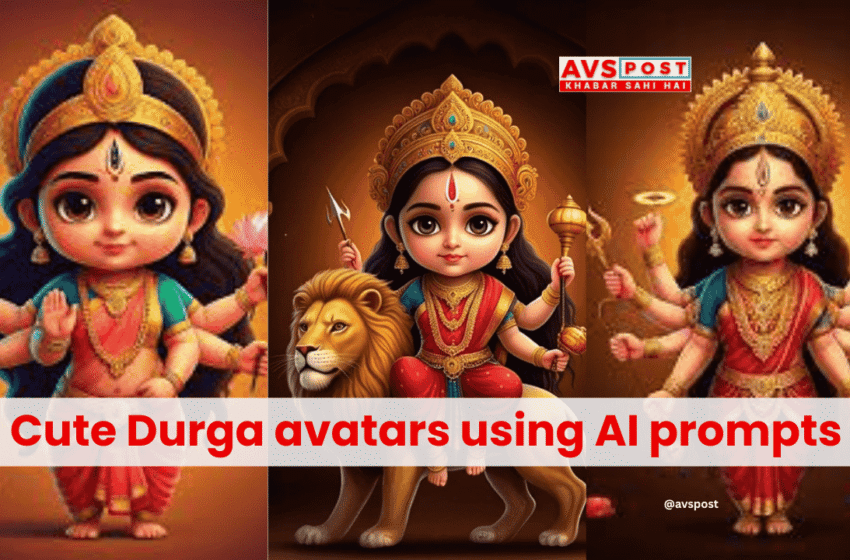
    Cute Durga avatars using AI prompts : Navratri is here, bringing with it the vibrant celebration of Maa Durga’s divine energy and festive joy. This sacred season, why not make it extra special by transforming your daughter’s photos into adorable avatars of Maa Durga using AI? With tools like Google Gemini and its Nano Banana image editing feature, you can create cute, cartoonish, or kawaii-style portraits inspired by the nine forms of Navdurga. In this blog, we’ll share some creative AI prompts to turn your little one into a charming mini Durga, along with tips to make the process fun and festive.

    Why Use AI to Create Cute Durga Avatars?

    AI image editing tools like Google Gemini have revolutionized how we bring creativity to life. Transforming your daughter’s photo into a cute Durga avatar is not just a fun activity—it’s a wonderful way to engage kids with Indian culture and Navratri traditions. These AI-generated images are perfect for sharing on social media, creating festive cards, or simply cherishing as a family keepsake. With the right prompts, you can craft vibrant, high-quality images that blend the divine essence of Durga with an adorable, child-friendly aesthetic.

    Cute Durga avatars using AI prompts
    Cute Durga avatars using AI prompts

    What You’ll Need to Get Started

    1. Google Gemini Access: Download the Gemini app (available on Android/iOS) or visit gemini.google.com.
    2. A Clear Photo: Choose a high-quality selfie or portrait of your daughter with a clear view of her face.
    3. AI Prompts: Copy and paste the prompts below into Gemini, prefixed with “Edit this image with…”.
    4. A Creative Spark: A bit of patience and imagination will help you create stunning results!

    Cute Durga avatars using AI prompts

    Below are carefully crafted prompts to transform your daughter’s photo into adorable Durga avatars, inspired by Navdurga forms and Navratri vibes. These focus on pastel colors, kawaii aesthetics, and festive elements to ensure a cute yet divine look.

    1. Classic Cute Durga (Red Saree Look)

    “Create a 4K HD cute cartoon portrait of a little girl as Maa Durga in a playful style. She wears a tiny red and white saree with gold borders, big sparkling eyes, rosy cheeks, and simple flower jewelry. She’s holding a small trishul and smiling sweetly. Background: soft golden diyas and a colorful Durga Puja pandal with pastel lights. Kawaii anime style, high detail, vibrant but gentle colors.”

    Why It Works: This prompt captures the traditional red saree look of Maa Durga, reimagined in a kid-friendly, kawaii style that’s perfect for Navratri.

    Cute Durga avatars using AI prompts
    Cute Durga avatars using AI prompts
    1. Retro Cute Durga (90s Bollywood Vibe)

    “Transform this photo into a retro vintage cute Durga avatar for a young girl, like a 90s cartoon heroine. Dress her in an off-white saree with red border and tiny prints, wavy hair blowing in wind, big innocent eyes, and a cute lion cub beside her. Background: grainy Durga Maa statue in a pandal with dramatic but soft lights. Add sparkle effects, pastel tones, and a playful smile.”

    Why It Works: The nostalgic 90s vibe adds a unique charm, appealing to both kids and adults who love a retro aesthetic.

    1. Shailaputri Avatar (First Form of Navdurga)

    “Create a cute sticker of a little girl as Shailaputri form of Durga, in kawaii cartoon style. Pastel pink lehenga, bull ride with big eyes, holding blue lotus, rosy cheeks, and glowing aura. Text: ‘Happy Navratri’ in golden font. Background: saffron gradient with rangoli and sparkles. Size: 512×512 PNG, vibrant but soft colors.”

    Why It Works: This prompt celebrates the first day of Navratri with Shailaputri’s serene yet adorable avatar, perfect for stickers or social media.

    1. Chandraghanta Avatar (Multi-Armed Cuteness)

    “Make a super cute 3D cartoon of a young girl as Chandraghanta Durga, with four chibi arms holding bell, trishul, and flowers. Golden skin, red attire, half-moon crown made playful. Big expressive eyes, pigtails, sitting on a lion with hearts around. Background: starry night temple with soft lights. Hyper-detailed, pastel palette, joyful expression.”

    Why It Works: The chibi multi-arm style makes Chandraghanta’s fierce form irresistibly cute, appealing to young kids.

    Cute Durga avatars using AI prompts
    Cute Durga avatars using AI prompts
    1. Kushmanda Avatar (Floral Festive Look)

    “Create a vibrant cute image of a girl as Kushmanda Durga, surrounded by little flower friends. She’s in yellow saree, holding a kamandalu, with round cheeks and twinkling eyes. Add puja thali with sweets and diya. Background: blooming lotus pond with golden hour light. Kawaii style, high-res, add ‘Jay Mata Di’ text in bubbly font.”

    Why It Works: Kushmanda’s connection to nature shines through with flowers and a sunny vibe, making it a cheerful festive creation.
    Tips for Perfect Results

    1. Choose the Right Photo: Pick a photo with a clear face and minimal background distractions for the best AI rendering.
    2. Customize Prompts: Feel free to tweak colors, outfits, or themes (e.g., blue lehenga or modern Durga look) to match your vision.
    3. Share the Festive Vibe: Download the images and share them with #Navratri2025 or #CuteDurga hashtags on social media.
    4. Prioritize Privacy: When sharing kids’ photos, consider blurring faces or limiting visibility to protect privacy.

    Also Read This : UAE Suspends Tourist and Work Visa Applications for Nine Countries : What You Need to Know

    Make Navratri Unforgettable

    Cute Durga avatars using AI prompts : This Navratri, celebrate the divine feminine energy by transforming your daughter into a cute Maa Durga avatar. These AI-generated images will bring joy to your family, spark creativity, and add a playful touch to your festive celebrations. With Google Gemini and these prompts, you’re just a few clicks away from creating magical, shareable memories.

  • iPhone 16 Pro Max Price Guide : What to Expect in 2025

    iPhone 16 Pro Max Price Guide : What to Expect in 2025

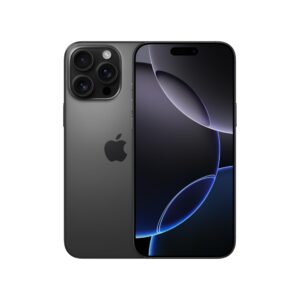
    The iPhone 16 Pro Max Price, launched in September 2024, continues to be a premium choice for smartphone enthusiasts in 2025. With its cutting-edge features like the A18 Pro chip, advanced camera system, and sleek titanium design, it’s no surprise that buyers are keen to know its price across regions. This blog provides a comprehensive guide to the iPhone 16 Pro Max pricing, including regional variations, storage options, and tips to save on your purchase.

    Pricing Overview by Region

    As of September 23, 2025, the iPhone 16 Pro Max remains widely available through Apple Stores, major retailers, and carriers. Prices vary based on storage capacity, region, and promotional offers. Below is a breakdown of the starting prices for the base model (256GB) across key markets:

    iPhone 16 Pro Max Price Drop
    iPhone 16 Pro Max Price Drop
    • United States: $1,199
      The official Apple Store price for an unlocked 256GB model. Retailers like Amazon offer renewed or refurbished units starting at around $1,000, while carriers like AT&T and Verizon provide trade-in deals or financing options.
    • India: ₹144,900 (launch price); ~₹105,999 during sales
      During major sales like Flipkart’s Big Billion Days or Amazon’s festive discounts, prices can drop significantly with bank offers and exchange deals reducing costs by up to 30%.
    • United Kingdom: £1,199
      Available through Apple UK and retailers like Currys. Financing options and trade-in programs are common.
    • Canada: ~$1,649 CAD
      Pricing includes taxes in some provinces. Apple Canada offers 0% financing for eligible buyers.
    • United Arab Emirates: ~4,450 AED (~$1,210 USD)
      Available through retailers like Sharaf DG. Prices may vary slightly based on local taxes.
    • Egypt: ~59,999 EGP
      Official Apple Egypt pricing for an unlocked model. Local retailers may offer installment plans.

    Note: Prices are approximate and subject to change based on taxes, import duties, and retailer promotions. Always check with local vendors for the latest offers.

    Storage Options and Price Tiers

    iPhone 16 Pro Max Price Drop : The iPhone 16 Pro Max comes in three storage variants, with prices increasing for higher capacities:

    • 256GB (Base Model): Starting price as listed above.
    • 512GB: ~$200/₹20,000 more than the base model.
    • 1TB: ~$400/₹40,000 more than the base model.

    For most users, 256GB is sufficient for apps, photos, and videos, but professionals or content creators may opt for 512GB or 1TB for 4K ProRes video recording and large media libraries.

    iPhone 16 Pro Max Price Drop
    iPhone 16 Pro Max Price Drop

    How to Save on Your iPhone 16 Pro Max Price

    1. Trade-In Programs:
      Apple and carriers like Verizon, AT&T, and T-Mobile offer trade-in credits (up to $650 in the US or ₹20,000+ in India) for eligible devices. Check your device’s trade-in value on Apple’s website or with your carrier.
    2. Seasonal Sales:
      In India, events like Flipkart’s Big Billion Days or Amazon’s Great Indian Festival can slash prices by 20-30%. In the US, Black Friday and holiday sales at Best Buy or Walmart often include gift cards or discounts.
    3. Financing Options:
      Apple’s 0% interest financing (e.g., Apple Card in the US) spreads payments over 12-24 months. Similar plans are available in other regions through local banks or retailers.
    4. Education Discounts:
      Apple offers student discounts in many countries, typically $100/₹10,000 off or free accessories like AirPods. Check eligibility on Apple’s education store.
    5. Refurbished Models:
      Retailers like Amazon and Apple’s refurbished store sell certified pre-owned iPhone 16 Pro Max units at a discount, often with full warranties.
    iPhone 16 Pro Max Price Drop
    iPhone 16 Pro Max Price Drop

    Why the iPhone 16 Pro Max is Worth It

    iPhone 16 Pro Max Price boasts a 6.9-inch Super Retina XDR display, a 48MP Fusion camera with advanced computational photography, and up to 30 hours of battery life. Its titanium frame and iOS 18 features, like enhanced AI capabilities, make it a powerhouse for work and entertainment. While the price is premium, the durability, software updates, and resale value justify the investment for many.

    Also Read This : K-Drama Photo Prompts : 10 Gemini Prompts to Transform Your Boy’s Photo into a K-Drama Heartthrob

     iPhone 16 Pro Max Price : The iPhone 16 Pro Max remains a top-tier smartphone in 2025, with prices starting at $1,199 in the US, ₹105,999 in India (during sales), and similar ranges globally. To get the best deal, explore trade-ins, seasonal sales, or financing options. Visit Apple’s official website or local retailers like Amazon, Flipkart, or Best Buy for the latest pricing and promotions.

  • K-Drama Photo Prompts : 10 Gemini Prompts to Transform Your Boy’s Photo into a K-Drama Heartthrob

    K-Drama Photo Prompts : 10 Gemini Prompts to Transform Your Boy’s Photo into a K-Drama Heartthrob

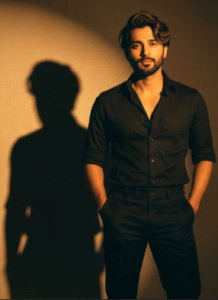
    K-Drama Photo Prompts : If you’ve ever binge-watched Crash Landing on You or swooned over the brooding charm in Itaewon Class, you know the magic of those impossibly handsome heroes. The sharp jawlines, the windswept hair, the intense stares that could melt a glacier—it’s pure escapism. But what if you could bring that vibe to your own photos? Enter Google’s Gemini AI, the ultimate tool for digital makeovers.

    As someone who’s “watched” (okay, analyzed) thousands of hours of K-dramas through my training data, I’ve crafted 10 ready-to-use prompts to style a boy’s photo—like your son, nephew, or that cute kid from the family album—into a full-on K-drama lead. These are perfect for fun edits, social media glow-ups, or just imagining your little one as the next Lee Min-ho. Upload a base photo to Gemini, plug in a prompt, and watch the transformation unfold. Pro tip: Specify details like age or outfit for even better results.

    K-Drama Photo Prompts
    K-Drama Photo Prompts

    K-Drama Photo Prompts for Boys

    1. The Brooding CEO Vibe

    Channel that chaebol their energy from What’s Wrong with Secretary Kim?.

    Prompt: “Transform the uploaded photo of a young boy into a K-drama hero like a chaebol heir: sharp black suit, windswept hair, intense gaze under rainy city lights at night, dramatic shadows on his face, cinematic wide-angle shot with a luxury car in the blurred background.”

    2. The Romantic Flower Boy

    For the soft, petal-soft romance of True Beauty.

    Prompt: “Style the boy in the uploaded photo as a soft-hearted K-drama lead: gentle smile, messy chestnut hair, white button-up shirt half-unbuttoned, surrounded by blooming cherry blossoms in spring, warm golden hour lighting, ethereal and dreamy atmosphere.”

    3. The Rebellious Bad Boy

    Think The Heirs meets urban edge—smirks and leather included.

    Prompt: “Edit the uploaded boy’s photo into a tough K-drama anti-hero: leather jacket over a graphic tee, tousled dark hair, smirking expression with a cigarette (implied, not shown), urban alleyway setting with neon signs and rain-slicked streets, high-contrast noir style.”

    K-Drama Photo Prompts
    K-Drama Photo Prompts

    4. The Scholarly Heartthrob

    A nod to the bookish charm in Extraordinary You.

    Prompt: “Recreate the boy from the uploaded photo as an intellectual K-drama prince: glasses perched on nose, neatly styled hair, crisp school uniform with a loose tie, standing in a sunlit library with books floating around, soft focus bokeh, romantic and whimsical.”

    5. The Athletic Charmer

    Sweat, stadiums, and sunset wins—like a scene from Weightlifting Fairy Kim Bok-joo.

    Prompt: “Turn the uploaded photo of the boy into a sporty K-drama hero: soccer jersey clinging after a game, sweat-glistened skin, windswept bangs, triumphant grin on a stadium field at sunset, dynamic action pose with motion blur, vibrant and energetic vibe.”

    6. The Mysterious Healer

    Mystic vibes from Alchemy of Souls, with a touch of serenity.

    Prompt: “Style the boy in the photo as a gentle K-drama doctor or shaman: white coat flowing in the wind, serene expression with piercing eyes, silver hair highlights, misty forest background with glowing fireflies, soft blue tones and healing aura.”

    7. The Playboy with Depth

    All charm on the surface, heartbreak underneath—Vincenzo style.

    Prompt: “Transform the uploaded boy’s image into a charming yet vulnerable K-drama playboy: velvet blazer, perfectly quiffed hair, half-smile hiding pain, lounging on a rooftop bar overlooking Seoul skyline at dusk, warm amber lighting with subtle heartbreak in his eyes.”

    8. The Time-Traveling Warrior

    K-Drama Photo Prompts : Epic hanbok action from historical hits like Mr. Sunshine.

    Prompt: “Edit the photo to depict the boy as a fierce K-drama historical hero: hanbok warrior robes in deep crimson, long ponytail, determined stare with a sword at his side, ancient palace courtyard with falling leaves, epic golden-hour drama lighting and volumetric fog.”

    K-Drama Photo Prompts
    K-Drama Photo Prompts

    9. The Coffee Shop Dreamer

    K-Drama Photo Prompts : Cozy, rainy-day romance à la My Love from the Star.

    Prompt: “Recast the boy from the uploaded photo as a relatable K-drama barista crush: apron over a hoodie, shy smile while holding a coffee cup, steam rising softly, cozy café interior with rain-streaked windows, sepia tones and intimate close-up.”

    Also Read This : 5 Best Laptops for Working Professionals in 2025 : Top Picks for Productivity & Portability

    10. The Supernatural Enigma

    K-Drama Photo Prompts : For fans of otherworldly intrigue in Goblin.
    Prompt: “Style the uploaded boy’s photo as a brooding K-drama supernatural lead: dark trench coat, ethereal glow in his eyes, raven-black hair, foggy urban night with cherry tree silhouettes, mysterious red string of fate trailing behind, high-fantasy contrast with cool desaturated colors.”

  • 5 Best Laptops for Working Professionals in 2025 : Top Picks for Productivity & Portability

    5 Best Laptops for Working Professionals in 2025 : Top Picks for Productivity & Portability

    5 Best Laptops for Working Professionals : As a working professional, your laptop isn’t just a tool—it’s your command center for emails, video calls, spreadsheets, and those late-night project tweaks. In 2025, the best options blend portability, all-day battery life, seamless multitasking, and business-grade security without breaking the bank. Drawing from the latest insights from PCMag, TechRadar, Laptop Mag, and RTINGS, I’ve narrowed it down to the top five laptops that excel for pros like you. Whether you’re an executive jet-setting between meetings or a remote analyst crunching data, these picks prioritize what matters: reliability, comfort, and efficiency. Let’s dive in.

    5 Best Laptops for Working Professionals in 2025

    1. Lenovo ThinkPad X1 Carbon Gen 13 Aura Edition

    If there’s one laptop that screams “professional,” it’s the ThinkPad X1 Carbon. This 14-inch ultrabook weighs just 2.4 pounds and packs an OLED display at 2880×1800 resolution, powered by an Intel Core Ultra 7 258V processor, 16-32GB RAM, and up to 1TB SSD. Battery life hits up to 12.6 hours, enough for a full day of unplugged productivity.

    Lenovo ThinkPad X1 Carbon Gen 13 Aura Edition
    Lenovo ThinkPad X1 Carbon Gen 13 Aura Edition : 5 Best Laptops for Working Professionals

    What stands out is the legendary ThinkPad keyboard—spill-resistant, with that signature TrackPoint nub for precise navigation during marathon typing sessions. It’s built to MIL-STD standards, so it can handle the rigors of travel, and AI features like noise-canceling mics make virtual meetings crystal clear. At around $1,500, it’s a premium investment for executives who demand durability and comfort. The only minor gripe? It skimps on ports (just two Thunderbolt 4s), so a USB-C hub is your friend.

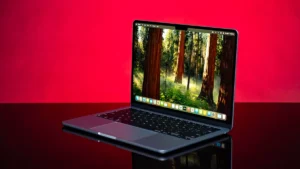
    2. Apple MacBook Air 13 (M4, 2025)

    For Apple ecosystem devotees, the MacBook Air 13 with the M4 chip is a no-brainer. Its 13.6-inch Retina display (2560×1664) delivers sharp visuals, backed by a 10-core M4 CPU/GPU, 16GB RAM, and storage from 256GB to 1TB. The real hero is the battery: up to 18 hours of mixed use, all in a fanless, whisper-quiet 2.7-pound chassis.

    Seamless integration with iPhone or iPad means effortless file sharing and Continuity features that boost workflows. It’s perfect for creative pros handling light editing or marketers syncing presentations on the fly. Starting at $999, it’s the value king in this list. Downsides include limited ports (two Thunderbolt) and non-user-repairable design, but for portability and battery supremacy, nothing touches it.

    Apple MacBook Air 13 (M4, 2025)
    Apple MacBook Air 13 (M4, 2025) : 5 Best Laptops for Working Professionals

    3. Dell XPS 13 (9350)

    Dell’s XPS 13 is the sleek sophisticate of the bunch, with a 13.4-inch OLED screen option up to 3K resolution that’s ideal for vibrant presentations or design reviews. Under the hood: Intel Core Ultra 7, 16-32GB RAM, 512GB SSD, and battery life stretching to 18 hours. At 2.6 pounds, it’s as portable as they come.

    The audio and 1080p webcam shine for client calls, and the premium aluminum build feels luxurious without the bulk. It’s a favorite for designers or managers who need that “wow” factor in visuals. Priced from $1,200, it’s worth the splurge for the display alone—though the trackpad can feel finicky at times, and OLED configs nudge the cost higher.

    Dell XPS 13 (9350)
    Dell XPS 13 (9350) : 5 Best Laptops for Working Professionals

    4. HP EliteBook X G1a

    5 Best Laptops for Working Professionals : For IT-managed teams craving power and peace of mind, the HP EliteBook X G1a delivers. This 14-inch model features an OLED display up to 2.8K, AMD Ryzen AI 9 processor, 16-32GB RAM, and 512GB-1TB SSD, with up to 15 hours of battery. Weighing about 3 pounds, it’s got a professional vibe with robust security like fingerprint readers and TPM chips.

    AMD’s efficiency shines in heavy multitasking—think dozens of Chrome tabs plus Excel without a stutter. Ports are generous for docking stations, making it a hit in office setups. At $1,400, it’s tailored for enterprise pros, though it’s a tad thicker than featherweight rivals and the speakers are just average for media breaks.

    HP EliteBook X G1a
    HP EliteBook X G1a : 5 Best Laptops for Working Professionals

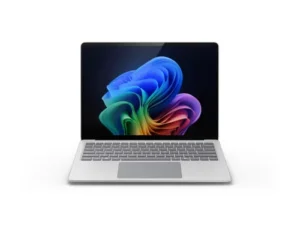
    5. Microsoft Surface Laptop 7th Edition (13.8″)

    5 Best Laptops for Working Professionals : Rounding out the list is Microsoft’s Surface Laptop 7th Edition, a 13.8-inch touchscreen powerhouse with a 2304×1536 PixelSense display, Snapdragon X Elite chip, 16-32GB RAM, and up to 1TB SSD. Battery? Up to 20 hours, thanks to Arm architecture’s magic. At around 3 pounds, it’s versatile for hybrid workers.

    Copilot+ AI tools automate mundane tasks like summarizing emails or generating reports, integrating smoothly with Windows apps. It’s a steal at $1,000 for remote teams leaning into AI. App compatibility has improved but isn’t flawless for legacy software, and ports are sparse—expect to dongle up.

    Microsoft Surface Laptop 7th Edition (13.8")
    Microsoft Surface Laptop 7th Edition (13.8″) : 5 Best Laptops for Working Professionals

    Which One’s Right for You?

    5 Best Laptops for Working Professionals in 2025 : These laptops represent the cream of the 2025 crop, each excelling in portability (all under 3.2 pounds) and endurance for the 9-to-5 grind. If budget’s tight, snag the MacBook Air for unbeatable value. Power hogs? The HP EliteBook’s AMD muscle wins. Always test the keyboard in-store—it’s your daily lifeline.

    Also Read This : Half Humanoid Vyommitra : ISRO’s Space Robot for Gaganyaan Human Spaceflight Mission

  • Half Humanoid Vyommitra : ISRO’s Space Robot for Gaganyaan Human Spaceflight Mission

    Half Humanoid Vyommitra : ISRO’s Space Robot for Gaganyaan Human Spaceflight Mission

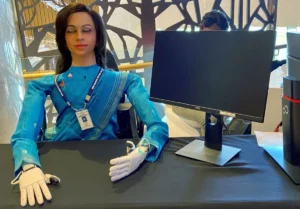
    Half Humanoid Vyommitra : If you’ve been following India’s Gaganyaan mission, you’ve likely heard the buzz around Vyommitra—the “space friend” (from Sanskrit Vyoma for space and Mitra for friend) that’s set to make history. But what exactly is a “half-humanoid,” and why is this robot stealing the spotlight? In this quick deep-dive, we’ll unpack Vyommitra’s design, capabilities, and her starring role in ISRO’s uncrewed Gaganyaan test flight this December. Spoiler: She’s not your average drone; she’s a smart, arm-wielding stand-in for future astronauts.

    What Makes Half Humanoid Vyommitra ?

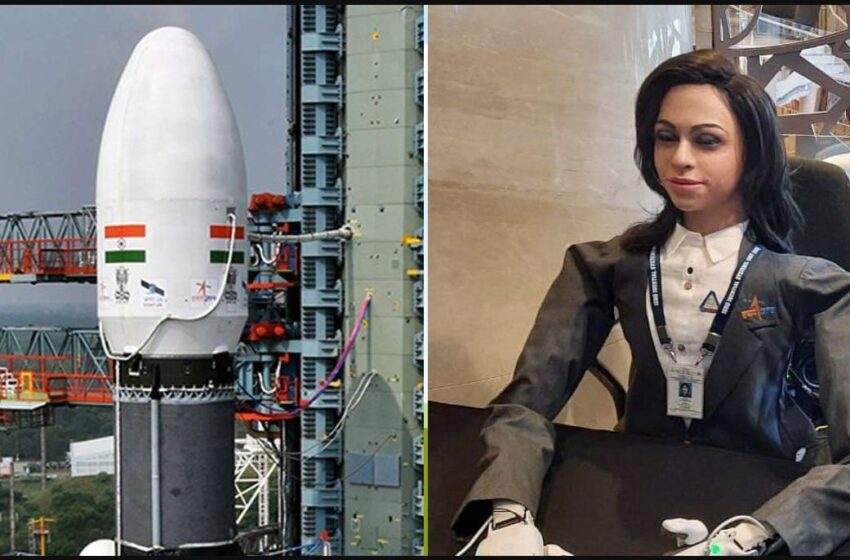
    Half Humanoid Vyommitra a is an advanced robotic system developed by the Indian Space Research Organisation (ISRO), specifically for human spaceflight simulations. Unveiled in August 2022, she’s classified as a half-humanoid because she features only the upper body of a humanoid form—think torso, head, and articulated arms—but no legs. This design choice keeps her compact (about 2 meters tall and weighing around 30 kg) and optimized for the tight confines of a spacecraft crew module, where full mobility isn’t needed.

    Half Humanoid Vyommitra
    Half Humanoid Vyommitra

    Built primarily from lightweight aluminum alloys, her “skull” weighs just 800 grams, housing cameras for “eyes” and sensors for environmental awareness. At her core is an AI-driven brain that allows her to interact with systems as a human would, making her ideal for testing life-support tech without putting actual crew at risk.

    Half Humanoid Vyommitra form draws inspiration from global robotic predecessors like NASA’s Robonaut but emphasizes Indian ingenuity: frugal engineering, rapid prototyping, and integration with local AI startups. She’s not meant to walk on the Moon (yet); her focus is on dexterity and decision-making in zero-gravity.

    Key Features and Tech Breakdown

    Half Humanoid Vyommitra isn’t just a mannequin with wires—she’s packed with cutting-edge tech to mimic astronaut behaviors. Here’s a snapshot of what she brings to the table:

    Component Description Real-World Function
    AI & Processing Machine learning algorithms and natural language processing (NLP) “Understands” voice commands from ground control; simulates human responses to alerts, like adjusting oxygen levels.
    Sensors & Monitoring Embedded detectors for temperature, humidity, radiation, and pressure Tracks cabin environment in real-time; collects data on microgravity effects for post-mission analysis.
    Articulated Arms Dual arms with dexterous grippers and multi-joint flexibility Operates control panels, flips switches, deploys small experiments, and handles emergency protocols autonomously.
    Communication Suite High-bandwidth telemetry links Streams video, sensor data, and status updates to ISRO’s mission control; enables two-way “conversations” via speech synthesis.
    Power System Efficient batteries with solar compatibility Sustains operations for mission duration (up to 7 days in orbit) without heavy energy demands.

    Powered by AI models trained on astronaut training data, Vyommitra can adapt to surprises—like a sudden CO2 spike—by prioritizing tasks or alerting teams. She’s even programmed for basic “empathy,” responding conversationally to keep the vibe steady during long simulations.

    Half Humanoid Vyommitra
    Half Humanoid Vyommitra

    Vyommitra’s Mission: Paving the Way for Human Spaceflight

    Vyommitra’s debut will be on Gaganyaan’s first uncrewed flight (G1) in December 2025, launching from Sriharikota on an LVM3 rocket. Strapped into the crew module, she’ll orbit Earth at around 400 km for about 5-7 days, testing:

    • Life Support Validation: Ensuring oxygen generation, air purification, and waste management work flawlessly.
    • Crew Interface Testing: Interacting with avionics as if she were a Gaganyatri (astronaut), spotting UI glitches.
    • Emergency Drills: Simulating contingencies like power failures or leaks to refine abort systems.

    This data will be crucial for the crewed G3 mission targeted for 2026-2027, carrying India’s first astronauts into low Earth orbit. By handling the “dirty work” of system checks, Half Humanoid Vyommitra reduces risks and costs—true to ISRO’s ethos of doing more with less.

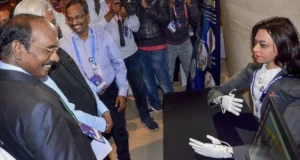
    Fun fact: Her name nods to the ancient Hindu sage Mitra, symbolizing companionship. As ISRO Chair Dr. V. Narayanan put it, “Vyommitra is our reliable partner, ensuring our human explorers arrive safe and inspired.”

    Why She Matters: A Glimpse into Tomorrow’s Space Exploration

    In a world racing toward multi-planetary life, half-humanoids like Vyommitra are the unsung heroes. She represents a shift from brute-force robotics to intelligent companions that can scout harsh environments—be it orbital labs, lunar habitats, or beyond. For India, she’s a proud step in self-reliant space tech, potentially inspiring exports of similar systems to global partners.

    Also Read This : World Athletics Championships Tokyo 2025 : Mid-Event Recap and Results

    Challenges? Sure—fine-tuning AI for unpredictable space quirks and ensuring arm precision in weightlessness. But with ISRO’s 100% success rate on recent missions, optimism runs high.

  • 90s Retro Look Prompt : How to Create a Stunning 90s Retro Look with AI, Step-by-Step Guide

    90s Retro Look Prompt : How to Create a Stunning 90s Retro Look with AI, Step-by-Step Guide

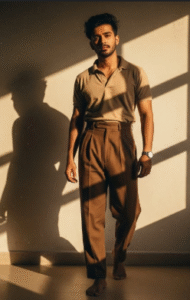
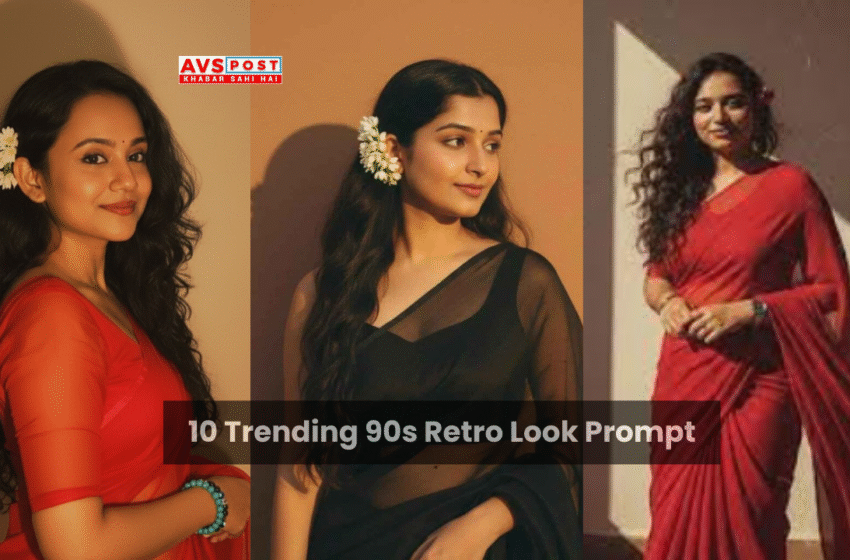
    90s Retro Look Prompt : The Nano Banana trend took social media by storm, with users transforming their photos into miniature 3D figurines. Now, the 90s Retro Look is stealing the spotlight, bringing back the nostalgic charm of 1990s Bollywood and Hollywood movie aesthetics. Think grainy yet vibrant visuals, retro outfits like chiffon sarees or casual blouses, golden hour lighting, and moody backgrounds. This trend is all about creating vintage-inspired images with a modern AI twist, perfect for sharing on social media. Here’s a detailed, step-by-step guide to crafting your own 90s retro look using AI, along with customizable prompts to create unique images.

    Why the 90s Retro Look is Trending

    The 90s retro aesthetic is a blend of nostalgia and artistry. It captures the essence of 90s cinema – bold colors, dramatic lighting, and expressive poses. In India, this trend is especially popular for recreating iconic Bollywood looks, like heroines in flowing sarees with curly hair and floral accents. The grainy texture, warm tones, and cinematic vibes make these images stand out on platforms like Instagram and TikTok. With AI tools, anyone can transform a simple selfie into a retro masterpiece in minutes.

    90s Retro Look Prompt
    90s Retro Look Prompt

    Step-by-Step Process to Create a 90s Retro Look Prompt

    90s Retro Look Prompt : Follow these steps to create your own 90s-inspired images using AI image generation tools. No specific platforms are needed – just an AI tool that supports image generation from text prompts and photo references.

    Step 1: Choose a Clear Reference Photo

    Select a high-quality selfie or portrait photo where your face is clearly visible. For best results:

    • Use a photo with good lighting and minimal background distractions.
    • Side profiles or full-body shots work well for dynamic poses.
    • Ensure the photo is high-resolution to preserve facial details.

    Step 2: Craft a Detailed AI Prompt

    The key to a great 90s retro image is a specific, descriptive prompt. Your prompt should include:

    • Style: Mention “90s retro look,” “vintage grainy but bright,” or “90s movie aesthetic.”
    • Subject: Reference your photo (e.g., “the person in the uploaded photo”).
    • Outfit: Specify clothing, like a “red chiffon saree” or “retro blue blouse and skirt.”
    • Hair and Accessories: Add details like “long wavy hair with a jasmine flower” or “short curly hair with a side clip.”
    • Lighting and Background: Use “golden hour lighting,” “deep shadows,” or “solid textured wall.”
    • Mood: Describe the vibe, like “romantic,” “mysterious,” or “playful.”
    • Extra Details: Include “film grain” or “Pinterest aesthetic” for that vintage touch.

    Write prompts in English for better AI understanding, keeping them between 50-100 words for clarity.

    90s Retro Look Prompt
    90s Retro Look Prompt

    Step 3: Generate the Image

    Input your prompt and photo into the AI tool. Once generated (usually in 10-30 seconds), review the image. If the result isn’t perfect:

    • Adjust the prompt (e.g., change the outfit color or background).
    • Add “keep the exact face and features” to preserve your likeness.
    • Experiment with 4-5 variations to find the best one.

    Step 4: Edit and Share

    Use basic editing tools to tweak brightness, contrast, or graininess if needed. Save the image and share it on social media with hashtags like #90sRetroLook or #AIRetro to join the trend. For variety, generate multiple images with different prompts (see examples below).

    Sample AI Prompts for Unique 90s Retro Looks

    90s Retro Look Prompt : Here are five ready-to-use prompts to create diverse 90s-inspired images. Copy these and tweak them to suit your style:

    1. Classic 90s Saree Look (Red)
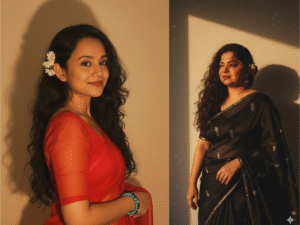
      “Create a retro vintage grainy but bright image of the person in the uploaded photo, draped in a perfect plain red chiffon saree, evoking a 90s Bollywood movie vibe. Dark brown wavy curly hair with a small flower tucked into the curls, standing in a windy environment against a solid wall. Warm golden hour lighting, deep shadows, and contrast drama, with a moody yet happy expression.”
    2. Black Aesthetic Retro Saree
      “Transform the uploaded photo into a 90s retro image with a grainy but bright vibe. The person is draped in a perfect black saree, styled like a 90s movie star. Brown hair with a medium flower tucked into curls, standing in windy weather against a textured wall. Deep shadows, warm lighting, mysterious and artistic atmosphere, calm introspective expression.”
    3. White Ethnic Look (Traditional Twist)
      “Create a 90s retro portrait of the person in the uploaded photo wearing a plain white chiffon saree with subtle embroidery. Long wavy hair with jasmine flowers, posing elegantly in golden hour light. Grainy vintage filter, bright highlights, solid minimal background with soft shadows, evoking a romantic 90s Bollywood vibe, happy and serene face.”
    4. Modern Retro Mix (Casual)
      “Generate a 90s retro look for the person in the uploaded photo: short curly hair with a side flower, wearing a simple blue retro blouse and skirt. Standing in a windy outdoor setting like a 90s film scene, with vintage grainy texture, bright warm tones, and deep contrast shadows on a plain wall. Playful and confident expression, Pinterest-inspired aesthetic.”
    5. Dark Moody Retro (Intense Look)
      “Create a dramatic 90s retro image of the person in the uploaded photo wearing a deep maroon saree, with long straight hair flowing in the wind and a red flower. Set against a dark solid wall with grainy but bright vintage style, golden sunset lighting, and strong shadows. Feels like a mysterious 90s thriller movie, with an intense yet calm gaze.”
    90s Retro Look Prompt
    90s Retro Look Prompt

    Tips for Better Results

    • Prompt Length: Aim for 50-100 words to balance detail and clarity.
    • Variations: Experiment with colors (e.g., blue, green), outfits (saree, lehenga, or Western), or backgrounds (windy beach, indoor room).
    • Fix Common Issues: If the face changes, add “preserve exact facial features” to the prompt. For grainy effects, include “film grain” or “old photo texture.”
    • Try Multiple Outputs: Generate 4-5 images with slight prompt tweaks to find your favorite.
    • Stay on Trend: Check social media for the latest 90s retro inspirations to keep your images fresh.

    Also Read This : The Nano Banana AI Trend : The AI Craze Turning Everyday Photos into Adorable 3D Figurines

    Why This Trend is So Fun

    The 90s retro look prompt lets you channel iconic movie star vibes while adding your personal flair. Whether it’s a romantic Bollywood heroine or a bold, modern-retro mix, AI makes it easy to experiment with endless styles. The grainy textures, vibrant colors, and nostalgic lighting create images that feel both timeless and trendy.

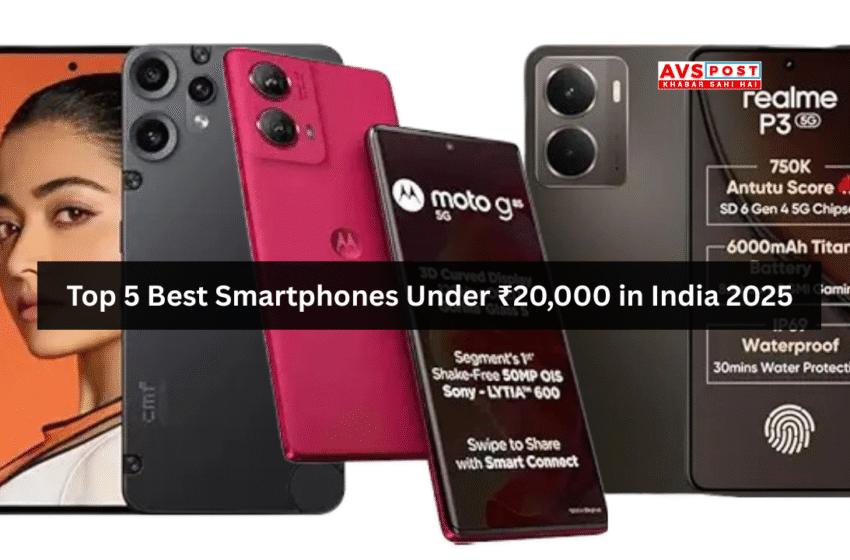
  • Top 5 Best Smartphones Under ₹20000 in 2025 | Performance, Camera & Battery Comparison

    Top 5 Best Smartphones Under ₹20000 in 2025 | Performance, Camera & Battery Comparison

    Top 5 Best Smartphones Under ₹20000 In 2025, the Indian smartphone market offers incredible value in the sub-₹20,000 segment, blending cutting-edge technology with affordability. Whether you’re a gamer, a photography enthusiast, or someone seeking a reliable daily driver, there’s a device for everyone. This blog highlights the top 5 smartphones under ₹20,000, focusing on performance, camera quality, display, battery life, and overall value. Let’s dive in!

    Top 5 Best Smartphones Under ₹20000 in India 

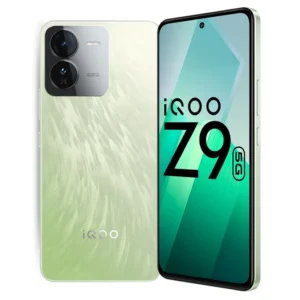
    1. iQOO Z9 5G (~₹19,999)

    The iQOO Z9 5G stands out as the best all-rounder in this price range, excelling in performance and gaming.

    Key Specifications:

    • Processor: MediaTek Dimensity 7200
    • Display: 6.67-inch AMOLED, 120Hz, 1800 nits
    • Camera: 50MP Sony IMX882 (OIS) + 2MP depth, 16MP front
    • Battery: 5,000mAh with 44W fast charging
    • OS: Android 15, 2 years of OS updates

    Why It’s Great:

    The Dimensity 7200 chipset delivers smooth multitasking and gaming, handling titles like BGMI at 60fps with ease. The vibrant AMOLED display with a 120Hz refresh rate ensures fluid visuals, while the 50MP camera with OIS captures sharp daylight shots. Its premium build and reliable battery life make it a top pick for power users.

    Pros:

    • Powerful chipset for gaming and multitasking
    • Smooth, bright AMOLED display
    • Decent camera with OIS for stable shots

    Cons:

    • Some pre-installed bloatware
    • Average low-light camera performance

    Best For:

    Gamers and multitasking users looking for a reliable, high-performance device.

    Top 5 Best Smartphones Under ₹20000 in India 
    Top 5 Best Smartphones Under ₹20000 in India

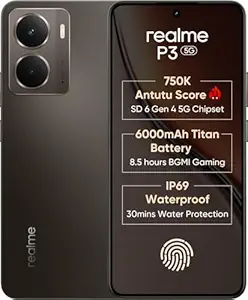
    2. Realme P3 5G (~₹18,999)

    The Realme P3 5G shines with its exceptional camera and massive battery, paired with a durable design.

    Key Specifications:

    • Processor: Snapdragon 6 Gen 4
    • Display: 6.67-inch AMOLED, 120Hz, 2000 nits
    • Camera: 50MP primary + 2MP secondary, 16MP front
    • Battery: 6,000mAh with 45W fast charging
    • OS: Android 15 with Realme UI 6.0

    Why It’s Great:

    The Realme P3 offers a standout 50MP camera with AI enhancements, delivering vibrant and detailed photos in daylight. Its 6,000mAh battery lasts up to two days, and the IP69 rating ensures top-notch water and dust resistance. The bright AMOLED display enhances streaming and browsing experiences.

    Pros:

    • Excellent daylight photography
    • Long-lasting battery
    • Durable build with IP69 rating

    Cons:

    • Bloatware-heavy software
    • No ultra-wide camera

    Best For:

    Photography enthusiasts and users prioritizing battery life and durability.

    Realme P3 5G
    Top 5 Best Smartphones Under ₹20000 in India

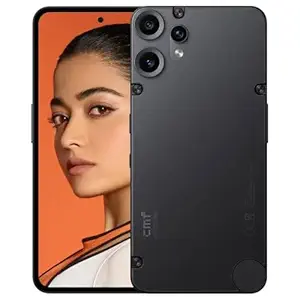
    3. CMF Phone 2 Pro (~₹19,999)

    The CMF Phone 2 Pro brings a unique triple camera setup and a clean software experience to the table.

    Key Specifications:

    • Processor: MediaTek Dimensity 7300 Pro
    • Display: 6.7-inch AMOLED, 120Hz
    • Camera: 50MP primary + 50MP telephoto + ultrawide, 16MP front
    • Battery: 5,000mAh with 33W fast charging
    • OS: Android 15, 2 years of OS updates

    Why It’s Great:

    This phone’s unique telephoto lens with 2x optical zoom makes it perfect for capturing detailed portraits and close-up shots. The clean, bloatware-free software ensures a smooth user experience, and the customizable design adds a personal touch. The AMOLED display delivers vibrant colors for media consumption.

    Pros:

    • Versatile triple camera setup
    • Clean, bloatware-free software
    • Customizable design

    Cons:

    • Incremental upgrade over predecessor
    • Average battery life

    Best For:

    Ideal for users seeking versatile camera capabilities and a smooth, clutter-free software experience.

    Top 5 Best Smartphones Under ₹20000 in India
    Top 5 Best Smartphones Under ₹20000 in India

    4. Poco X7 5G (~₹19,999)

    The Poco X7 5G is a multimedia powerhouse with the brightest display in its class.

    Key Specifications:

    • Processor: MediaTek Dimensity 7300 Ultra
    • Display: 6.67-inch AMOLED curved, 120Hz, 3000 nits, Gorilla Glass Victus 2
    • Camera: 50MP primary + 8MP ultrawide + 2MP macro, 20MP front
    • Battery: 5,110mAh with 45W fast charging
    • OS: Android 15

    Why It’s Great:

    The Poco X7’s curved AMOLED display with 3000 nits brightness is perfect for outdoor use and immersive streaming. The Dimensity 7300 Ultra chipset ensures smooth gaming with a 2560Hz touch sampling rate. Its durable Gorilla Glass Victus 2 build adds premium appeal.

    Pros:

    • Brightest display in the segment
    • Smooth gaming performance
    • Durable build quality

    Cons:

    • Average low-light camera
    • Bloatware-heavy software

    Best For:

    Multimedia lovers and gamers seeking a vibrant, durable display.

    Top 5 Best Smartphones Under ₹20000 in India
    Top 5 Best Smartphones Under ₹20000 in India
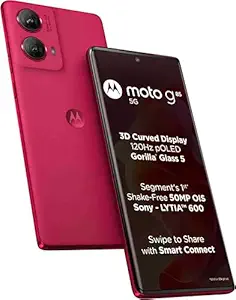
    1. Moto G85 5G (~₹17,999)

    The Moto G85 5G delivers a sleek premium design and well-balanced performance at a budget-friendly price.

    Key Specifications:

    • Processor: Snapdragon 6s Gen 3
    • Display: 6.67-inch curved AMOLED, 120Hz
    • Camera: 50MP primary (OIS) + 8MP ultrawide, 32MP front
    • Battery: 5,000mAh with 33W fast charging
    • OS: Android 14

    Why It’s Great:

    The Moto G85 features a sleek curved AMOLED display, rare in this segment, offering immersive visuals. Its 50MP camera with OIS delivers reliable photography, and the near-stock Android experience ensures smooth performance. The 5,000mAh battery provides all-day power.

    Pros:

    • Premium curved display
    • Reliable camera with OIS
    • Clean software experience

    Cons:

    • Slightly underpowered processor
    • Some bloatware present

    Best For:

    Top 5 Best Smartphones Under ₹20000 Perfect for users looking for a stylish premium design and smooth, balanced performance without overspending.

    Top 5 Best Smartphones Under ₹20000 in India
    Top 5 Best Smartphones Under ₹20000 in India

    How to Choose the Right Smartphone

    Top 5 Best Smartphones Under ₹20000 With so many options, picking the right phone depends on your priorities:

    • For Gaming: iQOO Z9 5G offers the best performance with its Dimensity 7200 chipset.
    • For Photography: Realme P3 5G excels in daylight shots, while CMF Phone 2 Pro offers versatile lenses.
    • For Display and Multimedia: Poco X7 5G’s ultra-bright AMOLED is unbeatable.
    • For Design and Balance: Moto G85 5G delivers a premium look and feel.
    • For Battery Life: Realme P3’s 6,000mAh battery is a standout.

    Also Read This :  Top 5 Best Smartphones Under ₹15,000 in India 2025 | Best Picks for Gaming, Camera & Battery

    Top 5 Best Smartphones Under ₹20000 in India for 2025 is packed with feature-rich devices that rival higher-end models. From the gaming-focused iQOO Z9 to the photography-centric Realme P3 and the premium Moto G85, there’s something for every user. Evaluate your needs—be it gaming, photography, or multimedia—and choose a device that fits your lifestyle. These smartphones prove that you don’t need to break the bank for cutting-edge technology.