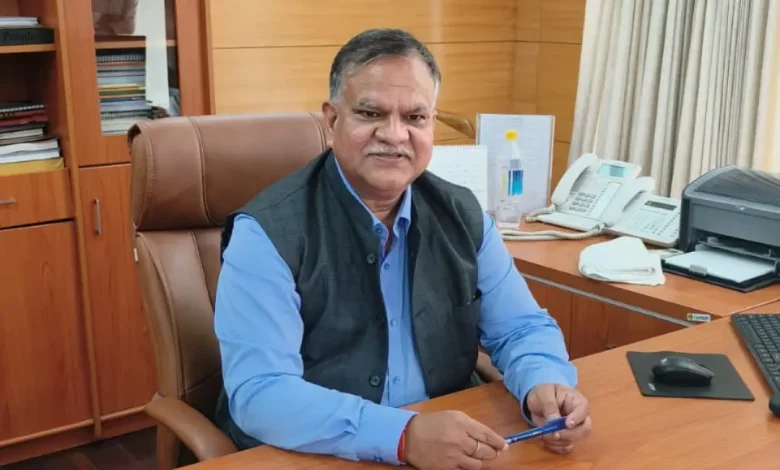
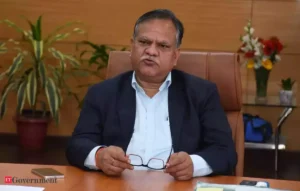
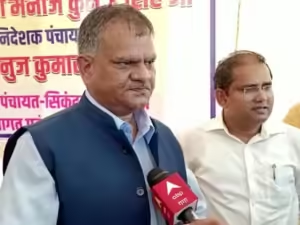
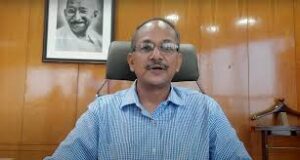
Manoj Kumar Singh: Manoj Kumar Singh is an Indian Administrative Service (IAS) officer from the 1988 batch belonging to the Uttar Pradesh cadre. He is currently serving as the Chief Secretary of Uttar Pradesh, since June 30, 2024. He succeeded Durga Shankar Mishra. He also holds the charge of Infrastructure and Industrial Development Commissioner (IIDC). He is also the Chairman of PICUP (Pradhesiya Industrial & Investment Corporation of U.P. Ltd.), and Chairman of Noida and Greater Noida Authority. Apart from this he is the Chief Executive Officer (CEO) of the Uttar Pradesh Expressways Industrial Development Authority.
Details on Who is Manoj Kumar Singh?
Details on his early life and education.
He was born on July 25, 1965 in Ranchi, Jharkhand. He has done Bachelor of Science in Agriculture and M.Sc. Agriculture in Agronomy.
Details on his early life and education.
What is Manoj Kumar Singh started?
Manoj is from 1988 batch and he joined government services as a IAS on August 31, 1990. His first post was as a Joint Magistrate in Manipur. He is currently on the post of Chief Secretary in Lucknow.
What is Manoj Kumar Singh started?
Details on the post he held till now.
He has been on the post of Joint Magistrate of Manipur, Gonda, and Aligarh; Chief Development Officer Jhansi Mandal; joint Secretary to Government UP, Industrial Development Department; Magistrate and Collector; Director in the Department of Heavy Industry; Divisional Commissioner; CEO of Greater Noida and more.
Details on the post he held till now.
Manoj Kumar Singh role in the current job.
Manoj Kumar Singh role in the current job:
He is in the top administrative position in the state (Uttar Pradesh).
He continues to hold this important charge, focusing on the state’s industrial and infrastructure growth.
He is in key role of urban and industrial hubs in Uttar Pradesh, and he heads their development authorities.
Manoj Kumar Singh role in the current job.
His corporation plays a crucial role in promoting industrial development and investments in Uttar Pradesh.
His authority is responsible for the planning, development, and maintenance of expressways and related industrial corridors in the state.
What are his achievements and records?
Manoj Kumar Singh achievements and records:
He was Chief Secretary of Uttar Pradesh, Appointed to the top administrative post in June 2024.
He is COVID-19 Crisis Management and played a pivotal role in managing the COVID-19 pandemic in Uttar Pradesh, particularly in rural areas, earning widespread recognition for his efforts in controlling its spread.
As Additional Chief Secretary of Panchayati Raj, he spearheaded Uttar Pradesh’s sanitation efforts, making all 75 districts open defecation-free and overseeing the construction of the highest number of toilets in India.
What are his achievements and records?
He played a key role in the Global Investors Summit, which attracted substantial investments (₹40 lakh crore), and later orchestrated the Ground Breaking Ceremony-4 (GBC-4) to launch projects worth ₹10 lakh crore, demonstrating his ability to facilitate industrial growth.
His leadership as head of the Uttar Pradesh Development Authority (UPDA), Chairman of the Uttar Pradesh State Highways Authority (UPSHA), and Pradeshiya Industrial & Investment Corporation (PICUP) has been pivotal in driving infrastructure development across Uttar Pradesh. He also currently heads the Uttar Pradesh Expressways Industrial Development Authority (UPEIDA), crucial for the state’s connectivity and industrial corridors.
He championed initiatives for women’s self-help groups and child development programs, including the ‘Take Home Ration’ initiative.
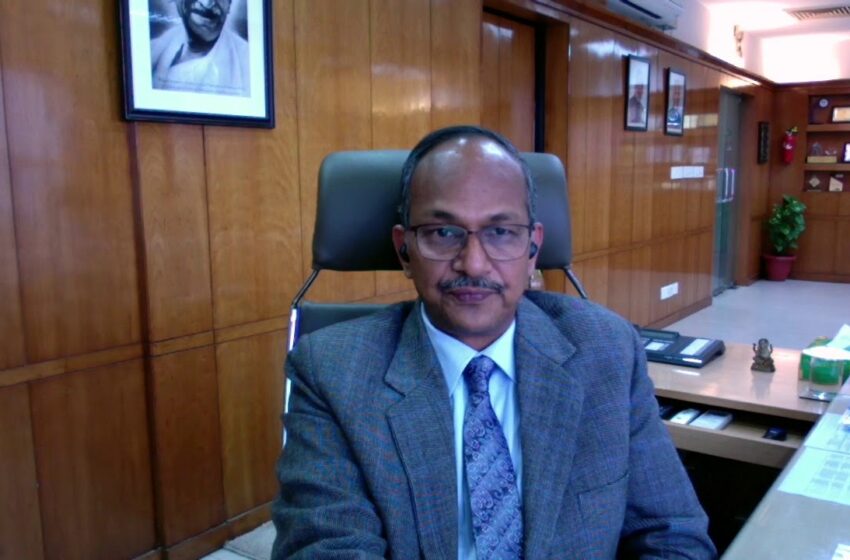
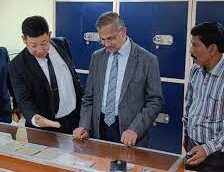
Arun Singhal: Arun Singhal is an IAS officer from 1987 batch. He has held various significant positions in the Indian government and Is Currently serving as the Director General of the National Archives of India (New Delhi) as of March 2025.
Who is Arun Singhal?
Details on his early life and education.
He was born on April 15, 1965 in Ghaziabad ,district of Uttar Pradesh. He did his education in Electrical Engineering ( B.Tech and M.Tech).
Details on his early life and education.
When did he join government services and when did he was appointed as IAS?
Arun was in 1987 IAS batch and he joined government services as a IAS on August 24, 1987. His first post was as a assistant magistrate in Gorakhpur. He is currently on the post of Director General National Archives of India in New Delhi.
When did he join government services and when did he was appointed as IAS?
Details on the post he held till now.
In past he was also appointed in the post of Assistant Magistrate, executive magistrate, Joint secretary to the Government of India, Additional Commissioner, Technical Education department, Chief Election Officer (UP), Principal Secretary To Government Of UP and Secretary, Health, Medical and Family Welfare department. He is currently Director General National Archives of India.
Details on the post he held till now.
His role as Director General of the National Archives of India.
As, Director General of the National Archives of India (NAI), Arun holds a significant and multifaceted role focused on the management, preservation, and accessibility of India’s documentary heritage. His responsibilities are guided by the Public Records Act, 1993 and the Public Records Rules, 1997.
Some of Arun Singhal role as Director General of the National Archives are:
He is a Custodian of National Records, in which he Overseeing the preservation of public records of enduring value belonging to the Government of India.
He does Implementation of the Public Records Act in which he ensures the effective implementation of the Public Records Act, 1993 and its rules. This includes, supervising the management and control of the Archives, accepting the deposit of permanent public records after a prescribed period, managing the custody, use and withdrawal of public records and ensuring the proper arrangement, preservation, and exhibition of these records.
He also enhancing Records Management Practices like analyzing, developing, promoting, and coordinating standards, procedures, and techniques for improving records management systems across Central Government ministries, departments, and public sector undertakings. He is also advising record-creating agencies on the compilation, classification, and disposal of records.
He does Preservation and Conservation like ensuring the maintenance, arrangement, and security of public records both within the Archives and in the originating agencies. He is also promoting the utilization of available space and the maintenance of equipment for preserving public records.
His role as Director General of the National Archives of India.
He is facilitating Access and research like preparing inventories, indices, catalogues, and other reference tools to make records accessible. He is regulating access to public records for researchers and other users. He is providing authenticated copies of or extracts from public records.
He is Capacity Building and Awareness like Organizing training programs in various disciplines of archives administration and records management. He is Promoting archival awareness among the general public through exhibitions and outreach activities. The NAI also houses the Museum of National Archives for this purpose.
He is collaborating and coordinating by acting as the Secretariat for the Indian Historical Records Committee (IHRC) and the National Committee of Archivists (NCA), providing guidance on archival matters nationwide, fostering relationships between archivists and archival institutions at national and international levels and coordinating with various ministries and organizations on matters related to records and archives.
He is Accepting Private Collections by having the authority to accept records from private sources that hold historical or national importance.
He is managing Disposal of Records by Overseeing the process of destroying or disposing of public records according to established rules and regulations.
He does emergency Preparedness by making arrangements for securing public records in the event of a national emergency.
What are his achievements?
Some of Arun Singhal achievements are:
He proactively worked towards Drugs & Food Regulation.
He was involved in the implementation of the Pradhan Mantri Swasthya Suraksha Yojana (PMSSY), which includes setting up new AIIMS.
He contributed to reforms in medical education.
He was providing COVID-19 training to food business operators through the FOSTAC program, training and certifying over two lakh food handlers.
He is improving online services for licensing, registration, food imports, and the laboratory network.
He launched the ‘Eat Smart Cities Challenge’ to encourage healthy and sustainable food environments in smart cities.
What are his achievements?
He inaugurated an exhibition on ‘Indian Heritage Through Architecture’ showcasing the evolution of architecture in India.
He has emphasized the historical ties between India and other nations, such as Oman, and has offered NAI’s technical assistance in the conservation and digitization of their archival wealth.
He has interacted with staff at various Record Centers of the NAI, focusing on conservation projects and the implementation of the Public Records Act and Rules.
He was empaneled as Secretary in the Government of India in June 2022.
He has a “rich and varied experience of administrative work in diverse areas including Petroleum and Natural Gas, Industrial Development, Rural Development, Agriculture Marketing and Health & Family Welfare.
State Bank of India (SBI) will soon declare the SBI PO Prelims result 2025. The examination was conducted on March 8, 16, and 24, 2025. The link to download the SBI PO Prelims result will be activated on the official website. However, we will also provide a direct link to check the SBI PO Prelims result on this page. Along with the result, the SBI PO Prelims cut-off and scorecard will also be released. Candidates can download the SBI PO Prelims Result 2025 by logging in with their registration number or roll number and date of birth (DOB) or password. Based on this result, candidates will be selected for the Mains Exam.
SBI PO Mains Admit Card 2025 will be issued after the result is announced. The date of the Mains Exam will be notified by the examination authority.
How to Check SBI PO Prelims Result 2025?
Follow the steps below to check the SBI PO Prelims Result 2025:
On the homepage, click on the ‘SBI PO Prelims Result 2025’ link.
Enter the required details (Registration Number/Roll Number and DOB/Password).
The SBI PO Prelims Result 2025 will appear on the screen.
Download it and save it for future reference.
What is the In-Hand Salary of an SBI PO?
The in-hand salary of an SBI PO ranges from approximately ₹52,000 to ₹55,000 per month. The basic pay is ₹41,960. The total annual package can range from ₹8.20 lakh (minimum) to ₹13.08 lakh (maximum). In addition, SBI POs receive benefits such as lease rental/HRA, DA, medical, CCA, and other allowances.
The India: India is the seventh-largest country in the world. It is a land of vibrant cultures, rich history, and breathtaking landscapes. It is known as the birthplace of ancient civilizations and more. It is a country where tradition and modernity coexist harmoniously. It has snow-capped Himalayas in the north to the serene beaches in the south, every corner of it has something unique to offer.
It is home to more than 1.4 billion people, speaking over 1,600 languages and dialects. The country celebrates a variety of festivals, including Diwali, Holi, Eid, Christmas, Navratri, and Pongal, each showcasing the diversity of its people. There is also influence of different religions, including Hinduism, Islam, Sikhism, Buddhism, and Christianity.
The India
These has shaped Indian traditions and way of life. It is more than just a country, it is an unique experience for all whether you are a history buff, a foodie, a traveler, or a tech enthusiast. It has something for everyone, with its rich traditions, rapid modernization, and warm hospitality, India continues to inspire and captivate people from all around the world.
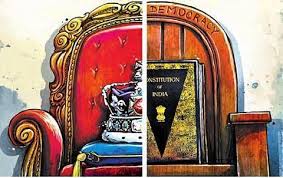
How did the India went from King rules to Democracy?
The country’s monarchy-based rule to a democratic republic was a long and complex journey, influenced by various historical events, foreign invasions, and independence movements.
This includes the following:
Ancient & Medieval India (Before 1757), which is The Era of Kings and Empires this includes-
From 1500 BCE – 600 BCE: Early Vedic Period.
From 600 BCE – 321 BCE: Rise of powerful Mahajan padas and some were monarchies like Magadha, Kosala.
From 200 BCE – 1200 CE: dynasties ruled different regions by– Guptas, Cholas, Rashtrakutas, Rajput’s, etc.
From 1206 – 1526: Delhi Sultanate – Various Turkic and Afghan rulers governed North India.
From 1526 – 1857: Mughal Empire – A mix of monarchy and administrative governance with regional autonomy in some places.
King rules to Democracy
The Colonial Rule (1757 – 1947) – British Takeover and the Freedom Struggle
In 1757, British East India Company won the Battle of Plassey, marking the start of colonial rule.
In 1857: The First War of Independence (Revolt of 1857) was crushed; British Crown took direct control, ending Mughal rule.
In 1885, Indian National Congress (INC) was formed to demand self-governance.
In 1905, Partition of Bengal led to protests and rise of revolutionary movements.
In 1919, Jallianwala Bagh Massacre increased demand for complete independence.
In 1930, Mahatma Gandhi led the Salt March, symbolizing civil disobedience.
In 1942, Quit India Movement called for an end to British rule.
In 1947, India gained independence on August 15, marking the end of British rule.
Then came the Formation of Democracy (1947 – 1950) and the Birth of the Republic India.
Modem democracy (1991-till now).
Details on the India area and boundaries and other information.
The country Area has a Total Area 3.287 million square kilometers and The country also has a coastline of approximately 7,500 kilometers. It is the 7th largest country in the world by area. Apart from this it shares borders with 7 countries which includes: Pakistan, China, Nepal, Bhutan, Bangladesh, Myanmar and Sri Lanka. It has a vast area, diverse states, and neighboring countries, plays a pivotal role in regional and global affairs. Its strategic borders and its rich cultural heritage contribute to its significance on the world stage.
India’s area and boundaries
It has around 28 states and 8 union territories. The List of States includes: Andhra Pradesh, Arunachal Pradesh, Assam, Bihar, Chhattisgarh, Goa, Gujarat, Haryana, Himachal Pradesh, Jharkhand, Karnataka, Kerala, Madhya Pradesh, Maharashtra, Manipur, Meghalaya, Mizoram, Nagaland, Odisha, Punjab, Rajasthan, Sikkim, Tamil Nadu, Telangana, Tripura, Uttar Pradesh, Uttarakhand, and West Bengal. Whereas, The List of Union Territories includes: Andaman and Nicobar Islands, Chandigarh, Dadra and Nagar Haveli and Daman and Diu, Lakshadweep, Delhi, Puducherry, Jammu and Kashmir, and Ladakh
Why is it a diverse country and details on the cultural and heritage of India.
It is considered one of the most diverse countries in the world due to its vast geographical, cultural, linguistic, religious, and historical variations. It has 22 official languages and over 1,600 dialects spoken across the country. Whereas some states have their own dominant language also. Apart from this English is widely spoken, especially in education and business.
the cultural and heritage of The India
India’s landscape varies drastically from snow-capped mountains to vast deserts, dense forests, fertile plains, and tropical beaches. It has Himalayas in North, Thar Desert in West, Indo-Gangetic Plains in North and Central, Western and Eastern Ghats in South and fauna. It also has Coastline and Islands ( it has Long coastline with Andaman & Nicobar and Lakshadweep islands).
It has a 5,000-year-old civilization influenced by various dynasties, empires, and colonial powers. Its cultural diversity is reflected in its Traditional Clothing like Sarees, dhotis, lungis, lehengas, and western attire; it celebrate various Festivals like Diwali, Eid, Christmas, Gurpurab, Navroz, Bihu, Pongal, Durga Puja (Bengali) and more. It also has various Art and Music form like Bharatanatyam, Kathak, Odissi, and folk traditions like Bhangra and Garba.
What are the famous cuisine of the India?
In India every region in India has its own unique food culture these include:
The North Indian Cuisine, which is famous for Butter chicken, naan, chole bhature, biryani.
The South Indian Cuisine, which includes Dosa, idli, sambar, coconut-based curries.
The East Indian Cuisine, which has food like Fish curry, rasgulla, momos.
The West Indian Cuisine, which has Dhokla, pav bhaji, Goan seafood.
There are more cuisines depending on the religion and state.
famous cuisine
Details on the economic and technology of the India.
The India is one of the fastest-growing economies. Which is ranking at 5th globally with a $3.7 trillion GDP. The economy thrives on agriculture, manufacturing, and services, with IT, pharmaceuticals, and fintech playing a major role. The Government initiatives like Make in India, Digital India, and Startup India are boosting it’s growth.
the economic and technology of The India
Whereas in technology, it leads in IT services and has achieved major space milestones, including Chandrayaan-3 and Mangalyaan. The country is rapidly advancing in AI, robotics, fintech, and electric vehicles, with a growing focus on renewable energy. It has a strong digital infrastructure and innovation. It is set to become a global tech and economic powerhouse in future.
The Tourism in India.
It is the major travel destinations of the world. Which is known for its rich history, diverse landscapes, cultural heritage, and spiritual sites. The tourism sector contributes nearly 10% to India’s GDP and attracts millions of visitors every year. It has 40 UNESCO World Heritage Sites and the Taj Mahal, which is one of the Seven Wonders of the World.
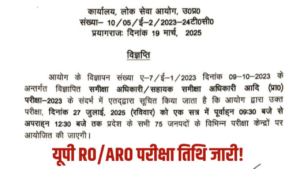
UPPSC RO ARO Exam Date in English: The Uttar Pradesh Public Service Commission (UPPSC) has announced the exam date for the Review Officer (RO) and Assistant Review Officer (ARO) Examination 2023.
Candidates who have been waiting for this exam should note that the commission has officially released a notice stating that the exam will be conducted on July 27, 2025 (Sunday), from 9:30 AM to 12:30 PM in a single session.
Exam to be Held in All 75 Districts of Uttar Pradesh
UPPSC RO ARO Exam Date
According to the notice, the exam will be conducted at various examination centers located in all 75 districts of Uttar Pradesh. The RO/ARO Exam 2023 is being organized for candidates who had applied under Advertisement No. A-7/E-1/2023, which was released on October 9, 2023. Through this examination, candidates will be selected for the posts of Review Officer (RO) and Assistant Review Officer (ARO). Candidates can visit the official UPPSC website to get all the important updates related to this exam.
UPPSC RO ARO Exam Date
Admit Cards for UPPSC RO ARO Exam to be Released Soon
With the UPPSC RO ARO Exam Date now announced, the admit cards for the candidates preparing for the exam will be released soon. Candidates will be able to download their admit cards from the official website of UPPSC (uppsc.up.nic.in).
All candidates are advised to regularly check the website for updates to ensure they do not miss any important information. Admit cards are mandatory for entry into the exam center, so candidates should download them on time.
It is recommended that candidates reach the exam center at least one hour before the exam time to avoid any last-minute issues.
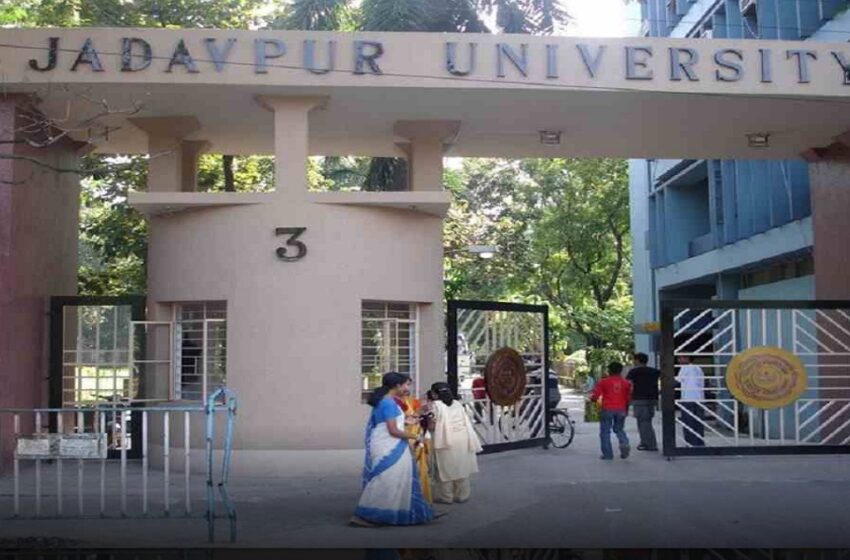
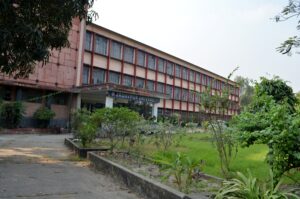
Jadavpur University, situated in the bustling neighborhood of Jadavpur in Kolkata, West Bengal, stands as one of India’s most prestigious and renowned educational institutions.
Its rich history dates back to its founding on July 25, 1906, when it was initially established as the Bengal Technical Institute, a modest institution aimed at advancing technical education in the region. Over the decades, it underwent a significant transformation, culminating in its official conversion into Jadavpur University on December 24, 1955. This evolution reflects its growing stature and its pivotal role in shaping higher education in India.
Recent Controversy
On March 10, 2025, Jadavpur University found itself thrust into the national spotlight due to a highly charged controversy. Provocative graffiti, boldly displaying slogans such as “Azad Kashmir” and “Free Palestine,” was discovered splashed across the university’s walls. This incident ignited a firestorm of reactions, sparking heated debates, impassioned protests, and widespread discussions among students, faculty, and the broader public. The event not only highlighted the university’s longstanding tradition of political activism but also drew intense media scrutiny, with news outlets across India covering the unfolding drama. The controversy underscored the institution’s complex role as both an academic powerhouse and a hotbed of socio-political expression.
NIRF Rankings 2024
Jadavpur University’s academic excellence has been consistently recognized on a national level, as evidenced by its impressive performance in the 2024 National Institutional Ranking Framework (NIRF). This authoritative ranking system placed the university in several commendable positions:
It secured the 9th rank among all universities in India, affirming its leadership in higher education.
In the category of engineering institutions, it achieved the 12th position, reflecting its strong technical programs.
In the overall ranking, encompassing diverse institutions across the country, it earned the 17th spot, a testament to its multidisciplinary prowess.
Jadavpur University
Nature Index & Research Recognition
Beyond national rankings, Jadavpur University has garnered international acclaim for its exceptional contributions to research. According to the prestigious Nature Index for the period of 2023-2024:
It proudly holds the 1st position among Indian universities, highlighting its dominance in cutting-edge research.
Across all Indian institutions, it ranks 22nd for its overall research output, a remarkable feat that underscores its influence in the global academic community. This recognition speaks volumes about the university’s commitment to fostering innovation and advancing knowledge.
UGC & NAAC Accreditation
Jadavpur University’s excellence extends to its official accreditations and endorsements. The University Grants Commission (UGC), India’s apex body for higher education, has designated it as an Institution with Potential for Excellence, a prestigious honor reserved for institutions demonstrating extraordinary capabilities. Furthermore, the National Assessment and Accreditation Council (NAAC), which evaluates institutional quality, has awarded Jadavpur University an “A+” grade. This glowing accreditation reinforces its standing as one of India’s elite academic establishments, celebrated for both its educational standards and its robust infrastructure.
Jadavpur University remains a towering pillar of education and research in India, seamlessly blending a legacy of academic brilliance with a dynamic culture of intellectual discourse. Its national and international accolades—including top-tier rankings, research distinctions, and official recognitions—highlight its unwavering dedication to excellence. Yet, it is equally defined by its vibrant student community, which continues to engage in activism and socio-political debates, as seen in the recent controversy of March 2025. This duality ensures that Jadavpur University not only excels as a center of learning but also thrives as a crucible for ideas, making it a truly iconic institution in the Indian educational landscape.
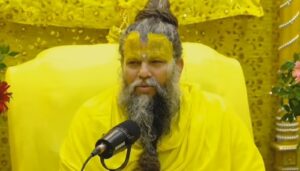
Swami Kailash Anand Giri: He is a revered Hindu saint and spiritual leader known for his deep knowledge of Sanatan Dharma, Vedic scriptures, and ascetic life. He is associated with the Juna Akhara, one of the largest and most prominent Akharas in India, which plays a significant role in Hindu monastic traditions. He is also known for guiding devotees on the path of dharma, devotion, and self-realization.
who is Swami Kailash Anand Giri?
When and where was he born?
He was born in 1976 and according to sources he was born in Bihar, Jharkhand.
How did he came towards spirituality?
His path to spirituality began at a young age, and his early detachment from material pursuits was a significant factor in his spiritual development. He is reported to have renounced his home and worldly life at a young age. He became deeply engrossed in devotion to God, following a path that involved intense penance, a common practice for those seeking spiritual enlightenment.
How did he came towards spirituality?
He served as an Acharya and Mahamandaleshwar of the Niranjani Akhara. He is known for his dedication to spiritual practices, such as the Rudrabhishek of Lord Shiva. His journey is characterized by early renunciation, deep devotion, and rigorous spiritual discipline.
Details on Swami Kailash Anand Giri teachings and philosophy?
Swami kailash Anand Giri teachings and philosophy are as follows:
The Path of Renunciation and Spiritual Discipline.
The Devotion to Lord Shiva and Rudrabhishek.
The Vedic Knowledge and Sanatan Dharma.
The knowledge about Yoga, Meditation, and Self-Realization.
The Role in Niranjani Akhara and Kumbh Mela.
The Service to Humanity and Social Welfare.
Details on Swami Kailash Anand Giri teachings and philosophy?
What are his contribution towards the society?
Some of his contribution towards the society are as follows:
The Promotion of Sanatan Dharma and Vedic Wisdom.
The Role in Kumbh Mela and Religious Leadership.
The Social Welfare and Charitable Activities.
By encouraging Yoga, Meditation, and Mental Well being.
The Environmental and Cultural Preservation.
By Inspiring the Youth Towards Spirituality.
What are his contribution towards the society?
His impact on society and devotees?
His impact on society and devotees are as follows:
By reviving and Strengthening the Sanatan Dharma.
By transforming the Lives of Devotees.
By doing leadership in Kumbh Mela and Niranjani Akhara.
By Social and Humanitarian Contributions.
By promoting Yoga, Meditation, and Holistic Well-being.
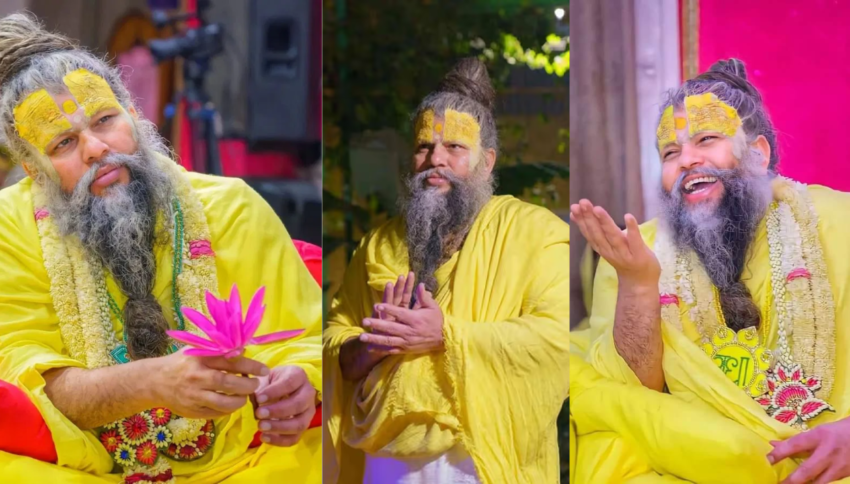
Premanand Maharaj: He is an Hindu saint, spiritual leader, and preacher known for his deep devotion, wisdom, and contributions to Sanatan Dharma. He dedicated his life to spreading bhakti (devotion), selfless service, and the teachings of Hindu scriptures.
details on Premanand Maharaj?
He had always emphasized pure love and devotion toward God as the ultimate path to spiritual enlightenment. He delivered profound spiritual teachings, guiding people on the path of righteousness, self-discipline, and devotion.
When and where was he born?
He was born in 1969 and was born in Kanpur, UP.
How did Premanand Maharaj came towards spirituality?
His journey toward spirituality began at a young age, driven by an innate longing for divine connection and self-realization. His path was shaped by deep devotion, a disciplined spiritual practice, and a desire to serve humanity through the teachings of Sanatan Dharma.
How did Premanand Maharaj came towards spirituality?
He was deeply moved by bhajans, kirtans, and religious discourses, which inspired him to seek a higher purpose. His early detachment from material desires indicated his path toward renunciation and divine love. The teachings of selfless love, devotion, and surrender to God became the foundation of his spiritual journey.
What are his teachings and philosophy?
Premanand Maharaj’s teachings and philosophy are as follows:
Reet Exam 2025: The Reet Exam also known as Rajasthan eligibility examination for teachers is an exam created at state level exam which is conducted by Rajasthan staff selection Board (RSSB) determine the eligibility of the candidates for teaching position in government school of Rajasthan.
what is Reet Exam 2025?
This exam specially decides the teachers from class 1st to 8th standard. That exam is divided into two levels, the first level decides the Teachers for class 1st to 5th and the second level decides the teachers from class 6th to 8th.
What is the criteria to be in Reet Exam 2025?
Some of the criteria to be in the Reet Exam 2025 are as follow: –
1. The Nationality limit.
2. Age limit.
3. Education qualification.
4. There is no limit of attempts.
5. Candidate should apply for teacher recruitment.
The importance of the exam.
The Rajasthan Eligibility Examination for Teachers (REET) is a crucial exam for aspiring teachers in Rajasthan government schools. It serves as a mandatory qualification for those who wish to teach students from Classes 1 to 8 in state-run schools.
The importance of the exam.
Some of its importance are as following:-
1. It is mandatory for Teaching Jobs in Rajasthan.
2. It can provide us with Lifetime Certification.
3. It ensures Quality Education.
4. It gives Skilled Teachers.
5. It gives government Job Benefits.
6. It gives opportunity for Career Growth.
7. It gives recognition Across Rajasthan.
8. It is a motivation for Aspiring Teachers.
How to get your Admit card?
1. Visit the Official Website of the Rajasthan Staff Selection Board (RSSB) official website.
2. Look for the “REET Admit Card 2025” link under the Latest Announcements section.
3. Enter Your Details like name, date of birth and other details.
4. Then submit your application.
5. After submitting the details, your REET admit card will appear on the screen.
6. Download your Admit card.
Details of the Reet Exam 2025 syllabus.
The REET syllabus is divided into two levels. Level 1 (Classes 1-5) includes Child Development & Pedagogy, Language I & II, Mathematics, and Environmental Studies, focusing on basic concepts and teaching methodologies.
Level 2 (Classes 6-8) covers Child Development & Pedagogy, Language I & II, Mathematics & Science (for Science teachers), and Social Studies (for Social Studies teachers), emphasizing subject expertise and teaching strategies.
Details of the Reet Exam 2025 syllabus.
Important dates of the exam.
Some of the important dates of the exam are: –
Notification Release: Expected in the first quarter of the year
Online Application Start Date: Usually within a month of the notification
Last Date to Apply: Around 3–4 weeks after applications open
Admit Card Release: About 1–2 weeks before the exam
Exam Date: Generally held mid-year (April–July)
Result Declaration: Within 1–2 months after the exam
DRDO internship 2025: The DRDO Internship is a program offered by the Defense Research and Development Organization (DRDO) that provides students and early professionals with hands-on experience in cutting-edge defense and aerospace projects. Interns work alongside experienced scientists and engineers on real-world challenges in fields such as electronics, mechanical engineering, aerospace, and computer science.
This opportunity not only enhances technical skills but also offers insight into national defense research and innovation, making it a valuable stepping stone for a career in defense technology and research.
What is the Importance of DRDO Internship 2025?
Some of the importance of the DRDO Internship 2025 are as follows:
Real-World Projects: Interns work on real defense and research projects, gaining practical knowledge.
Exposure to Advanced Technology: Learn about cutting-edge fields like AI, cybersecurity, missile technology, and aerospace engineering.
Guidance from Experts: Work under top scientists and engineers in India’s premier defense research organization.
Boost in Career Opportunities: Enhance your career prospects with DRDO experience.
What is the Importance of DRDO Internship 2025?
Opportunities for Innovation: Encourages problem-solving, innovation, and research contributions in national security projects.
Networking and Collaboration: Connect with like-minded professionals, researchers, and scientists, building strong career networks.
Certificate and Recognition: Interns receive a certificate from DRDO, adding value to their academic and professional profiles.
Contributing to National Security: Being part of India’s defense research efforts gives interns a sense of pride and responsibility.
Details on the Eligibility Criteria for the Internship.
Some of the eligibility criteria for the internship are as follows: Eligible candidates include B.Tech, M.Tech, B.Sc, M.Sc, and Ph.D. students specializing in disciplines like Aerospace, Mechanical, Electrical, Electronics, Computer Science, Cybersecurity, and Biotechnology. Applicants must have a good academic record and a keen interest in defense research and innovation.
Details on the Eligibility Criteria for the Internship
Internships are usually available for final-year students or those in the pre-final year, depending on specific project requirements. Some DRDO labs may have additional criteria, such as a minimum GPA or a recommendation from the institute. Selection is competitive, and candidates may need to submit a resume, academic transcripts, and a statement of purpose (SOP).
When and Where to Apply for the Internship?
The DRDO Internship 2025 application process typically begins in the first quarter of the year (January–March), but specific deadlines vary by DRDO labs. Interested candidates can apply through the official DRDO website (www.drdo.gov.in) or directly contact DRDO laboratories and research centers related to their field.
When and Where to Apply for the Internship?
Applications usually require a resume, academic transcripts, and a No Objection Certificate (NOC) from the college. Since each DRDO lab has its own selection process, it’s best to check individual lab websites or contact them for specific details.
How Can We Apply for the DRDO Internship?
Visit the Official Website: Go to www.drdo.gov.in or choose a relevant DRDO lab.
Prepare Required Documents: Ensure you have an updated resume/CV, academic transcripts/marksheets, No Objection Certificate (NOC) from your college/university, and a letter of recommendation (if required).