Category: Education

  • AI is Transforming Indian Education : The Future of Learning and Critical Thinking

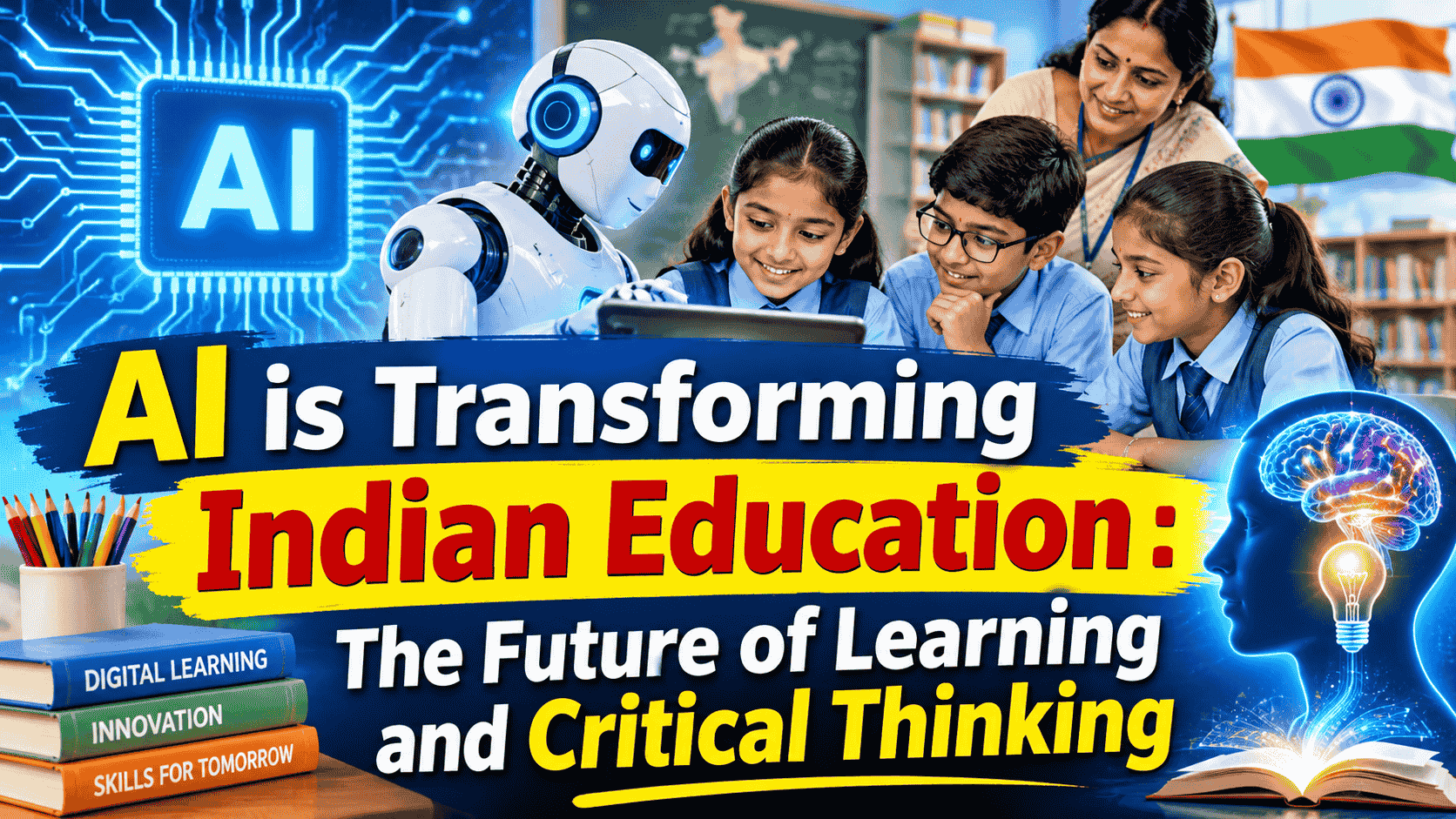
    AI is Transforming Indian Education : The Future of Learning and Critical Thinking

    AI is Transforming Indian Education by making learning faster and easier through tools that write essays, solve problems, and provide instant answers. While this improves access and support, it also risks reducing students’ critical thinking and independent learning.

    AI Is Changing the Way Students Learn

    AI Is Transforming Indian Education by providing instant essay writing, problem-solving, research assistance and access to information. These tools are making learning easier and faster, especially for students who need additional support. However, they also raise concerns about students bypassing important cognitive processes and reducing their ability to think independently.

    From Rote Learning to Inquiry-Based Education

    Universities and educational institutions must move away from traditional rote-learning methods towards inquiry-based learning. They should focus on developing critical thinking, creativity, problem-solving skills and independent judgement among students. The main objective of modern education should not simply be providing information but encouraging intellectual effort and effective learning.

    AI Is Changing Students’ Academic Work

    Today, students can use Artificial Intelligence to generate well-written essays and research papers, prepare for interviews, find answers to questions and solve coding problems within seconds. This raises an important question for universities: How should they maintain the quality of education when AI can perform many academic tasks so quickly?

    AI is Transforming Indian Education : The Future of Learning and Critical Thinking
    AI is Transforming Indian Education : The Future of Learning and Critical Thinking

    The Difference Between the Internet and Generative AI

    AI is Transforming Indian Education : Technology has already changed education through search engines, digital libraries and online learning platforms. For nearly two decades, students have been able to access information, lectures, videos, articles and solutions from anywhere and at any time. However, generative AI is fundamentally different. The Internet helps learners find information, whereas AI can generate answers, summaries, essays and debates in clear, human-like language. It does not simply provide information; it also helps organise and present knowledge.

    The Importance of Independent Thinking

    The biggest challenge is no longer access to information but the possibility of students avoiding the mental effort required for learning. Real and lasting learning takes place through active engagement, correcting mistakes, solving difficult problems and developing ideas independently. Students develop strong thinking skills when they struggle to find answers, deal with uncertainty, make mistakes and improve their understanding over time. When solutions are immediately available, students may miss these important learning experiences.

    Changes in Teaching and Assessment Methods

    AI is Transforming Indian Education : Across different campuses, students and teachers are already responding to these technological changes. Universities around the world are reconsidering their teaching methods and assessment systems. However, large parts of the Indian education system still depend on the traditional process of teachers sharing information, students learning the content and examinations testing their knowledge.

    AI is Transforming Indian Education : The Future of Learning and Critical Thinking
    AI is Transforming Indian Education : The Future of Learning and Critical Thinking

    Challenges Faced by Teachers and Universities

    Teachers from different disciplines are noticing changes in students’ assignments and written work. Many submissions are becoming more polished, well-structured and grammatically correct, but classroom discussions do not always demonstrate the same level of understanding. This shows that students may be using AI to improve their written assignments without developing a deeper understanding of the subject. As a result, assignments based mainly on collecting and presenting information are becoming less effective.

    Also Read This : CBSE Board Exam 2027 : CBSE date sheet for Class 10 and 12 examination is out

    Making Education More Practical and Problem-Based

    AI is Transforming Indian Education : Universities must redesign classroom activities and assessments to encourage students to participate in discussions, solve real-life problems, analyse situations and present their own ideas. Artificial Intelligence should be used as a supporting educational tool rather than a replacement for human thinking. The future of education depends on creating students who can use AI responsibly while maintaining their creativity, knowledge and independent judgement.

    Written By Prabhjyot Singh 


    View this post on Instagram
     

    A post shared by AVSPOST (@avspost)

  • CBSE Board Exam 2027 : CBSE date sheet for Class 10 and 12 examination is out

    CBSE Board Exam 2027 : CBSE date sheet for Class 10 and 12 examination is out

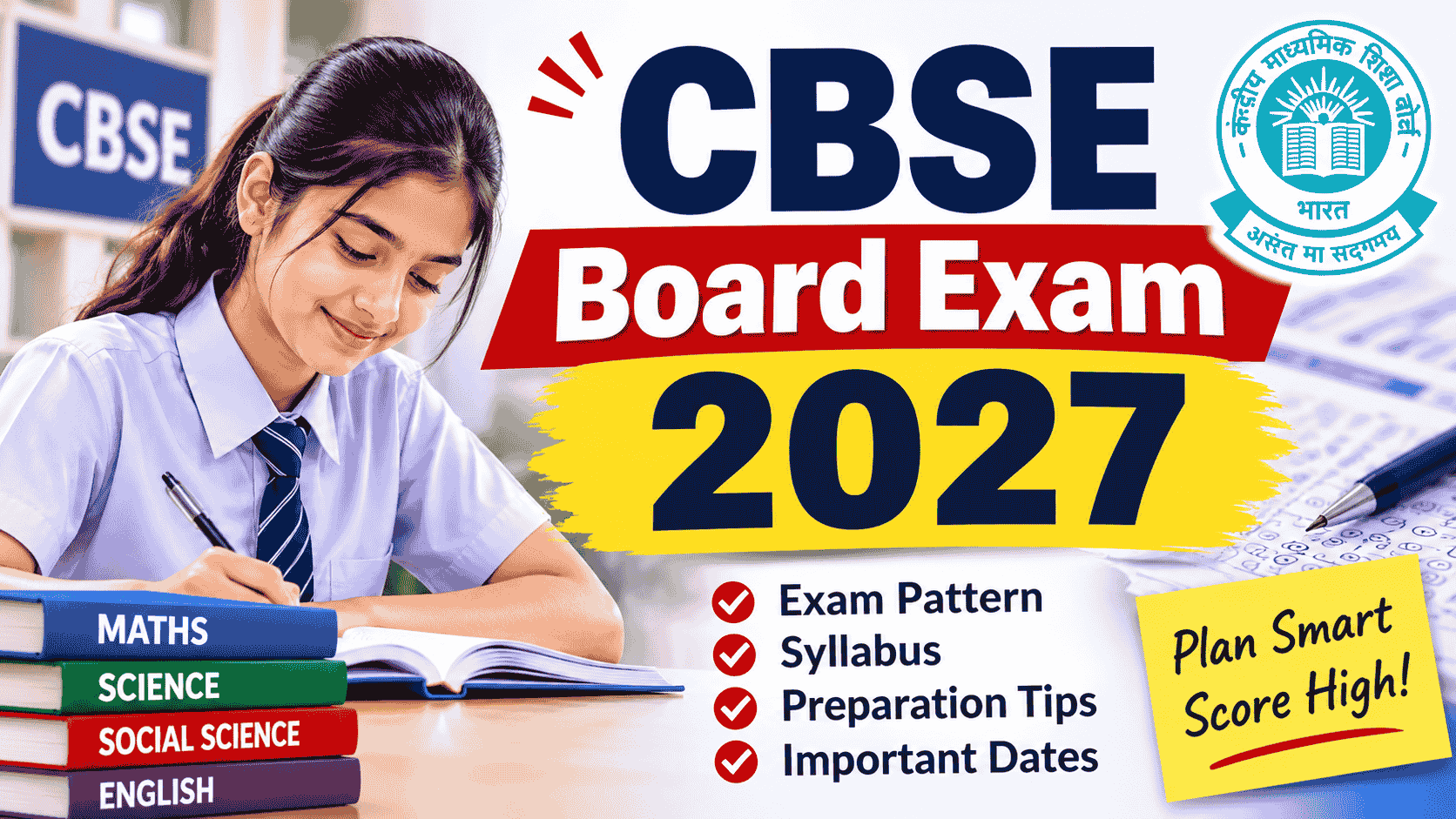
    CBSE Board Exam 2027 : CBSE central board of secondary education released date sheet for class 10th and class 12th board examination 2027 according to the schedule the examination will start on February 16 and end on march 9 2027 the board has announced the examination dates before the time itself for creating strategy and control academic schedules. The examination will start from 10:30 am. 83 subject for class 10th and 121 subjects for class 12th

    CBSE Board Exam 2027 : CBSE releases date sheet 

    Date sheet has been released 101 days before to assist candidates to manage competition of entrance examination to get sufficient time to manage revision schedules to prepare for the same.

    CBSE Board Exam 2027
    CBSE Board Exam 2027

    How Many participants are joining?

    More than 26 lakh participant have taken part in class 10th examination of board whereas around 19 lakh participants will take part in class 12 board examination availability of examination dates and academic needs of candidate the date sheet of

    Other competitive exams were also taken into consideration for class 12th.

    The board is making effort that finishing of board examination is done in perfect timing efficiently and effectively which does not collide with each other. Which balance both the examination. Main objective is to provide candidate extra time for further competitive exams.

    Also Read This : Shamonda virus reported in france as patient Dies Why is it deadly what are its symptoms treatment and prevention methods

    Where to check Date sheet or examination time table of central board of secondary education

    CBSE Board Exam 2027 : To check the date sheet of 10th class and 12th class do please do visit Central board of secondary education website

    Stay tuned for more news  and information or updates.

    Written By Prabhjyot Singh

  • ACP Sanchit Sharma : From a Farmer’s Family to Policing the Streets of Noida

    ACP Sanchit Sharma : From a Farmer’s Family to Policing the Streets of Noida

    NOIDA : Assistant Commissioner of Police Sanchit Sharma, currently posted in Circle-3 of the Gautam Buddha Nagar Police Commissionerate, has become a familiar name in the district’s policing framework since taking charge in late August 2026.

    For the 2023-batch IPS officer, the journey from a farming household in Madhya Pradesh to a territorial command in one of Uttar Pradesh’s busiest urban jurisdictions is a story of quiet, methodical perseverance.

    CURRENT ROLE AND RESPONSIBILITIES

    According to the transfer order issued by Police Commissioner Laxmi Singh, Sanchit Sharma was appointed as ACP of Circle-3 in Noida Zone on August 31, 2026.

    In this capacity, he oversees law and order in his jurisdiction, supervises crime prevention and investigation, coordinates with police personnel and other authorities, and works toward building public trust through responsive, community-oriented policing.

    His responsibilities place him at the supervisory level of day-to-day policing — ensuring that station-level officers execute departmental mandates, that public grievances are addressed, and that law enforcement remains accessible to ordinary citizens.

    THE COMMISSIONERATE HE SERVES IN

    Sanchit Sharma operates within a Commissionerate that has drawn attention for its performance and public outreach.

    In the Chief Minister’s ‘Darpan’ dashboard review for March 2026, Gautam Buddha Nagar ranked first among all police commissionerates in Uttar Pradesh and second among all districts. The ranking was based on emergency response times, complaint disposal rates, and action taken in crime cases, including those involving women and weaker sections of society.

    Under “Operation Invictus,” launched in June 2026, Mission Shakti Centres at every police station compiled confidential databases of children with special needs. In the first phase, 1,645 such children were identified across the district. Women beat officers were tasked with contacting families every 15 days, and a dedicated helpline — 8595902539 — was set up for assistance and counselling.

    From Farmer’s Family to IPS Officer : Sanchit Sharma’s Inspiring UPSC Journey (AIR 92)
    From Farmer’s Family to IPS Officer : Sanchit Sharma’s Inspiring UPSC Journey (AIR 92)

    Mission Shakti Phase 5.0, running since September 2025, has reached over 0.21 million women through 7,015 awareness programmes organised by women beat officers in village panchayats and wards. The sessions cover legal rights, self-defence, cyber security, and grievance redressal.

    Twenty-seven pink booths across the district provide quicker assistance for women. During the programme, police identified 837 women affected by domestic violence, of whom 791 received counselling or legal assistance.

    The commissionerate also introduced Café Rista inside the Noida Police Commissionerate in Sector 108 — a pastel-themed café where complainants awaiting mediation or counselling can relax. Additional DCP Preeti Yadav said the café was established so that people could sort out differences in a relaxed atmosphere rather than growing impatient.

    In Sector 19, a local police post adopted the C Block park near Sanatan Dharma temple following complaints of drug use and anti-social activity. Sub-inspector Rahul Sharma committed to continuous surveillance of the park. The move followed directions from the Police Commissioner to officers to coordinate with residents’ welfare associations and adopt a park each in their areas.

    These initiatives form the broader operational environment in which an ACP like Sanchit Sharma functions — translating departmental priorities into ground-level action within his circle.

    EDUCATION AND FAMILY BACKGROUND

    Sanchit Sharma was born on January 1, 2000, in Barwani district, Madhya Pradesh. His father, Sudhir Sharma, comes from a farming family. Growing up in this ordinary background, Sharma developed an early interest in education and public service.

    His academic record is exceptional. He scored approximately 89% in his board examinations and secured All India Rank 1885 in the JEE Advanced, earning admission to IIT Delhi. There, he completed a B.Tech in Civil Engineering, followed by an M.Tech in Environmental Engineering from the same institution.

    In 2021, Sanchit Sharma appeared for the UPSC Civil Services Examination for the first time. He cleared the Preliminary and Mains examinations but could not secure a place in the final selection list after the interview stage.

    Instead of giving up, he analysed his performance and revised his preparation strategy. He focused on answer writing, incorporated relevant examples, data, and statistics, and prepared largely through self-study, taking coaching support mainly for mock tests.

    The effort culminated in All India Rank 92 in the UPSC examination, securing him a place in the 2023 IPS batch and the Uttar Pradesh cadre.

    Also Read This : Meet Suchika tariyal India’s combat sports veteran turned Asian Games MMA Medallist

    His family stood by him through the setback. Their encouragement, he has acknowledged, helped him continue working toward his goal.

    Outside of policing, Sanchit Sharma enjoys playing the harmonium and has expressed an interest in mentoring school students and UPSC aspirants, encouraging candidates to remain consistent and learn from their mistakes.

    View this post on Instagram


    A post shared by AVSPOST (@avspost)

  • UGC-NET June 2026 Exam : Major Irregularities – English, Commerce and Sociology Papers to Be Held Again

    UGC-NET June 2026 Exam : Major Irregularities – English, Commerce and Sociology Papers to Be Held Again

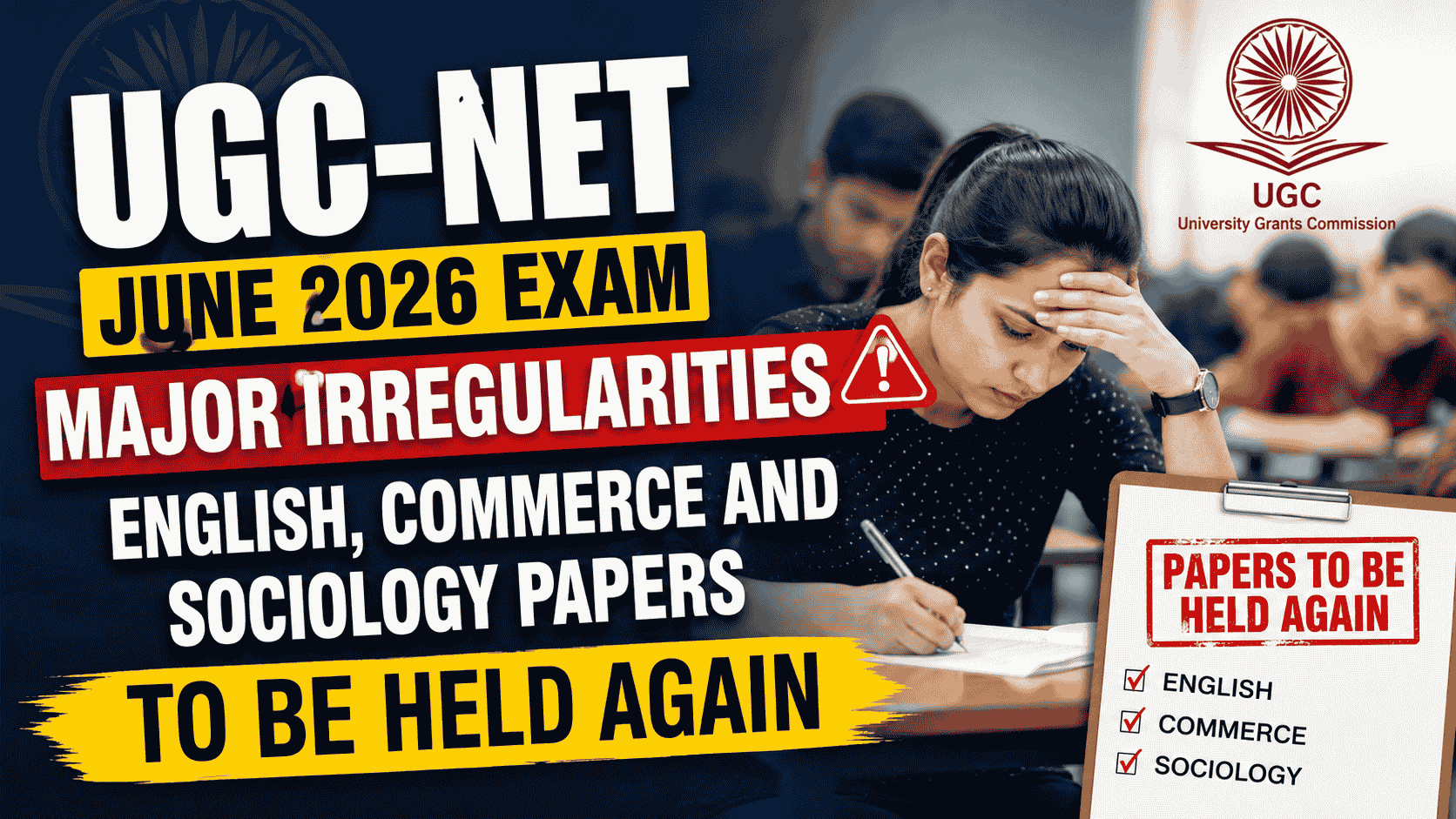
    The UGC-NET June 2026 examination conducted by the National Testing Agency (NTA) has once again come under controversy. Following serious errors found in the question papers of English, Commerce and Sociology, a decision has been taken to re-conduct these papers. This decision is likely to directly impact lakhs of candidates who had been waiting for a long time for the results and cut-offs.

    Amid rising questions over the reliability of the examination process, the matter has sparked serious discussion on both the education system and the evaluation process. Candidates say the errors in the question papers are not merely technical mistakes but a major issue linked to their future.

    Subjects in Which Irregularities Were Found

    UGC-NET June 2026 : According to available information, such errors were detected in the English, Commerce and Sociology question papers that could directly affect the fairness of the examination. Issues included discrepancies in options for some questions, errors related to answers, and inconsistencies in the structure of questions at certain places.

    Many candidates had raised objections because of these mistakes. After a review of the matter, it was decided that re-conducting the examination for the affected subjects would be the most appropriate step.

    Why Candidates’ Concerns Have Increased

    Even a minor error in a national-level examination like UGC-NET can affect the ranking, eligibility and career of thousands of aspirants. The discovery of serious flaws in the question papers has therefore been disappointing for candidates.

    Many candidates say they appeared for the exam after months of preparation, but the announcement of a re-examination will now affect their strategy, mental state and schedule. On the other hand, some candidates consider the decision justified, as it would not be proper to release results on the basis of incorrect question papers.

    UGC-NET June 2026 Exam : Major Irregularities – English, Commerce and Sociology Papers to Be Held Again
    UGC-NET June 2026 Exam : Major Irregularities – English, Commerce and Sociology Papers to Be Held Again

    Questions Raised Again on the Examination System

    This is not the first time questions have been raised about a national examination. In recent years, there has been continuous debate over exam conduct, question paper security, technical shortcomings and the evaluation process. After errors surfaced in a prestigious examination like UGC-NET June 2026, the question has once again arisen whether the preparation and monitoring systems of examination agencies are adequate.

    Experts believe that in such cases it is not enough merely to correct the mistakes; a review of the entire examination system is necessary. Processes such as question paper setting, moderation, translation, proofreading and final approval need to be strengthened further so that such situations do not arise in the future.

    UGC-NET June 2026 : Impact of the Re-Examination

    While the re-examination will attempt to ensure fairness, a delay in results is certain. Candidates who had already planned for other admission or recruitment processes will now have to wait for the new dates.

    In addition, candidates who appeared in the earlier examination will have to prepare again. This may increase mental pressure. However, given the serious errors in the examination, this step is being considered necessary.

    What Candidates Should Do Next

    All eyes are now on when the re-examination for the affected subjects will be held and when the new notification will be issued. Candidates are advised to keep an eye on official updates and not rely on any rumours.

    For students who appeared in English, Commerce or Sociology, this is a time to remain alert. The new examination date, admit cards and other instructions may be issued soon.

    Also Read This : 80th Independence Day 2026 : Celebrating Freedom, Vande Mataram & Viksit Bharat at Red Fort

    The irregularities that have come to light in the UGC-NET June 2026 examination raise serious questions about the transparency of the examination system. Although the decision to re-conduct the examination is being seen as being in the interest of candidates, it makes clear that stronger steps are needed to ensure an error-free system in national-level examinations.


    View this post on Instagram


    A post shared by AVSPOST (@avspost)

  • 80th Independence Day 2026 : Celebrating Freedom, Vande Mataram & Viksit Bharat at Red Fort

    80th Independence Day 2026 : Celebrating Freedom, Vande Mataram & Viksit Bharat at Red Fort

    India proudly celebrated its 80th Independence Day on 15 August 2026 with unmatched patriotic fervour across the nation. The historic Red Fort in New Delhi once again became the centre of national pride as Prime Minister Narendra Modi unfurled the Tricolour and addressed the country, marking not only 80 years of independence but also 150 years of the national song Vande Mataram.

    Historic Firsts at the Red Fort on 80th Independence Day

    This year’s 80th Independence Day celebrations carried special significance. For the first time in the history of Independence Day events at the Red Fort, Vande Mataram was rendered by an Army band while guests sang along. The national song was followed by the flag hoisting and the National Anthem, synchronised with a 21-gun salute fired by the 1721 Field Battery using indigenous 105mm Light Field Guns.

    Floral decorations on the ramparts beautifully displayed the national flag flanked by “Vande Mataram” in Hindi. After the Rashtriya Salute, two Indian Air Force Mi-17 helicopters showered flower petals—one carrying the Tricolour and the other a flag depicting Vande Mataram—creating a memorable visual spectacle.


    View this post on Instagram


    A post shared by AVSPOST (@avspost)

    PM Modi’s Vision for a Self-Reliant and Developed India

    Addressing the nation from the ramparts of the Red Fort on the 80th Independence Day, Prime Minister Narendra Modi strongly emphasised the need for self-reliance. He stated that India must not remain dependent on other countries and should strengthen its own capabilities through initiatives like Make in India and Vocal for Local. “We have to become self-reliant,” the Prime Minister declared, linking this resolve to the larger goal of Aatmanirbhar Bharat.

    A major highlight of the speech was the announcement of a new target under the Lakhpati Didi initiative. Having already surpassed the earlier goal of three crore women achieving an annual household income of ₹1 lakh or more, the government now aims to create six crore Lakhpati Didis. This move is expected to bring transformative change to the rural economy by empowering women.

    Key Announcements on 80th Independence Day

    Prime Minister Modi unveiled several forward-looking initiatives focused on youth, technology, education, sports, and strategic sectors:

    • Nationwide AI skilling programme for one crore youth
    • Free online coaching for competitive examinations
    • Civil defence reforms
    • Nationwide sports talent hunt for children
    • Expansion of semiconductor manufacturing
    • Ambitious new targets for nuclear power generation

    These announcements reflect the government’s focus on preparing India’s young population for the future while strengthening national capabilities in critical areas.

    80th Independence Day 2026 : Celebrating Freedom, Vande Mataram & Viksit Bharat at Red Fort
    80th Independence Day 2026 : Celebrating Freedom, Vande Mataram & Viksit Bharat at Red Fort

    Nationwide Celebrations and Messages of Unity

    The spirit of the 80th Independence Day resonated across states. In West Bengal, Suvendu Adhikari linked the vision of Viksit Bharat by 2047 with the goal of a prosperous West Bengal. Celebrations were held with full enthusiasm in Punjab, Haryana, and Chandigarh, with governors and chief ministers hoisting the national flag and paying tributes to freedom fighters.

    Internationally, Bangladesh extended warm greetings to the people of India, remembering the sacrifices of freedom fighters and highlighting the themes of friendship, harmony, and prosperity.

    From Freedom to Viksit Bharat 2047

    The 80th Independence Day was not just a day of celebration but a moment of reflection and renewed commitment. Connecting the spirit of Vande Mataram with the aspirations of over 140 crore Indians, Prime Minister Modi reiterated the collective journey towards Viksit Bharat by 2047.

    Also Read This : Iran’s President Masoud Pezeshkian to Visit India, Will Participate in New Delhi BRICS Summit 2026

    As India enters its 81st year of independence, the message from the Red Fort remains clear: self-reliance, empowerment of women and youth, technological advancement, and national unity will continue to guide the country forward.

    Jai Hind!

  • Open Day at Shanti International School : Partners in Progress – Together We Shape Every Child’s Future

    Open Day at Shanti International School : Partners in Progress – Together We Shape Every Child’s Future

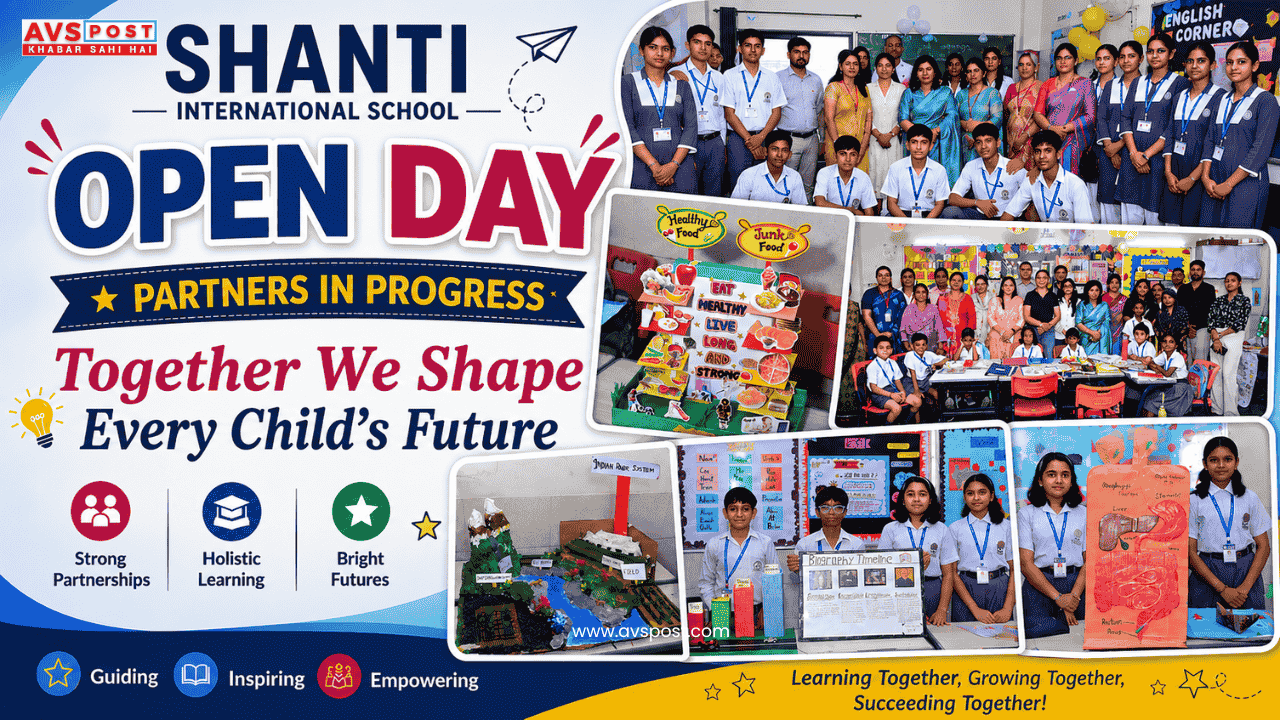
    Open Day at Shanti International School : On 25 July, Shanti International School came alive with colour, creativity, and collaboration as it successfully hosted its Open Day under the meaningful theme “Partners in Progress: Together We Shape Every Child’s Future.” Under the able guidance of Principal Ms. Sadhvi Verma, the event beautifully combined the UT-2 Parent-Teacher Meeting with an engaging display of student talent and learning.

    A Celebration of Learning and Creativity

    The highlight of the day was the series of subject-wise exhibits prepared by students as part of their Holiday Homework (HHW). Classrooms and corridors were transformed into vibrant learning spaces where children proudly showcased creative projects, working models, and innovative presentations across different subjects.


    View this post on Instagram


    A post shared by AVSPOST (@avspost)


    Alongside academic displays, SUPW (Socially Useful Productive Work) exhibits stood out, reflecting the students’ practical skills, imagination, and ability to turn ideas into tangible creations. These exhibits went beyond textbooks — they demonstrated how children understand, apply, and express concepts in real and meaningful ways.

    Students confidently explained their work to parents, answering questions with enthusiasm and clarity. The interactions created a warm, interactive atmosphere where learning became visible and shared.

    Open Day at Shanti International School : Partners in Progress – Together We Shape Every Child’s Future
    Open Day at Shanti International School : Partners in Progress – Together We Shape Every Child’s Future
    Open Day at Shanti International School : Partners in Progress – Together We Shape Every Child’s Future
    Open Day at Shanti International School : Partners in Progress – Together We Shape Every Child’s Future
    Open Day at Shanti International School : Partners in Progress – Together We Shape Every Child’s Future
    Open Day at Shanti International School : Partners in Progress – Together We Shape Every Child’s Future

    Open Day at Shanti International School : Moments of Joy and Connection

    Adding to the festive spirit, some classes presented short assembly performances. These brief yet lively presentations filled the school with energy and joy, making the day not only informative but also memorable for every family present.

    Parents walked through the exhibits with pride and appreciation. Many took time to leave encouraging messages on the Feedback Wall, praising the quality of the displays and the school’s commitment to experiential and holistic education. Their positive responses reaffirmed the strong partnership between home and school.

    Open Day at Shanti International School : Partners in Progress – Together We Shape Every Child’s Future
    Open Day at Shanti International School : Partners in Progress – Together We Shape Every Child’s Future
    Open Day at Shanti International School : Partners in Progress – Together We Shape Every Child’s Future
    Open Day at Shanti International School : Partners in Progress – Together We Shape Every Child’s Future
    Open Day at Shanti International School : Partners in Progress – Together We Shape Every Child’s Future
    Open Day at Shanti International School : Partners in Progress – Together We Shape Every Child’s Future
    Open Day at Shanti International School : Partners in Progress – Together We Shape Every Child’s Future
    Open Day at Shanti International School : Partners in Progress – Together We Shape Every Child’s Future

    The True Spirit of Partnership

    Open Day at Shanti International School : The Open Day was more than an event — it was a living example of the belief that education thrives when teachers, students, and parents work together. By opening the doors of classrooms and celebrating children’s efforts, Shanti International School reinforced its vision of collaborative growth.

    Also Read This : Sharmila Dhankar Wins Historic Gold : India’s First-Ever Para Athletics Gold at Commonwealth Games 2026

    As Principal Ms. Sadhvi Verma’s leadership continues to guide the school, days like these remind us that every project, every model, and every conversation between a child and parent is a step toward shaping brighter futures.

  • UP Board Result 2026 : Expected Date, How to Check Class 10 & 12 Results Online

    UP Board Result 2026 : Expected Date, How to Check Class 10 & 12 Results Online

    UP Board Result 2026 is one of the most awaited announcements for millions of students across Uttar Pradesh. The Uttar Pradesh Madhyamik Shiksha Parishad (UPMSP) is set to declare the UP Board High School and Intermediate Result 2026 very soon.

    Evaluation of answer sheets is complete, and the board is in the final stage of result processing. Here is everything you need to know about the UP Board Result 2026.

    Expected Date for UP Board Result 2026

    According to the latest updates and media reports, the UP Board Result 2026 for both Class 10 and Class 12 is expected to be announced in the last week of April 2026, most likely between April 20 and April 25, 2026.

    Some reports suggest the results could be declared around April 25, similar to last year when they were released on April 25 at around 12:30 PM. The announcement is usually made in the afternoon.

    Note: The UPMSP has not yet issued an official confirmed date and time. As soon as it is announced, the result links will be activated on the official websites.

    How to Check UP Board Result 2026 Online 

    Checking your UP Board Result 2026 is simple and quick. Follow these steps once the results are declared:

    1. Visit any of the official websites:
      • upresults.nic.in
      • upmsp.edu.in
      • results.upmsp.edu.in
    2. On the homepage, click on the link for UP Board High School Result 2026 (Class 10) or UP Board Intermediate Result 2026 (Class 12).
    3. Enter your Roll Number (as mentioned on your admit card) and School Code if required.
    4. Fill in the CAPTCHA code and click on Submit.
    5. Your UP Board Result 2026 marksheet will appear on the screen. Download and print it for future reference.

    Pro Tip: On result day, official websites may experience heavy traffic and slow down. Try after some time or use alternative portals like DigiLocker.

    UP Board Result 2026 : Expected Date, How to Check Class 10 & 12 Results Online
    UP Board Result 2026 : Expected Date, How to Check Class 10 & 12 Results Online

    What Details Will Be Mentioned in UP Board Result 2026?

    Your online marksheet will include

    • Subject-wise marks
    • Total marks and percentage
    • Division/Grade (First, Second, Third)
    • Pass/Fail status
    • Qualifying status for the next class or compartment exam

    The online result is provisional. Collect your original marksheet from your school later.

    Previous Year Performance 

    • Class 10 (2025): Overall pass percentage was approximately 90.11% (Girls performed better).
    • Class 12 (2025): Overall pass percentage was approximately 81.15%.

    This year also, girls are expected to outperform boys. Toppers list, district-wise performance, and overall statistics will be released along with the UP Board Result 2026.

    Important Tips for Students

    • Keep your Roll Number and Admit Card ready.
    • Use only official websites to check UP Board Result 2026 and avoid fake sites.
    • If there is any discrepancy in marks, contact your school or UPMSP for re-evaluation or scrutiny process.
    • Start planning for higher studies or career options based on your results.

    UP Board Result 2026 will also be available on DigiLocker and other result aggregator portals.

    Also Read This : R. Vaishali Creates History : Wins the 2026 FIDE Women’s Candidates Tournament

    Official Websites to Check UP Board Result 2026


    View this post on Instagram


    A post shared by AVSPOST (@avspost)

  • Union Budget 2026 highlights : Key announcements from FM Nirmala Sitharaman

    Union Budget 2026 highlights : Key announcements from FM Nirmala Sitharaman

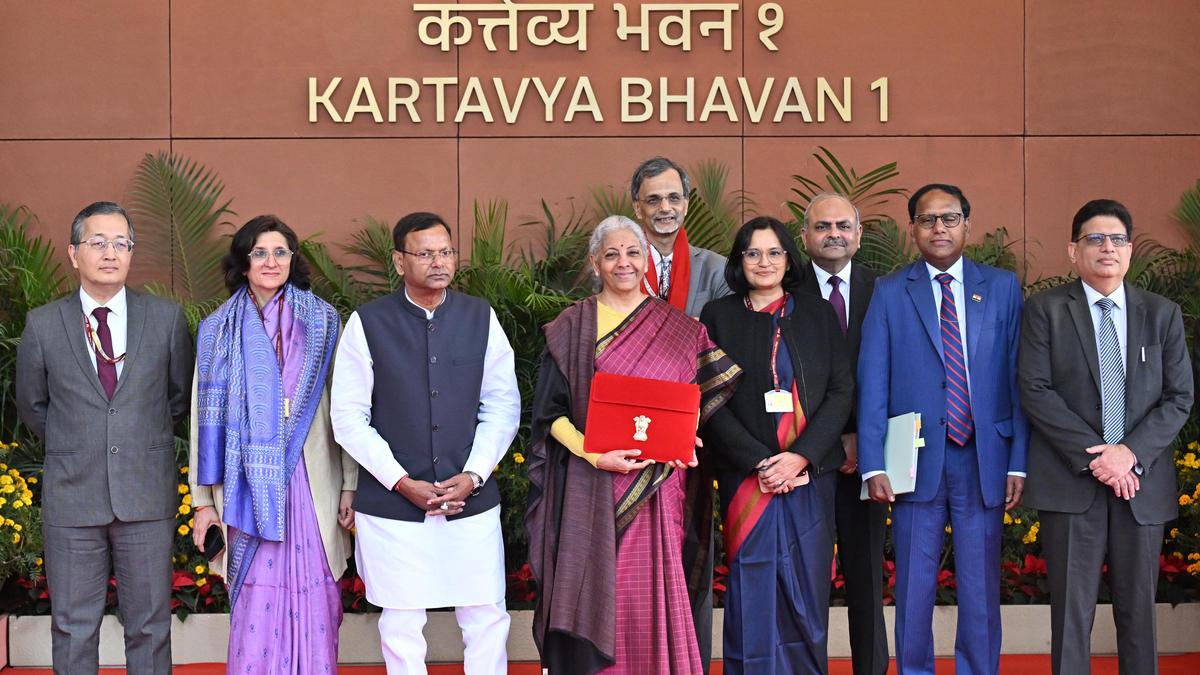
    Union Budget 2026 highlights : The Union Budget 2026-27, presented by Finance Minister Nirmala Sitharaman on February 1, 2026, marks her ninth consecutive budget speech. Tabled in Parliament on a Sunday for the first time in India’s history, this “Yuva Shakti-driven” budget emphasizes the government’s commitment to the poor, underprivileged, and disadvantaged. It draws inspiration from three core Kartavyas (duties):

    • Accelerate and sustain economic growth by boosting productivity, competitiveness, and resilience amid global volatility.
    • Fulfill people’s aspirations and build their capacities to make them strong partners in India’s prosperity.
    • Align with the vision of Sabka Saath, Sabka Vikas — ensuring every family, community, region, and sector has access to resources, amenities, and opportunities.

    Described as a budget of “reforms over rhetoric” and “action over ambivalence,” it prioritizes structural reforms, fiscal discipline, moderate inflation, sustained ~7% growth, and continued public investment to advance toward Viksit Bharat (Developed India).


    View this post on Instagram
     

    A post shared by AVSPOST (@avspost)

    Fiscal Framework : Prudence Meets Momentum

    The budget 2026 maintains a strong focus on capital expenditure while progressing toward fiscal consolidation.

    • Public Capital Expenditure (Capex): Raised to ₹12.2 lakh crore (approximately 4.4% of GDP) — the highest-ever allocation — up from ₹11.2 lakh crore in BE 2025-26, to sustain infrastructure momentum and crowd in private investment.
    • Fiscal Deficit: Targeted at 4.3% of GDP for FY 2026-27 (down from 4.4% in RE 2025-26).
    • Debt-to-GDP Ratio: Projected at 55.6% in BE 2026-27 (from 56.1% in RE 2025-26), with a long-term goal of 50 ± 1% by 2030.
    • Total Budget Size: Approximately ₹53.5 lakh crore.
    • Non-Debt Receipts and Total Expenditure: Estimated at ₹36.5 lakh crore and ₹53.5 lakh crore, respectively.
    • Net Tax Receipts: Around ₹28.7 lakh crore.

    These parameters reflect continued fiscal prudence while prioritizing growth-enabling investments.

    Budget 2026 : Manufacturing, Infrastructure, and Beyond

    Budget 2026 : Under the first Kartavya, the budget proposes interventions in six major areas:

    • Scaling Up Manufacturing in 7 strategic and frontier sectors.
    • Rejuvenating Legacy Industrial Sectors.
    • Creating Champion MSMEs — including a ₹10,000 crore SME Growth Fund.
    • Powerful Push to Infrastructure.
    • Long-Term Energy Security and reduced critical import dependencies.
    • Developing City Economic Regions (CERs).


    View this post on Instagram


    A post shared by AVSPOST (@avspost)


    Notable announcements include:

    • Biopharma Shakti: ₹10,000 crore over 5 years for domestic biologics and biosimilars production.
    • India Semiconductor Mission (ISM) 2.0: Launch to strengthen equipment, materials, design, and supply chains.
    • Electronics Components Manufacturing Scheme: Outlay increased to ₹40,000 crore.
    • Rare Earth Corridors: Support in states like Odisha, Kerala, Andhra Pradesh, and Tamil Nadu.
    • Infrastructure Highlights:
    • 7 high-speed rail corridors (e.g., Mumbai-Pune, Pune-Hyderabad, Hyderabad-Bengaluru, Hyderabad-Chennai, Chennai-Bengaluru, Delhi-Varanasi, Varanasi-Siliguri).
    • New dedicated freight corridors (including east-west).
    • Operationalization of 20 new National Waterways over 5 years.
    • Seaplane Viability Gap Funding (VGF) to boost indigenous manufacturing.
    • Infrastructure Risk Guarantee Fund for private developers.
    • City Economic Regions: ₹5,000 crore per CER over 5 years.
    • Defence: Record allocation (all-time high of around ₹7.85 lakh crore, up ~15%; capex hiked significantly, e.g., ~21% in some reports to ₹5.9 lakh crore).
    • Other Sectors:
    • Tourism: Upskilling 10,000 guides; reduced TCS on overseas tours; development of 15 archaeological sites; first Global Big Cat Summit; Khelo India Mission for sports skilling and employment.
    • AVGC (Animation, Visual Effects, Gaming, Comics — Orange Economy): AVGC Content Creator Labs in 15,000 schools and 500 colleges.
    • Agriculture: Dhan-Dhaanya Krishi Yojana for high-yield crops; Bharat-Vistaar AI tool.
    • Textiles: Integrated programme with mega parks and export support.


    View this post on Instagram
     

    A post shared by AVSPOST (@avspost)

    Tax and Customs Reforms : Simplification and Relief

    Budget 2026 : No changes to income tax slabs were announced, continuing stability from prior budgets. Key updates include:

    • New Income Tax Act, 2025: Effective from April 1, 2026, with simplified rules.
    • Middle-Class Reliefs: TCS cuts, new dividend deductions, nil deduction certificates for small taxpayers, ITR filing extension to August 31 for non-audit cases, rationalized penalties/prosecutions, and provident fund rule updates.
    • Securities Transaction Tax (STT): Increased on futures (e.g., to 0.05% from 0.02%).
    • Customs Duties:
    • Reduced from 20% to 10% on personal imports.
    • Exemptions/reductions on capital goods for lithium-ion cells, critical minerals, cancer medicines, sports equipment, leather goods, and seafood.
    • Some items (imported alcohol, coffee) may become costlier.
    • Other: Tax holidays for foreign cloud providers till 2047; MAT reforms; safe harbour enhancements for IT services; buyback taxed as capital gains.

    Overall Assessment

    The Union Budget 2026 – 27 is a continuity-focused, producer-centric document that doubles down on capex-led growth, manufacturing self-reliance, infrastructure, and inclusive reforms rather than short-term populist measures. It aims to build resilience against global uncertainties while empowering youth, MSMEs, and underserved sections.

  • JEE Main 2026 Session 1 Exam city detail out : Key Updates, Exam Dates, and Preparation Guide

    JEE Main 2026 Session 1 Exam city detail out : Key Updates, Exam Dates, and Preparation Guide

    JEE Main 2026 Session 1 : The Joint Entrance Examination (JEE) Main is one of the most crucial engineering entrance exams in India, serving as the gateway to prestigious institutions like NITs, IIITs, and other centrally funded technical institutes. For the year 2026, the National Testing Agency (NTA) has kicked off the process with Session 1, and exciting updates are rolling in. As of January 8, 2026, the Advance City Intimation Slip for JEE Main 2026 Session 1 has been released, marking a significant milestone for lakhs of aspirants.

    This blog covers everything you need to know about JEE Main 2026 Session 1, from the latest announcements to exam details and preparation tips.

    Latest Update : City Intimation Slip Released

    On January 8, 2026, NTA released the Advance City Intimation Slip for Session 1 on the official website, jeemain.nta.nic.in. This slip informs candidates about the city allotted for their examination center. It’s an essential document for early planning of travel, accommodation, and logistics, especially for those appearing from distant locations.

    Important Note: The city intimation slip is not the admit card. It only reveals the exam city, not the exact center or shift details. The full admit card, containing the exam center address, shift timings, and other instructions, is expected to be released in the third week of January 2026.

    JEE Main 2026 Session 1 Exam city detail out
    JEE Main 2026 Session 1 Exam city detail out

    How to Download the City Intimation Slip

    Follow these simple steps:

    1. Visit the official JEE Main website: jeemain.nta.nic.in.
    2. Click on the link for “Advance City Intimation Slip for JEE Main 2026 Session 1.”
    3. Log in using your Application Number and Password/Date of Birth.
    4. Download the slip and take a printout for reference.

    If you encounter any issues, reach out to the NTA helpline at 011-40759000 or email jeemain@nta.ac.in.

    JEE Main 2026 Session 1 Exam Schedule

    The Session 1 exam is scheduled from January 21 to January 30, 2026. Here’s a breakdown:

    • Paper 1 (BE/BTech): Conducted on multiple dates within this window, typically in two shifts per day (morning and afternoon).
    • Paper 2A (BArch) and Paper 2B (BPlanning): Likely on specific dates towards the end of the session.

    The exam will be computer-based (except for the drawing section in Paper 2A), covering Physics, Chemistry, and Mathematics for Paper 1.

    Results for Session 1 are expected by February 12, 2026, giving candidates time to prepare for Session 2 if needed.

    Session 2 is tentatively planned for April 2026, with the best score from both sessions considered for the final ranking.

    Eligibility and Exam Pattern Reminder

    To appear for JEE Main 2026:

    • Candidates must have passed Class 12 (or equivalent) in 2024, 2025, or appearing in 2026.
    • No age limit, but institute-specific criteria may apply.
    • The exam pattern remains consistent: 90 questions in Paper 1 (300 marks), with negative marking for incorrect answers in Section B.

    For the latest syllabus (with some reductions from previous years), refer to the official NTA information bulletin.

    Preparation Tips for the Final Stretch

    With less than two weeks left until the exam starts, focus on:

    • Revision: Prioritize high-weightage topics like Mechanics, Electromagnetism, Organic Chemistry, and Calculus.
    • Mock Tests: Practice full-length mocks to build stamina and time management.
    • Error Analysis: Review mistakes from previous tests and strengthen weak areas.
    • Health and Mindset: Maintain a balanced routine with adequate sleep, nutrition, and short breaks to avoid burnout.
    • Exam Day Strategy: Read questions carefully, attempt easy ones first, and avoid guesswork due to negative marking.

    Stay calm and confident – consistent effort will pay off!

    Also Read This : UPSSSC Lekhpal Recruitment 2026

    The release of the city intimation slip signals that JEE Main 2026 Session 1 is just around the corner. Download your slip today, finalize your preparations, and gear up for the challenge. Whether this is your first attempt or a drop year, give it your best shot.

  • Startup Trends in India 2026 : Top Opportunities & Predictions You Can’t Ignore

    Startup Trends in India 2026 : Top Opportunities & Predictions You Can’t Ignore

    Startup Trends in India 2026 : As of January 02, 2026, India’s startup ecosystem stands resilient and increasingly mature, maintaining its position as the third-largest globally. The ecosystem has transitioned from high-velocity growth phases to a focus on sustainable scaling, strong fundamentals, and real value creation. With over 140,000 DPIIT-recognized startups (building on the 1.4 lakh+ milestone from mid-2024), the emphasis remains on quality over quantity.

    Funding Landscape in 2025 – A Snapshot

    Indian startups raised approximately $10.5–11 billion in 2025 across around 900–1,600 deals (depending on sources like Tracxn and Inc42). This marked a modest decline from prior years, reflecting greater investor selectivity amid global caution. Capital favored:

    • Businesses demonstrating clear paths to profitability
    • Strong unit economics and operational efficiency
    • Defensible technology or market advantages

    Mega-rounds ($100M+) decreased significantly, while early-stage activity held steady, highlighting a healthier, more disciplined environment.

    Startup Trends in India 2026
    Startup Trends in India 2026

    The IPO Boom and Liquidity Surge

    2025 emerged as a landmark year for public listings, with 18–42 tech/startup IPOs (varying by tracking methodology) raising substantial capital — some estimates peg total IPO proceeds from the ecosystem at around $20–22 billion. High-profile listings spanned fintech, e-commerce, consumer services, EVs, and more, providing critical liquidity to investors and employees while shifting the primary exit route from private rounds to public markets.

    This momentum is expected to carry forward strongly into 2026, potentially making it an even bigger year for listings.

    Unicorn Status – Steady but Selective

    India added roughly 5–7 new unicorns in 2025, bringing the total to approximately 125–126 (with collective valuations exceeding $366–389 billion). New entrants included names in AI-driven solutions, logistics, petcare, and enterprise automation. The slower pace compared to peak years reflects a deliberate shift toward sustainable models rather than rapid valuation inflation.

    Key Startup Trends in India Defining 2026

    Startup Trends in India 2026 : The year ahead is poised for deeper maturity, with several structural shifts already gaining traction:

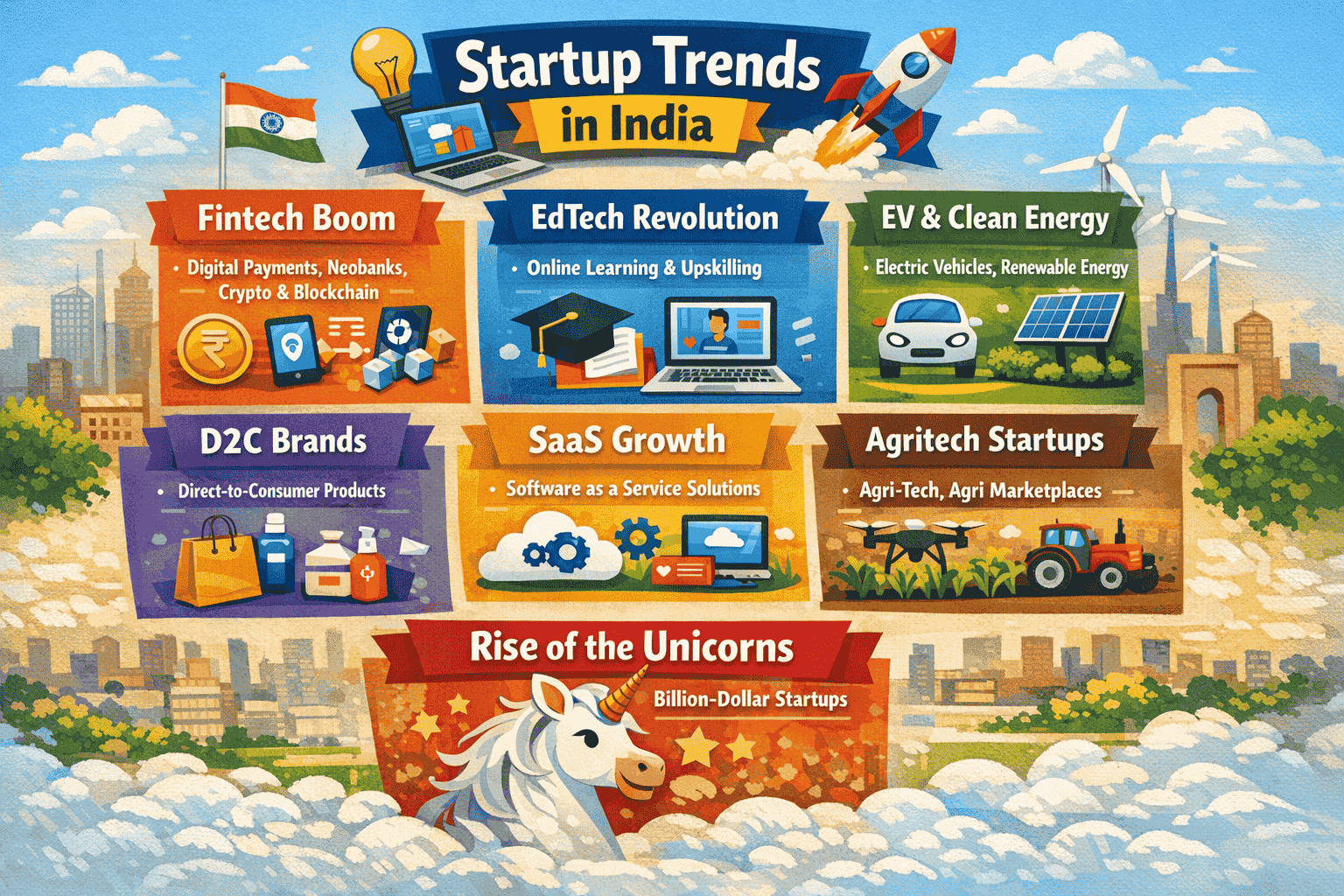
    • AI & Deeptech Acceleration Expect 15–20 new AI-native and deeptech ventures, many emerging as spin-outs from Global Capability Centres (GCCs). Vertical AI applications, voice tech, enterprise automation, and practical deployments in sectors like defence, healthcare, and manufacturing will dominate early-stage interest.
    • Profitability as the New Standard Capital discipline has become non-negotiable. Founders are prioritizing runway extension, margin improvement, and operational leverage over perpetual fundraising. Profitability is now viewed as a competitive edge and entry requirement for funding.
    • Rise of Global-First & Younger Founders More startups are building with international markets in mind from day one. Younger founding teams are securing capital, especially in enterprise, AI, and deeptech spaces.
    • Geographic Decentralization Tier-2 and Tier-3 cities (e.g., Kochi, Jaipur, Indore, Coimbatore) are seeing increased idea flow, talent, and capital, supported by local accelerators, state initiatives, and remote-first models.
    • Sustainability, Climate Tech & Strategic Sectors Growing momentum in climate tech, renewables, agritech, spacetech, defence, and semiconductors — aligned with national priorities and long-term policy support.
    • M&A and Strategic Exits While not explosive, M&A activity is expected to increase selectively, driven by cash-rich late-stage players, profitable incumbents, and strategic acquisitions (especially in SaaS, fintech, and enterprise).
    Startup Trends in India 2026
    Startup Trends in India 2026

    Also Read This : Vaishnavi Sharma : The Rising Left-Arm Spin Sensation of Indian Women’s Cricket

    The Path Forward

    In 2026, Startup Trends in India point toward a more accountable, innovation-led ecosystem. Success will hinge on combining genuine product differentiation with disciplined execution, purpose-driven models, and global relevance. The era of narrative-driven hype has given way to one rewarding real impact and resilience.