The CBSE Class 10th 12th Result 2025 is not yet announced. Based on past trends, expect results in May 2025, likely between May 1 and May 20. The exact date will be confirmed by CBSE closer to the release.
CBSE Class 10th 12th Result 2025 : Check and Download Guide
Exam Dates: Conducted from February 15 to March 18, 2025, with ~24.12 lakh students appearing.
Checking Results: Use your roll number, date of birth, school number, and admit card ID. Results are provisional; collect original mark sheets from your school.
Alternative Methods:
DigiLocker: Requires school code, roll number, and a 6-digit PIN from your school.
SMS: Send “cbse10 <Roll Number> <Date of Birth> <School Number> <Centre Number>” to 7738299899 (Date of Birth in DDMMYYYY format).
UMANG App or IVRS (call 24300699 with area code).
CBSE Class 10th 12th Result 2025
Passing Criteria
Minimum 33% in each subject (theory, practicals, and aggregate).
Grace Marks: Awarded if short by 1–2 marks in a subject.
Compartment Exams: For failing in 1–2 subjects, likely in July/August 2025, with results in August.
Additional Info
Pass Percentage (2024): 93.12%; expect similar or slightly better in 2025.
No Toppers List: CBSE won’t release a merit list.
Re-evaluation/Verification: Apply for mark verification (~INR 500/subject), answer sheet photocopy (~INR 700/sheet), or re-evaluation (~INR 100/question, refundable if upheld) in May/June 2025.
Grading: 9-point scale (A1 to E) based on rank among passed students.
Future Policy (2025-26): From next session, exams will be held twice yearly (November and March), with the best score counted.
Gamification’s Advantages : Increasing Student Engagement and Learning
In a time when students’ attention spans are getting shorter and learning environments are changing quickly, teachers are always looking for new and creative ways to keep students interested. Gamification, or the incorporation of game-like elements into non-gaming contexts, especially education, is one such technique that has gained a lot of popularity. Gamification has shown itself to be a potent instrument for raising student motivation, encouraging deeper learning, and boosting academic results; it is by no means a fad.
Gamification: What Is It?
Applying components like point scoring, competition, game rules, and rewards to conventional educational activities is known as gamification. Gamification overlays game mechanics on top of conventional learning content, in contrast to serious games, which are fully realised games with educational goals. Gamification overlays game mechanics on top of conventional learning content, in contrast to serious games, which are fully realised games with educational goals. This could involve competing on leaderboards for the highest quiz scores, levelling up after mastering a skill, or receiving badges for finishing assignments.
which are fully realised games with educational goals.
Increasing Involvement of Students
The rise in student engagement is among the most obvious and immediate advantages of gamification. Conventional teaching approaches can occasionally find it difficult to maintain students’ interest, particularly in settings where the material seems unrelated to personal interests or real-world relevance.
Gamification makes learning more enjoyable and challenging. When assignments are presented as quests or missions, students are more inclined to participate. In addition to maintaining students’ interest, this degree of involvement promotes a more optimistic outlook on education.
learning more enjoyable and challenging
Promoting Active Learning
Additionally, gamification encourages active learning, in which students actively participate in their education rather than merely absorbing knowledge. Students are urged to think critically and apply knowledge in novel ways through exercises like interactive quizzes, simulation games, and problem-solving challenges.
Constructivist learning, in which students develop their own understanding via experience and reflection, is consistent with this experiential approach. Gamified activities frequently force students to try new things, fail, adjust, and try again—skills that are essential for both academic and personal development.
Encouragement of Personalised Education
Managing a classroom full of diverse students, each with their own needs, interests, and skill levels, is one of the difficulties in education. A versatile framework for individualised learning is provided by gamification. By providing personalised feedback and progression paths based on individual performance, adaptive learning platforms, for instance, can gamify the process of learning new skills.
Benefits-of-Gamification-in-Education
Pupils have the freedom to work at their own speed, go over lessons or levels again as needed, and select different routes through the material. This lessens the pressure to compare and permits mastery-based advancement, both of which can greatly increase competence and self-confidence.
Encouraging Teamwork and Social Competencies
Although gamification frequently incorporates competitive aspects, it can also be designed to encourage teamwork. Classroom competitions, multiplayer simulations, and team-based tasks all promote cooperation and a sense of community. In order to accomplish common objectives, students learn how to assign tasks, communicate clearly, and help one another.
These cooperative elements are particularly helpful in preparing students for situations in the real world where teamwork is essential. Additionally, because group-based gamification provides a low-risk opportunity to participate and shine, it can boost participation among reticent or shy students.
Giving Quick Feedback
Instant feedback is one of the key components of gamification, which is important for successful learning. The opportunity for prompt correction and improvement is limited by the fact that traditional grading methods frequently provide feedback days or even weeks after an assignment is finished.
Gamification in Education
On the other hand, gamified systems frequently have visible progress indicators, instantaneous answer responses, and real-time scoring. By clearly demonstrating their progress, this feedback loop keeps students motivated, helps them identify errors promptly, and reinforces effective techniques.
Using Rewards to Increase Motivation
Leaderboards, badges, and points are used to appeal to both internal and external motivators. Although the ultimate objective is intrinsic motivation, such as curiosity or the desire for mastery, extrinsic rewards can be very helpful in igniting engagement. Students can eventually find the internal fulfilment of learning and growth with the aid of these outside motivators.
Furthermore, “gold stars” are frequently not the only rewards in a gamified setting. They can be connected to special duties, virtual objects, or privileges, which gives the educational process even more depth and significance.
Using Rewards to Increase Motivation
Obstacles and Things to Think About
Gamification has drawbacks despite its many advantages. Excessive competition, frustration, or an emphasis on rewards rather than learning can result from poorly designed systems. To ensure that gamified experiences are inclusive, equitable, and inspiring for every student, educators must carefully craft them to match learning objectives.
Training and access to technology are also essential. For gamification to be implemented successfully, teachers need the appropriate resources and assistance.
Gamification is a strategic approach that has the potential to revolutionise the educational experience for students of all ages, and it is more than just a trendy term. Gamification capitalises on people’s innate love of play and challenge by making learning more dynamic, personalised, and engaging. It has the capacity to enhance academic achievement, promote lifelong learning habits, and make education a genuinely joyful experience when carefully applied.
World Book Day 2025: World Book Day is an annual celebration held on April 23rd to promote the love of reading, writing, and publishing around the world. It was established by UNESCO in 1995 to recognize the power of books in shaping culture, education, and society. The date was chosen to honor the birth and death anniversaries of several literary greats, including William Shakespeare, Miguel de Cervantes, and Inca Garcilaso de la Vega all of whom died on April 23, 1616. Many people across the globe celebrate by this day by sharing their favorite books, donating books to schools or libraries, organizing reading sessions and literary events and encouraging children and young people to discover the joy of reading.
World Book Day 2025
When is World Book Day 2025?
The World Book Day 2025 is on Wednesday, April 23, 2025.
When is World Book Day 2025?
What is the significance and history of this day.
World Book Day holds deep cultural and educational significance. It was created to celebrate the power of books and to encourage a love for reading, especially among young people. It History is initiated by UNESCO in 1995, World Book Day is celebrated annually on April 23. The date is symbolic because it marks the death anniversaries of William Shakespeare, Miguel de Cervantes, and Inca Garcilaso de la Vega, all of whom died in 1616. The idea originally came from Spain, where April 23 is celebrated.
What is the significance and history of this day.
It’s Significance is to promotes reading, publishing, and the protection of intellectual property through copyright. It encourages children and adults to discover the joy of reading. It recognizes books as a bridge between generations, cultures, and ideas. This helps fight illiteracy by promoting access to books and educational resources.
Some importance of reading.
It’s importance are as follows:
It improves Knowledge.
It boosts Vocabulary and Language Skills.
It enhances Focus and Concentration.
It strengthens Imagination and Creativity.
Some importance of reading.
It reduces Stress
It improves Memory and Brain Function.
It builds Empathy.
It improves Academic and Career Performance.
Details on the importance of books and reading in the digital era.
In digital era, books and reading hold more importance than ever, While screens bombard us with constant information and distractions, reading a book encourages deep focus, reflection, and critical thinking. It provides a mindful escape from digital overload, reducing stress and improving mental well-being. Books offer in-depth, credible knowledge which something often lacking in the bite-sized, fast content found online.
the importance of books and reading in the digital era.
They also fuel imagination, empathy, and creativity, especially through storytelling. In a world driven by algorithms and instant gratification, reading helps individuals slow down, think independently, and reconnect with themselves. Whether in print, e-book, or audiobook form, books remain timeless companions that support lifelong learning and personal growth.
How can we celebrate Work Book Day 2025?
We can celebrate World Book Day in the following ways:
By Gift a Book and Sharing a favorite story with someone special.
By donating old books a new home.
By start a Reading Challenge .
By Visiting a Bookstore or Library to Discover something new.
How can we celebrate Work Book Day 2025?
By Reading with a Child and Pass on the magic of stories.
By Posting Your Favorite Book , Using #WorldBookDay2025 to inspire others.
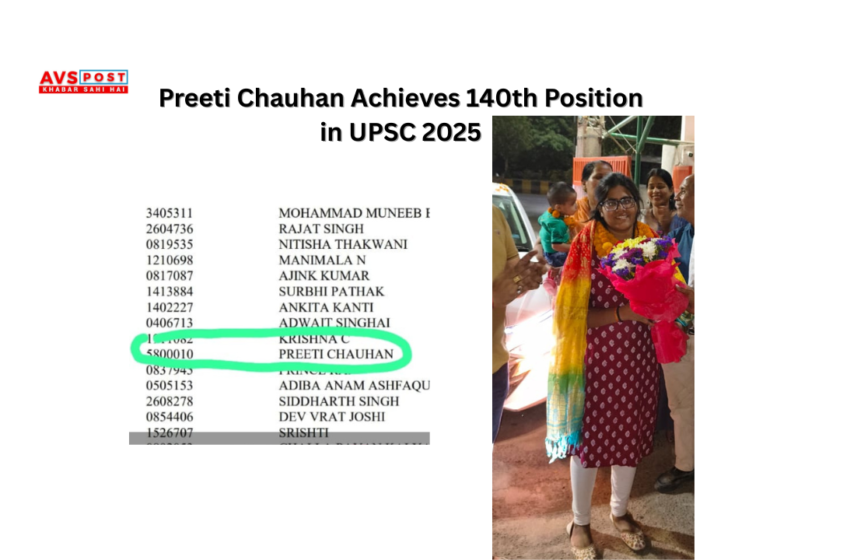
Preeti Chauhan, a daughter of Noida Sector-82, has brought immense pride to Noida and Uttar Pradesh by securing the 140th rank in the UPSC 2025 examination through her tireless hard work and dedication. Residing in Pocket-12 and daughter of Shri Rajendra Kumar Singh, Preeti’s success has sparked celebrations across the area, with her family and loved ones beaming with joy.
Turning Dreams into Reality with Strong Resolve: Preeti Chauhan
Preeti Chauhan Achieves 140th Position in UPSC 2025
Preeti’s success proves that no goal is out of reach when backed by strong determination and hard work. Cracking the highly competitive UPSC exam is akin to turning a dream into reality, and Preeti has accomplished this with sheer passion and commitment.
From Struggle to Success: Preeti’s Soaring Journey
Her success is particularly inspiring for young aspirants who dream big despite limited resources. Preeti has proven that the path to success is not confined to Delhi or elite coaching institutes — true dedication and discipline can lead to any height.
India’s New Education Policy 2025: The national education policy which was made in 2020 is currently going to start and be implemented soon in 2025 this is known as the new education policy or NEP 2025. It will still have more Development and changes. It will be a major step towards the Vikshit Bharat or the developed India for the students. There will also be changes in the education system and the way of studying. Apart from this it is built on five pillars such as: the access, the equity, the quality, the accountability and the affordability.
Details on what is India’s New Education Policy 2025?
What are the key features of India’s New Education Policy 2025?
Some features of the new education policy are:
The traditional system of Indian education 10 + 2 system will now convert into Pedagogical structure which is 5 + 3 + 3 + 4.
This will be the four stages of learning known as Foundation stage (Basic learning), Preparatory stage (literacy and numerical learning), Middle stage ( subjective learning), and Secondary stage (providing with many streams and the choice of subject).
This system will allow students to have childhood care, proper education, literacy, numeric learning, and master in multi-languages, critical thinking, development, technology based learning and other major training.
Details on what is India’s New Education Policy 2025
The major changes in India’s New Education Policy 2025
Some major changes of the Indian National Education policy 2025 are:
It will have an adoption of 5+3+3+4 structure in school education.
It will focus on foundational literacy and numeracy, which is led by national missions.
There will also be an Experiential and holistic learning with vocational education.
Some major changes of the Indian National Education policy 2025 are
There will be a reduction on the focus of high-stakes exams and shifting to continuous assessment.
There will be a teacher training aligned with NEP, with increased use of technology, Flexible, multidisciplinary higher education with the Academic Bank of Credit.
There will also be a greater emphasis on research and global integration in higher education.
There will also be commitment to equity, quality, and development across all levels.
The benefits of this policy.
Some of the benefits of NEP 2025 are:
Holistic Development.
Increased Flexibility.
Reduced Curriculum Burden.
Skill Development.
Some of the benefits of NEP 2025 are
Employment Opportunities.
Multilingual Development.
Cultural Development.
Personalized Learning.
Details on some of the challenges of India’s New Education Policy 2025.
Some of the challenges of NEP 2025 are:
Lack of planning.
Lack of teacher training.
The way to introduce this reforms.
Financial problems.
Details on some of the challenges of India’s New Education Policy 2025
Infrastructure development.
Language barriers.
Quality of education.
Faculty shortage.
Lack of awareness.
When will this policy began and start?
This policy was approved and implemented on July 29, 2020 and its long term implementation will be seen from this year 2025 when it will continue till 2040.
When will this policy began and start?
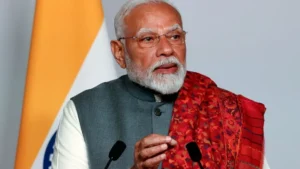
PM Narendra Modi on the Indian NEP 2025.
PM Modi is showing images support towards the education policy and its transformation. According to him this education policy will make students self Reliance and globally accessible. It will also be a major towards the development of India as students are the base and future of India. It will also be India’s step toward becoming modernized in this growing world. India will also get closer towards other countries by its multi-language and technology learning learning.
JEE Main 2025 Results Out:Today, April 17, 2025, the Joint Entrance Examination (JEE) Main 2025 Session 2 results were formally released by the National Testing Agency (NTA). For more than 10 lakh engineering candidates from India and overseas who took the exam between April 2 and April 9, 2025, this important announcement represents a major turning point.
Two papers were used for the second JEE Main 2025 session:
Paper 1 (B.E./B.Tech): April 2, 3, 4, 7, and 8, 2025.
On April 9, 2025, Paper 2 (B.Arch/B.Planning) was completed.
The test was given in 15 foreign locations and several Indian cities using a Computer-Based Test (CBT) format.
JEE Main 2025 Results Out
How to View the Outcomes
Candidates can use these steps to view their results:
Go to jeemain.nta.nic.in, the official JEE Main website.
To view the results of
, click the link.
Enter your date of birth or application number and password.
For future use, view and download your scorecard.
JEE Main 2025 Results Out
Final Answer Key and Compilation of Results
After resolving candidate-reported inconsistencies, such as inaccurate answers and blank response sheets, NTA published the final answer key prior to the results announcement. The organisation underlined its dedication to an open and equitable examination procedure.
The best of the two scores is used to calculate the All India Rank (AIR) for candidates who took the test in both Sessions 1 and 2.
JEE Main 2025 Results Out
High Achievers and Toppers
The outcomes have demonstrated the outstanding work that candidates nationwide have done. The official JEE Main website has comprehensive details about the top scorers, including those who received a perfect 100 percentile.
JEE Advanced Eligibility and Cut-Off
Alongside the results, the cut-off scores for JEE Advanced 2025 eligibility have been made public. The next stage of admission to the Indian Institutes of Technology (IITs), JEE Advanced, is open to candidates who meet the cut-off requirements.
JEE Main 2025 Results Out
After-Result Procedure
After the results are announced:
Registration for JEE Advanced 2025: Candidates who meet the requirements can sign up for JEE Advanced according to the timetable on the official website.
Counselling and Seat Allocation: For admission to NITs, IIITs, and other Government Funded Technical Institutions (GFTIs), counselling sessions will be held by the Joint Seat Allocation Authority (JoSAA).
JEE Main 2025 Results Out
In conclusion
An important milestone in the academic careers of engineering candidates is the announcement of the JEE Main 2025 Session 2 results. It is recommended that candidates keep abreast of official announcements concerning JEE Advanced registration and counselling schedules. For detailed information and updates, visit the official JEE Main website: jeemain.nta.nic.in.
Dr. Shriram Nene: Dr. Shriram Nene is a cardiothoracic and vascular surgeon. Who is best known medical expertise. He is also husband of Bollywood actress Madhuri Dixit. He built a successful career in the U.S. before moving to India with Madhuri Dixit in 2011. Since then, he has been involved in various health-tech and educational initiatives aimed at improving healthcare accessibility and awareness in India. He’s also active on digital platforms, using them to promote health, fitness, and wellness through simplified, trustworthy information. He is also known for being tech-savvy, entrepreneurial, and passionate about modernizing healthcare using technology.
Dr. Shriram Nene
Where was his early life and education?
He was born on February 11, 1967 in London. He was raised in a Maharashtrian family in US. He earned his undergraduate degree from Washington University in St. Louis. Then, he went on to earn his Doctor of Medicine (MD) from the University of California, Los Angeles Medical School. After this he completed his residency in General Surgery and then further specialized in Cardiothoracic and Vascular Surgery in the U.S. He has been board-certified in general surgery and thoracic surgery, and he practiced as a successful surgeon for over a decade in the United States before moving to India.
Where was his early life and education?
Who all are there in Dr. Shriram Nene’s family?
His family consists of the following members:
His father: Mr. Madhav Nene, Who was a engineer.
His Mother: Mrs. Anuradha Nene.
His Wife: Madhuri Dixit, who is a popular Bollywood actress and dancer.
His son: Arin Nene, born on March 2003 and Ryan Nene, born on March 2005.
He and Madhuri maintain a relatively private family life, though they occasionally share moments with their sons on social media or during public appearances.
Who all are there in Dr. Shriram Nene’s family?
Details about his relationship with Madhuri Dixit.
He shares a strong, supportive, and loving relationship with Madhuri Dixit. Their bond is often admired for how grounded, balanced, and private it remains, despite their public profiles. They got married on October 1999 and Madhuri often says she found a life partner who sees her as a person, not a celebrity as Dr. Nene had not watched Madhuri’s films before meeting her, which helped them build a relationship based on personality and values, not fame.
Details about his relationship with Madhuri Dixit.
They both support each other’s careers, Madhuri supported Dr. Nene’s decision to return to India in 2011, and he supports her acting and dance career, even producing content with her. They often speak about making decisions together and keeping their family grounded. The couple shares a love for fitness, health, and family life. They even co-create health and wellness content through YouTube and on other platforms.
Why did he choose medical as a career?
In US he practiced as a board-certified Cardiothoracic and Vascular Surgeon for several years. He performed complex surgeries including heart valve repairs, bypass surgeries, and lung surgeries. He is known for adopting innovative, evidence-based practices and keeping up with cutting-edge technology in the medical field. He built a reputation for excellence in minimally invasive and robotic surgeries.
Why did he choose medical as a career?
In 2011, he moved to Mumbai with Madhuri Dixit and their children to reconnect with their roots and contribute to the Indian healthcare ecosystem. Soon, he became passionate about healthcare transformation in India, especially around accessibility and awareness. He launched a digital health platform to educate people about preventive health and wellness. He has also created a YouTube channel (“Dr. Nene Official”) where he shares medical knowledge, fitness tips, and lifestyle content, often collaborating with Madhuri.
His Core Focus Areas are Preventive Healthcare, Health Education, Awareness, Technology-driven Healthcare Solutions and Public Health Advocacy.
What are his achievement and records?
Some of his achievement and records are:
He has performed hundreds of complex heart and lung surgeries, earning the trust of patients and peers.
He is recognized for using cutting-edge, minimally invasive surgical techniques.
He has Co-founded digital health platforms aimed at spreading awareness, improving access to credible medical knowledge, and empowering people to take charge of their health.
He played a pivotal role in creating educational content on YouTube and social media, demystifying medical topics for the general public.
Through his YouTube channel and collaborations with Madhuri Dixit, Dr. Nene has built a large online following for health content that is both professional and easy to understand.
What are his achievement and records?
He is recognized as a trusted voice in health communication, especially during COVID-19, where he shared timely, reliable information.
He was invited to be a speaker and advisor at various medical, health-tech and wellness events.
He was involved in startups and initiatives that bridge the gap between traditional healthcare and technology (like AI, telemedicine, and wearable tech).
He was from featured in interviews and health panels with top Indian and global healthcare leaders.
He was honored at public forums and conferences for his contributions to digital health education and innovation.
He is recognized in media outlets like The Times of India, Hindustan Times, and health magazines for his impact on healthcare in India.
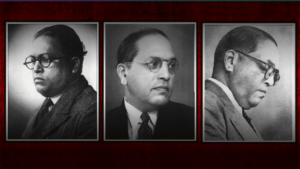
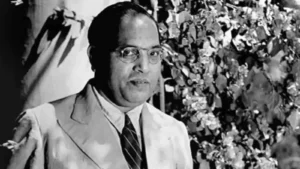
Ambedkar Jayanti 2025: The Ambedkar Jayanti is celebrated on April 14th every year to honor the birth anniversary of Dr. B.R. Ambedkar, one of India’s greatest social reformers, jurists, and the chief architect of the Indian Constitution. It is to be celebrated and pay tribute to Dr. Bhimrao Ramji Ambedkar, who fought against caste discrimination and worked for the upliftment of Dalits and other marginalized communities. He played a key role in shaping modern India by drafting the Constitution, which guarantees equality, liberty, and justice for all citizens. It is more than just a celebration, it’s a reminder of the ongoing fight for social equality and human rights in India.
Ambedkar Jayanti 2025
Who is Dr. B.R. Ambedkar?
Dr. Bhimrao Ramji Ambedkar, who is also known as Babasaheb Ambedkar. He was born on April 14, 1891, in Madhya Pradesh and died on December 6, 1956. He was from the Dalit community (Mahar community) and faced severe discrimination in his early life. He was the first Dalit to earn a college degree in India and Studied at Columbia University (USA) and London School of Economics. He earned multiple doctorates in economics and law.
Who is Dr. B.R. Ambedkar? (Ambedkar Jayanti 2025)
He was one of India’s most respected social reformers, jurists, economists, and the chief architect of the Indian Constitution. He dedicated his life to fighting social discrimination, against the Dalits also known as untouchables, and worked tirelessly for equality, justice, and human rights. Dr. Ambedkar’s legacy lives on as a symbol of courage, intellect, and the fight for justice. His work laid the foundation for a more equal and democratic India.
Details on some of his major teachings.
Some of his teachings and principal are:
He Spread Equality for All, Ambedkar believed that every human being is equal, regardless of caste, religion, or gender. He fought to abolish untouchability and caste-based discrimination.
He urges people to: Educate themselves to gain knowledge and awareness; Agitate peacefully against injustice and Organize collectively to bring social and political change.
He Spread the Freedom of Thought, He emphasized the importance of independent thinking and not blindly following traditions or authorities.
Details on some of his major teachings.
He stressed the need to respect and follow the Constitution and its values of justice, liberty, equality, and fraternity.
He taught that self-respect is essential for personal and social development. He encouraged Dalits and other oppressed communities to live with pride and dignity.
He believed religion should promote morality, equality, and human values, not oppression.
What are his achievement and contribution?
Some of his major achievements and contributions are:
He was the Architect of the Indian Constitution, as Chairman of the Drafting Committee.
He played a key role in writing the Indian Constitution and ensuring its guaranteed equality, justice, liberty, and fraternity.
He introduced provisions to abolish untouchability and protect the rights of marginalized communities.
He was a Champion of Dalit Rights and dedicated his life to the upliftment of Dalits (Scheduled Castes) and fought against caste-based discrimination.
He launched movements like the Mahad Satyagraha to demand access to public water and temples for Dalits.
He was the First Law Minister of Independent India and served as the first Law Minister from 1947 to 1951. He used his position to push for social justice reforms and a strong legal foundation for the new nation.
What are his achievement and contribution?
He is a Educational Pioneer, and promoted the importance of education as a tool for social change. He founded several educational institutions and inspired generations to pursue knowledge.
He also worked towards the Women’s Rights Advocate and was a strongly supported equal rights for women in marriage, inheritance, and employment.
He proposed progressive laws like the Hindu Code Bill (though it wasn’t passed during his time).
He did Conversion to Buddhism. In 1956, he converted to Buddhism along with millions of followers, marking a powerful movement for spiritual and social liberation.
He founded the Navayana (New Vehicle) Buddhism, focusing on equality and rational thinking.
He was an economist with degrees from Columbia University and the London School of Economics.
He wrote works like The Problem of the Rupee, and supported land and labor reforms to improve India’s economy.
Why do we celebrate Ambedkar Jayanti 2025?
Ambedkar Jayanti is celebrated to Honor a Visionary Leader Dr. Ambedkar as he dedicated his life to fighting social inequality, caste discrimination, and injustice. His ideas laid the foundation for a more just and equal India. This is also Celebrated for the Constitution’s Architect, as he was the main drafter of the Indian Constitution, he ensured fundamental rights for all citizens regardless of caste, religion, or gender. He inspiration for Equality and Justice.
Why do we celebrate Ambedkar Jayanti? Ambedkar Jayanti 2025
His life and teachings inspire people to continue working toward a society based on equality, dignity, and human rights. It is also a reminder of Social Reform, Ambedkar Jayanti reminds us of the need to uphold social justice, eradicate discrimination, and empower the marginalized. It also represents the Cultural and National Significance as it is a public holiday in many Indian states and is celebrated through various rallies, speeches, cultural events, and educational programs.
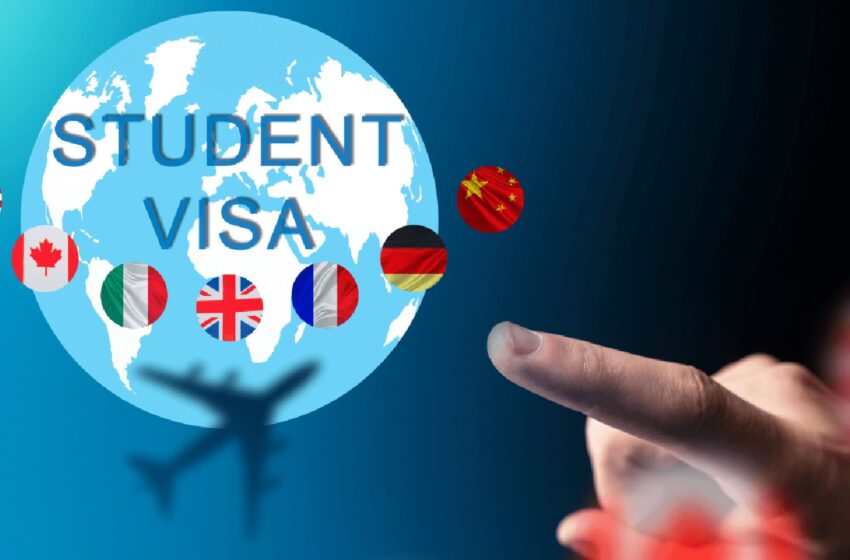
Student Visas: An All-Inclusive Handbook for Foreign Students Cross-border education has become both commonplace and essential in a world that is becoming more interconnected by the day. Millions of students go abroad each year in pursuit of better career opportunities, international exposure, and high-quality education. The student visa, a legal document that allows people to enter and remain in a country for the purpose of education, is essential to this trip. Aspiring international students must comprehend the complexities of student visas. The types, application procedures, prerequisites, difficulties, and advice for a successful application are all covered in detail in this article on student visas.
A student visa is a type of non-immigrant visa that is granted to people who want to attend an approved university in another nation. A student visa is especially designed for academic or professional endeavours, in contrast to tourist or work visas. It usually allows the holder to stay in the nation for the length of their course, and in certain situations, it allows limited work rights.
Student Visa Types
Depending on the level or kind of study, different nations offer different types of student visas. Here are some instances:
United States (Visas F-1, M-1, and J-1)
F-1 Visa: For academic pursuits at colleges and universities as well as language training programs.
M-1 Visa: For studies that are not academic or vocational.
J-1 Visa: For students participating in exchange programs as well as other exchange visitors.
UK (Visa for Student Route)
The primary student visa for the UK permits anyone 16 years of age and older to attend accredited universities. It took the place of the previous Tier 4 visa.
Student Visa
Canada (Permit to Study)
While a study permits the students to attend designated learning institutions (DLIs), Canada does not actually issue “student visas.” Additionally, students are issued an electronic travel authorisation (eTA) or a temporary resident visa.
Australia (Visa Subclass 500)
International students are permitted to enrol in a full-time course of study with this visa. Additionally, it grants work rights for the duration of the course.
Schengen Student Visa, European Union
The Schengen Visa is applicable for studies lasting less than ninety days. Individual nations provide national student visas for extended studies.
Standard Conditions for a Student Visa
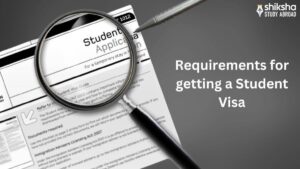
The majority of student visa applications need the following, though specific requirements differ from nation to nation:
An admission letter is evidence of acceptance from an accredited school.
Proof of Funds: Records attesting to the ability to cover living expenses, tuition, and return airfare.
Valid Passport: A passport that is good for the duration of the study.
Language Proficiency: Proof of language ability, such as the TOEFL, IELTS, or similar tests.
Health and Character Requirements: In certain countries, police clearance and medical examinations are required.
Visa Application Form: filled-out, national application form.
Biometric Information: Photographs and fingerprints are frequently needed.
Procedure for Applications
Apply and Get Accepted: You must be admitted to a course and institution that the immigration authority has approved before you can apply for a student visa.
Obtain Documents: Compile the necessary paperwork, such as your passport, academic records, and financial proof.
Pay Visa Fees: Keep the receipt after paying the necessary visa application fee.
Arrange an Interview (if necessary): A consulate or embassy interview is required in certain nations, such as the United States.
Application Submission: You can apply in person at the visa application centre or online.
Await Processing: Each country has a different processing time. Applying well in advance is advised.
Get Your Visa Decision: If your application is accepted, you will either get your visa as a separate document or as a sticker to put in your passport.
Difficulties Student Visa Applicants Face
Even though it’s a routine procedure, getting a student visa can be difficult:
Rejections of Visas
Inadequate documentation, a lack of academic motivation, weak ties to the home country, or inadequate financial proof are some of the causes.
Student Visa
Processing Delays
Travel plans may be impacted by delays in visa processing caused by high volumes or political factors.
Immigration Laws Are Changing
Applicants may become uncertain due to changing visa regulations, especially in nations like the United States and the United Kingdom.
False representation
Giving false information could lead to a visa being denied or future bans.
Start Early with These Tips for a Successful Student Visa Application
Begin the application process at least three to six months before the date of your planned trip.
Be Truthful and Unambiguous: Always give correct information and comprehensive documentation.
Prepare for the interview by outlining your plans for study, career aspirations, and the factors that led you to choose the nation.
Demonstrate Strong Home Ties: Immigration officials want to know that you plan to return once your studies are over.
Keep Up: Visa regulations are subject to sudden changes. Visit the official immigration website on a regular basis.
A Student Visa’s Rights and Obligations
You have rights and limitations while you are on a student visa:
Rights
Study: Attending an authorised school full-time.
Work: The majority of nations permit full-time employment during breaks and part-time employment (e.g., 20 hours per week) during semesters.
Access to Services: Restricted availability of student services, discounts, and healthcare.
Duties
Remain Enrolled: You need to continue your academic progress and full-time enrolment.
Comply with Visa Conditions: Comply with all requirements, including work limits and reporting.
Leave When Visa Expires: You are required to depart when your visa expires unless you apply for an extension or another visa.
Opportunities After Study
Numerous nations provide options for remaining and finding employment following graduation:
S.: H-1B visa options and Optional Practical Training (OPT).
UK: Two years of post-study work are permitted under the Graduate Route.
Post-Graduation Work Permit (PGWP) in Canada.
Australia’s Temporary Graduate Visa (Subclass 485).
These pathways are essential for obtaining foreign work experience and possibly obtaining permanent residence.
Student Visa
In conclusion
A student visa is the key to international education, personal development, and future opportunities; it is more than just a travel document. The chances of success can be significantly increased by being well-prepared and comprehending the requirements, even though the application process may seem overwhelming. Student visas continue to be an essential part of international development and cross-cultural academic exchange as nations continue to draw in top talent from around the world.
Whether your goal is to study engineering in Germany, business in Canada, or medicine in Australia, the first step to reaching your goals on the international scene is obtaining a student visa.
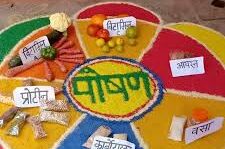
Poshan Pakhwada 2025: Poshan Pakhwada is a national initiative in India that focuses on improving nutrition and promoting healthy eating habits. The term “Poshan” means “nutrition” in Hindi, and “Pakhwada” refers to a period of 15 days. During Poshan Pakhwada, various activities are organized to raise awareness about the importance of proper nutrition, especially among children, pregnant women, lactating mothers, and other vulnerable groups. The event is typically held annually and is part of the broader Poshan Abhiyan (National Nutrition Mission), which was launched by the Government of India in 2018.
Poshan Pakhwada 2025
The mission aims to reduce malnutrition and improve nutritional outcomes through various campaigns, programs, and community-based initiatives. During Poshan Pakhwada, there are awareness campaigns, workshops, community events, health check-ups, and distribution of nutritional supplements to promote balanced diets and address issues like undernutrition, anemia, and stunting. The initiative encourages people to adopt healthier lifestyle choices, increase awareness about local, nutritious foods, and provide information about government programs related to nutrition. This event will happen from April 8 to April 22.
What is the theme of Poshan Pakhwada?
This is the 7th edition of the event, which will happen from April 8 to April 22. As per the reports of Ministry of Women and Child Development, this years themes centered around on maternal and infant nutrition, digital accessibility for beneficiaries, and combating childhood obesity. The event will use a Poshan tracker, which enables real-time monitoring of nutrition services at Anganwadi centres.
What is the theme of Poshan Pakhwada?
The importance of these events.
Some importance of Poshan Pakhwada 2025 is:
By Raising Awareness on Malnutrition.
By Promoting Healthy Eating Habits.
By Engaging Communities in Action.
By Targeting Vulnerable Groups.
By Strengthening Government Nutrition Programs.
By Addressing the Link Between Nutrition and Overall Health.
The importance of these events.
By Empowering Individuals with Knowledge.
By Creating Long-Term Behavioral Change.
By Building Partnerships and Collaboration.
By Tackling the Multidimensional Issue of Malnutrition.
By Fostering Supportive Policies and Programs.
By Incorporating Local Solutions.
Details on the key activities during poshan pakhwada.
During Poshan Pakhwada, a variety of activities are organized to raise awareness and promote better nutrition. These include community outreach programs, such as street plays and rallies, Health camps provide free health check-ups, Workshops and seminars offer expert guidance on balanced diets, whereas Schools engage students through nutrition education programs and activities like quizzes, cooking contests, and health talks.
Details on the key activities during poshan pakhwada.
The event also focuses on promoting traditional, locally grown foods through farmers markets and recipe-sharing initiatives. NGOs and community leaders collaborate to extend the event’s reach, and fitness programs like yoga and sports activities are organized to encourage physical well-being alongside nutrition. Finally, feedback collection and monitoring of nutrition programs help evaluate the event’s success and identify areas for improvement. Through these comprehensive activities, Poshan Pakhwada fosters greater community involvement, spreads vital health knowledge, and supports ongoing efforts to combat malnutrition.
What can we do on Poshan Pakhwada 2025?
We can take part in various things on Poshan Pakhwada 2025 like: Awareness Campaigns, Healthy Cooking Classes, Health and Nutrition Awareness camps, Community Engagement or Outreach programs, Competitions, Fitness or Physical Activity and more.
Details on roles government and NGOs.
Some roles government and NGOs in Poshan Pakhwada 2025 are: