Category: Technology News

  • Apple Pay : The Complete Guide to Faster, Safer Contactless Payments

    Apple Pay : The Complete Guide to Faster, Safer Contactless Payments

    Apple Pay has transformed how millions of people pay for everyday purchases. Instead of digging for a physical card or typing long card numbers online, you can complete transactions with a simple tap or glance on your iPhone, Apple Watch, iPad, or Mac. This guide explains what Apple Pay is, how it works, its key benefits, setup steps, and why it ranks among the most secure payment methods available today.

    What Is Apple Pay?

    Apple Pay is Apple’s built-in mobile payment and digital wallet service. It stores your eligible credit, debit, or prepaid cards in the Wallet app and lets you make contactless payments in stores, within apps, and on the web. It works wherever you see the contactless payment symbol or the Apple Pay mark.

    Unlike traditional cards, Apple Pay never shares your actual card number with merchants. When you add a card, your bank creates a unique Device Account Number (a token) that is stored securely on your device. Each transaction uses this token plus a one-time dynamic security code.

    The Complete Guide to Faster, Safer Contactless Payments
    The Complete Guide to Faster, Safer Contactless Payments

    How Does Apple Pay Work?

    The process is simple on the surface but relies on strong security underneath:

    1. You double-click the side button (or Home button on older models) to open Wallet.
    2. Authenticate with Face ID, Touch ID, Optic ID, or your device passcode.
    3. Hold your iPhone or Apple Watch near a contactless terminal (or confirm in an app or on the web).
    4. Near Field Communication (NFC) transmits the tokenized credentials.
    5. The payment is approved, and you see a confirmation on screen.

    In apps and on websites that support Apple Pay, you simply tap the Apple Pay button and authenticate. No need to fill out lengthy forms.

    Key Benefits of Using Apple Pay

    • Speed and Convenience: Pay in seconds without opening your wallet or entering details.
    • Enhanced Security: Your real card number is never stored on the device or shared with merchants. Data lives in the Secure Element, a dedicated chip isolated from the operating system.
    • Privacy Protection: Apple does not keep transaction information that can be tied back to you. Transactions stay between you, the merchant, and your bank.
    • Rewards and Benefits: You still earn the same rewards, cash back, and protections offered by your card issuer.
    • Wide Acceptance: Available at millions of locations worldwide, in apps, and on websites. Support continues to expand (recently including new markets such as India with participating banks).
    • Device Integration: Works seamlessly across iPhone, Apple Watch, iPad, Mac, and Apple Vision Pro.
    The Complete Guide to Faster, Safer Contactless Payments
    Apple Pay : The Complete Guide to Faster, Safer Contactless Payments

    How to Set Up Apple Pay

    Setting up Apple Pay takes only a couple of minutes:

    1. Open the Wallet app on your iPhone.
    2. Tap the + button.
    3. Choose Debit or Credit Card.
    4. Scan your card with the camera or enter the details manually.
    5. Follow the verification steps from your bank (usually a code via text or app).

    Once added, the card appears in Wallet and is ready to use. You can also add cards directly from many banking apps. Compatible devices include recent iPhones with NFC, Apple Watch models, iPads with Face ID or Touch ID, and Macs with Touch ID or paired authentication.

    Is Apple Pay Safe?

    Yes. Apple Pay is designed to be more secure than using a physical card. Key protections include:

    • Tokenization so merchants never receive your real card number.
    • Biometric or passcode authentication required for every payment.
    • Secure Element hardware storage that is not backed up to iCloud.
    • No retention by Apple of personally identifiable transaction data.

    Even if a merchant experiences a data breach, your actual card details are not exposed because they were never transmitted.

    Apple pay : The Complete Guide to Faster, Safer Contactless Payments
    Apple pay : The Complete Guide to Faster, Safer Contactless Payments

    Tips for Getting the Most Out of Apple Pay

    • Set a default card in Wallet for one-tap payments.
    • Use Apple Watch for quick transit or store payments when your phone is in a bag.
    • Check participating banks and card issuers in your country, as availability varies by region and issuer.
    • Keep your device software updated for the latest features and security improvements.
    • Combine it with contactless rewards cards stored in Wallet where supported.

    Also Read This : iPhone Ultra Fold : Apple’s First Foldable iPhone – Rumored Features, Design, Specs, and Price

    Apple Pay delivers a cleaner, faster, and more private way to pay whether you’re in a store, buying in an app, or checking out online. By replacing physical cards with secure tokens and requiring biometric confirmation, it reduces friction while raising the security bar. If you own a compatible Apple device and a supported card, adding Apple Pay takes minutes and can streamline nearly every purchase you make.


    View this post on Instagram

     

    A post shared by AVSPOST (@avspost)

  • Pinaka Multi-Barrel Rocket Launcher : India’s Indigenous Artillery Powerhouse

    Pinaka Multi-Barrel Rocket Launcher : India’s Indigenous Artillery Powerhouse

    The Pinaka multi-barrel rocket launcher system stands as one of the Indian Army’s most significant indigenous artillery assets. Developed by the Defence Research and Development Organisation (DRDO), Pinaka delivers rapid, high-volume firepower and has evolved from a concept in the 1980s into a modern, versatile rocket artillery platform. Named after Lord Shiva’s legendary bow, the system reflects both cultural symbolism and technological ambition. Mounted on a robust truck chassis, a single Pinaka launcher can unleash a devastating salvo of rockets in a short span, making it a critical force multiplier on the modern battlefield.

    Origins and Development Journey

    Development of Pinaka began in the early 1980s when the need for a long-range indigenous artillery system became clear. In 1981, the Ministry of Defence approved a project to create such a capability. By 1983, the Indian Army had formalised its qualitative requirements. The Armament Research and Development Establishment (ARDE) was designated the lead laboratory, coordinating efforts across multiple DRDO laboratories.

    The programme faced the typical challenges of complex weapons development—propulsion, warhead design, launcher mobility, and fire-control systems. Extensive trials refined the system over the years. The result was a multi-barrel rocket launcher capable of saturating targets with high-explosive rockets at ranges far exceeding conventional tube artillery of that era.

    Pinaka Multi-Barrel Rocket Launcher : India’s Indigenous Artillery Powerhouse
    Pinaka Multi-Barrel Rocket Launcher : India’s Indigenous Artillery Powerhouse

    Baptism by Fire: Kargil and Early Induction

    Pinaka’s operational debut came during the 1999 Kargil conflict. A detachment of two launchers from the 121 Rocket Regiment was deployed in the high-altitude theatre. Its ability to deliver concentrated fire on enemy positions in difficult terrain proved valuable and helped establish the system’s credibility within the Army’s rocket artillery inventory.

    Following this experience, the first Pinaka regiment was raised in February 2000. By 2010, two regiments were fully operational. The Army subsequently planned progressive expansion to replace older rocket systems with the modern indigenous platform.

    Pinaka : Capabilities and Variants

    A standard Pinaka launcher carries 12 high-explosive rockets and can fire a complete salvo in a very short time. This “shoot-and-scoot” capability enhances survivability against counter-battery fire.

    Two key versions highlight the system’s growth:

    • The Pinaka Mark-I Enhanced variant offers a maximum range of approximately 45 km.
    • A longer-range guided rocket version extends the reach to around 120 km, adding precision-strike options.

    These improvements allow Pinaka to engage a wider set of targets, from troop concentrations and logistics nodes to fortified positions, while reducing collateral risk through better accuracy in the guided version.

    Production Scale-Up and Force Expansion

    Recognising the need for higher availability, the government in April 2013 sanctioned ₹1,388.80 crore to expand rocket production capacity from 1,000 to 5,000 units per year. The capacity enhancement was completed by 2014, ensuring steady supply for ongoing induction and training.

    Force structure has expanded steadily. In March 2024, plans emerged to raise two additional Pinaka regiments for deployment near the Line of Actual Control. By June 2025 these regiments had been formed, with training and equipment induction continuing.

    Pinaka Multi-Barrel Rocket Launcher : India’s Indigenous Artillery Powerhouse
    Pinaka Multi-Barrel Rocket Launcher : India’s Indigenous Artillery Powerhouse

    As of 15 March 2026, the Indian Army had inducted and made operational seven Pinaka regiments. An eighth regiment had been raised and had received more than half of its equipment. Plans call for the ninth and tenth regiments to join the order of battle in 2027. This measured expansion reflects both confidence in the system and a deliberate approach to building trained crews and support infrastructure.

    Future Role in an Integrated Rocket Force

    Looking ahead, Pinaka is expected to form part of a proposed Integrated Rocket Force that would combine complementary systems such as Pralay, Nirbhay, and BrahMos. In such a structure, Pinaka would provide the high-volume area-fire element, while longer-range and precision-guided missiles handle specialised missions. This integration would give the Army a layered, flexible rocket and missile arsenal capable of addressing a spectrum of threats.

    Strategic Significance

    Pinaka embodies the success of India’s defence indigenisation drive. It reduces dependence on foreign suppliers, creates a domestic production base, and delivers a system tailored to the Army’s operational requirements across plains, deserts, and high-altitude sectors. Continuous upgrades in range, accuracy, and production capacity ensure the platform remains relevant against evolving threats.

    Also Read This : Trump son linked company strikes drone deal with Pakistan Army : agreement reached even on initial order

    From its conceptual roots in the 1980s, through combat validation in Kargil, to its growing presence as a multi-regiment force in 2026, Pinaka has matured into a cornerstone of Indian rocket artillery. As the ninth and tenth regiments prepare for induction and the system finds its place in broader force structures, Pinaka continues to strengthen India’s conventional deterrence and operational flexibility.


    View this post on Instagram


    A post shared by AVSPOST (@avspost)

  • Kia Sorento : Complete 2026 Buyer’s Guide – Specs, Pricing, Features & Why It’s a Top Family SUV

    Kia Sorento : Complete 2026 Buyer’s Guide – Specs, Pricing, Features & Why It’s a Top Family SUV

    Looking for a versatile midsize three-row SUV that balances style, space, technology, and value? The Kia Sorento continues to stand out in a crowded market. Whether you’re shopping for a family hauler, an efficient hybrid option, or a capable daily driver with available all-wheel drive, the Kia Sorento delivers strong performance and practical features at a competitive price.

    In this complete guide, we’ll cover everything you need to know about the Kia Sorento — from powertrains and pricing to cargo space, trims, and real-world strengths.

    What Is the Kia Sorento?

    The Kia Sorento is a midsize three-row crossover SUV that seats up to six or seven passengers. It sits neatly between the smaller Kia Sportage and the larger Kia Telluride, offering a more manageable size while still providing genuine third-row usability and strong cargo flexibility.

    The current generation of the Kia Sorento debuted for the 2021 model year and received meaningful updates in styling, technology, and features for 2024–2025. The 2026 Kia Sorento carries those improvements forward with refined options and continued emphasis on value.

    Kia Sorento
    Kia Sorento

    2026 Kia Sorento Pricing and Trims

    The 2026 Kia Sorento starts at approximately $32,390 for the base LX front-wheel-drive model (MSRP, excluding destination, taxes, and fees). Fully loaded X-Pro and plug-in hybrid models can approach or exceed $50,000 depending on configuration.

    Available trims typically include:

    • LX
    • S
    • EX
    • SX
    • X-Line variants
    • X-Pro (more rugged-oriented)
    • Prestige packages on higher trims

    Hybrid and plug-in hybrid versions of the Kia Sorento are also available, giving buyers excellent efficiency choices alongside traditional gasoline power.

    Kia Sorento Powertrain Options

    One of the biggest strengths of the Kia Sorento is its range of powertrains:

    Powertrain Horsepower Torque Transmission Drivetrain Options Approx. Fuel Economy
    2.5L 4-cylinder 191 hp ~181–182 lb-ft 8-speed automatic FWD / AWD Up to 26 mpg combined
    2.5L Turbo 4-cylinder 281 hp 311 lb-ft 8-speed DCT FWD / AWD Around 23 mpg combined
    1.6T Hybrid 227 hp 258 lb-ft 6-speed automatic FWD / AWD Up to 34–37 mpg combined
    1.6T Plug-in Hybrid 261 hp 258 lb-ft 6-speed automatic AWD standard ~74 MPGe + ~30–32 miles EV range

    The turbocharged 281-horsepower engine available on EX and higher trims gives the Kia Sorento strong acceleration for merging and highway driving. The hybrid versions shine for buyers focused on fuel savings, while the plug-in hybrid adds meaningful all-electric range for daily commuting.

    Kia Sorento
    Kia Sorento

    Interior Space, Comfort & Cargo Capacity

    The Kia is designed with families in mind. Second-row legroom is generous (around 41.7 inches), and available captain’s chairs on higher trims improve access and comfort. The third row works best for children or occasional adult use.

    Cargo space is practical:

    • Behind the third row: approximately 12.6 cubic feet
    • Behind the second row: roughly 38.5–45 cubic feet
    • Maximum with both rear rows folded: about 75.5 cubic feet

    Higher trims of the Kia offer dual 12.3-inch panoramic displays, wireless Apple CarPlay and Android Auto, available Bose premium audio, a hands-free power liftgate, and a full suite of advanced driver-assistance features as standard or available equipment.

    Kia Sorento Towing Capacity and Capability

    Properly equipped gasoline versions of the Kia can tow up to 3,500 pounds, with the X-Pro SX Prestige AWD model reaching as high as 4,500 pounds. Hybrid and plug-in hybrid models are limited to around 2,000 pounds. This makes the Kia Sorento suitable for small trailers, boats, or recreational gear, though it isn’t a heavy-duty towing machine like larger body-on-frame SUVs.

    X-Line and X-Pro trims add higher ground clearance (around 8.2 inches), unique styling, and in the case of the X-Pro, more rugged all-terrain tires for light off-road or adventure use.

    Kia Sorento
    Kia Sorento

    Pros and Cons of the Kia Sorento

    Pros:

    • Competitive starting price for a three-row SUV
    • Multiple powertrain choices including strong hybrid and PHEV options
    • Attractive modern styling and well-equipped interiors
    • Strong standard safety and technology features
    • Manageable size compared to larger three-row rivals

    Cons:

    • Third-row space is tighter than full-size midsize SUVs like the Telluride or Pilot
    • Dual-clutch transmission on turbo models can feel less refined in traffic
    • Higher trims climb in price quickly
    • Cargo volume with the third row in use is limited

    Who Should Buy a Kia Sorento?

    The Kia is an excellent choice for:

    • Growing families who want three-row flexibility without the bulk of a full-size SUV
    • Buyers seeking strong value and warranty coverage (Kia’s industry-leading warranty remains a major selling point)
    • Drivers who want hybrid efficiency in a practical package
    • Those who prefer modern design and technology without paying luxury-brand premiums

    It competes directly with vehicles such as the Hyundai Santa Fe, Honda Pilot, Toyota Highlander, Subaru Outback (in some configurations), and the larger Kia Telluride.

    Also Read This : Volkswagen Tiguan : The Complete 2026 Guide to VW’s Best-Selling Compact SUV

    Is the Kia Sorento Worth It in 2026?

    Yes — the Kia remains one of the strongest all-around values in the midsize three-row SUV segment. It offers a smart balance of size, features, powertrain variety, and pricing that many competitors struggle to match. Whether you choose a well-equipped gas model or step up to a hybrid or plug-in hybrid, the Kia delivers practicality, style, and everyday usability.


    View this post on Instagram


    A post shared by AVSPOST (@avspost)

  • WhatsApp New Username Feature : What It Is and How to Reserve One for Yourself?

    WhatsApp New Username Feature : What It Is and How to Reserve One for Yourself?

    WhatsApp new username feature is one of the most anticipated privacy updates for the messaging giant. Announced officially in late June 2026, it allows users to create a unique, shareable handle (like @YourName123) that can replace the need to share your phone number when connecting with others.

    This optional feature enhances privacy, reduces spam risks, and makes it easier to connect without revealing personal contact details—similar to how usernames work on platforms like Instagram, Telegram, or X.

    Why WhatsApp Is Introducing Usernames

    For years, WhatsApp relied solely on phone numbers for identification. This worked well for personal chats but posed privacy challenges when sharing contacts, joining groups, or interacting with businesses and new people.

    WhatsApp New Username Feature
    WhatsApp New Username Feature

    Key benefits of WhatsApp new username feature include:

    • Enhanced Privacy: Share your username instead of your phone number. New contacts see your @handle first.
    • Easier Connections: Search and message people using usernames once fully rolled out.
    • Spam Reduction: Optional controls (like a “key” or restrictions) to limit who can message or call you.
    • Business Use: Companies can create professional handles for customer communication.

    The full rollout of chatting and calling via usernames is happening gradually over the coming months (later in 2026), but reservations are open now to secure your preferred name before popular ones are taken.

    How to Reserve Your WhatsApp Username Right Now

    Reserving is completely optional and can be done (or changed/deleted) at any time. Here’s a simple step-by-step guide:

    • Update WhatsApp: Ensure you have the latest version of the app on your primary mobile device (Android or iOS).
    • Open WhatsApp and tap the More options (three vertical dots) or go to Settings.
    • Tap your profile at the top.
    • Look for Username or Create username / Reserve username.
    • Tap Create username and enter your desired handle.
    • Rules: 3–30 characters, lowercase letters, numbers, periods (.), and underscores (_).
    • Cannot start with “www.” or end with a domain like .com.
    • Must be unique and available.
    • Confirm and reserve it. You’ll get a notification when the full feature is ready for your account, and your reserved username will be held exclusively for you.

    Tip: Act quickly—popular names are being claimed fast. Use your primary device for the reservation.

    WhatsApp New Username Feature
    WhatsApp New Username Feature

    WhatsApp New Username Feature : What Happens After Reservation?

    • Your username stays reserved even if the feature isn’t live in your region yet.
    • Once available, you can use it for new chats/calls while keeping your phone number private.
    • You can still use phone numbers if you prefer—the feature is optional.
    • Usernames link to your existing account; changing or deleting one is straightforward.

    Important Things to Know

    • Availability: Rolling out gradually. Not everyone sees the option immediately—keep the app updated.
    • Security: Usernames help fight impersonation but be cautious of scams pretending to be official accounts.
    • Cross-Platform: You may be able to reserve handles matching your Instagram or Facebook username via Meta’s Accounts Center in some cases.

    Also Read This : Android 17 is Here : Complete Guide to the Latest Update

    WhatsApp new username feature marks a big step toward more flexible, privacy-focused messaging. By reserving yours today, you ensure you get the handle you want when the feature fully launches.


    View this post on Instagram


    A post shared by AVSPOST (@avspost)

  • Android 17 is Here : Complete Guide to the Latest Update

    Android 17 is Here : Complete Guide to the Latest Update

    Google officially released Android 17 on June 16, 2026, beginning with Pixel devices. This update emphasizes improved multitasking, privacy, security, and the foundation for deeper AI experiences.

    Release Details

    • Rollout start: June 16, 2026, along with the June 2026 Pixel Feature Drop.
    • Supported devices: Pixel 6 series and newer (including Pixel 6a, 7, 8, 9, 10, Fold, and Tablet models).
    • Security: Comes with the full June 2026 security patch.
    • Other manufacturers: Samsung, Xiaomi, OnePlus, and others will release their customized versions (One UI 9, etc.) over the coming months.
    How to Update Android 17
    How to Update Android 17

    Key New Features in Android 17

    1. App Bubbles for Better Multitasking

    App Bubbles let supported apps float as movable windows. This makes multitasking smoother, especially on foldables, tablets, and large-screen phones. You can keep multiple apps active at once without switching between them.

    1. Screen Reactions & Media Tools
    • Record your screen and front camera together with Screen Reactions — ideal for tutorials, reactions, and content creation.
    • Major improvements to screen recording with better controls and quality.
    • New RAW14 support for professional photography and enhanced camera capabilities.
    1. Stronger Privacy & Security
    • Redesigned privacy indicators and clearer permission prompts.
    • New Android Contact Picker that lets apps access contacts with limited permissions.
    • Improved threat detection, better lost device protections, and stricter location controls.
    • Memory management enhancements for greater stability.

    How to Update Android 17

    1. Productivity & Interface Improvements
    • Enhanced split-screen and foldable optimizations.
    • Per-app dark theme settings.
    • Redesigned volume panel and more compact Settings layout.
    • Independent volume control for the Assistant.
    • “Continue On” feature for seamless handoff between devices.
    1. AI Foundations

    Android 17 prepares the ground for advanced Gemini features, including better on-device intelligence. Additional AI capabilities like music generation are expected to arrive gradually throughout 2026.

    How to Update

    • Pixel users: Go to Settings > System > System Update to download and install now.
    • Other devices: Check for updates in the coming weeks and months through your manufacturer’s settings.

    Also Read This : Tata Tiago 2026 : The Ultimate Budget Hatchback Gets a Massive Glow-Up

    Android 17 is a refined and practical update. It doesn’t overhaul the entire look of Android, but it delivers meaningful improvements in everyday multitasking, privacy, and content creation tools. It feels stable, polished, and ready for both casual users and power users.


    View this post on Instagram


    A post shared by AVSPOST (@avspost)

  • SpaceX IPO: Record $85.7 Billion Raised as Shares Skyrocket

    SpaceX IPO: Record $85.7 Billion Raised as Shares Skyrocket

    SpaceX IPO marks one of the most historic moments in the financial and space industries. Elon Musk’s SpaceX has successfully gone public, raising a staggering $85.7 billion in the largest initial public offering ever, far surpassing all previous records.

    SpaceX IPO Details and Historic Fundraising

    In the SpaceX IPO, the company priced its shares at $135 each, initially selling approximately 555.6 million shares and raising $75 billion. Underwriters quickly exercised the full greenshoe overallotment option, adding another 83.3 million shares and bringing the total amount raised in the SpaceX IPO to $85.7 billion.

    SpaceX IPO: Record $85.7 Billion
    SpaceX IPO: Record $85.7 Billion

    This massive capital raise in the IPO will significantly accelerate the company’s ambitious roadmap, including Starship development, Starlink constellation expansion, and advanced space infrastructure projects.

    How Shares Performed After the SpaceX IPO

    • Debut Day (June 12, 2026): Following IPO, shares began trading on Nasdaq under the ticker SPCX. The stock opened near $150 and closed around $161, posting strong gains of approximately 19-20% on the first day.
    • Post-IPO Momentum: SpaceX shares continued to climb in the following sessions, pushing the company’s market capitalization well above $2 trillion.

    The successful IPO has also made Elon Musk the world’s first trillionaire on paper, thanks to his substantial ownership in the company.

    Why the SpaceX IPO Attracted Massive Investor Interest

    SpaceX reported around $18.7 billion in revenue for 2025, with Starlink serving as the main growth driver. The strong performance of the SpaceX IPO reflects investor confidence in several key areas:

    • Leadership in reusable rocket technology and commercial space launches
    • Global rollout and monetization of the Starlink satellite internet network
    • Progress on the Starship program aimed at Mars colonization
    • Long-term government and national security contracts
    SpaceX IPO: Record $85.7 Billion
    SpaceX IPO: Record $85.7 Billion

    What’s Next After the SpaceX IPO

    With substantial new capital from the IPO, the company is well-positioned to execute its long-term vision while operating under public market expectations. Investors will closely monitor how SpaceX deploys these funds to scale operations and deliver on its ambitious goals.

    Challenges ahead include managing high valuation expectations, executing on aggressive timelines, and navigating increased regulatory and public scrutiny.

    Also Read This : Top 15 AI Tools Every Business Should Use in 2026

    The IPO represents a new chapter for the commercial space industry, bringing private innovation into the public markets at an unprecedented scale. This record-breaking event will be studied for years as a benchmark for high-growth technology companies.

    Whether you’re an investor tracking SPCX stock or a space enthusiast following the journey to Mars, the IPO is a milestone worth watching.


    View this post on Instagram


    A post shared by AVSPOST (@avspost)

  • Samsung ‘s New AI smartphones : What to expect

    Samsung ‘s New AI smartphones : What to expect

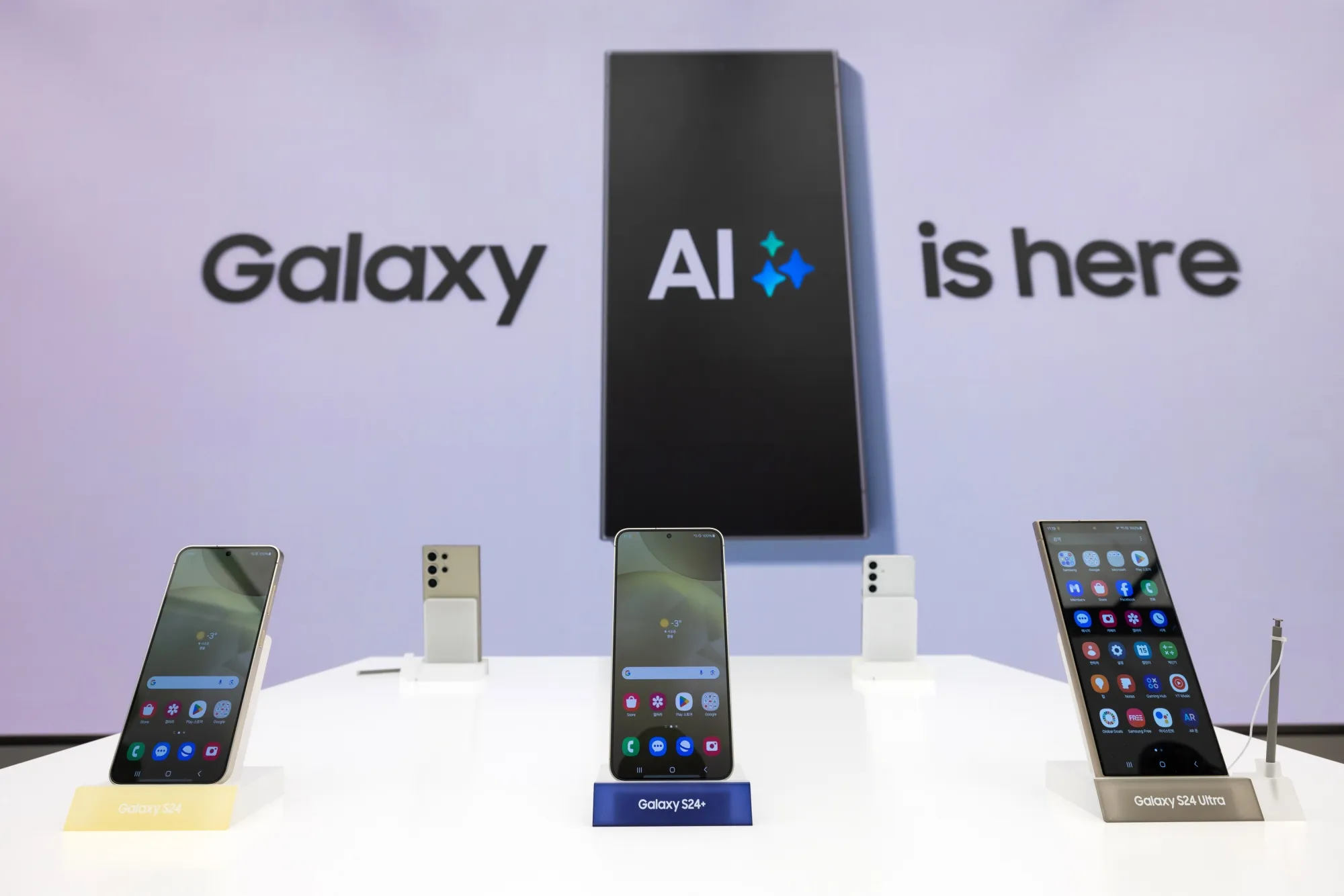
    Samsung ‘s New AI smartphones : Samsung is getting ready to launch a new range of smartphones with new  AI features. These phones are expected to make everyday tasks easier by improving areas like camera, battery and overall performance. Instead of just basic functions, the devices will use AI to understand users need and provide a smoother experience.

    ne of the main highlights will be the AI based camera, which can automatically adjust settings like brightness, focus and colours this will help users take better photos without needing much effort. Along with this, the phones are also likely to support better video recording with improved stability and clarity.

     The new smartphones may also come with faster processors, which will help in quick app loading and smooth multitasking. Over all the aim is to make the phone faster, smarter and more user – friendly.

    Samsung ‘s New AI smartphones
    Samsung ‘s New AI smartphones

    Samsung ‘s New AI smartphones :  Advanced camera Features 

    Samsung is focusing a lot in improving camera quality in its upcoming smartphones. with the help of AI, the camera will be able to recognize different scenes such as food, nature  portraits and night shots. Based on the situation, it will automatically adjust the settings to give the best result.

     Another useful feature is instant enhancement. As soon as picture is clicked, the system will improve its quality by sharpening details and reduce noise. This make it easier for users to get clear and attractive photos without editing.

     The camera is also expected to perform better in low light condition. It will brighten dark images and reduce blur. main night photography much more effective and clear.

    Samsung ‘s New AI smartphones
    Samsung ‘s New AI smartphones

     Longer battery Life With Smart  Optimization

    Samsung is also working on improving battery life in its upcoming smartphone. The device may use AI to understand how the user uses their phone and adjust power usage accordingly. This helps in saving battery and making it last longer throughout the day.

    The company is also likely to introduced faster charging option, so users can charge their phones quickly when needed. At the same time safety features will help protect the battery from overheating during heavy usage.

    All these improvements will make their phone more reliable, especially for people who use their devices for long hours.

    Smoother performance And Better Use Experience

    Samsung upcoming smartphones are expected to offer a much smoother and faster experience. with better processors, users will be able to use multiple apps at the same time without facing lag or slow down. Daily task like browsing , watching videos, and gaming will feel more seamless.

    Samsung ‘s New AI smartphones
    Samsung ‘s New AI smartphones

    The phone will also manage its performance based on user habits. Apps that are used more often will run faster, while unnecessary background activity will be reduced. This helps in keeping the phone stable and efficient over time.

    Also Read This : New information about PAN-AADHAR 

    Samsung ‘s New AI smartphones : A part from this, the overall experience will feel more personalized. The device may understand user preferences and make small improvements like faster response, smoother navigation, and better app performances. All these changes together will make the smartphone easy and comfortable to use.


    View this post on Instagram


    A post shared by AVSPOST (@avspost)

  • India’s New SIM Binding Rule : What Changes for WhatsApp, Telegram, and Signal Users Starting March 1, 2026

    India’s New SIM Binding Rule : What Changes for WhatsApp, Telegram, and Signal Users Starting March 1, 2026

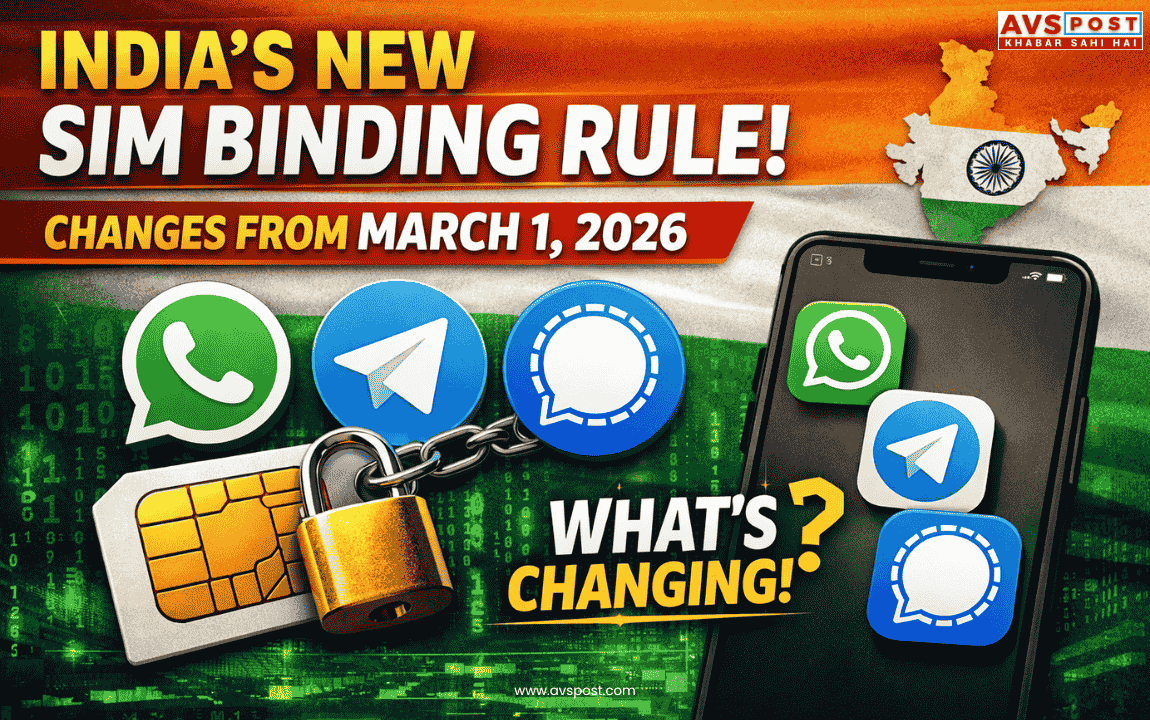
    India’s New SIM Binding Rule : Today being February 28, 2026, we’re literally on the edge of a big shift in how we use our favorite messaging apps in India. Starting tomorrow, March 1, 2026, a new government rule kicks in that could change the way WhatsApp, Telegram, Signal, and similar apps work on your phone—especially if you’re using an Indian (+91) number.

    This isn’t some rumor or fake news—it’s a real directive from the Department of Telecommunications (DoT) under the Telecom Cyber Security Rules. Let’s break it down clearly: what the rule actually says, why it’s happening, how it affects everyday users like you and me, and what to watch out for.

    What Exactly is “SIM Binding Rule”?

    In simple terms, SIM binding means your messaging app account must stay continuously linked to the active SIM card you used when you first registered the account.

    • The SIM has to be physically inserted in your phone.
    • It must remain active (not expired, not deactivated due to non-payment, etc.).
    • Apps will periodically check things like the SIM’s IMSI (a unique identifier) to confirm it’s still the same one and present in the device.

    If the SIM is removed, replaced, damaged, or goes inactive, the app may restrict access or stop working on your primary mobile device. This is similar to how some UPI apps now verify your SIM before letting you transact.

    India's New SIM Binding Rule
    India’s New SIM Binding Rule

    The rule applies to major OTT (over-the-top) messaging platforms using phone numbers for identification, including:

    • WhatsApp
    • Telegram
    • Signal
    • Snapchat
    • ShareChat
    • JioChat
    • Others like Arattai and Josh

    Why is the Government Doing This?

    India’s New SIM Binding Rule : The official reason is national security and fighting cyber fraud. India saw massive losses from digital scams in recent years—think “digital arrest” frauds, phishing via cloned numbers, SIM-swap attacks, and scammers using virtual/fake numbers or running accounts without a traceable telecom link.

    Communications Minister Jyotiraditya Scindia has repeatedly said no extensions will be given beyond the February 28 deadline, emphasizing that security comes first over any revenue or convenience concerns.

    The DoT issued the directive back on November 28, 2025, giving platforms 90 days to comply—hence the March 1 start date.

    Key Changes You’ll Notice (or Not)

    India’s New SIM Binding Rule : For most people who keep their main SIM inserted and topped up, this might feel invisible at first. But here are the practical impacts:

    • On your primary phone — The app should keep working normally as long as your registered SIM is in and active. If you remove it (e.g., to use a travel SIM abroad or switch devices often), expect potential lockouts or forced re-verification.
    • WhatsApp Web / Desktop / Linked Devices — Sessions will auto-logout every 6 hours (or less in some cases). You’ll need to scan the QR code again from your phone—which indirectly checks the SIM is present.
    • Multi-device limits — Stricter checks could make it harder to run the same account on many linked phones or companions without frequent SIM verification.
    • Roaming or eSIM users — If you’re abroad but your Indian SIM stays active (e.g., via roaming), it should be fine. But Wi-Fi-only setups without the physical SIM might break.
    • What if your SIM dies? — If it’s lost, damaged, or deactivated, you may lose access until you reactivate the same number or (possibly) migrate the account—details on migration aren’t fully clear yet.

    India’s New SIM Binding Rule : WhatsApp has already started testing this in beta versions for Indian users, with popups warning: “Due to regulatory requirements in India, WhatsApp needs to check that your SIM card is in your device.”

    India's New SIM Binding Rule
    India’s New SIM Binding Rule

    Is There Any Pushback?

    India’s New SIM Binding Rule : Yes—quite a bit. The Broadband India Forum (representing big tech like Meta/Google) called the directive “unconstitutional” and “ultra vires” (beyond legal powers), arguing telecom rules shouldn’t directly control OTT apps. There are reports of legal challenges and standoffs, but as of today, the government is firm—no extensions, compliance required.

    Platforms are complying to avoid penalties under the Telecommunications Act, 2023.

    Tips for Users in Lucknow (or Anywhere in India)

    • Keep your registered SIM active and inserted in your main phone.
    • Top up regularly if you have a low-balance plan.
    • For web usage, get used to more frequent logins.
    • If you travel a lot or use dual-SIM setups, test things early tomorrow.
    • Backup chats regularly (WhatsApp has cloud backups, but better safe!).
    • Watch official app updates and DoT announcements for any last-minute tweaks.

    Also Read This : Feel The Change Foundation’s Initiative : Cyber Fraud in Noida with Police and Community Support

    India’s New SIM Binding Rule is all about making messaging more traceable to cut down on fraud—but it does add friction for some legitimate use cases like device switching or privacy-focused setups.

  • Exciting Update: India AI Impact Summit 2026 Expo Extended to February 21 – Perfect Weekend Chance for UP Visitors!

    Exciting Update: India AI Impact Summit 2026 Expo Extended to February 21 – Perfect Weekend Chance for UP Visitors!

    India AI Impact Summit 2026 at Bharat Mandapam, New Delhi, here’s some fantastic news that just dropped today.

    Due to overwhelming public response, record footfall, and huge enthusiasm from students, professionals, and families, the government has officially extended the India AI Impact Expo (the main exhibition hall) by one extra day. It will now stay open to the public on Saturday, February 21, 2026!

    IT Secretary S. Krishnan announced this during a press briefing on February 18, emphasizing the need to give more people a comfortable experience without the heavy security restrictions on key summit days.

     India AI Impact Summit 2026 : Why This Event Matters

    The India AI Impact Summit 2026 (running under the IndiaAI Mission) is India’s biggest showcase of responsible and inclusive AI. The expo features:

    • 300+ exhibitors from India and 30+ countries
    • 10+ thematic pavilions on AI for healthcare, agriculture, education, sustainability, governance, fintech, robotics, and more
    • Live demos, humanoid robots, multilingual AI tools, startup zones, country pavilions, and interactive experiences like AI gaming and youth challenges (YUVAi, AI by HER)
    • Focus on ethical AI, Global South solutions, and real-world impact

    It’s hands-on and inspiring—perfect for anyone curious about how AI is shaping India’s future!

    India AI Impact Summit 2026
    India AI Impact Summit 2026

    Updated Public Visiting Schedule (Expo Only)

    • February 16–18, 2026: Already open and super crowded (you might have seen the buzz!)
    • February 19, 2026 (Thursday): Closed to the public — Main summit inauguration day with PM Narendra Modi, French President Emmanuel Macron, 20+ heads of state/government, and strict VIP/security protocols. Avoid this day if you’re just coming for the expo.
    • February 20, 2026 (Friday): Open to public with extended hours (up to 8 PM IST)
    • February 21, 2026 (Saturday): Extra day added! Fully open to public until around 8 PM IST

    Daily expo hours on public days: Generally 10 AM to 8 PM (extended from original 6 PM due to demand—check official site for real-time confirmations).


    View this post on Instagram

     

    A post shared by AVSPOST (@avspost)

    Travel Tips Especially for Visitors from Azamgarh / Uttar Pradesh

    Since you’re in Azamgarh (or nearby in eastern UP), plan smart to make the most of this weekend extension:

    • Train options: Catch an overnight train like the Poorva Express (from Azamgarh or Mau to New Delhi) or Gorakhpur-Lucknow-Delhi routes. Book ASAP—weekend crowds will spike!
    • From Delhi stations: Use Delhi Metro (Blue Line to Indraprastha or Pragati Maidan stations—Bharat Mandapam is right there). Metro is fastest and avoids traffic.
    • Shuttle/Parking: Organizers provide shuttles from select points; limited parking at venue—arrive early!
    • Entry: Free for public (registration may still be open via the portal). Carry valid ID, water, comfortable shoes—the expo spans huge halls!
    • Best days for relaxed visit: Go on Feb 20 or 21 to avoid Feb 19 chaos and enjoy extended evening hours.

    Also Read This : Justice for Sahil Dhaneshra : A Mother’s Unyielding Fight Against Reckless Reels and Road Impunity

     India AI Impact Summit 2026 : This extension shows how committed India is to making AI accessible to everyone—not just experts. If you’re a student, teacher, startup founder, or just tech-curious, this is your golden opportunity to see AI in action up close.

  • Tata Punch Facelift 2026 : Launching 13 January – Everything You Need to Know

    Tata Punch Facelift 2026 : Launching 13 January – Everything You Need to Know

    Tata Punch Facelift 2026 : The Tata Punch has been one of the most successful micro-SUVs in India since its launch in 2021. With strong sales, excellent safety ratings, and a practical package, it quickly became a favourite among buyers. Now, Tata Motors is preparing to launch the Tata Punch Facelift 2026 on 13 January 2026, bringing a much-needed mid-life update to keep it competitive.

    Here’s a complete overview of what to expect from the refreshed Tata Punch.

    Exterior – Sharper & More Modern Look

    The facelift gives the Punch a bolder and more contemporary appearance while retaining its signature high stance and muscular proportions.

    • Completely redesigned front with slimmer LED DRLs, sharper headlamps, and a more sculpted bumper
    • New grille design for a premium and aggressive front fascia
    • Rear features connected LED tail-lamps with a full-width light bar
    • Fresh alloy wheel designs and updated side profile elements

    The overall design draws clear inspiration from the Punch EV and larger Tata SUVs, making it look more upmarket.

    Tata Punch Facelift 2026
    Tata Punch Facelift 2026

    Interior – Bigger Screen, Better Quality

    Inside, the cabin feels noticeably more modern and feature-rich.

    • Larger 10.25-inch touchscreen infotainment system
    • Fully digital instrument cluster
    • New 2-spoke steering wheel with illuminated Tata logo
    • Updated dashboard layout with improved material quality
    • Possible additions like ventilated front seats, air purifier, and enhanced connected car features

    Safety – Segment-First ADAS

    Tata continues to lead in safety with this update.

    • Level-2 ADAS features (adaptive cruise control, lane keep assist, forward collision warning, etc.) – a first for any car in this segment and price range
    • 360-degree camera with front radar sensor
    • 6 airbags as standard across all variants
    • Electronic Stability Control (ESC), TPMS, hill-hold assist, and more

    Engine & Transmission – No Major Changes

    The powertrain remains the same trusted setup:

    • 1.2-litre naturally aspirated petrol engine (88 PS, 115 Nm)
    • 5-speed manual and AMT options
    • Factory-fitted i-CNG variant with dual-cylinder technology for better boot space

    No turbo-petrol or hybrid is expected in this update.

    Tata Punch Facelift 2026
    Tata Punch Facelift 2026

    Tata Punch Facelift : Expected Price

    The current Tata Punch ranges between approximately ₹6 lakh to ₹10.10 lakh (ex-showroom). The facelift version is likely to see a modest increase of ₹25,000–50,000 depending on the variant.

    Expected price band after facelift: ₹6.20 lakh – ₹11 lakh (ex-showroom)

    Rivals It Will Face

    The updated Punch will compete against:

    • Hyundai Exter
    • Nissan Magnite
    • Renault Kiger
    • Citroën C3
    • Maruti Fronx (base variants)

    Also Read This : Nissan Gravite Unveiled : Nissan’s Bold Bet on Affordable Family Mobility in India 2026

    With added ADAS, bigger screen, refreshed design, and Tata’s strong safety reputation, the Tata Punch Facelift 2026 looks set to strengthen its position as one of the best value-for-money micro-SUVs in India.