Author: Nimmi Chaudhary

  • Understanding the Waqf Act and Its 2025 Amendments: A Comprehensive Overview

    Understanding the Waqf Act and Its 2025 Amendments: A Comprehensive Overview

    In India, the Waqf Act governs the administration of Waqf properties—endowments made under Islamic law for religious, charitable, or private purposes. These properties, dedicated to God, are inalienable and meant to serve community welfare, such as funding mosques, schools, or hospitals. The Waqf (Amendment) Act, 2025, also known as the Unified Management Empowerment Efficiency and Development (UMEED) Act, has introduced significant reforms to the Waqf Act of 1995, sparking debates about transparency, inclusivity, and religious autonomy. This blog explores the Waqf Act’s origins, its 2025 amendments, key provisions, controversies, and implications for India’s Muslim community and beyond.

    What is Waqf?

    Waqf, rooted in Islamic jurisprudence, refers to the permanent dedication of movable or immovable property for pious, religious, or charitable purposes. Once declared Waqf, a property cannot be sold, gifted, or inherited, and its benefits are directed to the specified purpose. In India, Waqf properties include mosques, graveyards, schools, and hospitals, managed by State Waqf Boards and overseen by the Central Waqf Council. As of 2025, India has approximately 872,351 Waqf properties spanning over 940,000 acres, valued at an estimated $14.22 billion.
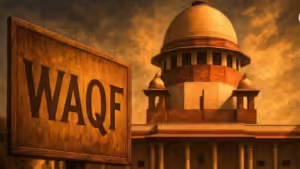
    Waqf Act and Its 2025 Amendments:
    Waqf Act and Its 2025 Amendments:

    Historical Context of the Waqf Act

    The regulation of Waqf in India dates back to the Mussalman Waqf Act of 1923, which aimed to ensure proper administration of Waqf properties. The Waqf Act of 1954 and its major revision in 1995 established a structured framework, creating State Waqf Boards and the Central Waqf Council to manage these assets. The 2013 amendments introduced measures to curb encroachments and enhance oversight but faced criticism for inefficiencies. Persistent issues like mismanagement, corruption, and land disputes—such as the Karnataka Waqf Board Land Scam—prompted calls for reform, culminating in the Waqf (Amendment) Act, 2025.

    Key Provisions of the Waqf (Amendment) Act, 2025

    The Waqf (Amendment) Act, 2025, introduced in the Lok Sabha on August 8, 2024, and enacted in April 2025 following heated parliamentary discussions, aims to improve transparency, accountability, and inclusivity in Waqf administration. Here are its key provisions:

    1. Renaming to UMEED Act: The Act renames the Waqf Act, 1995, as the Unified Waqf Management, Empowerment, Efficiency, and Development Act, emphasizing streamlined governance.
    2. Inclusion of Non-Muslims: For the first time, Waqf Boards and the Central Waqf Council must include at least two non-Muslim members to promote transparency, though this has raised concerns about community autonomy.
    3. Gender and Sectarian Inclusivity: The Act mandates at least two Muslim women on the Central Waqf Council and State Waqf Boards and ensures representation from diverse Muslim sects, such as Sunni, Shia, Bohra, and Aghakhani, as well as backward classes.
    4. Removal of ‘Waqf by User’: The provision allowing properties to be designated as Waqf based on long-term religious use has been eliminated, though existing Waqf-by-user properties registered before the Act remain valid unless disputed with the government.
    5. Centralized Registration System: A digital portal for Waqf property registration and management aims to improve record-keeping, with a six-month deadline for uploading details (extendable by Waqf Tribunals).
    6. Deletion of Section 40: Waqf Boards can no longer unilaterally declare properties as Waqf, curbing arbitrary claims that led to disputes, such as the Tamil Nadu case where an entire village, including a 1,500-year-old Hindu temple, was claimed by the Waqf Board.
    7. Enhanced Dispute Resolution: District Collectors or senior officers arbitrate disputes over Waqf versus government land, and Waqf Tribunals now include a District Judge, a Joint Secretary-level officer, and an Islamic law expert, with appeals allowed to High Courts within 90 days.
    8. Protection for Women and Orphans: The Act safeguards women’s inheritance rights, ensuring Waqf Act declarations do not override legal entitlements, and promotes welfare programs for widows and divorced women.
    9. Mandatory Audits: Entities with incomes above ₹1 lakh must undergo annual audits, subject to scrutiny by the Comptroller and Auditor General (CAG).
    10. Application of Limitation Act: The Limitation Act, 1963, now applies, setting a 12-year cap on Waqf property claims to reduce prolonged litigation.
    Key Provisions of the Waqf (Amendment) Act, 2025
    Key Provisions of the Waqf Act, 2025

    Controversies and Criticisms

    The Waqf (Amendment) Act, 2025, has ignited significant controversy, with supporters and critics voicing starkly different perspectives:

    • Supporters’ View: The government, led by the Bharatiya Janata Party (BJP), argues that the Act addresses long-standing issues like corruption, mismanagement, and illegal occupation of Waqf properties (58,898 properties are reportedly encroached upon). Minister Kiren Rijiju emphasized benefits for poor Muslims, citing the Act’s focus on transparency and inclusivity. The Dawoodi Bohra community, among others, has praised the reforms as meeting long-pending demands.
    • Critics’ Concerns: Opposition parties, including Congress, AIMIM, and the All India Muslim Personal Law Board, label the Act as “anti-Muslim” and unconstitutional, arguing it violates Article 26, which guarantees religious communities the right to manage their affairs. Critics, including MP Asaduddin Owaisi, fear the inclusion of non-Muslims and increased government oversight could erode Muslim autonomy and target Waqf properties. The removal of ‘Waqf by user’ is seen as potentially destabilizing existing Waqf designations.
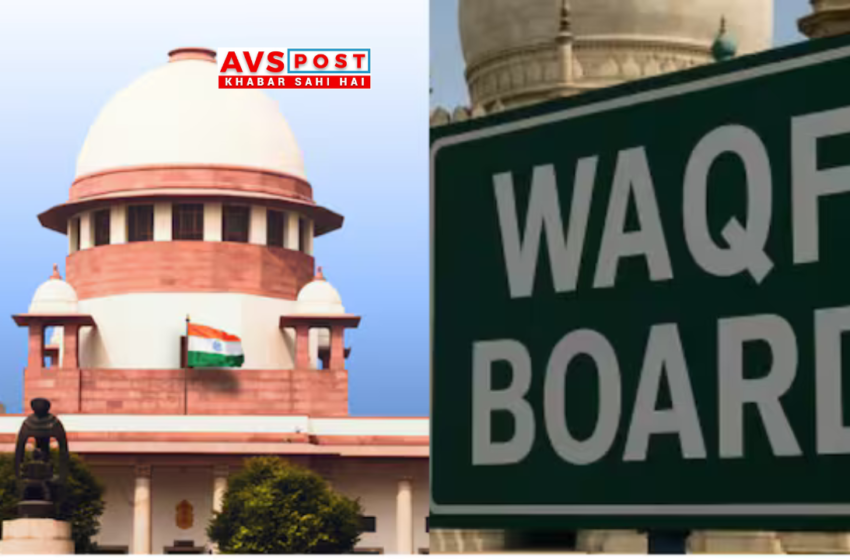
    • Legal Challenges: On April 4, 2025, multiple petitions, including those by Owaisi, Congress MP Mohammad Jawed, and Jamiat Ulama-e-Hind, challenged the Act’s constitutionality in the Supreme Court. The court, under Chief Justice Sanjiv Khanna, clubbed these under “In re: Waqf (Amendment) Act 2025” and ordered no denotification of Waqf properties or appointments to Waqf Boards until May 5, 2025, pending further hearings. Six BJP-ruled states, including Haryana and Assam, have supported the Act’s constitutionality.
    Controversies and Criticisms
    Controversies and Criticisms : Waqf Act

    Implications and the Road Ahead

    The Waqf (Amendment) Act, 2025, represents a bold attempt to modernize Waqf administration, addressing issues like opaque land records (over 2 lakh properties lacked digital records) and disputes that have fueled community tensions. Its focus on digitization, inclusivity, and legal safeguards aims to align Waqf management with constitutional principles of transparency and equality. However, the Act’s success hinges on balancing state oversight with religious autonomy, a challenge underscored by ongoing Supreme Court hearings and public protests, notably in West Bengal’s Muslim-majority districts.

    The Act’s provisions, such as mandatory audits and centralized registration, could unlock the potential of Waqf properties to fund education, healthcare, and women’s empowerment programs. Yet, critics warn that excessive government control risks alienating the Muslim community and setting a precedent for regulating other religious endowments. The Supreme Court’s upcoming rulings will likely clarify the Act’s constitutional validity and its impact on India’s secular framework.

    Also Read This : Civil Defence Drills

    The Waqf (Amendment) Act, 2025, is a landmark reform with far-reaching implications for India’s 872,351 Waqf properties and the communities they serve. By tackling mismanagement and promoting inclusivity, it aims to empower marginalized groups while ensuring accountability. However, its contentious provisions have sparked a broader debate about religious autonomy and state intervention. As India navigates these reforms, inclusive dialogue and vigilant implementation will be crucial to ensuring that the Waqf Act upholds both justice and constitutional values. For the latest updates, follow the Supreme Court hearings and official government portals like minorityaffairs.gov.in.

  • India on Alert: Civil Defence Drills Ordered as Tensions with Pakistan Escalate

    India on Alert: Civil Defence Drills Ordered as Tensions with Pakistan Escalate

    Civil Defence Drills

    India’s Ministry of Home Affairs (MHA) issued a directive for multiple states to conduct civil defence mock drills on May 7, a move driven by heightened tensions with Pakistan following the devastating April 22 terrorist attack in Pahalgam, Jammu and Kashmir. The attack, which claimed 26 lives, mostly tourists, has pushed the two nuclear-armed neighbors to the brink, with fears of conflict looming large. These drills, evoking memories of the 1971 India-Pakistan war, signal India’s resolve to prepare its citizens for any escalation.

    India’s Ministry of Home Affairs (MHA)
    India’s Ministry of Home Affairs (MHA) : civil defence drills

    The Trigger: Pahalgam and Its Fallout

    The Pahalgam attack, the deadliest in Kashmir since 2000, has inflamed India-Pakistan relations. India accuses Pakistan of orchestrating the assault, while Pakistan denies involvement, calling for a neutral probe. The attack has sparked a series of retaliatory measures from India: suspension of the 1960 Indus Waters Treaty, a ban on Pakistani airlines in Indian airspace, and the cancellation of visas for Pakistani nationals. Along the Line of Control (LoC), both nations have exchanged fire, with Pakistan claiming civilian casualties and India asserting effective counterstrikes. Pakistan’s recent warning of an imminent Indian military strike, based on “credible intelligence,” has further raised the stakes.

    Civil Defence Drills : A Proactive Response

    The MHA’s order for civil defence drills is a calculated step to ensure civilian readiness amid these volatile developments. Scheduled for May 7, the drills include:

    • Air Raid Siren Activation: Testing warning systems to alert civilians of potential attacks.
    • Public Training: Educating citizens, including students, on protective measures like taking cover or evacuating to bunkers.
    • Blackout Exercises: Simulating power outages to assess security preparedness, as recently practiced in Ferozepur Cantonment.
    • Camouflaging Key Sites: Early efforts to shield critical infrastructure from detection.
    • Evacuation Planning: Updating and rehearsing strategies to move civilians to safety.
    Civil Defence Drills
    Civil Defence Drills

    In border regions like Poonch, Jammu and Kashmir, these preparations are particularly urgent. Schools are training students to dive under desks or flee to bunkers during shelling, a grim reminder of the region’s vulnerability.

    The Bigger Picture: Military and Diplomatic Moves

    The civil defence initiative aligns with India’s broader response. Prime Minister Narendra Modi has given the armed forces “complete operational freedom,” with the Indian Air Force conducting exercises featuring Rafale and Su-30MKI jets. The National Investigation Agency is investigating the Pahalgam attack, and security has been tightened nationwide, with strict checks on Pakistani nationals in India.

    The Bigger Picture: Military and Diplomatic Moves
    civil defence drills  :  The Bigger Picture: Military and Diplomatic Moves

    On the diplomatic front, global powers are urging restraint. The U.S. has backed India’s right to combat terrorism but emphasized de-escalation, with Secretary of State Marco Rubio and Defense Secretary Pete Hegseth issuing measured statements. Russia, Iran, and others have echoed similar calls, while Pakistan has sought Russia’s mediation and proposed a joint investigation into the attack. Pakistan’s military, meanwhile, is conducting its own exercises near the LoC, signaling readiness for any Indian move.

    A Nation on Edge

    The drills reflect the public’s growing unease. Nationwide protests demanding justice for the Pahalgam victims have amplified calls for action, with opposition leaders like Rahul Gandhi pressing for a strong response. In Pakistan, public anxiety is evident, with people searching for terms like “India-Pakistan war” and “Rafale missiles,” wary of India’s military might. For Kashmiris on both sides of the LoC, the threat of conflict is all too real, with villagers preparing bunkers and schools closing in Pakistan-administered areas.

    Historical Echoes and Future Risks

    India and Pakistan have faced similar crises before—three wars since 1947, the 1999 Kargil conflict, and the 2019 Balakot airstrike after the Pulwama attack. Each time, diplomacy or restraint averted all-out war, but the current standoff feels different. The suspension of the Indus Waters Treaty, a cornerstone of bilateral ties, and the lack of robust crisis management channels raise the risk of miscalculation. With India’s 172 nuclear warheads and Pakistan’s 170, any escalation could be catastrophic.

    Civil Defence Drills
    Civil Defence Drills

    A Delicate Balance

    The MHA’s civil defence drills are both a practical necessity and a message of resolve. They prepare India’s citizens for the worst while signaling to Pakistan that India is ready for any eventuality. Yet, the hope remains that cooler heads will prevail. The international community’s push for dialogue and the memory of past de-escalation—like Pakistan’s release of an Indian pilot in 2019—offer a glimmer of optimism. For now, India stands vigilant, its people bracing for an uncertain future as the shadow of conflict lingers.

    Also Read This: ChatGPT Shopping : Revolution or Rough Start?

  • Why AIIMS Is the Best Choice for Medical Aspirants in India 2025

    Why AIIMS Is the Best Choice for Medical Aspirants in India 2025

    The All India Institute of Medical Sciences (AIIMS) is a group of premier public medical institutes in India, established under the All India Institute of Medical Sciences Act, 1956. All India Institute of Medical Sciences institutions are renowned for their excellence in medical education, research, and patient care. The first AIIMS was established in New Delhi in 1956, and as of 2025, there are 24 AIIMS institutions across India, including AIIMS New Delhi, AIIMS Bhopal, AIIMS Bhubaneswar, AIIMS Jodhpur, and others.

    AIIMS institutions offer undergraduate (MBBS), postgraduate (MD/MS/MDS), and super-specialty (DM/MCh) courses, along with nursing, paramedical, and allied health sciences programs. They are considered among the top medical colleges in India due to their rigorous academic standards, world-class faculty, and advanced infrastructure.

    Admission to AIIMS MBBS

    Admission to the MBBS program at All India Institute of Medical Sciences is through the National Eligibility cum Entrance Test (NEET-UG), followed by a centralized counseling process conducted by AIIMS New Delhi. Candidates are selected based on their NEET scores, rank, and category.

    National Eligibility cum Entrance Test
    National Eligibility cum Entrance Test

    Benefits of Studying at AIIMS

    1. World-Class Education

      • All India Institute of Medical Sciences institutions are globally recognized for their high-quality medical education.
      • The curriculum is comprehensive, combining theoretical knowledge, practical training, and research opportunities.
      • Faculty includes leading doctors, researchers, and scientists in the medical field.
    2. Affordable Fees

      • As government-funded institutions, AIIMS offer MBBS and other programs at highly subsidized fees compared to private medical colleges.
      • The approximate annual tuition fee for MBBS at AIIMS is ₹5,000–₹10,000, making it accessible to students from diverse economic backgrounds.
    3. State-of-the-Art Infrastructure

      • All India Institute of Medical Sciences campuses are equipped with modern laboratories, advanced medical equipment, and well-stocked libraries.
      • Attached tertiary-care hospitals provide hands-on clinical training with exposure to a diverse range of medical cases.
    4. Excellent Career Opportunities

      • An AIIMS degree is highly respected, opening doors to prestigious job opportunities in India and abroad.
      • Graduates often secure top positions in hospitals, research institutions, or pursue higher studies (MD/MS) at AIIMS or other renowned institutions.
      • Many AIIMS alumni work in global organizations like WHO or leading hospitals worldwide.
    5. Research Opportunities

      • All India Institute of Medical Sciences encourages students to engage in cutting-edge medical research, with access to funded projects and collaborations.
      • Students can publish papers, attend conferences, and contribute to advancements in healthcare.
    6. Clinical Exposure

      • All India Institute of Medical Sciences hospitals handle a high volume of patients, offering students unparalleled clinical exposure.
      • Students gain practical experience in diagnostics, surgeries, and patient care under expert supervision.
    7. Prestige and Recognition

      • Graduating from AIIMS is a mark of excellence, earning respect in the medical community and society.
      • AIIMS consistently ranks as the top medical college in India (e.g., NIRF 2024 ranked AIIMS New Delhi as No. 1).
    8. Holistic Development

      • AIIMS campuses offer vibrant student life with cultural events, sports, and extracurricular activities.
      • Leadership and teamwork skills are developed through student organizations and community outreach programs.
    9. Global Opportunities

      • AIIMS graduates are eligible to pursue postgraduate studies or practice medicine in countries like the USA, UK, and Australia after clearing relevant licensing exams (e.g., USMLE, PLAB).
      • International collaborations and exchange programs enhance global exposure.
    10. Contribution to Public Health

      • All India Institute of Medical Sciences trains students to address India’s healthcare challenges, including rural health and infectious diseases.
      • Graduates often contribute to public health initiatives, policy-making, and community service.
    delhi
    delhi

    Specific Benefits for MBBS Students

    • Limited Seats, High Competition: All India Institute of Medical Sciences offers around 1,200 MBBS seats across all its institutes, ensuring a low student-to-faculty ratio and personalized attention.
    • Internship and Stipend: The mandatory internship at AIIMS hospitals provides practical training and a stipend (approximately ₹20,000–₹25,000 per month).
    • Direct Pathway to Postgraduate Studies: AIIMS graduates have an edge in securing MD/MS seats at All India Institute of Medical Sciences or other top institutes due to their rigorous training.

    Why Choose AIIMS Over Other Medical Colleges?

    • Reputation: All India Institute of Medical Sciences is synonymous with excellence, often compared to institutions like Harvard Medical School for its standards.
    • Cost-Effectiveness: Unlike private colleges charging ₹50 lakh–₹1 crore for MBBS, All India Institute of Medical Sciences  is affordable.
    • Patient Diversity: Exposure to a wide range of medical cases prepares students for any challenge.
    • Alumni Network: A strong network of All India Institute of Medical Sciences alumni provides mentorship and career support.

    Also Read This: ChatGPT Shopping : Revolution or Rough Start?

    Studying at AIIMS is a dream for many medical aspirants due to its academic rigor, affordability, and unmatched career prospects. It equips students to become skilled doctors, researchers, and leaders in healthcare, contributing to both individual success and societal well-being. To secure admission, candidates must excel in NEET-UG (e.g., 2024 cut-off for general category was 675+ marks) and prepare diligently for the competitive selection process.

  • ChatGPT Shopping : Revolution or Rough Start?

    ChatGPT Shopping : Revolution or Rough Start?

    ChatGPT Shopping

    OpenAI’s latest venture into e-commerce has turned heads, with ChatGPT now doubling as a shopping assistant. Launched in late April 2025, this feature lets users search, compare, and buy products—from fashion to electronics—right within the chatbot. No ads, no browser hops, just a conversational nudge toward your next purchase. But is it a game-changer or a work in progress? Let’s unpack it.

    What’s New with ChatGPT Shopping?

    Imagine asking ChatGPT Shopping for a new air fryer and getting a curated list of options, complete with images, prices, and reviews, all neatly packed into visual product cards. That’s the promise. Powered by the GPT-4o model, the feature taps into third-party metadata to deliver results across categories like beauty, home goods, and tech. It’s available to everyone—free users, logged-out folks, and globe-trotters alike. OpenAI claims the recommendations are independent, driven purely by what you’re looking for, not by paid placements. Plus, you can ask follow-up questions to refine your choices, like picking a jacket that matches your vibe or budget.

    ChatGPT Shopping
    ChatGPT Shopping

    The Good: A Fresh Take on Shopping

    For some, it’s a breath of fresh air. One user raved about ChatGPT outshining traditional search engines, delivering detailed air fryer recommendations without a single click. The conversational flow feels natural—you ask, it answers, and suddenly you’re comparing models like a pro. No pop-up ads, no endless scrolling. The focus on intent-driven results means you’re not wading through sponsored listings or irrelevant suggestions (well, most of the time). For busy shoppers or those who hate tab overload, this streamlined approach could be a lifesaver.

    The Not-So-Good: Growing Pains

    Not everyone’s sold. Early feedback points to glitches, like users asking about niche topics—say, tariffs—and getting bizarrely off-topic results, like skincare products. Reddit’s buzzing with gripes about inconsistent recommendations, hinting that the AI’s still learning to nail context. Then there’s the privacy angle. If you’re a Plus or Pro user, ChatGPT Shopping might dip into your chat history for hyper-personalized picks. Sounds cool, but it’s got folks wondering how much of their data is fueling those suggestions. OpenAI’s tight-lipped on specifics, which doesn’t help.

    ChatGPT Shopping
    ChatGPT Shopping

    What’s Next?

    OpenAI’s playing the long game. They’re not making money from purchases or affiliate links yet, but they’ve left the door open for “tasteful” monetization down the road. Rumors of a Shopify partnership are swirling, which could tighten the e-commerce loop. With 500 million users and over a billion weekly searches, ChatGPT’s got the muscle to challenge giants like Google Shopping or Amazon—if it can iron out the kinks.

    Also Read This : Meet Ayush Mhatre : India’s Rising Cricket Sensation

    The Verdict

    ChatGPT’s shopping feature is bold, no question. It’s got the bones of something special: a chat-first, ad-free way to shop that feels like texting a savvy friend. But it’s not flawless. Missteps in relevance and murky data practices could trip it up if OpenAI doesn’t course-correct. For now, it’s a promising experiment—one worth trying if you’re curious, but don’t expect perfection just yet. Have you given it a spin? Let’s hear your take.

  • Meet Ayush Mhatre : India’s Rising Cricket Sensation

    Meet Ayush Mhatre : India’s Rising Cricket Sensation

    Ayush Mhatre was born in Virar, a suburban town near Mumbai, into a middle-class family. His father, Yogesh Mhatre, supported his cricketing passion, quitting his banker job to focus on Ayush’s career. His mother, Jagruti Mhatre, provided emotional and logistical support, with his maternal grandfather and uncle aiding during financial hardships. Details about his mother and siblings are private. Ayush faced challenges commuting 80 km by train from Virar to Churchgate for training. He switched schools—St. Joseph’s, Don Bosco, and Rizvi Springfield (for homeschooling)—to balance cricket and education.

    Personal Information

    • Full Name: Ayush Mhatre
    • Date of Birth: July 16, 2007
    • Age: 17 years (as of May 2025)
    • Birthplace: Virar, Maharashtra, India
    • Zodiac Sign: Cancer
    • Batting Style: Right-handed
    • Bowling Style: Right-arm off-break
    • Role: Opening Batter, Occasional Wicketkeeper
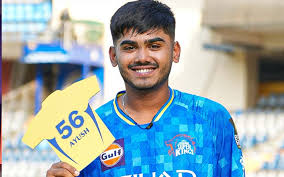
    • Jersey Number: 56 (noted during Under-19 Asia Cup, subject to change)
    • Instagram: @ayush_m255 (21.8K followers as of April 2025)
    • Net Worth: Estimated at ₹1–2 crore (approx. $120,000–$240,000 USD), derived from domestic cricket, IPL contract, and potential endorsements
    Ayush Mhatre : IPL Career
    Ayush Mhatre 

    Cricketing Journey

    Ayush started playing cricket at five, showing early talent in local parks. He trained at Dilip Vengsarkar Cricket Academy (ages 5–10) and MIG Cricket Club, both supporting him without fees. At 15, he committed to cricket professionally. Coached by Dinesh Lad and Prashant Shetty, he overcame depression and fitness issues, developing a fearless batting style likened to Rohit Sharma, his idol.

    Domestic Career

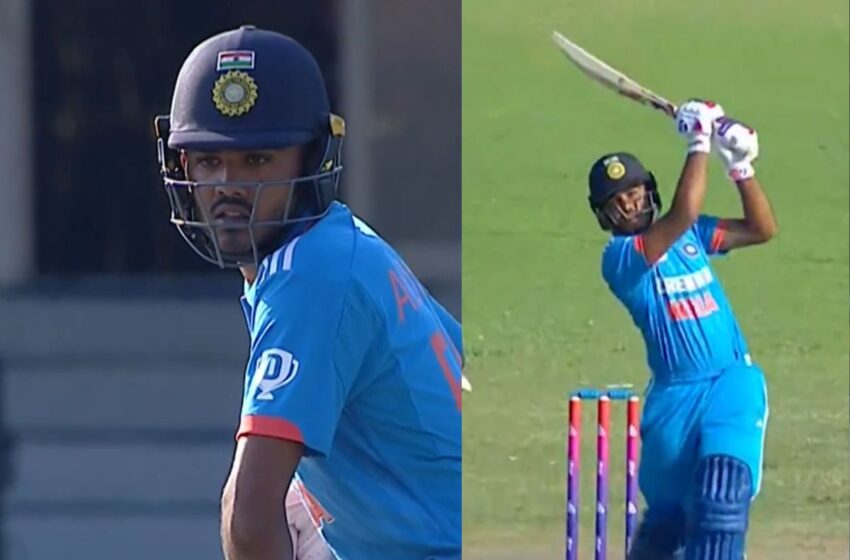
    • First-Class Debut: Played for Mumbai in the 2024–25 Irani Cup at 17, scoring 52 against Baroda and a maiden century (176 off 232 balls) against Maharashtra in the Ranji Trophy. In nine first-class matches, he scored 504 runs (two centuries, average: 31.50).
    • List A Achievements: In the 2024–25 Vijay Hazare Trophy, he scored 181 off 117 balls against Nagaland, breaking Yashasvi Jaiswal’s record as the youngest to score 150+ in men’s List A (age: 17 years, 291 days). In seven List A matches, he scored 458 runs (average: 65.42, strike rate: 135.50, two centuries) and took seven wickets.
    • Under-19 Career: In the 2024 ACC U19 Asia Cup, he scored 176 runs in five matches (average: 44), including 67* vs. UAE and 54 vs. Japan, and took two wickets in the semifinal. He was India’s top scorer. He led run-scoring in the 2022 U19 series against Pakistan and holds records for the fastest fifty (20 balls) in an ACC U19 Asia Cup match and most wickets by a spinner in a U19 league season (as of October 2023).

    Ayush Mhatre : IPL Career

    Ayush joined Chennai Super Kings (CSK) in 2025 as a replacement for Ruturaj Gaikwad, signed for ₹30 lakhs. He debuted against Mumbai Indians on April 20, 2025, at Wankhede Stadium, scoring 32 off 15 balls (four fours, two sixes, strike rate: 213.33) at number three, becoming CSK’s youngest player at 17 years and 278 days. MS Dhoni and coach Stephen Fleming praised his composure.

    Ayush Mhatre : IPL Career
    Ayush Mhatre : IPL Career

    Playing Style and Strengths

    Ayush is an aggressive yet technically solid opener, with fluent strokes and adaptability, drawing comparisons to Rohit Sharma. He occasionally bowls off-break and has kept wickets domestically. His fielding is exceptional, making him a versatile asset.

    Challenges and Resilience

    Ayush overcame depression, fitness struggles, and long commutes. His family’s sacrifices, especially his father’s, and his own discipline fueled his rise.

    Personal Life

    Ayush Mhatre keeps his personal life private, with no details about relationships. He lives humbly in Virar, stays grounded, and engages fans on Instagram. His clean image makes him a potential brand ambassador.

    Ayush Mhatre
    Ayush Mhatre

    Future Prospects

    At 17, Ayush is a top prospect for India’s 2026 Under-19 World Cup team. His domestic and IPL performances, backed by guidance from Rohit Sharma, position him for a potential senior India call-up.

    Inspiration

    Ayush’s journey from Virar to the IPL highlights talent, hard work, and family support, inspiring small-town cricketers.

    Also Read This : UPSC Preparation 2025 : What is UPSC exam? how to prepare for UPSC exam ?

  • Avneet Kaur : From Dance India Dance to Global Fame – Full Journey & Achievements

    Avneet Kaur : From Dance India Dance to Global Fame – Full Journey & Achievements

    Avneet Kaur was born on October 13, 2001, in Jalandhar, Punjab, India, to parents Sonia Nandra and Amandeep Singh Nandra. Brought up in a middle-class Sikh Punjabi household, she has a younger brother named Jaijeet Singh. Her family subsequently moved to Mumbai, where she continued her education and career. Avneet completed her schooling at Police DAV Public School in Jalandhar and earned a commerce degree from a private college in Kandivali, Mumbai. From a young age, she displayed a passion for dance and acting, which paved the way for her entry into the entertainment industry.

    Career Beginnings

    Avneet’s journey in the entertainment world began at age 8 as a contestant on Dance India Dance Li’l Masters (2010) on Zee TV, where she reached the top three. She continued to showcase her dancing skills on Dance Ke Superstars (2011) and became the youngest contestant on Jhalak Dikhhla Jaa 5 (2012) alongside Darsheel Safary. Her acting debut came in 2012 with the TV show Meri Maa on Life OK, where she played Jhilmil. She went on to portray roles in Savitri – Ek Prem Kahani (2013) as Rajkumari Damayanti, Pakhi in Ek Mutthi Aasmaan (2013), and Khushi in Hamari Sister Didi (2014).

    Avneet Kaur
    Avneet Kaur

    Avneet Kaur : Rise to Fame

    Avneet gained widespread recognition for her roles as Charumati in Chandra Nandini (2017) and Princess Yasmine in Aladdin – Naam Toh Suna Hoga (2018–2020), though she left the latter due to health concerns. Her Bollywood debut came with Mardaani (2014), playing Meera, Rani Mukerji’s niece, followed by Mardaani 2 (2019). She starred in lead roles in Tiku Weds Sheru (2023) opposite Nawazuddin Siddiqui, Chidiakhana (2023), and Luv Ki Arrange Marriage (2024). Her recent OTT project, Party Till I Die (2024), is a murder mystery on Amazon-MX Player.

    Upcoming Projects

    Avneet is set to star in Love in Vietnam, an Indo-Vietnamese film announced at the 2024 Cannes Film Festival. Directed by Rahhat Shah Kazmi and loosely based on the Turkish novel Madonna in a Fur Coat, the film features Shantanu Maheshwari and Vietnamese actress Kha Ngan. This project marks a significant step in her career, positioning her on an international stage. The release date is yet to be confirmed.

    Avneet Kaur
    Avneet Kaur

    Social Media Presence

    With over 31.7 million Instagram followers (@avneetkaur_13) and 1.77 million YouTube subscribers, Avneet is a prominent social media influencer. Her content includes fashion, lifestyle vlogs, travel, and movie promotions, resonating with a young audience. She has also featured in music videos like Teri Naar, Pahadan, and Yaari, further expanding her reach. Her bold and stylish looks often trend online, earning her praise for her fashion sense.

    Personal Life and Rumors

    Avneet Kaur is reportedly in a low-key relationship with producer Raghav Sharma, though she has not confirmed this publicly. Speculation about a romance with cricketer Shubman Gill has persisted due to their social media interactions and shared locations, but neither has addressed the rumors. Recently, she humorously shared her “lovestory” with her bed on Instagram while posting about her travels in Jammu and Kashmir and attending a Coldplay concert in Abu Dhabi.

    Avneet Kaur Family
    Avneet Kaur Family

    Challenges and Revelations

    n March 2025, Avneet Kaur shared difficult experiences from her time as a child actor, revealing an incident of inappropriate touching during a dance rehearsal at age 8 and verbal abuse from a director at 12 for stumbling over a monologue. She also shared a childhood incident during Holi where she hit a boy with a bat for misbehaving, highlighting her resilience. Avneet addressed plastic surgery rumors, attributing her transformed look to natural growth and skincare, denying any cosmetic procedures.

    Current News: Virat Kohli Controversy

    On May 2, 2025, Avneet made headlines when cricketer Virat Kohli briefly liked a post on her fan page on Instagram, sparking widespread reactions and memes. Kohli later clarified it was an algorithmic error with “no intent behind it,” but the incident fueled online buzz, with fans joking about his wife, Anushka Sharma. The event amplified Avneet’s visibility, with media outlets highlighting her massive Instagram following, surpassing actresses like Janhvi Kapoor and Ananya Panday.

    Virat Kohli Controversy
    Virat Kohli Controversy

    Interaction with Tom Cruise

    In November 2024, Avneet Kaur toured the set of Mission: Impossible – The Final Reckoning and met Hollywood icon Tom Cruise. She shared her excitement on Instagram, posting pictures and videos of their interaction. Fans speculated about a potential Hollywood debut, especially after a cryptic comment from the Mission: Impossible team, though no confirmation has been made. This encounter underscored her growing global appeal.

    Interaction with Tom Cruise
    Interaction with Tom Cruise

    Also Read This : UP Transport Department Launches 24×7 WhatsApp Chatbot for Seamless Public Services

    Achievements and Net Worth

    Avneet Kaur is a trained dancer in Bharatanatyam, Kathak, and contemporary styles and is known for her versatility. She received the Bharat Icon Award for “Top Child Star” and the Gold Quarantine Award (2020). Her net worth is estimated at $3 million (approximately 11 crore INR), earned through acting, endorsements, and social media collaborations. Her hobbies include painting, reading, traveling, and spending time with animals, reflecting her multifaceted personality.

  • UP Transport Department Launches 24×7 WhatsApp Chatbot for Seamless Public Services

    UP Transport Department Launches 24×7 WhatsApp Chatbot for Seamless Public Services

    UP Transport Department

    Lucknow, May 2025

    In a pioneering digital initiative aimed at enhancing citizen convenience and promoting e-governance, the Transport Department, Government of Uttar Pradesh, has launched a WhatsApp-based chatbot service on the number 8005441222. This user-friendly service is designed to deliver transport-related services and information directly to the public, 24×7, at their fingertips.

    This initiative has been undertaken under the clear direction of the Hon’ble Chief Minister and the Hon’ble Minister of Transport, who have consistently emphasized that government services must be citizen-friendly, transparent, and accessible right at the doorsteps of the people. The WhatsApp chatbot is a step in that direction, using technology to bridge the gap between citizens and essential public services.

    UP Transport Department
    UP Transport Department

    Key Features of the WhatsApp Chatbot

    (a) Round-the-clock access to essential services through a widely used platform.

    (b) Direct integration with Vahan and Sarthi services to offer:

    (c) Vehicle registration details

    (d) Driving licence services

    (e) Application status tracking

    (f) Instant access to challan details, including reasons, payment links, and legal provisions.

    (g) Step-by-step guidance for common queries like:

    (h) Renewal of driving licence

    (i) Transfer of ownership

    (j) Road tax payment

    UP Transport Department  : Benefits to Citizens

    (A) Eliminates the need for physical visits to RTO offices for basic queries.

    (B) Ensures real-time, authenticated information using official databases.

    (C) Available in multiple languages, ensuring inclusivity and ease of use.

    (D) Facilitates quick redressal of queries, reducing delays and paperwork.

    Speaking on the occasion, the Transport Commissioner stated, “This WhatsApp chatbot reflects our commitment to use technology for citizen welfare. It brings the department closer to the public and is a step towards transparent, efficient, and responsive governance.”

    UP Transport Department
    UP Transport Department

    How to Use

    Simply save the number 8005441222 on your phone and send a “Hi” message on WhatsApp to begin.

    This chatbot exemplifies the Uttar Pradesh government’s continued push towards digital transformation and service delivery at the doorstep, ensuring every citizen is empowered through smart governance.

    Also Read This : वेबसाइट किसे कहते है ये क्या है (What is website in Hindi) और ये (Website) कितने प्रकार के होते हैं।

    Issued by

    Office of the Transport Commissioner

    Government of Uttar Pradesh

    www.uptransport.upsdc.gov.in

  • Gorakhpur famous food : Street Food, Sweets & Local Delicacies You Must Try

    Gorakhpur famous food : Street Food, Sweets & Local Delicacies You Must Try

    Gorakhpur famous food, a vibrant city in Uttar Pradesh, is a food lover’s paradise, offering a delightful mix of traditional North Indian flavors, Mughlai influences, and street food charm. From spicy kebabs to indulgent sweets, Gorakhpur’s cuisine reflects its rich cultural heritage. In this SEO-friendly blog, we explore the top 10 famous foods of Gorakhpur that you absolutely must try. Whether you’re a local or a traveler, these dishes will leave your taste buds craving more!

    Top 10 : Gorakhpur famous food

    1. Litti Chokha – The Soul of Gorakhpur

    Litti Chokha is a rustic dish that defines Bhojpuri cuisine. Litti, made from wheat dough stuffed with sattu (roasted chickpea flour), is baked or roasted and served with chokha—a mashed mix of roasted eggplant, tomatoes, and spices. This protein-packed dish is a street food staple and a must-try for its smoky, spicy flavors.

    Gorakhpur famous food
    Gorakhpur famous food

    2. Kakori Kebabs – A Mughlai Delight

    Kakori Kebabs are soft, melt-in-the-mouth mutton kebabs made with minced goat meat, spiced with cloves, cinnamon, and saffron. Grilled to perfection, they’re served with green chutney and paratha. These kebabs are a nod to Gorakhpur’s love for Mughlai cuisine.

    Pro tip: Pair them with a refreshing mint drink for the ultimate experience.

    Gorakhpur famous food
    Gorakhpur famous food

    3. Galouti Kebabs – Royalty on a Plate

    Legend has it that Galouti Kebabs were created for a Nawab with no teeth! These tender lamb kebabs, seasoned with over 100 spices, are so soft they dissolve in your mouth. Served with paratha or chutney, they’re a Gorakhpur favorite for meat lovers.

    Why it’s famous: Their rich flavor and velvety texture make them irresistible.

    Gorakhpur famous food
    Gorakhpur famous food

    4. Aloo Puri – Breakfast Bliss

    Aloo Puri is a beloved breakfast dish in Gorakhpur. Crispy, deep-fried puris are paired with a spicy potato curry made with tomatoes, green chilies, and fragrant spices. This simple yet flavorful dish is a morning staple across the city’s street stalls.

    Best time to try: Early mornings for a fresh, hot serving.

    Gorakhpur famous food
    Gorakhpur famous food

    5. Ghughni – Spicy Street Food Star

    Ghughni is a tangy, spicy curry made from dried yellow peas, cooked with onions, tomatoes, and a blend of spices. Often garnished with coriander and chilies, it’s served with kulcha or puri. This affordable dish is a go-to for quick, flavorful bites.

    Why try it? It’s a perfect balance of spice, tang, and comfort.

    Gorakhpur famous food
    Gorakhpur famous food

    6. Gorakhpur Peda – Sweet Perfection

    No visit to Gorakhpur is complete without tasting its famous peda. Made from khoya, sugar, and cardamom, these soft, melt-in-the-mouth sweets are a local specialty. Known as “Gorakhpur Peda,” they’re a popular gift and festive treat.

    Fun fact: Their rich, creamy texture has earned them fans nationwide.

    Gorakhpur Peda
    Gorakhpur Peda

    7. Malaiyyo – A Winter Delicacy

    Malaiyyo, also called “Daulat ki Chaat,” is a unique winter dessert made from frothy milk flavored with saffron, pistachios, and sugar. Available only in the colder months, this light, airy treat is a Gorakhpur exclusive.

    Why it’s special: Its delicate texture and subtle sweetness are unmatched.

    Gorakhpur famous food
    Gorakhpur famous food

    8. Jalebi Samosa – Sweet Meets Savory

    For a quirky Gorakhpur experience, try the Jalebi Samosa combo. Crispy samosas stuffed with spiced potatoes or peas are paired with sweet, syrupy jalebis. The contrast of savory and sweet makes this a street food favorite.

    Pro tip: Enjoy it as an evening snack for a fun flavor explosion.

    Gorakhpur famous food
    Gorakhpur famous food

    9. Thaggu Ke Laddoo – Festive Indulgence

    Thaggu Ke Laddoo is a rich, creamy sweet made from khoya, ghee, and sugar. These decadent laddoos are a festive must-have, especially during Diwali and weddings. Their melt-in-the-mouth texture makes them a crowd-pleaser.

    Why try it? It’s a taste of Gorakhpur’s sweet-making tradition.

    Thaggu Ke Laddoo
    Thaggu Ke Laddoo

    10. Chaats – Tangy Street Food Magic

    Gorakhpur’s chaat scene is unbeatable, with options like gol gappa (pani puri), papri chaat, and bhel puri. These tangy, spicy, and crunchy snacks are bursting with flavors from tamarind chutney, yogurt, and chaat masala. They’re perfect for a quick, satisfying bite.

    Why it’s famous: Chaats are the heart of Gorakhpur’s street food culture.

    Chaats
    Chaats

    Also Read This: Best Food Lucknow : Iconic Dishes You Must Try in the City of Nawabs

    Why Gorakhpur’s Food Scene Stands Out

    Gorakhpur’s cuisine is a blend of Bhojpuri, Awadhi, and Mughlai influences, making it a unique culinary destination. The city’s bustling food hubs, like Golghar and Urdu Bazaar, are packed with vendors serving fresh, authentic dishes. Whether you’re craving spicy street food, succulent kebabs, or indulgent sweets, Gorakhpur has something for everyone.

  • UPSC Preparation 2025 : What is UPSC exam? how to prepare for UPSC exam ?

    UPSC Preparation 2025 : What is UPSC exam? how to prepare for UPSC exam ?

    UPSC Preparation 2025

    Do you dream of serving India as an IAS, IPS, or IFS officer? The UPSC Civil Services Examination (CSE) is the key to turning that dream into reality. It’s a tough exam with a vast syllabus, but with the right plan, you can succeed. After clearing UPSC, you’ll train at the Lal Bahadur Shastri National Academy of Administration (LBSNAA) in Mussoorie, where future IAS officers are shaped. This easy-to-follow guide shares practical tips for UPSC preparation in 2025 and explains what LBSNAA is, where it’s located, and how it prepares you for a rewarding career.

    What is UPSC? : UPSC Preparation 2025

    The Union Public Service Commission (UPSC) holds the Civil Services Exam every year to select candidates for top government jobs like the Indian Administrative Service (IAS), Indian Police Service (IPS), and Indian Foreign Service (IFS). It’s one of the hardest exams in the world, with only about 0.1–0.2% of candidates succeeding. The exam tests your knowledge, skills, and personality through three stages: Prelims, Mains, and Interview.

    UPSC Preparation 2025
    UPSC Preparation 2025

    How the UPSC Exam Works

    Let’s break down the exam structure so you know what to expect:

    1. Prelims (Screening Test)

    • What it is: Two multiple-choice papers (400 marks total).
    • Paper 1 (General Studies): Questions on history, geography, politics, economy, environment, and current events (200 marks).
    • Paper 2 (CSAT): Tests reasoning, reading comprehension, and basic math (200 marks, you need 33% to qualify).
    • Why it matters: Clears you for Mains, but marks don’t count for the final rank.

    2. Mains (Written Exam)

    • What it is: Nine written papers (1750 marks).
    • Papers include:
      • Qualifying: Indian Language and English (300 marks each, just pass).
      • Essay: Write essays on given topics (250 marks).
      • General Studies (4 papers): Covers history, governance, ethics, and more (250 marks each).
      • Optional Subject: Two papers on a subject you choose, like Sociology or Geography (250 marks each).
    • Why it matters: Your Mains score heavily impacts your final rank.

    3. Interview (Personality Test)

    • What it is: A 275-mark interview to assess your personality and communication.
    • Final Score: Mains (1750) + Interview (275) = 2025 marks.

    What is LBSNAA and Where is it Located? LBSNAA full form

    The Lal Bahadur Shastri National Academy of Administration (LBSNAA) is India’s top training center for IAS officers and other civil servants. It’s located in Mussoorie, Uttarakhand, a beautiful hill station in the Himalayas, about 6,500 feet above sea level. Spread across 189 acres, LBSNAA was founded in 1959 and named after India’s second Prime Minister, Lal Bahadur Shastri, in 1973.

    UPSC Preparation 2025
    UPSC Preparation 2025

    LBSNAA trains future leaders to serve the nation with honesty and skill. It offers:

    • Foundation Course: A 3-month program for all new civil servants (IAS, IPS, IFS, etc.).
    • IAS Training: A 2-year program with classroom learning, field visits, and hands-on experience.
    • Other Programs: Training for senior officers and state service promotees.

    The campus has modern classrooms, hostels (named Ganga, Kaveri, etc.), a huge library, sports facilities, and even trekking trails. Trainees enjoy cultural events, yoga, and community service, making LBSNAA a unique place to grow as a leader.

    IAS Training at LBSNAA : What Happens There?

    Once you clear UPSC, you’ll join LBSNAA for IAS training. Here’s what the 2-year IAS training program looks like:

    1. Foundation Course (3 months): Learn basics like law, governance, and public policy with other civil servants.
    2. Phase I (15 weeks): Study administration, policymaking, and technology. Includes Bharat Darshan, a 7-week trip across India to understand its culture and challenges.
    3. District Training (1 year): Work under a District Collector to learn real-world governance, like managing projects or solving local issues.
    4. Phase II (12 weeks): Reflect on your experiences, attend workshops, and visit international institutes.
    5. Assistant Secretaryship: Work in New Delhi to understand central government operations.

    Daily Life: Trainees start with morning exercise, attend classes, play sports, and join cultural events. You’ll earn a stipend of about Rs. 35,000–40,000 monthly (after deductions from Rs. 56,100).

    Why it’s Special: LBSNAA builds teamwork and leadership through events like cultural festivals and adventure activities. It’s not just training—it’s a life-changing experience.

    UPSC Preparation 2025
    UPSC Preparation 2025

    How to Prepare for UPSC in 2025

    Ready to start? Here’s a simple guide to ace UPSC preparation:

    1. Know the Syllabus

    • Get the official UPSC syllabus from upsc.gov.in.
    • Focus on key topics like politics, economy, and current events.

    2. Start with NCERT Books

    • Read NCERTs (Class 6–12) for clear basics:
      • History: Our Pasts (Class 6–8), Themes in Indian History (Class 11–12).
      • Politics: Indian Constitution at Work (Class 11).
      • Geography: Fundamentals of Physical Geography (Class 11).
      • Economy: Macroeconomics (Class 12).

    3. Add Must-Read Books

    • Politics: Indian Polity by M. Laxmikanth.
    • Economy: Indian Economy by Ramesh Singh.
    • History: A Brief History of Modern India by Spectrum.
    • Environment: Environment by Shankar IAS Academy.

    4. Follow Current Affairs

    • Read The Hindu or Indian Express every day.
    • Check Yojana or Kurukshetra magazines for big issues.
    • Use Vision IAS or InsightsIAS for monthly summaries.
    • Write short notes connecting news to exam topics.

    5. Pick an Optional Subject

    • Choose something you enjoy or studied before, like Sociology or Geography.
    • Look for subjects that overlap with General Studies.
    • Read standard books and practice writing answers.

    6. Practice Writing for Mains

    • After 4–6 months, start writing answers daily.
    • Use a clear format: Introduction, Main Points, Conclusion.
    • Join a test series (like Vision IAS) to get feedback.

    7. Get Ready for Prelims

    • Practice past question papers to spot patterns.
    • Take mock tests (e.g., InsightsIAS) to build speed.
    • Work on CSAT if math or reasoning feels tough.

    8. Prepare for the Interview

    • Know your Detailed Application Form (DAF) well—your hobbies, education, etc.
    • Stay updated on news and practice mock interviews.

     12-Month UPSC Study Plan for 2025

    • Months 1–4: Finish NCERTs, follow news, pick optional subject.
    • Months 5–8: Read standard books, start writing answers, take Prelims mocks.
    • Months 9–12: Revise everything, join test series, focus on essays and optional.
    • After Prelims: Practice Mains writing and optional.
    • After Mains: Prepare for Interview with DAF and mock sessions.

    Best Resources for UPSC Preparation

    • Books: NCERTs, M. Laxmikanth, Spectrum, Shankar IAS.
    • News: The Hindu, Indian Express.
    • Magazines: Yojana, Kurukshetra.
    • Online: InsightsIAS, Vision IAS, Unacademy.
    • Apps: Evernote for notes, UPSC quiz apps.

    Mistakes to Avoid

    1. Using too many books—stick to a few good ones.
    2. Skipping news—current affairs are a must.
    3. Forgetting to revise—review weekly.
    4. Not practicing writing—Mains needs strong answers.
    5. Poor planning—balance Prelims and Mains prep.

    Tips to Stay on Track

    • Study Daily: Aim for 6–8 hours.
    • Revise Often: Use short notes for quick recall.
    • Stay Healthy: Exercise, eat well, and rest.
    • Connect: Join UPSC groups on Telegram or Reddit.
    • Keep Going: Don’t give up, even if it takes a few tries.

    Also Read This : Best Food Lucknow : Iconic Dishes You Must Try in the City of Nawabs

     Your Journey to LBSNAA

    Clearing the UPSC Civil Services Exam in 2025 is tough, but with hard work and a smart plan, you can make it. Start with the syllabus, study NCERTs, and stay updated on news. Practice writing and taking tests to sharpen your skills. Once you succeed, LBSNAA in Mussoorie will train you to become an IAS officer, ready to serve India with pride. Take the first step today—your future at LBSNAA is waiting!

  • Pakistan airspace closure : India Closes Airspace to Pakistani Aircraft Until May 23, 2025

    Pakistan airspace closure : India Closes Airspace to Pakistani Aircraft Until May 23, 2025

    Pakistan airspace closure

    New Delhi, April 30, 2025 – India has imposed a complete ban on Pakistani aircraft entering its airspace, effective immediately until May 23, 2025, escalating tensions between the two neighboring countries. The decision follows a series of retaliatory measures triggered by the recent Pahalgam terror attack and Pakistan’s own airspace restrictions on Indian flights.

    Pakistan airspace closure : Airspace Ban Announced

    The Ministry of Civil Aviation (MoCA) issued a Notice to Airmen (NOTAM) declaring that no Pakistan-registered aircraft, including commercial, leased, operated carriers, or military flights, will be permitted to fly through Indian airspace. This move comes in response to Pakistan’s closure of its airspace to Indian airlines last week, which disrupted over 800 weekly flights. The Indian ban is seen as a direct countermeasure, intensifying the ongoing diplomatic and economic standoff.

    Pakistan airspace closure
    Pakistan airspace closure

    Impact on Pakistani Airlines

    The closure will significantly affect Pakistan International Airlines (PIA) and other Pakistani carriers, which rely on Indian airspace for efficient routes to Southeast Asian destinations like Kuala Lumpur, Singapore, and Thailand. Forced to reroute over China or Sri Lanka, these airlines face increased fuel costs, longer flight times, and potential fare hikes, adding financial strain to an already struggling aviation sector.

    Fallout from Pahalgam Attack

    The airspace restrictions stem from the deadly April 22 terror attack in Pahalgam, which killed 26 people and was claimed by The Resistance Front (TRF), a proxy of Pakistan-based Lashkar-e-Taiba. India has accused Pakistan of supporting cross-border terrorism, with Foreign Secretary Vikram Misri stating that such measures will persist until Pakistan takes “credible and irrevocable” steps to curb such activities. The attack has fueled a series of retaliatory actions, including India’s suspension of the Indus Waters Treaty and closure of the Attari check post.

    Pakistan airspace closure
    Pakistan airspace closure

    Challenges for Indian Carriers

    Indian airlines, already impacted by Pakistan’s airspace ban, are facing operational challenges. Major carriers like Air India and IndiGo have had to reroute flights over the Arabian Sea, increasing fuel costs and travel times. Some ultra-long-haul flights to North America now require technical stops in Europe for refueling, leading to potential fare increases and passenger inconvenience. The government is working with airlines to mitigate disruptions, but the situation remains fluid.

    Also Read This : How to Stop Smartphone Addiction : A Practical Guide

    Broader Diplomatic Tensions

    The airspace closures are part of a broader escalation, with both nations reducing diplomatic presence and Pakistan suspending trade with India. The international community is closely monitoring the situation, as the nuclear-armed neighbors remain on high alert. The ongoing tit-for-tat measures raise concerns about further economic fallout and the potential for prolonged regional instability.

    With inputs from PTI and ANI