Author: Nimmi Chaudhary

  • Mirage Fighter Jet : History, Design, Specs and Combat Record

    Mirage Fighter Jet : History, Design, Specs and Combat Record

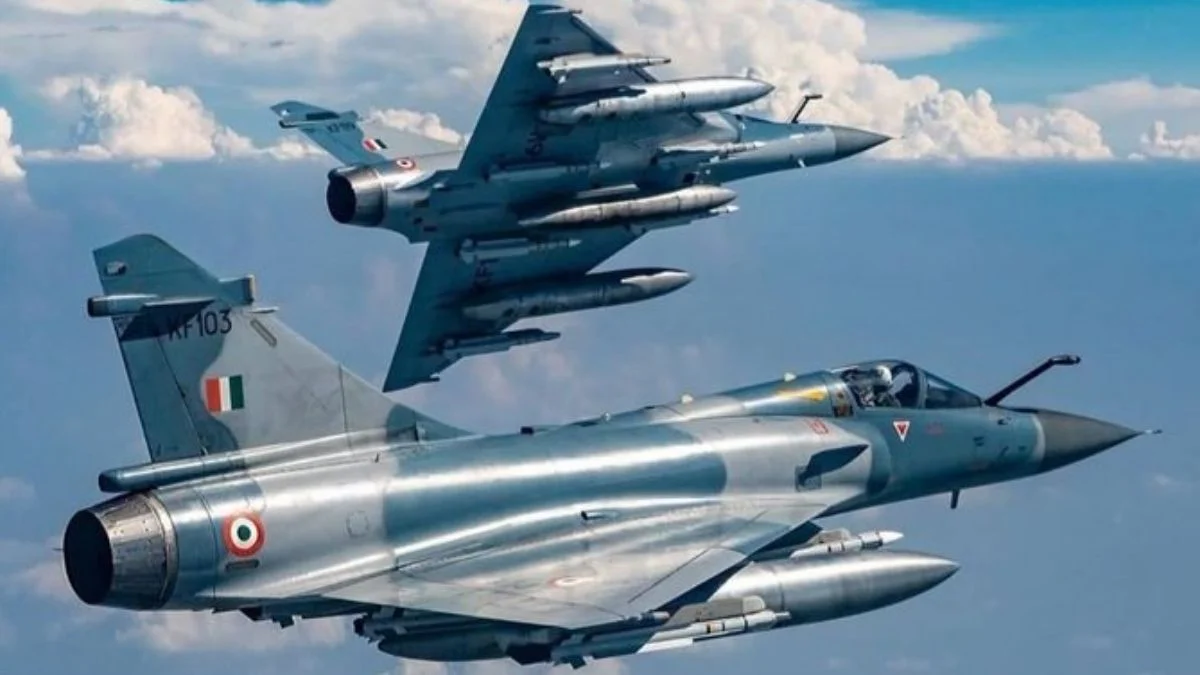
    The Mirage Fighter Jet stands as one of the most successful and recognizable families of combat aircraft in modern military aviation history. Designed and built by France’s Dassault Aviation, the Mirage series has served air forces around the world for more than six decades. From the groundbreaking Mirage III of the Cold War era to the advanced multirole Mirage 2000 still flying today, the Mirage Fighter Jet has earned a reputation for speed, agility, reliability, and export success.

    This comprehensive guide covers the history, design, key variants, specifications, operators, and combat record of the Mirage Fighter Jet family.

    History of the Mirage Fighter Jet

    The story of the Mirage Fighter Jet began in the mid-1950s. France sought a lightweight, high-performance interceptor after World War II experiences highlighted the need for independent air power. Dassault responded with the Mirage I and II prototypes, leading to the production Mirage III.

    The Mirage III first flew on 17 November 1956 and became the first Western European combat aircraft to sustain Mach 2 in level flight. It entered service with the French Air Force in 1961. The pure delta-wing design proved highly effective and commercially successful, with more than 1,400 Mirage III, 5, and 50 variants produced. These aircraft saw combat with Israel during the 1967 Six-Day War, where they achieved remarkable air superiority.
    Mirage Fighter Jet : Complete Guide to the Iconic French Combat Aircraft
    Mirage Fighter Jet : Complete Guide to the Iconic French Combat Aircraft

    In the 1960s, Dassault developed the Mirage F1, which replaced the pure delta with a conventional swept wing for better low-speed handling and short-field performance. The F1 first flew in 1966 and entered service in 1973. Approximately 720 were built and exported widely.

    The modern face of the Mirage Fighter Jet is the Mirage 2000. Developed in the 1970s as a lightweight replacement for the Mirage III and F1, the Mirage 2000 first flew on 10 March 1978 and entered French service in 1984. Around 601 aircraft were produced between 1978 and 2007. It remains in active service with several air forces today.

    Design Features of the Mirage Fighter Jet

    The signature feature of most Mirage Fighter Jets is the tailless delta wing. This configuration delivers excellent high-speed performance, low drag, and large internal volume for fuel and weapons. Early deltas like the Mirage III had limited maneuverability at low speeds, but the Mirage 2000 solved this with relaxed stability and a digital fly-by-wire flight control system. The result is a highly agile aircraft that retains the classic Mirage silhouette.

    Key design elements across the series include:

    • Single-engine layout for simplicity and lower operating costs
    • Area-ruled fuselage for efficient transonic and supersonic flight
    • High thrust-to-weight ratios enabling rapid climb and acceleration
    • Progressive improvements in radar, avionics, and weapons integration

    The Mirage 2000, for example, is powered by a single SNECMA M53-P2 afterburning turbofan producing approximately 95 kN (21,400 lbf) of thrust with afterburner. It features nine hardpoints capable of carrying up to 6,300 kg of external stores.

    Major Variants of the Mirage Fighter Jet

    Mirage III / 5 / 50 Family

    • Interceptor and ground-attack versions
    • Pure delta wing
    • Powered by SNECMA Atar turbojets
    • Widely exported and licence-built

    Mirage F1

    • Swept-wing multirole fighter
    • Better field performance than pure deltas
    • Used extensively in the Middle East and Africa

    Mirage Fighter Jet : Complete Guide to the Iconic French Combat Aircraft
    Mirage Fighter Jet : Complete Guide to the Iconic French Combat Aircraft

    Mirage 2000 Family

    • Mirage 2000C: Single-seat air-defense interceptor
    • Mirage 2000B: Two-seat trainer
    • Mirage 2000N: Nuclear strike variant (retired from French service)
    • Mirage 2000D: Conventional precision-strike aircraft
    • Mirage 2000-5 / 2000-9: Advanced multirole versions with improved radar (RDY) and beyond-visual-range missiles

    Export customers received tailored versions such as the Indian Mirage 2000H/TH (locally called Vajra) and UAE Mirage 2000-9.

    Mirage 2000 Key Specifications

    Parameter Value
    Crew 1 (2 in trainer/strike variants)
    Length 14.36 m (47 ft 1 in)
    Wingspan 9.13 m (29 ft 11 in)
    Height 5.20 m (17 ft 1 in)
    Empty Weight Approx. 7,500 kg
    Max Takeoff Weight 17,000–17,500 kg
    Engine 1 × SNECMA M53-P2 turbofan
    Max Speed Mach 2.2 (2,336 km/h)
    Ferry Range Approx. 3,335 km with external tanks
    Service Ceiling 18,000+ m (59,000+ ft)
    Armament 2 × 30 mm DEFA cannons + up to 6,300 kg external stores

    Operators and Combat History

    The Mirage Fighter Jet has been operated by more than 20 countries over its lifetime. Current or recent operators of the Mirage 2000 include France, the United Arab Emirates, Taiwan (Republic of China), India, Greece, Egypt, Peru, Qatar, and Ukraine (which received ex-French aircraft).

    Combat experience is extensive:

    • Israeli Mirage IIIs dominated in the 1967 Six-Day War
    • Mirage F1s saw action in various Middle Eastern conflicts
    • French Mirage 2000s participated in the Gulf War, Bosnia, Kosovo, Afghanistan, Libya, and Syria
    • Indian Mirage 2000s performed precision strikes during the 1999 Kargil War
    • UAE Mirage 2000s have flown combat missions in the region

    The aircraft’s combination of performance, relatively low cost, and French political independence made it highly attractive on the export market.

    Mirage Fighter Jet : Complete Guide to the Iconic French Combat Aircraft
    Mirage Fighter Jet : Complete Guide to the Iconic French Combat Aircraft

    Why the Mirage Fighter Jet Remains Relevant

    Even decades after its introduction, the Mirage Fighter Jet continues to serve effectively. Continuous upgrades in avionics, radar, electronic warfare systems, and precision weapons have kept later variants competitive. The Mirage 2000’s low operating costs compared with twin-engine fighters and its proven combat record ensure it will remain a valuable asset for many air forces well into the 2030s.

    Also Read This : Apple Pay : The Complete Guide to Faster, Safer Contactless Payments

    The Mirage Fighter Jet represents a remarkable achievement in aeronautical engineering. From the pure-delta Mirage III that helped redefine air combat in the 1960s to the sophisticated multirole Mirage 2000 still defending skies today, the family has left an indelible mark on aviation history. Its blend of elegant design, high performance, and export success makes the Mirage one of the most important fighter series of the jet age.


    View this post on Instagram
     

    A post shared by AVSPOST (@avspost)

  • Noida Authority News : GM S.P. Singh’s Efforts Give Fresh Momentum to Green Mobility, 48 New EV Charging Stations to Be Set Up in Noida

    Noida Authority News : GM S.P. Singh’s Efforts Give Fresh Momentum to Green Mobility, 48 New EV Charging Stations to Be Set Up in Noida

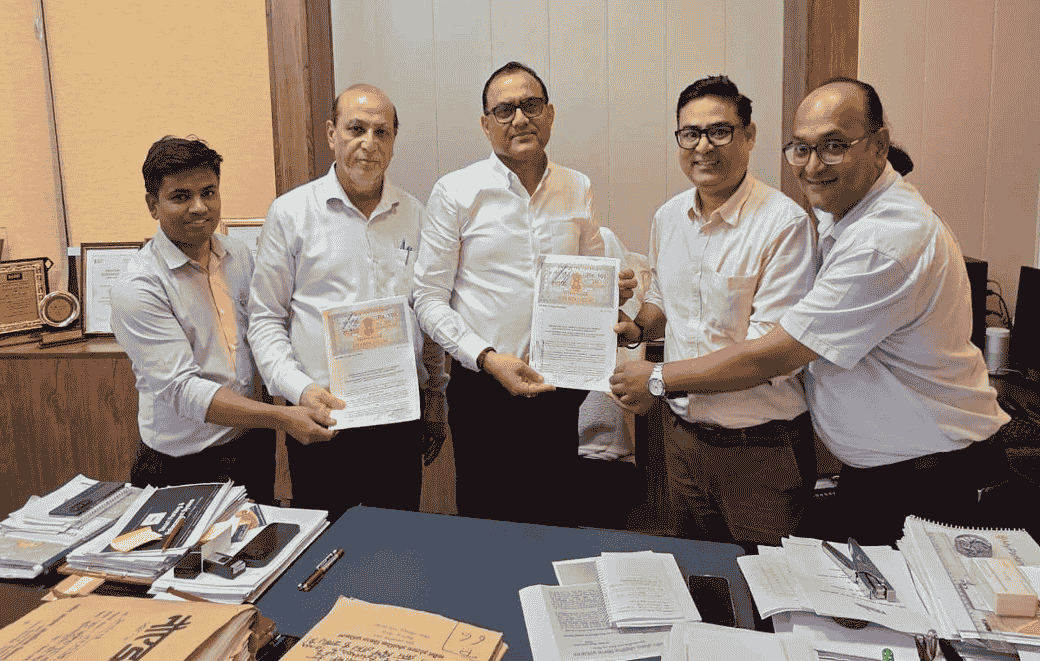
    New EV Charging Stations : Noida is taking an important step towards environmentally friendly transportation. Under a Memorandum of Understanding (MoU) signed between the Noida Authority and ITI Limited on October 12, 2026, 48 new EV charging stations will be established at various locations across the city. The initiative aligns with the Uttar Pradesh Electric Vehicle Policy 2022 and is a significant effort to promote the use of electric vehicles in the city.

    GM S.P. Singh’s active contribution and forward-looking vision are evident in this important initiative. Under his leadership and through his efforts, Noida’s green mobility infrastructure is gaining fresh momentum. His vision and continuous efforts are helping the city move towards a stronger charging network for electric vehicles.

    Two Agreements Bring the Total Number of Proposed EV Charging Stations to 78

    Earlier, on September 24, 2026, the Noida Authority signed an agreement with UP Renewable and EV Charging Infrastructure Ltd. (UPREV) to establish 30 charging stations. With the addition of 48 new stations under the agreement with ITI Limited, the total number of proposed EV charging stations has reached 78.

    The Noida Authority aims to establish a total of 100 EV charging stations across the city. Both agreements represent significant progress towards achieving this target.

    Where Will the New EV Charging Stations Be Installed?

    Locations have been identified near metro stations, public parking areas, markets, commercial zones, hospitals and major roads for the proposed 48 charging stations. Key locations include:

    At least two chargers will be installed at each location, enabling two cars and one two-wheeler to be charged simultaneously.

    Key Highlights of the Agreement

    • The agreement is for a period of 10 years, with the possibility of an extension.
    • ITI Limited will bear the entire cost of installation.
    • The Noida Authority will provide the required locations without offering any financial assistance.
    • Under the revenue-sharing arrangement, the Authority will receive ₹1 per unit (kWh) of electricity consumed.

    This model is a good example of making better use of public spaces through institutional collaboration.

    Why Are New EV Charging Stations Important for Green Mobility?

    The number of electric vehicles is increasing, but limited access to charging facilities can discourage people from switching to EVs. An adequate network of public new EV charging stations can reduce range anxiety and make everyday travel more convenient.

    Through GM S.P. Singh’s efforts, Noida is working towards developing such a convenient charging network. This will help make the city cleaner, more modern and more environmentally friendly.

    The initiative is a positive step towards pollution control, green transportation and a better urban future. Plans also include the possibility of installing additional new EV charging stations in the future, depending on demand.

    Also Read This : Noida Authority News : From Cleanliness Milestones to Model Roads, How Noida Authority’s GM S.P. Singh is Transforming the City

    The steps being taken by the Noida Authority under GM S.P. Singh’s leadership will not only improve convenience for residents but could also set an example for green mobility across the region. As these charging stations are installed and become operational, Noida is expected to become an even more attractive city for electric vehicle users.


    View this post on Instagram


    A post shared by AVSPOST (@avspost)

  • Noida Authority News : From Cleanliness Milestones to Model Roads, How Noida Authority’s GM S.P. Singh is Transforming the City

    Noida Authority News : From Cleanliness Milestones to Model Roads, How Noida Authority’s GM S.P. Singh is Transforming the City

    S.P. Singh Noida Authority News, the high-tech industrial hub neighboring Delhi, is no longer just known for its towering skyscrapers. Today, it is making headlines for its world-class civic infrastructure and top-tier cleanliness. Standing at the forefront of this urban transformation is S.P. Singh, the General Manager of the Noida Authority. Rising through the ranks from Deputy General Manager (DGM) to General Manager, S.P. Singh’s ground-level planning and decisive execution have given Noida’s foundational infrastructure a massive facelift.
    Here is a closer look at how his landmark initiatives and policy-driven approach have put Noida on a high-growth trajectory:

    When Noida Visualized and Won the National Cleanliness Crown

    One of the most defining milestones of S.P. Singh’s administrative career is placing Noida on India’s environmental map. Under his strategic oversight of the public health wing, Noida achieved the top ranking in the 10-lakh population category in the national cleanliness surveys (Swachh Survekshan).

    Noida Authority News : From Cleanliness Milestones to Model Roads, How Noida Authority’s GM S.P. Singh is Transforming the City
    Noida Authority News : From Cleanliness Milestones to Model Roads, How Noida Authority’s GM S.P. Singh is Transforming the City

    His formula went beyond basic garbage collection; he systematically institutionalized door-to-door waste segregation and optimized processing plants. Simultaneously, addressing urban stray animal concerns, S.P. Singh pioneered the setup of dedicated dog shelters across four vital sectors, introducing comprehensive anti-rabies vaccination drives and animal welfare protocols.

    The Infrastructure Boom: A ₹3-Crore Model Road and Digital Libraries

    Singh’s operational impact extends far beyond solid waste management into macro-level civil engineering and smart transit solutions:
    The Sector 126 Model Route : To elevate the city’s transit layout to international standards, his office successfully executed a ₹3-crore model road project in Sector 126. Built with high-grade granite pathways, tactile tiling for the visually impaired, and an integrated drainage network, it has set a new benchmark for pedestrian-friendly urban design.
    The Sector 52 Digital Hub : Championing community development, Singh is supervising the construction of an ₹8.29-crore, four-story digital library in Sector 52. Funded via Corporate Social Responsibility (CSR) partnerships, this high-tech center will serve as a free, state-of-the-art study hub for competitive exam aspirants, equipped with high-speed digital networks and resource centers.

    Administrative Rigor Backed by Worker Welfare

    While known as a strict administrator adhering to formal state guidelines, S.P. Singh has consistently prioritized social safety nets for frontline contract workers. Navigating recent labor representations, his management style stood out for its structural empathy and clarity:
    ₹5 Lakh Medical Cover : To shield frontline contract sanitation forces against health hazards, Singh’s office formally approved a robust ₹5 lakh medical support package.
    Financial Security & Increments : He clarified that the contract force receives a structured gross monthly package of approximately ₹21,000, which inherently factors in Provident Fund (PF) protections. Furthermore, he ensured that structured increments of ₹2,000 to ₹3,000 are programmatically written into the system whenever agency tenders undergo renewal.

    Noida Authority News : From Cleanliness Milestones to Model Roads, How Noida Authority’s GM S.P. Singh is Transforming the City
    Noida Authority News : From Cleanliness Milestones to Model Roads, How Noida Authority’s GM S.P. Singh is Transforming the City

    The Road Ahead: Building a Smart City

    Working under the strict performance-oriented guidance of Noida Authority CEO  and  dynamnic officer Krishna Karunesh ., S.P. Singh belongs to a select group of bureaucrats known for delivering results within uncompromising institutional deadlines. Whether rapidly driving massive pre-monsoon desilting operations or aligning utility networks with the expanding expressway corridors, his structural planning is continuously steering Noida toward its goal of becoming a premier ‘Smart and Sustainable City’.

    Also Read This : ACP Sanchit Sharma : From a Farmer’s Family to Policing the Streets of Noida


    View this post on Instagram


    A post shared by AVSPOST (@avspost)

  • ACP Sanchit Sharma : From a Farmer’s Family to Policing the Streets of Noida

    ACP Sanchit Sharma : From a Farmer’s Family to Policing the Streets of Noida

    NOIDA : Assistant Commissioner of Police Sanchit Sharma, currently posted in Circle-3 of the Gautam Buddha Nagar Police Commissionerate, has become a familiar name in the district’s policing framework since taking charge in late August 2026.

    For the 2023-batch IPS officer, the journey from a farming household in Madhya Pradesh to a territorial command in one of Uttar Pradesh’s busiest urban jurisdictions is a story of quiet, methodical perseverance.

    CURRENT ROLE AND RESPONSIBILITIES

    According to the transfer order issued by Police Commissioner Laxmi Singh, Sanchit Sharma was appointed as ACP of Circle-3 in Noida Zone on August 31, 2026.

    In this capacity, he oversees law and order in his jurisdiction, supervises crime prevention and investigation, coordinates with police personnel and other authorities, and works toward building public trust through responsive, community-oriented policing.

    His responsibilities place him at the supervisory level of day-to-day policing — ensuring that station-level officers execute departmental mandates, that public grievances are addressed, and that law enforcement remains accessible to ordinary citizens.

    THE COMMISSIONERATE HE SERVES IN

    Sanchit Sharma operates within a Commissionerate that has drawn attention for its performance and public outreach.

    In the Chief Minister’s ‘Darpan’ dashboard review for March 2026, Gautam Buddha Nagar ranked first among all police commissionerates in Uttar Pradesh and second among all districts. The ranking was based on emergency response times, complaint disposal rates, and action taken in crime cases, including those involving women and weaker sections of society.

    Under “Operation Invictus,” launched in June 2026, Mission Shakti Centres at every police station compiled confidential databases of children with special needs. In the first phase, 1,645 such children were identified across the district. Women beat officers were tasked with contacting families every 15 days, and a dedicated helpline — 8595902539 — was set up for assistance and counselling.

    From Farmer’s Family to IPS Officer : Sanchit Sharma’s Inspiring UPSC Journey (AIR 92)
    From Farmer’s Family to IPS Officer : Sanchit Sharma’s Inspiring UPSC Journey (AIR 92)

    Mission Shakti Phase 5.0, running since September 2025, has reached over 0.21 million women through 7,015 awareness programmes organised by women beat officers in village panchayats and wards. The sessions cover legal rights, self-defence, cyber security, and grievance redressal.

    Twenty-seven pink booths across the district provide quicker assistance for women. During the programme, police identified 837 women affected by domestic violence, of whom 791 received counselling or legal assistance.

    The commissionerate also introduced Café Rista inside the Noida Police Commissionerate in Sector 108 — a pastel-themed café where complainants awaiting mediation or counselling can relax. Additional DCP Preeti Yadav said the café was established so that people could sort out differences in a relaxed atmosphere rather than growing impatient.

    In Sector 19, a local police post adopted the C Block park near Sanatan Dharma temple following complaints of drug use and anti-social activity. Sub-inspector Rahul Sharma committed to continuous surveillance of the park. The move followed directions from the Police Commissioner to officers to coordinate with residents’ welfare associations and adopt a park each in their areas.

    These initiatives form the broader operational environment in which an ACP like Sanchit Sharma functions — translating departmental priorities into ground-level action within his circle.

    EDUCATION AND FAMILY BACKGROUND

    Sanchit Sharma was born on January 1, 2000, in Barwani district, Madhya Pradesh. His father, Sudhir Sharma, comes from a farming family. Growing up in this ordinary background, Sharma developed an early interest in education and public service.

    His academic record is exceptional. He scored approximately 89% in his board examinations and secured All India Rank 1885 in the JEE Advanced, earning admission to IIT Delhi. There, he completed a B.Tech in Civil Engineering, followed by an M.Tech in Environmental Engineering from the same institution.

    In 2021, Sanchit Sharma appeared for the UPSC Civil Services Examination for the first time. He cleared the Preliminary and Mains examinations but could not secure a place in the final selection list after the interview stage.

    Instead of giving up, he analysed his performance and revised his preparation strategy. He focused on answer writing, incorporated relevant examples, data, and statistics, and prepared largely through self-study, taking coaching support mainly for mock tests.

    The effort culminated in All India Rank 92 in the UPSC examination, securing him a place in the 2023 IPS batch and the Uttar Pradesh cadre.

    Also Read This : Meet Suchika tariyal India’s combat sports veteran turned Asian Games MMA Medallist

    His family stood by him through the setback. Their encouragement, he has acknowledged, helped him continue working toward his goal.

    Outside of policing, Sanchit Sharma enjoys playing the harmonium and has expressed an interest in mentoring school students and UPSC aspirants, encouraging candidates to remain consistent and learn from their mistakes.

    View this post on Instagram


    A post shared by AVSPOST (@avspost)

  • Meet Suchika tariyal India’s combat sports veteran turned Asian Games MMA Medallist

    Meet Suchika tariyal India’s combat sports veteran turned Asian Games MMA Medallist

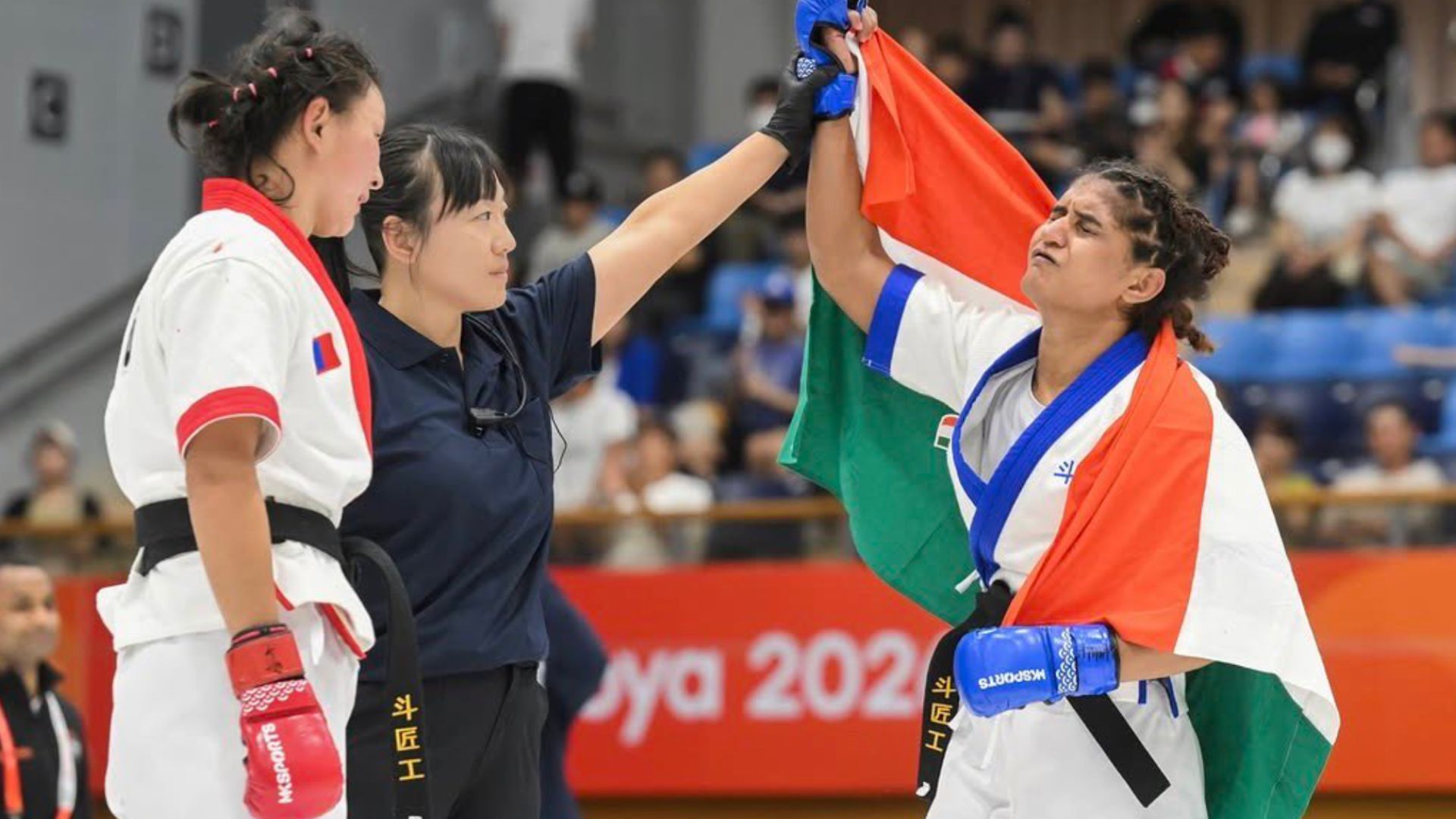
    After representing India in kurash at Hangzhou 2023 suchika tariyal returned for her Asian games ‘’second chance’’ and left aichi Nagoya with an MMA bronze. In judo, kurash, jiu-jitsu and mixed martial arts. She secured india’s first medal of the games after beating Mongolia’s altanchimeg baigalmaa 2-0 in the quarter-finals with both losing semi finalist receiving bronze medal victory guaranteed Suchika tariyal a place on the podium. SUCHIKA TARIYAL subsequently faced Singapore’s TEO hui hun in the semi finals. Losing 2-0 to finish with bronze.

    The medal particularly significant with MMA making its Asian games dubut. It was suchika tariyal second appearance at continental games having representing India in kurash at Hangzhou 2023. How ever suchika tariyal journey had began in combat sports long time before only. Born on 16 August 1990 and hailing from rohtak Haryana suchika tariyal took up judo at just age of 12 years old only after an accident of harassment she wanted to learn self defence. She began the training at Jawaharlal Nehru stadium in new delhi before moving to dev mandir center in Palam. Suchika tariyal later trained at sai Bhopal an important stage in her development as a competitive judoka

    Meet Suchika tariyal India’s combat sports veteran turned Asian Games MMA Medallist
    Meet Suchika tariyal India’s combat sports veteran turned Asian Games MMA Medallist

    Suchika tariyal judo career

    Judo became the foundation of suchika tariyal’s sporting career. She represented India at more than 20 international judo competition and became eight time national champion her international success incuded gold medals at the 2019 commonwealth judo championships and 2019 south Asian games, having previously won silver at the 2018 commonwealth judo championships. Suchika tariyal also competed at multiple Asian judo championships and represented india in the women’s 57 (kg) kilo grams category at the commonwealth games 2022 in Birmingham. Her experience in judo particularly in grappling and ground fighting would eventually would eventually provide the base for a move into other combat disciplaines

    Meet Suchika tariyal India’s combat sports veteran turned Asian Games MMA Medallist

    Meet Suchika tariyal India’s combat sports veteran turned Asian Games MMA Medallist
    Meet Suchika tariyal India’s combat sports veteran turned Asian Games MMA Medallist

    Seven years while continuing to compete in judo and jiu- jitsu ‘’judo set me up for MMA which for me is the ultimate level of combat sports because of judo I was skilful in ground fighting and grappling I only had to learn about standing game and striking skills for MMA. She returned to professional MMA in 2024 signing a multi fight deal with brave Combat federation and winning on her comeback at brave CF-92 in Bahrain that December. Suchika tariyal subsequently won gold at the first two MMA-SFI National championships before taking bronze at the Asian mixed martial arts championships in January and may 2026.

    A SECOND CHANCE AT THE ASIAN GAMES

    Aichi –Nagoya was not Suchika tariyal first Asian games experience. She had represented INDIA in Kurash at Hangzhou 2023 but returned three years later in a sport in which she had established considerably stronger international credentials. Life has given me a second chance at the Asian games before the competition in Hangzhou it did not go the way she expected because kurash was not Popular in INDIA and her preparation was not adequadethis time I am fully prepared for MMA. Her preparation were backed by the sports Ministry after she was inducted into the target Asian games group (tagg) scheme.

    Meet Suchika tariyal India’s combat sports veteran turned Asian Games MMA Medallist
    Meet Suchika tariyal India’s combat sports veteran turned Asian Games MMA Medallist

    Also Read This : Asian Games 2026 : HISTORY AND ORIGIN OF ASIAN GAMES 

    Earlier in the career suchika tariyal had also developed her judo at SAI BHOPAL having initially trained at the Jawaharlal Nehru stadium and klater the dada dev mandir center in Palam that long jouney made finally securing an Asian games medal particularly significant ‘’this medal means a lot to me as me and my coaches had worked very hard to reach this level after securing the bronze the family had spent a lot of money for her and provided every possible support they can to become a good MMA player. Suchika tariyal’s had appeared in MTV roadies aand India’s ultimate warrior on prime video while building a sizeable following on social media platforms alongside competing she has served as head constable with the CISF and later joined haryana’s department of sports as a junior coach.

    Written by – Prabhjyot Singh


    View this post on Instagram


    A post shared by AVSPOST (@avspost)

  • Too Tall, Too Small Face – The Real Story Behind Amitabh Bachchan’s Iconic Hairstyle

    Too Tall, Too Small Face – The Real Story Behind Amitabh Bachchan’s Iconic Hairstyle

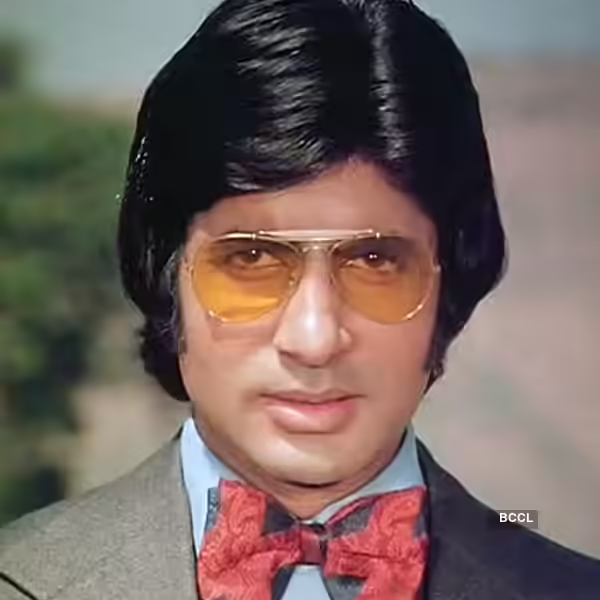
    Amitabh Bachchan’s hair is as legendary as his baritone voice and towering screen presence. The thick, wavy mane with a centre-parting and long sideburns defined the superstar of the 70s, but this signature look was never meant to be a fashion statement. It was born out of struggle and rejection.

    The Real Story Behind Amitabh Bachchan's Iconic Hairstyle
    The Real Story Behind Amitabh Bachchan’s Iconic Hairstyle

    The Struggle Behind The Style

    On the latest season of Kaun Banega Crorepati 18, the megastar revealed a lesser-known chapter of his life. Despite being the son of renowned poet Dr. Harivansh Rai Bachchan and Teji Bachchan, and brother of businessman Ajitabh Bachchan, his initial days in Mumbai were full of hardships. He roamed the streets, went from one studio to another, spent days and nights on footpaths and railway stations, often without food and water. Producers would bluntly reject him saying – “You are too tall, your face is too small, no heroine will work with you.” To counter that criticism, he found a simple trick. He started growing his hair towards his temples to make his face look fuller and more balanced on screen. What was a practical fix for a technical objection, later became a national trend.

    The Real Story Behind Amitabh Bachchan's Iconic Hairstyle
    The Real Story Behind Amitabh Bachchan’s Iconic Hairstyle

    The Birth of the ‘Bachchan Cut’

    Bachchan made his debut with  Saat Hindustani (1969) but stardom came only after Zanjeer (1973). It was around this time that his new hairstyle took shape and became synonymous with his ‘Angry Young Man’ era. The look – thick hair, slight centre-parting, and long sideburns extending till the ears – came to be known as the ‘Bachchan Cut’. It dominated men’s fashion in India for more than a decade and was seen in his biggest blockbusters like Deewaar, Sholay, Don and  Amar Akbar Anthony.

    The Real Story Behind Amitabh Bachchan's Iconic Hairstyle
    The Real Story Behind Amitabh Bachchan’s Iconic Hairstyle

    *The Man Behind The Hair* The architect of this iconic style was celebrated hairstylist Hakim Kairanvi. His son, celebrity stylist Aalim Hakim, once shared in an interview that his father started working with Bachchan right after Saat Hindustani. Kairanvi styled Big B for almost all his cult films including Zanjeer, Sholay, Don, Deewaar, and his last haircut for the actor was reportedly for Mard (1985).

    From Long Locks To The French Beard

    As his on-screen persona evolved, so did his hairstyle. The long-haired rebellious hero of the 70s transformed into the mature, authoritative host of Kaun Banega Crorepati in 2000, with shorter, neat hair and a distinguished French-cut beard. From a style adopted to hide criticism to a style that defined an entire decade of Hindi cinema, Amitabh Bachchan’s hair journey is truly a story of turning a flaw into an icon.

    Also Read This : NATIONAL FILM AWARDS SEVEN DECADES OF HONOURING THE MAGIC OF INDIAN CINEMA 

    Family Connect

    Amitabh Bachchan married actress Jaya Bhaduri after the super success of Zanjeer in 1973. The couple has two children, Abhishek Bachchan and Shweta Bachchan Nanda, and shares a close, long-standing bond with the prestigious Kapoor family of Bollywood.

    Written by – Prabhjyot Singh


    View this post on Instagram


    A post shared by AVSPOST (@avspost)

  • NATIONAL FILM AWARDS SEVEN DECADES OF HONOURING THE MAGIC OF INDIAN CINEMA 

    NATIONAL FILM AWARDS SEVEN DECADES OF HONOURING THE MAGIC OF INDIAN CINEMA 

    The national film awards instituted in 1954 have evolved over more than seven decades into country’s principle national recognition for excellence in indian cinema from the first edition which honoured films in three categories the awards have expanded to recognize feature films, non feature feature films and writings on Indian cinema and life time outstanding contribution in INDIAN cinema through the dada sahib phalke award. The awards established following the recommendations of films Enquiry committee which was contributed in 1949 the first edition held in 1954 honoured films made in 1953 and marked the beginning of a national system of recognition for artistic and technical excellence in indian filmmaking

    A MODEST BEGINNING IN 1954

    The first edition of the National film awards covered three categories- feature documentary films and children films. Shyamachi aai a Marathi film won president’s gold medal for the best documentary film while do bigha zamin received a certificate of merit. This initial set of honours laid the foundation for what has become more than seven decades of national recognition for indian cinema. The objectives the awards were defined around encouraging the production of film of aesthetic and technical excellence as well as social relevance. The awards also also sought to help audiences understand and appreciate the culture of different region in India thereby promoting the unity and integrity of the Nation. The national film awards also encourage the study and appreciation of cinema as an art form recognition of books, articles, films criticism provides a wider platforms for critical engagement with cinema

    NATIONAL FILM AWARDS SEVEN DECADES OF HONOURING THE MAGIC OF INDIAN CINEMA 
    NATIONAL FILM AWARDS SEVEN DECADES OF HONOURING THE MAGIC OF INDIAN CINEMA

    Recognition that Extends beyond the screen

    A National film awards provides national recognition to filmmaker artistes and technicians for their work such recognition can draw audiences towards films that might otherwise reach a relatively limited circle of viewers while also contributing to the professional journey of filmmakers and opening opportunities for future projects over the years the awards have widened their scope in line with the

    NATIONAL FILM AWARDS SEVEN DECADES OF HONOURING THE MAGIC OF INDIAN CINEMA

    growth and changing character of indian cinema. Thenational film awards are now organized across three principle sections feature film non feature film and best writing on cinema along with dadasaheb phalke award with stands apart as the highest honour in Indian cinema. The feature film section covers full-length films and include categories such as best feature films best direction and best actor in a leading role it also recognizes best childen’s film best cinematography best music direction best costume design and other aspects of film making. The non feature film section recognizes documentaries short films animation and other allied forms its categories incudes best documentary best short film best animation film best arts and culture film. Best narration and voice over best script among others. The best writing on cinema section recognize the best book on cinema and best film critic

    Acting and technical awards expand the canvas Awards for artistes and technician were separately established for films of the years 1967 the best actor and actress awards were presented in 1968 to Uttam kumar and Nargis dutt The best actor award then was known as bharat while best actress award was known as Urvashi As Indian cinema expanded in terms of its languages genres technology and artistic forms. The national film award steadily introduced new categories and recognized a wider range of creativity and technical crafts. The dadasaheb phalke award was instituted in 1969 and was first presented to devika rani

    From state awards for films to national institutions The awards were instituted in 1954 as the state awards for films with the first Honours covering films made in 1953

    NATIONAL FILM AWARDS SEVEN DECADES OF HONOURING THE MAGIC OF INDIAN CINEMA

    THE directorate of film festivals began administering the awards in 1973 in 2022 the directorate of film festivals was was merged in (NFDC) National film development corporation which became the present implementing body. The 72nd national film awards were announced in July 2026 with the award ceremony scheduled to be held at Ekta Nagar GUJRAT

    AWARD STRUCTURE

    The feature film section comprises 26 categories including special mentions while the non feature film section has 16 categories including special mentions. The feature film and non feature film section Use swarna kamal and rajat kamal medals with cash prizes 3 lakh and two lakh respectively. The best writing on cinema section has two categories and carries the swarna kamal along with a cash prize of 1 lakh. The dadasaheb phalke award carries the swarna kamal and a shawl for the 72nd national film awards the cash prize for the award is 10 lakh rupees

    NATIONAL FILM AWARDS SEVEN DECADES OF HONOURING THE MAGIC OF INDIAN CINEMA
    NATIONAL FILM AWARDS SEVEN DECADES OF HONOURING THE MAGIC OF INDIAN CINEMA

    RECOGNITION FOR EVERY LANGUAGE

    The national film awards are designed to reflect linguistic diversity of indian cinema the best feature film award is given in each language listed in schedule VIII of constitution of India films made in outside the schedule are recognized through different awards under relevant provisions The 72nd edition reflects this wider linguistic canvas with dholi in Garhwali and imbu in Tulu receiving recognition under this provision. This approach allows films from different linguistic and cultural traditions to find a place within the national framework of cinematic recognition How national film awards winners are selected Entries are invited every year for films certified during the preceding calender year the ministry constitutes separate juries each of the three award section The juries comprise

    NATIONAL FILM AWARDS SEVEN DECADES OF HONOURING THE MAGIC OF INDIAN CINEMA

    Distinguish contributors from cinema allied forms of art and humanities

    Two tier assessment for feature films Feature film

    are evaluated through a two- tier process introduced from the 57th edition onwards In the first stage five regional panels assess a short list entries received from different parts of the country the shortlisted films films then move to a central panel which decides the winners in the feature film section The non feature film section and best writing on cinema section have their own separate juries. The dadasaheb phalke awards follow a different selection process no entries are invited for the award instead a specially constituted committee of eminent film personalities recommends the recipient

    Cinema as culture identity and influence

    Cinema remains of India’s most expressive art forms and an important cultural asset the ministry of information and broadcasting describes it as a powerful medium for creativity culture and innovation the significance of indian cinema also exends beyond artistic expression in india’s media and entertainment sector is now world’s fitth largest anfdc supported by 2 to 2.5 million digital creators the country also have 40 to 60% advantage in animation and vfx services adding to the global india’s creative industries Indian film carries India’s cultural heritage and soft power to audiences around the world while supporting livelihood across languages and regions

    NATIONAL FILM AWARDS AND THE CHANGING FACE OF INDIAN CINEMA

    Indian cinema today reaches audience through more languages and format than ever before the expansion of national film awards has followed this transformation creating space for different types of film

    NATIONAL FILM AWARDS SEVEN DECADES OF HONOURING THE MAGIC OF INDIAN CINEMA

    making and recognizing both creative and technical achievement The awards are intended to recognize cinematic merit rather than commercial scale alone bringing togather major productions and film emerging from smaller filmmaking traditions on a national platforms The 72nd edition illustrates this continuing this continuing expansion a santhali films has entered the roll of honour for the first time while a veteran of kannada cinema is set to receive the highest honour in the field

    Taking national film awards beyond the capital

    A significant change in the organization of the national film awards is the decision to hold the ceremony in different parts of the country The ministry has decided that future editions will travel beyond the national capital to different cities and states the ceremony at ekta nagar will bring togather cinematic talent from across India the move is intended to bring awards closer to audiences out side the capital and provide national stage to film culture that have developed far from country’s major studios the initiative is also positioned within the spirit of ek bharat shreshtha bharat bringing togather india’s diverse cinematic traditions on a common national platforms

    NATIONAL FILM AWARDS SEVEN DECADES OF HONOURING THE MAGIC OF INDIAN CINEMA
    NATIONAL FILM AWARDS SEVEN DECADES OF HONOURING THE MAGIC OF INDIAN CINEMA

    Also Read This : National Film Awards 2026 : Full Winners List, Highlights & Historic Ceremony in Gujarat

    Dadasaheb phalke and the origins of indian cinema

    The history of national films awards is closely connected with history of indian cinema itself Dhundiraj govind phalke popularly known as dadasaheb phalke directed directed raja harishchandra in 1913 marking a landmark in indian filmmaking he went on to make 94 feature films and 27 short films dadasaheb phalke who lived from 1870 to 1944 is commemorated as the father of indian cinema through through the dadasaheb phalke award instituted by the government of India in 1969 the award represents highest honour in indian cinema and recognizes outstanding contribution to growth and development of country’s film industry from the first national honours in 1954 to 72nd edition in 2026 the national film awards have evolved along side indian cinema expanding from a modest set of recognitions into a comprehensive nation al platform for celebrating filmmakers, artistes, technicians, writers and the many cinematic traditions that make up India’s film culture

    Written by – Prabhjyot Singh


    View this post on Instagram


    A post shared by AVSPOST (@avspost)

  • Apple Pay : The Complete Guide to Faster, Safer Contactless Payments

    Apple Pay : The Complete Guide to Faster, Safer Contactless Payments

    Apple Pay has transformed how millions of people pay for everyday purchases. Instead of digging for a physical card or typing long card numbers online, you can complete transactions with a simple tap or glance on your iPhone, Apple Watch, iPad, or Mac. This guide explains what Apple Pay is, how it works, its key benefits, setup steps, and why it ranks among the most secure payment methods available today.

    What Is Apple Pay?

    Apple Pay is Apple’s built-in mobile payment and digital wallet service. It stores your eligible credit, debit, or prepaid cards in the Wallet app and lets you make contactless payments in stores, within apps, and on the web. It works wherever you see the contactless payment symbol or the Apple Pay mark.

    Unlike traditional cards, Apple Pay never shares your actual card number with merchants. When you add a card, your bank creates a unique Device Account Number (a token) that is stored securely on your device. Each transaction uses this token plus a one-time dynamic security code.

    The Complete Guide to Faster, Safer Contactless Payments
    The Complete Guide to Faster, Safer Contactless Payments

    How Does Apple Pay Work?

    The process is simple on the surface but relies on strong security underneath:

    1. You double-click the side button (or Home button on older models) to open Wallet.
    2. Authenticate with Face ID, Touch ID, Optic ID, or your device passcode.
    3. Hold your iPhone or Apple Watch near a contactless terminal (or confirm in an app or on the web).
    4. Near Field Communication (NFC) transmits the tokenized credentials.
    5. The payment is approved, and you see a confirmation on screen.

    In apps and on websites that support Apple Pay, you simply tap the Apple Pay button and authenticate. No need to fill out lengthy forms.

    Key Benefits of Using Apple Pay

    • Speed and Convenience: Pay in seconds without opening your wallet or entering details.
    • Enhanced Security: Your real card number is never stored on the device or shared with merchants. Data lives in the Secure Element, a dedicated chip isolated from the operating system.
    • Privacy Protection: Apple does not keep transaction information that can be tied back to you. Transactions stay between you, the merchant, and your bank.
    • Rewards and Benefits: You still earn the same rewards, cash back, and protections offered by your card issuer.
    • Wide Acceptance: Available at millions of locations worldwide, in apps, and on websites. Support continues to expand (recently including new markets such as India with participating banks).
    • Device Integration: Works seamlessly across iPhone, Apple Watch, iPad, Mac, and Apple Vision Pro.
    The Complete Guide to Faster, Safer Contactless Payments
    Apple Pay : The Complete Guide to Faster, Safer Contactless Payments

    How to Set Up Apple Pay

    Setting up Apple Pay takes only a couple of minutes:

    1. Open the Wallet app on your iPhone.
    2. Tap the + button.
    3. Choose Debit or Credit Card.
    4. Scan your card with the camera or enter the details manually.
    5. Follow the verification steps from your bank (usually a code via text or app).

    Once added, the card appears in Wallet and is ready to use. You can also add cards directly from many banking apps. Compatible devices include recent iPhones with NFC, Apple Watch models, iPads with Face ID or Touch ID, and Macs with Touch ID or paired authentication.

    Is Apple Pay Safe?

    Yes. Apple Pay is designed to be more secure than using a physical card. Key protections include:

    • Tokenization so merchants never receive your real card number.
    • Biometric or passcode authentication required for every payment.
    • Secure Element hardware storage that is not backed up to iCloud.
    • No retention by Apple of personally identifiable transaction data.

    Even if a merchant experiences a data breach, your actual card details are not exposed because they were never transmitted.

    Apple pay : The Complete Guide to Faster, Safer Contactless Payments
    Apple pay : The Complete Guide to Faster, Safer Contactless Payments

    Tips for Getting the Most Out of Apple Pay

    • Set a default card in Wallet for one-tap payments.
    • Use Apple Watch for quick transit or store payments when your phone is in a bag.
    • Check participating banks and card issuers in your country, as availability varies by region and issuer.
    • Keep your device software updated for the latest features and security improvements.
    • Combine it with contactless rewards cards stored in Wallet where supported.

    Also Read This : iPhone Ultra Fold : Apple’s First Foldable iPhone – Rumored Features, Design, Specs, and Price

    Apple Pay delivers a cleaner, faster, and more private way to pay whether you’re in a store, buying in an app, or checking out online. By replacing physical cards with secure tokens and requiring biometric confirmation, it reduces friction while raising the security bar. If you own a compatible Apple device and a supported card, adding Apple Pay takes minutes and can streamline nearly every purchase you make.


    View this post on Instagram


    A post shared by AVSPOST (@avspost)

  • Mohit Dubey, IDSE, Conferred the Prestigious Sudesh Dhiman Trophy on the 104th Raising Day of Military Engineer Services

    Mohit Dubey, IDSE, Conferred the Prestigious Sudesh Dhiman Trophy on the 104th Raising Day of Military Engineer Services

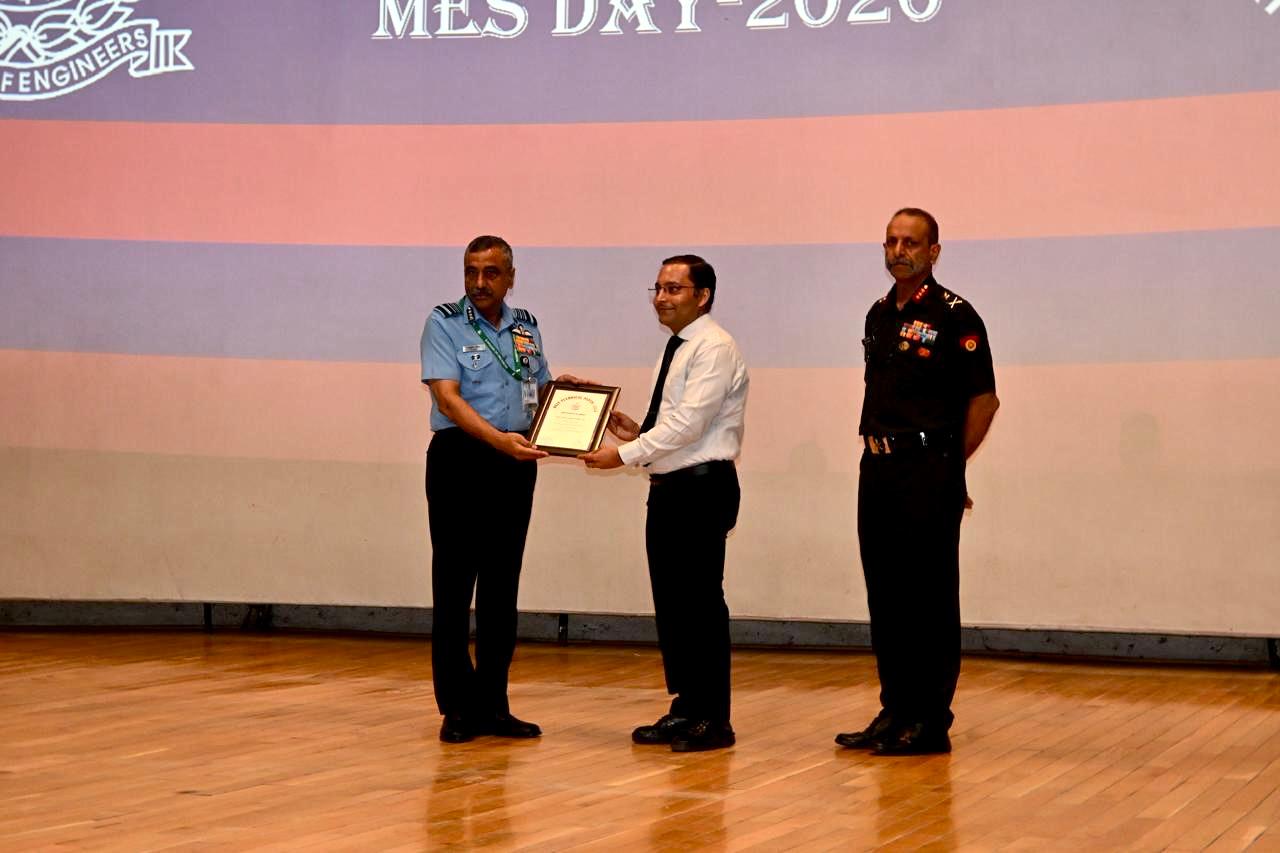
    Military Engineer Services : Shri Mohit Dubey, IDSE, was conferred the prestigious Sudesh Dhiman Trophy at a ceremony held in New Delhi on 28 September 2026, on the occasion of the 104th Raising Day of the Military Engineer Services (MES).

    The award was presented by Vice Chief of the Air Staff, Air Marshal Ashutosh Dixit, PVSM, AVSM, VM, VSM, in the august presence of Lt Gen Vikas Rohella, AVSM, SM, Engineer-in-Chief.

    The Sudesh Dhiman Trophy is one of the prestigious awards of MES and is conferred upon the officer whose technical paper is adjudged the best among papers published during the preceding year. Shri Mohit Dubey received the award for his technical paper titled “Legislative Requirements in the Field of Construction Law in India.”

    Mohit Dubey, IDSE, Conferred the Prestigious Sudesh Dhiman Trophy on the 104th Raising Day of Military Engineer Services
    Mohit Dubey, IDSE, Conferred the Prestigious Sudesh Dhiman Trophy on the 104th Raising Day of Military Engineer Services

    Shri Mohit Dubey is a 2012-batch officer of the Indian Defence Service of Engineers (IDSE). He is a graduate of the Indian Institute of Technology (IIT), Kanpur. Prior to joining the Military Engineer Services, he worked as a Structural Engineer in the United States of America for over three years.

    The recognition of Shri Dubey’s technical paper reflects his professional expertise and contribution to the understanding of legislative and legal requirements in the field of construction engineering.

    Also Read This : National Film Awards 2026 : Full Winners List, Highlights & Historic Ceremony in Gujarat

    The award marks a significant professional achievement for Shri Mohit Dubey and highlights the importance accorded by MES to technical excellence, professional knowledge and research-oriented contributions in the field of engineering and construction.


    View this post on Instagram


    A post shared by AVSPOST (@avspost)

  • Virat Kohli 15000 International Runs : A Historic Milestone That Redefined Consistency

    Virat Kohli 15000 International Runs : A Historic Milestone That Redefined Consistency

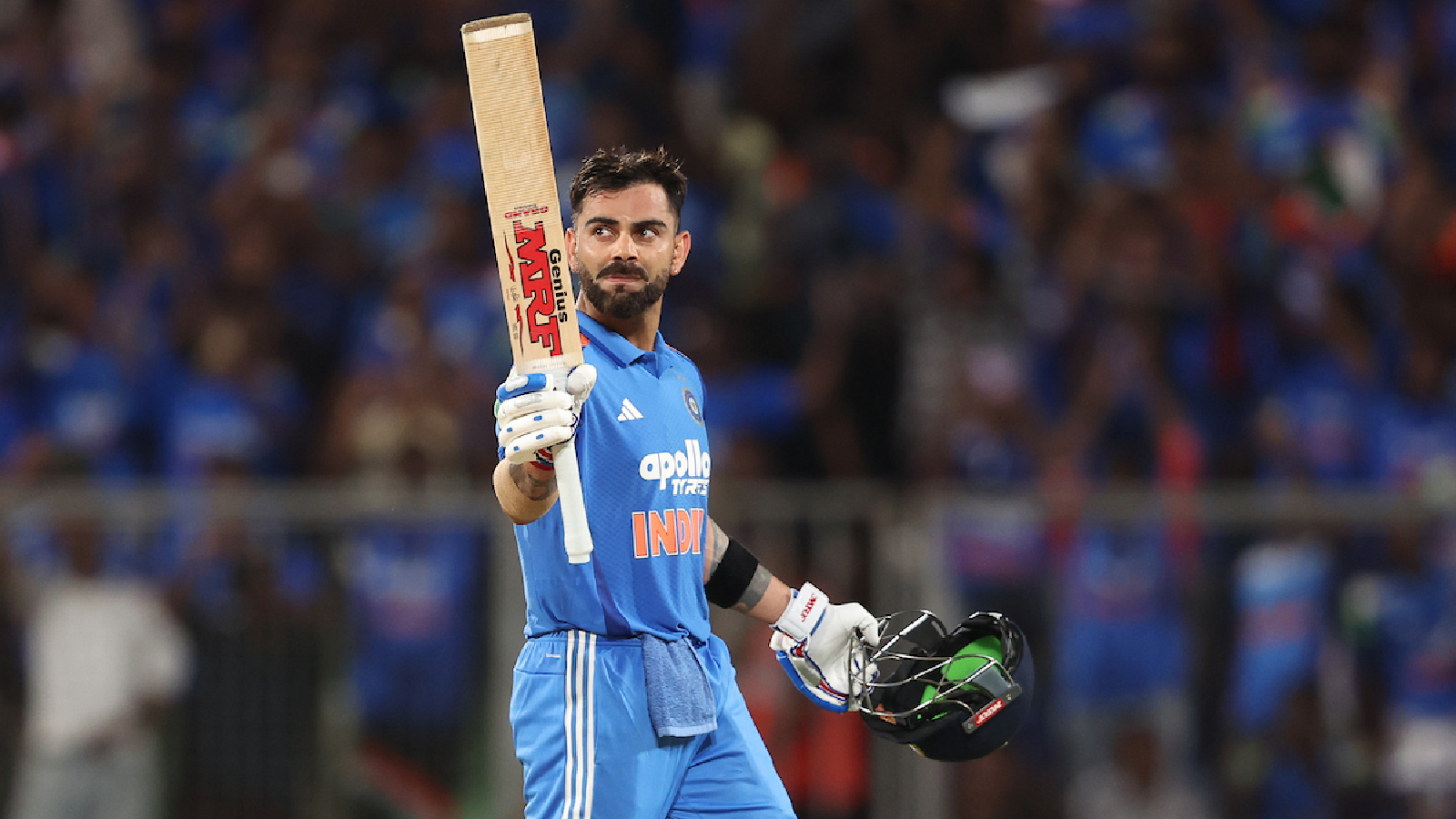
    Virat Kohli has once again etched his name in the record books by completing Virat Kohli 15000 international runs, becoming only the second batsman in the world to achieve this extraordinary feat. The landmark moment came during the first ODI against the West Indies in Thiruvananthapuram, where the Indian batting superstar crossed the magical 15,000-run mark in international cricket. This achievement is not just a number—it is a powerful testament to Kohli’s unmatched consistency, mental strength, and longevity at the highest level of the game.

    Why Virat Kohli 15000 International Runs Is a Special Achievement

    Reaching 15,000 runs in international cricket is an incredibly rare milestone. It demands years of sustained excellence across formats, conditions, and challenges. With Virat Kohli 15000 international runs, the former Indian captain has joined an elite club, proving once again why he is regarded as one of the greatest batsmen of the modern era.

    Virat Kohli 15000 International Runs : A Historic Milestone That Redefined Consistency
    Virat Kohli 15000 International Runs : A Historic Milestone That Redefined Consistency

    This landmark reflects more than just run-scoring ability. It highlights Kohli’s remarkable fitness, discipline, and hunger to perform even after more than a decade at the top. While many players struggle to maintain form over long periods, Kohli has continued to deliver match-winning performances in Tests, ODIs, and T20Is.

    The Special Moment in Thiruvananthapuram

    The historic moment unfolded in the first ODI against the West Indies in Thiruvananthapuram. From the moment Kohli walked out to bat, the focus of the entire stadium was on him. As soon as he reached the 15,000-run mark, the crowd erupted in applause, celebrating a career-defining achievement. The moment became unforgettable for Indian cricket fans who have followed Kohli’s journey from a young talent to a global icon.

    His innings once again showcased the trademark qualities that define him—solid technique, calm temperament under pressure, and the ability to adapt to any situation. Fans and experts alike hailed the achievement as another chapter in Kohli’s legendary career.

    Virat Kohli 15000 International Runs : A Historic Milestone That Redefined Consistency
    Virat Kohli 15000 International Runs : A Historic Milestone That Redefined Consistency

    A Career Built on Consistency and Excellence

    Virat Kohli’s international career has been filled with records and remarkable milestones. He has been the backbone of India’s batting lineup across formats for years. In ODIs especially, his ability to chase targets and construct innings under pressure has set him apart from his peers.

    Completing Virat Kohli 15000 international runs further strengthens his legacy. It is a reflection of his relentless work ethic, unmatched fitness standards, and deep commitment to the game. Few players in world cricket have maintained such high standards for such a long period.

    The Secret Behind Kohli’s Long-Term Success

    What makes Virat Kohli special is not just talent, but his mental toughness and professional approach. He treats every match as a new challenge and continuously works on improving his game. His ability to adapt his batting according to the situation has helped him stay relevant even as cricket has evolved.

    Virat Kohli 15000 International Runs : A Historic Milestone That Redefined Consistency
    Virat Kohli 15000 International Runs : A Historic Milestone That Redefined Consistency

    This achievement also serves as a huge inspiration for young cricketers. Kohli has shown that sustained hard work, discipline, and focus can lead to a long and successful career at the international level. His journey proves that greatness is built through consistency, not just occasional brilliance.

    A Proud Moment for Indian Cricket

    Virat Kohli 15000 international runs is not just a personal landmark—it is a moment of pride for Indian cricket. Whenever Kohli steps onto the field, expectations soar, and he has repeatedly lived up to them. This latest milestone adds another golden page to India’s rich cricket history.

    As Kohli continues his career, fans will keep expecting more magical performances from him. With his hunger still intact, there is every reason to believe that more records are waiting to be broken.

    Also Read This : Asian Games 2026 : HISTORY AND ORIGIN OF ASIAN GAMES

    By completing Virat Kohli 15000 international runs, the Indian superstar has once again proved why he is one of the most celebrated figures in world cricket. The milestone achieved against the West Indies in Thiruvananthapuram stands as a shining example of his greatness, consistency, and dedication. Virat Kohli remains not only an icon for India but also an inspiration for cricket lovers across the globe.