Author: Nimmi Chaudhary

  • Union Budget 2026 highlights : Key announcements from FM Nirmala Sitharaman

    Union Budget 2026 highlights : Key announcements from FM Nirmala Sitharaman

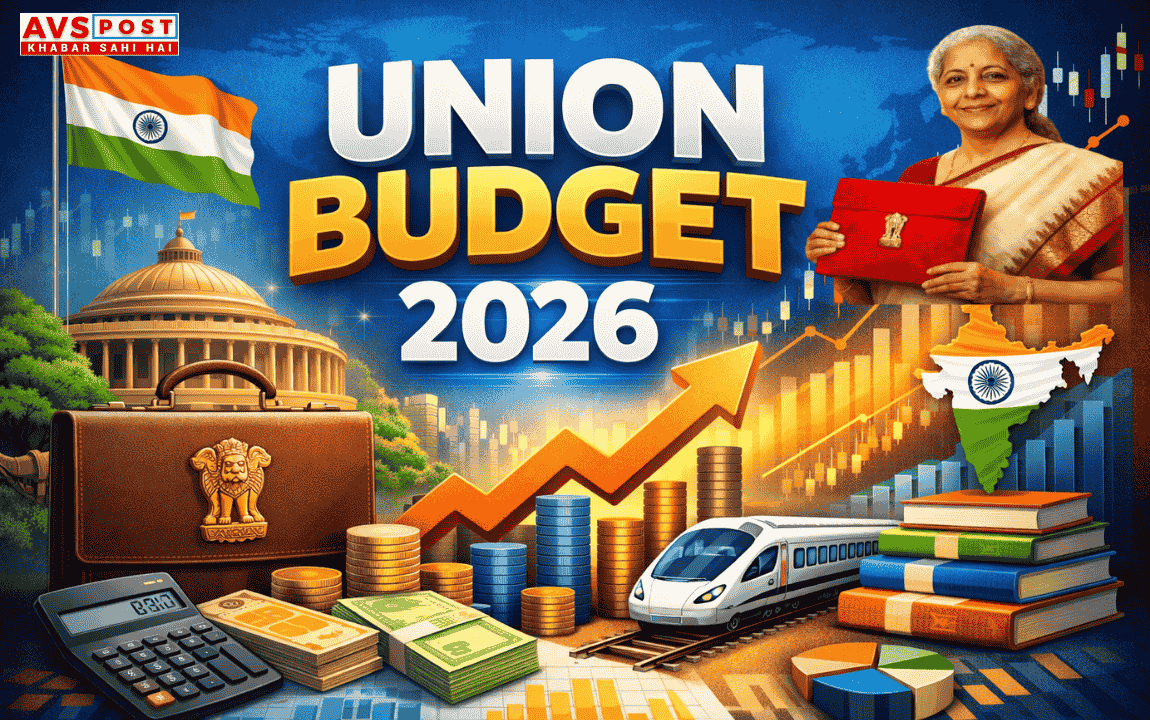
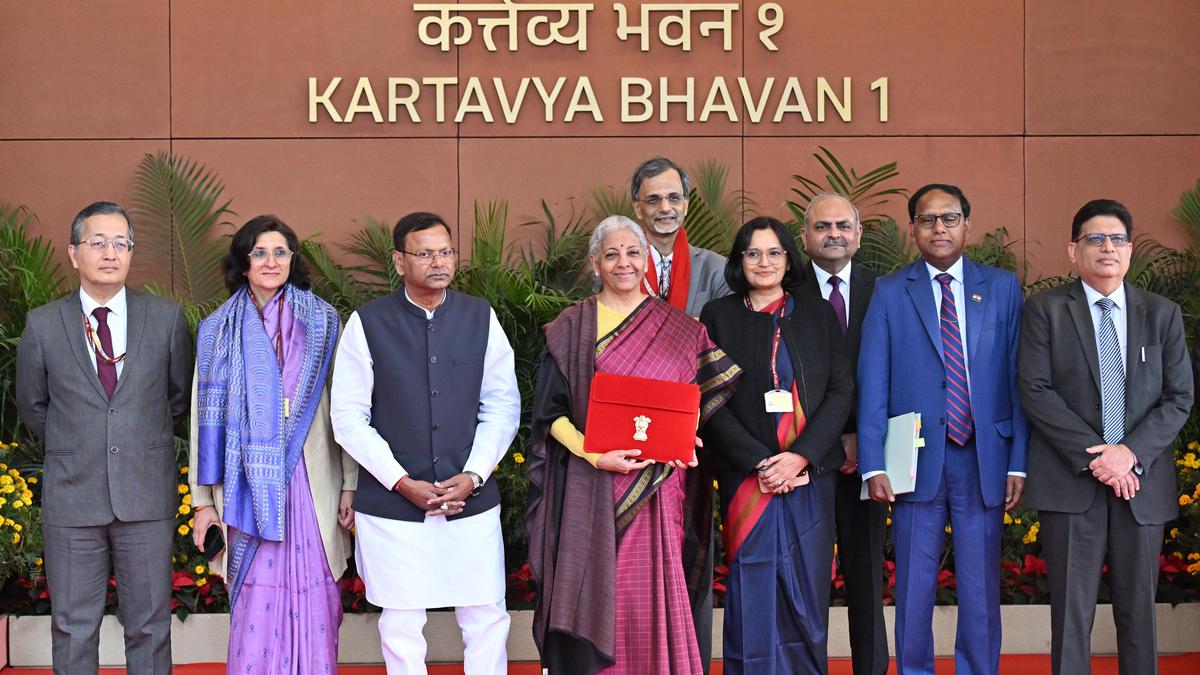
    Union Budget 2026 highlights : The Union Budget 2026-27, presented by Finance Minister Nirmala Sitharaman on February 1, 2026, marks her ninth consecutive budget speech. Tabled in Parliament on a Sunday for the first time in India’s history, this “Yuva Shakti-driven” budget emphasizes the government’s commitment to the poor, underprivileged, and disadvantaged. It draws inspiration from three core Kartavyas (duties):

    • Accelerate and sustain economic growth by boosting productivity, competitiveness, and resilience amid global volatility.
    • Fulfill people’s aspirations and build their capacities to make them strong partners in India’s prosperity.
    • Align with the vision of Sabka Saath, Sabka Vikas — ensuring every family, community, region, and sector has access to resources, amenities, and opportunities.

    Described as a budget of “reforms over rhetoric” and “action over ambivalence,” it prioritizes structural reforms, fiscal discipline, moderate inflation, sustained ~7% growth, and continued public investment to advance toward Viksit Bharat (Developed India).


    View this post on Instagram


    A post shared by AVSPOST (@avspost)

    Fiscal Framework : Prudence Meets Momentum

    The budget 2026 maintains a strong focus on capital expenditure while progressing toward fiscal consolidation.

    • Public Capital Expenditure (Capex): Raised to ₹12.2 lakh crore (approximately 4.4% of GDP) — the highest-ever allocation — up from ₹11.2 lakh crore in BE 2025-26, to sustain infrastructure momentum and crowd in private investment.
    • Fiscal Deficit: Targeted at 4.3% of GDP for FY 2026-27 (down from 4.4% in RE 2025-26).
    • Debt-to-GDP Ratio: Projected at 55.6% in BE 2026-27 (from 56.1% in RE 2025-26), with a long-term goal of 50 ± 1% by 2030.
    • Total Budget Size: Approximately ₹53.5 lakh crore.
    • Non-Debt Receipts and Total Expenditure: Estimated at ₹36.5 lakh crore and ₹53.5 lakh crore, respectively.
    • Net Tax Receipts: Around ₹28.7 lakh crore.

    These parameters reflect continued fiscal prudence while prioritizing growth-enabling investments.

    Budget 2026 : Manufacturing, Infrastructure, and Beyond

    Budget 2026 : Under the first Kartavya, the budget proposes interventions in six major areas:

    • Scaling Up Manufacturing in 7 strategic and frontier sectors.
    • Rejuvenating Legacy Industrial Sectors.
    • Creating Champion MSMEs — including a ₹10,000 crore SME Growth Fund.
    • Powerful Push to Infrastructure.
    • Long-Term Energy Security and reduced critical import dependencies.
    • Developing City Economic Regions (CERs).


    View this post on Instagram


    A post shared by AVSPOST (@avspost)


    Notable announcements include:

    • Biopharma Shakti: ₹10,000 crore over 5 years for domestic biologics and biosimilars production.
    • India Semiconductor Mission (ISM) 2.0: Launch to strengthen equipment, materials, design, and supply chains.
    • Electronics Components Manufacturing Scheme: Outlay increased to ₹40,000 crore.
    • Rare Earth Corridors: Support in states like Odisha, Kerala, Andhra Pradesh, and Tamil Nadu.
    • Infrastructure Highlights:
    • 7 high-speed rail corridors (e.g., Mumbai-Pune, Pune-Hyderabad, Hyderabad-Bengaluru, Hyderabad-Chennai, Chennai-Bengaluru, Delhi-Varanasi, Varanasi-Siliguri).
    • New dedicated freight corridors (including east-west).
    • Operationalization of 20 new National Waterways over 5 years.
    • Seaplane Viability Gap Funding (VGF) to boost indigenous manufacturing.
    • Infrastructure Risk Guarantee Fund for private developers.
    • City Economic Regions: ₹5,000 crore per CER over 5 years.
    • Defence: Record allocation (all-time high of around ₹7.85 lakh crore, up ~15%; capex hiked significantly, e.g., ~21% in some reports to ₹5.9 lakh crore).
    • Other Sectors:
    • Tourism: Upskilling 10,000 guides; reduced TCS on overseas tours; development of 15 archaeological sites; first Global Big Cat Summit; Khelo India Mission for sports skilling and employment.
    • AVGC (Animation, Visual Effects, Gaming, Comics — Orange Economy): AVGC Content Creator Labs in 15,000 schools and 500 colleges.
    • Agriculture: Dhan-Dhaanya Krishi Yojana for high-yield crops; Bharat-Vistaar AI tool.
    • Textiles: Integrated programme with mega parks and export support.


    View this post on Instagram


    A post shared by AVSPOST (@avspost)

    Tax and Customs Reforms : Simplification and Relief

    Budget 2026 : No changes to income tax slabs were announced, continuing stability from prior budgets. Key updates include:

    • New Income Tax Act, 2025: Effective from April 1, 2026, with simplified rules.
    • Middle-Class Reliefs: TCS cuts, new dividend deductions, nil deduction certificates for small taxpayers, ITR filing extension to August 31 for non-audit cases, rationalized penalties/prosecutions, and provident fund rule updates.
    • Securities Transaction Tax (STT): Increased on futures (e.g., to 0.05% from 0.02%).
    • Customs Duties:
    • Reduced from 20% to 10% on personal imports.
    • Exemptions/reductions on capital goods for lithium-ion cells, critical minerals, cancer medicines, sports equipment, leather goods, and seafood.
    • Some items (imported alcohol, coffee) may become costlier.
    • Other: Tax holidays for foreign cloud providers till 2047; MAT reforms; safe harbour enhancements for IT services; buyback taxed as capital gains.

    Overall Assessment

    The Union Budget 2026 – 27 is a continuity-focused, producer-centric document that doubles down on capex-led growth, manufacturing self-reliance, infrastructure, and inclusive reforms rather than short-term populist measures. It aims to build resilience against global uncertainties while empowering youth, MSMEs, and underserved sections.

  • Valentine Week List 2026 : Dates, Days, Meanings & Romantic Ideas for Couples in India

    Valentine Week List 2026 : Dates, Days, Meanings & Romantic Ideas for Couples in India

    Valentine Week List 2026 : Love in February isn’t limited to one day anymore—it’s a whole enchanting week of gestures, surprises, and deepening bonds! In India, Valentine’s Week 2026 has become a beloved tradition where couples (and even friends) celebrate daily from February 7 to February 14.

    Valentine Week List 2026 : This year, the grand finale—Valentine’s Day—falls on a Saturday (February 14, 2026), giving everyone the luxury of a relaxed, no-rush weekend to make memories. Whether you’re planning secret admirers, proposing, or just spoiling your partner, here’s your complete Valentine Week List 2026 with exact dates, days of the week, meanings, and practical celebration ideas tailored for Indian vibes.

    Valentine Week List 2026
    Valentine Week List 2026

    Valentine Week List 2026 : Day-by-Day Calendar & Meanings

    Date Day Valentine’s Week Day Meaning & Why It Matters Romantic Ideas (Especially for India)
    February 7, 2026 Saturday Rose Day Express love, admiration, or new beginnings with the timeless symbol of romance. Gift a fresh red rose bouquet (or single stem for subtlety). In Varanasi, surprise them during a morning Ganga aarti or at Assi Ghat—pair with a handwritten note! 🌹
    February 8, 2026 Sunday Propose Day  Propose Day The day to confess feelings, propose marriage, or ask someone to be yours. Choose a scenic spot like Dashashwamedh Ghat at sunset. Go classic with a ring or keep it simple with a heartfelt letter/coffee date. Be brave! 💍
    February 9, 2026 Monday Chocolate Day Share sweetness to show how irresistible and joyful your connection is. Gift premium chocolates, homemade barfi-chocolate fusion, or Ferrero Rocher. Plan a cozy evening with hot chocolate and fairy lights at home. 🍫
    February 10, 2026 Tuesday Teddy Day Symbolize comfort, care, and the promise of warm hugs whenever needed. Pick a soft teddy in their favorite color. Add a tag: “Hug this when you miss me.” Perfect for long-distance or college couples! 🧸
    February 11, 2026 Wednesday Promise Day Make sincere promises of loyalty, support, and building a future together. Write 7–10 promises on cute cards (e.g., “I’ll always support your dreams”). Exchange over a home-cooked meal or during a quiet walk by the ghats. 🤝
    February 12, 2026 Thursday Hug Day Celebrate closeness, comfort, and non-verbal “I’m here for you” love. Start with a long morning hug. If apart, send virtual hug reels or voice notes. Evening cuddles while watching a Bollywood romance! 🤗
    February 13, 2026 Friday Kiss Day Build passion, intimacy, and playful affection before the big day. Surprise with gentle kisses (forehead, cheek, or more!). Create “Kiss Coupons” for future fun—great buildup to Valentine’s Day! 💋
    February 14, 2026 Saturday Valentine’s Day The ultimate celebration of love, partnership, and making your special one feel cherished. Book a romantic dinner, plan a weekend getaway, or a private boat ride on the Ganga at sunset. Exchange gifts, cards, and spend quality time—no distractions! ❤️

    Why Valentine’s Week 2026 Feels Extra Special

    • Weekend Advantage: Valentine’s Day on Saturday means no Monday blues after celebrations—perfect for short trips to nearby spots like Sarnath or Ramnagar Fort.
    • Indian Twist: Many couples blend Western romance with local traditions—think rose + sindoor vibes, chocolate + mithai, or proposing near a temple for blessings.
    • For Everyone: Single? Celebrate self-love with roses and chocolates. In a situationship? Use Propose Day to clarify feelings. Families and friends exchange platonic gifts too!

    Quick Planning Tips for 2026

    • Budget Ideas: Handmade cards, playlists, home-cooked meals, or park picnics beat expensive outings.
    • Long-Distance Love: Use same-day delivery for roses/teddies + daily video calls.
    • Gift Shopping Now: Start early—flowers and chocolates sell out fast closer to the week!
    • Local Varanasi Magic: Ghats at dawn/dusk, boat rides, Banarasi saree surprises, or lassi dates add unique charm.

    Also Read This : Mardaani 3 Review : Rani Mukerji Delivers a Powerful, Hard-Hitting Return to the Franchise

    Valentine Week List 2026 : Valentine’s Week 2026 isn’t about grand gestures alone—it’s about showing love consistently, one sweet day at a time. Which day are you most looking forward to? Share your plans in the comments—I’d love to hear! 💕

    Wishing you a week full of butterflies, blushes, and beautiful moments. Happy Valentine’s Week 2026! 🌹🍫🧸❤️


    View this post on Instagram


    A post shared by AVSPOST (@avspost)

  • Union Budget 2026 : What Sunday’s Big Reveal Means for Your Wallet

    Union Budget 2026 : What Sunday’s Big Reveal Means for Your Wallet

    The Union Budget 2026 – 27 is one of the most anticipated economic events in India, marking a pivotal moment in the country’s journey toward becoming a developed nation (Viksit Bharat) by 2047. With Finance Minister Nirmala Sitharaman set to present her ninth consecutive Budget on Sunday, February 1, 2026, at 11:00 AM in Parliament, this rare Sunday presentation has already sparked widespread discussion.

    As we stand just a day away (on January 30, 2026), here’s a comprehensive look at the context, key expectations, and what this Budget could mean for everyday Indians, businesses, and the broader economy.


    View this post on Instagram


    A post shared by AVSPOST (@avspost)

    The Road to Union Budget 2026: Setting the Stage with the Economic Survey

    The Economic Survey 2025-26, tabled by FM Sitharaman on January 29, 2026, painted an optimistic yet cautious picture of India’s economy. It projects real GDP growth for FY 2026-27 (the year the Budget covers) in the range of 6.8–7.2%, building on the estimated 7.4% growth for FY 2025-26 (as per First Advance Estimates). This positions India as the world’s fastest-growing major economy for the fourth consecutive year.

    Key highlights from the Survey include:

    • Resilient domestic demand, with private consumption contributing ~61.5% of GDP and investment ~30%.
    • Historic low inflation levels and strengthened banking sector health.
    • Medium-term potential growth anchored around 7%, driven by structural reforms, infrastructure push, digital public infrastructure, and productivity gains.
    • Warnings about global uncertainties, including geopolitical tensions, trade fragmentation, potential financial crises (10–20% risk), and impacts from tariffs on labor-intensive sectors.

    The Survey emphasizes shifting focus from demand-led to productivity-led growth, with priorities like fiscal consolidation, higher capital expenditure (capex), human capital investment (education, skilling, healthcare), export competitiveness, and inclusive development.

    Union Budget 2026
    Union Budget 2026

    Why This Budget Matters

    This Budget arrives amid a “Goldilocks” moment—strong growth with controlled inflation—but also global headwinds like U.S. tariffs and rupee pressures. Expectations center on balancing fiscal prudence (likely targeting a deficit around 4.3% of GDP) with measures to boost consumption, jobs, and long-term competitiveness.

    Sitharaman’s speech will outline allocations for sectors, tax policies, and reforms, with documents released digitally on indiabudget.gov.in shortly after.

    Top Expectations from Union Budget 2026

    Union Budget 2026 : Analysts, economists, and industry bodies have outlined several key areas:

    1. Income Tax Relief for the Middle Class While drastic slab changes are unlikely, many hope for:
      • Increase in standard deduction (possibly to ₹1 lakh).
      • Higher exemption limits or tweaks to make the new tax regime more attractive.
      • Relief on TDS for FD interest, rental income, or health insurance (Section 80D). These could provide breathing room amid rising costs and boost consumption.
    2. Capital Expenditure and Infrastructure Push Capex is expected to remain robust (~₹12–12.5 lakh crore, or ~3.2% of GDP), focusing on:
      • Roads, railways, logistics, ports, and urban development (e.g., Multi-Modal Logistics Parks under PM Gati Shakti).
      • Green energy transition, energy storage, and climate-resilient projects.
      • Urban Challenge Fund or similar initiatives to transform cities.
    3. Sector-Specific Boosts
      • Agriculture & Rural Economy: Continued support for climate-resilient tech, exports, and farmer welfare amid trade talks.
      • Manufacturing & Exports: Incentives to counter global tariffs, PLI scheme extensions, and trade agreement benefits.
      • MSMEs & Startups: Easier credit, reduced compliance, and innovation funding.
      • Housing & Real Estate: GST rationalization, affordability measures, and REIT clarity.
      • Digital & AI: Support for data centers, AI infrastructure, and skilling.
    4. Capital Markets & Investors
      • Potential LTCG tax cut (to 10%), STT rollback, or tax parity across instruments to attract foreign inflows.
      • Stability over major surprises to maintain market confidence.
    5. Other Priorities
      • Skilling and employment generation.
      • Healthcare and education investments.
      • Simplified GST/compliance and faster tax dispute resolution.
    Union Budget 2026
    Union Budget 2026

    Where to Watch and Follow

    • Live Telecast: Sansad TV (Lok Sabha/Rajya Sabha channels), DD News, or official YouTube channels of Parliament/Sansad TV.
    • Post-Budget: Full speech, highlights, and documents on indiabudget.gov.in.
    • Stay tuned for sector-wise reactions and market movements immediately after.

    Also Read This : 8th Pay Commission 2026 : Latest Updates, Expected Salary Hikes, Fitment Factor & What Central Government Employees Should Know

    The Union Budget 2026 isn’t just about numbers—it’s a blueprint for sustaining momentum toward a $5+ trillion economy while addressing everyday challenges like jobs, affordability, and global competitiveness. Whether it delivers bold relief or measured continuity, it will shape India’s economic narrative for the year ahead.

  • Mardaani 3 Review : Rani Mukerji Delivers a Powerful, Hard-Hitting Return to the Franchise

    Mardaani 3 Review : Rani Mukerji Delivers a Powerful, Hard-Hitting Return to the Franchise

    Mardaani 3 Review : Released on January 30, 2026, Mardaani 3 marks the third chapter in Yash Raj Films’ acclaimed crime thriller series. Once again, Rani Mukerji steps into the boots of the no-nonsense cop Shivani Shivaji Roy, tackling one of society’s darkest issues: child trafficking and exploitation through a ruthless network involving a beggar mafia.

    Directed by debutant Abhiraj Minawala, the film follows Shivani as she races against time to rescue abducted young girls, clashing with a formidable female antagonist known as “Amma” (played by Mallika Prasad). The story blends high-stakes investigation, raw action, and emotional depth, staying true to the franchise’s gritty, issue-driven roots.

    Rani Mukerji Owns the Screen – A Ferocious Lead Performance

    Mardaani 3 Review : Rani Mukerji remains the undisputed soul of Mardaani. Her portrayal of Shivani is commanding, fearless, and layered with emotional intensity. Critics and audiences alike praise her for owning every frame, delivering steely resolve alongside genuine vulnerability. This installment gives her standout moments, including a heroic slow-motion action sequence that feels epic and earned. Many call it one of her strongest turns in the series, proving why Shivani Shivaji Roy is one of Hindi cinema’s most iconic female cop characters.

    Supporting performances shine too. Mallika Prasad’s “Amma” is terrifying and effective, bringing fresh menace as a female villain who matches Shivani’s ruthlessness. Janki Bodiwala adds emotional weight in her role, while the antagonists feel grounded and threatening.

    Strengths : Intensity, Relevance, and Raw Grit

    • Hard-hitting and relevant: The film doesn’t shy away from disturbing realities, with scenes that unsettle and provoke thought on child trafficking.
    • Pacing and tension: The first half builds atmosphere effectively, while the post-interval drama ramps up urgency and delivers emotional punches.
    • Action and score: Raw, realistic sequences (no over-the-top heroics) and a top-notch background score heighten the stakes.
    • Franchise loyalty: It stays true to the series’ spirit—moral urgency, no-mercy justice, and social commentary—without softening edges.

    Mardaani 3 Review : Early reactions on X (formerly Twitter) and from critics describe it as “intense, relevant, emotionally hard-hitting,” “powerful,” and a “worthy addition.” Many viewers root for Rani’s performance and the gripping second half.

    Mardaani 3 Review
    Mardaani 3 Review

    Mardaani 3 Review : Areas Where It Falters

    Not everything lands perfectly. The second half can feel predictable at times, with some twists following familiar crime-drama templates. A few reviews note the narrative becomes mechanical or over-the-top in portions, and the antagonists, while strong, don’t always match the chilling impact of previous entries (like Tahir Raj Bhasin in Mardaani 2). Some call it “messy” or “occasionally unhinged,” with wobbles in writing that could have been sharper.

    Box office-wise, it started slow despite affordable pricing and strong trailer buzz, but word-of-mouth could help it grow, as past Mardaani films did.

    Mardaani 3 is a solid, intense crime drama elevated by Rani Mukerji’s powerhouse performance and its unflinching look at a grave social evil. It may not reinvent the wheel, and the second half has predictable moments, but it refuses to play safe—delivering tension, emotion, and justice in equal measure.

    Also Read This : Vikrant Singh Rajpoot : The Charismatic Star of Bhojpuri Cinema

    Rating: 3.5/5

    Mardaani 3 Review : A must-watch for fans of gritty Hindi thrillers, content-driven cinema, and Rani Mukerji‘s commanding presence. If you loved the first two films, this third outing keeps the fire alive.

    Catch it in theaters—Shivani Shivaji Roy is back, and she’s as fierce as ever. What are your thoughts if you’ve seen it? Share in the comments!

  • 8th Pay Commission 2026 : Latest Updates, Expected Salary Hikes, Fitment Factor & What Central Government Employees Should Know

    8th Pay Commission 2026 : Latest Updates, Expected Salary Hikes, Fitment Factor & What Central Government Employees Should Know

    8th Pay Commission 2026 : As of late January 2026, the long-awaited 8th Central Pay Commission (8th CPC) remains a topic of intense discussion among over 50 lakh central government employees, defence personnel, and around 60 lakh pensioners. While many had hoped for immediate salary revisions starting January 1, 2026 (the day after the 7th Pay Commission term ended), the reality is more nuanced. Here’s a clear, updated overview based on recent reports from reliable sources like The Economic Times, India Today, Financial Express, and others.


    View this post on Instagram


    A post shared by AVSPOST (@avspost)

    Current Status of the 8th Pay Commission 

    The 8th Pay Commission has not yet fully kicked in with revised salaries or a new pay matrix. Key developments this month include:

    • The commission’s office is still not fully functional.
    • Staff-side representatives (employee unions) are planning meetings in February 2026 to push their demands.
    • There are reports of vacancies in the commission structure.
    • Most credible analyses now indicate that the commission will take 12–18 months to submit its final recommendations, likely meaning implementation (with arrears from January 1, 2026) could happen in mid-to-late 2027.
    • Some earlier optimistic headlines claiming “effective from January 2026” referred only to the eligibility date for arrears, not immediate pay hikes.
    • Delays are attributed to government processes, economic considerations, and the need for detailed consultations.

    In short: No official new salary list or pay matrix has been released yet. Any tables or exact figures circulating on social media (WhatsApp, Instagram, Facebook) are speculative or unofficial.

    What is the Expected Fitment Factor?

    The fitment factor is the multiplier applied to the existing basic pay (from the 7th CPC) to arrive at the revised basic pay. This single number determines much of the overall hike.

    Current expectations (as of January 2026 reports):

    • Conservative estimates: 1.8 – 2.0 (real hike after inflation ~13%, per some analysts like Kotak Institutional Equities)
    • Moderate projections: 2.15 – 2.28 (commonly discussed in arrears calculators)
    • Optimistic/union demands: 2.57 – 3.25 (employee unions pushing for higher to offset rising costs)
    • Some sources still mention lower ranges like 1.83–2.46

    Higher fitment factors would lead to more substantial increases but depend on government finances, inflation trends (AICPI-IW index), and negotiations.

    8th Pay Commission 2026 : Latest Updates
    8th Pay Commission 2026 : Latest Updates

    Expected Salary Revisions : Level-Wise Projections

    8th Pay Commission 2026 : Here are approximate revised basic pay figures starting from the current 7th CPC minimum (Level 1: ₹18,000). These are projections only — not official.

    • Fitment Factor 2.0 → Minimum basic pay ≈ ₹36,000
    • Fitment Factor 2.15 → Minimum basic pay ≈ ₹38,700
    • Fitment Factor 2.28 → Minimum basic pay ≈ ₹41,040
    • Fitment Factor 2.57 → Minimum basic pay ≈ ₹46,260
    • Higher demands (3.0+) → Could push minimum basic pay to ₹54,000 or more

    For higher levels (e.g., Level 6–10, common for Group B & A posts), the absolute increase would be larger even at moderate fitment factors.

    Gross salary impact (including HRA, DA, TA, etc.) could range from 25–50%+ overall increase, depending on:

    • City classification (X, Y, Z for HRA)
    • Current DA level (already near 60% in early 2026)
    • Allowances revision (some reports suggest merging or enhancing them)

    Arrears would be calculated from January 1, 2026, once implemented — potentially a significant one-time payout for Levels 1–5 employees.

    What Should Central Government Employees Do Now?

    1. Stay updated from official sources — Department of Personnel & Training (DoPT), Ministry of Finance, or Press Information Bureau (PIB) notifications.
    2. Avoid unverified viral lists — Many show exaggerated figures (e.g., Peon ₹45,000+, Teacher ₹85,000) that aren’t backed by any commission report.
    3. Track union developments — National Council–Joint Consultative Machinery (NC-JCM) staff side is actively negotiating.
    4. Prepare financially — If arrears come later, the lump sum could help with major expenses, but don’t count on it immediately.

    Also Read This : UGC Equity Rules 2026

    8th Pay Commission 2026 holds the promise of meaningful relief amid rising living costs, but patience is still required. Realistic expectations point to a fitment factor in the 2.0–2.5 range, delivering a solid (though not dramatic) hike once finalized. Keep an eye on February 2026 meetings and any commission announcements in the coming months.

  • Vikrant Singh Rajpoot : The Charismatic Star of Bhojpuri Cinema

    Vikrant Singh Rajpoot : The Charismatic Star of Bhojpuri Cinema

    Vikrant Singh Rajpoot : In the vibrant world of regional Indian cinema, few actors have captured the hearts of millions quite like Vikrant Singh Rajpoot. Known for his magnetic screen presence, versatile performances, and dedication to the craft, Vikrant has become one of the most recognizable and beloved faces in Bhojpuri films. From humble beginnings in rural Uttar Pradesh to sharing the spotlight with his superstar wife on national television, his journey is a true rags-to-riches story filled with passion, hard work, and unwavering fan love.


    View this post on Instagram


    A post shared by AVSPOST (@avspost)

    Vikrant Singh Rajpoot : Early Life and Entry into the Industry

    Born on September 29, 1986, in Azamgarh, Uttar Pradesh, Vikrant grew up in a modest environment that instilled in him strong values and determination. He completed his early education at Patel Memorial Inter College in Atrauliya. From a young age, he was drawn to the world of acting and modeling, often participating in local events and dreaming of the silver screen.

    His entry into films came through small roles and modeling gigs, but it was the Bhojpuri industry that truly welcomed his talent. Vikrant made his debut around 2010–2013 with films like Gundairaj (2010) and Mehraru Bina Ratiya Kaise Katti (2013), where he began building his reputation as a promising lead actor.

    Breakthrough and Rise to Stardom

    Vikrant’s career truly took off in the mid-2010s with a string of successful projects that showcased his range—from romantic heroes to intense action stars.

    Some of his most notable films include:

    • Prem Leela (2015) — A romantic drama that paired him with Monalisa and became one of his signature hits.
    • Saiyaan Toofani (2015) — Highlighting his energetic and “toofani” (stormy) persona in action-packed sequences.
    • Border (2018) — A high-budget action-drama that solidified his status as a bankable star in the industry.
    • Nathuniya Pe Goli Maare 2 (2018) — An action-romance that further boosted his popularity.
    • Pakistan Main Jai Shri Ram (2017) — A patriotic-themed entertainer.

    His films often blend romance, drama, action, and family values—elements that deeply resonate with Bhojpuri audiences across Bihar, Uttar Pradesh, and beyond.

    Vikrant Singh Rajpoot
    Vikrant Singh Rajpoot

    Recent Works and 2025 Highlights

    Even after more than a decade in the industry, Vikrant continues to stay relevant with fresh projects. In recent years, he has explored diverse genres, including horror and fantasy.

    Notable recent and 2025 releases include:

    • Sautan (2024)
    • Love Marriage Mein (2024)
    • Rudra-Shakti (2025) — An action-drama fantasy starring alongside Akshara Singh, focusing on themes of love, sacrifice, and power.
    • Hanikarak Mehraru (2025)
    • Other projects like Bhoot (horror, teaser released earlier), Saya, Bikharte Sapne, and Dulhan Wahi Jo Dhan Laye have kept him active in 2025.

    His ability to balance commercial entertainers with character-driven roles has earned him consistent praise and a loyal fanbase.

    Personal Life : The Power Couple with Monalisa

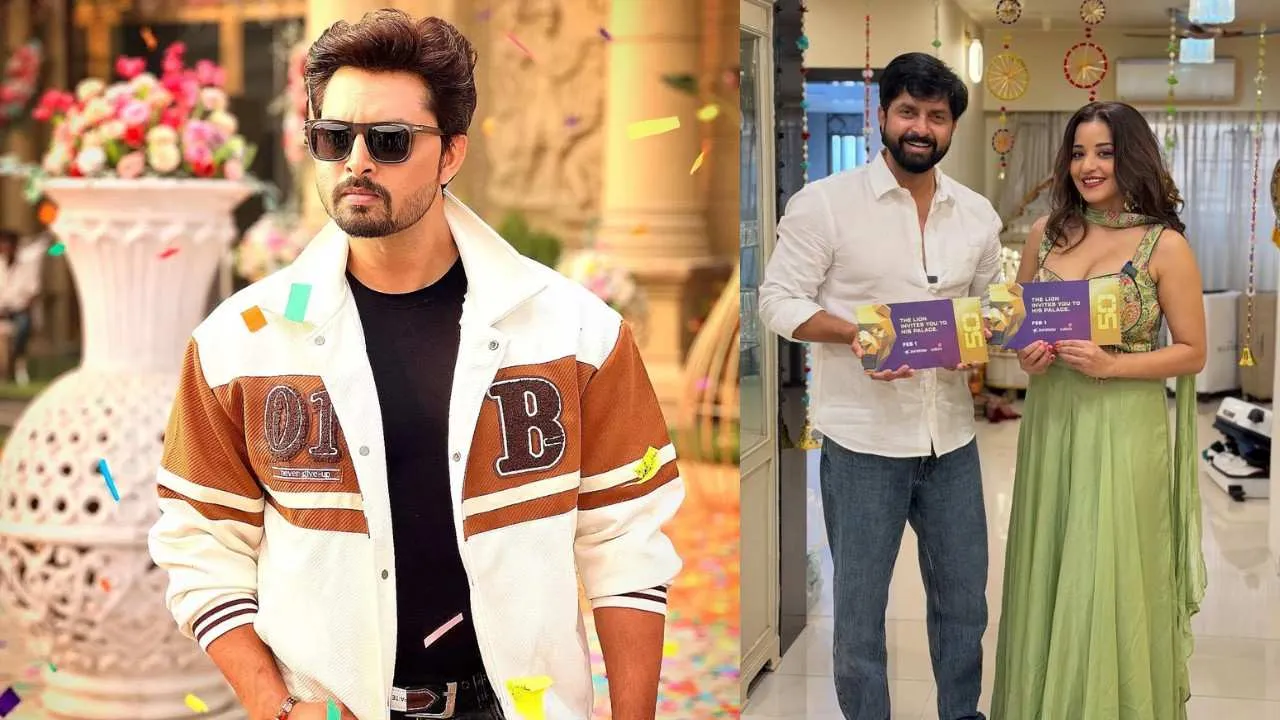
    Vikrant Singh Rajpoot personal life is as celebrated as his professional one. In 2017, he married actress Monalisa (Antara Biswas) in a high-profile ceremony that aired during Bigg Boss 10. Their wedding remains one of the most memorable moments in reality TV history.

    Together, they form one of Bhojpuri cinema’s most adored power couples, often collaborating on-screen and supporting each other’s careers. In a exciting recent development, the duo made their first joint reality show appearance on The 50 (premiering February 2026 on Colors and JioHotstar), hosted by Farah Khan. Announced around their wedding anniversary, their participation has generated massive buzz, with fans eager to see their strategy, teamwork, and chemistry in this high-stakes game format.

    Vikrant has shared that they approach challenges with mental strength and mutual protection—Vikrant ready to shield Monalisa in physical tasks while praising her sharp mind games.

    Vikrant Singh Rajpoot
    Vikrant Singh Rajpoot

    Legacy and Fan Connect

    At 39 (as of 2026), Vikrant Singh Rajpoot remains a dynamic force in Bhojpuri cinema. His journey from a small-town boy with big dreams to a household name inspires countless aspiring actors. Whether delivering powerful dialogues, performing high-octane action, or sharing romantic moments, he brings authenticity and charisma to every role.

    His massive following on social media and continued box-office success prove that hard work and connection with the audience can create lasting stardom.

  •  EU India Free Trade Deal :The ‘Mother of All Deals’ Finally Signed!

     EU India Free Trade Deal :The ‘Mother of All Deals’ Finally Signed!

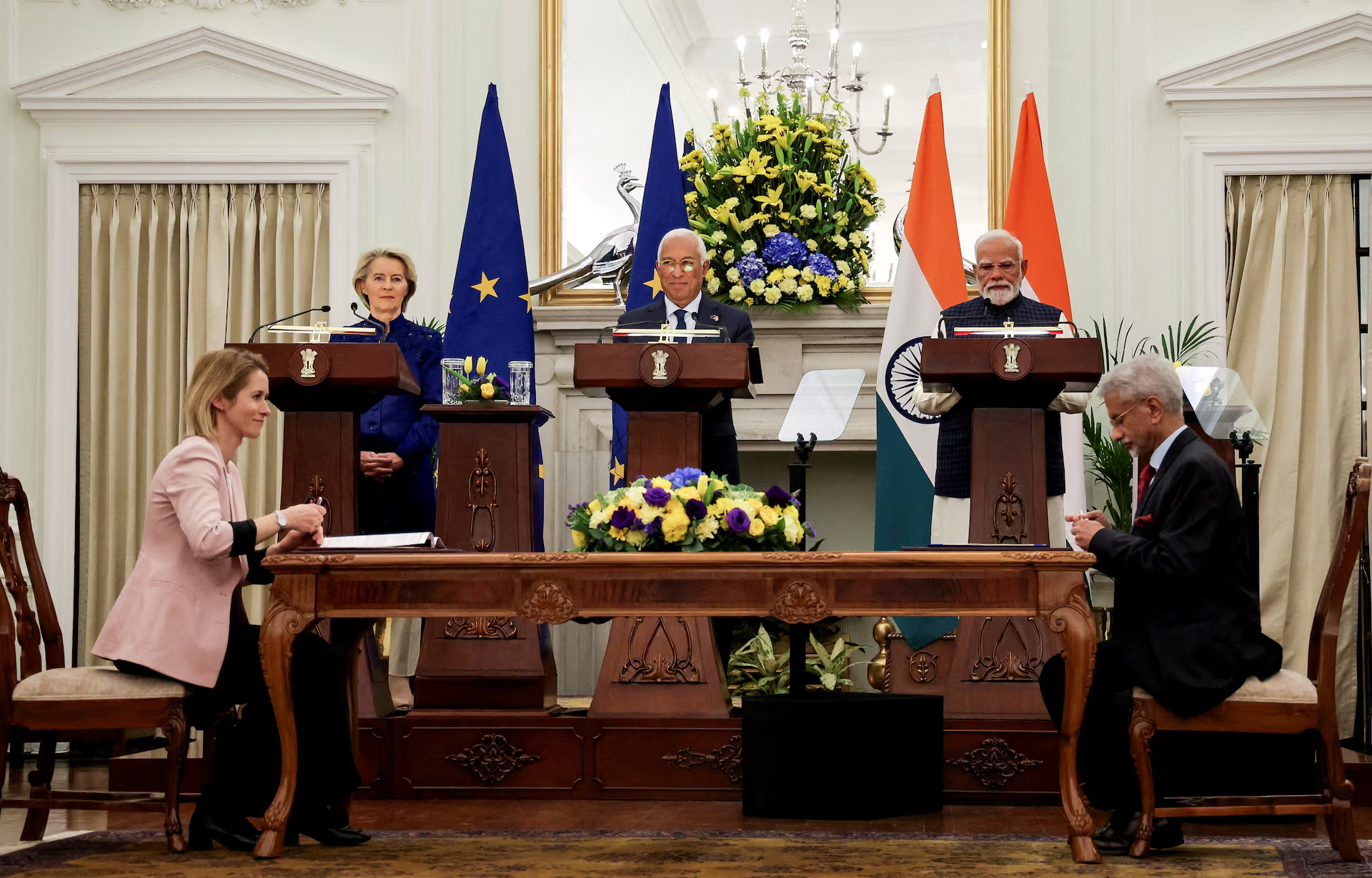
    EU India Free Trade Deal : In a historic moment for global trade, India and the European Union have finally sealed one of the most significant free trade agreements (FTA) in recent history. On January 27, 2026, during the 16th India-EU Summit in New Delhi, negotiations for the long-awaited EU-India FTA were officially concluded after nearly two decades of intermittent discussions. Relaunched in 2022, the talks accelerated dramatically in the final months, culminating in what European Commission President Ursula von der Leyen famously called the “mother of all deals.”

    This agreement creates a massive free trade zone encompassing nearly 2 billion people and roughly 25% of global GDP—equivalent to a combined market worth about $27 trillion. It marks a strategic pivot for both sides amid shifting geopolitics, supply chain disruptions, and uncertainties in global trade dynamics.

     EU India Free Trade Deal
    EU India Free Trade Deal

    Background of the Negotiations

     EU India Free Trade Deal : The EU and India first launched FTA talks back in 2007, but progress stalled in 2013 due to differences over issues like market access in agriculture, automobiles, and services. The negotiations were revived in June 2022 with renewed political commitment from both sides. Parallel discussions on an Investment Protection Agreement and a Geographical Indications (GIs) Agreement also progressed.

    The breakthrough came amid accelerated efforts in late 2025 and early 2026, driven by shared interests in diversifying trade partnerships and building resilient supply chains. The deal was announced and celebrated at the summit attended by Prime Minister Narendra Modi, Ursula von der Leyen, and European Council President António Costa.

     EU India Free Trade Deal
    EU India Free Trade Deal

     EU India Free Trade Deal : Key Highlights of the Agreement

    The FTA is comprehensive, covering goods, services, investment facilitation, sustainable development, and more. Here are the main features:

    • Tariff Reductions : Tariffs will be eliminated or significantly reduced on 96.6% of traded goods by value. This is expected to double EU exports to India by 2032 and save European companies billions in duties. Many industrial products—such as iron and steel, plastics, chemicals, pharmaceuticals, automobiles, spirits, and textiles—will see tariffs cut to zero.
    • Benefits for India : Indian exports in textiles, garments, gems and jewellery, leather, footwear, marine products, chemicals, plastics, sports goods, toys, tea, coffee, spices, and processed foods gain preferential or zero-duty access to the vast EU market. Sensitive sectors like dairy, cereals, and poultry remain protected with safeguards.
    • Services and Mobility : The EU opens 144 subsectors to Indian service providers, while India opens 102 to EU firms, including financial services, maritime transport, and telecommunications. Provisions support mobility for professionals and seasonal workers.
    • Other Provisions : The deal includes strong rules on trade facilitation, customs cooperation, intellectual property, transparency, labor rights, environmental standards, and gender equality. It features a bilateral safeguard mechanism for temporary protections if surges harm domestic industries, and SME-friendly measures like dedicated contact points.
    • Complementary Pacts : Alongside the FTA conclusion, India and the EU signed a security and defence partnership and advanced labor mobility arrangements.

    Expected Economic Impact

     EU India Free Trade Deal : This deal is poised to transform bilateral trade, which already stands at substantial levels but has huge untapped potential. EU goods exports to India could surge, while Indian sectors like textiles and engineering goods gain deeper penetration into Europe. It strengthens supply chain resilience, boosts MSMEs, and supports innovation partnerships. Officials project significant growth in exports, job creation, and investment flows.

     EU India Free Trade Deal
    EU India Free Trade Deal

    Next Steps and Timeline

    While negotiations are concluded, the full legal text requires final scrubbing, translation into all EU languages, and ratification. This includes approval by EU member states, the European Parliament, and India’s cabinet. Commerce Minister Piyush Goyal expressed optimism that the agreement could enter into force by the end of 2026.


    View this post on Instagram


    A post shared by AVSPOST (@avspost)

    Separate negotiations on the Investment Protection Agreement and Geographical Indications continue.

    Also Read This : Sunetra Pawar : A Life of Resilience, Service, and Legacy in the Shadow of Tragedy

    EU India Free Trade Deal : The EU-India FTA is more than a trade pact—it’s a blueprint for shared prosperity, strategic partnership, and stability in a turbulent world. As Prime Minister Modi noted, it represents India’s biggest and most comprehensive FTA yet, while von der Leyen hailed it as history in the making. In an era of protectionism and uncertainty, this deal underscores the power of win-win cooperation between two major democracies.

  • Sunetra Pawar : A Life of Resilience, Service, and Legacy in the Shadow of Tragedy

    Sunetra Pawar : A Life of Resilience, Service, and Legacy in the Shadow of Tragedy

    Sunetra Pawar : Today, as the state observes three days of mourning following the heartbreaking plane crash that claimed the life of Deputy Chief Minister Ajit Pawar and four others near Baramati Airport, the spotlight naturally turns to his wife, Sunetra Pawar—a woman who has quietly yet powerfully carved her own path in public life, environmental activism, and politics.

    Sunetra Pawar, the Rajya Sabha MP from Maharashtra and Chairperson of Baramati Hi-Tech Textile Park Ltd., has long been more than just the spouse of one of the state’s most influential leaders. She is a dedicated environmentalist, social worker, and now, in this moment of profound grief, a symbol of the Pawar family’s enduring strength.


    View this post on Instagram


    A post shared by AVSPOST (@avspost)

    From Baramati Roots to Environmental Leadership

    Born into a politically connected family as the sister of former state minister and Lok Sabha MP Padamsinh Patil, Sunetra has always been deeply tied to rural Maharashtra. In 2010, she founded the Environmental Forum of India (EFOI), an NGO committed to promoting organic farming, eco-villages, clean energy initiatives, and sustainable rural development. Starting from her home base in Baramati, the organization has expanded to advocate for environmental awareness, eco-friendly festivals, and community-led conservation efforts.

    Her work has earned her accolades, including the Green Warrior Award, recognizing her as a true champion of sustainability in a state where agriculture and ecology often intersect with politics.

    As Chairperson of the Baramati Textile Company, she has also championed economic empowerment through industry, blending modern textile innovation with local employment opportunities.

    Sunetra Pawar : Stepping into the Political Arena

    In 2024, Sunetra contested the Lok Sabha seat from Baramati—the Pawar family’s traditional stronghold—on behalf of the Ajit Pawar-led Nationalist Congress Party (NCP) faction. Though she faced a high-profile contest against her sister-in-law Supriya Sule (from the Sharad Pawar-led NCP-SP), the election highlighted her growing role in the family’s political legacy.

    Currently serving as a Rajya Sabha member, Sunetra has focused on issues like women’s empowerment, rural education (as a trustee of Vidya Pratishthan), and sustainable development. She is also associated with the World Entrepreneurship Forum (France) as a think tank member since 2011.

    A Family in Mourning

    Ajit Pawar and Sunetra Pawar shared a partnership that balanced high-stakes politics with family life. They have two sons: Parth Pawar, who has contested elections in the past (including from Maval in 2019), and Jay Pawar, who maintains a relatively private profile.

    Sunetra Pawar
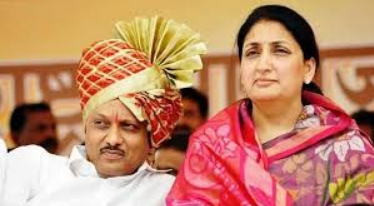
    Sunetra Pawar and Ajit Pawar shared a partnership that balanced high-stakes politics with family life

    The tragic crash on January 28, 2026, occurred as Ajit was traveling from Mumbai to Baramati for election-related rallies ahead of local body polls. The Learjet 45 attempted a second landing approach before the fatal incident. No survivors were reported from the five on board.

    In the immediate aftermath, Sunetra—along with sons Parth and Jay, Supriya Sule, and other family members—rushed from Delhi (where they were attending Parliament’s budget session) to Baramati. The Pawar family, despite past divisions, has come together in grief, with leaders from across parties expressing condolences.

    Prime Minister Narendra Modi remembered Ajit Pawar as a “leader of the people” with a strong grassroots connect, while Maharashtra CM Devendra Fadnavis announced state mourning.

    Strength in Service

    In the wake of this unimaginable loss, Sunetra Pawar stands at a crossroads. Speculation has already begun about her potential role in leading the NCP faction her husband built, or bridging divides within the broader Pawar ecosystem. Her background in grassroots activism, environmental causes, and parliamentary experience positions her uniquely to continue the legacy of service to Maharashtra’s people.

    Yet, today is not about speculation—it’s about honoring a shared life of dedication and offering support to a family that has given so much to public life.

    Sunetra Pawar’s journey—from founding an NGO dedicated to a greener future, to stepping boldly into electoral politics—reminds us that leadership often emerges from quiet, consistent effort rather than just spotlight moments.

    Also Read This : Ajit Pawar plane crash

    In this hour of sorrow, Maharashtra and India stand with her, her sons, and the entire Pawar family. May her resilience inspire continued work toward the sustainable, inclusive Maharashtra she and Ajit envisioned.

    Om Shanti.

  • Indian Navy SSC Officer Recruitment 2026 : Join the Elite Force – Apply Now!

    Indian Navy SSC Officer Recruitment 2026 : Join the Elite Force – Apply Now!

    Indian Navy SSC Officer Recruitment 2026 : If you’ve been dreaming of donning the crisp white uniform of the Indian Navy and commanding the waves, your opportunity has arrived. The Indian Navy has just rolled out the much-awaited notification for Short Service Commission (SSC) Officers in the January 2027 (ST-27) Course. This recruitment drive offers around 260 vacancies across multiple branches, opening doors for dynamic young men and women to serve the nation with pride.

    Applications are now open from 24 January 2026 to 24 February 2026. With the window closing in just a month, it’s time to act fast and secure your spot in this prestigious force.

    Indian Navy SSC Officer Recruitment 2026 : What Makes This Recruitment Special?

    The Indian Navy’s SSC entry is perfect for those seeking a challenging career filled with adventure, leadership, and global exposure. Whether you’re inclined towards the Executive Branch (handling operations and logistics), Technical Branch (engineering marvels at sea), or Education Branch (shaping future minds), there’s a role that aligns with your skills.

    Indian Navy SSC Officer Recruitment 2026
    Indian Navy SSC Officer Recruitment 2026
    • Vacancies: Approx. 260 (detailed branch-wise distribution in the official notification).
    • Course Start: January 2027 at the scenic Indian Naval Academy (INA), Ezhimala, Kerala – known for its rigorous yet transformative training.
    • Eligibility Snapshot:
      • Unmarried candidates (men and women).
      • Born between 02 July 2002 and 01 July 2008 (with minor variations per branch).
      • Minimum 60% in BE/B.Tech, M.Sc., MCA, MBA, or equivalent (specific streams required for each branch).

    This is more than a job – it’s a calling to safeguard India’s vast maritime borders and contribute to humanitarian missions worldwide.

    Step-by-Step Guide to Apply

    Indian Navy SSC Officer Recruitment 2026 : Applying is straightforward and completely online:

    1. Head to the official portal: www.joinindiannavy.gov.in.
    2. Complete one-time registration with your email and phone.
    3. Choose the “SSC Officers – January 2027 Course” option.
    4. Carefully enter your details, upload scanned documents (photograph, signature, and certificates).
    5. Review and submit – there’s no fee involved!

    Pro Tip: Double-check everything before submission, as corrections aren’t allowed later. Download the official notification PDF for exact requirements and vacancy details directly from the site.

    The Road to Selection : What to Expect

    The selection is merit-based and multi-stage:

    1. Initial Screening: Applications are shortlisted based on your academic scores (normalized if needed) and branch preferences.
    2. Services Selection Board (SSB): The hallmark 5-day interview at centers like Bhopal, Bangalore, Visakhapatnam, or Kolkata. It tests your officer-like qualities through psychological assessments, group tasks, and personal interviews.
    3. Medical Tests: Thorough examination to ensure you’re fit for sea duties.
    4. Final Merit: Compiled from SSB marks, medical clearance, and available slots.

    Preparation starts now! Brush up on current affairs, stay physically active, and practice group discussions. Lucknow has excellent coaching centers for SSB – make the most of them.

    Indian Navy SSC Officer Recruitment 2026
    Indian Navy SSC Officer Recruitment 2026

    Perks of Being a Naval Officer

    Joining as an SSC Officer means:

    • Starting pay of ₹56,100 (Level 10) plus Maritime Special Pay (₹15,500/month) and other allowances.
    • World-class training, postings on advanced warships, submarines, or aircraft.
    • Opportunities for extensions, Permanent Commission, or specialized courses.
    • A life of discipline, camaraderie, and unforgettable experiences – from sailing across oceans to disaster relief operations.

    Also Read this : Nitin Nabin Takes Charge : A New Era Begins for the BJP

    Indian Navy SSC Officer Recruitment 2026 : For aspirants in Uttar Pradesh like you, this is a chance to represent your state on a national platform. The Navy values diversity and merit above all.

  • Border 2 Box Office Collection : Sunny Deol’s War Epic Opens Strong on Day 1

    Border 2 Box Office Collection : Sunny Deol’s War Epic Opens Strong on Day 1

    Border 2 Box Office Collection : The much-anticipated sequel to the 1997 classic Border, aptly titled Border 2, has finally hit the theaters, and it’s off to a thunderous start! Released on January 23, 2026, coinciding with the Republic Day weekend, the film has tapped into the patriotic fervor, delivering one of the strongest openings of the year.

    Directed by Anurag Singh, Border 2 brings back Sunny Deol reprising his iconic role, joined by a stellar ensemble cast including Varun Dhawan, Diljit Dosanjh, and Ahan Shetty in pivotal roles. The war drama, based on real-life heroes from India’s military history, has struck a chord with audiences, blending high-octane action, emotional depth, and nationalism.

    Border 2 Box Office Collection Day 1

    According to early estimates from reliable trackers like Sacnilk, Bollywood Hungama, and Koimoi:

    • India Net Collection: ₹30–32.10 crore (most reports converging around ₹32 crore)
    • India Gross Collection: Approximately ₹36–38 crore
    • Overseas Gross: ₹5–7.5 crore
    • Worldwide Gross (Day 1): ₹41–43 crore

    This opening places Border 2 among the top openers of 2026, surpassing recent releases like Dhurandhar and Chhaava, though it falls short of Sunny Deol’s own Gadar 2 record. It’s also noted as the second-biggest January opener in Bollywood history, behind Shah Rukh Khan’s Pathaan.

    Border 2 Box Office Collection
    Border 2 Box Office Collection

    The film performed exceptionally well in North India, driven by strong word-of-mouth and the star power of Sunny Deol, whose patriotic image continues to draw massive crowds.

    Day 2 Early Trends : Growth Expected on Saturday

    As of the afternoon on January 24 (Day 2), morning shows saw a slight dip in occupancy compared to Day 1, but advances are robust with over 4.65 lakh tickets sold nationally. Partial earnings are already clocking in around ₹7–9 crore, and with Saturday being a weekend day, analysts predict a healthy jump—potentially crossing ₹30 crore again.

    Industry experts are optimistic about a solid extended weekend, with projections suggesting the film could accumulate over ₹125 crore by the end of the Republic Day holiday period.

    Border 2 Box Office Collection
    Border 2 Box Office Collection

    Also Read This : A.R. Rahman : The Musical Genius and His Recent Controversy

    Why Border 2 is Winning Hearts

    Border 2 Box Office Collection : The sequel builds on the legacy of the original Border, which remains one of India’s highest-grossing war films. Early audience reactions praise the intense battle sequences, powerful performances (especially Diljit Dosanjh’s standout role), and the film’s tribute to Indian armed forces heroes.