Realme P3 Pro: Realme p3 Pro 5G is the real means expanding smartphone line up which is soon launching in India. Awesome amazing features like handset glowing black panel, Snapdragon Gen 3 chipset, 50 MP camera setup and more.
Realme P3 Pro
Apart from this the phone will also come with a GT boost technology development in collaboration with kaftan. Specially designed for gaming features and more.
When is this phone launching?
The latest series of Realme P3 Pro had already been launched in India on February 18, 2025 with its two-budget friendly smartphone Realme 3 Pro and Realme P3x.
When is this phone launching?
What are the features of Realme p3 Pro? Details on the design and look of the phone?
Qatar Amir’s visit: An invitation was sent by Prime Minister Narendra Modi to the Amir of Qatar Tamim bin Hamad Ai-Thani. This visit has been planned to discuss various topics like bilateral relations, trade, investment, energy, and the ever-turbulent regional issues. According to the report Amir of Qatar has already arrived in India February 17, 2025.
Details on Qatar Amir visit?
When and where did his Trip start?
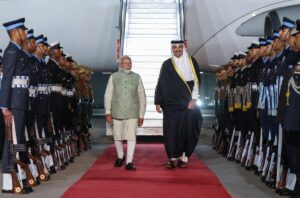
The Qatar Amir’s Visit to India started with his arrival in India on Monday at New Delhi Airport for a two-day visit to plan and discuss various topics. During his arrival he was received by PM Modi at the airport.
When and where did his Trip start?
What special gesture did the PM Modi show on Qatar Amir visit?
Some special gesture shown by PM Modi show on Qatar Amir visit are: –
The Amazing gesture was shown by PM Modi at the arrival at Delhi Airport to receive Amir of Qatar Sheikh Tamim Bin Hamad Al-Thani. Both were seen hugging and smiling while meeting with each other.
What special gesture did the PM Modi show on Qatar Amir’s visit?
Later PM Modi also posted on X saying “Went to the airport to welcome my brother, Amir of Qatar Sheikh Tamim Bin Hamad Al Thani. Wishing him a fruitful stay in India and looking forward to our meeting tomorrow”.
Details on the topic to be discussed between them during the visit?
Some of the topic to be discussed between them during the visit will be: –
This visit is planned to discuss various topics like bilateral relations, trade, investment, energy, and the ever-turbulent regional issues. Apart from this according to the Ministry of External affairs this visit will also further show momentum to our growing multifaceted partnership”.
The official meeting will start on Tuesday after the meeting of Sheikh with President Draupadi Murmu and External Affairs Minister President Draupadi Murmu and External Affairs Minister S Jaishankar..
How is this visit beneficial for India and Qatar bond?
The visit of Amir of Qatar reaffirms strong bonds of friendship and cooperation between India and Qatar. There will also be strengthening of infrastructure, trade and other regional issues. Apart from all this this might also increase the tourism of both the countries.
iPhone 14 : In the ever-evolving landscape of technology, Apple’s iPhone series has consistently stood at the forefront, setting benchmarks for innovation, design, and user experience. With each new release, anticipation builds, and consumers eagerly await the latest features and enhancements. However, for many, the allure of a new model also brings attention to the opportunities presented by previous generations, especially when significant price reductions make them more accessible. The iPhone 14, once a flagship device, has recently seen substantial price drops, making it a compelling option for those seeking premium quality without the premium price tag.
The Evolution of iPhone Pricing
Apple’s pricing strategy has traditionally positioned its latest models at the higher end of the market, reflecting the cutting-edge technology and design they embody. Historically, the introduction of a new iPhone model leads to a restructured pricing hierarchy, where preceding models receive price cuts. This approach not only caters to a broader audience but also ensures that Apple’s ecosystem remains inclusive, offering devices at various price points.
The launch of the iPhone 16 series in September 2024 marked a significant milestone in Apple’s product lineup. With the iPhone 16 starting at ₹79,900, the company strategically reduced the prices of its predecessors to make them more appealing to cost-conscious consumers. The iPhone 14, which debuted at ₹79,900 in 2022, experienced a notable price drop, positioning it as an attractive alternative for those unwilling to invest in the latest model.
Current Pricing of the iPhone 14 in India
As of February 2025, the iPhone 14 is available at various price points across different platforms in India. On Apple’s official online store, the 128GB variant is listed at ₹59,900, reflecting a ₹20,000 reduction from its original launch price. This significant markdown underscores Apple’s commitment to offering premium devices to a wider audience.
E-commerce giants and authorized retailers have further sweetened the deal with additional discounts and offers. For instance, during festive sales and special promotions, platforms like Flipkart and Amazon have listed the iPhone 14 at prices as low as ₹49,999, especially when combined with bank offers and exchange deals. These promotions not only make the device more affordable but also provide consumers with flexible payment options, including no-cost EMIs and substantial exchange bonuses.
iphone 14
Factors Contributing to the Price Drop
Several factors have contributed to the substantial reduction in the iPhone 14’s price:
Introduction of New Models: The release of the iPhone 16 series naturally shifts consumer interest towards the latest offerings. To maintain sales momentum for existing inventory, Apple adjusts the pricing of older models, making them more competitive in the market.
Market Dynamics and Competition: The smartphone market is highly competitive, with numerous brands vying for consumer attention. Price adjustments ensure that Apple’s products remain attractive choices amidst a plethora of alternatives.
Festive Seasons and Sales Events: In India, festive seasons like Diwali are synonymous with shopping sprees. Retailers capitalize on this by offering significant discounts, and Apple products often feature prominently in these promotions.
Inventory Management: As newer models are introduced, managing existing stock becomes crucial. Price reductions help in clearing inventory, ensuring that retailers can make way for the latest products.
Is the iPhone 14 Still a Viable Option in 2025?
Despite being two generations behind the latest release, the iPhone 14 remains a robust and capable device. It boasts a 6.1-inch Super Retina XDR display, the A15 Bionic chip, and a dual 12MP camera system, ensuring a seamless user experience for everyday tasks and advanced applications alike. Moreover, Apple’s commitment to software updates means that the iPhone 14 continues to receive the latest iOS versions, ensuring security and access to new features.
For consumers who prioritize value and are not necessarily seeking the absolute latest features, the iPhone 14 presents a compelling proposition. Its current pricing, combined with Apple’s renowned build quality and ecosystem integration, makes it a worthy consideration for those looking to upgrade their smartphone experience without stretching their budget.
Conclusion
The dynamic nature of technology markets often leads to rapid shifts in product pricing, especially with the introduction of newer models. The iPhone 14’s significant price drop in India exemplifies this trend, offering consumers the opportunity to own a premium device at a more accessible price point. As of February 2025, the iPhone 14 stands as a testament to Apple’s enduring quality and design philosophy, making it a viable and attractive option for a wide range of users.
For those considering a new smartphone purchase, the iPhone 14’s blend of performance, design, and now affordability, positions it as a strong contender in the mid-premium segment of the market.
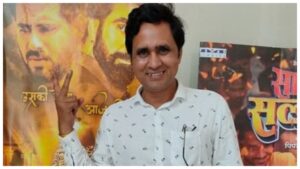
Sanoj Mishra is an Indian filmmaker known for directing bold and politically charged films like The Diary of West Bengal and Kashi to Kashmir. With over three decades in the industry, he has faced controversies, legal challenges, and media scrutiny, yet remains committed to storytelling that explores social and political realities.
Sanoj Mishra, a seasoned filmmaker with over three decades in the Hindi film industry, has recently been at the center of significant media attention due to both his professional endeavors and personal controversies. Born on August 11, 1977, in Haidergarh, Barabanki district, Uttar Pradesh, Mishra pursued a master’s degree in sociology from Shia PG College, Lucknow. Throughout his career, he has been associated with journalism and writing, contributing to numerous Bollywood projects as an assistant before establishing himself as a director. His filmography includes titles such as “Kashi to Kashmir,” “Shashank,” “Lafange Nawab,” “Ghaznavi,” and the contentious “The Diary of West Bengal.”
Sanoj Mishra
Controversy Surrounding “The Diary of West Bengal”
In 2024, Mishra directed “The Diary of West Bengal,” a film set against the backdrop of the 1971 Bangladesh genocide. The narrative follows Suhasini, a Hindu widow who, after losing her husband in the genocide, migrates to West Bengal. There, she faces challenges, including falling victim to “love jihad” and witnessing political exploitation. The film’s portrayal of sensitive issues sparked significant controversy, leading to allegations that it defamed the state of West Bengal. In response, the Kolkata Police issued a legal notice to Mishra, summoning him for questioning.
Sanoj Mishra
Mysterious Disappearance
Following the legal notice, Mishra traveled to Kolkata on August 14, 2024, to address the summons. However, upon arrival, he became uncontactable, with his phone switched off. His family, particularly his wife, Dwiti Mishra, expressed deep concern, fearing for his safety due to the threats he had received post the film’s trailer release. After several days of uncertainty, Mishra was located in Varanasi. Reports indicated that his mental state was unstable at the time of his discovery.
Sanoj Mishra
Collaboration with Monalisa Bhonsle
In early 2025, Mishra announced a new project titled “The Diary of Manipur.” For this venture, he cast Monalisa Bhonsle, a young girl who gained media attention during the Maha Kumbh Mela in Prayagraj. Monalisa’s viral images and videos led to widespread recognition, prompting Mishra to offer her a role in his upcoming film. He visited her residence in Maheshwar, Madhya Pradesh, to finalize the contract, expressing his commitment to support her budding career in the film industry.
Sanoj Mishra
Allegations and Defense
Despite the positive developments, Mishra faced allegations from Jitendra Narayan Singh Tyagi, formerly known as Syed Waseem Rizvi and the ex-chairman of the Shia Central Waqf Board of Uttar Pradesh. Tyagi accused Mishra of exploiting Monalisa for personal gain, questioning his credibility as a filmmaker. In response, Mishra refuted these claims, emphasizing his genuine intentions to mentor and support Monalisa. He highlighted her family’s financial struggles and his role in providing her with a platform to showcase her talent.
Sanoj Mishra
Current Endeavors
As of February 2025, Sanoj Mishra continues to focus on “The Diary of Manipur,” aiming to shed light on the region’s traditions and challenges. Despite facing controversies and personal challenges, he remains dedicated to his craft, striving to produce films that address pertinent social and political issues.
In summary, Sanoj Mishra’s journey reflects a blend of artistic ambition and resilience in the face of adversity. His commitment to storytelling, even amidst controversies, underscores his unwavering dedication to the cinematic portrayal of complex societal narratives.
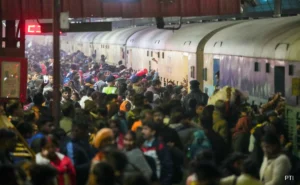
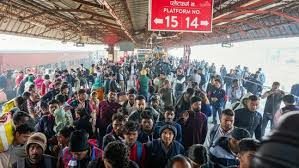
Delhi Stampede Case: The Delhi Railway Station stampede occurred on February 15, 2025, on a Saturday, when a large crowd gathered at the station due to delays and cancellations of several trains. The congestion worsened as passengers rushed to board the trains, leading to panic and chaos.
Details on the Delhi Stampede Incident
The situation escalated when people started pushing and shoving near the ticket counters and platforms, resulting in a stampede. Several individuals were injured, and emergency responders were deployed to manage the situation.
The authorities later stated that overcrowding, lack of proper crowd control, and mismanagement were key factors behind the incident. The railway department initiated an inquiry to improve safety measures and prevent such occurrences in the future.
Who Was Responsible for the Delhi Stampede Case?
When and Where Did the Incident Occur?
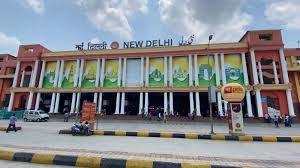
The incident took place at New Delhi Railway Station on Saturday, February 15, between 8:00 PM and 10:00 PM, while many people were waiting for trains heading towards the Maha Kumbh. The stampede occurred around 9:00 PM to 9:30 PM, when the train to Maha Kumbh changed platforms, causing passengers to rush toward the new platform, which led to overcrowding and the tragic loss of lives.
New Delhi Railway Station
What Was the Reason Behind the Delhi Stampede Case?
According to reports, 7,000 tickets were booked for the train heading toward Maha Kumbh. However, on the day of the train’s arrival, 9,600 people showed up, including those holding general class tickets. The train to Triveni Sangam for the Maha Kumbh had a major crowd, consisting of passengers with both reserved and non-reserved tickets.
What Was the Reason Behind the Delhi Stampede Case?
At the last minute, the special train heading to Maha Kumbh was redirected to a different platform, from Platform 14 to Platform 15, causing confusion and a last-minute rush. This chaos triggered the stampede, which led to several injuries and fatalities. The stampede, which occurred around 9:00 PM to 9:30 PM, resulted in the deaths of 18 people, mostly women and children.
The reactions of the Railway Authorities to the Stampede
In the aftermath of the New Delhi Railway Station stampede, several decisions were made:
A committee comprising Pankaj Gangwar, Principal Chief Security Commissioner, and Nar Singh, Principal Chief Commercial Manager of Northern Railway, convened on Sunday following the incident and made several changes to manage crowd control more effectively.
The changes include:
Emergency alerts and safety measures to handle large crowds.
The formation of a two-member high-level committee to investigate the stampede at New Delhi Railway Station.
All special trains to Prayagraj will now depart exclusively from Platform 16 at New Delhi Railway Station.
Passengers will now need to use the Ajmeri Gate for entry and exit from the station.
Enhanced security and emergency assistance will be provided in the area.
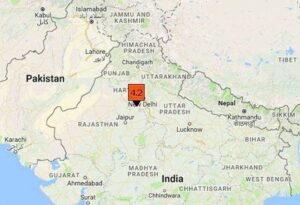
Delhi Earthquake: On February 17, 2025, at around 5:30 AM, an earthquake occurred in Delhi and its NCR region. The magnitude was approximately 4.0, and its epicenter was located near Durgabai Deshmukh College in Dhaula Kuan, which is southwest of Delhi. The tremors were felt in various areas of Delhi, Ghaziabad, and Noida, causing panic and chaos in these regions.
Details on Delhi Earthquake?
What are the Reasons Behind the Frequent Earthquakes in Delhi?
Delhi is situated in an active seismic zone due to its proximity to the seismically active Himalayas and several regional faults. This incident underscores the importance of earthquake preparedness and the need for robust infrastructure to withstand such events.
What are the Reasons Behind the Frequent Earthquakes in Delhi?
Highlights of the Delhi Earthquake: Who Was Affected?
Some key highlights of the Delhi Earthquake are as follows:
The earthquake occurred around 5:30 AM on February 17, 2025.
The magnitude of the earthquake was 4.0 on the Richter scale.
The epicenter of the incident was near Dhaula Kuan, around Durgabai Deshmukh College, at a depth of 5 kilometers.
Durgabai Deshmukh College, at a depth of 5 kilometers.
Tremors were widely felt across Delhi, as well as in neighboring areas like Noida and Ghaziabad, prompting many people to rush out of their homes in panic.
While no immediate reports of casualties were received, some damage was reported, including a 20–25-year-old tree being uprooted in Jheel Park, Dhaula Kuan.
Jheel Park, Dhaula Kuan
The National Centre for Seismology (NCS) indicated that the earthquake was due to “normal faulting,” a common ground movement, and not triggered by major regional faults like the Sohna or Mathura Faults.
How Safe Are People from a Larger Earthquake in the Future?
The safety of people in Delhi from a larger earthquake in the future depends on several factors, including infrastructure resilience, preparedness, and public awareness.
Delhi’s buildings, particularly older ones, may not always meet modern earthquake-resistant standards. While newer buildings are designed to withstand seismic activity, older structures are often more vulnerable. Additionally, while emergency protocols exist, public awareness and readiness remain areas of concern. Many people in Delhi may not have been trained in basic earthquake safety, such as knowing how to “Drop, Cover, and Hold On.”
basic earthquake safety
While Delhi is not completely unprepared for a larger earthquake, more efforts are needed to ensure safety and minimize damage in the event of a major seismic event. The city must continue to improve its infrastructure, preparedness, and response strategies to protect its residents.
Safety and Protection Tips
Some tips for safety and protection are as follows:
Secure Your Home: Anchor heavy furniture like bookshelves, cabinets, and appliances to the walls to prevent them from tipping over. Secure loose items such as pictures, vases, and small appliances that could fall and cause injury. Use safety straps for televisions, microwaves, and other heavy items.
Create an Emergency Kit: Keep all required items for big or small emergencies in a kit.
Develop an Emergency Plan: Identify an escape route from your home and a meeting point outside. Make sure all family members know what to do and where to go during an earthquake.
Learn to Turn Off Utilities: Know how to turn off your gas, water, and electricity in case of damage to these systems after an earthquake.
Ensure Your Home is Structurally Sound: If you live in an older building, consider retrofitting it to make it more resistant to earthquakes.
The Aashiqui franchise has been a cornerstone of Bollywood’s romantic musical genre, captivating audiences with its poignant storytelling and melodious music. The legacy began with Aashiqui (1990), which became a cultural phenomenon, followed by Aashiqui 2 (2013), which revived the franchise for a new generation. Now, as anticipation builds for Aashiqui 3, fans eagerly await another heartfelt love story set against a backdrop of unforgettable music. This article delves into the journey of Aashiqui 3, exploring its history, development, casting choices, production updates, and the challenges it faces in meeting expectations.
Directed by Mahesh Bhatt and produced by T-Series and Vishesh Films, Aashiqui (1990) starred Rahul Roy and Anu Aggarwal in the lead roles. The film became a sensation, not just for its tender love story but also for its groundbreaking music composed by Nadeem-Shravan. Songs like Dheere Dheere Se, Tu Meri Zindagi Hai, and Nazar Ke Samne became instant classics and are still cherished by music lovers today. The soundtrack of Aashiqui sold over 20 million copies, making it one of the best-selling Bollywood albums of all time.
Aashiqui 2 (2013): Reviving the Magic
After a gap of 23 years, Aashiqui 2 was released in 2013, directed by Mohit Suri and starring Aditya Roy Kapur and Shraddha Kapoor. Unlike its predecessor, the film was not a direct sequel but rather a spiritual successor, bringing a fresh love story with its own emotional depth. The plot revolved around a troubled musician who helps a young singer achieve fame, only to struggle with his own personal demons. The film’s soundtrack, composed by Mithoon, Jeet Gannguli, and Ankit Tiwari, was an instant hit, with songs like Tum Hi Ho, Sunn Raha Hai, and Chahun Main Ya Naa dominating the charts. The film was both a critical and commercial success, cementing its place as a modern classic.
Development of Aashiqui 3
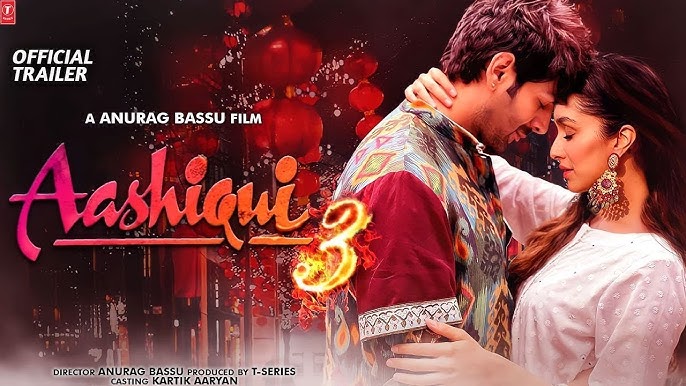
After the success of Aashiqui 2, speculation about a third installment began circulating. However, it wasn’t until September 2022 that Aashiqui 3 was officially announced, with Kartik Aaryan confirmed as the lead actor. The film is being directed by Anurag Basu, known for his unique storytelling style in films like Barfi! and Ludo. The combination of Basu’s directorial vision and Kartik Aaryan’s rising stardom has created significant buzz around the film.
Casting and Production Updates
One of the biggest mysteries surrounding Aashiqui 3 has been its female lead. While several names have been rumored, including Triptii Dimri, the official confirmation is still awaited. In March 2024, T-Series issued a statement clarifying that the project was still in the early stages and that the female lead had not been finalized. The producers emphasized their commitment to maintaining the integrity of the franchise and taking their time to cast the right actress for the role.
Aashiqui 3
As of early 2025, director Anurag Basu confirmed that the film is set to begin shooting in March 2025. The delay in production has been attributed to extensive pre-production work, including script refinements and music composition. Given the franchise’s legacy, the filmmakers are keen on delivering a product that lives up to audience expectations.
Musical Expectations: The Heart of Aashiqui
Music has always been the soul of the Aashiqui franchise. While the official list of composers for Aashiqui 3 has not been released, there is immense speculation about who will be entrusted with the responsibility of creating the soundtrack. Given Anurag Basu’s past collaborations, it is likely that Pritam, known for his versatile compositions, may be involved.
The challenge for Aashiqui 3 is not just to create a hit album but to deliver songs that resonate with the audience on an emotional level. Fans expect melodies that capture the intensity of love, heartbreak, and longing, much like the iconic songs from the first two films.
Challenges and Expectations
Bringing Aashiqui 3 to life comes with several challenges. The first is meeting the sky-high expectations set by its predecessors. Both Aashiqui and Aashiqui 2 had an emotional depth that connected deeply with audiences. Crafting a story that is both fresh and equally moving will be a crucial task for the writers and director.
Another challenge is the evolving landscape of Bollywood music. With changing trends and the rise of independent artists, Bollywood soundtracks no longer hold the same dominance they once did. Aashiqui 3 will need to strike a balance between nostalgia and contemporary appeal, ensuring its songs remain timeless yet relevant.
Additionally, Kartik Aaryan, while a popular star, has never played a role as emotionally intense as those seen in the Aashiqui series. His performance will be under scrutiny, as audiences will compare him to the portrayals of Rahul Roy and Aditya Roy Kapur, both of whom became synonymous with their characters.
Aashiqui 3
The Future of the Aashiqui Franchise
With Aashiqui 3 on the horizon, there is speculation about whether the franchise will continue beyond this installment. Given the brand’s legacy and the evolving nature of Bollywood storytelling, it is possible that future Aashiqui films may experiment with different narratives while staying true to the essence of love and music.
If Aashiqui 3 succeeds in capturing the magic of its predecessors, it could pave the way for a new generation of romantic musicals in Bollywood. The film has the potential to be a landmark in the genre, much like its predecessors, provided it delivers on both story and music.
Conclusion
Aashiqui 3 is more than just a film; it is a continuation of a legacy that has shaped Bollywood’s musical romance genre. With Anurag Basu’s vision, Kartik Aaryan’s performance, and the promise of another unforgettable soundtrack, the film has generated immense anticipation. As it moves towards production, fans eagerly await the next chapter in the Aashiqui saga, hoping it will live up to the magic of its predecessors. Whether Aashiqui 3 will become another timeless classic remains to be seen, but one thing is certain—it will carry forward the tradition of love, music, and storytelling that the franchise is known for.
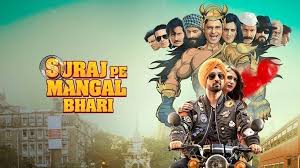
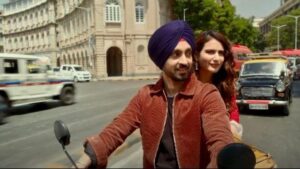
Suraj Pe Mangal Bhari is a 2020 Bollywood film directed by Abhishek Sharma. The movie is a satirical comedy set in the 1990s, featuring a cat-and-mouse game between a marriage detective and a prospective groom. It stars Manoj Bajpayee, Diljit Dosanjh, and Fatima Sana Shaikh in pivotal roles. The film, while rooted in humor, also explores themes of familial expectations, arranged marriages, and personal aspirations.
Indian cinema has always had a knack for blending comedy with social commentary, and Suraj Pe Mangal Bhari (2020) is a fine example of this tradition. Directed by Abhishek Sharma, the film is a lighthearted comedy with a strong undercurrent of social satire. Set in the 1990s, before the era of smartphones and social media, the film presents an amusing yet insightful look at arranged marriages, family values, and the age-old cat-and-mouse game between prospective grooms and investigative matchmakers.
Starring Diljit Dosanjh, Manoj Bajpayee, and Fatima Sana Shaikh in pivotal roles, Suraj Pe Mangal Bhari offers a nostalgic glimpse into a simpler time when detective work required effort and technology hadn’t yet taken over human relationships. Through its humor, music, and an engaging storyline, the film captures the essence of the bygone era while addressing modern-day concerns in a subtle yet impactful manner.
Plot Overview
The film revolves around Suraj Singh Dhillon (Diljit Dosanjh), a young, enthusiastic, and ambitious man from a traditional Punjabi family. He aspires to settle down in life and is actively searching for a suitable bride. However, his marriage prospects are repeatedly sabotaged by Madhu Mangal Rane (Manoj Bajpayee), a self-proclaimed wedding detective who specializes in exposing the flaws of potential grooms.
Mangal’s job is to conduct background checks on prospective grooms and provide families with insights into their character and lifestyle. With an intense commitment to his work, Mangal has earned a reputation for being thorough and ruthless. Suraj, frustrated by his continuous rejections, vows to take revenge on Mangal and turn the tables on him.
As the story unfolds, Suraj discovers Mangal’s Achilles’ heel—his sister Tulsi Rane (Fatima Sana Shaikh). In a bid to get back at Mangal, Suraj begins to woo Tulsi, leading to a roller-coaster of emotions, drama, and hilarity. What follows is a series of misunderstandings, comic confrontations, and a warm, entertaining tale of love, rivalry, and redemption.
Themes and Social Commentary
Arranged Marriage and Social Scrutiny: The film humorously portrays the scrutiny that grooms and brides face in arranged marriages, where family reputation and societal approval often take precedence over personal compatibility.
Privacy vs. Investigation: Mangal’s profession raises ethical questions about how much intrusion is acceptable in personal matters. The film satirizes the idea of extreme background checks, suggesting that excessive interference can backfire.
Sibling Bonds: The relationship between Mangal and Tulsi is a key emotional anchor. Mangal’s protectiveness stems from his desire to keep his sister away from heartbreak, but it also highlights the struggle between familial love and individual independence.
Revenge vs. Redemption: Suraj’s initial plan to take revenge on Mangal turns into a journey of self-discovery and understanding, showing that conflicts can often be resolved through empathy and communication.
A Nostalgic Take on the 1990s: One of the most striking aspects of Suraj Pe Mangal Bhari is its setting. By placing the story in the 1990s, the film avoids the trappings of modern technology and presents a charmingly old-school approach to matchmaking and investigation. The absence of social media and digital records means that Mangal’s detective work is purely based on groundwork, making his character all the more intriguing. This nostalgic setting serves as a delightful trip down memory lane for audiences who grew up in that era.
Satire on Arranged Marriages: The film cleverly critiques the process of arranged marriages in India, highlighting the intense scrutiny that prospective grooms often face. Mangal’s role as a marriage detective symbolizes the invasive background checks conducted by families, which, while well-intentioned, can sometimes be unfair and extreme. Through humor, the film questions the idea of judging people based on superficial criteria while subtly advocating for trust and genuine understanding in relationships.
Gender Roles and Family Dynamics: Tulsi’s character adds another layer of depth to the narrative. As a woman caught between familial expectations and personal aspirations, she represents many young Indian women who struggle to carve their own identity. Her evolving relationship with Suraj serves as a subplot that challenges traditional notions of love and marriage. Additionally, the film portrays strong family ties, showcasing the love, quirks, and conflicts that define Indian households.
Suraj Pe Mangal Bhari
Performances and Direction
Manoj Bajpayee as Madhu Mangal Rane
Manoj Bajpayee delivers a stellar performance as the meticulous and determined marriage detective. His portrayal is a perfect blend of comedy and seriousness, making Mangal an unforgettable character. His disguises and various avatars throughout the film add to the humor, showcasing his versatility as an actor.
Diljit Dosanjh as Suraj Singh Dhillon
Diljit Dosanjh brings his signature charm and comic timing to the role of Suraj. His portrayal of a naive yet determined young man resonates with the audience, making him a relatable and endearing protagonist. His interactions with both Mangal and Tulsi provide some of the film’s most entertaining moments.
Fatima Sana Shaikh as Tulsi Rane
Fatima Sana Shaikh shines in her role, bringing depth and nuance to her character. Her chemistry with Diljit adds a romantic angle to the film, while her emotional conflicts highlight the struggles of a woman torn between love and family loyalty.
Abhishek Sharma’s Direction
Abhishek Sharma does an excellent job of maintaining a balance between comedy and social critique. The film never feels preachy, yet it manages to deliver important messages with subtlety. The screenplay is engaging, and the pacing ensures that the audience remains entertained throughout.
Music and Cinematography
The music of Suraj Pe Mangal Bhari is another highlight. With a mix of upbeat Punjabi tracks and soulful melodies, the soundtrack complements the film’s mood and setting. Songs like “Ladki Dramebaaz Hai” and “Waareya” add to the entertainment quotient, enhancing both the comedic and emotional aspects of the story.
The cinematography captures the essence of the 1990s, with vibrant colors, traditional settings, and an authentic depiction of Mumbai’s middle-class neighborhoods. The attention to detail in costumes and production design further enhances the film’s nostalgic appeal.
Direction and Cinematic Elements
Director Abhishek Sharma effectively blends humor with nostalgia, taking the audience back to the pre-internet era when background checks relied on word-of-mouth and manual investigation. The 1990s setting is well-executed with period-appropriate costumes, technology, and cultural references. The film’s cinematography captures Mumbai’s vibrant essence, adding to the nostalgic feel.
Critical Reception and Audience Response
Upon its release, Suraj Pe Mangal Bhari received mixed-to-positive reviews from critics and audiences alike. While some praised its humor, performances, and nostalgic elements, others felt that the screenplay could have been tighter. Nevertheless, the film was appreciated for its unique concept and refreshing take on Indian matchmaking traditions.
One of the standout aspects was the chemistry between the lead actors and the dynamic between Diljit Dosanjh and Manoj Bajpayee, which provided ample moments of laughter and intrigue. The film’s lighthearted approach made it a family-friendly entertainer, appealing to audiences of all age groups.
Suraj Pe Mangal Bhari
Humor and Entertainment Value
One of the film’s strengths is its witty dialogues and situational comedy. Bajpayee’s disguises and Diljit’s innocent yet mischievous demeanor create several laugh-out-loud moments. The humor is clean and family-friendly, making it a refreshing change from slapstick comedies that rely on crass jokes.
Suraj Pe Mangal Bhari is a comedy-drama that thrives on its witty dialogues, situational humor, and quirky characters. The film successfully delivers a mix of slapstick comedy and intelligent satire, making it an entertaining watch for audiences who enjoy lighthearted family-friendly humor.
Engaging Comic Timing and Performances
Manoj Bajpayee steals the show with his brilliant comedic timing and multiple disguises as a wedding detective. His ability to switch between serious and humorous moments adds depth to the film.
Diljit Dosanjh brings his signature charm and natural comedic style, making Suraj a relatable and fun character. His Punjabi accent and expressions enhance the humor.
Fatima Sana Shaikh plays a refreshing role, balancing the comedy and romance in the film.
Supporting actors like Annu Kapoor, Supriya Pilgaonkar, and Vijay Raaz add layers of humor with their witty dialogues and amusing character quirks.
Situational and Satirical Comedy
The film’s core plot—where a detective investigates prospective grooms—sets up numerous hilarious situations, particularly in the exaggerated ways Mangal exposes men with dubious pasts.
The satire on Indian arranged marriages and societal expectations adds a humorous yet thought-provoking element.
Retro Bollywood Flavor
The 90s setting, complete with classic Bollywood references and music, creates a nostalgic and fun vibe.
The soundtrack and exaggerated dramatic moments further enhance the old-school Bollywood humor.
Clean, Family-Friendly Entertainment
Unlike many modern comedies that rely on crude jokes, Suraj Pe Mangal Bhari keeps the humor clean and suitable for all age groups, making it an ideal watch for family audiences.
With its fresh concept, hilarious performances, and engaging storytelling, Suraj Pe Mangal Bhari delivers solid entertainment. While it may not be a laugh-out-loud riot throughout, it maintains a steady flow of humor and feel-good moments, making it a fun and lighthearted movie experience.
Conclusion of Suraj Pe Mangal Bhari
Suraj Pe Mangal Bhari is a lighthearted satirical comedy that blends humor, family drama, and social commentary. The film builds up to an engaging climax where Suraj (played by Diljit Dosanjh) and Mangal (played by Manoj Bajpayee) find themselves in a battle of wits, driven by misunderstandings and personal grudges.
Throughout the film, Suraj, a simple and well-meaning young man, is determined to find love, but his plans are constantly foiled by Mangal, a detective who specializes in background checks on grooms. The conflict intensifies when Suraj falls in love with Mangal’s sister, Tulsi (Fatima Sana Shaikh), which creates a dilemma for both families. The movie cleverly uses humor to explore themes of trust, honor, and societal pressures regarding arranged marriages.
In the climax, the misunderstandings between Suraj and Mangal reach a breaking point, leading to a series of comedic and dramatic confrontations. However, as the dust settles, Mangal realizes that Suraj is genuinely in love with Tulsi and is not the kind of dishonest groom he usually exposes. This realization leads to an emotional reconciliation, where Mangal, after much reluctance, finally accepts Suraj as his sister’s suitor.
The film concludes on a heartwarming note, reinforcing the idea that love and honesty ultimately triumph over societal skepticism and personal prejudices. With a mix of witty dialogues, well-timed humor, and a strong emotional core, Suraj Pe Mangal Bhari delivers an entertaining yet meaningful message about love, marriage, and familial bonds.
State scholarship: A state scholarship is a financial aid program provided by a state government to support students in pursuing their education. These scholarships are typically awarded based on academic merit, financial need, or specific eligibility criteria such as belonging to a particular category. Each state has its own set of scholarships with unique eligibility and benefits.
what is State scholarship?
Who all are eligible for state scholarship?
Some eligibility for state scholarship is as follows: –
It needs academic eligibility like students with a minimum required percentage or grade according to the scholarship.
The eligibility is like financial or economical week students.
The reserved category eligibility like SC, ST and OBC.
It also depends on various courses and institutions according to the one you pick.
Your residential address could also be one of the eligibilities for the scholarship.
There is also a state scholarship for Female students, military kids or single parent kids to encourage education.
Who all are eligible for state scholarship?
What are different types of state scholarship?
Different types of State scholarship are as follows: –
Merit-Based Scholarships.
Need-Based Scholarships.
Category-Based Scholarships.
Gender-Specific Scholarships.
Course-Specific Scholarships.
Sports Scholarships.
Special Category Scholarships.
Study-Abroad Scholarships.
What are different types of state scholarship?
How can we apply for this scholarship?
Some steps to apply for this scholarship are as follows: –
Fill out the application form and provide them with your details and qualifications.
Upload your documents like Aadhar card and other details.
Submit your application after checking your information properly.
Verify your documents.
How can we apply for this scholarship?
Details on benefits and impact of this scholarship?
The benefits of this scholarship are as follows:-
Financial support like tuition fees, examination fees and other academic expenses.
Increases higher education for students with low-income family or other boundaries.
It supports under privileged students and communities like SC, ST and OBC.
It Reduces the dependency of people on loans.
It increases career growth and employment of the country.
It boosts academics excellence.
The benefits of this scholarship
What are the challenges and issues of this scholarship?
Some challenges and issues of this scholarship are as follows: –
People are not aware about this scholarship.
There is a very vast and complex application process.
It has a delayed disbursement of funds.
The restriction of eligibility and quota system.
It also has technical issues in the online portal.
Has many corruptions and missed used issues.
The insufficient scholarship amount.
It has limited opportunities for higher education.
What are the challenges and issues of this scholarship?
The future of this scholarship scheme trend.
The future of scholarship programs is set to evolve with advancements in technology, increased funding, and greater accessibility. Digital transformation, including AI-driven verification and blockchain-based document authentication, will streamline the application and disbursement process, reducing fraud and delays.
The future of this scholarship scheme trend.
Governments are expected to expand funding to cover more students, including postgraduate and research scholars, while also introducing global scholarships for international studies. Simplified application portals and faster Direct Benefit Transfers (DBT) will ensure quicker financial aid distribution. The global opportunities grow, collaborations with foreign universities will open new avenues for students to gain international exposure.
Overall, the scholarship system is expected to become more efficient, inclusive, and aligned with future career demands.
PM Modi US visit: The PM Narendra Modi visited the United States on February 12, 2025. This visit is planned to discuss and make plants to strengthen US-India Bond across every section like trade, defense and energy. The visit will also cover extradition matters and deportation concerns. While the talks prioritize strategic and economic cooperation, avoiding sensitive human rights discussions, the visit reinforced India-U.S. relations, setting the stage for deeper collaborations in defense, technology, and energy sectors.
Details on PM Modi US visit.
Where and when did PM Modi US visit started?
PM Modi’s recent visit to the United States started on February 12, 2025, when he arrived in Washington, D.C. at approximately 6:00 PM Eastern Standard Time. During his stay in Washington, PM Modi was hosted at Blair House, the official guest residence of the U.S. President.
PM Modi was hosted at Blair House, the official guest residence of the U.S. President.
Why did PM Modi visit US?
This visit aim is to strengthen bilateral relations between India and the U.S. Key objectives included enhancing trade partnerships, with a mutual goal to double trade and it also focuses on exploring defense collaborations, such as potential sales of advanced military equipment. Additionally, discussions addressed immigration policies, focusing on the deportation of illegal Indian immigrants and visa accessibility for skilled Indian professionals. These efforts underscore a commitment to deepening strategic and economic ties between the two nations.
Why did PM Modi visit US? India welcomes PM near Blair House.
What are the key highlights and events of his visit?
Some key highlights and events of his visit: –
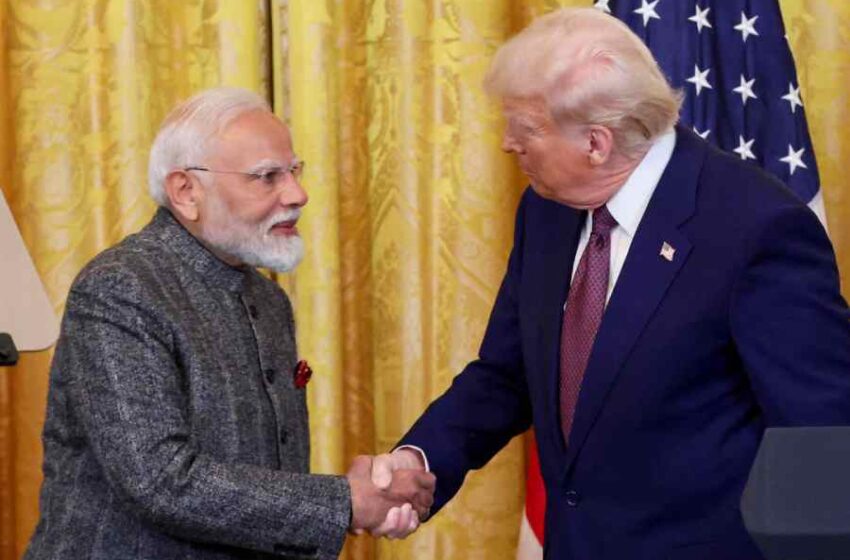
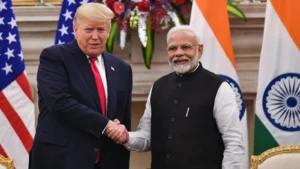
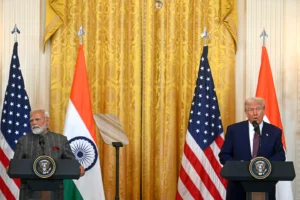
Modi Meeting with President Donald Trump at the White House.
The leaders committed to doubling bilateral trade to $500 billion by 2030, addressing trade imbalances, and exploring increased U.S. energy exports to India.
They also discussed Defense Cooperation and potential military sales to enhance India’s defense capabilities.
Apart from This they also discussed Immigration and Extradition issues with President Trump emphasizing illegal immigration and PM Modi advocating for more accessible visas for skilled Indian professionals.
Modi Meeting with President Donald Trump
PM meeting with Elon Musk.
It highlights a great conversation between the two to discuss advancements in space technology and potential collaborations, including the possible entry of Star link services into the Indian market.
PM meeting with Elon Musk.
PM Stay at Blair House.
During his visit, PM Modi was hosted at Blair House, the official guest residence of the U.S. President, symbolizing the importance of the diplomatic relationship between the two nations.
How does this tour affect India and US relationship?
The tour will affect India and the US relationship in the following ways: –
It will Strengthen the Trade Relations between the two countries.
President Trump emphasized that India would not be exempt from the U.S. tariffs and more.
They also discussed advancing defence Cooperation and the military. They also did Strengthening a 10-year defence cooperation agreement.
How does this tour affect India and US relationship?
They also discussed the deportation of illegal Indian immigrants in the U.S.
Apart from this they also talk about easing visa policies for skilled Indian professionals.
They also set the foundation for stronger economic and security cooperation.
Details on Public and Media reactions on the PM Modi US visit?
The reaction of Public and Media on PM Modi US visit is as follows: –
Media outlets highlighted the discussions on trade imbalances and tariffs. The Associated Press noted President Donald Trump’s emphasis on imposing higher U.S. tariffs on Indian goods, despite referring to Modi as a “great friend.”
This also highlighted the economic relationship between the two nations and their discussion.
The Indian American community largely viewed the visit positively, appreciating the emphasis on strengthening bilateral ties and potential economic benefits.
The Community leaders expressed optimism about increased collaboration in technology and defense sectors.
PM Modi departs for India after US visit.
The analysts cautioned that while high-profile meetings and defense deals signify strong ties, underlying issues such as trade imbalances and human rights concerns require sustained dialogue.
Some noted that the visit highlighted India’s importance to the U.S., but mismatched expectations might persist without addressing long-term policy differences.
The media portrayed the visit as a strategic engagement with tangible outcomes in defense and trade.
Apart from this while public opinion ranged from enthusiastic support within the diaspora to critical analysis from policy experts.