In a landmark achievement for India’s space industry, Skyroot Aerospace has successfully launched India’s first private rocket into orbit. Named Vikram-1, this mission — codenamed “Mission Aagaman” — marks a new era in Indian space exploration, where private companies are now capable of developing and launching orbital-class rockets.
On July 18, 2026, the 20–24 metre tall Vikram-1 rocket lifted off from the Satish Dhawan Space Centre in Sriharikota, making India one of the few nations with proven private orbital launch capability.
What Makes This Launch Historic?
The successful flight of India’s first private rocket is more than just a technical milestone. It represents the growing strength of India’s private space ecosystem and the fruition of government policies that opened up the sector to startups.
India’s First Private Rocket: Skyroot Aerospace Makes History with Vikram-1 Launch
Skyroot Aerospace, a Hyderabad-based startup founded by former ISRO scientists, designed and built the Vikram-1 entirely in India. The rocket features an all-carbon composite structure, advanced solid rocket motors, and 3D-printed components — showcasing world-class indigenous technology.
Mission Aagaman : Key Highlights
Rocket: Vikram-1 (four-stage orbital launch vehicle)
Payload Capacity: Up to 350 kg to Low Earth Orbit
Orbit Targeted: Approximately 450 km altitude at 60° inclination
Payloads: Included satellites and technology demonstrators from Indian startups (Grahaa Space, Cosmoserve) and Germany’s Dcubed, along with Skyroot’s own SCOPE satellite.
The primary objective of this maiden flight was to collect real-time flight data on propulsion, stage separation, guidance, navigation, and control systems. This data will be crucial for refining future commercial launches.
Significance for India
The launch of India’s first private rocket strengthens the country’s position in the global small satellite launch market. With increasing demand for dedicated and responsive launches, Skyroot aims to offer cost-effective and rapid access to space for both domestic and international customers.
Prime Minister Narendra Modi congratulated the Skyroot team, stating that this achievement will inspire countless young Indians to dream bigger in science and innovation.
This success is just the beginning. Skyroot has already announced plans for an upgraded variant, Vikram-1U, with higher payload capacity. With more test flights planned, the company is gearing up for regular commercial operations in the coming years.
The successful debut of India’s first private rocket not only boosts national pride but also signals to the world that India is serious about becoming a major player in the global space economy, projected to reach $600 billion in the near future.
The launch of Vikram-1 by Skyroot Aerospace will be remembered as the moment when India’s private space sector truly arrived. As India’s first private rocket soars into the skies, it carries with it the dreams and ambitions of a new generation of Indian space entrepreneurs.
SpaceX IPO marks one of the most historic moments in the financial and space industries. Elon Musk’s SpaceX has successfully gone public, raising a staggering $85.7 billion in the largest initial public offering ever, far surpassing all previous records.
SpaceX IPO Details and Historic Fundraising
In the SpaceX IPO, the company priced its shares at $135 each, initially selling approximately 555.6 million shares and raising $75 billion. Underwriters quickly exercised the full greenshoe overallotment option, adding another 83.3 million shares and bringing the total amount raised in the SpaceX IPO to $85.7 billion.
SpaceX IPO: Record $85.7 Billion
This massive capital raise in the IPO will significantly accelerate the company’s ambitious roadmap, including Starship development, Starlink constellation expansion, and advanced space infrastructure projects.
How Shares Performed After the SpaceX IPO
Debut Day (June 12, 2026): Following IPO, shares began trading on Nasdaq under the ticker SPCX. The stock opened near $150 and closed around $161, posting strong gains of approximately 19-20% on the first day.
Post-IPO Momentum: SpaceX shares continued to climb in the following sessions, pushing the company’s market capitalization well above $2 trillion.
The successful IPO has also made Elon Musk the world’s first trillionaire on paper, thanks to his substantial ownership in the company.
Why the SpaceX IPO Attracted Massive Investor Interest
SpaceX reported around $18.7 billion in revenue for 2025, with Starlink serving as the main growth driver. The strong performance of the SpaceX IPO reflects investor confidence in several key areas:
Leadership in reusable rocket technology and commercial space launches
Global rollout and monetization of the Starlink satellite internet network
Progress on the Starship program aimed at Mars colonization
Long-term government and national security contracts
SpaceX IPO: Record $85.7 Billion
What’s Next After the SpaceX IPO
With substantial new capital from the IPO, the company is well-positioned to execute its long-term vision while operating under public market expectations. Investors will closely monitor how SpaceX deploys these funds to scale operations and deliver on its ambitious goals.
Challenges ahead include managing high valuation expectations, executing on aggressive timelines, and navigating increased regulatory and public scrutiny.
The IPO represents a new chapter for the commercial space industry, bringing private innovation into the public markets at an unprecedented scale. This record-breaking event will be studied for years as a benchmark for high-growth technology companies.
Whether you’re an investor tracking SPCX stock or a space enthusiast following the journey to Mars, the IPO is a milestone worth watching.
In a landmark moment for space exploration, the NASA Artemis II program took a giant leap forward as the four astronauts of Artemis II safely returned to Earth. On April 10, 2026, the Orion spacecraft nicknamed Integrity splashed down in the Pacific Ocean off the coast of San Diego, California, marking the successful end of humanity’s first crewed lunar mission in over 50 years.
What Was the NASA Artemis II Mission?
The NASA Artemis II mission was the first crewed flight of NASA’s ambitious program aimed at returning humans to the Moon and establishing a long-term presence there. Launched on April 1, 2026, the mission sent four astronauts on a 10-day journey that included a lunar flyby, taking them farther from Earth than any humans have ever traveled — approximately 694,481 miles.
NASA astronaut Christina Koch (Mission Specialist)
Canadian Space Agency astronaut Jeremy Hansen (Mission Specialist)
During the flight, the team tested critical systems for future NASA Artemis missions, including the Orion spacecraft’s heat shield, life support systems, and navigation during high-speed re-entry.
NASA Artemis II Crew Completes Historic Journey with Safe Splashdown
Dramatic Re-Entry and Text-Book Splashdown
The highlight of the return was the high-stakes atmospheric re-entry. Traveling at nearly 25,000 mph, the Orion capsule endured extreme temperatures reaching about 2,760°C — roughly half the surface temperature of the Sun. After a flawless parachute deployment, the spacecraft made a perfect “textbook” splashdown at 8:07 p.m. EDT (5:07 p.m. PDT) in the Pacific Ocean.
Commander Reid Wiseman radioed back: “What a journey. We are stable. Four green crewmembers.” All astronauts were reported happy and healthy immediately after recovery by Navy teams aboard the USS John P. Murtha.
Why This NASA Artemis Milestone Matters
The successful completion of NASA Artemis II is more than just a return mission — it’s a critical stepping stone. This flight has validated key technologies that will enable Artemis III, the first crewed landing on the lunar surface (targeted for 2028 or later). The long-term goal of the NASA Artemis program is to build a sustainable human presence on the Moon, learn how to live and work in deep space, and ultimately prepare for sending astronauts to Mars.
This mission also highlights strong international collaboration, with Canada playing a key role through astronaut Jeremy Hansen.
NASA Artemis II Crew Completes Historic Journey with Safe Splashdown
What’s Next for NASA Artemis II ?
With Artemis II now complete, NASA is already preparing for more ambitious steps in the NASA Artemis program. Future missions will focus on lunar landings, building the Lunar Gateway station, and developing new spacesuits and landers.
The safe return of the Artemis II crew proves that humanity is ready to venture back to the Moon — and beyond.
Anvesha Satellite : India’s space program encountered a significant setback on January 12, 2026, when the Indian Space Research Organisation (ISRO)’s PSLV-C62 mission failed during its third stage, resulting in the loss of the primary payload: the Defence Research and Development Organisation (DRDO)’s advanced hyperspectral Earth observation satellite, Anvesha (officially EOS-N1).
What Was Anvesha Satellite ?
Developed by DRDO’s Instruments Research & Development Establishment (IRDE), Anvesha was a sophisticated hyperspectral imaging satellite weighing around 400 kg. It was designed for deployment in a sun-synchronous orbit at approximately 505-512 km altitude.
Hyperspectral imaging stands out from traditional multispectral or optical satellites by capturing data in hundreds of narrow spectral bands across the electromagnetic spectrum. This technology enables the detection of unique material signatures, allowing the satellite to:
Anvesha Satellite
Identify camouflaged military assets, track troop movements, and enhance border and maritime surveillance.
Support civilian applications such as precision agriculture (detecting crop diseases and soil nutrients), environmental monitoring, mineral exploration, urban planning, and disaster response.
Anvesha represented a major advancement in India’s indigenous remote sensing and intelligence, surveillance, and reconnaissance (ISR) capabilities, often referred to as a strategic “eye in the sky.”
The PSLV-C62 Mission Overview
Launched from the First Launch Pad at Satish Dhawan Space Centre in Sriharikota at 10:18 AM IST, PSLV-C62 was ISRO’s first mission of 2026 and the 64th flight of the reliable Polar Satellite Launch Vehicle (PSLV-DL variant).
The mission carried:
Primary Payload: Anvesha (EOS-N1)
15 Co-Passenger Satellites: Innovative payloads from Indian startups (e.g., AayulSAT for on-orbit refuelling demonstration by OrbitAID Aerospace), universities, and international partners (including Nepal, Spain, and others). Notable among them was the Spanish KID re-entry capsule demonstrator.
The liftoff and initial stages proceeded nominally, with successful separation of the first and second stages.
Anvesha Satellite
The Mission Failure
During the third stage (PS3) burn, the vehicle experienced a critical anomaly, described by ISRO as a “disturbance in roll rates” leading to trajectory deviation. The rocket failed to achieve the necessary orbital velocity, preventing satellite deployment.
ISRO Chairman V. Narayanan confirmed the issue shortly after launch, stating that data analysis was underway. All satellites, including Anvesha, are presumed lost, likely re-entering and burning up in the atmosphere.
One minor positive note: The Spanish KID re-entry capsule reportedly separated successfully and transmitted data briefly before being lost.
This failure marks the second consecutive PSLV setback due to third-stage issues, following PSLV-C61 in May 2025, which also involved pressure anomalies in the same stage.
Current Status and Ongoing Investigation
As of January 17, 2026, ISRO has initiated a detailed failure analysis, including review of telemetry data, hardware examination, and potential issues like flex nozzle failures, propellant defects, or casing problems. No official root cause has been announced yet, and the agency has formed a Failure Analysis Committee to investigate.
Anvesha Satellite
The loss delays India’s hyperspectral capabilities, impacting both defence readiness and civilian remote sensing applications. It also affects the private space sector, as several startup payloads were onboard.
Anvesha Satellite : Despite this challenge, ISRO’s PSLV remains one of the world’s most reliable launch vehicles, with a strong history of successes powering missions like Chandrayaan-1 and Mangalyaan. Setbacks are inherent in space exploration, and past failures have often led to stronger systems.
The investigation’s findings will be crucial for restoring confidence and resuming the ambitious 2026 launch schedule, including preparations for Gaganyaan and other missions.
How Your Food Habits Reflect Your Skin : In the world of skincare, we often focus on creams, serums, and routines, but one of the most powerful influences on your skin comes from within: your diet. The saying “you are what you eat” is especially true for skin health. What you consume daily can either nourish your skin for a radiant glow or contribute to breakouts, dullness, inflammation, and premature aging.
Extensive research in nutritional dermatology shows that food habits affect skin through multiple pathways, including hormonal balance, inflammation levels, oxidative stress, collagen production, and the gut-skin axis. Studies published in journals like Nutrients, Journal of the American Academy of Dermatology, and PMC reviews consistently demonstrate that a nutrient-rich diet promotes resilient, clear skin, while poor dietary choices can worsen common concerns.
Understanding How Your Food Habits Reflect Your Skin
Your daily meals send signals throughout your body that directly impact skin cells. High-sugar and processed foods trigger insulin spikes and inflammation, leading to excess oil production and acne. Conversely, antioxidant-rich whole foods protect against free radical damage and support natural repair processes.
How Your Food Habits Reflect Your Skin
This reflection isn’t immediate—it builds over weeks and months—but the changes are visible and measurable. Clinical trials have shown improvements in skin hydration, elasticity, and acne severity when participants switch to low-glycemic, anti-inflammatory diets.
Foods That Promote Radiant, Healthy Skin
Focus on whole, nutrient-dense foods to give your skin the building blocks it needs:
Colorful fruits and vegetables: Berries, citrus fruits, tomatoes, carrots, spinach, and bell peppers are loaded with vitamins C and A, beta-carotene, and polyphenols. These antioxidants fight oxidative stress and boost collagen synthesis, resulting in firmer, brighter skin.
Healthy fats: Sources like salmon, walnuts, chia seeds, avocados, and olive oil provide omega-3 fatty acids that strengthen the skin barrier, reduce inflammation, and lock in moisture.
Whole grains and fiber-rich foods: Oats, quinoa, and legumes help stabilize blood sugar and support gut health, indirectly benefiting skin via the gut-skin connection.
The Mediterranean diet—rich in plants, healthy fats, and lean proteins—stands out in research for its ability to reduce acne, eczema flare-ups, and signs of aging.
Hydration plays a supporting role: Aim for adequate water intake to maintain skin plumpness and aid detoxification.
How Your Food Habits Reflect Your Skin
Dietary Habits That Can Negatively Affect Your Skin
Certain common eating patterns are strongly linked to skin issues:
High-glycemic foods: Sugary drinks, white bread, pastries, and processed snacks cause rapid blood sugar rises, increasing sebum production and inflammation—a well-documented trigger for acne.
Dairy products: Especially skim milk and whey-based supplements, which may elevate insulin-like growth factor (IGF-1) and promote breakouts in many individuals.
Ultra-processed and fried foods: High in refined carbs, trans fats, and additives, these contribute to systemic inflammation and glycation, a process that damages collagen and accelerates wrinkles.
Long-term reliance on these foods can lead to dull complexion, uneven texture, and heightened sensitivity.
How Your Food Habits Reflect Your Skin
The Science Behind the Connection
Robust evidence supports these links. Randomized controlled trials show that low-glycemic diets reduce acne lesions by 20–50% compared to high-glycemic ones. Reviews analyzing dozens of studies confirm that higher fruit and vegetable intake correlates with fewer wrinkles and better skin hydration.
Emerging research on the gut-skin axis highlights how probiotic-rich foods (like yogurt and fermented vegetables) and fiber improve microbiome diversity, calming inflammatory skin conditions.
While genetics and lifestyle factors matter, diet remains a modifiable factor with significant impact.
Practical Steps to Improve Your Skin Through Better Food Habits
How Your Food Habits Reflect Your Skin, Start with simple changes :-
Replace refined carbs with whole grains and add a serving of colorful produce to every meal.
Limit added sugars and monitor dairy intake to identify personal triggers.
Prioritize balanced plates: half vegetables, a quarter protein, a quarter complex carbs, plus healthy fats.
How Your Food Habits Reflect Your Skin
Track your skin’s response over 4–8 weeks. Consistency is key—positive changes often become noticeable within a month.
How Your Food Habits Reflect Your Skin : Your food habits truly reflect your skin’s health. By choosing nourishing, whole foods over processed options, you invest in clearer, more resilient skin from the inside out. For persistent concerns, consult a dermatologist or registered dietitian for personalized guidance. Embrace this approach, and let your healthy choices shine through.
CMS-03 Satellite : India’s space efforts are on fire right now—pushing boundaries like never before. The Indian Space Research Organisation (ISRO) just nailed the launch of CMS-03, their beefiest communication satellite to date. This isn’t just another rocket ride; it’s a huge leap for India’s tech smarts, push for self-sufficiency, and all things digital growth. The whole thing spotlights ISRO’s sharp skills and cements India’s spot among the top space players globally.
Breaking Down CMS-03
At its core, CMS-03 is a cutting-edge comms beast tipping the scales at about 4,100 kg. It’ll supercharge telecom networks, TV signals, internet access, and even secure chats for government ops right across the nation. Packed with the newest C-band and Ku-band transponders, it’s geared to sharpen up signals in the sticks and beef up web reach where it’s spotty. Expect it to keep humming for 12 to 15 years, locking in solid digital links for the long haul.
ISRO Launches Its Heaviest Communication Satellite Yet, CMS-03
How the Launch Went Down
They kicked things off from the Satish Dhawan Space Centre in Sriharikota, ISRO’s go-to spot. Powering the show was their heavy-hitter, the GSLV Mk III—affectionately dubbed the “Bahubali” rocket for its muscle. It slotted the satellite perfectly into Geosynchronous Transfer Orbit (GTO). Next up, ground teams will nudge it up to 36,000 km in geostationary orbit, giving it a bird’s-eye view over India and nearby spots.
ISRO’s big boss, Dr. S. Somanath, was all grins post-liftoff, high-fiving the team and dropping this gem: “CMS-03 is set to turbocharge India’s digital roadmap, making sure no corner of the country gets left offline.”
Why This Mission Matters
This launch is rocket fuel for Digital India and BharatNet projects, zipping broadband and mobile signals to the farthest flung villages. Here’s the real payoff:
Turbo Telecom & Web: High-speed net even in back-of-beyond spots—no more dead zones for rural folks.
TV Upgrade: Smoother DTH and cable feeds with rock-solid signals.
Ironclad Comms: Bulletproof lines for gov and military needs.
Crisis Mode: Quick-as-a-flash networks during floods, quakes, or whatever Mother Nature throws.
Power-Up for the People: Easier online learning, remote doc visits, and streamlined gov services.
Bottom line? It’s a bold stride toward a digitally independent India.
ISRO Launches Its Heaviest Communication Satellite Yet, CMS-03
ISRO’s Winning Streak
Lately, ISRO’s been on a tear with game-changers like:
Chandrayaan-3’s nail-biter landing at the Moon’s south pole—first ever!
Aditya-L1, now eyeballing the Sun up close.
Gaganyaan gearing up for India’s crewed space jaunt.
Tossing CMS-03 into the mix? It screams that ISRO’s not just playing catch-up—they’re calling shots in heavyweight satellite ops worldwide.
CMS-03‘s blast-off is pure Indian pride stuff. Beyond the tech win, it’s a shoutout to our digital hustle and do-it-ourselves vibe. Those ISRO brainiacs? Their grind proves we’re not mere runners in the space game—we’re out front, leading the pack. This one’s a game-changer, wiring up a smarter, tighter-knit, bolder India.
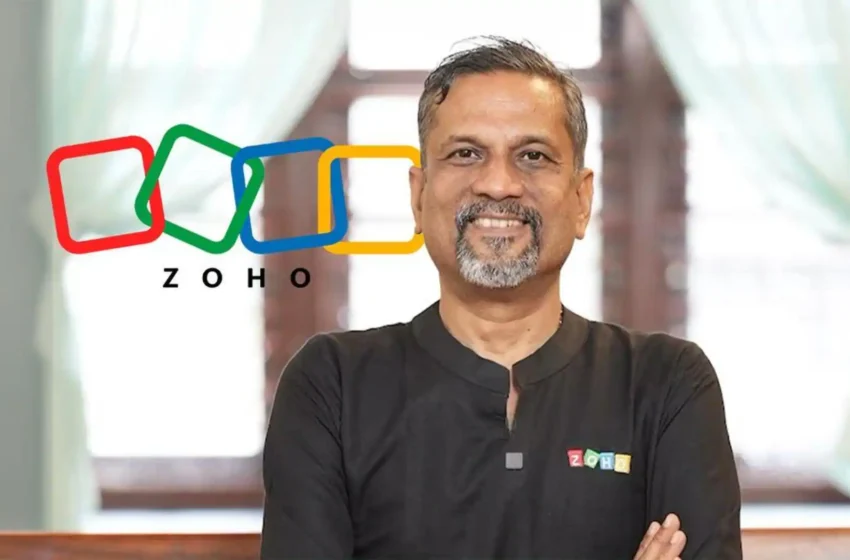
Sridhar Vembu : In the fast-paced world of tech giants dominated by flashy valuations and Silicon Valley hype, Sridhar Vembu stands out as a beacon of understated brilliance. As the founder, chief scientist, and until recently, CEO of Zoho Corporation, Vembu has quietly built a multinational software powerhouse valued at billions without chasing IPO glory or venture capital fanfare. Born in 1968 in the culturally rich city of Thanjavur, Tamil Nadu, into a middle-class family, Vembu’s journey is a testament to resilience, innovation, and an unyielding commitment to “Made in India” ethos. Today, on October 7, 2025, as Zoho’s latest venture Arattai continues its meteoric rise with fresh endorsements from industry leaders, Vembu’s story feels more relevant than ever – a reminder that true disruption often comes from the roots, not the headlines.
Sridhar Vembu
Roots in Rural India: A Foundation of Simplicity
Vembu’s early life was far from the glamour of urban tech hubs. Raised in a modest household, he credits his mother’s influence for instilling values of hard work and humility. Pursuing a B.Tech in Electrical Engineering from the prestigious Indian Institute of Technology (IIT) Madras, Sridhar Vembu honed his technical acumen amid India’s burgeoning tech scene of the late 1980s. After a brief stint in the U.S., working on network management software, he returned to India with a vision: to create world-class technology that empowers local talent and solves global problems.
In 1996, Vembu co-founded AdventNet (later rebranded as Zoho Corporation) in Chennai with his siblings, Sridharan and Radha. Starting with just a handful of employees and bootstrapped funds, the company focused on network management tools – a niche that would evolve into a suite of over 50 cloud-based applications for businesses worldwide. What began as a survival play in a competitive market has grown into a $1 billion+ revenue behemoth, serving millions of users across 150+ countries without a single dollar of external funding. Vembu and his siblings retain majority ownership, a deliberate choice to preserve independence.
Building Zoho: Innovation Without the Noise
Zoho’s secret sauce? Relentless R&D and a disdain for short-term trends. Under Vembu’s leadership, the company pioneered affordable, privacy-focused alternatives to giants like Salesforce, Microsoft, and Google Workspace. Tools like Zoho CRM and Zoho Mail have democratized enterprise software for small businesses, emphasizing data sovereignty and open-source ethos. “Proudly Made in India, Made for the World,” Vembu recently affirmed in a post defending Zoho’s data hosting practices, underscoring the company’s commitment to Indian infrastructure.
Sridhar Vembu
Vembu’s philosophy extends beyond products. He’s a vocal advocate for rural innovation, establishing Zoho’s development centers in places like Tenkasi, a small town in Tamil Nadu where he now resides. Living in a modest village home far from urban luxuries, Vembu embodies “Dharmic Capitalism” – profit with purpose, blending business success with social upliftment. In a recent interview, he explained why Zoho shuns public markets: “Projects like Arattai wouldn’t exist if we had gone public,” highlighting how staying private allows bold, long-term bets on innovation over shareholder pressures.
Milestone
Year
Key Achievement
Founding
1996
Launched AdventNet for network management software.
Rebranding
2005
Became Zoho Corporation, expanding into cloud apps.
Global Scale
2015
Reached 25 million users; established rural dev centers.
Billion-Dollar Club
2022
Hit $600M+ revenue; focused on AI and privacy tools.
Leadership Shift
2025
Stepped down as CEO to focus on R&D and mentorship.
Sridhar Vembu and the Arattai Phenomenon
This year marks a pivotal shift for Sridhar Vembu. In January 2025, he transitioned from CEO to chief scientist, handing the operational reins to trusted lieutenants while diving deeper into research. His focus? Accelerating Zoho’s engineering depth, as evidenced by the launch of Arattai – a privacy-first messaging app billed as India’s answer to WhatsApp.
Sridhar Vembu
Debuting in late September 2025, Arattai skyrocketed from 3,000 to 350,000 daily sign-ups, with a 100x surge in traffic within three days and reaching 7.5 million overall downloads by early October. Topping app charts and now boasting an official Android TV app – a unique feature absent in rivals like WhatsApp, Signal, or Telegram – it promises crisp calls, multilingual support for India’s linguistic diversity, and end-to-end encryption (with text E2EE on the roadmap). Vembu, ever the engineer, shared in a team huddle: “Being a dedicated engineer is like being a Rishi… Allow neither praise nor criticism nor fame to distract you, resolutely stay the course.” He emphasized the app’s deceptive simplicity, built on 20 years of homegrown tech frameworks for real-time messaging and distributed systems.
Yet, challenges abound. Amid viral hype, users flagged lags in message delivery and contact sync issues, prompting Vembu’s hands-on fixes: “We are addressing these bottlenecks one by one.” Privacy remains paramount – no ads, no data mining – a stark contrast to global rivals. In a candid exchange with the Republic’s Arnab Goswami, Vembu urged national self-belief: “We need to believe in ourselves as a nation and people.”
The momentum shows no signs of slowing. Just yesterday, October 6, industrialist Anand Mahindra announced he had downloaded Arattai “with pride,” prompting a grateful reply from Vembu: a simple yet heartfelt acknowledgment of the growing support for India’s digital self-reliance. Vembu’s X feed (@svembu) buzzes with this energy – from thanking early adopters to teasing refinements, all while invoking Gandhi on his Jayanti for inspiration. It’s a window into a leader who eats his own dogfood, literally using Arattai for internal chats. Even as he turns attention to broader concerns like the energy inefficiency of AI – a critical issue for India’s resource constraints – Arattai’s success underscores his vision for sustainable, indigenous innovation.
Sridhar Vembu
The Vembu Mindset: Humility in a Hyper-Connected World
What sets Sridhar Vembu apart isn’t just his tech wizardry but his worldview. A self-proclaimed “Rishi-engineer,” he prioritizes depth over dazzle, rural revival over red carpets. Despite billionaire status, he shuns ostentation, living simply to mentor young talent from underserved areas. Zoho’s “staying power,” he insists, stems from decades of R&D: “Recently I have moved full time to R&D and you will see many more innovations from us.”
Critics question if Arattai can sustain its buzz against entrenched players like WhatsApp. Sridhar Vembu dismisses the noise: “We don’t worry about ‘will the excitement wear off’ – we are focused on how to offer the best experience.” It’s this resolve that has kept Zoho thriving for nearly three decades.
Sridhar Vembu‘s story isn’t one of overnight unicorns or viral exits; it’s a slow-burn saga of building from the ground up, for the ground up. As Arattai refines its edges and Zoho eyes bolder horizons, Vembu reminds us that innovation flourishes in humility. In an era of fleeting apps and fleeting fame, his path – rooted in purpose, powered by persistence – is the real revolution.
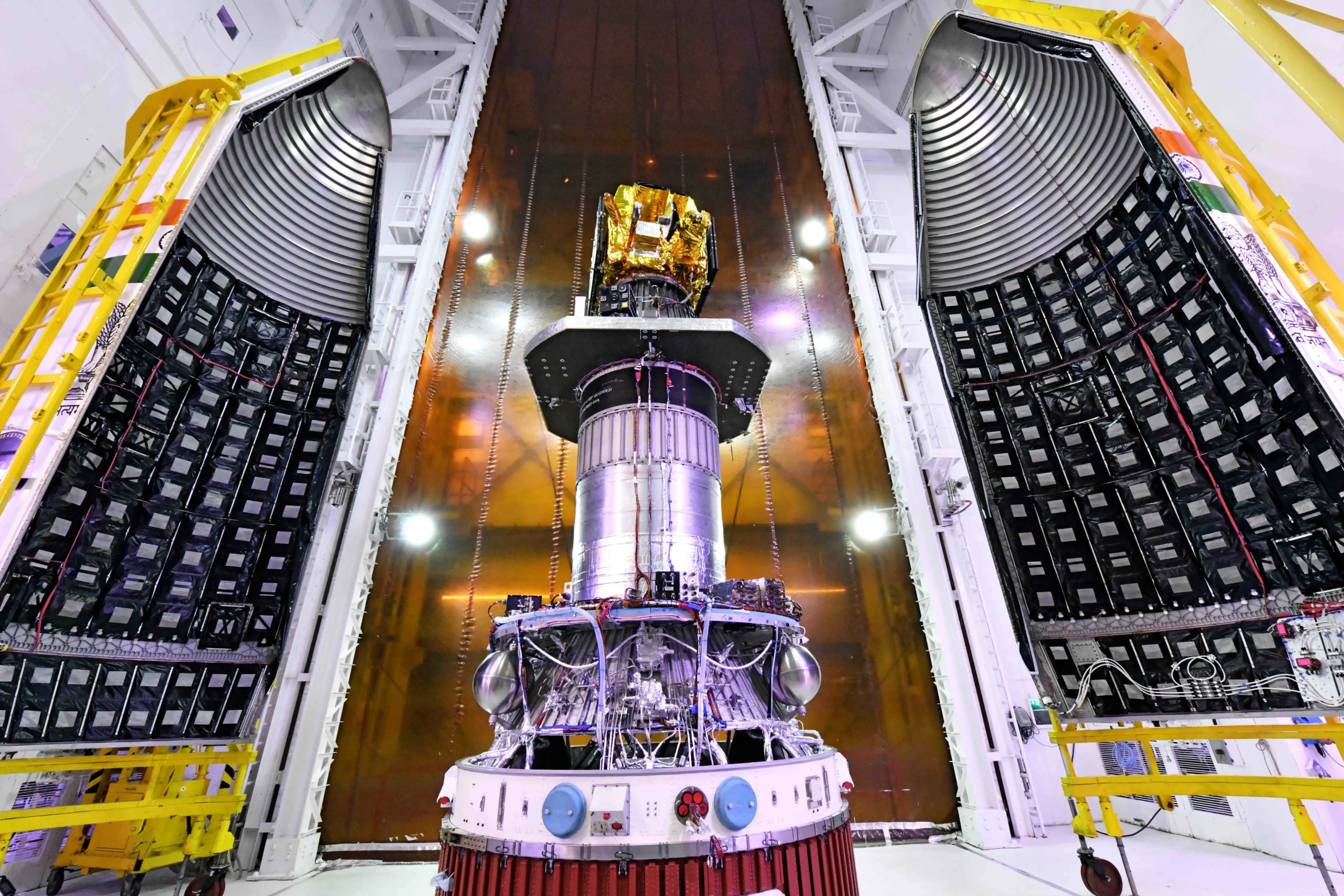
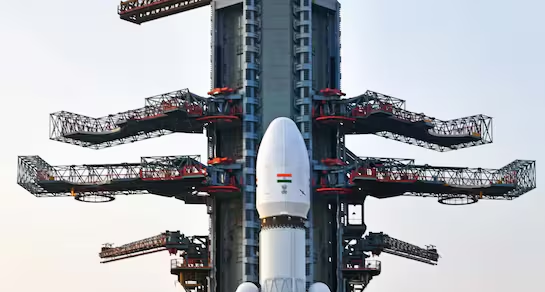
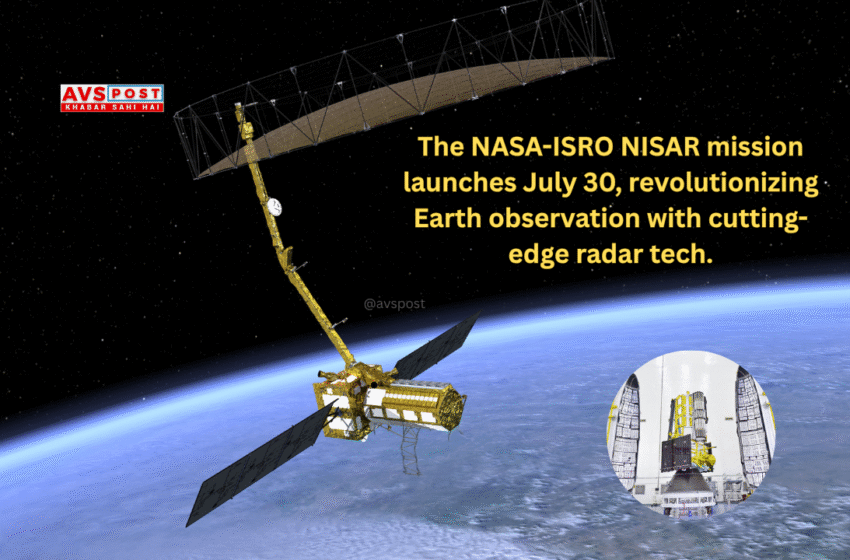
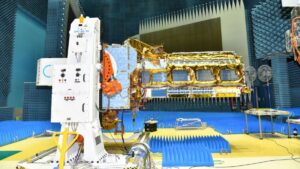
NISAR stands for NASA-ISRO Synthetic Aperture Radar. It is a joint satellite mission between NASA (National Aeronautics and Space Administration) and ISRO (Indian Space Research Organisation), designed for Earth observation. The NISAR mission is set to launch on July 30, 2025, from the Satish Dhawan Space Centre in Sriharikota using the GSLV-F16 rocket. With an estimated cost of approximately 1.5 billion USD, it is the world’s most expensive Earth observation satellite.
NISAR MISSION
Objectives of the NISAR Mission
The primary objective of NISAR is to monitor changes in Earth’s surface and ice masses.The satellite will survey almost the entire Earth’s surface every 12 days, delivering vital data in the following key areas:
Study of Natural Disasters: Monitoring hazards such as earthquakes, tsunamis, volcanic eruptions, and landslides.
Climate Change: Monitoring shifts in ice sheets, glaciers, and sea ice.
Agriculture and Environment: Monitoring soil moisture, vegetation biomass, and crop cycles.
Resource Management: Managing groundwater levels and natural resources.
Technical Specifications
NISAR is the world’s first satellite to use dual-frequency radar (L-band and S-band). Its key features include:
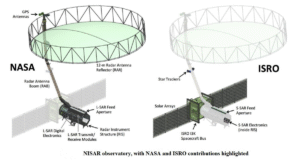
L-band Radar: Developed by NASA, it uses long wavelengths (24 cm) to penetrate dense forests, ice, and soil. It is useful for landscape topography and polar region monitoring.
S-band Radar: Developed by ISRO, it monitors surface changes with high resolution and is effective in measuring properties like soil moisture.
Radar Antenna: A 12-meter deployable mesh antenna that sends and receives microwave signals from Earth’s surface.
Orbit: The satellite will operate in a Sun-synchronous orbit at an altitude of 747 km, ensuring consistent lighting conditions.
NISAR MISSION : Technical Features
Mission Cost and Collaboration
Total Cost: Approximately 1.5 billion USD. ISRO’s contribution is around 788 crore INR (93 million USD), while NASA’s contribution is 1.118 billion USD.
Collaboration: This is the first large-scale collaboration between NASA and ISRO. NASA developed the L-band radar, and ISRO developed the S-band radar. The satellite’s integration and testing were conducted at ISRO’s facility in Bengaluru.
Launch and Preparations
Launch Date: July 30, 2025, at 5:40 PM (IST).
Launch Site: Satish Dhawan Space Centre, Sriharikota, India.
Launch Vehicle: GSLV Mark II.
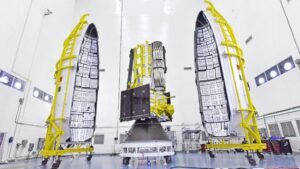
Preparations: The satellite was transported from California to Bengaluru in October 2024 via NASA’s C-130 cargo aircraft. All preliminary tests were completed by January 2025.
Challenges and Delays
Originally scheduled for launch in March 2024, the mission was postponed due to technical reasons. The reflector was likely to face high temperatures during flight, so it was sent back to the manufacturer in California for a reflective coating.
NISAR Mission
Significance and Impact
Scientific Impact: NISAR will detect changes in Earth’s surface at the centimeter level, aiding in the prediction of earthquakes and volcanic activities.
Global Benefits: Its data will be used for disaster management, environmental monitoring, and resource management. The data will be openly available, benefiting the global scientific community and policymakers.
India-US Collaboration: This mission represents a major milestone in space cooperation between the two countries, laying the foundation for future joint ventures.
The NISAR mission is set to usher in a new era in Earth observation technology. It is not only a symbol of technical collaboration between India and the US but will also play a crucial role in addressing climate change, earthquakes, floods, and other natural disasters. Its proposed launch on July 30, 2025, will be a historic and significant moment for scientists and the global community.
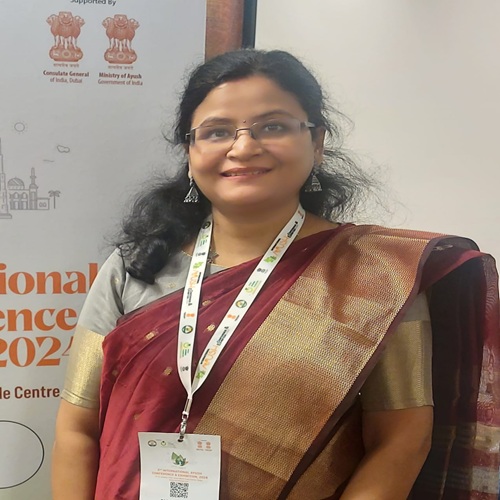
#Homeopathy Dr. Padmalaya Rath, a renowned expert in the field of Homoeopathy, currently serves as the Hospital In-charge and Research Officer at the Dr. D.P. Rastogi Central Research Institute (Homoeopathy), Noida. This prestigious institute, a unit under the Central Council for Research in Homoeopathy (CCRH), Ministry of AYUSH, Government of India, is recognized for its significant contributions to homoeopathic research and patient care.
Dr. Rath holds the rare distinction of being the first-ever MD (Homoeopathy) in Organon of Medicine from the esteemed National Institute of Homoeopathy, under Calcutta University in 2001. Her academic brilliance led her to author the popular book Homoeopathy MCQ, which became a best-seller in India’s homoeopathy academic community. The book saw multiple editions due to its success.
Dr. Rath’s career spans both government and private sectors, where she has contributed as a Medical Officer, Lecturer, and Research Officer. Her expertise extends beyond clinical work to public education on health issues. She has actively participated in talk shows on All India Radio and Rajya Sabha TV, raising awareness about health topics.
Her research excellence is reflected in her 27 published articles in indexed journals and her significant role as a Resource Person at various Government of India-sponsored Continuing Medical Education (CME) programs. Dr. Rath’s educational outreach has extended to Madhya Pradesh, Arunachal Pradesh, Tripura, Meghalaya, and Manipur, where she has shared her knowledge with medical professionals. She also serves as an examiner for various universities.
Dr. Rath’s academic credentials are exceptional. In addition to her MD, she holds a PhD in Homoeopathy from JRN Rajasthan Vidyapeeth (Deemed University), Udaipur. She has also earned Post-Graduate Diplomas in Disaster Preparedness and Rehabilitation and Computer Applications (PGDCA).
Her clinical expertise has made her a trusted name in treating critical and chronic diseases. Dr. Rath is widely recognized for her work in skin conditions such as eczema, psoriasis, chronic rashes, and acne. Many patients have found significant relief from these conditions through her holistic homoeopathic treatments.
Dr. Padmalaya Rath
Mrs. Sunita Sharma, a Noida resident, shared, “I had been struggling with migraines for over 10 years. After following Dr. Rath’s homoeopathic treatment, I saw dramatic improvement. My headaches have reduced by over 90%.”
Similarly, Mr. Rajesh Verma, who had long battled chronic skin allergies, noted, “After trying various treatments, Dr. Rath’s homoeopathy brought me permanent relief without any side effects. I’m truly grateful.”
Dr. Rath has also successfully treated complex conditions such as thyroid disorders, chronic asthma, anxiety-related issues, pediatric health problems, and autoimmune diseases. Her holistic approach, which focuses on identifying the root causes of illnesses, has earned her a loyal patient base. Patients often speak highly of her patient-centered care, which sets her apart in the field.
Her academic contributions and dedication to research have earned her several accolades. Dr. Rath was honored with the Flame of Medical Science Award by the World Science Congress in 2015. She also won the 2nd prize for Research Paper Presentation at the 10th Global Health Summit, organized by the American Association of Physicians of Indian Origin in 2016.
Beyond her professional life, Dr. Rath is deeply committed to social service. She played a pivotal role in providing medical aid during the 2004 Surat floods and has since been involved in organizing and participating in health camps across various regions. Her continued involvement in public awareness campaigns has made her an advocate for alternative medicine and holistic health practices.
Dr. Rath’s leadership and dedication at the Dr. D.P. Rastogi Central Research Institute are now more significant than ever. Since 2022, she has taken charge as the Hospital In-charge, overseeing the institute’s operations and ensuring the delivery of quality healthcare services. Under her leadership, the institute has continued to grow as a center for advanced research in homoeopathy.
The Dr. D.P. Rastogi Central Research Institute (Homoeopathy) has become a key institute for homoeopathic research and training, with Dr. Rath playing a crucial role in guiding young homoeopaths and contributing to the future of the field. Her commitment to excellence, both in treatment and research, is setting a new standard in the integration of homoeopathy into mainstream healthcare systems in India.
Through her expertise, leadership, and compassionate care, Dr. Padmalaya Rath continues to make a lasting impact on the homoeopathy community, providing innovative solutions to critical health challenges while promoting integrated healthcare for the people of India.
Climate Change’s goods Comprehending the Science One of the most important worldwide issues of the twenty-first century is climate change. The scientific community is in complete agreement that mortal exertion is a major contributor to global warming, despite ongoing political and profitable controversies. Making educated opinions and enforcing successful mitigation ways bear an understanding of the wisdom underpinning climate change.
Nature’s Thermostat The Greenhouse Effect
The hothouse effect, a natural circumstance that has supported life on Earth for thousands of times, is at the heart of climate change wisdom. The Earth’s atmosphere contains feasts like carbon dioxide( CO ₂), methane( CH ₄), nitrous oxide( N ₂ O), and water vapour that trap part of the sun’s heat and keep it from escaping back into space. rather of the current inhabitable temperature of 15 °C( 59 °F), the Earth’s average temperature would be around-18 °C( 0 °F) without this natural sequestration.
still, the issue occurs when mortal conditioning significantly raise the atmospheric attention of these hothouse feasts( GHGs), particularly since the Industrial Revolution. Deforestation, ferocious husbandry, artificial processes, and the burning of fossil energies( coal, oil painting, and natural gas) have all increased the hothouse effect and raised global temperatures.
The goods of adding Temperatures
The average face temperature of the Earth has increased by roughly 1.1 °C( 2 °F) since the late 19th century, according to the Intergovernmental Panel on Climate Change( IPCC). Indeed though this figure might not feel like much, it signifies a substantial change in the Earth’s climate system with far- reaching goods.
ocean situations are rising as a result of the melting of glaciers and polar ice caps brought on by warmer global temperatures. This puts brackish inventories in mountainous areas that calculate on glacial meltwater in jeopardy in addition to low- lying littoral areas. likewise, hurricanes, typhoons, and cyclones are getting more frequent and stronger due to warming abysses.
famines, heat swells, and cataracts are exemplifications of extreme rainfall events that are growing more frequent and severe. structure, biodiversity, husbandry, and mortal health are all seriously at threat from these changes.
The goods of adding Temperatures
Climate Feedback circles and the Carbon Cycle
The climate system of Earth is intricately linked. The carbon cycle, or the process by which carbon is transferred between the atmosphere, abysses, soil, and living effects, is a crucial idea in climate wisdom. By releasing enormous quantities of CO ₂ more snappily than ecosystems can absorb it, mortal exertion is disturbing this natural cycle. Also, this dislocation has set off dangerous feedback circles. For illustration, melting Arctic ice lowers Earth’s albedo, or reflectivity, which increases the quantum of sun absorbed by darker ocean waters and contributes to global warming. Warming temperatures can also beget permafrost to thaw, releasing methane, a important hothouse gas, into the atmosphere. This process speeds up warming.
Acidification and Oceanic Changes
By absorbing roughly 90 of the redundant heat produced by GHG emigrations and 30 of CO2 emigrations, abysses play a pivotal part in controlling the Earth’s climate. This has a price indeed though it lessens the goods of global warming. Ocean acidification brought on by increased CO2 immersion endangers marine ecosystems, especially those that depend on shell- forming organisms like corals, molluscs, and certain plankton species.
Known as the” rainforests of the ocean,” coral reefs are especially at threat. Coral bleaching, a stress response brought on by rising ocean temperatures, can beget expansive reef die- offs, affecting marine biodiversity and the livelihoods of millions of people who calculate on tourism and fishing.
Acidification and Oceanic Changes
The Path Ahead and Scientific Consensus
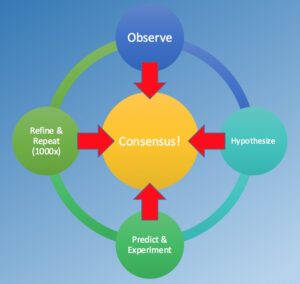
The inviting agreement among climate scientists is one of the stylish measures of how solid climate wisdom is. According to studies, further than 97 of climate scientists who are presently publishing concur that mortal exertion is the main cause of the most recent climate change. nearly all of the world’s major scientific organisations agree with this agreement.
still, policy responses have constantly fallen behind, indeed though the wisdom is clear. Important conduct include switching to renewable energy, adding energy effectiveness, planting new trees, and funding climate- flexible structure. Since climate change transcends public boundaries, transnational cooperation is inversely pivotal.
Knowing the wisdom underpinning climate change is essential to anticipating and preventing the worst consequences of a warming earth; it is n’t simply an academic exercise. The wisdom is unmistakable mortal exertion is changing the climate of the earth in ways that have noway been seen ahead. Indeed though the obstacles are redoubtable, wisdom also gives us the coffers and information we need to fight climate change and guard our earth’s future.o9