Author: Nimmi Chaudhary

  • Sridhar Vembu : The Quiet Revolution – From IIT to Building Zoho’s Global Empire

    Sridhar Vembu : The Quiet Revolution – From IIT to Building Zoho’s Global Empire

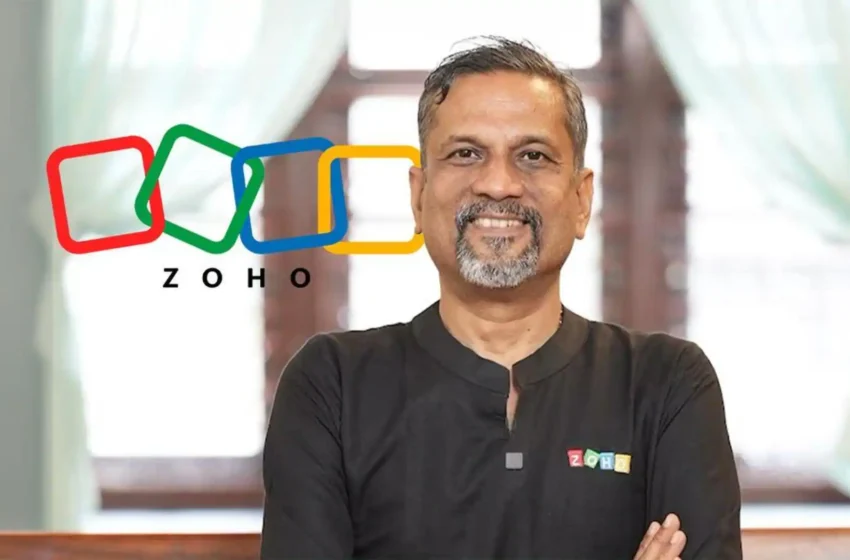
    Sridhar Vembu : In the fast-paced world of tech giants dominated by flashy valuations and Silicon Valley hype, Sridhar Vembu stands out as a beacon of understated brilliance. As the founder, chief scientist, and until recently, CEO of Zoho Corporation, Vembu has quietly built a multinational software powerhouse valued at billions without chasing IPO glory or venture capital fanfare. Born in 1968 in the culturally rich city of Thanjavur, Tamil Nadu, into a middle-class family, Vembu’s journey is a testament to resilience, innovation, and an unyielding commitment to “Made in India” ethos. Today, on October 7, 2025, as Zoho’s latest venture Arattai continues its meteoric rise with fresh endorsements from industry leaders, Vembu’s story feels more relevant than ever – a reminder that true disruption often comes from the roots, not the headlines.

    Sridhar Vembu
    Sridhar Vembu

    Roots in Rural India: A Foundation of Simplicity

    Vembu’s early life was far from the glamour of urban tech hubs. Raised in a modest household, he credits his mother’s influence for instilling values of hard work and humility. Pursuing a B.Tech in Electrical Engineering from the prestigious Indian Institute of Technology (IIT) Madras, Sridhar Vembu honed his technical acumen amid India’s burgeoning tech scene of the late 1980s. After a brief stint in the U.S., working on network management software, he returned to India with a vision: to create world-class technology that empowers local talent and solves global problems.

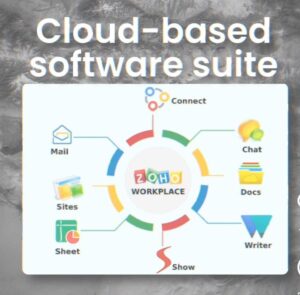
    In 1996, Vembu co-founded AdventNet (later rebranded as Zoho Corporation) in Chennai with his siblings, Sridharan and Radha. Starting with just a handful of employees and bootstrapped funds, the company focused on network management tools – a niche that would evolve into a suite of over 50 cloud-based applications for businesses worldwide. What began as a survival play in a competitive market has grown into a $1 billion+ revenue behemoth, serving millions of users across 150+ countries without a single dollar of external funding. Vembu and his siblings retain majority ownership, a deliberate choice to preserve independence.

    Building Zoho: Innovation Without the Noise

    Zoho’s secret sauce? Relentless R&D and a disdain for short-term trends. Under Vembu’s leadership, the company pioneered affordable, privacy-focused alternatives to giants like Salesforce, Microsoft, and Google Workspace. Tools like Zoho CRM and Zoho Mail have democratized enterprise software for small businesses, emphasizing data sovereignty and open-source ethos. “Proudly Made in India, Made for the World,” Vembu recently affirmed in a post defending Zoho’s data hosting practices, underscoring the company’s commitment to Indian infrastructure.

    Sridhar Vembu
    Sridhar Vembu

    Vembu’s philosophy extends beyond products. He’s a vocal advocate for rural innovation, establishing Zoho’s development centers in places like Tenkasi, a small town in Tamil Nadu where he now resides. Living in a modest village home far from urban luxuries, Vembu embodies “Dharmic Capitalism” – profit with purpose, blending business success with social upliftment. In a recent interview, he explained why Zoho shuns public markets: “Projects like Arattai wouldn’t exist if we had gone public,” highlighting how staying private allows bold, long-term bets on innovation over shareholder pressures.

    Milestone Year Key Achievement
    Founding 1996 Launched AdventNet for network management software.
    Rebranding 2005 Became Zoho Corporation, expanding into cloud apps.
    Global Scale 2015 Reached 25 million users; established rural dev centers.
    Billion-Dollar Club 2022 Hit $600M+ revenue; focused on AI and privacy tools.
    Leadership Shift 2025 Stepped down as CEO to focus on R&D and mentorship.

    Sridhar Vembu and the Arattai Phenomenon

    This year marks a pivotal shift for Sridhar Vembu. In January 2025, he transitioned from CEO to chief scientist, handing the operational reins to trusted lieutenants while diving deeper into research. His focus? Accelerating Zoho’s engineering depth, as evidenced by the launch of Arattai – a privacy-first messaging app billed as India’s answer to WhatsApp.

    Sridhar Vembu
    Sridhar Vembu

    Debuting in late September 2025, Arattai skyrocketed from 3,000 to 350,000 daily sign-ups, with a 100x surge in traffic within three days and reaching 7.5 million overall downloads by early October. Topping app charts and now boasting an official Android TV app – a unique feature absent in rivals like WhatsApp, Signal, or Telegram – it promises crisp calls, multilingual support for India’s linguistic diversity, and end-to-end encryption (with text E2EE on the roadmap). Vembu, ever the engineer, shared in a team huddle: “Being a dedicated engineer is like being a Rishi… Allow neither praise nor criticism nor fame to distract you, resolutely stay the course.” He emphasized the app’s deceptive simplicity, built on 20 years of homegrown tech frameworks for real-time messaging and distributed systems.

    Yet, challenges abound. Amid viral hype, users flagged lags in message delivery and contact sync issues, prompting Vembu’s hands-on fixes: “We are addressing these bottlenecks one by one.” Privacy remains paramount – no ads, no data mining – a stark contrast to global rivals. In a candid exchange with the Republic’s Arnab Goswami, Vembu urged national self-belief: “We need to believe in ourselves as a nation and people.”

    The momentum shows no signs of slowing. Just yesterday, October 6, industrialist Anand Mahindra announced he had downloaded Arattai “with pride,” prompting a grateful reply from Vembu: a simple yet heartfelt acknowledgment of the growing support for India’s digital self-reliance. Vembu’s X feed (@svembu) buzzes with this energy – from thanking early adopters to teasing refinements, all while invoking Gandhi on his Jayanti for inspiration. It’s a window into a leader who eats his own dogfood, literally using Arattai for internal chats. Even as he turns attention to broader concerns like the energy inefficiency of AI – a critical issue for India’s resource constraints – Arattai’s success underscores his vision for sustainable, indigenous innovation.

    Sridhar Vembu
    Sridhar Vembu

    The Vembu Mindset: Humility in a Hyper-Connected World

    What sets Sridhar Vembu apart isn’t just his tech wizardry but his worldview. A self-proclaimed “Rishi-engineer,” he prioritizes depth over dazzle, rural revival over red carpets. Despite billionaire status, he shuns ostentation, living simply to mentor young talent from underserved areas. Zoho’s “staying power,” he insists, stems from decades of R&D: “Recently I have moved full time to R&D and you will see many more innovations from us.”

    Critics question if Arattai can sustain its buzz against entrenched players like WhatsApp. Sridhar Vembu dismisses the noise: “We don’t worry about ‘will the excitement wear off’ – we are focused on how to offer the best experience.” It’s this resolve that has kept Zoho thriving for nearly three decades.

    Also Read This : Zoho Enters China : How an Indian Company is Making Big Moves in Tech

    A Legacy of Quiet Power

    Sridhar Vembu‘s story isn’t one of overnight unicorns or viral exits; it’s a slow-burn saga of building from the ground up, for the ground up. As Arattai refines its edges and Zoho eyes bolder horizons, Vembu reminds us that innovation flourishes in humility. In an era of fleeting apps and fleeting fame, his path – rooted in purpose, powered by persistence – is the real revolution.

  • Zoho Enters China : How an Indian Company is Making Big Moves in Tech

    Zoho Enters China : How an Indian Company is Making Big Moves in Tech

    Zoho enters China : In the high-stakes world of global tech, where U.S. giants like Google and Microsoft often hit roadblocks, an underdog from India is rewriting the rules. Zoho Corporation, the bootstrapped Chennai-based powerhouse known for its affordable cloud suite, has just made waves by officially launching in China. This isn’t just another market entry—it’s a geopolitical chess move that could reshape the SaaS landscape in Asia. As of early October 2025, Zoho’s localized services are rolling out with data centers in Shanghai and Beijing, partnerships with local firms, and even eye-catching billboards in major airports and train stations. Let’s dive into what this means for businesses, innovators, and the ongoing tussle between Eastern and Western tech ecosystems.

    Zoho Enters China : Navigating the Great Firewall with Smarts

    Zoho enters China at a time when the country’s digital economy is booming, yet fiercely protective of its data sovereignty. Unlike American behemoths that faced outright bans or heavy compliance hurdles—think Google’s 2010 exit or Amazon’s ongoing struggles—Zoho has cracked the code through strategic localization. The company established a Beijing office back in 2019 and has since expanded with dedicated data centers, ensuring all user data stays within China’s borders. This move aligns perfectly with Beijing’s regulations, allowing Zoho to offer its full stack of tools, from CRM and email to AI-powered analytics, without the friction that sidelined competitors.

    Zoho Enters China
    Zoho Enters China

    What sets Zoho apart? It’s not just compliance—it’s cultural and economic savvy. Founder Sridhar Vembu, a vocal advocate for self-reliant tech, has long emphasized learning from China’s playbook on manufacturing and R&D. In recent interviews, Vembu urged India to “study China closely” for its phased economic growth model, a philosophy that’s clearly guiding Zoho’s expansion. The result? Rapid adoption by Chinese SMBs and enterprises, who are drawn to Zoho’s cost-effective alternatives—think Zoho Workplace rivaling Microsoft 365 at a fraction of the price.

    The Ripple Effects: A Blow to Big Tech and a Boost for India

    This entry isn’t happening in a vacuum. Amid U.S.-China tensions, Zoho’s success signals a shift in the global tech balance, empowering non-Western players to fill gaps left by restricted American services. Hyperbolic headlines scream “death of Microsoft planned,” but the reality is more nuanced: Zoho’s nimble, VC-free model is eroding market share in price-sensitive segments, especially as it integrates AI tools tailored for the Chinese market. In India, this fuels national pride—government mandates are already pushing Zoho’s suite into public offices, and tools like Vani (a Workspace clone) are gaining traction at rock-bottom prices.

    For global businesses, the takeaway is clear: Diversify beyond Silicon Valley. Zoho’s China play proves that innovation from emerging markets can thrive in the world’s toughest arenas, offering secure, sovereign alternatives without the geopolitical baggage.

    Zoho Enters China
    Zoho Enters China

    Also Read This : WhatsApp vs Arattai : The Ultimate Messaging App Showdown for India in 2025

    What’s Next for Zoho and the SaaS World?

    Zoho Enters China : As Zoho ramps up marketing with those ubiquitous ads in Shanghai metros and Beijing hubs, expect more headlines about its “surprise breakthrough.” Could this pave the way for other Indian SaaS firms? Absolutely. Vembu’s vision of India as a tech bridge between East and West feels prescient, especially with Zoho’s 80 million+ users worldwide.

  • India Cricket Squad for Australia Tour 2025 : Full Team List, Schedule, and Key Highlights

    India Cricket Squad for Australia Tour 2025 : Full Team List, Schedule, and Key Highlights

    India Cricket Squad for Australia Tour 2025 : Cricket fans, buckle up! In a move that’s sending shockwaves through the cricketing world, the Board of Control for Cricket in India (BCCI) has just dropped the bombshell squads for India’s white-ball tour of Australia in late 2025. This isn’t just another series announcement—it’s a seismic shift in leadership, with young gun Shubman Gill stepping up as the new ODI captain, while the return of legends Rohit Sharma and Virat Kohli adds a nostalgic punch to the mix. As India eyes the 2027 ODI World Cup, this tour—featuring three ODIs and five T20Is—promises fireworks Down Under. Let’s dive into the details, break down the squads, and unpack what this means for the Men in Blue.

    BCCI Announces India Cricket Squad for Australia Tour 2025 – Gill Leads, Rohit & Kohli Return
    BCCI Announces India Cricket Squad for Australia Tour 2025 – Gill Leads, Rohit & Kohli Return

    The ODI Squad: Gill’s Debut as Captain, Rohit-Virat Reunion

     India Cricket Squad for Australia Tour 2025 : Shubman Gill’s appointment as ODI skipper marks the end of an era for Rohit Sharma, who handed over the reins after a stellar tenure. At just 25, Gill—known for his elegant strokeplay and cool-headedness—gets the nod alongside vice-captain Shreyas Iyer, signaling a youth-infused leadership core. The big news? Rohit and Virat’s comeback after their T20I and Test retirements, bringing experience and firepower to the top order.

    Here’s the full 15-member ODI squad:

    Player Role
    Shubman Gill (C) Batter
    Shreyas Iyer (VC) Batter
    Rohit Sharma Batter
    Virat Kohli Batter
    Yashasvi Jaiswal Batter
    KL Rahul Wicketkeeper-Batter
    Dhruv Jurel Wicketkeeper
    Axar Patel All-rounder
    Nitish Kumar Reddy All-rounder
    Washington Sundar All-rounder
    Kuldeep Yadav Bowler
    Harshit Rana Bowler
    Mohammed Siraj Bowler
    Arshdeep Singh Bowler
    Prasidh Krishna Bowler

    Quick Analysis: This lineup screams balance. The batting is stacked with Gill opening alongside either Rohit or Jaiswal, while Kohli and Iyer anchor the middle. Rahul’s return as a keeper-batter adds flexibility, and the bowling attack—led by Siraj, Arshdeep, and a fit Prasidh Krishna—looks lethal on Aussie pitches. Kuldeep’s inclusion over other spinners hints at his growing role in white-ball cricket. But can the youngsters hold their own against Australia’s pace barrage? That’s the billion-dollar question.

    BCCI Announces India Cricket Squad for Australia Tour 2025 – Gill Leads, Rohit & Kohli Return
    BCCI Announces India Cricket Squad for Australia Tour 2025 – Gill Leads, Rohit & Kohli Return

    T20I India Cricket Squad for Australia Tour 

     India Cricket Squad for Australia Tour 2025 : Over in the T20I camp, Suryakumar Yadav retains the captaincy with Gill as his deputy, keeping the momentum from recent successes. This 16-player unit blends explosive youth with proven finishers, setting the stage for high-octane clashes.

    Full T20I squad at a glance:

    Player Role
    Suryakumar Yadav (C) Batter
    Shubman Gill (VC) Batter
    Abhishek Sharma Batter/All-rounder
    Tilak Varma Batter
    Rinku Singh Batter
    Nitish Kumar Reddy All-rounder
    Shivam Dube All-rounder
    Axar Patel All-rounder
    Washington Sundar All-rounder
    Jitesh Sharma Wicketkeeper
    Sanju Samson Wicketkeeper
    Varun Chakaravarthy Bowler
    Jasprit Bumrah Bowler
    Arshdeep Singh Bowler
    Kuldeep Yadav Bowler
    Harshit Rana Bowler

    Quick Analysis: Power-hitting is the name of the game here. Abhishek Sharma and Tilak Varma bring X-factor at the top, while Dube and Rinku are death-over specialists. The bowling? Bumrah’s return is music to fans’ ears, backed by Arshdeep’s swing and Kuldeep’s wizardry. With two keepers, rotation options abound, but expect Jitesh to edge out Samson for his aggressive keeping. This squad feels primed for T20 innovation—watch for Nitish Reddy’s all-round bursts to shine.

    BCCI Announces India Cricket Squad for Australia Tour 2025 – Suryakumar Yadav Leads,
    BCCI Announces India Cricket Squad for Australia Tour 2025 – Surya kumar Yadav Leads,

    Tour Schedule: From Perth Pace to Brisbane Bash

     India Cricket Squad for Australia Tour 2025 : The action kicks off with the ODIs in mid-October, transitioning seamlessly into T20Is. No rest for the weary—India will crisscross Australia for eight high-stakes games.

    Match Date Day Venue
    1st ODI October 19 Sunday Perth
    2nd ODI October 23 Thursday Adelaide
    3rd ODI October 25 Saturday Sydney
    1st T20I October 29 Wednesday Canberra
    2nd T20I October 31 Friday Melbourne
    3rd T20I November 2 Sunday Hobart
    4th T20I November 6 Thursday Gold Coast
    5th T20I November 8 Saturday Brisbane

    Perth’s bouncy tracks could test India’s top order early, while the T20Is offer variety—from Hobart’s swing to Brisbane’s heat.

    Why This Tour Matters: Transition, Triumph, and T20 Twists

     India Cricket Squad for Australia Tour 2025 : This announcement isn’t just about names on a list; it’s a blueprint for India’s future. Gill’s captaincy is a bet on youth, but with Rohit and Kohli’s guiding hands, it’s low-risk high-reward. The tour doubles as prep for the 2027 World Cup, where consistency in alien conditions will be key. Plus, in T20Is, expect experiments—Harshit Rana’s raw pace could be the next big thing.

    Also Read This : Dhruv Jurel : The Salute That Echoed from Kargil to the Kotla – A Story of Grit, Glory, and Gratitude

    As BCCI Honorary Secretary Devajit Saikia put it via official channels, this is about “building a squad that’s ready for global battles.” Fans, are you hyped? Drop your predictions in the comments—who opens with Gill? Will Bumrah run riot?

  • Dhruv Jurel : The Salute That Echoed from Kargil to the Kotla – A Story of Grit, Glory, and Gratitude

    Dhruv Jurel : The Salute That Echoed from Kargil to the Kotla – A Story of Grit, Glory, and Gratitude

    Dhruv Jurel : In the heart of Ahmedabad’s Narendra Modi Stadium, under a relentless October sun, a young man from the dusty lanes of Agra raised his bat, turned to the roaring crowd, and delivered a crisp salute. It wasn’t just a celebration; it was a promise fulfilled—a nod to the battles fought not on the cricket field, but in the snow-capped peaks of Kargil. Dhruv Jurel, India’s rising wicket-keeper batter, had just notched up his maiden Test century against West Indies on Day 2 of the first Test. 125 runs off 210 balls, laced with 15 boundaries and three massive sixes. But more than the runs, it was the gesture that captured the nation’s imagination: a “Guard of Honour” tribute, marching in place like a soldier on parade, dedicated to the Indian Army and his father, a Kargil War veteran.

    As the dressing room erupted in applause—Ravindra Jadeja, his partner in a marathon 206-run stand, joining from the non-striker’s end—Jurel’s story unfolded once again. It’s a tale that transcends cricket, weaving threads of sacrifice, visualization, and unyielding routine. On this crisp October morning, let’s dive into the journey of Dhruv Chand Jurel: from a boy’s dream deferred to a cricketer’s dream realized.

    Dhruv Jurel
    Dhruv Jurel

    Roots in Resilience: A Childhood Forged in Sacrifice

    Born on January 21, 2001, in Agra, Uttar Pradesh, Dhruv Jurel grew up in a modest household where cricket was a luxury, not a given. His father, Nem Chand Jurel, a proud veteran of the 1999 Kargil War, had always envisioned his son donning the olive green of the Indian Army. Dhruv, too, harbored those ambitions, dreaming of a life in uniform. But fate, or perhaps a well-timed summer camp at school, had other plans. At just nine years old, a cricket ball found its way into his hands, and with it, a passion that would redefine his path.

    Life wasn’t easy. A severe leg injury at age five left him needing plastic surgery, a setback that could have sidelined him for good. Financial strains loomed large—Nem Chand took a loan to buy Dhruv’s first bat, while his mother, Sunita, pawned her gold necklace to afford a kit bag. “We gave everything so he could chase his dreams,” Nem Chand later recalled in interviews. Dhruv trained relentlessly at a local academy before moving to Noida for better facilities, rising through Uttar Pradesh’s youth ranks: U-14, U-16, and eventually captaining the U-19 side.

    His breakthrough came at the 2020 Under-19 World Cup, where as vice-captain, he helped India reach the final. It was here that scouts first whispered his name in IPL circles. But Dhruv’s mantra, even then, was simple: preparation over pressure. “It’s about being always prepared,” he would say, a philosophy rooted in his army-inspired upbringing.

    Dhruv Jurel
    Dhruv Jurel

    From Syed Mushtaq to Stadium Lights: The Climb to Stardom

    Dhruv Jurel domestic debut was a baptism by fire. He made his T20 bow for Uttar Pradesh in the 2020–21 Syed Mushtaq Ali Trophy, followed by first-class entry in the Ranji Trophy the next year. His glovework was sharp, his batting aggressive—a right-hander with a flair for the square of the wicket, threading boundaries through point and cover with surgical precision.

    The IPL became his launchpad. Snapped up by Rajasthan Royals for the 2022 season, Dhruv waited patiently before exploding on debut against Punjab Kings in 2023: an unbeaten 32 off 15 balls, a cameo that screamed potential. Off the field, he was the quiet observer, absorbing lessons from veterans like Sanju Samson and Jos Buttler.

    International call-up arrived in January 2024 for the England series. Debuting in the third Test at Rajkot, he scored 46—solid, but a teaser. Then came Ranchi, the fourth Test, where he scripted history: 90 and an unbeaten 39, partnering Shubman Gill for a match-winning 72-run stand. Player of the Match in hand, Dhruv was no longer a prospect; he was a pillar.

    T20Is followed against Zimbabwe in July 2024, and by 2025, he was captaining Central Zone in the Duleep Trophy. Subbing in for Rishabh Pant during India’s England tour, he kept wickets in the third and fourth Tests, proving his mettle under fire. Through it all, Dhruv stuck to his routine: the same drills, the same visualizations. “I keep doing the same thing every day,” he revealed post-match in Ahmedabad. It’s this consistency—honed in Agra’s unforgiving heat—that turned potential into performance.

    Dhruv Jurel
    Dhruv Jurel

    Dhruv Jurel: The Wicket-Keeper Who Keeps Giving Back

    Beyond the boundaries and behind the stumps, Dhruv Jurel embodies a quiet philanthropy that mirrors his grounded roots. Inspired by his family’s sacrifices, he quietly supports underprivileged kids in Agra through cricket clinics, providing kits and coaching to those who remind him of his younger self. In a recent interview, he shared, “Cricket gave me everything; it’s time to pass it on.” His off-field efforts, often shared subtly on social media, highlight a commitment to community, making him not just a star on the field but a role model off it.

    The Century That Saluted a Legacy: October 3, 2025

    October 3, 2025: India, 4/143, staring down West Indies’ seam attack. Pant’s injury had thrust Dhruv into the fray as wicket-keeper. Walking in after Shubman Gill’s 50 and KL Rahul’s fluent 100, he steadied the ship. Half-century first—a salute to the stands. Then, the ton: another crisp military salute, bat raised like a rifle, eyes locked on the horizon.

    “It was emotional,” Jurel admitted later, his voice steady but laced with pride. “I dedicated it to the Indian Army—what they do on the battlefield is incredible. I’m very fascinated by those things.” The gesture? A “Guard of Honour,” inspired by his father’s drills. As he marched in place, the crowd rose; the team cheered. It wasn’t showmanship; it was gratitude, a son’s tribute to a father’s scars.

    Jurel’s knock wasn’t just gritty—it was artistic. Three fours in the arc from 36 to 60 showcased his square-of-the-wicket mastery, punishing seamers with wristy flicks and punched drives. Falling to debutant Khary Pierre soon after (edged to Shai Hope), he left India dominant at 349/5, Jadeja unbeaten on 50. “Lot of visualisation,” he credited his behind-the-scenes prep, echoing the “Power of Manifestation” theme in a recent BCCI.tv feature.

    As Day 3 dawned on October 4, whispers of a series whitewash filled the air. But for Dhruv, it’s never about the spotlight—it’s about the salute, the routine, the readiness.

    Dhruv Jurel
    Dhruv Jurel

    A Mamba Mentality for the Maroon Cap

    Dhruv Jurel’s story is cricket’s modern fable: a boy from Agra, son of a soldier, who salutes with his bat what his father did with his life. At 24, he’s the 12th Indian keeper to hit a Test ton, the sixth against West Indies. India’s third such century in 2025 alone—a record year for glovemen’s grit.

    On Instagram (@dhruvjurel, 923K followers), he posts “Mamba Mentality” vibes: training montages, family shoutouts. His X handle (@dhruvjurel21) lit up post-century: “First one is always special” Fans flood in, but Dhruv stays grounded—visualizing the next knock, saluting the next milestone.

    Also Read This : WhatsApp vs Arattai : The Ultimate Messaging App Showdown for India in 2025

    Dhruv Jurel : As the Test unfolds, one thing’s clear: Dhruv Jurel isn’t just playing cricket. He’s honoring a legacy, one boundary at a time. Here’s to the salutes yet to come. Jai Hind.

  • Kantara Chapter 1 Review : A Mythical Rampage That Roars Louder Than Legends

    Kantara Chapter 1 Review : A Mythical Rampage That Roars Louder Than Legends

    Kantara Chapter 1: If the original Kantara (2022) was a thunderclap of raw folklore and divine fury, then Kantara Chapter 1—the prequel that’s got theaters trembling—is the full-blown storm. Released yesterday on October 2, 2025, coinciding with Gandhi Jayanti and the eve of Dussehra, Rishab Shetty’s latest opus transports us back to 300 CE in the lush, treacherous forests of the Kadamba dynasty’s Bangra Kingdom. It’s not just a film; it’s a ritual. A clash of kings, spirits, and unyielding devotion that leaves you breathless, questioning the line between myth and reality.

    As someone who’s been tracking this franchise since its humble Kannada roots exploded into pan-India mania, I finally caught an early screening last night. Spoiler-free verdict? It’s a visual and emotional beast—bigger, bolder, and more immersive than the first. But does it live up to the impossible hype? Let’s dive in.

    The Folklore Unfolds : A Spoiler-Free Plot Tease

    Set centuries before Shiva’s possession in the original Kantara, Chapter 1 peels back the layers of the Kaadubettu Shiva legend. We follow a young king (Rishab Shetty, in dual roles that demand god-like charisma) navigating betrayal, forbidden love, and a brewing war between human ambition and forest deities. Think epic battles infused with Tulu Nadu rituals: Bhoota Kola dances that pulse with primal energy, VFX-laden spirit encounters that feel straight out of a fever dream, and a narrative that weaves betrayal with redemption.

    The first half builds like a slow-burning yagna—introducing the kingdom’s prosperity, the encroaching shadows of greed, and those signature folk songs by Ajaneesh Loknath that make your skin tingle. The interval block? A jaw-dropper that had the audience erupting. The second half unleashes the chaos: high-stakes action, divine interventions, and a climax that’s equal parts predictable and pulse-pounding. It’s Baahubali meets RRR with a spiritual core that grounds the spectacle in cultural authenticity.

    At its heart, this is a story about harmony with nature, the cost of power, and the eternal dance between man and god. If the original was about inheritance, Chapter 1 is the origin myth we craved—raw, reverent, and relentlessly engaging.

    Kantara Chapter 1 : Cast, Crew, and Cinematic Magic

    Rishab Shetty doesn’t just direct and write; he is the film. As the conflicted king and the fierce warrior spirit, his transformation is mesmerizing—bulging with intensity, vulnerability, and that signature Shetty swagger. Rukmini Vasanth shines as the queen, bringing grace and fire to a role that’s more than just arm candy. Veterans like Jayaram and Achyuth Kumar add gravitas, while newcomers like Gulshan Devaiah inject fresh edge.

    Behind the lens, it’s Hombale Films at their peak. Shetty’s direction amplifies the scale without losing the intimacy of the first film. Cinematographer Pratheesh Varma captures the misty forests like a living entity, and the VFX (hello, those ethereal daivas) rivals Hollywood blockbusters. Loknath’s score? Goosebump fuel—folk beats that evolve into orchestral thunder. In IMAX or Dolby, it’s transcendent.

    Kantara Chapter 1
    Kantara Chapter 1

    Box Office Blitz : Crossing the Century Mark in Blink-and-You’ll-Miss-It Time

    Forget slow burns; Kantara Chapter 1 hit the ground sprinting. On Day 1, it raked in ₹61.85 crore net in India across languages, including paid previews, making it one of the biggest South Indian openers of 2025. Worldwide, it notched around ₹90 crore, eclipsing Stree 2 and Saiyaara in a single day. Day 2 (today, as I write) saw a dip to ₹38.77 crore net India, but that’s still massive—pushing the two-day total to ₹100.62 crore domestically and over ₹103 crore globally. In the Hindi belt alone, it’s the 8th biggest South Indian opener ever, trailing only titans like Pushpa 2 and Baahubali 2.

    Kannada circuits are on fire, with Tamil Nadu holding steady at ₹1.84 crore by evening. The word-of-mouth is electric—some theaters in Bengaluru are adding midnight shows, and advance bookings for the weekend are surging. Projections? Easily ₹300+ crore in India if the momentum holds. Hombale’s gamble on a prequel paid off big.

    Critical Acclaim and Fan Frenzy: Goosebumps or Overhype?

    Critics are mostly enchanted. Sandeep Reddy Vanga called it a “cinematic thunderstorm” and “true masterpiece,” praising its raw power. 123Telugu dubs it a “captivating action drama” with “goosebump-inducing moments.” GreatAndhra raves about the second half’s “magic,” noting it surpasses the original in scale and visuals, though the narrative lags slightly. NDTV gives it 3 stars, hailing Shetty’s dominance but critiquing the predictable finale. Early aggregates? A solid 3.5-4/5, with the BGM, VFX, and climax stealing hearts.

    Fans on X are a riot of devotion and debate. One viewer gushed, “Divine Rampage Continues! Folk fury meets box office glory!” with the film hitting ₹103 crore. Another called it a “class act” that ties loose ends while teasing more. But not everyone’s converted—some decry it as “okish,” with Pushpa 2’s jathara sequence outshining the whole thing. Comparisons to Baahubali 2, KGF 2, and RRR are rife, with one poll voter ranking it below BB2 but above Pushpa 2. The consensus? The wow factor from the original is dialed up in spectacle but tempered by a slower first half.

    Public screenings are buzzing—reports of crowds chanting “I Saw God!” post-climax, and Tamil reviews praising the “God Vibe.” It’s divisive in the best way: a film that sparks rituals of its own.

    Kantara Chapter 1
    Kantara Chapter 1

    My Take: Why It Works (and Where It Stumbles)

    Kantara Chapter 1 is Shetty’s love letter to his roots—unapologetically Kannada, yet universally mythic. The devotion feels earned, not exploitative, and in a year of sequels (Pushpa 2, anyone?), it stands out for its cultural depth. The VFX and action are next-level; that spirit chase sequence? Chef’s kiss. But the pacing drags in spots, and some comedy bits feel forced, echoing Baahubali‘s excesses. Still, it’s a triumph that elevates Indian cinema’s global game.

    Also Read This : WhatsApp vs Arattai : The Ultimate Messaging App Showdown for India in 2025

    The Legend Continues: What’s Next?

    Kantara Chapter 1 : The post-credits stinger? Pure tease for Kantara Chapter 2 in 2026, bridging this prequel to the original’s timeline. No word on a direct sequel yet, but with this momentum, expect the franchise to rival Baahubali‘s empire.

  • The Sukhoi Su-57 : Russia’s Bold Leap into Fifth-Generation Air Superiority

    The Sukhoi Su-57 : Russia’s Bold Leap into Fifth-Generation Air Superiority

    Su-57 : In the high-stakes world of modern aerial warfare, where stealth and speed can mean the difference between victory and vulnerability, Russia’s Sukhoi Su-57 stands out as a fascinating engineering marvel. Dubbed the “Felon” by NATO, this fifth-generation multirole fighter is more than just a machine—it’s a symbol of Russia’s determination to reclaim its place among the elite in fighter jet technology. As we hit the midpoint of the 2020s, with production ramping up amid global tensions, let’s dive into what makes the Su-57 tick, from its turbulent development to its cutting-edge capabilities and real-world deployments.

    A Rocky Road to the Skies: Development and History

    The Su-57 didn’t emerge overnight. Its story begins in the late Soviet era with the ambitious I-90 program in 1979, aimed at creating a fighter for the 1990s. Economic turmoil after the USSR’s collapse stalled progress, leading to canceled prototypes like Mikoyan’s Project 1.44. Fast-forward to 1999, and Russia relaunched the effort under the PAK FA (Prospective Airborne Complex of Frontline Aviation) banner. Sukhoi clinched the contract in 2002, leveraging its Su-27 heritage, and the first prototype—the T-50—took to the skies on January 29, 2010.

    Su-57
    Su-57

    Challenges abounded: engine troubles, a 2019 crash of the first production model, and the 2018 fallout with India over the joint FGFA program (due to cost and tech-sharing disputes). Yet, perseverance paid off. Serial production kicked off in July 2019, with the first delivery to the Russian Aerospace Forces (VKS) in December 2020. By late 2025, the jet has officially entered service since December 2019, though full operational capability remains a work in progress.

    What sets the Su-57 apart? It’s Russia’s first true stealth fighter, blending low observability with supermaneuverability, supercruise speeds, and sensor fusion. Designed to phase out aging Su-27s and MiG-29s, it’s also a testbed for future stealth tech, including potential drone-swarming capabilities.

    Design and Tech: Su-57 Stealth Meets Agility

    At first glance, the Su-57’s blended wing-body design screams “stealth.” Its radar cross-section (RCS) is a mere 0.1–1 m²—dwarfed by the 10–15 m² of its predecessors—thanks to aligned edges, radar-absorbent coatings, and serpentine inlets that hide the engines from prying radars. Twin AL-41F1 turbofans (with upgrades to the more efficient AL-51F1 on the horizon) provide 3D thrust-vectoring for Cobra-like maneuvers that defy physics.

    The cockpit is a pilot’s dream: an active electronically scanned array (AESA) N036 Byelka radar, infrared search and track (IRST) for passive targeting, and modular avionics for seamless data sharing in network-centric battles. Composites make up 22–26% of the airframe, keeping it light yet tough, while internal bays ensure weapons stay hidden during stealth ops.

    Here’s a quick spec breakdown to geek out over:

    Feature Details
    Crew 1 (with two-seat variant planned)
    Dimensions Length: 20.1 m; Wingspan: 14.1 m
    Weights Empty: 18,500 kg; Max Takeoff: 35,000 kg
    Engines 2 × AL-41F1 (up to 142.2 kN afterburner)
    Top Speed Mach 2 (2,135 km/h)
    Supercruise Mach 1.3 (1,400 km/h)
    Range 3,500 km subsonic
    Ceiling 20,000 m
    Armament Payload Up to 10,000 kg (internal/external)

    Armed to the teeth, it packs R-77M air-to-air missiles, Kh-69 cruise missiles for ground strikes, and even hypersonic Kinzhal derivatives. A 30 mm GSh-30-1 cannon rounds out the close-quarters punch.

    Su-57
    Su-57

    From Syria to Ukraine: Combat Proven?

    The Su-57’s baptism by fire came in Syria in 2018, where it logged 10 sorties, firing Kh-59MK2 missiles without a hitch. But the real test? The ongoing Russo-Ukrainian War. Since late 2022, it’s been used for standoff strikes from Russian soil, avoiding frontline risks. As of October 2025, fewer than 25 are combat-ready, with Ukrainian drones reportedly damaging one in June 2024. The VKS’s 23rd Fighter Aviation Regiment at Akhtubinsk handles most ops, and recent border deployments with China signal growing interoperability.

    Production lags due to sanctions—only six deliveries in 2024—but 2025 shows promise. Leaked docs from August reveal early birds flying “lite” without full pods, but the Su-57M upgrade (with AI smarts and better engines) is in trials, eyeing a mid-decade rollout.

    Global Ambitions: Exports and Rivals

    Russia’s not keeping this bird caged. Algeria locked in an order in February 2025, and the export-tuned Su-57E turned heads at Zhuhai 2024 and Aero India 2025—parked cheek-by-jowl with the F-35. Talks for Indian co-production bubbled up in September, though Delhi’s eyeing the cheaper Su-75 Checkmate too. At LIMA 2025 in Malaysia, the Su-57M stole the show.

    Stack it against the F-35? The Su-57 wins on raw speed and range but trails in all-aspect stealth and sensor maturity. It’s a trade-off: agility for the skies versus invisibility in the electromagnetic fog.

    Also Read This : WhatsApp vs Arattai : The Ultimate Messaging App Showdown for India in 2025

    The Future Skies: What’s Next for the Felon?

    As geopolitical winds shift, the Su-57 embodies Russia’s push for self-reliance in defense tech. With upgrades like drone control and hypersonic integration, it could redefine multirole fighters. But hurdles remain—sanctions, funding, and proving itself beyond Russia’s borders.

  • Whispers of the Wind: Unveiling the Enchanting Hawa Mahal in Jaipur

    Whispers of the Wind: Unveiling the Enchanting Hawa Mahal in Jaipur

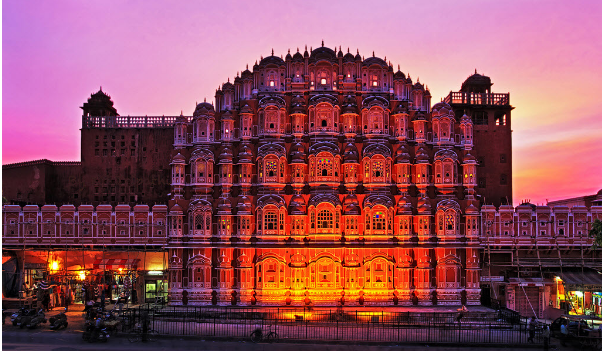
    Hawa Mahal : Imagine standing in the heart of a bustling pink city, gazing up at a honeycomb of delicate windows that seem to dance with the desert breeze. That’s Hawa Mahal for you—a five-story facade that’s less a palace and more a poetic veil between the royal past and the vibrant present. Nestled in the chaotic charm of Jaipur, Rajasthan’s “Pink City,” this architectural gem has whispered secrets of intrigue, tradition, and ingenuity for over two centuries. If you’re a history buff, an architecture aficionado, or just someone who loves a good story wrapped in sandstone, join me as we step through its lattice screens and into a world frozen in time.

    The Royal Veil: A Peek into Hawa Mahal’s Storied Past

    Built in 1799 by Maharaja Sawai Pratap Singh, the grandson of Jaipur’s visionary founder Maharaja Jai Singh II, Hawa Mahal wasn’t designed for grand banquets or opulent thrones. No, this was a sanctuary for the women of the royal zenana—the secluded quarters where queens, princesses, and attendants lived under the purdah system. From behind its 953 intricately carved jharokhas (overhanging enclosed balconies), they could catch glimpses of the world outside: colorful street processions, lively festivals, and the everyday rhythm of the city below. It was a clever compromise between isolation and curiosity, allowing the royals to stay hidden while staying connected.

    Hawa Mahal
    Hawa Mahal

    The palace’s name, meaning “Palace of Winds,” is no poetic flourish. Jaipur’s scorching summers demanded innovation, and Hawa Mahal delivered. Cool breezes funneled through those tiny windows like nature’s own air conditioning, turning the structure into a living testament to the Kachwaha dynasty’s blend of Rajput valor and Mughal finesse. Under the guidance of architect Lal Chand Ustad, it rose as part of the sprawling City Palace complex, yet stands alone like a blushing sentinel on the edge of Badi Chaupar. Over the years, it has witnessed the ebb and flow of empires, from the princely states to independent India, evolving from a private viewpoint into a public icon that draws wanderers from across the globe.

    What strikes me most about its history isn’t just the dates and dynasties—it’s the human element. Picture the rustle of silk saris against stone walls, the muffled laughter of hidden observers, and the faint echo of elephant processions. Hawa Mahal isn’t just stone; it’s a silent storyteller of lives veiled in mystery.

    A Symphony in Sandstone: The Architectural Poetry of Hawa Mahal

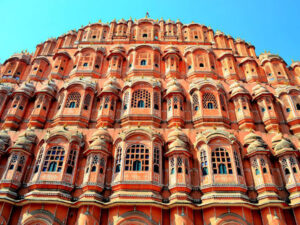
    If Jaipur is a canvas painted in rose-tinted hues, Hawa Mahal is the masterpiece that steals the show. Towering 53 meters high, its facade unfurls like a frozen honeycomb, each level adorned with progressively more windows—fewer at the base, blooming into a frenzy at the top for optimal airflow. Crafted from the region’s signature pink sandstone (locally sourced and quarried to perfection), the structure glows ethereally at dawn and dusk, especially during the monsoon when the air hums with petrichor.

    Step closer, and the details will leave you breathless. Floral motifs of lotuses and peacocks intertwine with geometric Islamic patterns, a harmonious nod to the syncretic influences of Rajput and Mughal eras. Those jharokhas aren’t mere holes; they’re sculpted screens with overhanging cornices that cast playful shadows, turning the wall into a living tapestry. Inside, it’s a different tale—narrow corridors wind upward via steep staircases, revealing sparse chambers that feel more like a high-rise beehive than a lavish lair. There’s no vast Durbar Hall here; the magic is in the restraint, the clever use of space to prioritize ventilation over volume.

    Hawa Mahal
    Hawa Mahal

    Fun fact: The pyramid-like shape isn’t accidental. It mimics Lord Krishna’s crown, a divine touch that infuses the secular with the sacred. In an age before fans or AC units, this design was revolutionary—passive cooling at its finest, a lesson in sustainable living we could all borrow from today. Wandering its innards, I couldn’t help but marvel at how something so visually extravagant serves such a practical purpose. It’s architecture that breathes, literally.

    A Morning with the Winds: Experiencing Hawa Mahal Up Close

    My first encounter with Hawa Mahal was at sunrise, when the city still slumbers under a golden haze. Arriving via a rickety auto-rickshaw through the labyrinthine lanes of the old city, I crossed the road to the iconic viewpoint—a spot where the palace’s full glory unfolds like a postcard come to life. From here, it’s a riot of pink perforations against the sky, perfect for that Instagram-worthy silhouette (though trust me, the real charm is in the details you can’t capture in a single frame).

    Entry is straightforward and affordable, with tickets that let you roam freely from 9 AM to 4:30 PM most days. Opt for an early visit to beat the heat and the hordes—by noon, the place buzzes with school groups and selfie sticks. Inside, a small museum on the ground floor houses artifacts like antique jewelry and faded photographs, offering a tangible link to the zenana’s whispers. Climb those stairs (wear comfy shoes; they’re no joke), and emerge onto balconies where the wind truly comes alive, tousling your hair as you peer down at the bazaar’s awakening chaos.

    Pro tip: Bring a hat and water—Rajasthan’s sun doesn’t discriminate. And if you’re there in the cooler months (October to March, ideally), linger for the subtle play of light through the lattices; it’s like watching a kaleidoscope shift in slow motion. Evenings bring a quieter vibe, with the palace bathed in the warm glow of street lamps, hinting at the festivals that light it up during Diwali or Teej.

    Echoes Beyond the Walls: Jaipur’s Treasures Just a Stone’s Throw Away

    Hawa Mahal doesn’t exist in isolation; it’s the gateway to Jaipur’s soul. Mere steps away lies the majestic City Palace, where royal courtyards and museums spill secrets of the maharajas’ opulent lives. Venture a short stroll to Jantar Mantar, the UNESCO-listed observatory whose massive sundials and star charts feel like stepping into a cosmic playground designed by an 18th-century genius.

    Hawa Mahal
    Hawa Mahal

    For a dose of local flavor, lose yourself in Chandpole Bazaar, where vendors hawk everything from block-printed textiles to silver jhumkas that jingle like temple bells. It’s here that Jaipur’s sensory overload hits: the spice-scented air, the haggling symphony, the flash of turquoise and crimson saris. Pair your Hawa Mahal jaunt with a thali at a nearby dhaba—think dal baati churma that warms you from the inside out—and you’ve got the makings of an unforgettable day.

    Final Breeze: Why Hawa Mahal Still Captivates

    In a world racing toward glass skyscrapers and smart cities, Hawa Mahal stands as a gentle reminder of beauty born from necessity. It’s not just a monument; it’s a bridge to a time when architecture whispered rather than shouted, when winds carried stories across veiled divides. Whether you’re tracing the footsteps of forgotten queens or simply seeking a cool respite from the desert heat, this palace invites you to pause, peer, and ponder.

    Also Read This : WhatsApp vs Arattai : The Ultimate Messaging App Showdown for India in 2025

    Jaipur’s Pink City pulses with such wonders, but Hawa Mahal ? It’s the heartbeat. If life’s veils ever feel too thick, head to the Palace of Winds—let it remind you that sometimes, the best views come from looking out, unseen.

  • Why Gangsters Targeted Munawar Faruqui : Rohit Godara and Goldy Brar Allegedly Planned to Kill Him Over Jokes on Hindu Gods

    Why Gangsters Targeted Munawar Faruqui : Rohit Godara and Goldy Brar Allegedly Planned to Kill Him Over Jokes on Hindu Gods

    Targeted Munawar Faruqui : The life of stand-up comedian Munawar Faruqui, known for his sharp wit and Bigg Boss 17 victory, is once again under threat. Canada-based gangsters Rohit Godara and Goldy Brar had orchestrated a plot to assassinate him—and the reason? His old jokes that some deemed offensive to Hindu deities. Delhi Police foiled the conspiracy, but this incident is not just shaking the entertainment world; it’s raising serious questions about freedom of expression. Let’s dive into the full story.

    Targeted Munawar Faruqui : Laughter Behind the Pain

    Munawar Faruqui is one of India’s most popular comedians today. His punchlines have made millions laugh, but they’ve also landed him in hot water multiple times. Back in 2021, during a show in Indore, he was arrested on charges of hurting religious sentiments and promoting enmity, allegedly for jokes mocking Hindu gods. The Madhya Pradesh Police slapped him with serious accusations, and he spent over 35 days in jail before being released on bail. That episode became a defining moment in his life, spotlighting the tension between comedy and cultural sensitivities—and now, it seems that same controversy has turned deadly.

    Why Gangsters Targeted Munawar Faruqui
    Why Gangsters Targeted Munawar Faruqui

    The Plot Unraveled: Gangsters’ Deadly Decree

     Targeted Munawar Faruqui : According to police investigations, two shooters from the Rohit Godara-Goldy Brar-Virendra Charan gang were arrested during a probe into a murder in Delhi’s Najafgarh area. Identified as Sahil Ansari and Mohammad Arbaz, they confessed during interrogation that the gangsters had assigned them to kill Munawar. The motive was clear: viewing his jokes as an attack on Hindu gods, the gangsters saw this as a chance to boost their ‘social media image’ and gain traction among fringe religious groups. Sources reveal that Goldy Brar and Rohit Godara, hiding in Canada, issued instructions via encrypted apps. They targeted Delhi, where Munawar often performs his shows.

    The arrest involved a shootout with police, leaving the shooters injured. This syndicate has a history of high-profile hits, including the murder of Sidhu Moosewala. By targeting Munawar, they hoped to score points with hardline elements, but swift police action thwarted the plan.

    Why Gangsters Targeted Munawar Faruqui
    Why Gangsters Targeted Munawar Faruqui

    The Shadow of Danger : The Cost of Comedy

     Targeted Munawar Faruqui : This isn’t the first time Munawar has received threats. Since his 2021 arrest, he’s lived cautiously, but the involvement of gangsters is a terrifying escalation. The news has gone viral on social media, with fans rallying under hashtags like #SaveMunawarFaruqui. Authorities have ramped up his security, but the big question remains: Should a joke cost someone their life?

    In India, comedy and sensitive topics have always walked a tightrope. Artists like Munawar push boundaries, but should criminal elements get involved? This event reminds us that freedom of expression is a precious right, yet respecting societal feelings is equally important.

    Also Read This : WhatsApp vs Arattai : The Ultimate Messaging App Showdown for India in 2025

    Keep the Laughter Alive

    Munawar Faruqui‘s story teaches us that even laughter can have deep-rooted consequences. We hope this foiled plot makes him stronger, ready to return to the stage with his signature sparkle. But it’s time for us to reflect: Are our sensitivities making us too narrow-minded, stifling humor in the process? Wishing Munawar all the best, and hoping this is the last threat he faces.

  • WhatsApp vs Arattai : The Ultimate Messaging App Showdown for India in 2025

    WhatsApp vs Arattai : The Ultimate Messaging App Showdown for India in 2025

    WhatsApp vs Arattai : In the fast-paced world of instant messaging, WhatsApp has long been the undisputed king, with over 3 billion users globally and more than 500 million in India alone. However, a new player, Arattai—meaning “casual chat” in Tamil—is making waves as a homegrown alternative. Launched in 2021 by India’s Zoho Corporation, Arattai has surged to over 1 million downloads by September 2025, fueled by endorsements from Indian ministers like Dharmendra Pradhan and Ashwini Vaishnaw. Topping the Apple App Store and climbing Google Play’s ranks, Arattai is positioning itself as a privacy-focused, lightweight, and Made in India app tailored for India’s diverse users. But can it challenge WhatsApp’s dominance? This blog compares WhatsApp vs. Arattai across key features, exploring why users might consider switching and what each app brings to the table.

    What Are WhatsApp and Arattai?

    WhatsApp

    • Owner: Meta, a US-based tech giant behind Facebook and Instagram.
    • Launched: 2009
    • User Base: Over 3 billion globally, with 500M+ in India, making it the go-to for personal and business communication.
    • Positioning: A global, feature-rich messaging platform with seamless integration into Meta’s ecosystem.

    Arattai

    • Owner: Zoho Corporation, an Indian software company known for privacy-first enterprise solutions.
    • Launched: 2021
    • User Base: Over 1 million downloads in India, with signups exploding from 3,000 to 350,000 in days during recent campaigns.
    • Positioning: A Made in India alternative optimized for low-end devices, slow networks, and regional languages, with a strong focus on data sovereignty and no ad monetization.
    WhatsApp vs Arattai
    WhatsApp vs Arattai

    Why Compare WhatsApp and Arattai?

    WhatsApp vs Arattai : India’s messaging landscape is at a crossroads. WhatsApp’s universal adoption makes it hard to beat, but its ties to Meta’s ecosystem and global servers raise privacy concerns. Meanwhile, Arattai taps into India’s push for digital self-reliance (Atmanirbhar Bharat), offering a lightweight, locally developed app that resonates with users prioritizing data privacy and accessibility. This comparison will help you decide which app suits your needs in 2025.

    Feature-by-Feature Comparison: WhatsApp vs Arattai

    Feature WhatsApp Arattai
    Core Messaging Text, voice notes, media (photos, videos, documents up to 2GB) Text, voice notes, media (photos, videos, documents)
    Calls Audio and video calls, end-to-end encrypted Audio and video calls, end-to-end encrypted
    Group Chats Up to 1,024 members; Communities for larger groups Up to 1,000 members
    Broadcast/Channels WhatsApp Channels for one-way updates Dedicated Channels for broadcasts
    Stories Status updates (24-hour ephemeral content) 24-hour ephemeral stories
    Meetings Up to 32 participants via WhatsApp calls Up to 250 participants; instant and scheduled meetings
    Encryption End-to-end encryption for all messages, calls, and media End-to-end encryption for calls; messages in “secret chat” mode (full E2E in development)
    Data Storage Global servers; linked to Meta’s ecosystem India-only servers (Mumbai, Delhi, Chennai); no data monetization
    Language Support 100+ languages, including Hindi, Tamil, Telugu, etc. Strong focus on Indian regional languages; multilingual support
    Performance Smooth on mid-to-high-end devices; lags on low-end phones or 2G/3G Lightweight; optimized for low-end devices and slow networks (2G/3G)
    Additional Features Business API, payments (select countries), Google Drive/iCloud backups Username-based chats, WhatsApp chat/group import, Android TV app
    Privacy Focus Strong encryption but tied to Meta; past privacy controversies Ad-free, no data sharing; interoperable protocols in development
    Availability iOS, Android, Desktop, Web iOS, Android (including TV); global expansion underway
    Monetization Free for users; revenue via business tools Free; ad-free, no data exploitation
    WhatsApp vs Arattai
    WhatsApp vs Arattai

    Why Replace WhatsApp with Arattai? Key Reasons

    1. Data Sovereignty and Privacy

    • WhatsApp’s Drawbacks:
      • Meta’s Ecosystem: WhatsApp’s data is stored on global servers, and its integration with Meta’s ad-driven platforms (Facebook, Instagram) raises concerns about metadata usage (e.g., contacts, usage patterns), despite end-to-end encryption.
      • Privacy Controversies: The 2021 privacy policy update sparked outrage in India over potential data sharing with Meta’s broader ecosystem, eroding trust among privacy-conscious users.
      • Regulatory Scrutiny: India’s data localization laws (e.g., Personal Data Protection Bill) push for local storage, which WhatsApp only partially addresses.
    • Arattai’s Advantages:
      • India-Centric Storage: Data is stored on servers in Mumbai, Delhi, and Chennai, aligning with data sovereignty goals and reducing exposure to foreign regulations.
      • No Data Monetization: Zoho’s ad-free model ensures user data isn’t exploited, a stark contrast to Meta’s business model.
      • Username-Based Chats: Users can communicate without sharing phone numbers, enhancing privacy—a feature WhatsApp lacks.

    Why Switch?: WhatsApp vs Arattai – If you’re wary of Meta’s data practices or prioritize data sovereignty, Arattai’s India-first approach and privacy focus make it a compelling alternative.

    2. Optimized for India’s Diverse Users

    • WhatsApp’s Drawbacks:
      • Resource-Heavy: WhatsApp’s feature-rich app can be slow on low-end smartphones or 2G/3G networks, common in rural India.
      • Data and Battery Drain: Media-heavy features and background processes consume significant resources, a challenge for users with limited data plans or budget devices.
      • Urban-Centric Design: While it supports Indian languages, WhatsApp’s design prioritizes high-speed internet users, leaving rural users with suboptimal experiences.
    • Arattai’s Advantages:
      • Lightweight Performance: Built for low-end devices and slow networks (2G/3G), Arattai ensures smooth operation in semi-urban and rural areas.
      • Regional Language Support: Strong emphasis on languages like Tamil, Telugu, and Hindi makes it accessible to non-English speakers, a key demographic in India.
      • Low Data Usage: Optimized to minimize data consumption, saving costs for users on limited plans.

    Why Switch?: If you use a budget phone, live in an area with poor connectivity, or prefer an app tailored for India’s linguistic diversity, Arattai is a better fit.

    3. Innovative Features for Indian Users

    • WhatsApp’s Drawbacks:
      • Feature Bloat: Features like Channels, payments, and Communities can overwhelm users seeking simple messaging.
      • Limited Meeting Capacity: Video calls are capped at 32 participants, insufficient for larger groups.
      • Phone Number Dependency: Requiring a phone number for registration and chats limits privacy.
    • Arattai’s Advantages:
      • WhatsApp Chat Import: Seamlessly transfer chats and groups from WhatsApp, easing the transition.
      • Large Meetings: Supports up to 250 participants for instant or scheduled calls, ideal for community or professional use.
      • Android TV App: Unique support for Android TV enables messaging on shared screens, catering to Indian households.
      • Interoperability Plans: Zoho’s work with iSPIRT (UPI’s creators) on open messaging protocols could enable cross-app communication, reducing platform lock-in.

    Why Switch?: WhatsApp vs Arattai – Arattai’s user-friendly features like chat imports and large meetings cater to India-specific needs, while its interoperability vision could disrupt messaging monopolies.

    WhatsApp vs Arattai
    WhatsApp vs Arattai

    4. Made in India and Government Support

    • WhatsApp’s Drawbacks:
      • Foreign Ownership: As a Meta product, WhatsApp faces skepticism in India’s push for Atmanirbhar Bharat (self-reliant India).
      • Limited Local Focus: Its global design doesn’t fully address India’s unique socio-economic context.
    • Arattai’s Advantages:
      • Government Backing: Endorsements from Indian ministers boost Arattai’s credibility as a national alternative.
      • Zoho’s Reputation: Developed entirely in India without reliance on AWS/Azure, Zoho’s track record adds trust.
      • Cultural Resonance: The name “Arattai” and focus on regional languages align with India’s cultural diversity.

    Why Switch?: WhatsApp vs Arattai – If you support local innovation or India’s self-reliance movement, Arattai’s Made in India credentials make it a strong choice.

    5. Breaking Big Tech’s Monopoly

    • WhatsApp’s Drawbacks:
      • Network Effects: WhatsApp’s dominance creates a lock-in effect—everyone uses it because everyone else does, stifling competition.
      • Meta Integration: Ties to Facebook/Instagram can feel intrusive for users wanting a standalone app.
    • Arattai’s Advantages:
      • Competitive Alternative: Backed by Zoho and government support, Arattai challenges WhatsApp’s monopoly in India.
      • Standalone Focus: No ties to a broader social media ecosystem, offering a cleaner experience.

    Why Switch?: WhatsApp vs Arattai : Choosing Arattai supports a competitive tech landscape, reducing reliance on WhatsApp’s dominance.

    Challenges to Replacing WhatsApp

    WhatsApp vs Arattai : Despite its strengths, Arattai faces hurdles:

    • Incomplete Encryption: Only calls are end-to-end encrypted; messages rely on a “secret chat” mode, with full encryption still in development (a major drawback for privacy hawks).
    • Scaling Issues: Recent signup surges caused OTP delays and sync problems, though Zoho is addressing these.
    • Smaller User Base: With just 1 million users, Arattai lacks WhatsApp’s network effects, making it harder to convince friends or groups to switch.

    Can Arattai Replace WhatsApp?

    WhatsApp vs Arattai : Arattai’s rise echoes UPI’s disruption of payment giants like Visa and Mastercard in India. Its lightweight design, data sovereignty, and innovative features position it as a strong contender, especially for rural and semi-urban users. Zoho’s interoperable protocol plans could further level the playing field. However, WhatsApp’s universal adoption, full end-to-end encryption, and mature ecosystem make it hard to dethrone in 2025. Arattai could capture 100M+ users in 2–3 years if it delivers full encryption and scales smoothly, but for now, it’s a promising alternative rather than a full replacement.

    WhatsApp vs Arattai
    WhatsApp vs Arattai

    Who Should Use Each App?

    • Stick with WhatsApp if:
      • You need a globally accepted app with a massive user base.
      • End-to-end encryption for all communications is critical.
      • You rely on features like payments or business APIs.
      • You’re comfortable with Meta’s ecosystem.
    • Switch to Arattai if:
      • You prioritize data sovereignty and an ad-free experience.
      • You use low-end devices or slow networks (2G/3G).
      • You value features like chat imports, large meetings, or Indian language support.
      • You support Made in India tech and want to try a local alternative.

    How to Get Started

    • WhatsApp: Free on iOS, Android, Desktop, and Web. Download from the Apple App Store or Google Play.
    • Arattai: Free on iOS and Android (including Android TV). Available on the App Store and Google Play.

    Also Read This : Goodbye Google Chrome? Zoho Launches Ulaa Browser as India’s Better Alternative

    WhatsApp vs Arattai : WhatsApp remains the gold standard for messaging due to its reliability, encryption, and universal reach. However, Arattai’s privacy-first, Made in India approach, combined with its lightweight design and innovative features, makes it a strong contender for users seeking an alternative. As Zoho addresses encryption gaps and scaling challenges, Arattai could reshape India’s messaging landscape, much like UPI transformed payments. If you’re curious, download Arattai and give it a try—it’s free, and you can even import your WhatsApp chats to test the waters.

  • Goodbye Google Chrome? Zoho Launches Ulaa Browser as India’s Better Alternative

    Goodbye Google Chrome? Zoho Launches Ulaa Browser as India’s Better Alternative

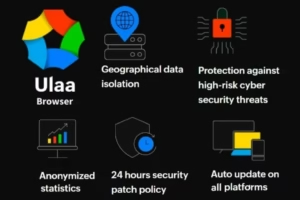
    Ulaa Browser : In May 2023, Zoho Corporation, the Chennai-based tech giant, launched Ulaa, a privacy-first, Chromium-based web browser that’s been hailed as a “Made in India” alternative to Google Chrome. After winning India’s Indigenous Browser Development Challenge (IWBDC) and rolling out Ulaa Enterprise in May 2025, Ulaa has sparked buzz as a potential “Chrome killer.” Social media platforms are abuzz with users praising its speed and privacy features, but does it truly outshine Chrome? Let’s compare the two across privacy, performance, usability, and more to find out.

    What is Ulaa?

    Ulaa is a free browser available on Windows, macOS, Linux, Android, and iOS, developed by Zoho, the company behind tools like Zoho CRM and Mail. It emphasizes user privacy, blocks trackers and ads by default, and integrates tightly with Zoho’s ecosystem. The Enterprise edition, launched in 2025, adds advanced security controls and AI features powered by Zoho’s Zia assistant, appealing to businesses and privacy-focused users.

    So, how does Ulaa stack up against Google Chrome, which holds a dominant 65% global market share? Let’s break it down.

    Ulaa Browser
    Ulaa Browser

    Privacy: Ulaa’s Strongest Suit

    Ulaa is built for users who value privacy, setting it apart from Chrome’s data-heavy approach:

    • Tracker and Ad Blocking: Ulaa automatically blocks trackers, ads, and browser fingerprinting, minimizing your online footprint.
    • DuckDuckGo Default: It uses the privacy-centric DuckDuckGo as its default search engine, avoiding Google’s ecosystem.
    • Browser ID Reset: Each session starts with a fresh browser ID, making cross-site tracking difficult.
    • End-to-End Encryption: Sync data (bookmarks, passwords, etc.) is fully encrypted, and Zoho claims it collects no telemetry data.
    • Motion Sensor Blocking: Ulaa disables access to device motion sensors, a lesser-known tracking vector.

    Chrome, by contrast, relies on Google’s data collection for targeted advertising. To achieve similar privacy protections, you’d need extensions like uBlock Origin or Privacy Badger. For privacy-conscious users, Ulaa is the clear winner.

    Performance: Chrome Holds the Edge

    Speed and resource efficiency are critical for a smooth browsing experience. Here’s how they compare:

    • Ulaa: User reviews praise its quick startup and smooth performance for light to moderate use. However, it consumes more CPU and RAM than Chrome, especially with multiple tabs (e.g., 500MB+ idle with 10 tabs, spawning more processes). Its memory saver mode helps but isn’t as refined as Chrome’s.
    • Chrome: Known for its optimization, Chrome handles heavy multitasking and complex web apps with ease, using tab hibernation to keep resource usage low.

    Recent benchmarks (as of September 2025) show Chrome outperforming Ulaa in JavaScript execution and page load times, especially on demanding sites like video editors or gaming platforms. If speed is your priority, Chrome remains the leader.

    Ease of Use: Familiarity vs. Features

    Both browsers are user-friendly but cater to different audiences:

    • Ulaa (9.1/10 on user reviews): Its clean interface, customizable dashboards (minimal or smart with tracker stats), and browsing modes (Work, Personal, Kids) are popular. However, non-Zoho users may face a slight learning curve, and some report occasional login issues with Zoho IDs.
    • Chrome (9.6/10 on user reviews): Chrome’s minimalist design and universal familiarity make it effortless to use. Its integration with Google services like Gmail and Drive is a plus for many.

    Chrome wins for simplicity, but Ulaa’s unique features—like isolated modes and Zoho app integration—make it a productivity gem once mastered.

    Ulaa Browser
    Ulaa Browser

    Extensions and Ecosystem: Chrome’s Strength

    Extensions are a browser’s lifeblood, and both being Chromium-based helps with compatibility:

    • Ulaa: Supports most Chrome Web Store extensions, but its native library is smaller. Built-in tools like an ad blocker and password manager reduce the need for some add-ons, but power users may find the options limited.
    • Chrome: With a vast extension library and near-universal compatibility, Chrome is the go-to for customization.

    If you rely on niche extensions or developer tools, Chrome’s ecosystem is unmatched. Ulaa Browser is improving but still lags behind.

    Security: A Tight Race

    Security is a priority for both browsers, with different strengths:

    • Ulaa: Features auto-updates, browser ID rotation, and robust privacy controls. The Enterprise edition offers IT admin tools like policy enforcement and data loss prevention, ideal for businesses.
    • Chrome: Google’s frequent patches and Safe Browsing protect against phishing and malware, but its open extension ecosystem can introduce risks if you install unverified add-ons.

    For individuals, it’s a tie—Ulaa’s privacy focus balances Chrome’s patching prowess. Businesses may lean toward Ulaa Browser Enterprise for its advanced controls.

    Battery and Memory: Chrome’s Efficiency

    Battery life is key, especially for mobile and laptop users:

    • Ulaa: Performs decently on mobile, but user feedback notes higher battery drain than Chrome, particularly during video streaming or heavy tab usage.
    • Chrome: Its tab hibernation and optimized rendering make it more power-efficient for prolonged use.

    For low-spec devices or extended sessions, Chrome is the better choice.

    Ulaa Browser
    Ulaa Browser

    Integration: Ecosystem Matters

    Your preferred apps can sway your choice:

    • Ulaa: A boon for Zoho users, offering one-click SSO login to Zoho apps (CRM, Mail, etc.) and Zia AI for searching across Zoho data. It’s less compelling outside the Zoho ecosystem.
    • Chrome: Ideal for Google Workspace users, with seamless access to Gmail, Drive, and Meet.

    Zoho users will love Ulaa’s integration; Google loyalists will stick with Chrome.

    What Users Are Saying

    As of September 30, 2025, social media and reviews reflect strong opinions:

    • Ulaa Fans: Users praise its “fast, ad-free browsing” and privacy focus, with many in India switching for “Swadeshi” pride. It earns 4.5/5 on app stores for its sleek UI and speed.
    • Critics: Some complain about crashes or high RAM usage (“Ulaa eats resources”). A few mention Zoho ID login bugs, though Zoho’s support is responsive.
    • Chrome’s Grip: Chrome’s reliability and speed keep it dominant for most users.

    The Verdict: Is Ulaa Better Than Chrome?

    Ulaa Browser is a bold Indian innovation, excelling in privacy and Zoho integration. It’s ideal if you:

    • Want to escape Google’s tracking and prioritize privacy.
    • Use Zoho apps and value a tailored browsing experience.
    • Support India’s push for homegrown tech.

    Also Read This : ICC Men’s T20 world cup 2026 : A Preview of Cricket’s Biggest Showdown

    Chrome, however, leads in:

    • Performance and battery efficiency.
    • Extension variety and compatibility.
    • Google ecosystem integration.

    Final Take: Ulaa Browser isn’t a Chrome killer yet, but it’s a strong contender for privacy hawks and Zoho users. If you need speed, extensions, or Google’s ecosystem, Chrome—or alternatives like Brave—may still be your go-to.