Author: AVS POST Bureau

  • Gemini AI: Details on what is it, its feature, its impact and other AI models and its new trends.

    Gemini AI: Details on what is it, its feature, its impact and other AI models and its new trends.

    Gemini AI: Gemini AI is artificial intelligent model which is developed by Google DeepMind full stop it is designed to be multimodal, meaning it can process and understand different types of data like text, image, audio, video and code. It is a model with deeply integrated into it ecosystem where as GPT-4 is widely available through Open AI’s API and Chat GPT. It assisting with research and analysis, it generates text images and code, it also enhances productivity tools like Google docs and sheets and also improve AI Power research recommendation.

    what is Gemini AI?
    what is Gemini AI?

    What are the features of Gemini AI?

    Some features of Gemini AI are: –

    1. It has multimodal when it is like text, images, audio, code and video.
    2. It has advanced reasoning in problem solving skills like complex logic, mathematical reasoning, scientific research, data analysis and solving advance problem. But from this can also assist task like medical research, physics and engineering calculation.
    3. Chicken also perform high level coding, multiprogramming languages, Debugging, code generating and optimizing.

      What are the features of Gemini AI
      What are the features of Gemini AI
    4. We can work seamlessly with Google search, Gmail, Docs, Sheets and Android devices.
    5. It can help you draft emails, summarize documents and generating creative content.
    6. It improve responses overtime based on user interaction.

    How is it impacting various industries?

    Some of the impact of Gemini AI in various industries are as follows: –

    1. In healthcare and medicine, it has discovered several drugs, diagnosis, virtual health assistants, etc.
    2. In the Education department it has personal learning tutors AI tutors language accessibility and other student learning style processes.
    3. The Finance and banking department has provided fraud detection, security, automated finance advice and other analysis and forecasts in prediction.
    4. In media and entertainment department provides content creation, editing, AI generated art and design.
    5. Manufacturing in the automation department has been provided with smart robotics, automation and predictive maintenance.

      How is it impacting various industries?
      How is it impacting various industries?

    Is it better than other AI models?

    It is a Strong competitor in the AI space offering advanced multimodal capability with problems solving and scientific research making it ideal for complex tasks like medical, analysis and coding in data integration. It deep in integration with Google service gives it a specific advantage for users within the Google ecosystem.

    Is it better than other AI models
    Is it better than other AI models

    New trends in Gemini AI.

    Some new trends in Gemini AI are as follows: –

    1. Enhanced Multimodal Abilities.
    2. Improved AI Efficiency & Performance.
    3. Deeper Integration with Google Services.
    4. Advanced AI Coding & Debugging.

      How is it impacting various industries?
      How is it impacting various industries?
    5. More Ethical & Bias-Reduced AI.
    6. Personalized AI Assistants.
    7. Real-Time AI Learning & Adaptation.
    8. Gemini AI is leading the next wave of AI innovation by combining multimodal intelligence, real-time learning, deep integration, and ethical AI practices.

    Also Read This: Renewable energy: What is renewable energy, its types, benefits, challenges and recent innovation in it.

  • Delhi Assembly Elections: Details on Delhi assembly election, parties in the election, changes and trend in the politics.

    Delhi Assembly Elections: Details on Delhi assembly election, parties in the election, changes and trend in the politics.

    Delhi Assembly Elections: The Delhi assembly election held on February 5,2025. This will lead to electing of 70 members of the assembly. The voter turnout was recorded at 57.70% as of 5 pm on election day. In this election there was approximately 15 million eligible voters casted their ballots across 70 assembly constituencies. The counting of the votes will be declared by February 8,2025.

    Details on Delhi Assembly Elections.
    Details on Delhi Assembly Elections.

    Structure of the Delhi Assembly Elections.

    The structure of election is as following: –

    1. It follows a unicameral parliamentary system. In this the member are elected through direct election.
    2. The Delhi legislative assembly consists of 70 members of the legislative assembly (MLAs)
    3. These elections are conducted by using a first-past-the-post system (FPTP), meaning the candidate with the most votes in a constituency.

      structure of election
      structure of election
    4. The assembly are set for a duration of 5 years.
    5. The citizen with aged group of 18 year and above can register and vote.
    6. This entire process is conducted by election commission of India.

    Major Political parties in this Elections.

    Major political parties contesting in election are as following: –

    • Aam Aadmi Party (AAP).
    • Bhartiya Janata Party (BJP).
    • Indian National Congress (INC).
    • And other regional parties.

      Major Political parties in this Elections.
      Major Political parties in this Elections.

    What is the prediction of Delhi Assembly Elections, which party can win?

    According to the exit poll results it has been said that BJP has 39-49 seats, AAP has 21-31 seats and Congress 0-1 seats. These projections, if accurate, would mark a significant comeback for the BJP in Delhi after 27 years, ending AAP’s consecutive two-term governance.

    prediction of Delhi Assembly Elections
    prediction of Delhi Assembly Elections

    The official election results are scheduled to be announced on February 8, 2025. Until then, these projections remain speculative.

    Also Read This: 6G Technology: what is 6G technology, what are its features, its impact, difficulties and future?

  • Social Media Evolution 2025: The Next Big Trends in Social Media Platforms and Usage

    Social Media Evolution 2025: The Next Big Trends in Social Media Platforms and Usage

    Social media has come a long way since the early days of Friendster and MySpace. What started as a way to connect with friends and family has now evolved into a massive digital ecosystem that influences every aspect of our lives, from entertainment and business to politics and mental health. As technology continues to advance, the social media landscape is also rapidly changing. What will the next big trends be? Let’s explore the future of social media and the trends that will define the next generation of digital interactions.

    Social Media

    The Rise of AI-Powered Social Media

    Artificial intelligence (AI) is already playing a crucial role in social media, from content recommendation algorithms to chatbots. However, the next phase of AI-driven social media will see even more personalized and immersive experiences. AI-generated content (AIGC), such as text, images, and videos, will become mainstream, allowing users to create professional-quality content effortlessly. Platforms will also use AI for enhanced moderation, reducing harmful content and misinformation while improving engagement.

    Key Impacts:

    • More sophisticated AI-driven chatbots for customer service and interaction.
    • AI-powered content creation tools making high-quality posts accessible to everyone.
    • Advanced moderation techniques to curb fake news, hate speech, and cyberbullying.

    Decentralization and Blockchain-Based Social Media

    With increasing concerns about data privacy, censorship, and platform monopolies, decentralized social media is gaining traction. Blockchain-based platforms, such as Mastodon and Bluesky, offer users more control over their data and content, reducing reliance on big tech corporations.

    Key Impacts:

    • Users will have more ownership over their content and data.
    • A reduction in censorship concerns as platforms operate on decentralized networks.
    • More opportunities for monetization through token-based reward systems and NFTs.

    The Growth of the Metaverse and Virtual Social Spaces

    The concept of the metaverse is no longer just a futuristic idea; it is becoming a reality. Platforms like Meta (formerly Facebook), Decentraland, and Roblox are investing heavily in virtual social spaces where users can interact through avatars, attend virtual events, and even conduct business.

    Key Impacts:

    • Increased adoption of VR and AR technologies for social interactions.
    • More immersive online communities, replacing traditional text-based social networks.
    • Brands leveraging the metaverse for marketing, customer engagement, and e-commerce.

    Short-Form Video Dominance

    Platforms like TikTok, Instagram Reels, and YouTube Shorts have revolutionized content consumption. Short-form video content is engaging, highly shareable, and preferred by younger audiences. As attention spans continue to decrease, this trend will only grow.

    Key Impacts:

    • More brands and influencers focusing on bite-sized, engaging content.
    • AI-enhanced video editing tools making content creation easier.
    • Increased competition among platforms to dominate the short-video space.

    Social Commerce: Shopping Directly from Social Media

    Social media is no longer just about connecting with people; it is now a marketplace. Platforms like Instagram, Facebook, and TikTok are integrating shopping features, allowing users to discover and purchase products without leaving the app.

    Key Impacts:

    • Increased influencer-driven shopping experiences.
    • More brands using AR try-on features for virtual product testing.
    • Expansion of live shopping events where influencers sell products in real-time.

    Privacy and Digital Well-Being

    With rising concerns about data security and mental health, users are becoming more cautious about their online activities. Platforms are being pressured to introduce better privacy controls, reduce algorithmic addiction, and promote healthier digital habits.

    Key Impacts:

    • More platforms adopting “privacy-first” approaches, limiting data tracking.
    • Increased demand for digital detox tools and well-being features.
    • Stricter regulations around data collection and user privacy.

    Social Media

    Audio-First Social Media

    The success of Clubhouse and Twitter Spaces has demonstrated that audio-based social networking is here to stay. Podcasts, live audio chats, and voice-driven interactions are becoming popular alternatives to text and video content.

    Key Impacts:

    • More platforms integrating live audio rooms for discussions and events.
    • Increased use of AI-powered voice assistants for personalized interactions.
    • Growth of niche communities centered around audio-based content.

    Niche and Community-Driven Platforms

    As users become frustrated with mainstream social media platforms, there is a shift toward smaller, niche communities. Platforms like Discord and Reddit are thriving because they offer highly engaged, topic-specific discussions rather than algorithm-driven content feeds.

    Key Impacts:

    • Growth of micro-communities where users interact based on shared interests.
    • Less reliance on ad-driven models, with more focus on user-funded content.
    • Increased adoption of subscription-based models for exclusive content.

    The Evolution of Influencer Marketing

    Influencer marketing is evolving beyond sponsored posts. Brands are now focusing on long-term partnerships, co-branded products, and micro-influencers who have highly engaged niche audiences.

    Key Impacts:

    • Shift from mega-influencers to micro and nano-influencers.
    • More collaborations between brands and influencers on product development.
    • AI-driven influencer analytics for better campaign performance tracking.

    Gamification and Interactive Content

    Gamification elements, such as badges, challenges, and interactive polls, are making social media more engaging. Platforms are incorporating interactive content to keep users hooked and encourage more participation.

    Key Impacts:

    • Increased use of interactive filters, quizzes, and polls to boost engagement.
    • Brands leveraging gamified experiences for marketing campaigns.
    • Greater emphasis on rewards and incentives to encourage user activity.

    Conclusion

    Social media is evolving at an unprecedented pace, driven by advancements in AI, blockchain, and immersive technologies. The next generation of social media platforms will be more personalized, decentralized, and immersive, offering users greater control and engagement. Brands, content creators, and marketers must stay ahead of these trends to remain relevant in the ever-changing digital landscape. As we move forward, one thing is certain: social media will continue to shape how we connect, communicate, and consume content in ways we never imagined.

    ALSO READ THIS: ChatGPT: The Ultimate AI Assistant for Success and 24/7 Smart Companion for Innovation

  • ChatGPT: The Ultimate AI Assistant for Success and 24/7 Smart Companion for Innovation

    ChatGPT: The Ultimate AI Assistant for Success and 24/7 Smart Companion for Innovation

    ChatGPT, developed by OpenAI, has been at the forefront of artificial intelligence advancements, continually evolving to enhance user experience and expand its capabilities. Recent developments have significantly impacted how users interact with this AI tool, making it more accessible and versatile.

    ChatGPT’s Search Functionality Now Accessible Without Sign-In

    In a move to broaden accessibility, OpenAI announced that users can now utilize ChatGPT’s search engine without the need to log in. This feature allows ChatGPT to provide responses based on real-time web information, displaying the sources used to gather the data. Initially launched for paid subscribers in October, it became available to the general public in December. By removing the account requirement, ChatGPT’s search functionality positions itself as a competitor to traditional search engines like Google and Bing. The updated interface includes features such as maps and images of local attractions, along with brief descriptions, enhancing the overall user experience.

    ChatGPT

    Integration with WhatsApp: Voice Notes and Multimedia Support

    ChatGPT has expanded its integration with WhatsApp, allowing users to send voice notes, images, and memes to the chatbot and receive appropriate responses. This enhancement facilitates interaction without the need to type messages. Users can send voice notes by pressing the corresponding button in WhatsApp, and ChatGPT will respond to each note in the order received. Similarly, users can share memes and images as they would with any other contact on WhatsApp. These new capabilities make ChatGPT more versatile and user-friendly within the WhatsApp platform.

    ChatGPT Plus: Advanced Features for Subscribers

    For users seeking advanced functionalities, ChatGPT Plus offers a subscription service that provides access to the latest OpenAI GPT models and additional features. Subscribers benefit from more monthly messages, early access to new AI models like GPT-4o, and capabilities such as multi-modality features, DALL-E 3 image generation, data analysis, and web browsing. Plus subscribers can also share trial access with friends and family. While the free version remains powerful for casual users, the Plus subscription caters to those requiring more advanced tools and early access to new developments.

    Enterprise Adoption: BBVA’s Implementation of ChatGPT

    In the enterprise sector, Spanish bank BBVA has implemented ChatGPT Enterprise licenses to enhance productivity across various functions, including legal, risk, marketing, talent, and finance. Employees have created over 2,900 GPTs for tasks such as translating risk-specific phrases and drafting responses to client inquiries. Initial reports indicate productivity increases, with 80% of users saving more than two hours of work per week. However, challenges remain in scaling and integrating the tool with complex internal systems. BBVA plans to expand its user base and licenses, aiming for more tangible returns in 2025.

    Legal Challenges: Canadian News Publishers Sue OpenAI

    OpenAI faces legal challenges as a coalition of Canadian news publishers, including The Canadian Press, Torstar, Globe and Mail, Postmedia, and CBC/Radio-Canada, filed a lawsuit against the company. The publishers accuse OpenAI of copyright infringement, alleging that it used their news content without permission or compensation to train its ChatGPT system. They argue that this practice undermines their investments in journalism and violates copyright laws. OpenAI contends that its models are trained on publicly available data and adhere to fair use principles. This case is the first of its kind in Canada, though similar lawsuits are underway in the United States.

    Advancements in Voice Interaction

    OpenAI has enhanced ChatGPT’s voice interaction capabilities by introducing an advanced voice mode. This functionality allows the chatbot to respond to audio inputs in approximately 232 milliseconds, mimicking human conversational speed. Initially launched for users in the United States, the feature has been expanded globally and is now available in the web version for subscribers of various plans. OpenAI plans to extend this feature to free users in the coming weeks. Additional improvements include new customizable voices and support for various languages and accents, aiming to provide more natural and fluid interactions.

    ChatGPT’s Role in Search Engine Competition

    OpenAI has launched a ChatGPT-powered search engine, positioning itself in direct competition with search giants like Google. The new search feature allows ChatGPT to access real-time web information, providing users with up-to-date responses and citing sources. This development signifies a shift in how users may seek information online, with AI-driven chatbots offering an alternative to traditional search methods.

    Ethical and Safety Considerations

    The integration of AI tools like ChatGPT into various platforms has raised ethical and safety considerations. For instance, the Victorian Department of Families, Fairness and Housing in Australia prohibited its staff from using generative AI services after a child protection worker used ChatGPT to draft a report containing personal information. This incident highlights the importance of establishing guidelines and safeguards when implementing AI technologies in sensitive areas.

    In summary, ChatGPT continues to evolve, offering enhanced features and integrations that improve accessibility and functionality for users across different platforms. As it expands its capabilities, considerations around ethical use, legal implications, and integration challenges remain critical to its development and adoption.

    ALSO READ THIS: Joint Entrance Examination 2025 Answer Key: Unlock Your Success with Accurate Solutions!

  • Renewable energy: What is renewable energy, its types, benefits, challenges and recent innovation in it.

    Renewable energy: What is renewable energy, its types, benefits, challenges and recent innovation in it.

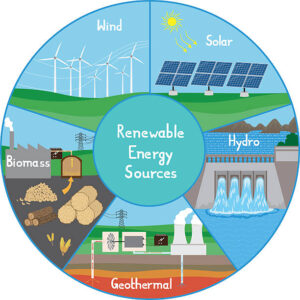
    Renewable energy: The energy that comes from natural sources like coals, oils, and gases that are replenished constantly are known as renewable energy. These resources are more sustainable and have a low environment impact.

    Details on what is Renewable energy?
    Details on what is it?

    Apart from this it is also driven from natural sources and places a crucial role in reducing greenhouse gas emissions, combating climate change and ensuring a sustainable energy future.

    What are the different types of Renewable energy?

    Some different types are as follows: –

    1. Solar energy.
    2. Wind energy.
    3. Hydro power or hydroelectric energy.
    4. Biomass and bio energy.
    5. Geothermal energy.
    6. Tidal aur wave energy.
    7. Green hydrogen
    8. Emerging renewable sources.

      the different types of Renewable energy
      the different types of Renewable resources.

    How does it benefit us?

    Some benefits of renewable energy are as follows: –

    1. It reduces greenhouse gas immersions like solar, wind, hydropower, and other climate changing problems.
    2. It improves air and water quality which is beneficial for human health.
    3. It helps us to conserve natural resources unlike coal, oil and has. Apart from this it also reduces deforestation and land degradation.
    4. The solar and wind power like sources are easily available comma cost effective and affordable
    5. Countries who invest in renewable experience economic growth and energy independence.
    6. The renewable energy provides table and predictable energy caused since the sun and when free resources.

      benefits of renewable energy
      benefits of renewable energy
    7. Renewable energy enables Nations to produce their own power and reduces dependency on foreign oils and gases.
    8. Renewables allows the distributed power generation meaning energy can be produced locally.
    9. Reduces the risk of blackout and great failures caused by centralizing power plants.
    10. Switching to clean energy reduces healthcare cost and improves quality of life
    11. Renewable energy projects impower local communities by creating jobs and providing access to affordable powers.
    12. It ensures a sustainable future for the coming generation.

    What is the recent innovation in it are?

    Some innovations in it include this:

    1. The offshore wind energy expansion.
    2. The advanced in photovoltaics.
    3. The Airborne wind energy.
    4. The distribution of the energy storage system.
    5. Advancement in geothermal energy.

      the recent innovation in renewable energy
      the recent innovation in it.

    The future of this energy.

    Advancement in the renewable energy is expected to play Domino’s role in global energy transition. It also helps countries achieve sustainability and reduce carbon immersion. Apart from this it also enhances energy security.

    The future of Renewable energy
    The future of Renewable energy

    Some of the development for renewable energy are as follows: –

    1. The advanced energy storage and smart grade. The green hydrogen revolution.
    2. The over show wind and floating solar growth.
    3. The next gen nuclear and geothermal energy.
    4. Job creation and economic growth.
    5. Climate action and carbon neutrality.

    Also Read This:  Voter List: what is Voter List, its important, how it manages, and how to register or check for it.

  • Joint Entrance Examination 2025 Answer Key: Unlock Your Success with Accurate Solutions!

    Joint Entrance Examination 2025 Answer Key: Unlock Your Success with Accurate Solutions!

    Joint Entrance Examination: The Joint Entrance Examination (JEE) Main is a pivotal assessment for engineering aspirants across India, serving as a gateway to esteemed institutions like the National Institutes of Technology (NITs), Indian Institutes of Information Technology (IIITs), and other centrally funded technical institutes. A critical component of this examination process is the release of the answer key, which provides candidates with the correct responses to the questions posed in the exam. The answer key not only offers transparency but also allows candidates to estimate their scores and assess their performance prior to the official results.

    Joint Entrance Examination

    Release Timeline of JEE Main 2025 Answer Key

    The National Testing Agency (NTA), responsible for conducting the JEE Main, typically releases the provisional answer key a few days after the conclusion of the examination. For the 2025 session, the JEE Main exams were conducted from January 22 to 31, 2025. Based on previous trends, it is anticipated that the provisional answer key will be made available in the first week of February 2025, possibly around February 4 or 5. This provisional release allows candidates to review the answers and raise objections if discrepancies are found. Following the resolution of these objections, the final answer key is expected to be published in the third week of February 2025.

    Accessing the Answer Key

    To access the JOINT ENTRANCE EXAMINATION [JEE] Main 2025 answer key, candidates should follow these steps:

    1. Visit the Official Website: Navigate to the NTA’s official JEE Main portal at jeemain.nta.nic.in.
    2. Locate the Answer Key Link: On the homepage, look for the link labeled “JEE Main 2025 Provisional Answer Key” and click on it.
    3. Log In: You will be prompted to enter your application number and password or date of birth.
    4. Download the Answer Key: Upon successful login, the answer key will be displayed. Download and save it for reference.

    This process ensures that candidates can efficiently access the answer key and evaluate their performance.

    Joint Entrance Examination
    Joint Entrance Examination

    Challenging the Provisional Answer Key

    The NTA provides an opportunity for candidates to challenge the provisional answer key if they believe there are errors or discrepancies. To do so, candidates must:

    1. Log In to the Portal: Access the official JEE Main website and log in using your credentials.
    2. Select the Question to Challenge: Identify and select the specific question(s) you wish to challenge.
    3. Provide Justification: Submit valid supporting documents or explanations for each challenge.
    4. Pay the Processing Fee: A non-refundable fee of INR 200 per question is required to process the challenge. Payment can be made via debit card, credit card, net banking, or UPI.

    It’s important to note that the window for challenging the answer key is limited, typically lasting 2-3 days after the release of the provisional key. Candidates should act promptly to ensure their challenges are considered.

    Joint Entrance Examination

    Calculating Probable Scores Using the Answer Key

    The answer key serves as a valuable tool for candidates to estimate their scores before the official results are announced. To calculate your probable score:

    1. Match Your Responses: Compare your answers with the ones provided in the answer key.
    2. Apply the Marking Scheme:
      • Correct Answer: Award yourself +4 marks.
      • Incorrect Answer: Deduct 1 mark.
      • Unanswered Question: No marks are added or deducted.
    3. Total Your Score: Sum the marks for all questions to get your estimated score.

    This self-assessment provides insight into your performance and helps set realistic expectations for the official results.

    Joint Entrance Examination

    Significance of the Answer Key

    The release of the answer key is a critical aspect of the JEE Main examination process for several reasons:

    • Transparency: It ensures that the examination process is transparent, allowing candidates to see the correct answers and understand the evaluation process.
    • Self-Evaluation: Candidates can assess their performance, identify areas of strength and weakness, and plan their future preparation strategies accordingly.
    • Feedback Mechanism: The challenge process allows candidates to provide feedback, ensuring that any errors in the question paper or answer key are addressed promptly.
    Joint Entrance Examination

    Recent Changes in JEE Main Exam Pattern

    In 2024, the NTA announced significant changes to the JEE Main exam pattern, reverting to the pre-pandemic format. Notably, the optional questions in Section B were removed, making all questions mandatory. This change emphasizes the need for comprehensive preparation across all topics, as selective studying is no longer a viable strategy. Additionally, negative marking has been reintroduced for numerical value questions, requiring candidates to approach these questions with greater caution.

    Expert Insights on Exam Pattern Changes

    Educational experts have weighed in on these changes, suggesting that the removal of optional questions and the reintroduction of negative marking may lead to a reduction in cutoff scores. Ramesh Batlish, Managing Partner and Head of FIITJEE NOIDA, noted that the absence of optional questions necessitates a more thorough preparation strategy, as students can no longer afford to skip topics they find challenging. He emphasized the importance of a comprehensive study approach to succeed under the new pattern. The JEE Main answer key is an indispensable resource for candidates, offering clarity and insight into their performance.

    ALSO READ THIS: Space Tourism 2025: Epic Adventures Beyond Earth The Thrill & Wonder of Space Tourism”

  • Space Tourism 2025: Epic Adventures Beyond Earth The Thrill & Wonder of Space Tourism”

    Space Tourism 2025: Epic Adventures Beyond Earth The Thrill & Wonder of Space Tourism”

    Space tourism, once a concept confined to the realm of science fiction, has now become an emerging industry poised to revolutionize travel beyond Earth. With private companies like SpaceX, Blue Origin, and Virgin Galactic pioneering commercial spaceflight, the dream of ordinary individuals venturing into space is becoming a reality. As technological advancements and commercial investments continue to push the boundaries, space tourism is expected to reshape human experiences and exploration in unprecedented ways.

    Space Tourism

    The Evolution of Space Tourism

    The idea of space tourism dates back to the 20th century when the Apollo missions ignited public fascination with space travel. However, it was not until 2001 that the first space tourist, Dennis Tito, a wealthy entrepreneur, paid $20 million for a journey to the International Space Station (ISS) aboard a Russian Soyuz spacecraft. Since then, interest in space tourism has grown exponentially, leading to the development of dedicated commercial spaceflight programs.

    In recent years, companies have made significant strides in developing reusable spacecraft to make space travel more accessible. Virgin Galactic, founded by Richard Branson, focuses on suborbital flights, offering passengers a brief yet exhilarating experience of weightlessness and a view of Earth from space. Blue Origin, led by Jeff Bezos, has also conducted successful suborbital flights with its New Shepard rocket. Meanwhile, SpaceX, founded by Elon Musk, has set its sights on orbital and even interplanetary tourism, with missions designed to take private citizens around the Moon and beyond.

    The Technology Behind Space Tourism

    Advancements in aerospace technology have played a crucial role in the feasibility of space tourism. Reusable rocket technology, pioneered by SpaceX’s Falcon 9 and Blue Origin’s New Shepard, has significantly reduced launch costs. Additionally, innovations in spacecraft design, propulsion systems, and life-support technology have enhanced the safety and comfort of space travel.

    The development of space habitats is another crucial aspect of commercial space travel. Companies like Axiom Space and Bigelow Aerospace are working on commercial space stations that could serve as hotels in orbit. These space habitats would allow tourists to experience extended stays in microgravity, participate in scientific research, or simply enjoy the breathtaking views of Earth from space.

    The Cost of Space Tourism

    Despite remarkable advancements, space tourism remains a luxury experience, primarily accessible to the ultra-wealthy. A suborbital flight with Virgin Galactic costs around $450,000 per ticket, while trips to the ISS through private missions facilitated by SpaceX and Axiom Space can exceed $50 million per person.

    However, with continued advancements in technology and increasing competition among spaceflight companies, costs are expected to decrease over time. Just as air travel evolved from an expensive privilege to a widely accessible mode of transportation, space tourism could follow a similar trajectory, opening the doors for a broader demographic in the future.

    The Impact of Space Tourism

    Space tourism is expected to have profound implications across various domains, including science, economy, and the environment.

    1. Scientific Advancements

    Commercial space travel provides new opportunities for scientific research. Space tourists and private astronauts can contribute to experiments in microgravity, medical research, and Earth observation. The growing interest in space travel may also accelerate the development of new technologies, benefiting fields such as materials science, robotics, and artificial intelligence.

    2. Economic Growth

    The space tourism industry is projected to generate billions of dollars in revenue over the coming decades. The emergence of spaceports, spacecraft manufacturing, and ancillary services will create new job opportunities and stimulate economic growth. Additionally, tourism-driven investments could fuel advancements in other space-related sectors, including asteroid mining and planetary exploration.

    3. Environmental Concerns

    Despite its potential benefits, space tourism raises concerns about environmental sustainability. Rocket launches generate carbon emissions and contribute to atmospheric pollution. While some companies are exploring eco-friendly propulsion systems, the long-term impact of frequent spaceflights on Earth’s climate remains uncertain. As the industry expands, balancing innovation with environmental responsibility will be critical.

    The Future of Space Tourism

    Looking ahead, space tourism is expected to evolve from brief suborbital flights to longer, more immersive experiences. Some potential future developments include:

    • Lunar Tourism: Companies like SpaceX and Blue Origin have ambitious plans to send private citizens around the Moon, with the possibility of lunar landings in the future.
    • Space Hotels: Companies are investing in the development of orbital hotels, where tourists can stay for days or even weeks, experiencing life in space.
    • Mars Exploration: Elon Musk’s vision of colonizing Mars includes the possibility of tourists traveling to the Red Planet, marking a new era of interplanetary tourism.
    • Space Elevators: Although still a theoretical concept, space elevators could revolutionize space travel by providing an alternative to traditional rocket launches, reducing costs, and increasing accessibility.

    Conclusion

    The commercialization of space travel is an exciting and transformative development that brings humanity closer to realizing the dream of becoming an interplanetary species. While challenges such as cost, safety, and environmental concerns remain, continued innovation and investment in space tourism hold the promise of making space travel an integral part of human experience. As space tourism advances, it has the potential to reshape not only the way we explore the cosmos but also how we perceive our place in the universe.

    ALSO READ THIS: Music in the Digital Age: The Bright Future of Music in the Digital Age (2025)

  • Music in the Digital Age: The Bright Future of Music in the Digital Age (2025)

    Music in the Digital Age: The Bright Future of Music in the Digital Age (2025)

    The digital revolution has transformed nearly every aspect of modern life, and the music industry is no exception. Advances in technology have significantly changed how music is created, distributed, and consumed. From digital audio workstations (DAWs) enabling independent production to streaming services redefining accessibility, technology has reshaped the landscape. This article explores the profound impact of digital advancements on both music production and consumption, examining the benefits and challenges that have emerged in the process.

    The Evolution of Music Production

    The Shift from Analog to Digital Recording

    Historically, music production relied on analog equipment, including tape recorders, mixing consoles, and vinyl pressings. However, the advent of digital recording in the late 20th century revolutionized the industry. Digital audio workstations (DAWs) such as Pro Tools, Logic Pro, and Ableton Live have enabled artists and producers to create, edit, and mix music with unprecedented flexibility and precision.

    Digital recording has also improved audio quality by reducing noise interference and allowing for greater dynamic range. Additionally, the affordability of software-based production tools has democratized music creation, empowering independent musicians who no longer need access to expensive studio equipment.

    Music

    Virtual Instruments and Sampling

    Technology has also revolutionized instrumentation through virtual instruments and sampling. Synthesizers, drum machines, and orchestral plugins enable artists to produce high-quality music without requiring physical instruments. Moreover, advancements in artificial intelligence (AI) and machine learning have led to the development of AI-generated compositions and algorithmic music production, pushing creative boundaries even further.

    The Rise of Home Studios

    In the past, music production required expensive studio time, but today, many artists produce professional-grade music from home. High-quality microphones, audio interfaces, and DAWs allow musicians to record and mix their work without the need for traditional studio spaces. This shift has given rise to a more independent music industry where self-produced artists can achieve mainstream success.

    The Transformation of Music Distribution

    The Decline of Physical Media

    Before the digital age, music distribution relied on physical formats such as vinyl records, cassette tapes, and CDs. With the rise of digital downloads and streaming services, physical media sales have declined significantly. Although vinyl has seen a niche resurgence, the majority of consumers now access music digitally.

    The Streaming Revolution

    Streaming services such as Spotify, Apple Music, and YouTube Music have fundamentally changed how audiences consume music. Listeners now have access to vast libraries of music at their fingertips, often at little or no cost. Subscription-based models and ad-supported platforms have replaced traditional purchasing methods, leading to a decline in album sales but an increase in overall music accessibility.

    However, streaming services have also sparked debates about artist compensation. While these platforms provide exposure to millions of listeners, many artists receive only a fraction of a cent per stream, making it challenging for independent musicians to earn a sustainable income.

    The Role of Social Media in Music Promotion

    Social media platforms like TikTok, Instagram, and Twitter have become essential tools for music promotion. Viral trends and challenges on TikTok, for instance, have propelled songs to mainstream popularity, sometimes even reviving older tracks. Independent artists can now reach global audiences without relying on record labels, leveraging social media algorithms and influencer collaborations to gain traction.

    The Changing Landscape of Music Consumption

    Personalized Listening Experiences

    Artificial intelligence and big data have enabled personalized music recommendations. Streaming services use sophisticated algorithms to analyze user preferences and suggest tailored playlists, enhancing the listening experience. AI-driven curation has made music discovery more accessible, helping listeners find new artists and genres with ease.

    The Impact of Digital Piracy

    While streaming services have curbed illegal downloads to some extent, digital piracy remains an issue. File-sharing platforms and unauthorized streaming sites still contribute to revenue losses for artists and record labels. However, advancements in digital rights management (DRM) and blockchain technology offer potential solutions to protect intellectual property rights and ensure fair compensation for creators.

    Live Streaming and Virtual Concerts

    The COVID-19 pandemic accelerated the adoption of live-streamed performances and virtual concerts. Artists have embraced platforms like Twitch, YouTube Live, and Facebook Live to engage with audiences in real-time. Virtual reality (VR) concerts are also emerging, providing immersive experiences that replicate the atmosphere of live shows.

    Challenges and Ethical Considerations

    Despite its benefits, technology-driven music consumption presents several challenges. The dominance of streaming services has led to concerns about fair pay for artists, with many advocating for more transparent revenue-sharing models. Additionally, the over-reliance on algorithms in music discovery raises concerns about artistic diversity, as mainstream trends often overshadow niche or experimental genres.

    Conclusion

    Technology has undeniably revolutionized the music industry, reshaping both production and consumption in profound ways. Digital tools have democratized music creation, while streaming platforms have expanded accessibility like never before. However, these advancements also present challenges, particularly regarding fair compensation and artistic visibility. As technology continues to evolve, the industry must adapt to ensure that both artists and audiences benefit from the digital transformation of music. Ultimately, striking a balance between innovation and sustainability will be key to the future of music in the digital age.

    ALSO READ THIS: The Future of Film and Television 2025: Trends in Streaming and Content Creation with a Thriving Era of Innovation and Storytelling”


  • 6G Technology: what is 6G technology, what are its features, its impact, difficulties and future?

    6G Technology: what is 6G technology, what are its features, its impact, difficulties and future?

    6G Technology: The 6G Technology is the sixth generation of Technology and it is the future of wireless communication which will succeed 5G Technology. It is offering fastest speed lower latency and more advanced capabilities. It is expected to be developed till or around 2030.

    Details on 6G Technology.
    Details on 6G Technology.

    It will provide potential to applications like VR or AR meta was experience is, AI driven automation,  Smart City with real time monitor next gen automobiles and advance space or satellite communication.

    The feature of 6G Technology.

    Some of the features of 60 technology are as following: –

    1. It has ultra high speed of about one terabit per second. Which is much faster than 5G.
    2. It has ultra-low latency which reduces delay to microsecond enabling real time communication.
    3. It will have AI integration for smart network optimization and intelligence.
    4. Will have Terahertz frequency bands, it provides high frequency brands for improve data capacity. It also increases ultra-fast data processing and transmission.
    5. It will support aliens of devices improving smart cities, industries and automation.

      The feature of 6G Technology.
      The feature of 6G Technology.
    6. It will enable machine to machine communication at a unexpected scale.
    7. It will also support 3D holographic calls and ultra real virtual or arguments reality experience.
    8. It uses a smart energy management to reduce power consumption.
    9. It’s support eco-friendly Technology with minimal carbon footprint.
    10. It will have Quantum security and blockchain in integration for transition and sharing of data.

    What are the impacts of 6G Technology?

    Some of it impacts are as following: –

    1. It will provide economic and industrial impact like boost of industries, new business opportunities and faster digital transformation.
    2. It will provide advancement in health care in medical advancement like remote surgeries advance telemedicine and smart wearable tech.
    3. It provides improvement in communication and connectivity like holographic call, AR or VR experience and instant data transfer.

      What are the impacts of 6G Technology?
      What are the impacts of 6G Technology?
    4. It Provide with transportation and smart cities with autonomous vehicles and roles and smart traffic management.
    5. It provides better education and entertainment like immersive learning and metaverse.
    6. It provides better security and privacy enhancement.

    The challenges and difficulties of 6G Technology.

    Some of the challenges and difficulties of 6G technologies are as following: –

    1. IT infrastructure and deployment cost a very high and it need upgrading existing network.
    2. The spectrums and frequency management like Terahertz spectrum, spectrum allocation and etc.
    3. It provides with some security and privacy concern as it increases at that surface and cyber criminals.
    4. It provides environment impacts like energy consumption and E-waste.

      The challenges and difficulties of 6G Technology.
      The challenges and difficulties of 6G Technology.
    5. It provides with technology complexity like integration and multiple Technology.
    6. It causes regulatory and standardization issues like global collaboration and regulatory hurdles.
    7. It provides with problems like scale ability and Accessibility.
    8. It several environmental factors and Affecting performance.

    Also Read This: Grammy Award 2025: Details on this year’s award ceremony, its highlights, history and other significances.

  • Voter List: what is Voter List, its important, how is it manage, and how to register or check for it.

    Voter List: what is Voter List, its important, how is it manage, and how to register or check for it.

    Voter List: The voter list is official record of an individual poor eligible for voting it is also known as electoral rolls. These are maintained and managed by election commission or related government authority. The card or the list is consisting of name of the voter, age, date of birth comma address voter id number and constituency or polling station details.

    what is Voter List?
    what is Voter List?

    The voter list is crucial for insuring free and fair elections. It helps us to prevent fraudulent voting which assure that only eligible citizen can participate in the electoral process.

    What is the important voter List?

    Some importance of voter list is: –

    1. It prevents electoral fraud that only allows eligible voters to participate and it prevent multiple or fake voting.
    2. It guarantee transparency fairness and help in official conduct of election smoothly.
    3. It help citizen to confirm their voting eligibility and find their pulling station.
    4. It can help authority plan resources like polling booth, stuff and security.
    5. Ensures and promote democratic right of eligible citizen to vote and strengthening their democracy.
    6. Ensures no eligible photos is executed from the election process.

      What is the important voter List?
      What is the important voter List?

    How does the voter List manage?

    The regulation and management of the voter list are done in the following way: –

    1. Election commission are regulating and updating the list by including new voters. These are the voters who turn 18.
    2. It removes ineligibility of waters due to death immigration or migration and loss of citizenship.
    3. There are special revision drives which are conducted before the election.
    4. Apart from this the officer conducts due to door verification to confirm voter details and etc.
    5. Details online or at the election office etc.

      How does the voter List manage?
      How does the voter List manage?

    How can one register for a voter list?

    To apply or register for voter list follow the given steps: –

    1. Check the eligibility comma citizenship and other details before applying for the voter registration.
    2. Then some important documents like passport, ID cards driving lessons comma birth certificate or utility bills and etc.
    3. Then visit the official election commission website or the office to fill out the voter registration form and upload all your documents given in the list.
    4. Then verify your documents in register details and for this process sometimes the field officer may visit your home to.
    5. When you are successfully registering your name, you must check your name to the list or receive your voter ID card or you can check your registration status online or other local election office.

      How can one register for a voter list?
      How can one register for a voter list?

    The Eligibility criteria for voter list.

    Some of the eligibility criteria for voter list as following: –

    1. The voter should be 18 years or above.
    2. He or she should be a citizen of the country. Non-citizen comma foreigners national or illegal immigrant cannot be registration for the voter list.
    3. The water should be resident of the constitution where your registration.
    4. People with certain criminal background or mental hen condition may get disqualified from the voter list.
    5. You can pre-register for voter list but can only vote at the age of 18 year and above.

      The Eligibility criteria for voter list.
      The Eligibility criteria for voter list.

    What is the process of checking and getting to the voter list?

    Online method:

    You can check your voter list by visiting official election commission website of your country and search for voter list and check your name in the electoral rolls. Enter details like name, date or birth date, voter ID number or district etc. to get your voter ID. You can also get your voter ID card by SMS or mobile services.

    What is the process of checking and getting to the voter list
    What is the process of checking and getting to the voter list?

    Office method:

    You can visit local election office, municipal office or voter register center to get your detail or register you can also get your voter ID card from these services.

    Also Read This: Entrepreneurship in 2025: Details entrepreneurship in 2025, new trends in the market, impact of AI and web3, how to make a good investment and more.