Author: AVS POST Bureau

  • Gandhi Jayanti 2023: A One-Hour Volunteer Tribute to Bapu: ‘SwachhAnjali’

    Gandhi Jayanti 2023: A One-Hour Volunteer Tribute to Bapu: ‘SwachhAnjali’

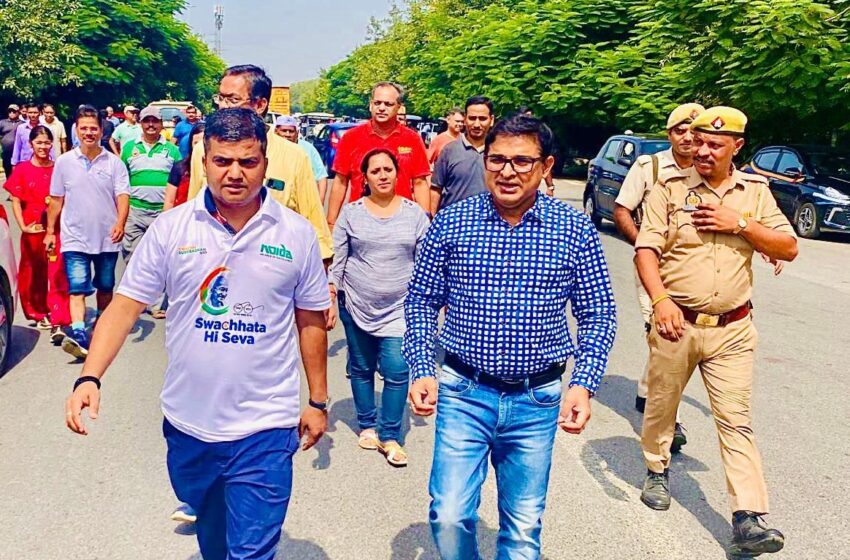
    Gandhi Jayanti 2023: District Magistrate Manish Kumar Varma dedicated one hour of voluntary service to Bapu in the ‘SwachhAnjali’ sector-137 area near Felix Hospital on Sunday morning at 10 AM, on the eve of Mahatma Gandhi Jayanti. Clean India is a collective responsibility. DM Manish Kumar Varma stated, ‘Understanding the importance of cleanliness is a matter of pride for our society because cleanliness is a crucial step toward a healthy and prosperous India.’ Dr. D.K. Gupta also emphasized the significance of cleanliness in relation to health, saying, ‘Cleanliness is not only essential for our immediate environment but also extremely important for our health. Through cleanliness, we can keep diseases at bay and enjoy a healthy and happy life. Therefore, all of us should commit to understanding the importance of cleanliness and its connection to health.’

    Dr. D.K. Gupta, the founder of Felix Hospital, highlighted the necessity of cleanliness for better health. In this regard, everyone should adopt cleanliness, and it is also essential to raise awareness about cleanliness among others. Cleanliness means keeping the surroundings clean, which is of utmost importance. It’s not just about cleaning our homes but also keeping our neighborhoods clean. In our culture and religion, cleanliness holds special importance. Cleanliness keeps both the body and mind healthy. If we don’t maintain cleanliness around us, there’s a fear of diseases spreading. The more dirt there is around us, the harder it is for us to stay healthy, and we will face various health-related issues. We should clean our surroundings, including our homes, gardens, and neighborhoods. It’s the duty of every citizen to avoid littering and dispose of waste properly.

    Mahatma Gandhi also emphasized cleanliness. In these challenging times of the COVID-19 pandemic, people are giving more priority to cleanliness and regularly washing their hands. Despite people being aware of the importance of cleanliness, they often neglect small things, like littering while traveling in vehicles, which is wrong. Many roads have litter strewn around, which spreads filth. This not only affects us but also harms animals. For example, plastic waste on the streets can be mistakenly ingested by cows, leading to their death. To make life beautiful and healthy, it’s necessary to keep our bodies, homes, and surroundings clean. Just as we keep our bodies clean, which is essential, maintaining cleanliness in our surroundings is also crucial. It’s essential to educate children about the importance of cleanliness. Everyone should understand the significance of cleanliness and practice it. People should keep their surroundings clean, just like they keep their homes clean. Morning prayers at religious places also involve the worship of cleanliness. In such places, people should refrain from littering and dispose of waste properly. Cleanliness of the mind and body helps a person succeed in life and aids in contemplation and meditation. Other prominent individuals who participated in this program included Dr. Rashmi Gupta, Abhishek Gupta, Payal Bhayana, Vinod Joshi, Daljit Chopra, Satpal Sharma, Akhil Chaturvedi, Hemant Kumar, and Reema Chauhan, who contributed to this event after understanding the importance of cleanliness.”
  • World Heart Day 2023: Felix Hospital Organizes Walkathon On World Heart Day

    World Heart Day 2023: Felix Hospital Organizes Walkathon On World Heart Day

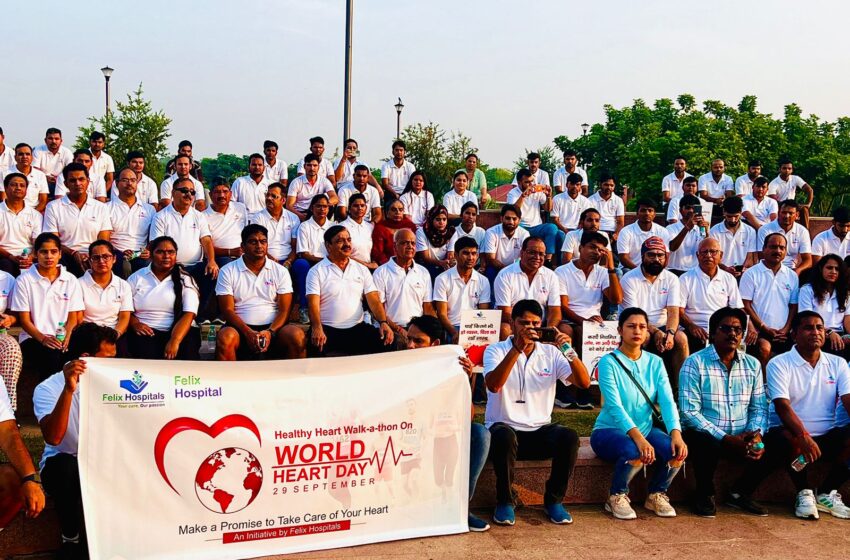
    World Heart Day, observed on September 29 every year, aims to educate society about the significance of maintaining a healthy heart. On World Heart Day, Sector 137 Felix Hospital organized a walkathon to raise awareness about heart health. Many residents participated in this event, which started at 6 AM. Participants received T-shirts and breakfast from the hospital. Dr. D.K. Gupta, Chairman of Felix Hospital, emphasized the importance of awareness regarding heart health, especially due to the increasing cases of heart attacks in people aged 30 to 40.

    World Heart Day, observed on September 29 every year, aims to educate society about the significance of maintaining a healthy heart. Over the past two years, there has been a rise in heart attack cases, with many patients succumbing to the condition. It is crucial for young individuals to undergo heart check-ups before hitting the gym, as the trend has shifted towards heart attacks occurring in those aged 30 to 50, especially after the COVID-19 pandemic.

    Changes in HS-CRP (High Sensitivity C-Reactive Protein) levels have been observed in most patients since COVID-19, which is considered a significant contributor to heart attacks. The leading causes of heart attacks include smoking, an unhealthy lifestyle, irregular eating habits, consumption of junk food, and excessive spicy food.

    Symptoms of heart problems like high blood pressure, shortness of breath, fatigue, chest pain, burning sensations, dizziness, and abdominal or chest pain are often ignored by individuals. This leads to the weakening of the heart, reduced pumping capacity, and sudden heart attacks during intense physical activities.

    Young people’s obsession with building a muscular body through intense workouts and following keto diets is contributing to the increase in heart attack cases. Heavy workouts and weight-lifting are causing the thickening of heart muscles and negative effects on the body.

    These are signs of a weak heart:
    1. Difficulty breathing
    2. Easily getting tired
    3. Shortness of breath
    4. Chest pain
    5. Burning sensation
    6. Dizziness
    7.  Abdominal and chest pain
    8. Fluctuations in blood pressure

    Remember these key points for heart health:
    1. Exercise and practice yoga daily.
    2. Manage stress.
    3. Consume a balanced diet, avoid fast food and oily meals.
    4. Control cholesterol, blood pressure, sugar, and weight.
    5. Avoid smoking, tobacco, and alcohol.
    6. Get heart-related check-ups every 6 months.

  • India will show the world a new path on biofuel through Global Biofuels Alliance: Petroleum Minister Shri Hardeep Singh Puri

    India will show the world a new path on biofuel through Global Biofuels Alliance: Petroleum Minister Shri Hardeep Singh Puri

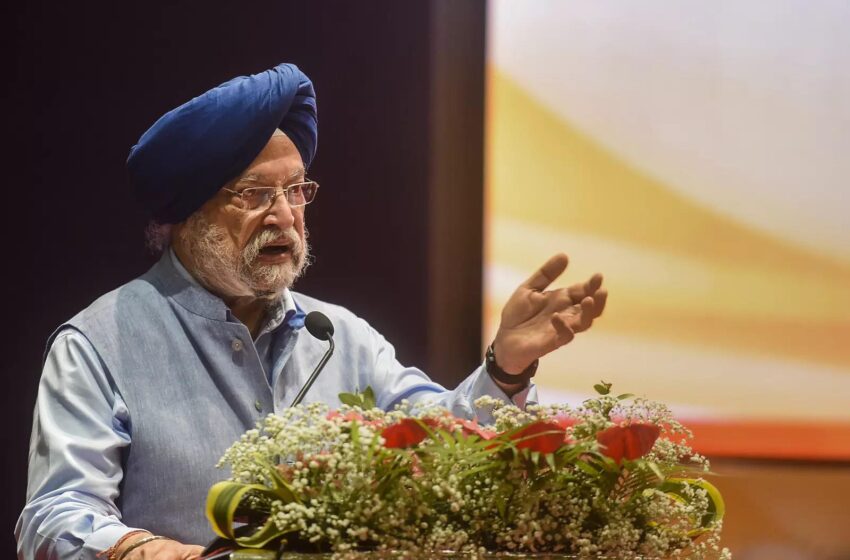
    #Petroleum Minister Shri Hardeep Singh Puri: India will show the world a new path on biofuels through Global Biofuels Alliance, stated Shri Hardeep Singh Puri, Minister of Petroleum & Natural Gas and Housing & Urban Affairs. Expressing his views through a series of posts on social media platform ‘X’ the Minister noted that following the mantra of ‘Vasudhaiva Kutumbakam’, this effort of Prime Minister Shri Narendra Modi will definitely reduce the dependence on petrol and diesel across the world.

    Creating history in the global energy sector, Prime Minister Shri Narendra Modi announced the launch of Global Biofuels Alliance (GBA) on the sidelines of the G20 Summit yesterday. 19 countries and 12 international organisations have already agreed to join the alliance.

    GBA is an India-led Initiative to develop an alliance of Governments, International organizations and Industry to facilitate adoption of biofuels. Bringing together the biggest consumers and producers of biofuels to drive biofuels development and deployment, the initiative aims to position biofuels as a key to energy transition and contribute to jobs and economic growth.

    Shri Hardeep Puri observed that world’s quest for cleaner & greener energy has gained historic momentum with launch of GBA on sidelines of the G20 Summit.

    The Indian Petroleum and Natural Gas Minister expressed his gratitude to Ms Jennifer Granholm, Secretary of Department of Energy, US; Mr. Alexandre Silveira, Energy Minister of Brazil; & Dr Evandro Gussi President & CEO of UNICA Brazil for germinating the seeds of forming Global Biofuels Alliance.

    Shri Hardeep Singh Puri noted that the visionary Global Biofuels Alliance supported by G20 Nations & energy related global organisations like International Energy Agency (IEA), International Civil Aviation Organization (ICAO), World Economic Forum (WEO), and World LPG Association among others will strengthen global biofuels trade & best practices allowing the members to successfully face the Energy Quadrilemma. This will bolster the transformation of our farmers from ‘Annadatas to Urjadatas’ as an additional source of income. In last 9 year we have given ₹71,600 cr to our farmers. With E20 implementation by 2025, India will save about ₹45,000 cr in oil imports & 63 MT of oil annually, he added.

    GBA will support worldwide development and deployment of sustainable biofuels by offering capacity-building exercises across the value chain, technical support for national programs and promoting policy lessons-sharing. It will facilitate mobilizing a virtual marketplace to assist industries, countries, ecosystem players and key stakeholders in mapping demand and supply, as well as connecting technology providers to end users. It will also facilitate development, adoption and implementation of internationally recognized standards, codes, sustainability principles and regulations to incentivize biofuels adoption and trade.

    The initiative will be beneficial for India at multiple fronts. GBA as a tangible outcome of the G20 presidency, will help strengthen India’s position globally. Moreover, the alliance will focus on collaboration and will provide additional opportunities to Indian industries in the form of exporting technology and exporting equipment. It will help accelerate India’s existing biofuels programs such as PM-JIVANYojna, SATAT, and GOBARdhan scheme, thereby contributing to increased farmers’ income, creating jobs and overall development of the Indian ecosystem. The global ethanol market was valued at USD 99.06 billion in 2022 and is predicted to grow at a CAGR of 5.1% by 2032 and surpass USD 162.12 billion by 2032. As per IEA, there will be 3.5-5x biofuels growth potential by 2050 due to Net Zero targets, creating a huge opportunity for India.

  • Vandana Tripathi : A Story of Grit, Passion, and Administrative Brilliance

    Vandana Tripathi : A Story of Grit, Passion, and Administrative Brilliance

    Vandana Tripathi, an illustrious 2000 batch PCS officer, has earned widespread recognition for her exceptional service and remarkable contributions as an Indian Administrative Service (IAS) officer. Her recent appointment as Officer on Special Duty (OSD) of the Noida Authority only adds to her distinguished career.

    Hailing from Gorakhpur, Vandana Tripathi’s journey to becoming an IAS officer is a testament to her dedication and commitment to public service. Her promotion to the prestigious IAS cadre on 28th October 2021 marked a significant milestone in her career, further solidifying her status as one of the finest bureaucrats in India.

    Vandana Tripathi : Five Years of Educational Impact

    Throughout her tenure, Vandana Tripathi has been posted in various key positions across the state of Uttar Pradesh, showcasing her versatility and adeptness in handling diverse administrative roles. Her notable assignments include serving as the Secretary in the Uttar Pradesh Higher Education Service Commission in Prayagraj, where she dedicated nearly five years to improving the higher education landscape in the state.

    Vandana Tripathi
    Vandana Tripathi

    Her tenure in Bulandshahr district left an indelible mark as she served as the Sub-Divisional Magistrate (SDM) in both Sikandrabad and Sadar tehsils. Her work in these roles exemplified her administrative prowess, as she tackled complex issues with precision and efficiency.

    Vandana Tripathi’s leadership was also witnessed during her tenure as the Secretary of the Allahabad Development Authority, where she contributed to urban development and infrastructure improvement initiatives in Allahabad.

    From ADM to CDO: A Journey of Excellence

    Furthermore, she has held crucial positions such as Additional District Magistrate and Chief Development Officer in multiple districts of Uttar Pradesh. These roles allowed her to address a wide range of issues, from socio-economic development to administrative efficiency, demonstrating her ability to adapt and excel in various capacities.

    22 Years of Service: Leadership with a Human Touch

    What sets Vandana Tripathi apart is not just her extensive experience but also her reputation for quick decision-making and her compassionate approach to public service. Her 22 years of service have not only shaped her into a capable administrator but also a kind and helpful officer who puts the welfare of the people at the forefront of her agenda.

    Also Read This: Sunita Williams Crew-9 Return : From Space to Earth, Mission Comes to an End

    In conclusion, Vandana Tripathi stands as a shining example of an IAS officer who has consistently delivered excellence in her roles, leaving a lasting impact on the communities she has served. Her dedication, compassion, and leadership qualities make her one of the best IAS officers in India, and her appointment as OSD of the Noida Authority is a testament to her exceptional abilities. Her legacy of excellence in public service is sure to inspire future generations of bureaucrats in India.

  • A P Pathak: Paving the Way for Bureaucratic Excellence to Political Leadership in West Champaran

    A P Pathak: Paving the Way for Bureaucratic Excellence to Political Leadership in West Champaran

    A P Pathak, a former bureaucrat with an illustrious career in the Indian government, has emerged as a prominent leader within the Bharatiya Janata Party (BJP). His journey from the bureaucratic corridors to the political arena has been marked by his unwavering dedication to social welfare through the Babu Dham Trust in the West Champaran district. With his recent affiliation with the BJP, Pathak’s growing influence and positive rapport with key party leaders have ignited discussions about his potential role in national politics, including a prospective opportunity to contest the Valmikinagar Lok Sabha seat.

    A Bureaucrat’s Transformation: A P Pathak’s transition from a seasoned bureaucrat to a dynamic political leader has been nothing short of remarkable. Having served in various capacities within the Indian government, his shift to the political spectrum was driven by a desire to effectuate change at a grassroots level. Throughout his tenure as a bureaucrat, Pathak’s commitment to public welfare and community development laid the foundation for his later engagement in politics.

    Social Upliftment through Babu Dham Trust: Pathak’s involvement in social initiatives gained prominence through the Babu Dham Trust, an organization he has tirelessly championed in the West Champaran district. Through this platform, he has orchestrated and spearheaded numerous initiatives aimed at addressing critical societal issues such as education, healthcare, and poverty alleviation. The trust’s consistent efforts and impactful projects have endeared Pathak to the local population, solidifying his reputation as a catalyst for positive change.

    Joining the BJP and Building Bridges: A P Pathak’s decision to join the BJP has garnered widespread attention and intrigue. His established rapport with key leaders within the party speaks volumes about his dedication and potential contribution. Pathak’s alignment with the BJP’s ideology and values has positioned him as a promising addition to the party’s ranks. His ability to bridge his bureaucratic experience with political aspirations presents a unique blend of skills that can drive meaningful progress.

    Prospects for the Future: Pathak’s affiliation with the BJP has sparked conversations about his future role in national politics. As discussions abound, there is a growing sentiment that he could be a strong contender for the Valmikinagar Lok Sabha seat. His extensive work in the West Champaran district, combined with his understanding of governance, presents a compelling case for Pathak to represent the BJP in a larger capacity.

    From Bureaucrat to BJP Leader, Championing Social Causes in West Champaran: A P Pathak’s transformative journey from a bureaucrat to a BJP leader exemplifies his commitment to societal betterment. Through his active engagement with the Babu Dham Trust and his recent foray into politics, he has carved a unique path that resonates with both grassroots initiatives and larger political aspirations. As Pathak’s association with the BJP evolves, the prospect of his candidacy for the Valmikinagar Lok Sabha seat underscores his potential to effect meaningful change on a broader scale.

  • Prime Minister attributes India’s rise to 5th largest economy in the world to efforts of 140 crore people of India

    Prime Minister attributes India’s rise to 5th largest economy in the world to efforts of 140 crore people of India

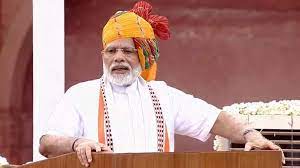
    Addressing from the ramparts of Red Fort on the 77th Independence Day, Prime Minister Shri Narendra Modi attributed the rise of India from 10th to 5th  largest economy in the world to the efforts of 140 crore people of India. He said this has happened because this Government stopped leakages, created a strong economy, and spent maximum money for the welfare of the poor.

    Prime Minister Shri Modi stated, “Today I want to tell the people that when the country becomes economically prosperous, it does not fill the treasury; it increases capacity of the nation and its peoples. Results will automatically come if the Government pledges to spend every penny towards the welfare of its citizens. 10 years ago, the Government of India used to send Rs. 30 lakh crore to the States. In the last 9 years, this figure has reached Rs. 100 lakh crore. Seeing these numbers, you will feel that such big transformation has happened with big increase in capacity!”

    On the front of self-employment, Shri Modi said, “More Rs. 20 lakh crore have been given to the youth for self-employment for their occupation. 8 crore people have started new business and not only that, every businessman has given employment to one or two people. Therefore, 8 crore citizens benefitting from the (Pradhan Mantri) Mudra Yojana have the ability to provide employment to 8-10 crore new people.”

    Referring to COVID-19 Pandemic, Shri Modi said, “MSMEs were not allowed to go bankrupt with the help of loans worth Rs. 3.5 lakh crore in the crisis of Corona virus. They were not allowed to die, they were given strength.”

    On the new and aspiring middle class, Shri Modi said, “When poverty reduces in the country, the power of the middle class increases a lot. And I assure you with guarantee that in the coming five years the country will take its place in the first three world economies. Today the 13.5 crore people have come out of poverty to become the strength of the middle class. When the purchasing power of the poor increases, the business power of the middle class increases. When the purchasing power of the village increases, the economic system of the town and city runs at a faster pace. This interconnected is our economic cycle. We want to move ahead by giving it strength.”

    Additionally, the Prime Minister said, “When the (exemption) limit of income tax is increased from Rs. 2 lakh to Rs. 7 lakh, then the biggest benefit is to the salaried class, especially to the middle class.”

    Referring to the recent problems faced by the world collectively, the Prime Minister said, “The world has not yet emerged from COVID-19 Pandemic, and the war created a new problem. Today, the world is facing the crisis of inflation.”

    Talking about fighting inflation, the Prime Minister said, “India has tried its best to control inflation. We cannot think that our things are better than the world, I have to take more steps in this direction to minimise the burden of inflation on my countrymen. My efforts will continue to tame inflation.”

  • Haryana’s Son, Harvard Scholar, Bihar’s Champion: The Deepak Yadav Story

    Haryana’s Son, Harvard Scholar, Bihar’s Champion: The Deepak Yadav Story

    The Deepak Yadav Story: In the heart of Bihar’s West Champaran district, a remarkable transformation is underway, driven by the dedication and vision of an extraordinary leader, Deepak Yadav. Hailing from Haryana, Deepak Yadav’s journey from a distinguished educational background at the General Management program of Harvard Business School to the helm of a progressive campaign in Champaran is a testament to his commitment to community, agriculture, and positive change.

    The Rise of a Leader

    Deepak Yadav’s journey from Haryana to the lanes of Champaran echoes with determination. His roots may trace back to a powerful political legacy, but his path has been defined by education, empowerment, and entrepreneurship. Graduating with a degree in Mechanical Engineering from the esteemed National Institute of Technology Kurukshetra, Yadav’s early years set the stage for his multidimensional approach to leadership.

    Harvard to Heartfelt Connection

    The hallowed halls of Harvard Business School provided Deepak Yadav with a unique perspective on global management and leadership. Armed with the knowledge gained from the General Management program, he returned to India with a mission – to transform his acquired wisdom into actionable change in the heartland. This was the beginning of his journey to become a bridge between the lessons of international business and the aspirations of Champaran’s people.

    A People’s Champion

    What sets Deepak Yadav apart is his genuine and empathetic approach to leadership. He has embraced the people of Champaran with open arms, engaging them in a way that resonates deeply. Through dialogue, grassroots initiatives, and collaborative efforts, Yadav has formed an unbreakable bond with the community. His dynamic and inclusive leadership style has earned him admiration and support, transcending the barriers of politics.

    Empowering Agriculture, Uplifting Lives

    One of the cornerstones of Yadav’s mission is his dedication to the agrarian sector. As the owner of the Tirupati Sugar Factory, he has not only brought economic growth to the region but has also embarked on a journey to improve the lives of farmers. By introducing innovative agricultural practices, providing modern tools, and advocating for fair pricing, he is nurturing a resilient farming community that forms the backbone of Champaran’s prosperity.

    Stepping into the Political Arena

    Deepak Yadav’s political journey took a significant turn when he contested the Lok Sabha elections under the BSP symbol. His decision to dive into the political fray was motivated by a genuine desire to create positive change. Garnering approximately 75,000 votes, his inaugural foray into politics marked the beginning of a transformative odyssey that would shape the fate of Champaran.

    A Shift in Allegiances

    With an innate ability to gauge the pulse of the people, Deepak Yadav found a new home in the Bharatiya Janata Party (BJP). His alignment with the party was driven by his admiration for Prime Minister Narendra Modi’s vision and relentless commitment to national progress. Inspired by Modi’s leadership, Yadav’s transition to the BJP symbolized a strategic move towards a political landscape that resonated with his values and aspirations.

    Connecting with the Heartland

    Deepak Yadav’s connection with the people of Champaran stands as a hallmark of his political career. His approach, characterized by empathy, accessibility, and genuine concern, has cemented his position as a beloved figure within the community. By engaging in grassroots initiatives, listening to the concerns of the people, and addressing their needs, Yadav has emerged as a true representative of the people, transcending the boundaries of politics.

    The 2024 Prospects

    As the political horizon shifts towards the upcoming elections, Deepak Yadav’s name looms large as a potential candidate. Speculation abounds that he may contest the 2024 elections with the BJP symbol from Valmikinagar. This anticipation underscores the impact he has had on the region and the aspirations of the people for a leader who embodies their values, aspirations, and dreams.

    What makes Deepak’s best

    Deepak Yadav’s political journey is a saga of transformation, leadership, and a profound dedication to the people of Champaran. From his entrepreneurial roots to his role in shaping agrarian progress, Yadav’s evolution as a political force exemplifies the power of strategic alignment, community engagement, and a vision for a brighter future. As the path ahead unfolds, one thing remains certain – Deepak Yadav’s journey is a living testament to the transformative potential of a leader dedicated to the holistic development of his constituency and the nation at large.


  • Sculpting Your Ideal Figure: A Holistic Approach to Maintaining Health and Fitness”

    Sculpting Your Ideal Figure: A Holistic Approach to Maintaining Health and Fitness”

    Sculpting Your Ideal Figure: Once upon a time in a bustling city, lived a young woman named Maya. Maya was determined to maintain a healthy and fit figure, not just for appearances, but for her overall well-being. She believed in a holistic approach that encompassed both her physical and mental health.

    Maya’s journey began with a realization – she needed to prioritize self-care. She knew that a balanced lifestyle was key, so she started by incorporating a variety of physical activities into her daily routine. She explored different forms of exercise, from brisk morning walks to invigorating yoga sessions and heart-pumping dance classes. The joy of movement not only helped her shed unwanted pounds but also boosted her mood and energy levels.

    But Maya knew that exercise alone wouldn’t yield the results she desired. She understood the importance of proper nutrition in achieving her goals. She embarked on a quest to discover the magic of a balanced diet. Maya educated herself about the significance of macronutrients and micronutrients, and she began to prepare wholesome meals that were both nourishing and delicious.

    One of Maya’s favorite mantras was “everything in moderation.” She believed in treating herself occasionally, whether it was indulging in a small piece of dark chocolate or savoring a slice of homemade pizza. This mindful approach to eating prevented feelings of deprivation and kept her on track.

    As Maya’s fitness journey continued, she found solace in practicing mindfulness and relaxation techniques. She dedicated time each day to meditate and reflect on her progress. This mental clarity helped her overcome challenges and stay motivated.

    Maya’s commitment to her holistic approach paid off. Her body transformed over time, becoming leaner, stronger, and more vibrant. But what truly mattered to her was the newfound sense of confidence and self-love that radiated from within.

    Maya’s story serves as an inspiration to anyone seeking to maintain their figure in a healthy and sustainable way. Her holistic approach reminds us that achieving our ideal figure isn’t just about physical changes; it’s about embracing a lifestyle that nurtures our body, mind, and spirit.

    In a world filled with quick-fix fads and unrealistic expectations, Maya’s journey teaches us that the path to maintaining a figure isn’t a rigid one. It’s about finding what works best for us individually and making choices that honor our well-being. So, let Maya’s story be a beacon of light guiding us towards a balanced, fit, and fulfilling life


  • Rahul Gandhi: A Leader’s Journey – Unraveling the Legacy and Aspirations

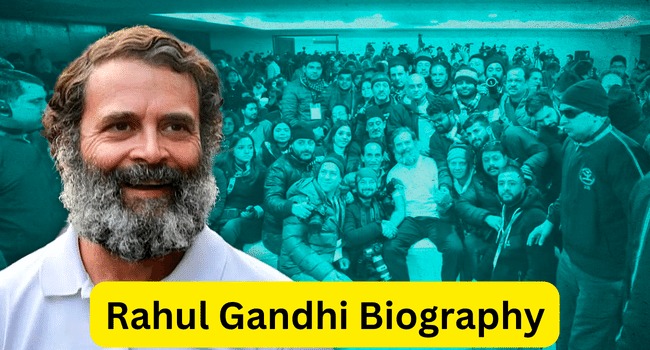
    Rahul Gandhi: A Leader’s Journey – Unraveling the Legacy and Aspirations

    Rahul Gandhi: Early Life and Family Background:

    Rahul Gandhi, born on June 19, 1970, in Delhi, India, is the son of Rajiv Gandhi and Sonia Gandhi. He hails from the influential Nehru-Gandhi family, which has been a cornerstone of Indian politics since the country’s independence. His grandmother, Indira Gandhi, and great-grandfather, Jawaharlal Nehru, were both Prime Ministers of India. Growing up in a politically charged environment, Rahul was exposed to the intricacies of politics from a young age.

    Education and Professional Beginnings:

    Rahul Gandhi completed his schooling in Delhi and later pursued higher education abroad. He attended St. Stephen’s College in Delhi and then went on to earn a Bachelor’s degree in International Relations from Harvard University. After his education, he worked at various financial institutions, including a management consulting firm in London.

    Entry into Politics and Struggles:

    Rahul Gandhi officially entered politics in 2004 by contesting the Lok Sabha (lower house of parliament) elections from the constituency of Amethi, a traditional stronghold of the Nehru-Gandhi family. Initially, he faced challenges in establishing himself as a political leader. Despite his family’s legacy, gaining acceptance and support from the public and party members was not easy.

    One of Rahul’s major struggles was to connect with the masses effectively. Critics often accused him of lacking a charismatic presence and questioned his ability to lead a diverse and complex nation like India. He faced criticism for his occasional lack of clarity on policy matters and failure to articulate a strong vision for the future.

    Strengths and Leadership Qualities:

    While facing various challenges, Rahul Gandhi also demonstrated several strengths and leadership qualities. He has been praised for his empathy and connect with the common people, often visiting and empathizing with those affected by various issues, such as farmers’ protests and natural disasters. Rahul’s willingness to listen to people’s grievances has garnered him some support and loyalty among certain sections of the population.

    Another strength lies in his ability to engage with the youth and connect with the younger generation, often advocating for their interests and concerns. Rahul Gandhi has also shown dedication to promoting women’s empowerment and representation in politics.

    Controversies and Criticisms:

    Throughout his political career, Rahul Gandhi has faced controversies and attracted criticism from opponents and even some within his own party. Some of the major controversies include:

    1. Dynastic Politics: One of the most significant criticisms leveled against Rahul Gandhi is his association with the Nehru-Gandhi family and the perceived promotion of dynastic politics. Critics argue that political leadership should be based on merit and not solely on family lineage.
    2. Ineffectiveness as an Opposition Leader: Rahul has faced criticism for his role as the leader of the opposition, with some questioning his ability to provide a strong counter to the government’s policies and decisions.
    3. Controversial Statements: Certain remarks made by Rahul Gandhi have landed him in controversy. For instance, his “suit-boot ki sarkar” comment against the government was seen by some as divisive and lacking substance.

    Conclusion:

    Rahul Gandhi’s journey in politics has been a mix of struggles, strengths, and controversies. As a scion of the Nehru-Gandhi family, he inherited both the advantages of a political legacy and the burdens of expectations. While he has shown determination and empathy in connecting with people, he continues to grapple with challenges to establish himself as a formidable national leader.

    Whether Rahul Gandhi can overcome the criticisms and controversies to carve a lasting political legacy remains uncertain. His future in Indian politics will depend on how he addresses these challenges and evolves as a leader capable of navigating the complexities of the nation’s political landscape.

  • The Bhojpuri Legend Manoj Bhawuk Bestowed “Bhojpuri Icons” Filmfare and Femina Award

    The Bhojpuri Legend Manoj Bhawuk Bestowed “Bhojpuri Icons” Filmfare and Femina Award

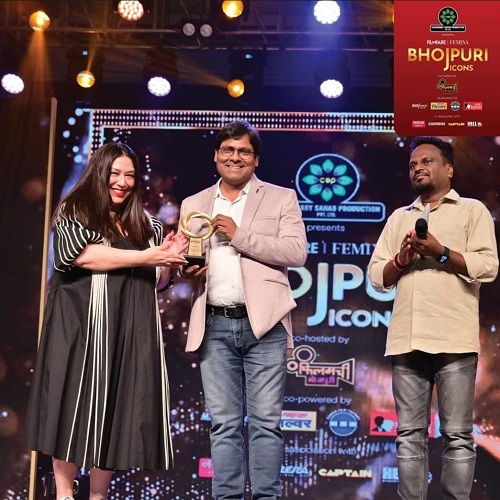
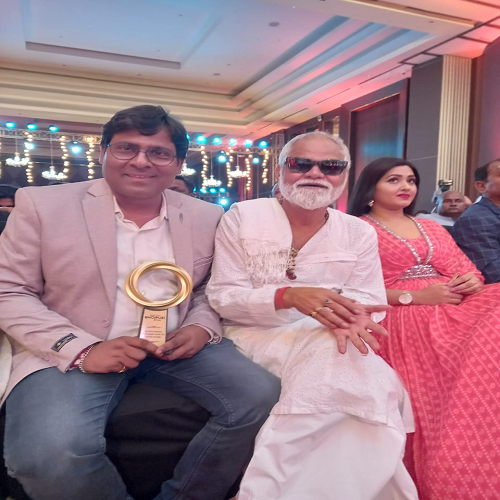
    Bhojpuri Icons Real and Real Stars Award: In a historic moment, two iconic brands “Filmfare and Femina”known for their steadfast dedication to recognising talent and excellence honoured eminent Bhojpuri writer, poet, lyricist and critic Mr. Manoj Bhawuk for his indelible contribution in the history of Bhojpuri cinema and literature. In a grand celebration at Ramada, Lucknow on 16 July 2023,Mr. Manoj Bhawuk was bestowed “Filmfare and Femina Bhojpuri Icons-Reel & Real Star”honour by Ambika Muttoo, Editor-in-Chief of Femina and Vikram Vasudev Narla, Director from South industry in presence of many celebs. This is first time Filmfare and Femina collaborated to honour Bhojpuri Icons who have made remarkable contributions to Bhojpuri entertainment industry.

    The Safar of Manoj Bhawuk

    Manoj Bhawuk left his lucrative engineering job in England and devoted his entire life for the development of Bhojpuri language, literature and cinema. Recognizing his inestimable contribution, Bhawuk was conferred with many awards and accolades time to time which includes Bharatiya Bhasha Parishad Award (2006) for his ghazal collection entitled “Tasveer Zindagi Ke”, Pt. Pratap Narayan Mishra Samman (2006), Bhikhari Thakur Samman (2011), Rahi Masoon Raza Samman (2012), International Bhojpuri Gaurav Samman, Mauritius (2014), Parikalpana Lok Bhushan Samman in Kathmandu, Nepal (2013), Geetanjali Sahitya Award in Birmingham, United Kingdom (2018), Bihari Connect Global Samman in Dubai (2019), Kailash Gautam Kavya-Kunj Lokbhasha Samman (2022) to list few. Chalni Main Paani (A Bhojpuri Songs Collection) is another renowned contribution of Mr Manoj to Bhojpuri poetry.

    His book ‘ Bhojpuri Cinema ke Sansar’ on the history of Bhojpuri Cinema (1931-2022) is in the process of publication by Maithili Bhojpuri Academy, Delhi.The award-winning book “Cinema Bhojpuri” authored by of Mr Avijit Ghosh and published by Penguin has greatly relied and referred the writings of Mr. Bhawuk. Besides, many PHD scholars working on history of cinema has referred the writings of Manoj. That’s why Manoj Bhawuk is known as the ‘Encyclopedia of Bhojpuri cinema’.

    Stint with Acting in Bhojpuri Cinema

    Multi-talented Manoj also showcased his acting skills in Bhojpuri Cinema. He made his acting talent profusely felt in famous Bhojpuri films, ‘Saugandh Ganga Maiya Ke’ and ‘Rakhwala.’Manoj has intenselysteered various Bhojpuri shows related to entertainment, literature and various pressing issues.Bhawuk has been the Project Head and host of Zee TV’s reality show Sa Re Ga Ma Pa. He is one of the lyricist of film ‘ Mehandi laga ke rakhna-3 ‘.

    The Early Life of Manoj

    Manoj Bhawuk“the Encyclopedia of Bhojpuri” as he is famously known comes from a very humble and rural background. He was born in Kausar, a small village in Siwan district of Bihar as second son of Shri Ram Deo Singh and Sunaina Devi. He was brought up in Renukoot, Uttar Pradesh where his father worked as a trade union leader in HINDALCO Industries.

    Currently he is the chief editor of e-magazines named Bhojpuri Junction. He is the director of Achievers Junction dedicated to the legends of the world. Manoj Bhawuk has been President of Delhi and England Units of Vishwa Bhojpuri Sammelan.