WhatsApp new username feature is one of the most anticipated privacy updates for the messaging giant. Announced officially in late June 2026, it allows users to create a unique, shareable handle (like @YourName123) that can replace the need to share your phone number when connecting with others.
This optional feature enhances privacy, reduces spam risks, and makes it easier to connect without revealing personal contact details—similar to how usernames work on platforms like Instagram, Telegram, or X.
Why WhatsApp Is Introducing Usernames
For years, WhatsApp relied solely on phone numbers for identification. This worked well for personal chats but posed privacy challenges when sharing contacts, joining groups, or interacting with businesses and new people.
WhatsApp New Username Feature
Key benefits of WhatsApp new username feature include:
Enhanced Privacy: Share your username instead of your phone number. New contacts see your @handle first.
Easier Connections: Search and message people using usernames once fully rolled out.
Spam Reduction: Optional controls (like a “key” or restrictions) to limit who can message or call you.
Business Use: Companies can create professional handles for customer communication.
The full rollout of chatting and calling via usernames is happening gradually over the coming months (later in 2026), but reservations are open now to secure your preferred name before popular ones are taken.
How to Reserve Your WhatsApp Username Right Now
Reserving is completely optional and can be done (or changed/deleted) at any time. Here’s a simple step-by-step guide:
Update WhatsApp: Ensure you have the latest version of the app on your primary mobile device (Android or iOS).
Open WhatsApp and tap the More options (three vertical dots) or go to Settings.
Tap your profile at the top.
Look for Username or Create username / Reserve username.
Tap Create username and enter your desired handle.
Rules: 3–30 characters, lowercase letters, numbers, periods (.), and underscores (_).
Cannot start with “www.” or end with a domain like .com.
Must be unique and available.
Confirm and reserve it. You’ll get a notification when the full feature is ready for your account, and your reserved username will be held exclusively for you.
Tip: Act quickly—popular names are being claimed fast. Use your primary device for the reservation.
WhatsApp New Username Feature
WhatsApp New Username Feature : What Happens After Reservation?
Your username stays reserved even if the feature isn’t live in your region yet.
Once available, you can use it for new chats/calls while keeping your phone number private.
You can still use phone numbers if you prefer—the feature is optional.
Usernames link to your existing account; changing or deleting one is straightforward.
Important Things to Know
Availability: Rolling out gradually. Not everyone sees the option immediately—keep the app updated.
Security: Usernames help fight impersonation but be cautious of scams pretending to be official accounts.
Cross-Platform: You may be able to reserve handles matching your Instagram or Facebook username via Meta’s Accounts Center in some cases.
WhatsApp new username feature marks a big step toward more flexible, privacy-focused messaging. By reserving yours today, you ensure you get the handle you want when the feature fully launches.
WhatsApp vs Arattai : In the fast-paced world of instant messaging, WhatsApp has long been the undisputed king, with over 3 billion users globally and more than 500 million in India alone. However, a new player, Arattai—meaning “casual chat” in Tamil—is making waves as a homegrown alternative. Launched in 2021 by India’s Zoho Corporation, Arattai has surged to over 1 million downloads by September 2025, fueled by endorsements from Indian ministers like Dharmendra Pradhan and Ashwini Vaishnaw. Topping the Apple App Store and climbing Google Play’s ranks, Arattai is positioning itself as a privacy-focused, lightweight, and Made in India app tailored for India’s diverse users. But can it challenge WhatsApp’s dominance? This blog compares WhatsApp vs. Arattai across key features, exploring why users might consider switching and what each app brings to the table.
What Are WhatsApp and Arattai?
WhatsApp
Owner: Meta, a US-based tech giant behind Facebook and Instagram.
Launched: 2009
User Base: Over 3 billion globally, with 500M+ in India, making it the go-to for personal and business communication.
Positioning: A global, feature-rich messaging platform with seamless integration into Meta’s ecosystem.
Arattai
Owner: Zoho Corporation, an Indian software company known for privacy-first enterprise solutions.
Launched: 2021
User Base: Over 1 million downloads in India, with signups exploding from 3,000 to 350,000 in days during recent campaigns.
Positioning: A Made in India alternative optimized for low-end devices, slow networks, and regional languages, with a strong focus on data sovereignty and no ad monetization.
WhatsApp vs Arattai
Why Compare WhatsApp and Arattai?
WhatsApp vs Arattai : India’s messaging landscape is at a crossroads. WhatsApp’s universal adoption makes it hard to beat, but its ties to Meta’s ecosystem and global servers raise privacy concerns. Meanwhile, Arattai taps into India’s push for digital self-reliance (Atmanirbhar Bharat), offering a lightweight, locally developed app that resonates with users prioritizing data privacy and accessibility. This comparison will help you decide which app suits your needs in 2025.
Feature-by-Feature Comparison: WhatsApp vs Arattai
Feature
WhatsApp
Arattai
Core Messaging
Text, voice notes, media (photos, videos, documents up to 2GB)
Text, voice notes, media (photos, videos, documents)
Calls
Audio and video calls, end-to-end encrypted
Audio and video calls, end-to-end encrypted
Group Chats
Up to 1,024 members; Communities for larger groups
Up to 1,000 members
Broadcast/Channels
WhatsApp Channels for one-way updates
Dedicated Channels for broadcasts
Stories
Status updates (24-hour ephemeral content)
24-hour ephemeral stories
Meetings
Up to 32 participants via WhatsApp calls
Up to 250 participants; instant and scheduled meetings
Encryption
End-to-end encryption for all messages, calls, and media
End-to-end encryption for calls; messages in “secret chat” mode (full E2E in development)
Data Storage
Global servers; linked to Meta’s ecosystem
India-only servers (Mumbai, Delhi, Chennai); no data monetization
Language Support
100+ languages, including Hindi, Tamil, Telugu, etc.
Strong focus on Indian regional languages; multilingual support
Performance
Smooth on mid-to-high-end devices; lags on low-end phones or 2G/3G
Lightweight; optimized for low-end devices and slow networks (2G/3G)
Additional Features
Business API, payments (select countries), Google Drive/iCloud backups
Username-based chats, WhatsApp chat/group import, Android TV app
Privacy Focus
Strong encryption but tied to Meta; past privacy controversies
Ad-free, no data sharing; interoperable protocols in development
Availability
iOS, Android, Desktop, Web
iOS, Android (including TV); global expansion underway
Monetization
Free for users; revenue via business tools
Free; ad-free, no data exploitation
WhatsApp vs Arattai
Why Replace WhatsApp with Arattai? Key Reasons
1. Data Sovereignty and Privacy
WhatsApp’s Drawbacks:
Meta’s Ecosystem: WhatsApp’s data is stored on global servers, and its integration with Meta’s ad-driven platforms (Facebook, Instagram) raises concerns about metadata usage (e.g., contacts, usage patterns), despite end-to-end encryption.
Privacy Controversies: The 2021 privacy policy update sparked outrage in India over potential data sharing with Meta’s broader ecosystem, eroding trust among privacy-conscious users.
Regulatory Scrutiny: India’s data localization laws (e.g., Personal Data Protection Bill) push for local storage, which WhatsApp only partially addresses.
Arattai’s Advantages:
India-Centric Storage: Data is stored on servers in Mumbai, Delhi, and Chennai, aligning with data sovereignty goals and reducing exposure to foreign regulations.
No Data Monetization: Zoho’s ad-free model ensures user data isn’t exploited, a stark contrast to Meta’s business model.
Username-Based Chats: Users can communicate without sharing phone numbers, enhancing privacy—a feature WhatsApp lacks.
Why Switch?: WhatsApp vs Arattai – If you’re wary of Meta’s data practices or prioritize data sovereignty, Arattai’s India-first approach and privacy focus make it a compelling alternative.
2. Optimized for India’s Diverse Users
WhatsApp’s Drawbacks:
Resource-Heavy: WhatsApp’s feature-rich app can be slow on low-end smartphones or 2G/3G networks, common in rural India.
Data and Battery Drain: Media-heavy features and background processes consume significant resources, a challenge for users with limited data plans or budget devices.
Urban-Centric Design: While it supports Indian languages, WhatsApp’s design prioritizes high-speed internet users, leaving rural users with suboptimal experiences.
Arattai’s Advantages:
Lightweight Performance: Built for low-end devices and slow networks (2G/3G), Arattai ensures smooth operation in semi-urban and rural areas.
Regional Language Support: Strong emphasis on languages like Tamil, Telugu, and Hindi makes it accessible to non-English speakers, a key demographic in India.
Low Data Usage: Optimized to minimize data consumption, saving costs for users on limited plans.
Why Switch?: If you use a budget phone, live in an area with poor connectivity, or prefer an app tailored for India’s linguistic diversity, Arattai is a better fit.
3. Innovative Features for Indian Users
WhatsApp’s Drawbacks:
Feature Bloat: Features like Channels, payments, and Communities can overwhelm users seeking simple messaging.
Limited Meeting Capacity: Video calls are capped at 32 participants, insufficient for larger groups.
Phone Number Dependency: Requiring a phone number for registration and chats limits privacy.
Arattai’s Advantages:
WhatsApp Chat Import: Seamlessly transfer chats and groups from WhatsApp, easing the transition.
Large Meetings: Supports up to 250 participants for instant or scheduled calls, ideal for community or professional use.
Android TV App: Unique support for Android TV enables messaging on shared screens, catering to Indian households.
Interoperability Plans: Zoho’s work with iSPIRT (UPI’s creators) on open messaging protocols could enable cross-app communication, reducing platform lock-in.
Why Switch?: WhatsApp vs Arattai – Arattai’s user-friendly features like chat imports and large meetings cater to India-specific needs, while its interoperability vision could disrupt messaging monopolies.
WhatsApp vs Arattai
4. Made in India and Government Support
WhatsApp’s Drawbacks:
Foreign Ownership: As a Meta product, WhatsApp faces skepticism in India’s push for Atmanirbhar Bharat (self-reliant India).
Limited Local Focus: Its global design doesn’t fully address India’s unique socio-economic context.
Arattai’s Advantages:
Government Backing: Endorsements from Indian ministers boost Arattai’s credibility as a national alternative.
Zoho’s Reputation: Developed entirely in India without reliance on AWS/Azure, Zoho’s track record adds trust.
Cultural Resonance: The name “Arattai” and focus on regional languages align with India’s cultural diversity.
Why Switch?: WhatsApp vs Arattai – If you support local innovation or India’s self-reliance movement, Arattai’s Made in India credentials make it a strong choice.
5. Breaking Big Tech’s Monopoly
WhatsApp’s Drawbacks:
Network Effects: WhatsApp’s dominance creates a lock-in effect—everyone uses it because everyone else does, stifling competition.
Meta Integration: Ties to Facebook/Instagram can feel intrusive for users wanting a standalone app.
Arattai’s Advantages:
Competitive Alternative: Backed by Zoho and government support, Arattai challenges WhatsApp’s monopoly in India.
Standalone Focus: No ties to a broader social media ecosystem, offering a cleaner experience.
Why Switch?: WhatsApp vs Arattai : Choosing Arattai supports a competitive tech landscape, reducing reliance on WhatsApp’s dominance.
Challenges to Replacing WhatsApp
WhatsApp vs Arattai : Despite its strengths, Arattai faces hurdles:
Incomplete Encryption: Only calls are end-to-end encrypted; messages rely on a “secret chat” mode, with full encryption still in development (a major drawback for privacy hawks).
Scaling Issues: Recent signup surges caused OTP delays and sync problems, though Zoho is addressing these.
Smaller User Base: With just 1 million users, Arattai lacks WhatsApp’s network effects, making it harder to convince friends or groups to switch.
Can Arattai Replace WhatsApp?
WhatsApp vs Arattai : Arattai’s rise echoes UPI’s disruption of payment giants like Visa and Mastercard in India. Its lightweight design, data sovereignty, and innovative features position it as a strong contender, especially for rural and semi-urban users. Zoho’s interoperable protocol plans could further level the playing field. However, WhatsApp’s universal adoption, full end-to-end encryption, and mature ecosystem make it hard to dethrone in 2025. Arattai could capture 100M+ users in 2–3 years if it delivers full encryption and scales smoothly, but for now, it’s a promising alternative rather than a full replacement.
WhatsApp vs Arattai
Who Should Use Each App?
Stick with WhatsApp if:
You need a globally accepted app with a massive user base.
End-to-end encryption for all communications is critical.
You rely on features like payments or business APIs.
You’re comfortable with Meta’s ecosystem.
Switch to Arattai if:
You prioritize data sovereignty and an ad-free experience.
You use low-end devices or slow networks (2G/3G).
You value features like chat imports, large meetings, or Indian language support.
You support Made in India tech and want to try a local alternative.
How to Get Started
WhatsApp: Free on iOS, Android, Desktop, and Web. Download from the Apple App Store or Google Play.
Arattai: Free on iOS and Android (including Android TV). Available on the App Store and Google Play.
WhatsApp vs Arattai : WhatsApp remains the gold standard for messaging due to its reliability, encryption, and universal reach. However, Arattai’s privacy-first, Made in India approach, combined with its lightweight design and innovative features, makes it a strong contender for users seeking an alternative. As Zoho addresses encryption gaps and scaling challenges, Arattai could reshape India’s messaging landscape, much like UPI transformed payments. If you’re curious, download Arattai and give it a try—it’s free, and you can even import your WhatsApp chats to test the waters.
whatsapp AI: The Best AI Assistant Is Now at Your Fingertips with Meta AI’s Launch in India the official launch of Meta AI in India, the company is bringing its cutting-edge AI capabilities straight to consumers through well-known platforms like Facebook, Instagram, WhatsApp, and Messenger. This rollout, which is based on Meta’s potent Llama 3 large language model, is a major step towards incorporating generative AI into the daily conversations of millions of Indian users.
whatsapp AI
How Can I Get Meta AI?
Meta AI is easy to use and seamless:
On Instagram, Facebook, or WhatsApp:
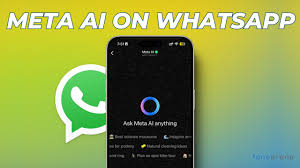
In the chat box or search bar, look for the Meta AI logo, which is a vibrant circular icon or “sparkle” symbol.
To initiate a direct conversation with Meta AI, tap it.
Enquiries, summaries, text translation, content creation, and even original ideas can all be requested.
In chats:
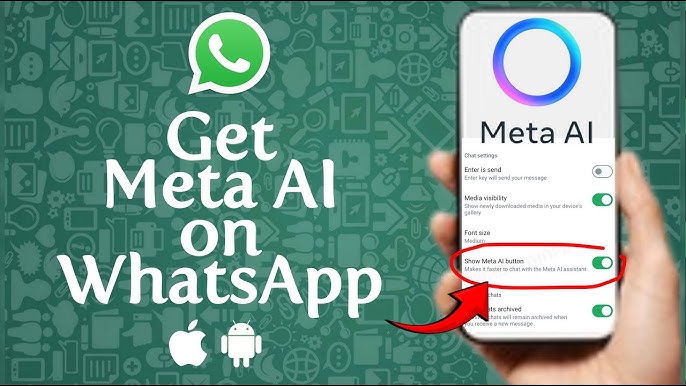
When typing in chats on WhatsApp, you might notice a Meta AI button.
In group chats, you can ask the assistant to assist with tasks like finding information, translating text, or summarising messages by typing “@Meta AI.”
whatsapp AI
Mark Zuckerberg’s Remarks Regarding Meta AI
“The most intelligent AI assistant that you can freely use” is how Meta CEO Mark Zuckerberg characterised Meta AI. He underlined that the goal of this rollout is to integrate beneficial AI into popular apps that people already use, eliminating the need for additional apps or complex tools.
In his own words:
“We believe that Meta AI, which is accessible through our apps with real-time web access, will be the most practical, entertaining, and engaging assistant available to people.”
whatsapp AI
What Is Possible with Meta AI?
Meta AI is capable of many different tasks, such as:
utilising current online information to respond to general enquiries.
summarising articles or conversations for easy comprehension.
producing textual content for social media posts, emails, poems, and jokes.
offering suggestions for travel, films, recipes, and other things.
real-time language translation.
generating images (in certain regions) with integrated AI image creation tools.
Consider it your personal smart assistant, integrated directly into your social media platforms, akin to ChatGPT or Google Gemini.
How Can I Get Rid of WhatsApp’s Meta AI Button?
Many Indian users have noticed a new Meta AI button in WhatsApp’s search or chat bar since the update. This button allows users to quickly access the AI assistant.
whatsapp AI
What Does the Meta AI Button on WhatsApp Do?
From any screen, it offers immediate access to Meta AI.
allows you to create content, ask questions, and receive suggestions all within the app.
The AI can participate in group chats and ask @Meta AI for assistance.
Can the Meta AI Button Be Removed?
There isn’t currently a built-in way for Meta to hide or remove the button. Toggles to disable or hide the button from view may be included in future updates, though, as user feedback has already begun to flood in regarding the desire for greater customisation.
whatsapp AI
What Is a WhatsApp AI Chatbot?
A WhatsApp chatbot that uses artificial intelligence (AI) is a virtual assistant that can interact with users via text messages. One such chatbot is Meta AI, which is built right into the WhatsApp user interface.
Additional WhatsApp AI chatbots could be:
third-party bots for booking, shopping, or customer support.
Chatbots for businesses that take orders, respond to frequently asked questions, or gather feedback.
The fact that Meta AI is formally integrated into WhatsApp and is intended for both enjoyment and efficiency makes it special.
whatsapp AI
What Are the Future Prospects for Meta AI?
Meta plans to enhance Meta AI in the future by adding features like enhanced functionality and multilingual support. The business is also looking into working with Indian state governments to create chatbots for e-governance services that are based on WhatsApp.
With its ongoing development, Meta AI seeks to revolutionise user interaction with digital platforms, enabling more effective and customised communication.