The iPhone 16 Pro Max Price, launched in September 2024, continues to be a premium choice for smartphone enthusiasts in 2025. With its cutting-edge features like the A18 Pro chip, advanced camera system, and sleek titanium design, it’s no surprise that buyers are keen to know its price across regions. This blog provides a comprehensive guide to the iPhone 16 Pro Max pricing, including regional variations, storage options, and tips to save on your purchase.
Pricing Overview by Region
As of September 23, 2025, the iPhone 16 Pro Max remains widely available through Apple Stores, major retailers, and carriers. Prices vary based on storage capacity, region, and promotional offers. Below is a breakdown of the starting prices for the base model (256GB) across key markets:
iPhone 16 Pro Max Price Drop
United States: $1,199 The official Apple Store price for an unlocked 256GB model. Retailers like Amazon offer renewed or refurbished units starting at around $1,000, while carriers like AT&T and Verizon provide trade-in deals or financing options.
India: ₹144,900 (launch price); ~₹105,999 during sales During major sales like Flipkart’s Big Billion Days or Amazon’s festive discounts, prices can drop significantly with bank offers and exchange deals reducing costs by up to 30%.
United Kingdom: £1,199 Available through Apple UK and retailers like Currys. Financing options and trade-in programs are common.
Canada: ~$1,649 CAD Pricing includes taxes in some provinces. Apple Canada offers 0% financing for eligible buyers.
United Arab Emirates: ~4,450 AED (~$1,210 USD) Available through retailers like Sharaf DG. Prices may vary slightly based on local taxes.
Egypt: ~59,999 EGP Official Apple Egypt pricing for an unlocked model. Local retailers may offer installment plans.
Note: Prices are approximate and subject to change based on taxes, import duties, and retailer promotions. Always check with local vendors for the latest offers.
Storage Options and Price Tiers
iPhone 16 Pro Max Price Drop : The iPhone 16 Pro Max comes in three storage variants, with prices increasing for higher capacities:
256GB (Base Model): Starting price as listed above.
512GB: ~$200/₹20,000 more than the base model.
1TB: ~$400/₹40,000 more than the base model.
For most users, 256GB is sufficient for apps, photos, and videos, but professionals or content creators may opt for 512GB or 1TB for 4K ProRes video recording and large media libraries.
iPhone 16 Pro Max Price Drop
How to Save on Your iPhone 16 Pro Max Price
Trade-In Programs: Apple and carriers like Verizon, AT&T, and T-Mobile offer trade-in credits (up to $650 in the US or ₹20,000+ in India) for eligible devices. Check your device’s trade-in value on Apple’s website or with your carrier.
Seasonal Sales: In India, events like Flipkart’s Big Billion Days or Amazon’s Great Indian Festival can slash prices by 20-30%. In the US, Black Friday and holiday sales at Best Buy or Walmart often include gift cards or discounts.
Financing Options: Apple’s 0% interest financing (e.g., Apple Card in the US) spreads payments over 12-24 months. Similar plans are available in other regions through local banks or retailers.
Education Discounts: Apple offers student discounts in many countries, typically $100/₹10,000 off or free accessories like AirPods. Check eligibility on Apple’s education store.
Refurbished Models: Retailers like Amazon and Apple’s refurbished store sell certified pre-owned iPhone 16 Pro Max units at a discount, often with full warranties.
iPhone 16 Pro Max Price Drop
Why the iPhone 16 Pro Max is Worth It
iPhone 16 Pro Max Price boasts a 6.9-inch Super Retina XDR display, a 48MP Fusion camera with advanced computational photography, and up to 30 hours of battery life. Its titanium frame and iOS 18 features, like enhanced AI capabilities, make it a powerhouse for work and entertainment. While the price is premium, the durability, software updates, and resale value justify the investment for many.
iPhone 16 Pro Max Price : The iPhone 16 Pro Max remains a top-tier smartphone in 2025, with prices starting at $1,199 in the US, ₹105,999 in India (during sales), and similar ranges globally. To get the best deal, explore trade-ins, seasonal sales, or financing options. Visit Apple’s official website or local retailers like Amazon, Flipkart, or Best Buy for the latest pricing and promotions.
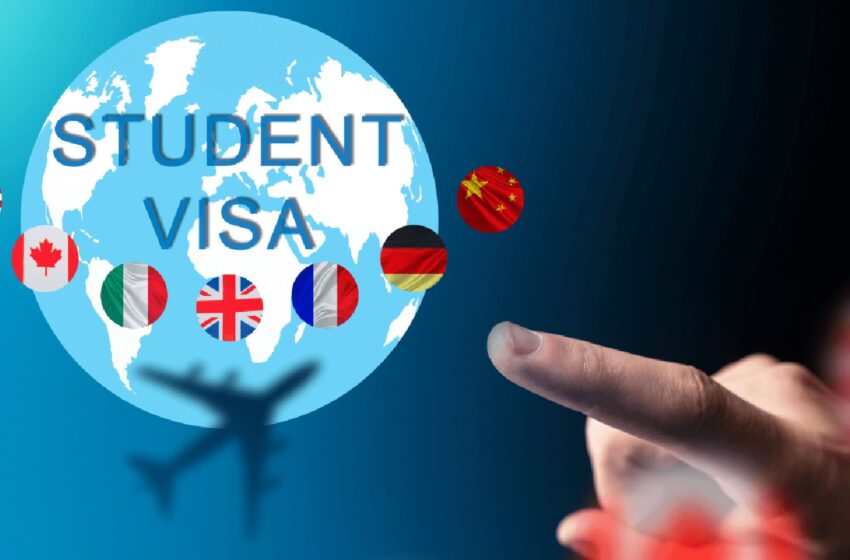
Student Visas: An All-Inclusive Handbook for Foreign Students Cross-border education has become both commonplace and essential in a world that is becoming more interconnected by the day. Millions of students go abroad each year in pursuit of better career opportunities, international exposure, and high-quality education. The student visa, a legal document that allows people to enter and remain in a country for the purpose of education, is essential to this trip. Aspiring international students must comprehend the complexities of student visas. The types, application procedures, prerequisites, difficulties, and advice for a successful application are all covered in detail in this article on student visas.
A student visa: what is it?
A student visa is a type of non-immigrant visa that is granted to people who want to attend an approved university in another nation. A student visa is especially designed for academic or professional endeavours, in contrast to tourist or work visas. It usually allows the holder to stay in the nation for the length of their course, and in certain situations, it allows limited work rights.
Student Visa Types
Depending on the level or kind of study, different nations offer different types of student visas. Here are some instances:
United States (Visas F-1, M-1, and J-1)
F-1 Visa: For academic pursuits at colleges and universities as well as language training programs.
M-1 Visa: For studies that are not academic or vocational.
J-1 Visa: For students participating in exchange programs as well as other exchange visitors.
UK (Visa for Student Route)
The primary student visa for the UK permits anyone 16 years of age and older to attend accredited universities. It took the place of the previous Tier 4 visa.
Student Visa
Canada (Permit to Study)
While a study permits the students to attend designated learning institutions (DLIs), Canada does not actually issue “student visas.” Additionally, students are issued an electronic travel authorisation (eTA) or a temporary resident visa.
Australia (Visa Subclass 500)
International students are permitted to enrol in a full-time course of study with this visa. Additionally, it grants work rights for the duration of the course.
Schengen Student Visa, European Union
The Schengen Visa is applicable for studies lasting less than ninety days. Individual nations provide national student visas for extended studies.
Standard Conditions for a Student Visa
The majority of student visa applications need the following, though specific requirements differ from nation to nation:
An admission letter is evidence of acceptance from an accredited school.
Proof of Funds: Records attesting to the ability to cover living expenses, tuition, and return airfare.
Valid Passport: A passport that is good for the duration of the study.
Language Proficiency: Proof of language ability, such as the TOEFL, IELTS, or similar tests.
Health and Character Requirements: In certain countries, police clearance and medical examinations are required.
Visa Application Form: filled-out, national application form.
Biometric Information: Photographs and fingerprints are frequently needed.
Procedure for Applications
Apply and Get Accepted: You must be admitted to a course and institution that the immigration authority has approved before you can apply for a student visa.
Obtain Documents: Compile the necessary paperwork, such as your passport, academic records, and financial proof.
Pay Visa Fees: Keep the receipt after paying the necessary visa application fee.
Arrange an Interview (if necessary): A consulate or embassy interview is required in certain nations, such as the United States.
Application Submission: You can apply in person at the visa application centre or online.
Await Processing: Each country has a different processing time. Applying well in advance is advised.
Get Your Visa Decision: If your application is accepted, you will either get your visa as a separate document or as a sticker to put in your passport.
Difficulties Student Visa Applicants Face
Even though it’s a routine procedure, getting a student visa can be difficult:
Rejections of Visas
Inadequate documentation, a lack of academic motivation, weak ties to the home country, or inadequate financial proof are some of the causes.
Student Visa
Processing Delays
Travel plans may be impacted by delays in visa processing caused by high volumes or political factors.
Immigration Laws Are Changing
Applicants may become uncertain due to changing visa regulations, especially in nations like the United States and the United Kingdom.
False representation
Giving false information could lead to a visa being denied or future bans.
Start Early with These Tips for a Successful Student Visa Application
Begin the application process at least three to six months before the date of your planned trip.
Be Truthful and Unambiguous: Always give correct information and comprehensive documentation.
Prepare for the interview by outlining your plans for study, career aspirations, and the factors that led you to choose the nation.
Demonstrate Strong Home Ties: Immigration officials want to know that you plan to return once your studies are over.
Keep Up: Visa regulations are subject to sudden changes. Visit the official immigration website on a regular basis.
A Student Visa’s Rights and Obligations
You have rights and limitations while you are on a student visa:
Rights
Study: Attending an authorised school full-time.
Work: The majority of nations permit full-time employment during breaks and part-time employment (e.g., 20 hours per week) during semesters.
Access to Services: Restricted availability of student services, discounts, and healthcare.
Duties
Remain Enrolled: You need to continue your academic progress and full-time enrolment.
Comply with Visa Conditions: Comply with all requirements, including work limits and reporting.
Leave When Visa Expires: You are required to depart when your visa expires unless you apply for an extension or another visa.
Opportunities After Study
Numerous nations provide options for remaining and finding employment following graduation:
S.: H-1B visa options and Optional Practical Training (OPT).
UK: Two years of post-study work are permitted under the Graduate Route.
Post-Graduation Work Permit (PGWP) in Canada.
Australia’s Temporary Graduate Visa (Subclass 485).
These pathways are essential for obtaining foreign work experience and possibly obtaining permanent residence.
Student Visa
In conclusion
A student visa is the key to international education, personal development, and future opportunities; it is more than just a travel document. The chances of success can be significantly increased by being well-prepared and comprehending the requirements, even though the application process may seem overwhelming. Student visas continue to be an essential part of international development and cross-cultural academic exchange as nations continue to draw in top talent from around the world.
Whether your goal is to study engineering in Germany, business in Canada, or medicine in Australia, the first step to reaching your goals on the international scene is obtaining a student visa.
India’s oil: India’s burgeoning economy has led to a significant increase in energy consumption, making it the world’s third-largest oil importer. In the fiscal year 2020–21, India’s net crude oil imports reached approximately 226.95 million metric tons, underscoring its heavy reliance on foreign oil to meet domestic demand. This dependence has profound implications for the nation’s economy, energy security, and foreign policy.
India’s oil import bill is a significant component of its economy, reflecting the country’s heavy reliance on imported crude oil to meet its energy demands. In the fiscal year 2023-24, India imported approximately 232.5 million tonnes of crude oil, incurring an expenditure of $132.4 billion. This figure represents a 16% decrease from the previous fiscal year’s import bill of $157.5 billion, primarily due to lower international crude oil prices. However, despite the reduction in expenditure, India’s import dependence increased to 87.7% in 2023-24, up from 87.4% in the prior year, underscoring the nation’s growing energy needs and limited domestic production.
The global oil landscape is influenced by the policies of major economies, notably the United States. Former President Donald Trump’s energy strategy, often termed the pursuit of “energy dominance,” aimed to position the U.S. as a leading global energy producer and exporter. This approach involved several key initiatives:
Boosting Domestic Production: The Trump administration prioritized increasing domestic oil and gas production by rolling back environmental regulations and expediting permits for drilling, including in previously protected areas like the Arctic National Wildlife Refuge.
Withdrawal from the Paris Agreement: In a move to prioritize economic growth over environmental commitments, the U.S. withdrew from the Paris Climate Accord, signaling a shift away from global efforts to reduce carbon emissions.
Support for Fossil Fuel Infrastructure: The administration advocated for the expansion of fossil fuel infrastructure, including pipelines and liquefied natural gas (LNG) terminals, to facilitate increased exports. This included lifting moratoriums on federal coal leasing and promoting offshore drilling.
Opposition to Renewable Energy Initiatives: The Trump administration took steps to limit the development of renewable energy projects, such as halting new offshore wind leases and rolling back incentives for electric vehicles, arguing that these measures were necessary to protect jobs and ensure energy reliability.
These policies were designed to enhance U.S. energy independence, stimulate economic growth, and strengthen national security by reducing reliance on foreign oil. However, they also had significant implications for global oil markets and other oil-importing nations like India.
The Dynamics of India’s Oil Import Bill
India’s oil import bill is a substantial component of its trade deficit. The country’s import dependence for crude oil stands at 82.8%, highlighting its vulnerability to global oil price fluctuations. Major suppliers include Russia, Iraq, Saudi Arabia, and the United Arab Emirates, with Russia recently becoming a significant contributor, accounting for 40% of India’s oil imports. This shift has reduced the share of Middle Eastern oil imports from 60% to 44%.
The financial implications are considerable. Elevated global oil prices can lead to increased inflation, a higher current account deficit, and pressure on the Indian rupee. Consequently, the government faces challenges in managing subsidies and maintaining fiscal discipline.
India’s Oil
Strategies to Mitigate Import Dependence
To address these challenges, India is pursuing several strategies:
Diversification of Energy Sources: The government is investing in renewable energy projects, including solar, wind, and hydroelectric power, to reduce reliance on fossil fuels.
Enhancing Domestic Production: Efforts are underway to boost domestic oil and gas exploration and production. The government has engaged with major international oil companies, such as ExxonMobil, BP, Chevron, and Petrobras, to encourage exploration in Indian territories, particularly in untapped regions like the Andaman waters. Proposed regulatory changes aim to protect investors and streamline legal processes, with additional measures including the opening of previously restricted areas for exploration.
Strategic Petroleum Reserves: India is expanding its strategic petroleum reserves to cushion against supply disruptions and price volatility.
Impact on Global Oil Markets and India
The U.S.’s increased oil production contributed to a more abundant global oil supply, which, in turn, exerted downward pressure on international oil prices. For India, a major oil importer, lower global oil prices can lead to reduced import bills, providing economic relief. However, the benefits are nuanced.
While lower oil prices can reduce immediate import costs, they can also discourage investment in domestic oil production and alternative energy sources, potentially increasing long-term dependency on imports. Moreover, the U.S.’s withdrawal from international climate agreements and the rollback of environmental regulations can contribute to global environmental challenges, which have far-reaching consequences beyond energy markets.
India’s Strategic Response
In response to the evolving global oil dynamics, India has been exploring strategies to mitigate its import dependence and enhance energy security:
Diversification of Import Sources: India has increased its oil imports from Russia, taking advantage of discounted rates. The share of Russian crude in India’s import basket jumped to 36% in April-February FY2024 from 2% in FY2022. This shift has led to significant savings, estimated at $7.9 billion in 11 months of 2023-24.
Enhancing Domestic Production: The Indian government is encouraging exploration and production activities within the country. Initiatives include offering incentives for oil exploration in unexplored regions and implementing policy reforms to attract foreign investment in the energy sector.
Investing in Renewable Energy: India is making significant investments in renewable energy sources such as solar and wind power to reduce its reliance on imported fossil fuels. The country aims to achieve 450 GW of renewable energy capacity by 2030 as part of its commitment to sustainable development.
India’s Oil
The Global Oil Landscape and U.S. Policies
On the global stage, oil dynamics are influenced by the policies of major producers and consumers, notably the United States. Under President Donald Trump’s administration, there was a pronounced emphasis on achieving energy dominance. This approach involved:
Deregulation: Rolling back environmental regulations to boost oil and gas production.
Infrastructure Development: Promoting projects like the Keystone XL Pipeline to enhance oil transportation capacity.
Industry Leadership: Appointing industry leaders to key positions, such as Chris Wright, CEO of Liberty Energy, as Secretary of Energy.
These policies aimed to increase domestic production, reduce dependence on foreign oil, and position the U.S. as a leading global energy supplier.
Implications for India
The U.S. pursuit of energy dominance has several implications for India:
Market Dynamics: Increased U.S. oil production can influence global oil prices, potentially benefiting large importers like India through more stable or reduced prices.
Trade Opportunities: Enhanced U.S. production opens avenues for India to diversify its import sources, strengthening energy security.
Geopolitical Considerations: U.S. policies can affect global alliances and trade flows, necessitating strategic adjustments by India in its foreign policy and trade relations.
Conclusion: The Future of India’s Oil Strategy in a Shifting Global Energy Order
India’s oil import bill of ₹11 lakh crore underscores its heavy reliance on foreign crude, making energy security a critical concern for economic stability. As one of the world’s fastest-growing energy consumers, India faces the challenge of balancing energy affordability, geopolitical risks, and long-term sustainability. The country’s dependency on imported oil has direct implications for its trade deficit, inflation, and currency stability. This makes strategic planning essential, especially when global oil markets are influenced by power plays from dominant nations like the United States, Russia, and OPEC members.
India’s Strategic Dilemma: Energy Security vs. Geopolitical Constraints
India has been actively diversifying its crude oil sources, with Russia emerging as a major supplier in recent years. However, this diversification brings its own set of challenges, including sanctions, price volatility, and shifting diplomatic alliances. The dominance of the US in global energy markets—especially with its ambitions to be the world’s top oil and gas producer—adds another layer of complexity.
India’s Oil
Under Donald Trump’s leadership, the US adopted a strategy of energy dominance, increasing domestic oil production, lifting export restrictions, and using oil as a geopolitical tool. If Trump were to return to power, his administration is likely to continue prioritizing energy independence and global market influence. This could impact India in several ways:
Oil Price Volatility – US policies favoring domestic production may lead to lower global oil prices, benefiting India in the short term. However, aggressive American energy policies could also disrupt global supply chains.
Geopolitical Alignments – The US may impose stricter trade restrictions on countries buying oil from sanctioned nations like Russia, forcing India to make difficult foreign policy decisions.
Shift Towards US LNG – With the US becoming a leading exporter of Liquefied Natural Gas (LNG), India might increase LNG imports from the US, reducing its crude dependency but raising new cost considerations.
The Path Forward: Balancing Domestic and Global Priorities
To reduce its vulnerability, India is focusing on several key strategies:
Expanding domestic exploration and production – Investing in oil fields within India and improving extraction technologies.
Boosting renewable energy initiatives – Increasing solar, wind, and biofuel projects to lessen dependence on imported crude.
Strengthening energy partnerships – Engaging with diverse suppliers like Middle Eastern nations, Russia, and the US to ensure a steady and competitive supply.
Enhancing strategic petroleum reserves – Stockpiling oil to cushion against supply disruptions and price shocks.
Navigating the Global Oil Game with Strategic Agility
India finds itself at the crossroads of a global oil power struggle, where economic growth, diplomatic flexibility, and energy security must be carefully balanced. While its oil import bill remains high, the country’s ability to adapt to shifting energy dynamics, build resilient supply chains, and invest in alternative energy sources will determine its long-term energy independence.
With the US pushing for greater control over the global oil market—especially if Trump returns to office—India will need strategic foresight to navigate the oil game effectively. By leveraging diplomatic engagements, enhancing domestic production, and accelerating its clean energy transition, India can strengthen its position and mitigate risks associated with global energy politics.
ChatGPT, developed by OpenAI, has been at the forefront of artificial intelligence advancements, continually evolving to enhance user experience and expand its capabilities. Recent developments have significantly impacted how users interact with this AI tool, making it more accessible and versatile.
ChatGPT’s Search Functionality Now Accessible Without Sign-In
In a move to broaden accessibility, OpenAI announced that users can now utilize ChatGPT’s search engine without the need to log in. This feature allows ChatGPT to provide responses based on real-time web information, displaying the sources used to gather the data. Initially launched for paid subscribers in October, it became available to the general public in December. By removing the account requirement, ChatGPT’s search functionality positions itself as a competitor to traditional search engines like Google and Bing. The updated interface includes features such as maps and images of local attractions, along with brief descriptions, enhancing the overall user experience.
Integration with WhatsApp: Voice Notes and Multimedia Support
ChatGPT has expanded its integration with WhatsApp, allowing users to send voice notes, images, and memes to the chatbot and receive appropriate responses. This enhancement facilitates interaction without the need to type messages. Users can send voice notes by pressing the corresponding button in WhatsApp, and ChatGPT will respond to each note in the order received. Similarly, users can share memes and images as they would with any other contact on WhatsApp. These new capabilities make ChatGPT more versatile and user-friendly within the WhatsApp platform.
ChatGPT Plus: Advanced Features for Subscribers
For users seeking advanced functionalities, ChatGPT Plus offers a subscription service that provides access to the latest OpenAI GPT models and additional features. Subscribers benefit from more monthly messages, early access to new AI models like GPT-4o, and capabilities such as multi-modality features, DALL-E 3 image generation, data analysis, and web browsing. Plus subscribers can also share trial access with friends and family. While the free version remains powerful for casual users, the Plus subscription caters to those requiring more advanced tools and early access to new developments.
Enterprise Adoption: BBVA’s Implementation of ChatGPT
In the enterprise sector, Spanish bank BBVA has implemented ChatGPT Enterprise licenses to enhance productivity across various functions, including legal, risk, marketing, talent, and finance. Employees have created over 2,900 GPTs for tasks such as translating risk-specific phrases and drafting responses to client inquiries. Initial reports indicate productivity increases, with 80% of users saving more than two hours of work per week. However, challenges remain in scaling and integrating the tool with complex internal systems. BBVA plans to expand its user base and licenses, aiming for more tangible returns in 2025.
Legal Challenges: Canadian News Publishers Sue OpenAI
OpenAI faces legal challenges as a coalition of Canadian news publishers, including The Canadian Press, Torstar, Globe and Mail, Postmedia, and CBC/Radio-Canada, filed a lawsuit against the company. The publishers accuse OpenAI of copyright infringement, alleging that it used their news content without permission or compensation to train its ChatGPT system. They argue that this practice undermines their investments in journalism and violates copyright laws. OpenAI contends that its models are trained on publicly available data and adhere to fair use principles. This case is the first of its kind in Canada, though similar lawsuits are underway in the United States.
Advancements in Voice Interaction
OpenAI has enhanced ChatGPT’s voice interaction capabilities by introducing an advanced voice mode. This functionality allows the chatbot to respond to audio inputs in approximately 232 milliseconds, mimicking human conversational speed. Initially launched for users in the United States, the feature has been expanded globally and is now available in the web version for subscribers of various plans. OpenAI plans to extend this feature to free users in the coming weeks. Additional improvements include new customizable voices and support for various languages and accents, aiming to provide more natural and fluid interactions.
ChatGPT’s Role in Search Engine Competition
OpenAI has launched a ChatGPT-powered search engine, positioning itself in direct competition with search giants like Google. The new search feature allows ChatGPT to access real-time web information, providing users with up-to-date responses and citing sources. This development signifies a shift in how users may seek information online, with AI-driven chatbots offering an alternative to traditional search methods.
Ethical and Safety Considerations
The integration of AI tools like ChatGPT into various platforms has raised ethical and safety considerations. For instance, the Victorian Department of Families, Fairness and Housing in Australia prohibited its staff from using generative AI services after a child protection worker used ChatGPT to draft a report containing personal information. This incident highlights the importance of establishing guidelines and safeguards when implementing AI technologies in sensitive areas.
In summary, ChatGPT continues to evolve, offering enhanced features and integrations that improve accessibility and functionality for users across different platforms. As it expands its capabilities, considerations around ethical use, legal implications, and integration challenges remain critical to its development and adoption.