Tag: Stock Market

  • Why market is down today? Causes and Investment Strategies

    Why market is down today? Causes and Investment Strategies

    Why market is down today : On May 20, 2025, the stock market crash sent shockwaves through investors worldwide. Both U.S. and global markets, including indices like the S&P 500, experienced significant declines, leaving many wondering about the reasons behind this downturn. In this blog, we’ll explore the key factors driving today’s market crash, including the U.S. debt downgrade, uncertainties in the global economy, and fears of inflation. We’ll also share practical investment strategies to navigate these turbulent times.

    Why market is down today? Causes of the Stock Market Crash

    1. U.S. Debt Downgrade by Moody’s

    A major catalyst for today’s stock market crash was Moody’s downgrade of the U.S. debt rating from Aaa to Aa1, announced on May 16, 2025. This downgrade raised concerns about the fiscal stability of the global economy’s largest player, leading to a sell-off in U.S. stocks, bonds, and the dollar. The ripple effect was felt across markets, including India’s Sensex and Nifty, as investors reassessed risks tied to U.S. economic policies.

    Why market is down today?
    Why market is down today?

    2. Trade Policy Uncertainties

    Uncertainty surrounding global trade policies and potential tariffs has added fuel to the market crash. Ongoing discussions about new trade restrictions, particularly involving the U.S., have raised fears of disruptions to supply chains and corporate earnings. This uncertainty has driven investors toward safer assets, intensifying the stock market downturn as they shy away from riskier equities.

    3. Inflation and Recession Fears

    Persistent inflation and growing concerns about a potential economic recession have further pressured markets. Rising prices and increasing interest rates are squeezing corporate profitability, impacting investor confidence. The global economy is grappling with these challenges, and today’s stock market crash reflects fears that central banks may continue tightening monetary policies to curb inflation, potentially slowing growth.

    Why market is down today?
    Why market is down today?

    Investment Strategies for a Volatile Market

    A stock market crash can be daunting, but it also presents opportunities for prepared investors. Here are some investment strategies to consider:

    • Diversification: Spread your investments across sectors and asset classes to reduce risk exposure.
    • Focus on Fundamentals: Invest in companies with strong balance sheets and consistent earnings, which are likely to weather the market crash.
    • Long-Term Perspective: View market volatility as a chance to buy quality stocks at lower prices for long-term gains.
    • Risk Management: Use tools like stop-loss orders to limit potential losses during sudden stock market downturns.

    Also Read This : Why Paresh Rawal Is One of the Most Versatile Actors in Indian Cinema

    Why market is down today : Today’s stock market crash was driven by a combination of the U.S. debt downgrade, uncertainties in global trade policies, and fears of inflation and recession. While these factors have created a challenging environment, savvy investors can use smart investment strategies to navigate the volatility. Stay informed, keep an eye on market trends, and make decisions based on your financial goals.

  • Sensex, Nifty: 3 Reasons Why the Stock Market is Rising Today

    Sensex, Nifty: 3 Reasons Why the Stock Market is Rising Today

    Sensex and Nifty Show Gains

    Sensex and Nifty saw an uptrend today as GDP growth stood at 6.2%, aligning with expectations. February auto sales data was strong, providing market support. Additionally, a decline in Foreign Institutional Investors (FIIs) selling out and a drop in US bond yields strengthened the market.

    Sensex and Nifty Performance

    • Sensex reached 73,593.26, gaining 395.16 points (0.54%) at closing.
    • Nifty traded at 22,243.85, rising by 119.15 points (0.54%).
    • Most Asian markets were also trading higher, with Japan’s Nikkei leading with a 1.4% rise.
    Sensex, Nifty
     Nifty

    3 Main Reasons Behind the Stock Market Rally

    1. GDP Growth in Line with Expectations

    • India’s GDP grew by 6.2% in the December quarter, up from 5.6% in the September quarter.
    • HSBC reported that previous GDP figures were revised upward, indicating strong economic growth.

    2. Strong Performance in the Automobile Sector

    • February auto sales data exceeded expectations.
    • Companies like Mahindra & Mahindra (M&M) and Eicher Motors performed well, boosting investor confidence.

    3. Decline in Foreign Institutional Investors (FIIs) Selling

    • High stock valuations and attractive US bond yields led to recent FII selling in the Indian market.
    • However, the US 10-year bond yield has now fallen to 4.21%, which may reduce FII selling.
    FIIs
    FIIs

    Long-Term Investment Opportunity in Sensex

    V.K. Vijayakumar, Chief Investment Strategist at Geojit Financial Services, stated,
    “The recent correction in Sensex presents a great opportunity for long-term investors to buy high-quality stocks.”

    Also Read This: Stock market: meaning, basics and guide of stock market. Best investment strategies and market update.

    He also mentioned that while predicting the market bottom is difficult, now is a good time for long-term investors to start investing without worrying about short-term volatility.

    • Sensex and Nifty surged due to GDP growth, strong auto sales, and reduced FII selling.
    • Current market corrections offer a golden opportunity for investors to buy high-quality stocks.
  • Stock market: meaning, basics and guide of stock market. Best investment strategies and market update.

    Stock market: meaning, basics and guide of stock market. Best investment strategies and market update.

    Stock market : It is a market place where several companies are been purchase and sold at financial market in shares (or stocks). In this process several companies, purchaser or investors try to interact with the market to buy and sell various stocks.

    Apart from buying and purchasing it is also a major part of our economy as it allows businesses and other market places to grow by providing them with several opportunities and strategies to grow.

    what is stock market?
    what is stock market?

    Meaning of stock or shares.

    Stock: It is the representative or ownership given for a company in stock market. Whereas shares are a unit or part of the stock. When we buy stock, we get one of the shares or part of the company in stock market.

    Types of stocks- common stock and preferred stock.

    How does stock market work?

    1. Some of the most important part of stock market are companies who gives the stock, investors who buys or sell stock and regulators who regulate this market activities.
    2. Then come the trade process in which there is buying and selling of the shares.
    3. Then comes the price of supply depending on economic condition and other investing strategy.
    4. It also involve risk factor, the ability to invest and act right in every situation without getting emotional.
    5. Then comes the performances of the market and the final result.

      How does stock market work?
      How does stock market work?

    Things to known before joining stock market.

    1. Learn and know about the market basics like what is stock, the working of market and other strategies.
    2. Have a perfect income or funds to invest in the markets. Only go with the amount you can afford to pay or loss.
    3. Understand various trends in market or stocks, research and analyses before investing in them.
    4. Choose your investment strategy on basics of long-term or short-term goals.
    5. Be patient and not make decision by been emotional.
    6. Start with small investment to learn about big investment slowly and gradually.

    Best investment strategies.

    Investment in stock market required some strategy according to financial capability, rick and time. Some of the investment strategies right now are as follow: –

    1. Long Term Investment: It involves investing in stock for a long period of time in a quality stock for larger profit and potential.
    2. Value Investment: It involve investing in a low-price stock which can provide larger profits. It needs patience and good analysis.
    3. Growth Investment: It involves companies which can provide profit faster then the market. Example healthcare and etc.
    4. Dividend Investing: It is a process in which one puts the money in stock and after getting profit. The profit money can be use in investing to the next stock. In this way the profit money can keep getting increase.
    5. Index Fund Investing: It involves market with low or minimum risks and lower price stock. This is best for beginners or stable investor.
    6. Dollar Cost Investing: It includes regular investment apart from regular market condition. It involves fixed amount of money to be invested regularly.

      Investment strategy
      Investment strategy

    How are stock market prices been decided?

    The stock market prices are depended on the following: –

    1. The supply and demand of the stock.
    2. The way company performance.
    3. The economic condition.
    4. The stock exchanges.
    5. The Industrial trends.

    What is bond, and different between stock market and bond market?

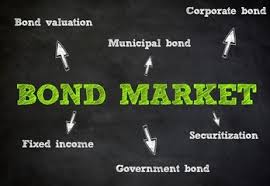
    Bond market: It is a government-based market that provide a raise of capital. It is financial market where investor buy bonds which are securities provided by government.

    what is bond market?
    what is bond market?

    The bond market or stock market are different in the following ways: 

    This are two different financial market which provide with offer unique or different risk and opportunities.

    The bond market is government base, in which you can buy bond and lend money to the issuer and the issuer provide this money with an interest.

    whereas stock markets are individual or company which provide stock to buy as a shareholder to get a returned profit.

    The Current Stock Market update.

    some of the new trends in stock market are as following: –

    • According to todays stock market report, global stock markets are providing with mixed performances and influencing various economic indicator and corporate development.
    • At the same time Indian markets are getting influenced by the global market trends and changes its economic indicator.

    Also Read This: Mental health: what is the impact of social media on are mental health, new trends in it, and reaction of society on the same.

  • What’s Trading? Become the Number 1 Trader with a Complete Guide to Understanding Financial Markets

    What’s Trading? Become the Number 1 Trader with a Complete Guide to Understanding Financial Markets

    Trading refers to the exertion of buying and dealing fiscal instruments similar as stocks, bonds, goods, currencies, or derivations with the ideal of making a profit. It’s a pivotal part of fiscal requests and involves the exchange of means between buyers and merchandisers.

    Crucial Aspects of Trading

    1. Types of requests

    Stock market
    The stock request is a fiscal business where shares of intimately traded companies are bought and vended. It serves as a mark of a country’s profitable health and provides a platform for investors and companies to achieve their fiscal pretensions.

    Stock request
    Stock request

    Forex Market
    The forex request, or foreign exchange request, is the largest and most liquid fiscal request in the world, where currencies are traded. It operates 24 hours a day, five days a week, and is decentralized, meaning deals do untoward( OTC) rather than on a centralized exchange.

    Forex Market
    Forex Market

    Commodity market
    The commodity request is where raw accoutrements like gold, oil painting, and agrarian products are traded. It plays a vital part in the global frugality, furnishing openings for directors, dealers, and investors to buy and vend goods.

    Derivations market

    The derivations request is a fiscal business where instruments similar as futures, options, barters, and forwards are traded. A secondary derives its value from the performance of an beginning asset, indicator, or rate. These requests serve as essential tools for threat hedging, enterprise, and price discovery.

    Cryptocurrency market
    The cryptocurrency request is a decentralized fiscal ecosystem where digital currencies like Bitcoin, Ethereum, and thousands of other cryptocurrencies are traded. This request leverages blockchain technology to insure translucency, security, and invariability. It has endured rapid-fire growth, presenting both openings and challenges for investors and dealers.

    Cryptocurrency
    Cryptocurrency

    2. Trading Styles

    Day Trading
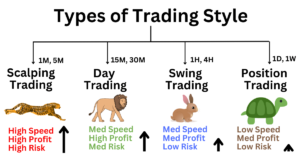
    Day trading involves buying and dealing fiscal instruments like stocks, currencies, goods, or derivations within the same trading day. The ideal is to subsidize on small price movements for quick gains.

    Swing Trading
    Swing trading is a strategy where dealers hold their positions for a many days to several weeks, aiming to profit from short to medium- term request movements.

    Trading Styles
    Trading Styles

    Position Trading
    Position trading is a long- term strategy where dealers hold their positions for extended ages, ranging from months to times, to profit from long- term request trends and profitable changes.

    Scalping
    Scalping is a high- frequence trading strategy concentrated on making gains from small price changes. Scalpers execute multiple trades within a single day and hold positions for just seconds or twinkles.

    3. Actors in Trading

    Retail Traders
    Retail dealers are individual investors who buy and vend fiscal securities like stocks, bonds, goods, or cryptocurrencies for their particular portfolios.

    Institutional Dealers
    Institutional dealers represent associations that trade large volumes of fiscal securities on behalf of realities like collective finances, barricade finances, investment banks, insurance companies, and pension finances.

    Request Makers
    request makers are fiscal realities or individualities that continuously shot( buy) and ask( vend) prices for securities, icing request liquidity and reducing price volatility.

    Also Read This: Big ups and downs in the Stock Market: After the fall, Sensex made a tremendous comeback of 550 points

    4. Provocations for Trading

    Profit Implicit
    Generating profit is the primary thing of utmost dealers. Dealers share in fiscal requests to subsidize on price movements in colorful means like stocks, bonds, goods, currencies, and cryptocurrencies.

    Hedging
    Hedging is a threat operation strategy aimed at negativing implicit losses or adverse price changes in one asset by taking an contrary position in a affiliated asset or request.

    Provocations for Trading
    Provocations for Trading

    Enterprise
    Enterprise involves prognosticating unborn price movements in colorful fiscal requests to benefit from implicit price changes. Bookmakers try to anticipate where the price of an asset will go, frequently grounded on specialized, abecedarian, or sentiment analysis.

    Arbitrage
    Arbitrage is a strategy that takes advantage of price differences for identical or analogous means in different requests or instruments. Arbitrage openings arise when the price of an asset differs in multiple locales, allowing dealers to buy at a lower price and vend at a advanced price.

  • Big ups and downs in the Stock Market: After the fall, Sensex made a tremendous comeback of 550 points

    Big ups and downs in the Stock Market: After the fall, Sensex made a tremendous comeback of 550 points

    The stock market (Stock Market) took a dramatic turn on the first trading day of the week, Monday. BSE Sensex and NSE Nifty started in the red, with Sensex falling by 400 points as the market opened. However, after a brief period of decline, the stock market suddenly reversed, transforming the losses into gains.

    On one hand, the Sensex made a powerful comeback, leaping over 550 points to cross the 80,000 mark once again, while the Nifty also marked a remarkable return.

    Stock Market: Rapid Surge in Sensex-Nifty

    When the stock market opened on Monday, the Sensex started with a decline, dropping 400 points within minutes. However, by the time of this report, the 30-share Bombay Stock Exchange (BSE) Sensex was trading up by 558 points, reaching the level of 80,043.71. Meanwhile, the Nifty index of the National Stock Exchange (NSE) surged 170 points within the first hour and a half of trading, hitting 24,317.

    Stocks Supporting the Market

    Let’s look at the stocks that helped boost the market. In the BSE large-cap category, PowerGrid’s shares rose by 4.41%, Tata Motors by 2.83%, and TCS by 2%, all trading at a gain. Additionally, Tech Mahindra (1.63%), HDFC Bank shares (1.51%), and ICICI Bank (1.10%) also showed positive momentum.

    Strong Rally in Banking Stocks

    Banking stocks also played a significant role in supporting the market. Among other stocks in this category, HCL Tech, Infty, Maruti, NTPC, ITC, Bharti Airtel, and Ultratech Cement were all trading in the green. HDFC Bank and ICICI Bank, along with SBI, Axis Bank, Kotak Bank, and IndusInd Bank, saw approximately a 1% increase in share prices.

    Stock Market Banking
    Stock Market Banking

    Mid-cap and Small-cap Stocks on the Rise

    In the mid-cap category, Endurance shares surged by 6.73%, Biocon by 6.25%, Prestige by 3.66%, and MRF by 2.76%. Among small-cap companies, Pixtrans shares rose by 20%, VHL by 15.48%, ITI by 9.63%, and IFCI by 7%, all showing a strong upward trend.

    Sensex Plunged Last Week

    Looking back at last week’s market performance, the BSE benchmark index Sensex (Sensex) fell by 4,813 points within just five trading days. From a high of 84,200 on September 30, the index fell to 79,486 on November 8. NSE Nifty also struggled to recover, closing at 24,248.20 last Friday with a notable loss.

    Also Read This: Stock market crash on 4 November 2024: what happened?