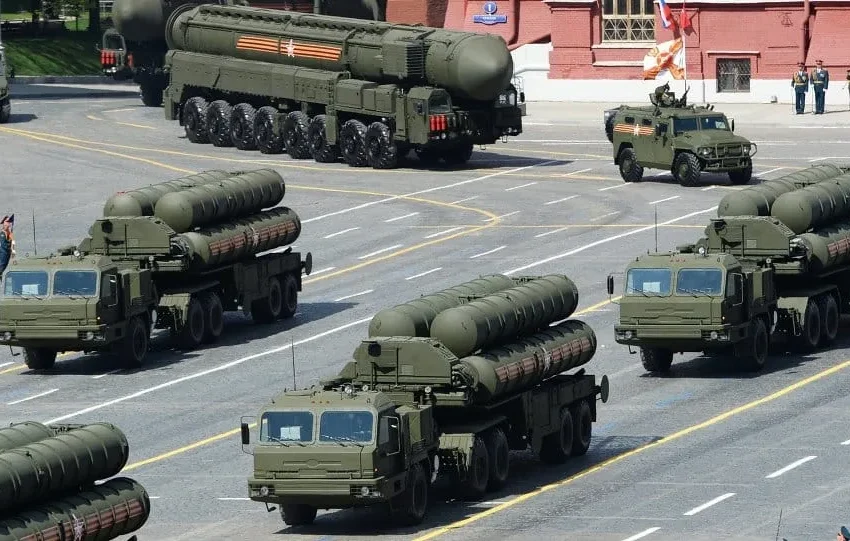
S-400 Air Defence System : In an era of advanced aerial threats—think stealth jets, drones, and hypersonic missiles—nations are racing to bolster their air defenses. Enter the S-400 Triumf, Russia’s cutting-edge air defense system that’s reshaping military strategies worldwide. Known for its unparalleled range and versatility, theS-400 Air Defence System has become a game-changer in modern warfare. But what makes this system so special, and why is it at the center of global debates? Let’s dive into its history, capabilities, and impact.
A Brief History of the S-400
Developed by Russia’s Almaz-Antey corporation, the S-400 Air Defence System (NATO designation: SA-21 Growler) entered service in 2007 as an upgrade to the S-300 series. Designed to counter a wide range of aerial threats, it quickly became a cornerstone of Russia’s defense strategy. Its global appeal grew as countries like China, India, and Turkey signed deals to acquire it, sparking both admiration and controversy.
Unpacking the S-400’s Capabilities
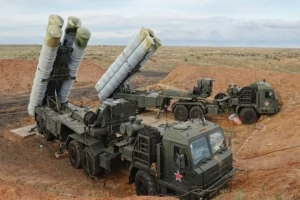
The S-400 Air Defence System is not just another missile system; it’s a multi-layered defense network. Here’s what sets it apart:
- Range and Reach: The system can engage targets up to 400 km away (with the 40N6 missile) and at altitudes from 10 meters to 30 km, covering everything from low-flying drones to high-altitude aircraft.
- Versatile Missiles: It supports multiple missile types, including the 48N6 (250 km range) and 9M96 (120 km range), allowing it to tackle diverse threats simultaneously.
- Advanced Radar: The S-400’s 91N6E radar can track up to 300 targets at once, even stealth aircraft, thanks to its anti-jamming technology.
- Rapid Deployment: The system can be operational in just 5 minutes, making it ideal for dynamic battlefields.
These features make the S-400 a formidable shield against modern threats, from ballistic missiles to cruise missiles.
Global Deployments : Who’s Using the S-400?
The S-400’s reach extends far beyond Russia. Key operators include:
- China: Deployed S-400 systems in 2018 to protect its eastern coast, enhancing its stance in the South China Sea.
- India: Began receiving S-400 units in 2021 under a $5.4 billion deal, bolstering defenses along its borders with China and Pakistan.
- Turkey: Acquired the system in 2019, a move that strained its NATO ties and led to U.S. sanctions under CAATSA (Countering America’s Adversaries Through Sanctions Act).
- Russia: Uses the S-400 extensively, including in Syria, to protect its military bases and assert regional influence.
Other nations, like Saudi Arabia and Qatar, have expressed interest, underscoring the system’s global demand.
Controversies and Geopolitical Tensions
The S-400’s proliferation has sparked significant debates:
- NATO Concerns: Turkey’s purchase raised fears that the S-400 could compromise NATO’s F-35 program, as its radar might collect sensitive data on stealth jets.
- U.S. Sanctions: The U.S. has imposed sanctions on countries like Turkey and threatened similar measures against India, citing national security risks.
- Strategic Balance: The S-400’s deployment in regions like South Asia and the Middle East is shifting power dynamics, forcing adversaries to rethink their air strategies.
Despite these tensions, the S-400’s affordability (compared to systems like the U.S. Patriot) and performance make it a top choice for many nations.
Why the S-400 Air Defence System Matters Today
The S-400 Air Defence System transcends its role as a weapon, embodying cutting-edge technology and strategic influence on the global stage. For Russia, it’s a lucrative export and a tool to expand influence. For buyers, it’s a ticket to stronger defenses in an unpredictable world. As aerial warfare evolves, systems like the S-400 will play a pivotal role in shaping military strategies.
Also Read This : PM Kisan Yojana : A Complete Guide to e-KYC Verification
What’s Next?
As hypersonic weapons and AI-driven drones emerge, the S-400 will likely evolve, with Russia already working on its successor, the S-500. For now, the Triumf remains a benchmark in air defense technology, balancing power and controversy on the global stage.