Tag: Russia

  • G7 Summit 2025 : Key Takeaways from Kananaskis

    G7 Summit 2025 : Key Takeaways from Kananaskis

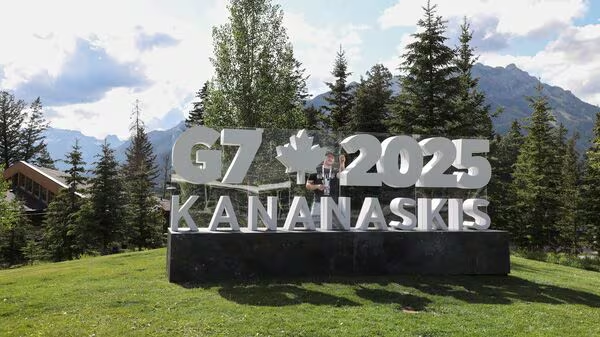
    The 51st G7 Summit was held on June 16–17, 2025, in Kananaskis, Alberta, Canada, where leaders from Canada, France, Germany, Italy, Japan, the United Kingdom, and the United States came together for high-level discussions. Representatives from the European Union and invited guests. Against a backdrop of global conflicts and economic challenges, the summit aimed to address pressing issues like the Russia-Ukraine war, Middle East tensions, trade policies, and energy security. However, the event was marked by unexpected disruptions and mixed outcomes. Below are the key takeaways from this pivotal gathering.

    U.S. President Trump’s Abrupt Exit

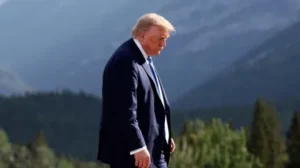
    One of the summit’s defining moments was U.S. President Donald Trump’s early departure on June 16 to address escalating tensions in the Israel-Iran conflict. This move disrupted a planned meeting with Ukrainian President Volodymyr Zelenskyy, derailing efforts to secure U.S. support for pressuring Russia into a Ukraine ceasefire. Trump’s focus shifted to the Middle East, with speculation about potential U.S. involvement in Israeli strikes against Iran’s nuclear facilities. His absence left a void in discussions, raising questions about the G7’s ability to align on critical global issues and fueling debates about the group’s relevance in a shifting geopolitical landscape.
    U.S. President Trump’s Abrupt Exit
    U.S. President Trump’s Abrupt Exit

    Ukraine and Russia: A Fractured G7 Response

    The Russia-Ukraine war was a central focus, but divisions emerged, particularly after Trump’s exit. His expressed support for Russian President Vladimir Putin complicated efforts to craft a unified G7 stance. Canada, as host, had hoped to issue a strong statement condemning Russia and supporting Ukraine but scrapped these plans due to U.S. resistance. Ukrainian President Zelenskyy called the diplomatic situation a “crisis,” urging G7 leaders to leverage their influence to end the conflict.

    Despite the setbacks, Canada stepped up with significant commitments, announcing $4.3 billion in aid for Ukraine. This package included $2 billion in military support—comprising helicopters, drones, and ammunition—and $2.3 billion in loans for infrastructure rebuilding. Canada also condemned Russia’s recent deadly attack on Kyiv, labeling it an act of “barbarism.” Other G7 members reaffirmed their support for Ukraine, but the lack of U.S. alignment underscored the challenges of coordinated action.

    Middle East Tensions Take Center Stage

    The Israel-Iran conflict loomed large over the summit, with G7 leaders issuing a joint statement condemning Iran as a source of regional instability and emphasizing that Iran must not acquire nuclear weapons. Trump’s early departure was directly tied to these tensions, with reports indicating U.S. preparations for potential military engagement alongside Israel. The G7’s unified stance on Iran contrasted with its divisions over Ukraine, highlighting the complex balancing act of addressing multiple global crises simultaneously.

    India’s Role and Diplomatic Efforts

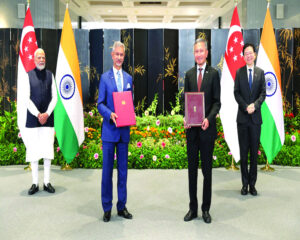
    Indian Prime Minister Narendra Modi’s attendance—his sixth consecutive G7 summit—underscored India’s growing global influence. Modi emphasized energy security, green technology pathways, and the need for collective action against terrorism. His presence also sparked protests from Sikh groups over Canada’s allegations regarding the 2023 killing of Hardeep Singh Nijjar, a Canadian Sikh leader. Despite these tensions, Modi held productive meetings with Canadian Prime Minister Mark Carney and other leaders to reset India-Canada relations and explore trade opportunities, including a proposed Europe-Middle East-India trade corridor.
    India’s Role and Diplomatic Efforts
    India’s Role and Diplomatic Efforts

    Trade, Tariffs, and Economic Cooperation

    Trade discussions yielded mixed results. Trump secured a framework for a new trade deal with the United Kingdom but criticized the European Union and Japan for what he called unfair trade practices, singling out Japan as “tough” in negotiations. Canada, meanwhile, made progress on a potential U.S. trade agreement and brokered initiatives for critical minerals stockpiling and cross-border wildfire coordination. These efforts reflect the G7’s ongoing focus on economic resilience amid global uncertainties.

    Global South and Energy Security

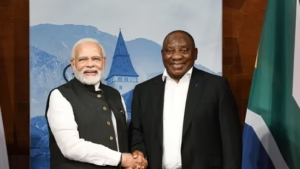
    South African President Cyril Ramaphosa, the only African leader invited, advocated for the Global South’s priorities, calling for a fairer global order. Modi echoed this sentiment, highlighting sustainable energy solutions to support AI-driven and technology-intensive societies. The G7’s discussions on energy security underscored the need for collaborative approaches to address climate challenges while ensuring economic stability.

    Indigenous Engagement

    In a notable moment, Indigenous leader Steven Crowchild of the Tsuut’ina First Nation welcomed G7 leaders, including Trump, to the summit. Crowchild described the encounter with Trump as “intense” but emphasized the importance of Indigenous voices in global dialogues. This gesture highlighted Canada’s commitment to incorporating Indigenous perspectives into international forums.
    Global South and Energy Security
    Global South and Energy Security

    Questions About the G7’s Future

    Trump’s early exit and his “America First” approach prompted renewed scrutiny of the G7’s effectiveness. Critics, including Russian official Maksim Oreshkin, argued that the G7 no longer drives global economic growth, pointing to the G20 as a more inclusive platform. Despite these challenges, Canadian Prime Minister Mark Carney earned praise for his deft handling of a complex summit, navigating diplomatic tensions and securing tangible outcomes like aid for Ukraine and trade progress.

    Also Read This : Mahindra XUV700 Facelift: What to Expect from the Upcoming XUV 7XO

    The 51st G7 Summit in Kananaskis was a microcosm of today’s fractured global landscape. While it achieved progress in areas like critical minerals, trade frameworks, and support for Ukraine, it also exposed deep divisions, particularly over Russia and the U.S.’s role in global diplomacy. The summit underscored the urgency of addressing conflicts in Ukraine and the Middle East, the importance of inclusive partnerships with the Global South, and the need for the G7 to adapt to a rapidly evolving world. As the international community looks ahead, the outcomes of Kananaskis 2025 will shape diplomatic and economic strategies for years to come.

  • BRICS & the Caspian Sea: Shaping Geopolitical Landscapes in 2024

    BRICS & the Caspian Sea: Shaping Geopolitical Landscapes in 2024

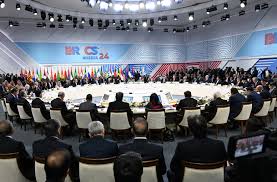
    BRICS summit: The 16th BRICS summit was organised from 22nd to 24th of October, 2024 in Russia and Kazan that clasp remarkable pertinence in thermal Geo political topography. It’s spooning out a policy for evident prudence to advantage their impact in a gradually changing world. Summit distinct the very first convention after extension of the classification to add new members from Egypt, Ethiopia, Iran and United Arab Emirates and actual members from Brazil, Russia, India, China and South Africa. Every year leaders from the members sovereign state congregate to debate regarding several issues engulfing into economic cooperation, developments and political orientation among apparent economies.

    BRICS Summit
    BRICS Summit

    BRICS and the Caspian Sea

    The Caspian-sea region up holds a decisive place in BRICS border comparative government callous. Russia as the most protuberant topographical ingredient and a BRICS founding member can view the Caspian as fundamental to impact someparticular terms of vigour certainty and zonal occupation not only wealthy in natural resources but also in oil and gas serve a censorious gangway linking Asia and Europe. Fostering corporation in area presence 7 opportunities on the basis of potentials, architectures and territorial balance- Russia crucial power and Caspian region, Moscow 6 to enlighten its topographical influence through bricks and particularly by amalgamate Tehran, to associate Caspian nearshore circumstances and also Summit as an advantage forexpanding multilateral vivacity enterprise to grip territorial trade routes and to add spirits to its management to multipolar andvast world. Iran-recent insertion in bricks produce a deliberate shift that
    isolates from Western pecuniary organisations because of the deterrent, Tehran fees in BRICS associateship as a way for moving forward to economic re inventions and recovery to greater globe for further integration. Move over Caspian-sea place an effective role Tehran’s master plan to wafer punitive actions as it ensures access to unorthodox craft routes.

    BRICS Summit
    BRICS Summit

    Azerbaijan-applied for BRICS partnerships on August 24, Baku
    sees profit-making worth in bloc in energy corporations and architectures development as it’s a game plan natural resources make Azerbaijan an attention seeking spouse for BRICS majorly as bloc seeks to glow up the topographical correspondence through powering hallway to move decussate that proceed through the Caspian. Kazakhstan and Turkmenistan -both the countries remain attentive about escalate constraints. Astana that values policies of non-calibration is closely observing the changes of organisations but has yet to appeal formally for membership. Kazakhstan’s involvement in Summit culminates willingness in supporting and opening conversation with BRICS, on vivacity
    transports and geographical connections.

    Read Also This: BRICS Summit 2024 pivotal Highlights of the 16th Summit in Russia 

    BRICS Summit
    BRICS Summit

    The brick Summit concluded on a crucial note by asserting the bloc’s determinations for globalising authorities and encouraging development. Through synergetic attempts BRICS empire subscribers by introducing challenges and indulging into climatic influences, moneymaking bias and comparative government stress. It includes consensus on trafficking sponsorship, animation surgical interventions and alteration coalition. The Summit also emphasized the consequence of multi acquisitiveness, intercontinental constitution and zonal safety. As BRICS proceeds to deprive into global economic development to sustain culture development and exchanges for
    people centric policies to shape up an equitable and multipolar world for betterment of the modern world towards progress

    Report By: Ananya Saxena

  • BRICS Summit 2024 pivotal Highlights of the 16th Summit in Russia

    BRICS Summit 2024 pivotal Highlights of the 16th Summit in Russia

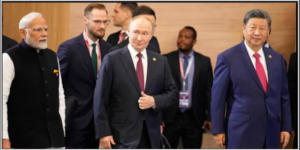
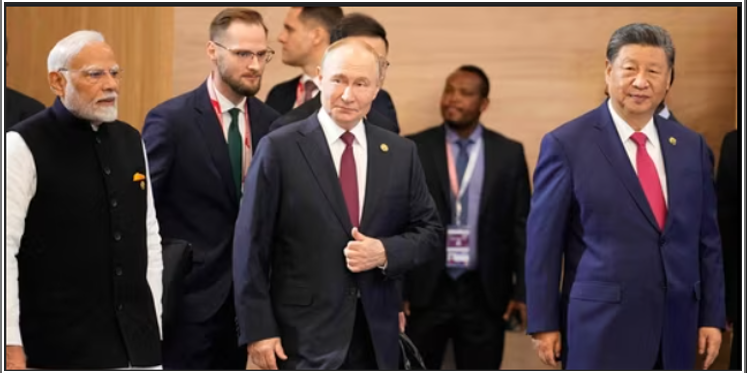
    The 16th BRICS Summit is set to take place from 22 to 24 October 2024 in Kazan, Russia. This marks the fourth time Russia is hosting the peak, with world leaders from Brazil, Russia, India, China, and South Africa attending. This time, the peak will also see the participation of new countries like Egypt, Ethiopia, Iran, and the United Arab Emirates( UAE), expanding its global significance.

    PM Modi at the BRICS Summit in Russia

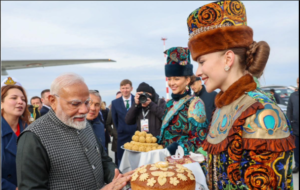
    Indian Prime Minister Narendra Modi arrived in Russia to a warm welcome filled with Krishna Bhajans and traditional Tatarstan and Bashkortostan delectable. PM Modi, accompanied by a security detail of 85 Indian legionnaires from the Russian army, entered sincere hospitality, including being offered the indigenous sweet dish, chak- chak. President Vladimir Putin accredited Modi, expressing joy at his presence, and Modi reflected on the strong ties between India and Russia, saying,” My visit to Russia in the last 3 months reflects our deep fellowship and close collaboration.”

    PM Modi at the BRICS Summit in Russia
    PM Modi at the BRICS Summit in Russia

    Modi’s program at the peak focuses on bilateral meetings with other BRICS countries. He emphasized India’s commitment to the platform, which addresses pivotal issues like climate change, profitable cooperation, and global peace.

    Brazil’s President to Join via video Call

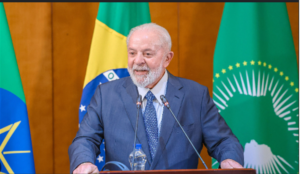
    Brazilian President Luiz Inácio Lula da Silva wo n’t attend the peak in person due to an injury. After a fall in his bathroom, the 78- time-old president sustained a head injury that demanded pangs and has been advised by croakers
    to avoid trip. He will partake in the peak through a video conference.

    BRICS Summit :Brazil’s President
    BRICS Summit :Brazil’s President

    Russia’s Interest in Indian Cinema

    President Putin stressed Russia’s love for Bollywood filmland and expressed interest in uniting with India to promote Indian films in Russia. He proposed the idea of launching a 24/7 TV channel devoted to Indian cinema, further strengthening cultural ties between the two nations.

    BRICS Summit pretensions and Global responses

    During the peak, pivotal exchanges will revolve around digital currencies and their part in collaborative trade and long- term investments. profitable development and other critical issues will also be addressed on 23 and 24 October 2024.

    Regarding the BRICS Summit, the White House clarified that the US does n’t view it as a geopolitical rival. Press Secretary Karine Jean- Pierre stated that the US is concentrated on erecting strong coalitions worldwide and is n’t concerned about contest with BRICS.

    Also Read This: I am grateful to him for racing the issue of Ukraine, Putin praised PM Narendra Modi before the BRICS

    The 16th BRICS Summit promises to be a significant event, with exchanges on digital currencies, profitable development, and strengthening ties between member andnon- member countries. The addition of new nations like Egypt, Ethiopia, Iran, and the UAE highlights the growing influence of BRICS on the global stage.

    Report By:- Enakshi Dasgupta