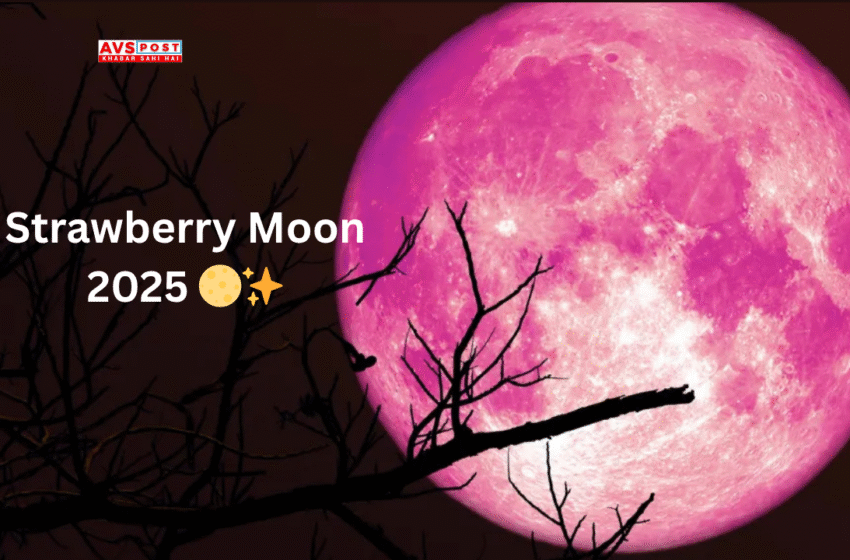
Strawberry Moon 2025 : On the night of June 11, 2025, skywatchers across India and beyond are in for a celestial treat as the enigmatic Strawberry Moon graces the night sky. This full moon, the last of June, is not just a visual delight but a rare astronomical event, combining the phenomena of a micro moon and a major lunar standstill. What makes this Strawberry Moon even more special is that a similar spectacle won’t occur again until 2043, making it a must-see for astronomy enthusiasts.
What is the Strawberry Moon?
The term “Strawberry Moon” originates from Native American traditions, specifically the Algonquin tribes, who named it to mark the start of the strawberry harvesting season in June. Contrary to its name, the moon doesn’t take on a pink or reddish hue like strawberries. Instead, it often appears golden or slightly reddish when low on the horizon due to atmospheric scattering, adding to its mystical allure.
Why is the 2025 Strawberry Moon Unique?
This year’s Strawberry Moon stands out for two key reasons:
- Micro Moon: On June 11, 2025, the moon will be at its apogee, the farthest point from Earth in its orbit, approximately 406,000 kilometers away. This distance makes the moon appear about 14% smaller and slightly dimmer than a typical full moon, earning it the title of a micro moon. The subtle, ethereal glow of this smaller moon adds a unique charm to the night sky.
- Major Lunar Standstill: Every 18.6 years, the moon reaches a point in its cycle known as a major lunar standstill, where it rises and sets at its most extreme points on the horizon. During this event, the moon appears lower in the sky, creating a dramatic effect. The last major lunar standstill occurred in 2006, and after 2025, the next one won’t happen until 2043, making this a once-in-a-generation event.
Viewing the Strawberry Moon in India
For those in India, the Strawberry Moon will be visible after sunset, rising in the south-east direction. Major cities like Delhi, Mumbai, Kolkata, and Bengaluru will offer prime viewing opportunities, with the moon becoming visible around 7:00 PM IST or shortly after. To make the most of this event:
- Find a location with a clear view of the horizon, away from tall buildings or trees.
- Avoid areas with heavy light pollution for a sharper view.
- Binoculars or a telescope can enhance the experience, though the moon will be striking to the naked eye as well.
Cultural and Astronomical Significance
The Strawberry Moon holds cultural significance beyond its Native American roots. In various cultures, full moons are associated with renewal, reflection, and celebration. In India, full moons often align with festivals or spiritual practices, making this an ideal time for stargazing and connecting with nature.
Astronomically, the combination of a micro moon and a major lunar standstill offers a rare opportunity to study the moon’s orbital dynamics. For researchers and amateur astronomers, this event provides valuable insights into the moon’s 18.6-year cycle and its positional extremes.
How to Capture the Moment
Photography enthusiasts can capture the Strawberry Moon’s beauty with a few simple tips:
- Use a DSLR or smartphone with a good zoom lens to capture the moon’s details.
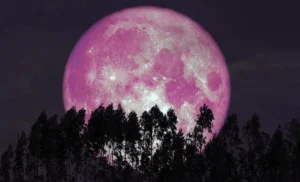
- Shoot during twilight, just after sunset, when the moon’s golden hue is most pronounced.
- Include foreground elements like trees or buildings to add depth to your photos.
A Celestial Event Not to Miss
The Strawberry Moon of June 11, 2025, is more than just a full moon—it’s a rare convergence of astronomical phenomena that won’t be seen again for nearly two decades. Whether you’re an avid skywatcher, a casual observer, or someone seeking a moment of wonder, step outside tonight and witness this celestial marvel. As the moon rises low and golden in the south-eastern sky, it will remind us of the vast, mysterious universe we inhabit.
Also Read This: ChatGPT Outage : What Happened and What’s Next?
So, mark your calendars, gather your loved ones, and prepare to be captivated by the Strawberry Moon—a fleeting yet unforgettable spectacle in the night sky.