Rahul Gandhi: Early Life and Family Background:
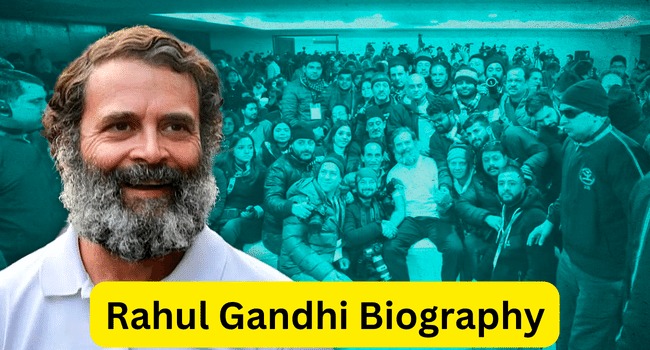
Rahul Gandhi, born on June 19, 1970, in Delhi, India, is the son of Rajiv Gandhi and Sonia Gandhi. He hails from the influential Nehru-Gandhi family, which has been a cornerstone of Indian politics since the country’s independence. His grandmother, Indira Gandhi, and great-grandfather, Jawaharlal Nehru, were both Prime Ministers of India. Growing up in a politically charged environment, Rahul was exposed to the intricacies of politics from a young age.
Education and Professional Beginnings:
Rahul Gandhi completed his schooling in Delhi and later pursued higher education abroad. He attended St. Stephen’s College in Delhi and then went on to earn a Bachelor’s degree in International Relations from Harvard University. After his education, he worked at various financial institutions, including a management consulting firm in London.
Entry into Politics and Struggles:
Rahul Gandhi officially entered politics in 2004 by contesting the Lok Sabha (lower house of parliament) elections from the constituency of Amethi, a traditional stronghold of the Nehru-Gandhi family. Initially, he faced challenges in establishing himself as a political leader. Despite his family’s legacy, gaining acceptance and support from the public and party members was not easy.
One of Rahul’s major struggles was to connect with the masses effectively. Critics often accused him of lacking a charismatic presence and questioned his ability to lead a diverse and complex nation like India. He faced criticism for his occasional lack of clarity on policy matters and failure to articulate a strong vision for the future.
Strengths and Leadership Qualities:
While facing various challenges, Rahul Gandhi also demonstrated several strengths and leadership qualities. He has been praised for his empathy and connect with the common people, often visiting and empathizing with those affected by various issues, such as farmers’ protests and natural disasters. Rahul’s willingness to listen to people’s grievances has garnered him some support and loyalty among certain sections of the population.
Another strength lies in his ability to engage with the youth and connect with the younger generation, often advocating for their interests and concerns. Rahul Gandhi has also shown dedication to promoting women’s empowerment and representation in politics.
Controversies and Criticisms:
Throughout his political career, Rahul Gandhi has faced controversies and attracted criticism from opponents and even some within his own party. Some of the major controversies include:
- Dynastic Politics: One of the most significant criticisms leveled against Rahul Gandhi is his association with the Nehru-Gandhi family and the perceived promotion of dynastic politics. Critics argue that political leadership should be based on merit and not solely on family lineage.
- Ineffectiveness as an Opposition Leader: Rahul has faced criticism for his role as the leader of the opposition, with some questioning his ability to provide a strong counter to the government’s policies and decisions.
- Controversial Statements: Certain remarks made by Rahul Gandhi have landed him in controversy. For instance, his “suit-boot ki sarkar” comment against the government was seen by some as divisive and lacking substance.
Conclusion:
Rahul Gandhi’s journey in politics has been a mix of struggles, strengths, and controversies. As a scion of the Nehru-Gandhi family, he inherited both the advantages of a political legacy and the burdens of expectations. While he has shown determination and empathy in connecting with people, he continues to grapple with challenges to establish himself as a formidable national leader.
Whether Rahul Gandhi can overcome the criticisms and controversies to carve a lasting political legacy remains uncertain. His future in Indian politics will depend on how he addresses these challenges and evolves as a leader capable of navigating the complexities of the nation’s political landscape.