Tag: performance

  • Goodbye Google Chrome? Zoho Launches Ulaa Browser as India’s Better Alternative

    Goodbye Google Chrome? Zoho Launches Ulaa Browser as India’s Better Alternative

    Ulaa Browser : In May 2023, Zoho Corporation, the Chennai-based tech giant, launched Ulaa, a privacy-first, Chromium-based web browser that’s been hailed as a “Made in India” alternative to Google Chrome. After winning India’s Indigenous Browser Development Challenge (IWBDC) and rolling out Ulaa Enterprise in May 2025, Ulaa has sparked buzz as a potential “Chrome killer.” Social media platforms are abuzz with users praising its speed and privacy features, but does it truly outshine Chrome? Let’s compare the two across privacy, performance, usability, and more to find out.

    What is Ulaa?

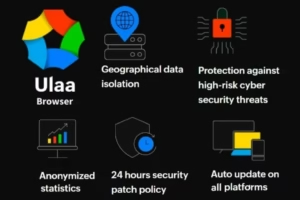
    Ulaa is a free browser available on Windows, macOS, Linux, Android, and iOS, developed by Zoho, the company behind tools like Zoho CRM and Mail. It emphasizes user privacy, blocks trackers and ads by default, and integrates tightly with Zoho’s ecosystem. The Enterprise edition, launched in 2025, adds advanced security controls and AI features powered by Zoho’s Zia assistant, appealing to businesses and privacy-focused users.

    So, how does Ulaa stack up against Google Chrome, which holds a dominant 65% global market share? Let’s break it down.

    Ulaa Browser
    Ulaa Browser

    Privacy: Ulaa’s Strongest Suit

    Ulaa is built for users who value privacy, setting it apart from Chrome’s data-heavy approach:

    • Tracker and Ad Blocking: Ulaa automatically blocks trackers, ads, and browser fingerprinting, minimizing your online footprint.
    • DuckDuckGo Default: It uses the privacy-centric DuckDuckGo as its default search engine, avoiding Google’s ecosystem.
    • Browser ID Reset: Each session starts with a fresh browser ID, making cross-site tracking difficult.
    • End-to-End Encryption: Sync data (bookmarks, passwords, etc.) is fully encrypted, and Zoho claims it collects no telemetry data.
    • Motion Sensor Blocking: Ulaa disables access to device motion sensors, a lesser-known tracking vector.

    Chrome, by contrast, relies on Google’s data collection for targeted advertising. To achieve similar privacy protections, you’d need extensions like uBlock Origin or Privacy Badger. For privacy-conscious users, Ulaa is the clear winner.

    Performance: Chrome Holds the Edge

    Speed and resource efficiency are critical for a smooth browsing experience. Here’s how they compare:

    • Ulaa: User reviews praise its quick startup and smooth performance for light to moderate use. However, it consumes more CPU and RAM than Chrome, especially with multiple tabs (e.g., 500MB+ idle with 10 tabs, spawning more processes). Its memory saver mode helps but isn’t as refined as Chrome’s.
    • Chrome: Known for its optimization, Chrome handles heavy multitasking and complex web apps with ease, using tab hibernation to keep resource usage low.

    Recent benchmarks (as of September 2025) show Chrome outperforming Ulaa in JavaScript execution and page load times, especially on demanding sites like video editors or gaming platforms. If speed is your priority, Chrome remains the leader.

    Ease of Use: Familiarity vs. Features

    Both browsers are user-friendly but cater to different audiences:

    • Ulaa (9.1/10 on user reviews): Its clean interface, customizable dashboards (minimal or smart with tracker stats), and browsing modes (Work, Personal, Kids) are popular. However, non-Zoho users may face a slight learning curve, and some report occasional login issues with Zoho IDs.
    • Chrome (9.6/10 on user reviews): Chrome’s minimalist design and universal familiarity make it effortless to use. Its integration with Google services like Gmail and Drive is a plus for many.

    Chrome wins for simplicity, but Ulaa’s unique features—like isolated modes and Zoho app integration—make it a productivity gem once mastered.
    Ulaa Browser
    Ulaa Browser

    Extensions and Ecosystem: Chrome’s Strength

    Extensions are a browser’s lifeblood, and both being Chromium-based helps with compatibility:

    • Ulaa: Supports most Chrome Web Store extensions, but its native library is smaller. Built-in tools like an ad blocker and password manager reduce the need for some add-ons, but power users may find the options limited.
    • Chrome: With a vast extension library and near-universal compatibility, Chrome is the go-to for customization.

    If you rely on niche extensions or developer tools, Chrome’s ecosystem is unmatched. Ulaa Browser is improving but still lags behind.

    Security: A Tight Race

    Security is a priority for both browsers, with different strengths:

    • Ulaa: Features auto-updates, browser ID rotation, and robust privacy controls. The Enterprise edition offers IT admin tools like policy enforcement and data loss prevention, ideal for businesses.
    • Chrome: Google’s frequent patches and Safe Browsing protect against phishing and malware, but its open extension ecosystem can introduce risks if you install unverified add-ons.

    For individuals, it’s a tie—Ulaa’s privacy focus balances Chrome’s patching prowess. Businesses may lean toward Ulaa Browser Enterprise for its advanced controls.

    Battery and Memory: Chrome’s Efficiency

    Battery life is key, especially for mobile and laptop users:

    • Ulaa: Performs decently on mobile, but user feedback notes higher battery drain than Chrome, particularly during video streaming or heavy tab usage.
    • Chrome: Its tab hibernation and optimized rendering make it more power-efficient for prolonged use.

    For low-spec devices or extended sessions, Chrome is the better choice.

    Ulaa Browser
    Ulaa Browser

    Integration: Ecosystem Matters

    Your preferred apps can sway your choice:

    • Ulaa: A boon for Zoho users, offering one-click SSO login to Zoho apps (CRM, Mail, etc.) and Zia AI for searching across Zoho data. It’s less compelling outside the Zoho ecosystem.
    • Chrome: Ideal for Google Workspace users, with seamless access to Gmail, Drive, and Meet.

    Zoho users will love Ulaa’s integration; Google loyalists will stick with Chrome.

    What Users Are Saying

    As of September 30, 2025, social media and reviews reflect strong opinions:

    • Ulaa Fans: Users praise its “fast, ad-free browsing” and privacy focus, with many in India switching for “Swadeshi” pride. It earns 4.5/5 on app stores for its sleek UI and speed.
    • Critics: Some complain about crashes or high RAM usage (“Ulaa eats resources”). A few mention Zoho ID login bugs, though Zoho’s support is responsive.
    • Chrome’s Grip: Chrome’s reliability and speed keep it dominant for most users.

    The Verdict: Is Ulaa Better Than Chrome?

    Ulaa Browser is a bold Indian innovation, excelling in privacy and Zoho integration. It’s ideal if you:

    • Want to escape Google’s tracking and prioritize privacy.
    • Use Zoho apps and value a tailored browsing experience.
    • Support India’s push for homegrown tech.

    Also Read This : ICC Men’s T20 world cup 2026 : A Preview of Cricket’s Biggest Showdown

    Chrome, however, leads in:

    • Performance and battery efficiency.
    • Extension variety and compatibility.
    • Google ecosystem integration.

    Final Take: Ulaa Browser isn’t a Chrome killer yet, but it’s a strong contender for privacy hawks and Zoho users. If you need speed, extensions, or Google’s ecosystem, Chrome—or alternatives like Brave—may still be your go-to.
  • Virat Kohli & Rohit Sharma Drop Out of ICC ODI Rankings : Retirement Speculation Grows

    Virat Kohli & Rohit Sharma Drop Out of ICC ODI Rankings : Retirement Speculation Grows

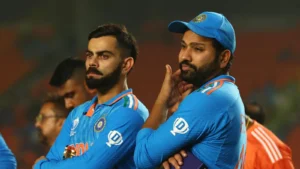
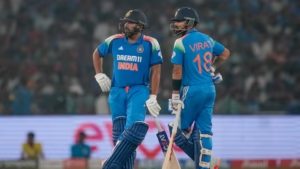
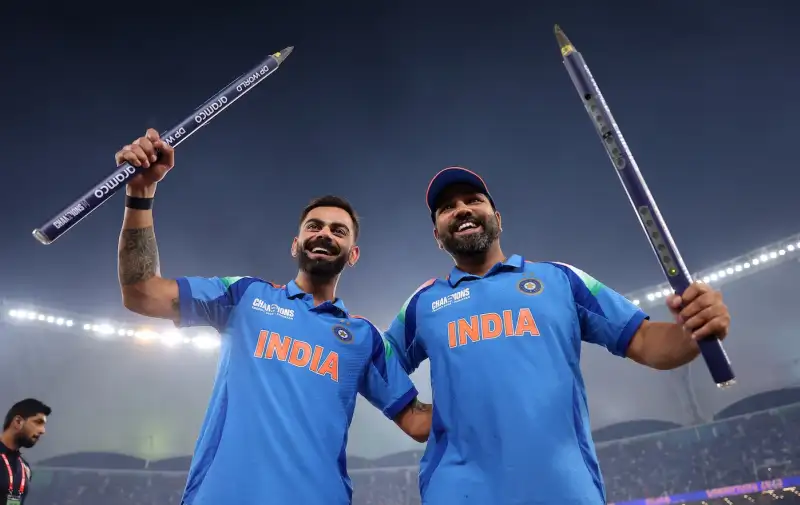
    ICC ODI Rankings : The cricketing world woke up to a seismic shock on August 20, 2025, as Indian cricket icons Virat Kohli and Rohit Sharma mysteriously disappeared from the ICC Men’s ODI Batting Rankings. Just a week ago, Rohit held the No. 2 spot and Kohli was at No. 4, trailing only Shubman Gill and Babar Azam. Their sudden absence—not just from the top 10 but from the entire top 100—has ignited a firestorm of speculation about their potential retirement from One-Day Internationals (ODIs). Social media platforms, especially X, are buzzing with fan reactions, while analysts and former players weigh in on what this could mean for Indian cricket.

    ICC ODI Rankings Riddle: A Glitch or a Hint?

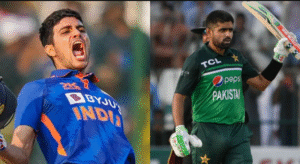
    The latest ICC ODI rankings update placed Shubman Gill at No. 1 and Babar Azam at No. 2, with no trace of Kohli or Rohit. This is particularly puzzling given their active status and stellar performances in India’s recent ICC Champions Trophy 2025 campaign in the UAE. Kohli smashed a century against Pakistan and an 84 in the semi-final against Australia, while Rohit delivered a match-defining 76 in the final. Both players remain integral to India’s ODI setup, making their exclusion from the rankings highly unusual.

    ICC ODI rankings update Shubman Gill at No. 1 and Babar Azam at No. 2
    ICC ODI rankings update Shubman Gill at No. 1 and Babar Azam at No. 2

    The most likely explanation is a technical glitch in the ICC’s ranking system. ICC protocols typically remove players only after prolonged inactivity (usually 12–18 months), which doesn’t apply here. Neither player has announced retirement from ODIs, and the ICC has yet to issue a statement. Fans and experts expect the rankings to be corrected in the next update, but the absence of clarity has fueled rampant speculation.

    Social Media Erupts: #KohliRohit Trends on X

    ICC ODI Rankings : The news sent shockwaves across X, with hashtags like #RohitSharma and #ViratKohli trending globally. Fans expressed a mix of disbelief, concern, and frustration. One user posted, “No Rohit, no Virat in ODI rankings? Is this a mistake or are they retiring??” Another wrote, “ICC needs to fix this ASAP. Legends like Kohli and Rohit can’t just vanish!” Some speculated about retirement, with a user commenting, “If Virat and Rohit retire from ODIs, it’s the end of an era for Indian cricket.”

    The emotional outpouring reflects the duo’s colossal stature. Kohli, with 14,181 ODI runs at an average of 57.88 and 51 centuries, and Rohit, with 11,168 runs at 48.76 and 32 centuries, are among the format’s all-time greats. Their leadership—Rohit as captain and Kohli as a former skipper—has defined India’s white-ball dominance for over a decade.

    ICC ODI rankings
    ICC ODI rankings

    Retirement Speculation: Context and Clues

    ICC ODI Rankings : The rankings controversy comes at a time when both players are at career crossroads. Kohli (36) and Rohit (38) retired from T20Is after India’s 2024 T20 World Cup victory and from Test cricket in May 2025, following a grueling Border-Gavaskar Trophy series in Australia. Their ODI futures have been under scrutiny, especially with the Board of Control for Cricket in India (BCCI) focusing on youth for the 2027 ODI World Cup.

    A recent Dainik Jagran report stirred the pot, suggesting that the BCCI might mandate Kohli and Rohit to play in the Vijay Hazare Trophy—India’s domestic one-day tournament—to prove their form and fitness for ODI selection. Non-compliance could reportedly push them toward retirement after India’s upcoming ODI series against Australia in October 2025. However, a BCCI source, quoted by PTI, dismissed these claims, stating that no discussions about their ODI retirement have occurred. The board’s current focus is on the Asia Cup T20 and the 2026 T20 World Cup, with ODI plans on hold.

    Voices from the Cricketing Fraternity

    Former cricketers have been vocal about the situation. Aakash Chopra opined that Kohli and Rohit may have retired from the “wrong format” by quitting Tests instead of ODIs. He noted that the sparse ODI schedule—only nine ODIs before the next IPL—makes it tough for senior players to maintain rhythm without regular competitive cricket. Sourav Ganguly, however, advocated for their continued inclusion, emphasizing their unmatched white-ball records and leadership. “If they’re performing, they should play,” Ganguly said. Suresh Raina echoed this, highlighting their chasing prowess and mentorship for younger players like Gill and Yashasvi Jaiswal.

    India’s ODI Roadmap: What Lies Ahead?

    India’s ODI calendar includes three matches against Australia (October 19–25, 2025), three against South Africa (November 30–December 6, 2025), three against New Zealand (January 2026), and a potential series in Bangladesh (August 2025, yet to be confirmed). This gives Kohli and Rohit at least 24 ODIs before the 2027 World Cup to solidify their legacy. Kohli has publicly expressed his desire to play the 2027 tournament, while Rohit has been more reserved, citing form and external factors as key determinants.

    ICC ODI rankings
    ICC ODI rankings

    ICC ODI Rankings : The BCCI’s youth-focused strategy is evident, with players like Shubman Gill, Yashasvi Jaiswal, and Sai Sudharsan being groomed as future stars. Yet, the experience and match-winning ability of Kohli and Rohit remain invaluable, especially in high-stakes tournaments.

    A Storm in a Teacup?

    While the removal of Virat Kohli and Rohit Sharma from the ICC ODI rankings has sparked intense speculation, it’s likely a technical error rather than a retirement signal. Their recent performances, active status, and lack of official retirement announcements point to a glitch that the ICC will likely rectify soon. However, the episode has brought their ODI futures into sharp focus, with fans and experts debating their roles in a transitioning Indian team.

    Also Read This : MG Windsor EV : A Comprehensive Review of India’s Top-Selling Electric Crossover

    ICC ODI Rankings : As India gears up for a packed ODI schedule, all eyes will be on Kohli and Rohit in the Australia series. Will they silence the doubters and march toward the 2027 World Cup, or is this the beginning of the end for two of cricket’s modern giants? Only time will tell, but for now, the cricketing world holds its breath.