Tag: Pahalgam terror attack

  • India-Pakistan Tensions Escalate Under Operation Sindoor

    India-Pakistan Tensions Escalate Under Operation Sindoor

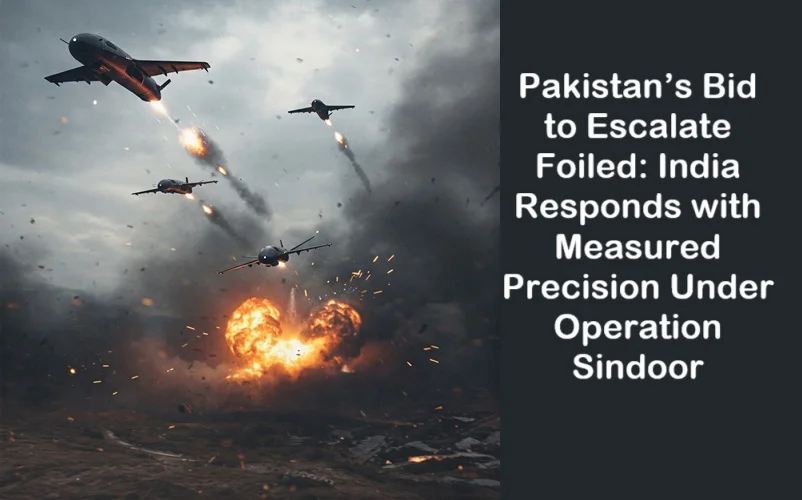
    Operation Sindoor : On April 22, 2025, a horrific terror attack in Pahalgam, Jammu and Kashmir, claimed the lives of 26 civilians, igniting a fresh wave of conflict between India and Pakistan. The attack, attributed to Pakistan-based terror group Jaish-e-Mohammad, prompted India to launch Operation Sindoor, a series of precision airstrikes targeting terror infrastructure across the border. This blog explores the unfolding crisis, its implications, and the delicate balance of power in the region.


    View this post on Instagram


    A post shared by AVSPOST (@avspost)

    `

    Operation Sindoor: India’s Decisive Response

    India’s military response was swift and calculated. Airstrikes hit nine terror launchpads in Pakistan and Pakistan-occupied Kashmir (PoK), neutralizing key Jaish-e-Mohammad operatives, including Abdul Rauf Azhar, a notorious figure linked to the IC-814 hijacking and the 2019 Pulwama attack. The Indian Air Force, leveraging advanced intelligence, ensured minimal collateral damage while crippling terror networks. The operation underscored India’s zero-tolerance policy toward cross-border terrorism, with the government emphasizing its right to self-defense.

    Pakistan’s Retaliation and India’s Defense

    Pakistan retaliated aggressively, launching missiles and drones targeting military installations in 15 Indian cities across Jammu, Punjab, Gujarat, and Rajasthan. However, India’s state-of-the-art S-400 air defense system proved formidable, intercepting missiles and downing drones with precision. A significant blow came when Indian forces shot down a Pakistani F-16 jet near Sargodha and disabled Pakistan’s air defense radar in Lahore. These actions highlighted India’s technological and strategic superiority, though the human cost of the conflict remains a grim reality.
    India-Pakistan Tensions : operation sindoor
    India-Pakistan Tensions : operation sindoor

    The Human and Strategic Toll

    The escalation has not been without loss. At least 16 civilians, including women and children, and one Indian soldier have been killed in the crossfire. Blackouts have been enforced in border states, and 24 airports in northern India are closed, disrupting over 400 flights. The Indian government has banned live media coverage of military operations to curb panic and misinformation, while security measures have been tightened nationwide. On the Pakistani side, unverified reports suggest heavy casualties, adding to the regional instability.

    A Call for De-escalation

    The international community has responded with urgency. U.S. Secretary of State Marco Rubio has engaged both nations, urging restraint and dialogue. Former U.S. President Donald Trump described the conflict as a “tit-for-tat” cycle, expressing hope for resolution. Domestically, voices like PDP leader Mehbooba Mufti have called for diplomacy over military action, emphasizing the suffering in Jammu and Kashmir. The situation remains volatile, with the Indian Air Force on high alert and Pakistan signaling readiness for further retaliation.

    Also Read This: India-Pakistan conflict 

    Looking Ahead

    As tensions simmer, the India-Pakistan conflict under Operation Sindoor serves as a stark reminder of the fragile peace in South Asia. While India’s military prowess has sent a strong message, the path to lasting stability lies in addressing the root causes of terrorism and fostering diplomatic engagement. For now, the region holds its breath, hoping cooler heads prevail in this high-stakes standoff.

  • Pakistan airspace closure : India Closes Airspace to Pakistani Aircraft Until May 23, 2025

    Pakistan airspace closure : India Closes Airspace to Pakistani Aircraft Until May 23, 2025

    Pakistan airspace closure

    New Delhi, April 30, 2025 – India has imposed a complete ban on Pakistani aircraft entering its airspace, effective immediately until May 23, 2025, escalating tensions between the two neighboring countries. The decision follows a series of retaliatory measures triggered by the recent Pahalgam terror attack and Pakistan’s own airspace restrictions on Indian flights.

    Pakistan airspace closure : Airspace Ban Announced

    The Ministry of Civil Aviation (MoCA) issued a Notice to Airmen (NOTAM) declaring that no Pakistan-registered aircraft, including commercial, leased, operated carriers, or military flights, will be permitted to fly through Indian airspace. This move comes in response to Pakistan’s closure of its airspace to Indian airlines last week, which disrupted over 800 weekly flights. The Indian ban is seen as a direct countermeasure, intensifying the ongoing diplomatic and economic standoff.

    Pakistan airspace closure
    Pakistan airspace closure

    Impact on Pakistani Airlines

    The closure will significantly affect Pakistan International Airlines (PIA) and other Pakistani carriers, which rely on Indian airspace for efficient routes to Southeast Asian destinations like Kuala Lumpur, Singapore, and Thailand. Forced to reroute over China or Sri Lanka, these airlines face increased fuel costs, longer flight times, and potential fare hikes, adding financial strain to an already struggling aviation sector.

    Fallout from Pahalgam Attack

    The airspace restrictions stem from the deadly April 22 terror attack in Pahalgam, which killed 26 people and was claimed by The Resistance Front (TRF), a proxy of Pakistan-based Lashkar-e-Taiba. India has accused Pakistan of supporting cross-border terrorism, with Foreign Secretary Vikram Misri stating that such measures will persist until Pakistan takes “credible and irrevocable” steps to curb such activities. The attack has fueled a series of retaliatory actions, including India’s suspension of the Indus Waters Treaty and closure of the Attari check post.

    Pakistan airspace closure
    Pakistan airspace closure

    Challenges for Indian Carriers

    Indian airlines, already impacted by Pakistan’s airspace ban, are facing operational challenges. Major carriers like Air India and IndiGo have had to reroute flights over the Arabian Sea, increasing fuel costs and travel times. Some ultra-long-haul flights to North America now require technical stops in Europe for refueling, leading to potential fare increases and passenger inconvenience. The government is working with airlines to mitigate disruptions, but the situation remains fluid.

    Also Read This : How to Stop Smartphone Addiction : A Practical Guide

    Broader Diplomatic Tensions

    The airspace closures are part of a broader escalation, with both nations reducing diplomatic presence and Pakistan suspending trade with India. The international community is closely monitoring the situation, as the nuclear-armed neighbors remain on high alert. The ongoing tit-for-tat measures raise concerns about further economic fallout and the potential for prolonged regional instability.

    With inputs from PTI and ANI

  • Pahalgam Terror Attack Leaves 26-28 Dead, Sparks Global Condemnation

    Pahalgam Terror Attack Leaves 26-28 Dead, Sparks Global Condemnation

    Pahalgam, April 22, 2025 :- A horrific Pahalgam terror attack rocked the tranquil Baisaran meadow near Pahalgam, Anantnag district, Jammu and Kashmir, on Tuesday, leaving at least 28 dead, mostly tourists, and over 20 injured. The Pahalgam terror attack, executed by 3-6 militants from The Resistance Front (TRF), a Lashkar-e-Taiba offshoot, is among the deadliest since the 2019 Pulwama bombing.

    Jammu and Kashmir : Pahalgam terror attack
    Jammu and Kashmir :  terror attack

    Pahalgam Carnage: Civilians Singled Out

    The Pahalgam terror attack struck around 2:50 PM in a remote, scenic area reachable only by foot or pony, hampering rescue efforts. The attackers, some believed to be Pakistani nationals, targeted civilians, singling out non-Muslims by checking identities and demanding recitation of Islamic verses. Victims of the Pahalgam terror attack included Indian tourists from Gujarat, Karnataka, and Maharashtra, two locals, two foreigners (from Nepal and the UAE), and Indian Navy officer Lt. Vinay Narwal, on his honeymoon.

    Jammu and Kashmir : terror attack
    Jammu and Kashmir : terror attack

    Pahalgam Attack: TRF Claims, Forces Launch Manhunt

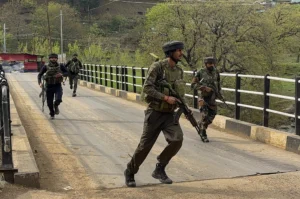
    Security forces, including the Army, CRPF, and J&K Police, launched an extensive manhunt, employing helicopters, special forces, and sniffer dogs to track the perpetrators of terror attack. The National Investigation Agency (NIA) is supporting the probe, with heightened security across Kashmir. The TRF claimed responsibility for terror attack, citing alleged demographic changes post-2019 Article 370 abrogation.

    Jammu and Kashmir : terror attack
    Jammu and Kashmir : terror attack

    Pahalgam Terror Attack Sparks Global Condemnation

    Prime Minister Narendra Modi, cutting short a Saudi Arabia trip, and Home Minister Amit Shah, who visited Pahalgam, condemned the Pahalgam terror attack and promised justice. Global leaders, including U.S. President Donald Trump, Russian President Vladimir Putin, and UN Secretary-General Antonio Guterres, denounced terror attack. Kashmir observed a shutdown, with local newspapers printing black front pages. The Pahalgam terror attack has devastated J&K’s tourism industry, triggering mass cancellations.

    Also Read This: Jammu and Kashmir: Omar Abdulla advice for better coordination with the center and the Governor

    Authorities are intensifying efforts to apprehend those behind terror attack as the region mourns.