Tag: Pahalgam attack

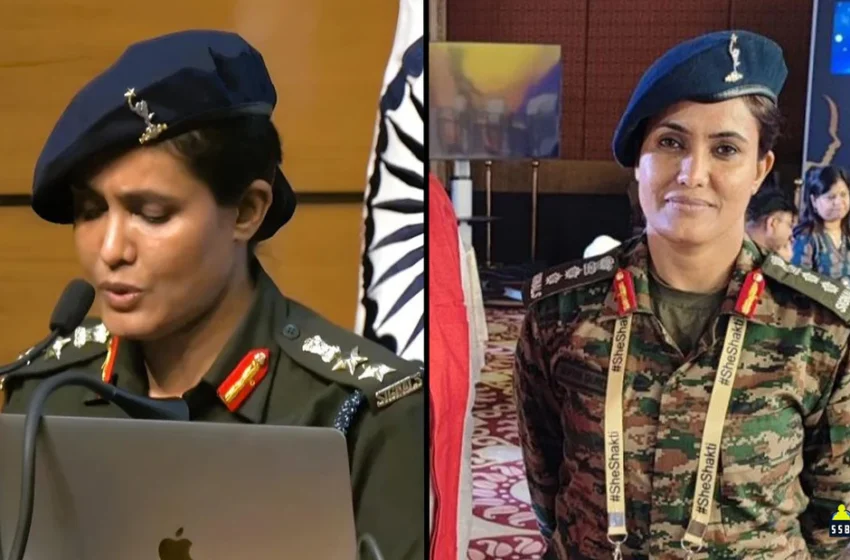
  • Colonel Sofiya Qureshi : Trailblazing Indian Army Officer, Peacekeeper, and Hero of Operation Sindoor

    Colonel Sofiya Qureshi : Trailblazing Indian Army Officer, Peacekeeper, and Hero of Operation Sindoor

    Born in 1974 in Vadodara, Gujarat, Colonel Sofiya Qureshi grew up in a family steeped in military tradition. Her grandfather and father, Taj Mohammad, served in the Indian Army, instilling in her a sense of duty and patriotism. Raised with secular values, Sofiya traces her lineage to a great-grandmother who fought alongside Rani Laxmibai in the 1857 revolt. She and her twin sister, Shyna Sunsara, were educated at Kendriya Vidyalaya, EME, in Vadodara. Sofiya excelled academically, earning a B.Sc. in Chemistry and an M.Sc. in Biochemistry from Maharaja Sayajirao University (MSU), Baroda. She briefly worked as an assistant lecturer at MSU and was enrolled in a Ph.D. program before choosing a military career, inspired by her grandmother’s stories of valor.

    Military Career (1999–Present)

    Colonel Sofiya Qureshi joined the Indian Army in 1999 through the Officers Training Academy (OTA) in Chennai, commissioned into the Corps of Signals. Her career spans over two decades, marked by pioneering leadership, operational excellence, and contributions to peacekeeping.

    • Early Service and Operations: As a young officer, Sofiya earned commendations for her role in counter-insurgency operations on the Punjab border during Operation Parakram (2001–2002), a tense military standoff following the Parliament attack. She also provided critical communication support during flood relief operations in Northeast India, showcasing her versatility.
    • UN Peacekeeping Mission (2006): Sofiya served as a military observer in the United Nations Peacekeeping Mission in the Democratic Republic of Congo. Over her six-plus years in peacekeeping roles, she contributed to ceasefire monitoring, humanitarian aid, and protecting vulnerable populations, particularly women and children. A notable act was reuniting a missing Congolese child with her family, earning local admiration.
    • Historic Leadership (2016): In 2016, as a Lieutenant Colonel, Sofiya made history as the first Indian woman officer to lead a 40-member Indian Army contingent at Exercise Force 18, a multinational military exercise in Pune involving ASEAN Plus countries. As the only female contingent commander among 18 nations, she earned praise from then-Lt. Gen. Bipin Rawat for her strategic acumen and leadership.
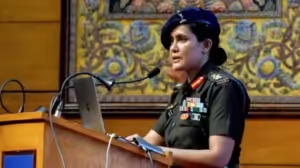
    • Operation Sindoor (2025): Promoted to Colonel, Sofiya gained national prominence for leading the media briefing alongside Wing Commander Vyomika Singh and Foreign Secretary Vikram Misri after India’s precision strikes on nine terrorist hideouts in Pakistan and Pakistan-occupied Kashmir. The operation, a response to the April 22, 2025, Pahalgam terror attack, was a success, and Sofiya’s articulate briefing emphasized justice for victims and countered Pakistani misinformation.
    Colonel Sofiya Qureshi
    Colonel Sofiya Qureshi

    Colonel Sofiya Qureshi : Personal Life

    Colonel Sofiya Qureshi is married to Colonel Tajuddin Bagewadi, an officer in the Mechanised Infantry from Konnur village, Belagavi, Karnataka. The couple met while serving in Jhansi and married in 2015. They have a son, Sameer, who is preparing to join the Air Force. Her twin sister, Shyna Sunsara, is a model and film producer in Mumbai. Sofiya’s family emphasizes unity and service, with her father stating, “We are first Indians and then Hindus or Muslims.” Despite her public profile, Sofiya maintains privacy, and fake social media accounts claiming to be hers have been debunked.

    Colonel Sofiya Qureshi
    Colonel Sofiya Qureshi

    Legacy and Public Perception

    Colonel Sofiya Qureshi is celebrated as a trailblazer for women in the Indian armed forces, embodying gender equality in high-stakes roles. Her leadership in Operation Sindoor and Exercise Force 18 has made her a household name, particularly in Vadodara and Belagavi, where she is honored as a local hero. However, some critiques highlight the use of her image to bolster nationalist narratives, occasionally overshadowing broader conflict-related issues. Her calm, authoritative presence and dedication to service continue to inspire, cementing her as a symbol of resilience and empowerment.

    Also Read This: Meet Flight Lieutenant Shivangi Singh : India’s Trailblazing Rafale Pilot
  • India on Alert: Civil Defence Drills Ordered as Tensions with Pakistan Escalate

    India on Alert: Civil Defence Drills Ordered as Tensions with Pakistan Escalate

    Civil Defence Drills

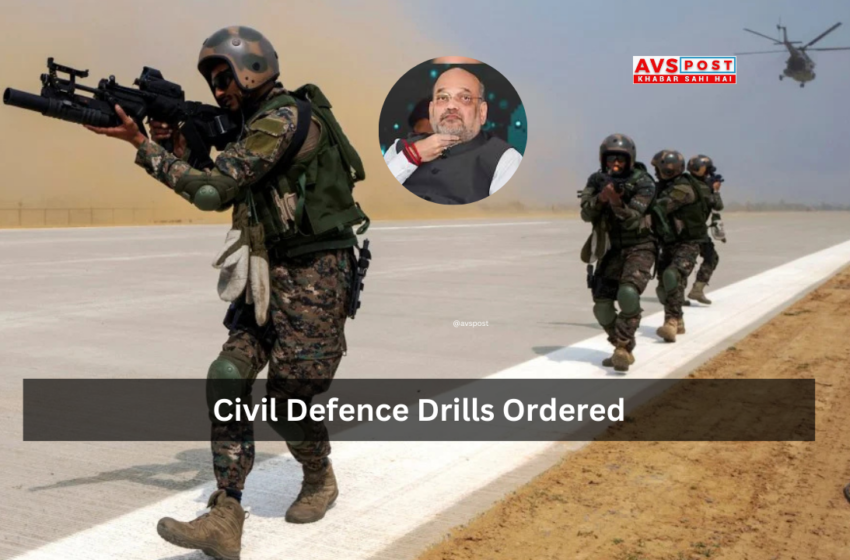
    India’s Ministry of Home Affairs (MHA) issued a directive for multiple states to conduct civil defence mock drills on May 7, a move driven by heightened tensions with Pakistan following the devastating April 22 terrorist attack in Pahalgam, Jammu and Kashmir. The attack, which claimed 26 lives, mostly tourists, has pushed the two nuclear-armed neighbors to the brink, with fears of conflict looming large. These drills, evoking memories of the 1971 India-Pakistan war, signal India’s resolve to prepare its citizens for any escalation.

    India’s Ministry of Home Affairs (MHA)
    India’s Ministry of Home Affairs (MHA) : civil defence drills

    The Trigger: Pahalgam and Its Fallout

    The Pahalgam attack, the deadliest in Kashmir since 2000, has inflamed India-Pakistan relations. India accuses Pakistan of orchestrating the assault, while Pakistan denies involvement, calling for a neutral probe. The attack has sparked a series of retaliatory measures from India: suspension of the 1960 Indus Waters Treaty, a ban on Pakistani airlines in Indian airspace, and the cancellation of visas for Pakistani nationals. Along the Line of Control (LoC), both nations have exchanged fire, with Pakistan claiming civilian casualties and India asserting effective counterstrikes. Pakistan’s recent warning of an imminent Indian military strike, based on “credible intelligence,” has further raised the stakes.

    Civil Defence Drills : A Proactive Response

    The MHA’s order for civil defence drills is a calculated step to ensure civilian readiness amid these volatile developments. Scheduled for May 7, the drills include:

    • Air Raid Siren Activation: Testing warning systems to alert civilians of potential attacks.
    • Public Training: Educating citizens, including students, on protective measures like taking cover or evacuating to bunkers.
    • Blackout Exercises: Simulating power outages to assess security preparedness, as recently practiced in Ferozepur Cantonment.
    • Camouflaging Key Sites: Early efforts to shield critical infrastructure from detection.
    • Evacuation Planning: Updating and rehearsing strategies to move civilians to safety.
    Civil Defence Drills
    Civil Defence Drills

    In border regions like Poonch, Jammu and Kashmir, these preparations are particularly urgent. Schools are training students to dive under desks or flee to bunkers during shelling, a grim reminder of the region’s vulnerability.

    The Bigger Picture: Military and Diplomatic Moves

    The civil defence initiative aligns with India’s broader response. Prime Minister Narendra Modi has given the armed forces “complete operational freedom,” with the Indian Air Force conducting exercises featuring Rafale and Su-30MKI jets. The National Investigation Agency is investigating the Pahalgam attack, and security has been tightened nationwide, with strict checks on Pakistani nationals in India.

    The Bigger Picture: Military and Diplomatic Moves
    civil defence drills  :  The Bigger Picture: Military and Diplomatic Moves

    On the diplomatic front, global powers are urging restraint. The U.S. has backed India’s right to combat terrorism but emphasized de-escalation, with Secretary of State Marco Rubio and Defense Secretary Pete Hegseth issuing measured statements. Russia, Iran, and others have echoed similar calls, while Pakistan has sought Russia’s mediation and proposed a joint investigation into the attack. Pakistan’s military, meanwhile, is conducting its own exercises near the LoC, signaling readiness for any Indian move.

    A Nation on Edge

    The drills reflect the public’s growing unease. Nationwide protests demanding justice for the Pahalgam victims have amplified calls for action, with opposition leaders like Rahul Gandhi pressing for a strong response. In Pakistan, public anxiety is evident, with people searching for terms like “India-Pakistan war” and “Rafale missiles,” wary of India’s military might. For Kashmiris on both sides of the LoC, the threat of conflict is all too real, with villagers preparing bunkers and schools closing in Pakistan-administered areas.

    Historical Echoes and Future Risks

    India and Pakistan have faced similar crises before—three wars since 1947, the 1999 Kargil conflict, and the 2019 Balakot airstrike after the Pulwama attack. Each time, diplomacy or restraint averted all-out war, but the current standoff feels different. The suspension of the Indus Waters Treaty, a cornerstone of bilateral ties, and the lack of robust crisis management channels raise the risk of miscalculation. With India’s 172 nuclear warheads and Pakistan’s 170, any escalation could be catastrophic.

    Civil Defence Drills
    Civil Defence Drills

    A Delicate Balance

    The MHA’s civil defence drills are both a practical necessity and a message of resolve. They prepare India’s citizens for the worst while signaling to Pakistan that India is ready for any eventuality. Yet, the hope remains that cooler heads will prevail. The international community’s push for dialogue and the memory of past de-escalation—like Pakistan’s release of an Indian pilot in 2019—offer a glimmer of optimism. For now, India stands vigilant, its people bracing for an uncertain future as the shadow of conflict lingers.

    Also Read This: ChatGPT Shopping : Revolution or Rough Start?

  • India’s Response to Pahalgam Terror Attack : Visa Restrictions, Treaty Suspension, and Diplomatic Measures

    India’s Response to Pahalgam Terror Attack : Visa Restrictions, Treaty Suspension, and Diplomatic Measures

    Swift Actions Post-Attack Following the terror attack in Pahalgam, the Indian government has taken decisive steps, including suspending the 1960 Indus Waters Treaty and shutting down the Attari Check Post. Prime Minister Narendra Modi convened a Cabinet Committee on Security (CCS) meeting to evaluate the security landscape, instructing all agencies to remain on high alert.

    Visa Ban on Pakistani Nationals 

    Visa Ban for Pakistani Nationals Foreign Secretary Vikram Misri declared that Pakistani nationals are prohibited from entering India under the SAARC Visa Exemption Scheme (SVES). All previously issued SVES visas for Pakistani nationals are now void, and those currently in India under this scheme must leave within 48 hours.

    Foreign Secretary shri vikram misri
    Foreign Secretary shri vikram misri

    Reduction and Expulsion of Diplomatic Staff

    Diplomatic Expulsions and Staff Reductions India has designated the Defence, Naval, and Air Advisors at the Pakistani High Commission in New Delhi as “Persona Non Grata,” requiring their departure within one week. Concurrently, India will withdraw its own Defence, Naval, and Air Advisors from the Indian High Commission in Islamabad, along with five support staff from each mission. By May 1, both High Commissions will reduce their staff from 55 to 30, underscoring strained bilateral relations.

    Condemnation of the Pahalgam Terror Attack and International Support

    Condemnation of the Pahalgam Attack The CCS examined evidence linking Pakistani elements to the Pahalgam attack, interpreting it as an effort to undermine recent peaceful elections and development in Jammu and Kashmir. The committee strongly condemned the attack, extended condolences to the victims’ families, and prayed for the quick recovery of the injured.

    Condemnation and international support of Pahalgam terror attack
    Condemnation and international support of Pahalgam terror attack

    Also Read This : Sugar Detox Results : What Happens When You Stop Eating Sugar for 7 Days

    International Reaction

    International Solidarity Governments worldwide have condemned the attack and voiced support for India. The CCS expressed appreciation for these responses, viewing them as evidence of a global commitment to combating terrorism.