Tag: Operation Sindoor

  • India-Pakistan conflict : Operation Sindoor and the Shattered Ceasefire

    India-Pakistan conflict : Operation Sindoor and the Shattered Ceasefire

    The India-Pakistan conflict has once again thrust South Asia into a state of high alert, with a fragile ceasefire barely holding the line. The spark? A devastating terror attack on April 22, 2025, in Pahalgam, Kashmir, claiming 26 lives. What followed was a rapid escalation that has left the world watching anxiously.

    Operation Sindoor : India Strikes Back

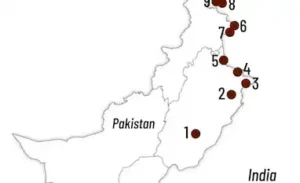
    On May 7, India launched Operation Sindoor, a bold military operation targeting terror infrastructure in Pakistan and Pakistan-occupied Kashmir (PoK). The strikes hit nine terror camps, including Jaish-e-Mohammad’s stronghold in Bahawalpur, eliminating 35-40 personnel. India’s message was clear: terrorism would face severe consequences. The operation was a direct response to the Pahalgam attack, which New Delhi attributed to Pakistan-backed groups.

    India-Pakistan conflict
    India-Pakistan conflict

    India-Pakistan conflict : Pakistan’s Retaliation

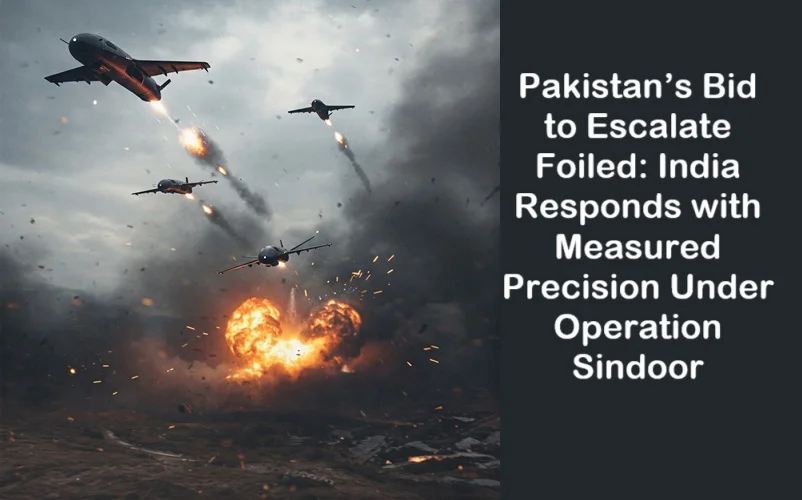
    Pakistan didn’t stay silent. On May 8-9, it launched missile and drone attacks on Indian military bases in Jammu, Udhampur, and Pathankot. Hundreds of Turkish drones, mostly unarmed, tested India’s defenses, with some capturing reconnaissance footage. India’s advanced systems—S-400, Akash, and Barak-8—neutralized the threat, but the provocation was unmistakable. The cost was heavy: two Indian soldiers, including Surendra Singh Moga and BSF Sub-Inspector Md Imteyaz, lost their lives, while Pakistan reported 26 civilian deaths from India’s strikes.

    A Fragile Ceasefire

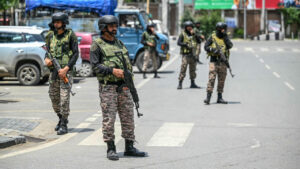
    On May 10, a U.S.-mediated ceasefire brought a temporary pause. But peace was short-lived. By May 11, explosions rocked Srinagar and Jammu, and India accused Pakistan of deploying drones in Barmer, Rajasthan. Pakistan, in turn, claimed India violated the truce. Both nations remain on edge, with India demanding terrorists like Masood Azhar and Hafiz Saeed be handed over, while Pakistan’s troop movements to forward areas hint at further escalation.
    India-Pakistan conflict
    India-Pakistan conflict

    Beyond the Battlefield

    The conflict’s ripples extend far beyond military clashes. India suspended the Indus Waters Treaty, briefly halting water flow from the Baglihar dam, a move with severe implications for Pakistan. Both nations expelled diplomats, canceled visas, and suspended trade. Pakistan closed its airspace, and India abstained from supporting a $1 billion IMF bailout for Pakistan, citing its terrorism links. The human toll is stark: blackouts hit Indian-administered Kashmir, the Indian Premier League paused for a week, and Pakistan’s Twenty20 league was postponed indefinitely.

    The Road Ahead

    The India-Pakistan conflict is a stark reminder of deep-rooted tensions, fueled by decades of mistrust and unresolved issues like Kashmir. The ceasefire, brokered with U.S. and Saudi involvement, hangs by a thread. Social media buzzes with reports of diplomatic fallout and troop movements, though misinformation—like false claims of Imran Khan’s death—clouds the narrative.
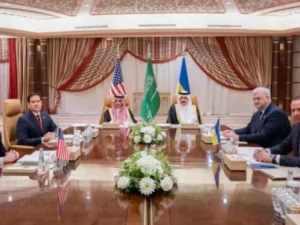
    The ceasefire, brokered with U.S. and Saudi involvement
    The ceasefire, brokered with U.S. and Saudi involvement

    Also Read This : Meet Flight Lieutenant Shivangi Singh : India’s Trailblazing Rafale Pilot

    As both nations stand at a crossroads, the world hopes for de-escalation. But with mutual accusations and no clear path to dialogue, the risk of renewed conflict looms large. What’s next for India and Pakistan? Only time will tell.
  • Colonel Sofiya Qureshi : Trailblazing Indian Army Officer, Peacekeeper, and Hero of Operation Sindoor

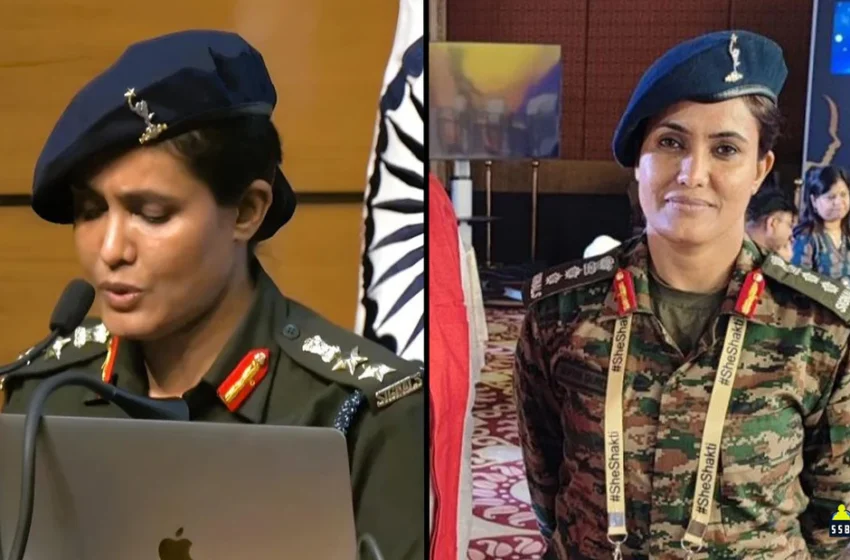
    Colonel Sofiya Qureshi : Trailblazing Indian Army Officer, Peacekeeper, and Hero of Operation Sindoor

    Born in 1974 in Vadodara, Gujarat, Colonel Sofiya Qureshi grew up in a family steeped in military tradition. Her grandfather and father, Taj Mohammad, served in the Indian Army, instilling in her a sense of duty and patriotism. Raised with secular values, Sofiya traces her lineage to a great-grandmother who fought alongside Rani Laxmibai in the 1857 revolt. She and her twin sister, Shyna Sunsara, were educated at Kendriya Vidyalaya, EME, in Vadodara. Sofiya excelled academically, earning a B.Sc. in Chemistry and an M.Sc. in Biochemistry from Maharaja Sayajirao University (MSU), Baroda. She briefly worked as an assistant lecturer at MSU and was enrolled in a Ph.D. program before choosing a military career, inspired by her grandmother’s stories of valor.

    Military Career (1999–Present)

    Colonel Sofiya Qureshi joined the Indian Army in 1999 through the Officers Training Academy (OTA) in Chennai, commissioned into the Corps of Signals. Her career spans over two decades, marked by pioneering leadership, operational excellence, and contributions to peacekeeping.

    • Early Service and Operations: As a young officer, Sofiya earned commendations for her role in counter-insurgency operations on the Punjab border during Operation Parakram (2001–2002), a tense military standoff following the Parliament attack. She also provided critical communication support during flood relief operations in Northeast India, showcasing her versatility.
    • UN Peacekeeping Mission (2006): Sofiya served as a military observer in the United Nations Peacekeeping Mission in the Democratic Republic of Congo. Over her six-plus years in peacekeeping roles, she contributed to ceasefire monitoring, humanitarian aid, and protecting vulnerable populations, particularly women and children. A notable act was reuniting a missing Congolese child with her family, earning local admiration.
    • Historic Leadership (2016): In 2016, as a Lieutenant Colonel, Sofiya made history as the first Indian woman officer to lead a 40-member Indian Army contingent at Exercise Force 18, a multinational military exercise in Pune involving ASEAN Plus countries. As the only female contingent commander among 18 nations, she earned praise from then-Lt. Gen. Bipin Rawat for her strategic acumen and leadership.
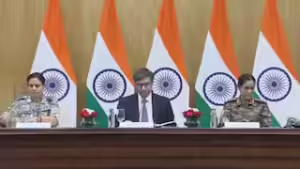
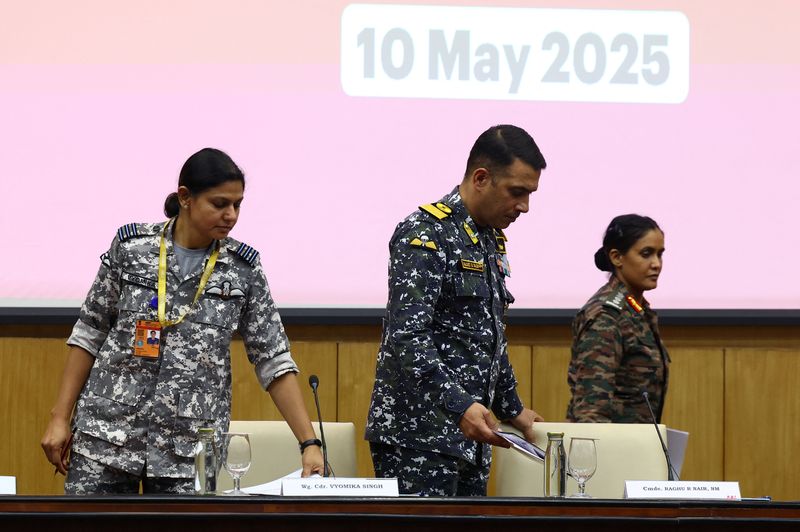
    • Operation Sindoor (2025): Promoted to Colonel, Sofiya gained national prominence for leading the media briefing alongside Wing Commander Vyomika Singh and Foreign Secretary Vikram Misri after India’s precision strikes on nine terrorist hideouts in Pakistan and Pakistan-occupied Kashmir. The operation, a response to the April 22, 2025, Pahalgam terror attack, was a success, and Sofiya’s articulate briefing emphasized justice for victims and countered Pakistani misinformation.
    Colonel Sofiya Qureshi
    Colonel Sofiya Qureshi

    Colonel Sofiya Qureshi : Personal Life

    Colonel Sofiya Qureshi is married to Colonel Tajuddin Bagewadi, an officer in the Mechanised Infantry from Konnur village, Belagavi, Karnataka. The couple met while serving in Jhansi and married in 2015. They have a son, Sameer, who is preparing to join the Air Force. Her twin sister, Shyna Sunsara, is a model and film producer in Mumbai. Sofiya’s family emphasizes unity and service, with her father stating, “We are first Indians and then Hindus or Muslims.” Despite her public profile, Sofiya maintains privacy, and fake social media accounts claiming to be hers have been debunked.

    Colonel Sofiya Qureshi
    Colonel Sofiya Qureshi

    Legacy and Public Perception

    Colonel Sofiya Qureshi is celebrated as a trailblazer for women in the Indian armed forces, embodying gender equality in high-stakes roles. Her leadership in Operation Sindoor and Exercise Force 18 has made her a household name, particularly in Vadodara and Belagavi, where she is honored as a local hero. However, some critiques highlight the use of her image to bolster nationalist narratives, occasionally overshadowing broader conflict-related issues. Her calm, authoritative presence and dedication to service continue to inspire, cementing her as a symbol of resilience and empowerment.

    Also Read This: Meet Flight Lieutenant Shivangi Singh : India’s Trailblazing Rafale Pilot

  • Meet Flight Lieutenant Shivangi Singh : India’s Trailblazing Rafale Pilot

    Meet Flight Lieutenant Shivangi Singh : India’s Trailblazing Rafale Pilot

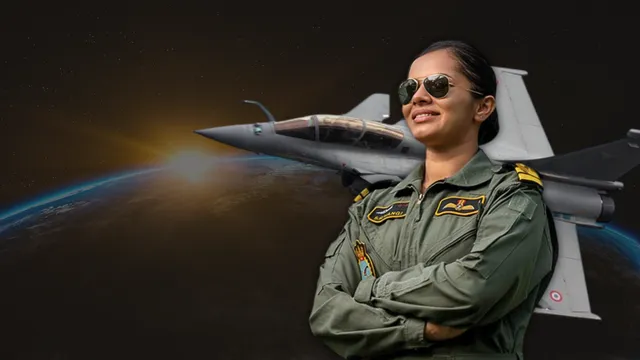
    Flight Lieutenant Shivangi Singh, born in 1995 in Phulwariya, Varanasi, Uttar Pradesh, is the first and only woman pilot to fly India’s Rafale fighter jet. Growing up in a modest family, with her father Kumareshwar Singh running a tours and travels business and her mother Seema Singh working as a teacher, Shivangi’s passion for aviation was sparked early. Visits to the Indian Air Force Museum in Delhi with her maternal grandfather, a retired Army colonel, fueled her dream of flying. A graduate of Banaras Hindu University, she joined the 7 UP Air Squadron NCC, setting the stage for her Air Force career.

    Breaking Barriers in the Indian Air Force

    Commissioned into the Indian Air Force (IAF) in December 2017 as part of its second batch of women fighter pilots, Shivangi initially flew the MiG-21 Bison, a challenging aircraft requiring exceptional piloting skills. Stationed at a Rajasthan border base, she trained alongside Wing Commander Abhinandan Varthaman, a national hero known for downing a Pakistani F-16 in 2019. In 2020, after rigorous conversion training, Shivangi was selected to pilot the Rafale, joining the 17 Squadron “Golden Arrows” in Ambala, Punjab. Her selection marked a historic milestone as the first woman to fly India’s advanced multi-role fighter jet.

    Achievements and Recognition

    Flight Lieutenant Shivangi Singh career is studded with firsts. In 2022, she became the second woman fighter pilot to feature in the IAF’s Republic Day tableau, showcasing the Rafale alongside other advanced aircraft. In 2023, she participated in Exercise Orion in France, the IAF’s first overseas deployment of Rafale jets, earning praise for her skill in multinational wargames. She has also flown missions over eastern Ladakh amid tensions with China, demonstrating the Rafale’s reliability in high-stakes operations. Known as “Rafale Rani,” Shivangi’s journey culminated in her leading the IAF tableau at the 2022 Republic Day parade.

    Flight Lieutenant Shivangi Singh
    Flight Lieutenant Shivangi Singh

    Role in Operation Sindoor

    During the ongoing India-Pakistan tensions under Operation Sindoor, sparked by a terror attack in Pahalgam on April 22, 2025, Shivangi’s expertise as a Rafale pilot has been critical. With the IAF on high alert, her role in the Golden Arrows squadron underscores India’s aerial dominance, particularly in countering Pakistani missile and drone attacks. Her experience in high-intensity missions positions her as a key asset in maintaining air superiority.

    Also Read This: India-Pakistan Tensions Escalate Under Operation Sindoor

    Vision and Impact

    Lieutenant  Shivangi Singh aspires to become an astronaut, eyeing ISRO’s upcoming manned space mission. In interviews, she emphasizes gender equality in the IAF, noting that training and responsibilities are identical for men and women. “I succeeded in a field long reserved for men, and if I can do it, anyone can,” she told AFP. Her story inspires countless young women, proving that determination and skill can shatter glass ceilings. Shivangi’s message to aspiring pilots is clear: “Believe in yourself and dream big.”

  • India-Pakistan Tensions Escalate Under Operation Sindoor

    India-Pakistan Tensions Escalate Under Operation Sindoor

    Operation Sindoor : On April 22, 2025, a horrific terror attack in Pahalgam, Jammu and Kashmir, claimed the lives of 26 civilians, igniting a fresh wave of conflict between India and Pakistan. The attack, attributed to Pakistan-based terror group Jaish-e-Mohammad, prompted India to launch Operation Sindoor, a series of precision airstrikes targeting terror infrastructure across the border. This blog explores the unfolding crisis, its implications, and the delicate balance of power in the region.


    View this post on Instagram


    A post shared by AVSPOST (@avspost)

    `

    Operation Sindoor: India’s Decisive Response

    India’s military response was swift and calculated. Airstrikes hit nine terror launchpads in Pakistan and Pakistan-occupied Kashmir (PoK), neutralizing key Jaish-e-Mohammad operatives, including Abdul Rauf Azhar, a notorious figure linked to the IC-814 hijacking and the 2019 Pulwama attack. The Indian Air Force, leveraging advanced intelligence, ensured minimal collateral damage while crippling terror networks. The operation underscored India’s zero-tolerance policy toward cross-border terrorism, with the government emphasizing its right to self-defense.

    Pakistan’s Retaliation and India’s Defense

    Pakistan retaliated aggressively, launching missiles and drones targeting military installations in 15 Indian cities across Jammu, Punjab, Gujarat, and Rajasthan. However, India’s state-of-the-art S-400 air defense system proved formidable, intercepting missiles and downing drones with precision. A significant blow came when Indian forces shot down a Pakistani F-16 jet near Sargodha and disabled Pakistan’s air defense radar in Lahore. These actions highlighted India’s technological and strategic superiority, though the human cost of the conflict remains a grim reality.

    India-Pakistan Tensions : operation sindoor
    India-Pakistan Tensions : operation sindoor

    The Human and Strategic Toll

    The escalation has not been without loss. At least 16 civilians, including women and children, and one Indian soldier have been killed in the crossfire. Blackouts have been enforced in border states, and 24 airports in northern India are closed, disrupting over 400 flights. The Indian government has banned live media coverage of military operations to curb panic and misinformation, while security measures have been tightened nationwide. On the Pakistani side, unverified reports suggest heavy casualties, adding to the regional instability.

    A Call for De-escalation

    The international community has responded with urgency. U.S. Secretary of State Marco Rubio has engaged both nations, urging restraint and dialogue. Former U.S. President Donald Trump described the conflict as a “tit-for-tat” cycle, expressing hope for resolution. Domestically, voices like PDP leader Mehbooba Mufti have called for diplomacy over military action, emphasizing the suffering in Jammu and Kashmir. The situation remains volatile, with the Indian Air Force on high alert and Pakistan signaling readiness for further retaliation.

    Also Read This: India-Pakistan conflict 

    Looking Ahead

    As tensions simmer, the India-Pakistan conflict under Operation Sindoor serves as a stark reminder of the fragile peace in South Asia. While India’s military prowess has sent a strong message, the path to lasting stability lies in addressing the root causes of terrorism and fostering diplomatic engagement. For now, the region holds its breath, hoping cooler heads prevail in this high-stakes standoff.

  • Operation Sindoor : India’s Precision Strike Against Terror After Pahalgam Attack

    Operation Sindoor : India’s Precision Strike Against Terror After Pahalgam Attack

    Operation Sindoor was a series of pre-dawn precision military strikes conducted by the Indian Armed Forces on May 7, 2025, targeting nine terrorist infrastructure sites in Pakistan and Pakistan-occupied Jammu and Kashmir (PoK). The operation was a retaliatory response to the Pahalgam terror attack on April 22, 2025, which killed 25 Indians and one Nepali citizen, including newlywed men singled out based on their religion. The strikes were executed jointly by the Indian Army, Navy, and Air Force, marking the first time since the 1971 war that all three services collaborated against Pakistan in such a manner.

    Operation Sindoor

    Operation Sindoor : Key Details

    • Objective: Neutralize terror camps linked to groups like Jaish-e-Mohammed (JeM), Lashkar-e-Taiba (LeT), and Hizbul Mujahideen, which were planning and directing attacks against India. Specific targets included JeM’s headquarters in Bahawalpur and LeT’s base in Muridke.
    • Execution: The operation used precision weapons, including beyond-visual-range and standoff cruise missiles, ensuring no Pakistani military facilities were hit to maintain a non-escalatory approach. The strikes were described as “focused, measured, and restrained” by the Indian Ministry of Defence.
    • Locations: Nine sites were targeted, including Markaz Subhan Allah (Bahawalpur, JeM), Markaz Taiba (Muridke, LeT), and others in Gulpur, Bhimber, Chak Amru, Bagh, Kotli, Sialkot, and Muzaffarabad.
    • Significance of the Name: “Sindoor” (vermilion) holds cultural significance in Hinduism, symbolizing the marital bond of Hindu women and the warrior spirit (as a tilak worn by warriors). The name was chosen to humanize the victims of the Pahalgam attack, particularly referencing the loss of newlywed men, whose widows, like Himanshi Narwal, became symbols of the tragedy. It underscored India’s resolve to avenge the attack while honoring its cultural and warrior ethos.
    For every drop of sindoor lost, a strike answered.
    Operation Sindoor  : For every drop of sindoor lost, a strike answered.
    • Leadership: Prime Minister Narendra Modi monitored the operation overnight, having granted the armed forces full operational freedom to decide the mode, targets, and timing. National Security Advisor Ajit Doval spearheaded the strategy, briefing international counterparts, including U.S. NSA Marco Rubio, post-operation.
    • Impact: The Indian Army declared “Justice is served. Jai Hind!” post-strikes, with all targets successfully neutralized. Pakistan reported civilian casualties (three to nine deaths, per varying claims) and condemned the strikes as an “act of war,” alleging attacks on civilian areas like a mosque in Bahawalpur. India denied these claims, asserting only terror sites were targeted. Pakistan retaliated with ceasefire violations along the Line of Control (LoC), causing civilian deaths and injuries in Jammu and Kashmir.
    • Aftermath: Airspaces in northern India and Pakistan were temporarily closed, affecting commercial flights. Schools and colleges in border districts like Jammu, Poonch, and Rajouri were shut, and India activated air defense units. Diplomatic briefings were conducted with global powers, and the UN Security Council held closed-door discussions, urging de-escalation.
    Operation Sindoor
    Operation Sindoor

    Cultural and Strategic Message:

    The codename “Operation Sindoor” was a deliberate choice, reflecting both the human cost of the Pahalgam attack and India’s warrior resolve. It highlighted the personal tragedies, such as widows losing their sindoor (a symbol of a living husband), and positioned the strikes as a heroic, culturally rooted response to terrorism. The operation was praised domestically for its precision and restraint, with leaders like Defence Minister Rajnath Singh and Congress’s Jairam Ramesh expressing support, while Pakistan’s denials of terror involvement were criticized internationally.

    Operation Sindoor
    Operation Sindoor

    Sources:

    • India Today, May 7, 2025
    • The Times of India, May 7, 2025
    • The Hindu, May 7, 2025
    • Hindustan Times, May 7, 2025
    • NDTV, May 7, 2025
    • Deccan Herald, May 7, 2025
    • ANI and PTI posts on X, May 7, 2025

    Also Read This: Civil Defence Drills Ordered

    Operation Sindoor : The operation underscored India’s zero-tolerance policy toward cross-border terrorism while navigating complex regional tensions, with ongoing diplomatic and military developments expected to shape the aftermath.