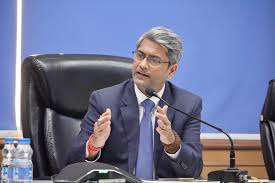
All India Football Federation: The All India Football Federation (AIFF) is the governing body for football in India. It manages development, promotion, and regulation of the sport in the country. It is affiliated with FIFA (World), AFC (Asia), and SAFF (South Asia) and its president is Kalyan Chaubey.
Kalyan Chaubey
When and where was it established?
The AIFF was established on 23 June 1937 and its headquarters was in Shimla, India. its headquarter was later moved to New Delhi.
its headquarter was later moved to New Delhi.
What is the All India Football Federation role in Indian football?
The role of the All India Football Federation is:
It is Managing National Teams. It Oversees Men’s, Women’s, and Youth National Teams (U-17, U-19, U-23) and organizes participation in international tournaments like AFC Asian Cup, FIFA World Cup Qualifiers, SAFF Championships and Olympic Qualifiers
It also Organizes Domestic Competitions like Indian Super League, Santosh Trophy, Durand Cup, Indian Women’s League and more.
It focuses on Grassroots and Youth level Development. It establishes football academies across India and collaborates with FIFA and AFC for training programs.
The role of the All India Football Federation
It is Promoting Women’s Football.
It is also hosting and participating in International Events
It also implements Policies and provides regulation.
It helps in expanding Football Infrastructure.
The responsibility of AIFF.
Some responsibilities of AlFF is as follows:
It oversees the rules, regulations, and policies for football in India.
It ensures compliance with FIFA, AFC (Asian Football Confederation), and SAFF (South Asian Football Federation) regulations.
It resolves disputes between clubs, players, and other officials.
It supervises Men’s, Women’s, and Youth National Teams and organizes participation in international competitions.
It also provides training, coaching staff, and development programs for players.
Some responsibilities of AlFF
It is responsible for running and regulating of Indian Super League (ISL), I-League, Santosh Trophy, Durand Cup, Indian Women’s League (IWL)
It implements Baby Leagues and school-level tournaments also.
It supports football academies across India.
It partners with FIFA and AFC for training and scouting programs.
It is a traditional league system which is supporting club football.
The challenges faced by AIFF.
Some of the responsibility of AIFF is:
Many Indian cities lack world-class stadiums and training facilities.
There is a poor quality pitches, inadequate floodlights, and lack of proper seating arrangements in stadiums.
It has limited availability of grassroots training centers, academies and more.
India’s men’s national team struggles to qualify for major tournaments like the FIFA World Cup.
India’s FIFA ranking fluctuates around 100-110, far from being a footballing powerhouse.
The women’s team lacks regular exposure to strong international opponents.
It does not attract the same level of corporate sponsorships and investments as cricket.
Many clubs and state associations struggle with financial instability.
It has a limited broadcasting revenue and lower fan engagement compared to global football leagues.
The challenges faced by AIFF.
The Indian Super League (ISL) and I-League have had conflicts regarding their status.
It has a lack of a promotion-relegation system. Which makes it difficult for smaller clubs to rise.
The football development is concentrated in a few regions only like West Bengal, Kerala, Goa, and the Northeast.
There is a lack of structured school and college football programs across India.
The football season in India lasts only 6-7 months, unlike European leagues that run for 9-10 months.
There is a fewer matches mean players have limited opportunities for improvement.
The football has passionate fans in states like West Bengal, Kerala, and the Northeast, but struggles in other parts of India.
It has faced controversies, including mismanagement and lack of transparency.
It has slow implementation of long-term plans like Vision 2047
Apart from this, Women’s football receives less funding, fewer leagues, and lower visibility than men’s football.
It has a lack of a strong club structure for female players.
The football struggles to get consistent media coverage and national attention.
What are its achievements?
Some of its achievements are:
It has hosted many International Tournaments.
There is a growth of Domestic Football Leagues and more.
It has a improvement in FIFA Rankings.
There are many National Team Achievements.
Some of its achievements
There is a grassroots and Youth level development.
It has Vision 2047, which is a Long-Term Development Plan.
It is strengthening Women’s Football.
It has international Recognition and Collaborations.
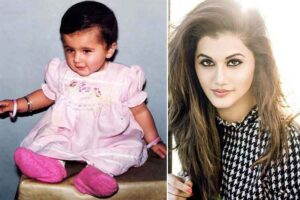
Taapsee Pannu: Taapsee Pannu is an Indian actress known for her work in industry such as Hindi, Telugu, and Tamil cinema. She started her career as a model before making her acting debut. She is admired for choosing strong and unconventional roles.
film industry
She is breaking stereotypes in the film industry. Apart from acting, Taapsee is vocal about social issues, supports women’s empowerment, and is also an entrepreneur with her own production house which is known as Outsiders Films.
How and where was her childhood?
She was born on August 1, 1987 and was born in New Delhi, India. She spent most of her childhood in New Delhi, India. She was raised in a Sikh family. Apart from this she completed her schooling from Mata Jai Kaur Public School in Ashok Vihar and college from Guru Tegh Bahadur Institute of Technology (GTBIT), Delhi.
How and where was her childhood?
Who all there in her family?
Taapsee Pannu family consist of the following:
Her Father, Dilmohan Singh Pannu. Who is Retired Real Estate Businessman.
Her Mother, Nirmaljeet Pannu. Who is Homemaker.
Who all there in her family?
Her Sister, Shagun Pannu. Who is Entrepreneur and Wedding Planner.
Her Husband, Mathias Boe who is former Danish badminton player. Mathias Boe is an Olympic silver medalist and has also worked as a coach for the Indian badminton team. The couple has been in a relationship for several years before tying the knot in an intimate ceremony.
How was her journey from engineering to acting? When was her debut?
She transformation from a software engineer to a leading actress in Indian cinema is an inspiring story of passion, risk-taking, and perseverance. She is having a stable job in the IT sector but she wasn’t satisfied with the routine of a corporate life. She was always interested in performing arts and decided to explore modeling as a side career.
She participated in Miss India 2008 and won titles like “Pantaloons Femina Miss Fresh Face” and “Safi Femina Miss Beautiful Skin.” This led to various modeling assignments and TV commercials, which gave her exposure in the entertainment industry. She soon realized that modeling alone wouldn’t be fulfilling, so she decided to try acting.
How was her journey from engineering to acting? When was her debut?
She made her debut in Telugu cinema with the film Jhummandi Naadam (2010), directed by K. Raghavendra Rao. This marked the beginning of her journey in films. She then acted in Tamil and Malayalam films, gaining recognition for her performances.
Then she made her Bollywood debut in 2013 with Chashme Baddoor but her real breakthrough came with the critically acclaimed film Pink (2016), where she played a strong and independent woman fighting for justice. The film’s success established her as a powerful performer.
Top 10 movie of Taapsee Pannu.
Some of her top movies are as follows:
Pink
Naam Shabana
Mulk
Manmarziyaan
Badla
Top 10 movie of Taapsee Pannu.
Rashmi Rocket
Haseen Dillruba
Thappad
Saand Ki Aankh
Game Over
What are her awards, records and achievements?
Some of her Awards, records and achievements are as follow:
1. National Film Awards for Best Actress in Saand Ki Aankh.
2. Film Fare awards for Best Actress (Critics) for Saand Ki Aankh, Best Actress for Thappad
Screen Awards and Saand Ki Aankh.
3. IIFA Awards for Best Actress for Thappad.
4. CNN-News18 Indian of the Year for her contribution to Indian cinema.
5. Dadasaheb Phalke Film Foundation Award, Best Actress for Mulk and Manmarziyaan.
What are her awards, records and achievements?
6. She got featured in Forbes India’s Celebrity 100 List multiple times for her influence in Bollywood.
7. She also got recognized as a trailblazer in Indian cinema for portraying strong female protagonists.
8. She got honored at various forums for breaking stereotypes in Bollywood and promoting women-centric films.
9. She got invited as a guest speaker at multiple educational and social events to inspire young talent.
10. She is enterpreneur of various brands such as Outsider Films; Founded her own production house, The Wedding Factory; Co-owns an event planning company with her sister, Shagun Pannu and she also actively supports Indian badminton and is associated with the Premier Badminton League.
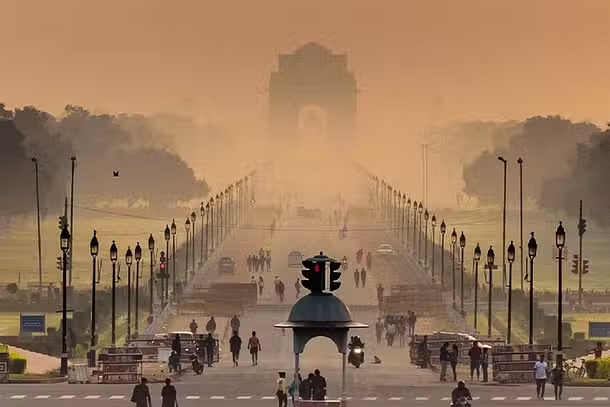
Delhi air pollution: The AQI in Delhi again seems to drop after the report which came this Tuesday, which shows records of the AQI drop by 471. All in all Delhi is not at a great start before the winters.
This record set Delhi on High alert as the national capital came under the ‘serve plus’ category for two days straight. Delhi also seems to have a smog level and layer increase which has lowered the visibility.
What is GRAP?
The Graded Response Action Plan (GRAP) is an emergency measure applied by the Delhi government to maintain the air quality of capital.
How will GRAP help in maintaining pollution?
Under the stage 3 and 4 of GRAP plan the government has done the following: –
Suspension of physical classes in school and colleges.
Advice on wearing a Mask for prevention.
Some office is also closed under the plan.
Restriction of vehicles in Delhi until its LNG, CNG or electric. Petrol or diesel vehicles are fully prohibited.
Apart from this construction activities are also banned.
CM Atishi Marlena on Delhi air pollution.
She said and pointed out the farmers of Haryana and Punjab for pollution and immersion of harmful gases by their farm activities. She further also pointed out that they have been warned several times but no action has been taken against them.
She also claimed BJP’S poor politics is one reason behind bad AQI and also Yamuna river pollution. She said they are not taking any action in Haryana and Punjab which is leading to heavy pollution in Delhi.
Delhi air pollution
Delhi police on High AQI.
They are taking many proactive measures. This could include:-
Checking of vehicles after the banning of petrol and diesel vehicles.
Taking challans and fines on prohibition or violation of the law.
Controlling of heavy traffics.
Collaborating and working with MCD and other government stakeholders.
Using drones and other devices to measure.
Starting of new campaign
They are also working with other RWs 9 (Resident Welfare Associations).
They are also monitoring green drive services.
They are also controlling special task forces to control pollution.
Airline Threats: New Delhi several breakouts across India entered lemon pitfalls yet moment, promoting the authorities to spark exigency protocols and aviators to land their aircraft before reaching the destinations. Several Vistara and Akasa air breakouts admit lemon trouble calls, their prophet claimed. Akasa breakouts entered the lemon trouble and was flying from Lucknow to Mumbai on October 20, 2024. Vistara prophet claimed that they got security pitfalls on social media for 6 breakouts listed to operate. These include flight nos. UK25( Delhi to Frankfurt), Uk106( Bali to Delhi), Uk116( Singapore to Delhi) and so on. field in Karnataka’s Belagavi also entered trouble emails, police and lemon team check the field, after which the determine it to be a humbug correspondence. Another flight made an exigency wharf in Rajasthan Udaipur due to a lemon trouble communication. further than 90 breakouts have entered lemon pitfalls calls, emails and dispatches from which utmost of them have turn out to be phonies .
Airline Threats
Emergency Protocols Initiated in Case of Airline Threats
what are the measures taken by Airlines Threats in case of lemon trouble calls originally, upon entering a lemon trouble call, communication or an dispatch, airlines incontinently spark the exigency protocols and airline security platoon notice the law enforcement agencies like Transportation Security Administration( TCA) in US, and cautions field authorities and elders. The aircrafts through informed and passengers are prepared for implicit evacuation. Passengers and crew are evicted from craft to a secured girding area and reckoned for to insure no unauthorized existent remain on the board. The carry on- luggage are re screened. Trained labor force check the craft attention to suspicious particulars and anomalies. Train tykes or specialized accoutrements descry implicit snares. Cargo holds are audited and packages are defenses. Breakouts we made to be delayed cancel to insure passenger safety. Enhanced security checks passengers luggage and airlines partake thread information with authorities and other airlines.
Airline Threats
Immediate Steps Taken by Airlines for Airline Threats
Upon receiving a bomb threat, whether via phone, email, or social media, airlines immediately activate their emergency response protocols. Law enforcement agencies like the Transportation Security Administration (TSA) in the US, along with airport authorities, are alerted.
Airlines unite with law enforcement agencies to probe and appeared perpetrators and cleave to nonsupervisory conditions similar as those set by TSA. Airlines work with transnational authorities to address international pitfalls. Airlines conduct through reviews to identify areas for enhancement, apply changes to help analogous incident support hand training on born trouble response. After taking these measures of lemon thread calls seriously and prioritizing passenger safety would going to be a Swift and effective system in response to similar implicit pitfalls.
In conclusion plain lemon blast prevalence serve as a stark and ruinous consequences of terrorism and significance of townies and icing aeronautics security. woeful and unsupportable losses of lives which white spread destruction underscore and need for enhance security measures and transnational cooperation to combat pitfalls. Plain lemon blast incident demands a collaborative and immediate response to strengthen the aeronautics security, and to insure the safety of passengers and crew worldwide while travelling.
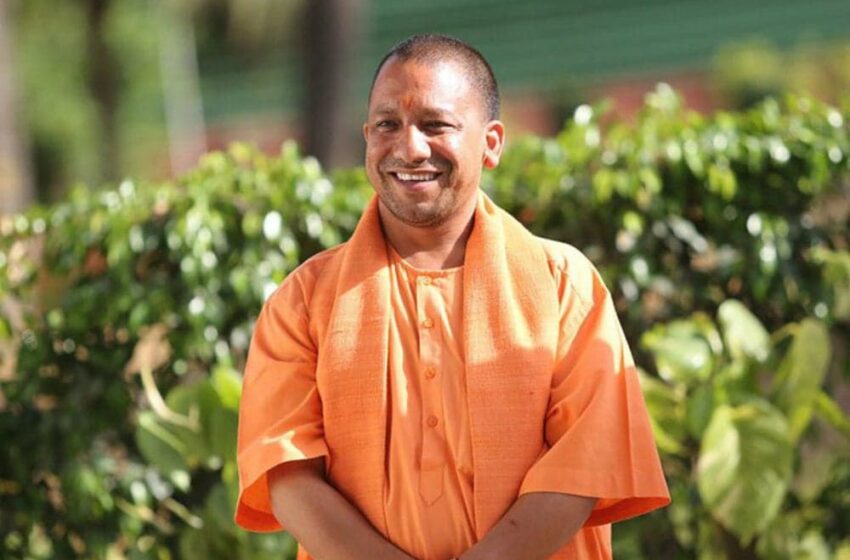
CM Yogi Adityanath: Inaugurates Silk Expo; honours 16 farmers, entrepreneurs, institutions, and designers with the prestigious Pandit Deendayal Upadhyaya Resham Ratna Award.
UP the first state in the country to come up with a policy for traditional products, says CM
Lucknow, October 22
CM Yogi Adityanath, on Tuesday, said that Uttar Pradesh and India at large, have both the potential and resources to compete with the major global players in readymade garments.
CM Yogi Adityanath also releases the latest edition of ‘Resham Mitra’ magazine; expo to conclude on October 28
Inaugurating the Silk Expo at the Indira Gandhi Pratishthan, which runs from October 22 to 28, the Chief Minister said, “Small nations worldwide have established a strong presence in the readymade garment industry, even with limited resources and opportunities. We, on the other hand, have both the potential and resources.”
He added: “If a significant portion of the workforce, especially women, is engaged in silk production, processing, readymade garments, designing, marketing, and packaging, Uttar Pradesh and India can emerge as global leaders in the garment industry.”
He urged stakeholders to leverage the initiatives taken by the state government to realize this vision.
The CM Yogi Adityanath highlighted a remarkable achievement in silk production, which has increased 84-fold under the current administration. “A day will come when Uttar Pradesh will be recognized among the top states in the country for silk production,” he added.
CM Yogi Adityanath Resham Mitra’ magazine;
Farmers and entrepreneurs had to suffer due to the misdeeds of previous governments: CM Yogi Adityanath
He also released the ‘Resham Mitra’ magazine and honored 16 farmers, entrepreneurs, institutions, and designers with the Pt. Deendayal Upadhyaya Resham Ratna Samman. Following the ceremony, he toured the exhibition.
CM Yogi Adityanath highlighted that since the BJP government came to power in 2017, Uttar Pradesh has taken significant steps to promote traditional products. The state became the first in India to implement a dedicated policy for traditional crafts, identifying a unique product for each of its 75 districts under the “One District, One Product” (ODOP) initiative.
By linking ODOP with market access, design, and packaging, the initiative has not only created employment, but also boosted the export of traditional goods. Today, all 75 districts have distinct GI-tagged products recognized across the country, he pointed out.
The Chief Minister emphasized the potential for further growth, particularly through the famous sarees of Varanasi, Bhadohi, and Mubarakpur. He encouraged efforts to make the Silk Expo a platform for advancing Uttar Pradesh’s prospects in this sector.
Referring to the age-old slogan of “roti, kapda aur makaan” (food, clothing, and shelter), CM Yogi stressed that while air and water are essential for life, the need for food, clothing, and shelter is equally fundamental.
He noted that clothing not only meets a basic need but also serves as a vital means to boost farmers’ income and generate employment. Uttar Pradesh, with its population of 25 crores, has a vast potential in silk production, and while progress has been made in recent years, much more remains to be achieved to match the state’s immense possibilities.
Chief Minister Yogi Adityanath urged people to explore the vast potential for development within Uttar Pradesh. He pointed out that places like Varanasi, Bhadohi, and Azamgarh, known for their silk sarees such as those from Mubarakpur, hold significant promise.
“The central and state governments are making concerted efforts to develop silk clusters in these regions. Varanasi silk sarees, a popular choice for auspicious occasions nationwide, have seen increased demand following the expansion of Kashi Vishwanath Dham, which has attracted more devotees and tourists. The establishment of a Trade Facilitation Center at the Varanasi Expo Mart has further boosted this traditional industry”, CM Yogi asserted.
He highlighted the progress of entrepreneurs associated with the saree industry in Mubarakpur and the silk clusters in Mirzapur, Varanasi, and Bhadohi, indicating that the sector has considerable growth potential.
The upcoming PM Mitra Park, a large textile hub on the Lucknow-Hardoi border, will cover 1,000 acres and host various textile-related industries, showcasing Uttar Pradesh’s potential in this field, he noted.
However, the Chief Minister emphasized the need for local raw material production to support these initiatives. He encouraged farmers to participate, noting that the central government offers several schemes for their benefit.
Furthermore, he called on the relevant departments to organize symposiums, seminars, and outreach programs in every district to inform progressive farmers about these schemes and connect them with training and processing programs.
This initiative aims to enhance opportunities, not just in the Gorakhpur division but also in Varanasi, Mirzapur, Lucknow, Devipatan, Basti, and Azamgarh.
CM Yogi Adityanath: Resham Mitra
CM Yogi Adityanath highlighted that Uttar Pradesh, with its nine climatic zones, offers a unique opportunity to develop and promote diverse agricultural products across different regions. The state has immense potential, especially in areas like Varanasi and Azamgarh, which have been hubs for the silk industry since ancient times.
He emphasized the importance of locally linking silk production and processing with the textile industry to ensure affordable raw materials, which would naturally lower costs and make products more accessible to meet market demand. The government, he assured, will support training initiatives, and assist in raw material procurement, processing, marketing, and design.
The CM Yogi Adityanath pointed out that farmers and entrepreneurs in Uttar Pradesh have long been connected to traditional crafts, but faced setbacks due to the neglect of previous governments, which failed to provide proper incentives, design support, and packaging for their products. This challenge extended beyond silk to all traditional industries.
Today, the state showcases a variety of unique products: Bhadohi’s carpets, Gorakhpur’s terracotta, Varanasi’s numerous GI-tagged items, leather goods from Agra and Kanpur, Moradabad’s brassware, Firozabad’s glass, and sports equipment from Meerut.
These products represent Uttar Pradesh’s rich heritage and provide a platform for youth and entrepreneurs to advance through traditional industries, he pointed out.
The Chief Minister called for a rapid expansion of silk clusters in regions with the potential, urging the relevant departments to collaborate with farmers who could act as “silk friends,” helping to realize this potential and position Uttar Pradesh as a strong competitor among other states.
He stressed the importance of timely incentives to better showcase the state’s capabilities to the world. The upcoming PM Mitra Textiles Park in Lucknow is poised to play a key role in furthering these opportunities.
CM Yogi Adityanath emphasized that silk garments are rooted in indigenous technology, and there is a need to continuously upgrade and adapt this technology. He pointed out the evolution from the traditional hand-operated spinning wheel for khadi, to electric-powered versions, which increased efficiency five to ten times with the rise in electricity use. To further reduce energy costs, solar-powered spinning wheels have now been introduced.
Similarly, silk production must integrate modern processing techniques and align with updated spinning programs, the CM emphasized. He highlighted that alongside daily activities, these initiatives can promote women’s self-reliance at the local level. Such efforts are progressing in line with Prime Minister Modi’s vision for women’s empowerment under the Mission Shakti initiative.
On this occasion, MSME Minister Rakesh Sachan, Chief Secretary Manoj Kumar Singh, Agriculture Production Commissioner Monica S. Garg, Member Secretary Central Silk Board New Delhi P. Shivkumar, Additional Chief Secretary (Silk) BL Meena, Director (Silk) Sunil Kumar Verma etc. were present.
The Chief Minister awarded the Pandit Deendayal Upadhyaya Silk Ratna Award to 16 farmers, entrepreneurs, institutions, and designers. They were honored with the first prize of Rs 50,000 and the second prize of Rs 25,000, along with a memento, and a citation.
1- Cocoon Production Award: Jagram (Bahraich) got the first prize, whereas Mala Devi from Kushinagar got the second.
2- Lifetime Achievement Award: Dr. NV Chaudhary, Director, Central Tasar Research and Training Institute, Central Silk Board, Ranchi (Jharkhand) got the first prize, while Haseen Ahmed Ansari M/s Qasim Silk Emporium Varanasi got the second prize.
3- The first prize in the best-designed silk-made garment was given to Angika Kushwaha of Ramnagar Varanasi and the second to Sarvesh Kumar Srivastava (Varanasi). Ranjana Srivastava received the award on Sarvesh’s behalf.
4- Best designing in other silk-made products: Mukhtar Ahmed (Bhadohi) got the first prize and Iftikhar Ahmed (Azamgarh) got the second.
5- Innovation in silk finished product textile: First prize was given to Aditi Jaggi Rastogi of Hazratganj, Lucknow, and second to Mrs. Sangeeta Basant, Kanya Mahavidyalaya, Varanasi.
6- Top Cocoon Seller – First Prize in Yarn Sales – First prize went to Shashi Shukla of Pilibhit and the Second to Rajnath Verma of Sonbhadra.
7- Top Textile Seller – Silk Finished Product – First Prize was bagged by Viresh Shah (Varanasi), and the Second Prize by Pankaj Shah (Varanasi).
8- Innovation in Cocoon Production – First prize to went to P. Shivkumar IFS, Member Secretary Central Silk Board and the Second Prize to Dasharathi Behera, Deputy Secretary Technical, Central Silk Board, New Delhi.