Tag: Narendra Modi

  • G7 Summit 2025 : Key Takeaways from Kananaskis

    G7 Summit 2025 : Key Takeaways from Kananaskis

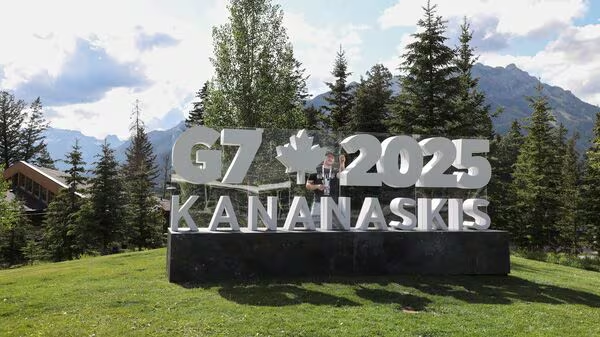
    The 51st G7 Summit was held on June 16–17, 2025, in Kananaskis, Alberta, Canada, where leaders from Canada, France, Germany, Italy, Japan, the United Kingdom, and the United States came together for high-level discussions. Representatives from the European Union and invited guests. Against a backdrop of global conflicts and economic challenges, the summit aimed to address pressing issues like the Russia-Ukraine war, Middle East tensions, trade policies, and energy security. However, the event was marked by unexpected disruptions and mixed outcomes. Below are the key takeaways from this pivotal gathering.

    U.S. President Trump’s Abrupt Exit

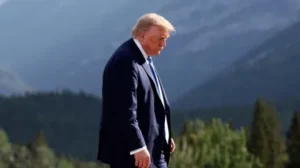
    One of the summit’s defining moments was U.S. President Donald Trump’s early departure on June 16 to address escalating tensions in the Israel-Iran conflict. This move disrupted a planned meeting with Ukrainian President Volodymyr Zelenskyy, derailing efforts to secure U.S. support for pressuring Russia into a Ukraine ceasefire. Trump’s focus shifted to the Middle East, with speculation about potential U.S. involvement in Israeli strikes against Iran’s nuclear facilities. His absence left a void in discussions, raising questions about the G7’s ability to align on critical global issues and fueling debates about the group’s relevance in a shifting geopolitical landscape.
    U.S. President Trump’s Abrupt Exit
    U.S. President Trump’s Abrupt Exit

    Ukraine and Russia: A Fractured G7 Response

    The Russia-Ukraine war was a central focus, but divisions emerged, particularly after Trump’s exit. His expressed support for Russian President Vladimir Putin complicated efforts to craft a unified G7 stance. Canada, as host, had hoped to issue a strong statement condemning Russia and supporting Ukraine but scrapped these plans due to U.S. resistance. Ukrainian President Zelenskyy called the diplomatic situation a “crisis,” urging G7 leaders to leverage their influence to end the conflict.

    Despite the setbacks, Canada stepped up with significant commitments, announcing $4.3 billion in aid for Ukraine. This package included $2 billion in military support—comprising helicopters, drones, and ammunition—and $2.3 billion in loans for infrastructure rebuilding. Canada also condemned Russia’s recent deadly attack on Kyiv, labeling it an act of “barbarism.” Other G7 members reaffirmed their support for Ukraine, but the lack of U.S. alignment underscored the challenges of coordinated action.

    Middle East Tensions Take Center Stage

    The Israel-Iran conflict loomed large over the summit, with G7 leaders issuing a joint statement condemning Iran as a source of regional instability and emphasizing that Iran must not acquire nuclear weapons. Trump’s early departure was directly tied to these tensions, with reports indicating U.S. preparations for potential military engagement alongside Israel. The G7’s unified stance on Iran contrasted with its divisions over Ukraine, highlighting the complex balancing act of addressing multiple global crises simultaneously.

    India’s Role and Diplomatic Efforts

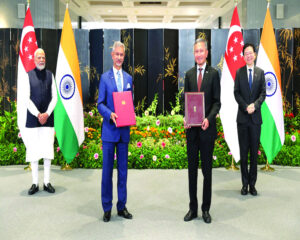
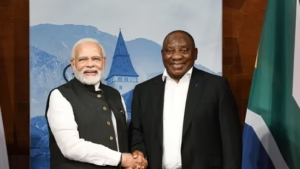
    Indian Prime Minister Narendra Modi’s attendance—his sixth consecutive G7 summit—underscored India’s growing global influence. Modi emphasized energy security, green technology pathways, and the need for collective action against terrorism. His presence also sparked protests from Sikh groups over Canada’s allegations regarding the 2023 killing of Hardeep Singh Nijjar, a Canadian Sikh leader. Despite these tensions, Modi held productive meetings with Canadian Prime Minister Mark Carney and other leaders to reset India-Canada relations and explore trade opportunities, including a proposed Europe-Middle East-India trade corridor.
    India’s Role and Diplomatic Efforts
    India’s Role and Diplomatic Efforts

    Trade, Tariffs, and Economic Cooperation

    Trade discussions yielded mixed results. Trump secured a framework for a new trade deal with the United Kingdom but criticized the European Union and Japan for what he called unfair trade practices, singling out Japan as “tough” in negotiations. Canada, meanwhile, made progress on a potential U.S. trade agreement and brokered initiatives for critical minerals stockpiling and cross-border wildfire coordination. These efforts reflect the G7’s ongoing focus on economic resilience amid global uncertainties.

    Global South and Energy Security

    South African President Cyril Ramaphosa, the only African leader invited, advocated for the Global South’s priorities, calling for a fairer global order. Modi echoed this sentiment, highlighting sustainable energy solutions to support AI-driven and technology-intensive societies. The G7’s discussions on energy security underscored the need for collaborative approaches to address climate challenges while ensuring economic stability.

    Indigenous Engagement

    In a notable moment, Indigenous leader Steven Crowchild of the Tsuut’ina First Nation welcomed G7 leaders, including Trump, to the summit. Crowchild described the encounter with Trump as “intense” but emphasized the importance of Indigenous voices in global dialogues. This gesture highlighted Canada’s commitment to incorporating Indigenous perspectives into international forums.
    Global South and Energy Security
    Global South and Energy Security

    Questions About the G7’s Future

    Trump’s early exit and his “America First” approach prompted renewed scrutiny of the G7’s effectiveness. Critics, including Russian official Maksim Oreshkin, argued that the G7 no longer drives global economic growth, pointing to the G20 as a more inclusive platform. Despite these challenges, Canadian Prime Minister Mark Carney earned praise for his deft handling of a complex summit, navigating diplomatic tensions and securing tangible outcomes like aid for Ukraine and trade progress.

    Also Read This : Mahindra XUV700 Facelift: What to Expect from the Upcoming XUV 7XO

    The 51st G7 Summit in Kananaskis was a microcosm of today’s fractured global landscape. While it achieved progress in areas like critical minerals, trade frameworks, and support for Ukraine, it also exposed deep divisions, particularly over Russia and the U.S.’s role in global diplomacy. The summit underscored the urgency of addressing conflicts in Ukraine and the Middle East, the importance of inclusive partnerships with the Global South, and the need for the G7 to adapt to a rapidly evolving world. As the international community looks ahead, the outcomes of Kananaskis 2025 will shape diplomatic and economic strategies for years to come.
  • Operation Sindoor : India’s Precision Strike Against Terror After Pahalgam Attack

    Operation Sindoor : India’s Precision Strike Against Terror After Pahalgam Attack

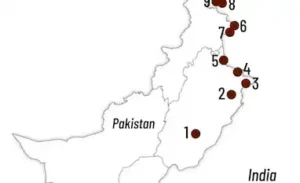
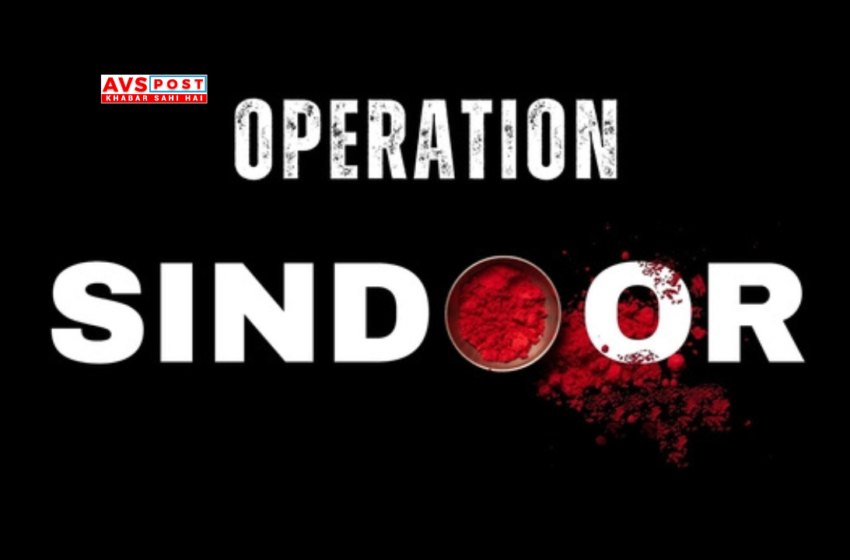
    Operation Sindoor was a series of pre-dawn precision military strikes conducted by the Indian Armed Forces on May 7, 2025, targeting nine terrorist infrastructure sites in Pakistan and Pakistan-occupied Jammu and Kashmir (PoK). The operation was a retaliatory response to the Pahalgam terror attack on April 22, 2025, which killed 25 Indians and one Nepali citizen, including newlywed men singled out based on their religion. The strikes were executed jointly by the Indian Army, Navy, and Air Force, marking the first time since the 1971 war that all three services collaborated against Pakistan in such a manner.

    Operation Sindoor

    Operation Sindoor : Key Details

    • Objective: Neutralize terror camps linked to groups like Jaish-e-Mohammed (JeM), Lashkar-e-Taiba (LeT), and Hizbul Mujahideen, which were planning and directing attacks against India. Specific targets included JeM’s headquarters in Bahawalpur and LeT’s base in Muridke.
    • Execution: The operation used precision weapons, including beyond-visual-range and standoff cruise missiles, ensuring no Pakistani military facilities were hit to maintain a non-escalatory approach. The strikes were described as “focused, measured, and restrained” by the Indian Ministry of Defence.
    • Locations: Nine sites were targeted, including Markaz Subhan Allah (Bahawalpur, JeM), Markaz Taiba (Muridke, LeT), and others in Gulpur, Bhimber, Chak Amru, Bagh, Kotli, Sialkot, and Muzaffarabad.
    • Significance of the Name: “Sindoor” (vermilion) holds cultural significance in Hinduism, symbolizing the marital bond of Hindu women and the warrior spirit (as a tilak worn by warriors). The name was chosen to humanize the victims of the Pahalgam attack, particularly referencing the loss of newlywed men, whose widows, like Himanshi Narwal, became symbols of the tragedy. It underscored India’s resolve to avenge the attack while honoring its cultural and warrior ethos.
    For every drop of sindoor lost, a strike answered.
    Operation Sindoor  : For every drop of sindoor lost, a strike answered.
    • Leadership: Prime Minister Narendra Modi monitored the operation overnight, having granted the armed forces full operational freedom to decide the mode, targets, and timing. National Security Advisor Ajit Doval spearheaded the strategy, briefing international counterparts, including U.S. NSA Marco Rubio, post-operation.
    • Impact: The Indian Army declared “Justice is served. Jai Hind!” post-strikes, with all targets successfully neutralized. Pakistan reported civilian casualties (three to nine deaths, per varying claims) and condemned the strikes as an “act of war,” alleging attacks on civilian areas like a mosque in Bahawalpur. India denied these claims, asserting only terror sites were targeted. Pakistan retaliated with ceasefire violations along the Line of Control (LoC), causing civilian deaths and injuries in Jammu and Kashmir.
    • Aftermath: Airspaces in northern India and Pakistan were temporarily closed, affecting commercial flights. Schools and colleges in border districts like Jammu, Poonch, and Rajouri were shut, and India activated air defense units. Diplomatic briefings were conducted with global powers, and the UN Security Council held closed-door discussions, urging de-escalation.
    Operation Sindoor
    Operation Sindoor

    Cultural and Strategic Message:

    The codename “Operation Sindoor” was a deliberate choice, reflecting both the human cost of the Pahalgam attack and India’s warrior resolve. It highlighted the personal tragedies, such as widows losing their sindoor (a symbol of a living husband), and positioned the strikes as a heroic, culturally rooted response to terrorism. The operation was praised domestically for its precision and restraint, with leaders like Defence Minister Rajnath Singh and Congress’s Jairam Ramesh expressing support, while Pakistan’s denials of terror involvement were criticized internationally.

    Operation Sindoor
    Operation Sindoor

    Sources:

    • India Today, May 7, 2025
    • The Times of India, May 7, 2025
    • The Hindu, May 7, 2025
    • Hindustan Times, May 7, 2025
    • NDTV, May 7, 2025
    • Deccan Herald, May 7, 2025
    • ANI and PTI posts on X, May 7, 2025

    Also Read This: Civil Defence Drills Ordered

    Operation Sindoor : The operation underscored India’s zero-tolerance policy toward cross-border terrorism while navigating complex regional tensions, with ongoing diplomatic and military developments expected to shape the aftermath.

  • Gautam Adani : Life, Career, and Controversies of India’s Billionaire Tycoon

    Gautam Adani : Life, Career, and Controversies of India’s Billionaire Tycoon

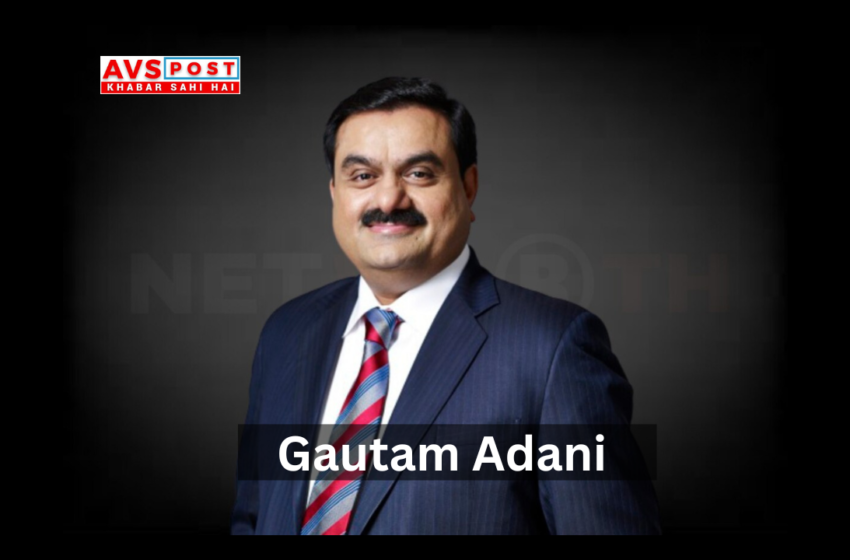
    Gautam Adani, born June 24, 1962, in Ahmedabad, Gujarat, India, is a global business titan, steering the Adani Group, a conglomerate spanning ports and beyond, energy, logistics, agribusiness, airports, and media. As of April 2025, he is Asia’s third-richest person and the 24th wealthiest globally, boasting a net worth of $64.3 billion. Gautam Adani’s rise from modest roots to a billionaire titan showcases ambition and strategic genius, yet his journey is equally shaped by controversies that have ignited widespread debate. This biography explores his life, achievements, and the challenges that have shaped his legacy.

    Gautam Adani : Early Life and Education

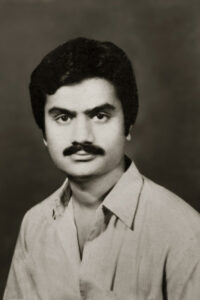
    Gautam Adani was born into a Gujarati Jain family, the seventh of eight children to Shantilal, a modest textile merchant, and Shantaben Adani. Raised in Ahmedabad’s Seth ni Pol, a tightly-knit community, the family grappled with financial limitations, fostering Adani’s early drive for independence. He studied at Sheth Chimanlal Nagindas Vidyalaya School, showing an aptitude for commerce. Enrolling in Gujarat University for a commerce degree, he left after his second year, opting for real-world business experience over academic credentials. This bold choice laid the groundwork for his entrepreneurial journey.

    Gautam Adani
    Gautam Adani

    Early Career and Rise

    At 16, in 1978, Gautam Adani ventured to Mumbai, India’s commercial epicenter, to seek his fortune. He started as a diamond sorter at Mahendra Brothers, quickly mastering the trade. By 1982, at age 20, he had amassed his first million rupees through diamond trading, a remarkable feat. In 1981, he returned to Ahmedabad to manage his brother Mansukhbhai’s plastics unit, diving into global trade by importing polyvinyl chloride (PVC). This experience honed his understanding of international markets, setting the stage for his future ventures. In 1988, he founded Adani Exports, later Adani Enterprises, focusing on agricultural and power commodities.

    Building the Adani Empire

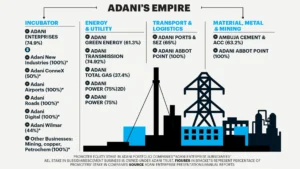
    India’s economic liberalization in the 1990s was a game-changer for Adani. He leveraged the open market to expand his trading operations. In 1995, he secured a transformative contract to develop Mundra Port in Gujarat, which grew into India’s largest private port, handling massive cargo volumes. The Adani Group diversified into energy (Adani Power, Adani Green Energy), logistics, airports, and agribusiness, achieving a market capitalization of over $242 billion by 2022. Adani’s acquisition of seven airports, including Mumbai’s international airport, and his push into renewables cemented his role in India’s infrastructure growth.

    Building the Adani Empire
    Building the Adani Empire

    Controversies and Challenges

    Adani’s meteoric rise has been shadowed by controversies. 

    His apparent ties to Prime Minister Narendra Modi and the Bharatiya Janata Party (BJP) have fueled allegations of cronyism, with detractors challenging the rapid awarding of government contracts.

    Adani denies these claims. In 2022, his group’s acquisition of a 29.18% stake in NDTV raised alarms about media independence. The most significant blow came in January 2023, when Hindenburg Research accused the Adani Group of stock manipulation and fraud, triggering a $150 billion market value loss. India’s Supreme Court later closed related probes. In November 2024, U.S. charges alleged Adani paid over $250 million in bribes for energy contracts, which he denies.

    Personal Life

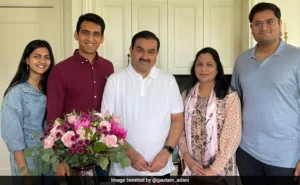
    Gautam Adani married Priti Vora, a dentist, in 1986, and they have two sons: Karan, CEO of Adani Ports and SEZ, and Jeet, head of Adani Airports and Adani Digital Labs. Priti chairs the Adani Foundation, driving its philanthropy. Adani’s resilience is evident in his survival of a 1998 kidnapping for ransom and the 2008 Mumbai Taj Hotel terrorist attack. A vegetarian, he practices yoga and enjoys reading history, philosophy, and biographies, maintaining a disciplined lifestyle despite his high-stakes career.

    Personal Life
    Personal Life

    Philanthropic Contributions

    The Gautam Adani Foundation, established in 1996, is a cornerstone of Adani’s legacy, focusing on education, healthcare, and rural development. Operating across multiple Indian states, it supports underprivileged communities, including fishermen’s children and rural students. During the COVID-19 pandemic in 2020, Adani donated approximately $12 million, including a significant contribution to India’s relief fund, to bolster healthcare and relief efforts. The foundation’s work underscores Adani’s commitment to social impact, balancing his business pursuits with community welfare.

    Also Read This : Civil Defence Drills

    Legacy and Impact

    Gautam Adani’s journey from a school dropout to a global billionaire encapsulates the opportunities and complexities of India’s economic rise. His ability to navigate a competitive business landscape has made him a symbol of entrepreneurial success, driving India’s infrastructure and energy sectors forward. Yet, the controversies surrounding his empire highlight the challenges of operating at the nexus of business and politics. As Adani continues to expand his conglomerate, he remains a polarizing figure, admired for his vision and scrutinized for his methods, embodying the dynamic tensions of modern India’s growth story.

  • Pahalgam Terror Attack Leaves 26-28 Dead, Sparks Global Condemnation

    Pahalgam Terror Attack Leaves 26-28 Dead, Sparks Global Condemnation

    Pahalgam, April 22, 2025 :- A horrific Pahalgam terror attack rocked the tranquil Baisaran meadow near Pahalgam, Anantnag district, Jammu and Kashmir, on Tuesday, leaving at least 28 dead, mostly tourists, and over 20 injured. The Pahalgam terror attack, executed by 3-6 militants from The Resistance Front (TRF), a Lashkar-e-Taiba offshoot, is among the deadliest since the 2019 Pulwama bombing.

    Jammu and Kashmir : Pahalgam terror attack
    Jammu and Kashmir :  terror attack

    Pahalgam Carnage: Civilians Singled Out

    The Pahalgam terror attack struck around 2:50 PM in a remote, scenic area reachable only by foot or pony, hampering rescue efforts. The attackers, some believed to be Pakistani nationals, targeted civilians, singling out non-Muslims by checking identities and demanding recitation of Islamic verses. Victims of the Pahalgam terror attack included Indian tourists from Gujarat, Karnataka, and Maharashtra, two locals, two foreigners (from Nepal and the UAE), and Indian Navy officer Lt. Vinay Narwal, on his honeymoon.

    Jammu and Kashmir : terror attack
    Jammu and Kashmir : terror attack

    Pahalgam Attack: TRF Claims, Forces Launch Manhunt

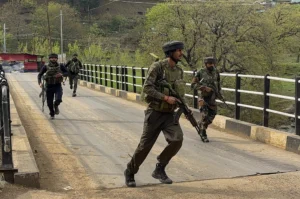
    Security forces, including the Army, CRPF, and J&K Police, launched an extensive manhunt, employing helicopters, special forces, and sniffer dogs to track the perpetrators of terror attack. The National Investigation Agency (NIA) is supporting the probe, with heightened security across Kashmir. The TRF claimed responsibility for terror attack, citing alleged demographic changes post-2019 Article 370 abrogation.

    Jammu and Kashmir : terror attack
    Jammu and Kashmir : terror attack

    Pahalgam Terror Attack Sparks Global Condemnation

    Prime Minister Narendra Modi, cutting short a Saudi Arabia trip, and Home Minister Amit Shah, who visited Pahalgam, condemned the Pahalgam terror attack and promised justice. Global leaders, including U.S. President Donald Trump, Russian President Vladimir Putin, and UN Secretary-General Antonio Guterres, denounced terror attack. Kashmir observed a shutdown, with local newspapers printing black front pages. The Pahalgam terror attack has devastated J&K’s tourism industry, triggering mass cancellations.

    Also Read This: Jammu and Kashmir: Omar Abdulla advice for better coordination with the center and the Governor

    Authorities are intensifying efforts to apprehend those behind terror attack as the region mourns.

  • PM at Gir national park: A step towards the wildlife conservation.

    PM at Gir national park: A step towards the wildlife conservation.

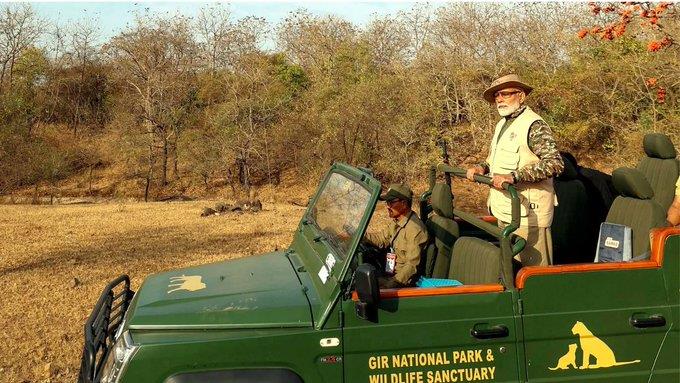
    PM at Gir national park: Prime Minister Narendra Modi visited Gir National Park in Gujarat on March 3, 2024. His visit focused on wildlife conservation efforts, especially for the Asiatic lions, which are exclusively found in Gir. He visited underscored India’s dedication to preserving Asiatic lions and promoting eco-tourism in Gir National Park, which is home to over 600 lions today.

    details of PM at Gir national park
    details of PM at Gir national park

    The importance and other details of Gir national park.

    The importance of Gir national park is as follows: –

    1. Gir National Park is also known as Sasan Gir. This is one of India’s most important wildlife sanctuaries. It is the only place in the world where Asiatic lions are found in the wild.

    2. It is Located in Gujarat and was established in 1965 and covers 1,412 sq km of protected area. It also includes Gir Wildlife Sanctuary.

    3. This is the last remaining habitat of the Asiatic lion. This conservation efforts, led to the lion population having grown from about 20 in the early 1900s to over 600 today.

    4. It is a home to over 600 species of wildlife, including leopards, striped hyenas, jackals, sloth bears, and over 300 species of birds. It is also rich in flora with dry deciduous forests, grasslands, and scrublands supporting diverse ecosystems.

    The importance and other details of Gir national park.
    The importance and other details of Gir national park.

    5. It has amajor tourist attraction in Gujarat, bringing in thousands of visitors each year. It provides employment to locals and also promotes eco-tourism.

    6. It also includes Maldhari tribes, who have coexisted with lions for centuries, play a key role in conservation. It has sustainable tourism and wildlife conservation programs support local livelihoods.

    7. Safari Timings are Morning: 6:00 AM – 9:00 AM, 8:30 AM – 11:30 AM and Evening: 3:00 PM – 6:00 PM.

    8. It put efforts to expand and protect the lion population continue. It is also ensuring Gir remains a global model for wildlife conservation.

    Why is PM at Gir national park a significant event?

    The reason and significance behind PM Gir Visit are as follows: –

    1. It is highlighted on the Asiatic Lion Conservation Success by the Gir national park.

    2. It is Boosting Eco-Tourism in Gujarat and other local things.

    3. It encourages the Community Participation in Conservation of wildlife.

    Asiatic Lion Conservation
    Asiatic Lion Conservation

    4. It also shows Government’s Commitment towards the Wildlife and other Environment issues.

    5. The Global level Awareness on Indian Wildlife Conservation has also been promoted by this.

    What is the purpose of PM at Gir national park?

    The purpose of PM at Gir national park is reviewing conservation efforts, promoting eco-tourism, and highlighting India’s success in protecting the Asiatic lion. He also visit reinforced the government’s commitment to wildlife protection and sustainable environmental policies.

    What is the purpose of PM at Gir national park?
    What is the purpose of PM at Gir national park?

    The main highlights of this visit?

    The main highlights of this Visit are as follows: –

    1. PM Modi took a safari in Gir National Park, observing Asiatic lions in their natural habitat. He shared his experiences through social media, expressing pride in India’s successful conservation efforts.

    2. He emphasized India’s success in increasing the lion population from just 20 in the early 1900s to over 600 today. He also discussions focused on expanding lion habitats and reducing overcrowding stress in Gir.

    3. PM Modi interacted with forest rangers, conservationists, and the Maldhari tribal community, who have played a key role in lion conservation. He also acknowledged their efforts in protecting Gir’s ecosystem and emphasized the importance of community-driven conservation.

    4. The visit brought global attention to Gir National Park as a premier wildlife tourism destination. It also focus on sustainable tourism that benefits local communities while preserving nature.

    The main highlights of this Visit
    The main highlights of this Visit

    5. It is expanding lion habitats to prevent overcrowding. It is the Scientific wildlife management to ensure the long-term health of the species.

    6. The Mitigating human-wildlife conflicts and enhancing protection measures.

    7. PM Modi’s visit sent a strong message about India’s commitment to wildlife conservation.

    8. Apart from this PM social media posts featured stunning images of Gir’s lions and landscapes, increasing public awareness of India’s rich biodiversity.

    Also Read This: The Waking of a Nation: A detailed review on the series.

  • Prime Minister attributes India’s rise to 5th largest economy in the world to efforts of 140 crore people of India

    Prime Minister attributes India’s rise to 5th largest economy in the world to efforts of 140 crore people of India

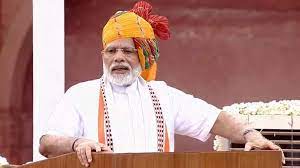
    Addressing from the ramparts of Red Fort on the 77th Independence Day, Prime Minister Shri Narendra Modi attributed the rise of India from 10th to 5th  largest economy in the world to the efforts of 140 crore people of India. He said this has happened because this Government stopped leakages, created a strong economy, and spent maximum money for the welfare of the poor.

    Prime Minister Shri Modi stated, “Today I want to tell the people that when the country becomes economically prosperous, it does not fill the treasury; it increases capacity of the nation and its peoples. Results will automatically come if the Government pledges to spend every penny towards the welfare of its citizens. 10 years ago, the Government of India used to send Rs. 30 lakh crore to the States. In the last 9 years, this figure has reached Rs. 100 lakh crore. Seeing these numbers, you will feel that such big transformation has happened with big increase in capacity!”

    On the front of self-employment, Shri Modi said, “More Rs. 20 lakh crore have been given to the youth for self-employment for their occupation. 8 crore people have started new business and not only that, every businessman has given employment to one or two people. Therefore, 8 crore citizens benefitting from the (Pradhan Mantri) Mudra Yojana have the ability to provide employment to 8-10 crore new people.”

    Referring to COVID-19 Pandemic, Shri Modi said, “MSMEs were not allowed to go bankrupt with the help of loans worth Rs. 3.5 lakh crore in the crisis of Corona virus. They were not allowed to die, they were given strength.”

    On the new and aspiring middle class, Shri Modi said, “When poverty reduces in the country, the power of the middle class increases a lot. And I assure you with guarantee that in the coming five years the country will take its place in the first three world economies. Today the 13.5 crore people have come out of poverty to become the strength of the middle class. When the purchasing power of the poor increases, the business power of the middle class increases. When the purchasing power of the village increases, the economic system of the town and city runs at a faster pace. This interconnected is our economic cycle. We want to move ahead by giving it strength.”

    Additionally, the Prime Minister said, “When the (exemption) limit of income tax is increased from Rs. 2 lakh to Rs. 7 lakh, then the biggest benefit is to the salaried class, especially to the middle class.”

    Referring to the recent problems faced by the world collectively, the Prime Minister said, “The world has not yet emerged from COVID-19 Pandemic, and the war created a new problem. Today, the world is facing the crisis of inflation.”

    Talking about fighting inflation, the Prime Minister said, “India has tried its best to control inflation. We cannot think that our things are better than the world, I have to take more steps in this direction to minimise the burden of inflation on my countrymen. My efforts will continue to tame inflation.”