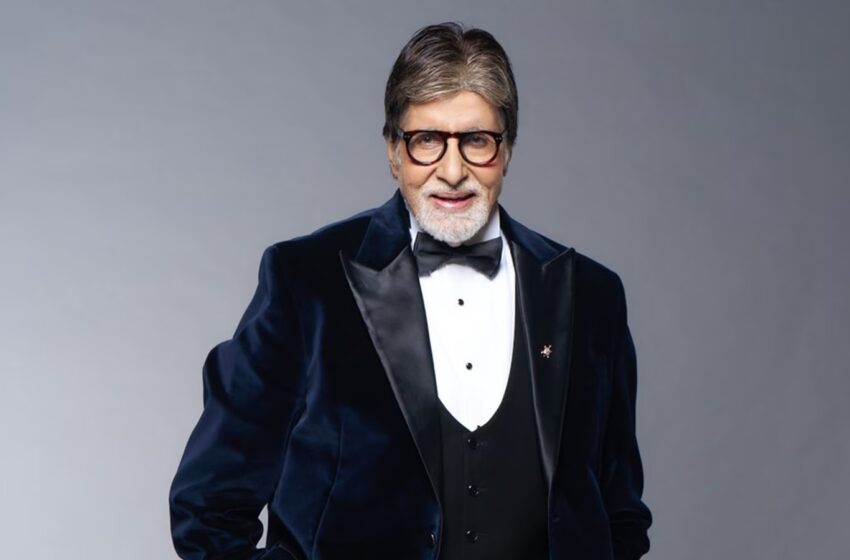
Amitabh Bachchan: A Detailed Biography Amitabh Bachchan is an iconic Indian actor, film producer, television host, and former politician, widely regarded as one of the greatest and most influential actors in Indian cinema. Born on October 11, 1942, in Allahabad (now Prayagraj), India, he rose to fame in the 1970s with his portrayal of the “Angry Young Man” in films like Zanjeer (1973), Deewaar (1975), and Sholay (1975).

Early Life and Background
Amitabh Bachchan was born as Amitabh Harivansh Rai Bachchan on October 11, 1942, in Allahabad (now Prayagraj), Uttar Pradesh, India. He was born into a distinguished family. His father, Harivansh Rai Bachchan, was a renowned Hindi poet, known for his famous work Madhushala. His mother, Teji Bachchan, was a social activist and had a keen interest in theatre.
Originally, Amitabh’s name was to be Inquilaab, inspired by the phrase Inquilab Zindabad (meaning “Long Live the Revolution”), commonly used during India’s independence movement. However, on the suggestion of poet Sumitranandan Pant, his father changed it to Amitabh, meaning “the light that never dims.”
Amitabh completed his schooling at Sherwood College, Nainital, where he was an active student, excelling in academics and extracurricular activities. Later, he pursued his graduation from Kirori Mal College, University of Delhi, where he was part of the theatre and drama society, which played a crucial role in shaping his acting career.
Entry into Bollywood and Initial Struggles
Amitabh Bachchan made his Bollywood debut in 1969 with the film Saat Hindustani, which did not gain much commercial success but earned him the National Film Award for Best Newcomer. His tall, lanky frame and deep baritone voice were initially considered disadvantages in the film industry, but he persevered.
In 1971, he gained recognition for his supporting role in Anand, where he starred alongside Rajesh Khanna. His performance as a cynical doctor was widely appreciated and earned him his first Filmfare Award for Best Supporting Actor. Despite this breakthrough, he struggled to establish himself in the industry, facing multiple rejections and unsuccessful films.
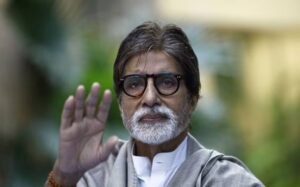
Peak of Success (1970s–1980s)
During the late 1970s and early 1980s, Amitabh delivered some of the most iconic performances of his career. His collaboration with directors like Yash Chopra, Ramesh Sippy, Hrishikesh Mukherjee, and Manmohan Desai resulted in several unforgettable films.
In 1975, Sholay became a milestone in Indian cinema. His portrayal of the rugged yet endearing Jai was loved by audiences. The film remains one of the biggest blockbusters in Bollywood history.
Another major hit was Deewar (1975), where he played a smuggler with a tragic past. The film featured the legendary dialogue, “Mere paas maa hai”, making it one of the most memorable moments in Bollywood history.
In the 1980s, Amitabh continued his dominance with hits like:
- Silsila (1981)
- Lawaaris (1981)
- Satte Pe Satta (1982)
- Namak Halaal (1982)
- Sharaabi (1984)
However, tragedy struck in 1982 when he was seriously injured while filming Coolie. He suffered internal bleeding and was declared clinically dead for a few minutes before being revived. The entire nation prayed for his recovery, and when he returned to the screen, he was greeted with even greater love and admiration.

Rise to Stardom: The Angry Young Man
The turning point in his career came with Zanjeer (1973), directed by Prakash Mehra. In this film, he played Inspector Vijay, a brooding and intense character that resonated with audiences. This role marked the beginning of the “Angry Young Man” era in Bollywood, a persona that Amitabh would become synonymous with.
Following Zanjeer, he delivered several back-to-back hits, including:
- Abhimaan (1973)
- Namak Haraam (1973)
- Deewar (1975)
- Sholay (1975)
- Kabhi Kabhie (1976)
- Amar Akbar Anthony (1977)
- Trishul (1978)
- Don (1978)
By the late 1970s, Amitabh Bachchan had become the biggest star in Indian cinema. His films not only achieved box office success but also won critical acclaim. His ability to blend action, drama, and emotion made him a favorite among filmmakers and audiences alike.
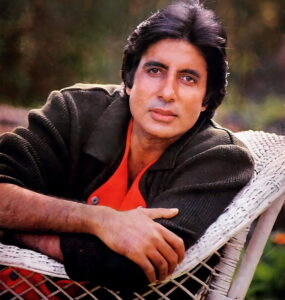
Versatility and Continued Success
While known for his action-packed roles, Amitabh showcased remarkable versatility in films such as Chupke Chupke (1975), Amar Akbar Anthony (1977), and Muqaddar Ka Sikandar (1978). His ability to handle comedy, romance, and drama with equal ease made him the undisputed king of Bollywood in the late 1970s and 1980s.
During this period, he also experimented with different genres, delivering critically acclaimed performances in films like Silsila (1981), Shakti (1982), and Namak Halaal (1982). His popularity soared, and he was often referred to as the “Shahenshah” of Bollywood, a title derived from one of his successful films.
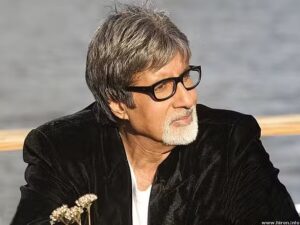
Career Decline and Political Stint (Late 1980s–1990s)
By the late 1980s, Amitabh’s career started facing a decline. Films like Toofan (1989) and Jaadugar (1989) failed at the box office.
In 1984, he took a break from acting and entered politics at the request of his close friend, Rajiv Gandhi. He contested the Lok Sabha elections from Allahabad on a Congress ticket and won by a massive margin. However, he resigned after three years, citing disillusionment with politics.
His comeback films, Agneepath (1990) and Khuda Gawah (1992), were well-received, but they did not bring back his box-office dominance. In 1994, he announced a temporary retirement.
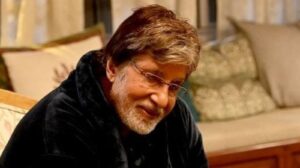
Near-Fatal Accident and Temporary Retirement
In 1982, while shooting for Coolie, Amitabh suffered a life-threatening injury during an action sequence. The entire nation prayed for his recovery, and he eventually survived after multiple surgeries. This incident reinforced his immense popularity and emotional connection with the audience.
After recovering, he continued acting but gradually shifted towards politics. In 1984, he contested the Indian general elections from Allahabad on a Congress Party ticket and won by a huge margin. However, disillusioned by politics, he resigned after three years and returned to films.

Career Slump and Revival
The late 1980s and early 1990s were challenging for Amitabh, as many of his films failed to perform at the box office. He took a brief hiatus in the mid-1990s and ventured into business with the Amitabh Bachchan Corporation Ltd. (ABCL), which faced financial difficulties.
His comeback began with Mohabbatein (2000), where he played a stern yet compassionate headmaster opposite Shah Rukh Khan. Around the same time, he ventured into television as the host of Kaun Banega Crorepati (KBC), the Indian version of Who Wants to Be a Millionaire?. His charismatic hosting revived his career, making him a household name once again.
The Resurgence and Modern Era
From the 2000s onwards, Amitabh reinvented himself by taking on character-driven roles in films like Black (2005), Paa (2009), Piku (2015), and Pink (2016). His ability to adapt to changing cinematic trends kept him relevant in an industry dominated by younger actors.
Films like Sarkar (2005), Bhootnath (2008), and Badla (2019) further cemented his legacy as an actor who could captivate audiences across generations. His collaboration with directors like R. Balki, Shoojit Sircar, and Sujoy Ghosh showcased his ability to take on unconventional and thought-provoking roles.
Personal Life and Philanthropy
Amitabh Bachchan married actress Jaya Bhaduri in 1973, and they have two children, Abhishek Bachchan and Shweta Bachchan Nanda. His son, Abhishek, is also an actor, while his daughter, Shweta, is an author and entrepreneur.
Apart from acting, Amitabh is actively involved in philanthropy. He has supported various charitable initiatives, including campaigns for polio eradication, education, and disaster relief. He has also been a brand ambassador for several social causes, reflecting his commitment to societal welfare.
Awards and Recognition
Amitabh Bachchan has received numerous accolades, including:
- Four National Film Awards for Best Actor
- 16 Filmfare Awards
- The Padma Shri (1984), Padma Bhushan (2001), and Padma Vibhushan (2015) from the Government of India
- The Dadasaheb Phalke Award (2019) for his contribution to Indian cinema
- International honors, including the Knight of the Legion of Honour from France
- 4 National Film Awards for Best Actor (Agneepath, Black, Paa, Piku)
- 16 Filmfare Awards
- Dadasaheb Phalke Award (2019) for lifetime achievement
- Padma Shri (1984), Padma Bhushan (2001), and Padma Vibhushan (2015) by the Government of India
His contributions to Indian cinema have been unparalleled, making him a global icon.
Financial Struggles and Resurgence (2000s–Present)
In the late 1990s, Amitabh faced severe financial troubles. His production company, ABCL (Amitabh Bachchan Corporation Limited), suffered huge losses, leaving him in deep debt.
However, he made a grand comeback in 2000 with the television quiz show Kaun Banega Crorepati (KBC). His dignified hosting style revived his popularity, and he became a household name again.
Simultaneously, he redefined his film career with age-appropriate roles in films like:
- Mohabbatein (2000)
- Baghban (2003)
- Black (2005)
- Paa (2009)
- Piku (2015)

Legacy and Influence
Amitabh Bachchan is regarded as one of the greatest actors in Indian cinema. His ability to reinvent himself across generations has kept him relevant for over five decades.
Apart from acting, he is also involved in philanthropy and social causes. His deep baritone voice has made him the voice behind numerous social campaigns, and he is a regular ambassador for causes like polio eradication, tuberculosis awareness, and girl child education.
At 82 (as of 2024), Amitabh continues to act in films and host KBC, proving that he is truly the Shahenshah of Bollywood.

Conclusion
Amitabh Bachchan’s journey from an aspiring actor to Bollywood’s biggest superstar is nothing short of legendary. Despite ups and downs, he has remained an enduring figure in Indian cinema. His dedication, versatility, and charisma have made him one of the most respected figures in the entertainment industry.
Amitabh Bachchan’s journey is a testament to perseverance, talent, and adaptability. From struggling to find roles in his early career to becoming the biggest superstar of Indian cinema, his story continues to inspire millions. His ability to reinvent himself, stay relevant across generations, and contribute to society makes him not just a cinematic legend but a cultural icon. Even in his eighties, he remains active in films, television, and social initiatives, proving that true greatness knows no bounds.
His legacy will continue to inspire future generations, making him an eternal icon in Indian and global cinema.
ALSO FREAD THIS: “Katrina Kaif: 12 Powerful Milestones of a Bollywood Icon”