Tag: military escalation

  • India-Pakistan Tensions Escalate Under Operation Sindoor

    India-Pakistan Tensions Escalate Under Operation Sindoor

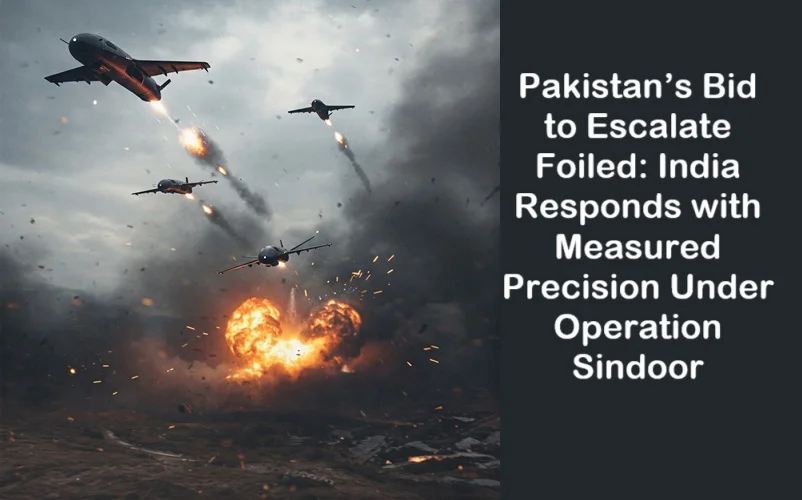
    Operation Sindoor : On April 22, 2025, a horrific terror attack in Pahalgam, Jammu and Kashmir, claimed the lives of 26 civilians, igniting a fresh wave of conflict between India and Pakistan. The attack, attributed to Pakistan-based terror group Jaish-e-Mohammad, prompted India to launch Operation Sindoor, a series of precision airstrikes targeting terror infrastructure across the border. This blog explores the unfolding crisis, its implications, and the delicate balance of power in the region.


    View this post on Instagram


    A post shared by AVSPOST (@avspost)

    `

    Operation Sindoor: India’s Decisive Response

    India’s military response was swift and calculated. Airstrikes hit nine terror launchpads in Pakistan and Pakistan-occupied Kashmir (PoK), neutralizing key Jaish-e-Mohammad operatives, including Abdul Rauf Azhar, a notorious figure linked to the IC-814 hijacking and the 2019 Pulwama attack. The Indian Air Force, leveraging advanced intelligence, ensured minimal collateral damage while crippling terror networks. The operation underscored India’s zero-tolerance policy toward cross-border terrorism, with the government emphasizing its right to self-defense.

    Pakistan’s Retaliation and India’s Defense

    Pakistan retaliated aggressively, launching missiles and drones targeting military installations in 15 Indian cities across Jammu, Punjab, Gujarat, and Rajasthan. However, India’s state-of-the-art S-400 air defense system proved formidable, intercepting missiles and downing drones with precision. A significant blow came when Indian forces shot down a Pakistani F-16 jet near Sargodha and disabled Pakistan’s air defense radar in Lahore. These actions highlighted India’s technological and strategic superiority, though the human cost of the conflict remains a grim reality.
    India-Pakistan Tensions : operation sindoor
    India-Pakistan Tensions : operation sindoor

    The Human and Strategic Toll

    The escalation has not been without loss. At least 16 civilians, including women and children, and one Indian soldier have been killed in the crossfire. Blackouts have been enforced in border states, and 24 airports in northern India are closed, disrupting over 400 flights. The Indian government has banned live media coverage of military operations to curb panic and misinformation, while security measures have been tightened nationwide. On the Pakistani side, unverified reports suggest heavy casualties, adding to the regional instability.

    A Call for De-escalation

    The international community has responded with urgency. U.S. Secretary of State Marco Rubio has engaged both nations, urging restraint and dialogue. Former U.S. President Donald Trump described the conflict as a “tit-for-tat” cycle, expressing hope for resolution. Domestically, voices like PDP leader Mehbooba Mufti have called for diplomacy over military action, emphasizing the suffering in Jammu and Kashmir. The situation remains volatile, with the Indian Air Force on high alert and Pakistan signaling readiness for further retaliation.

    Also Read This: India-Pakistan conflict 

    Looking Ahead

    As tensions simmer, the India-Pakistan conflict under Operation Sindoor serves as a stark reminder of the fragile peace in South Asia. While India’s military prowess has sent a strong message, the path to lasting stability lies in addressing the root causes of terrorism and fostering diplomatic engagement. For now, the region holds its breath, hoping cooler heads prevail in this high-stakes standoff.
  • India on Alert: Civil Defence Drills Ordered as Tensions with Pakistan Escalate

    India on Alert: Civil Defence Drills Ordered as Tensions with Pakistan Escalate

    Civil Defence Drills

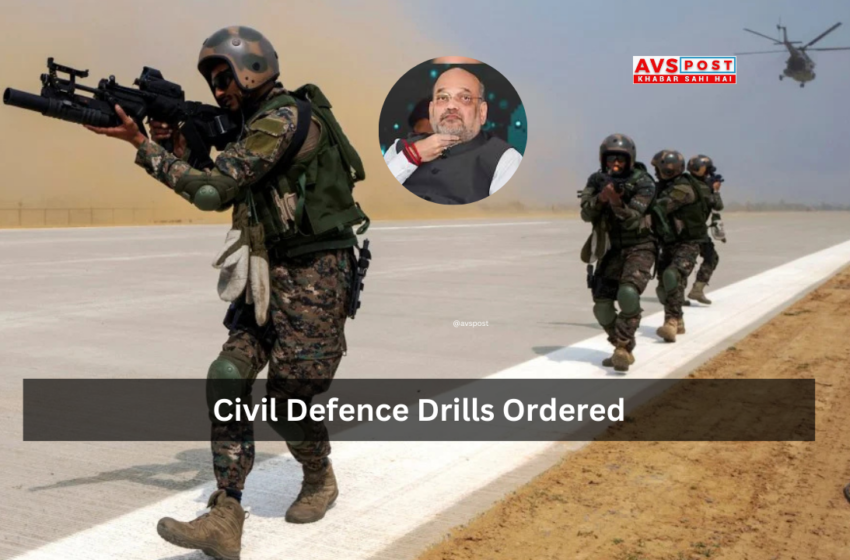
    India’s Ministry of Home Affairs (MHA) issued a directive for multiple states to conduct civil defence mock drills on May 7, a move driven by heightened tensions with Pakistan following the devastating April 22 terrorist attack in Pahalgam, Jammu and Kashmir. The attack, which claimed 26 lives, mostly tourists, has pushed the two nuclear-armed neighbors to the brink, with fears of conflict looming large. These drills, evoking memories of the 1971 India-Pakistan war, signal India’s resolve to prepare its citizens for any escalation.

    India’s Ministry of Home Affairs (MHA)
    India’s Ministry of Home Affairs (MHA) : civil defence drills

    The Trigger: Pahalgam and Its Fallout

    The Pahalgam attack, the deadliest in Kashmir since 2000, has inflamed India-Pakistan relations. India accuses Pakistan of orchestrating the assault, while Pakistan denies involvement, calling for a neutral probe. The attack has sparked a series of retaliatory measures from India: suspension of the 1960 Indus Waters Treaty, a ban on Pakistani airlines in Indian airspace, and the cancellation of visas for Pakistani nationals. Along the Line of Control (LoC), both nations have exchanged fire, with Pakistan claiming civilian casualties and India asserting effective counterstrikes. Pakistan’s recent warning of an imminent Indian military strike, based on “credible intelligence,” has further raised the stakes.

    Civil Defence Drills : A Proactive Response

    The MHA’s order for civil defence drills is a calculated step to ensure civilian readiness amid these volatile developments. Scheduled for May 7, the drills include:

    • Air Raid Siren Activation: Testing warning systems to alert civilians of potential attacks.
    • Public Training: Educating citizens, including students, on protective measures like taking cover or evacuating to bunkers.
    • Blackout Exercises: Simulating power outages to assess security preparedness, as recently practiced in Ferozepur Cantonment.
    • Camouflaging Key Sites: Early efforts to shield critical infrastructure from detection.
    • Evacuation Planning: Updating and rehearsing strategies to move civilians to safety.
    Civil Defence Drills
    Civil Defence Drills

    In border regions like Poonch, Jammu and Kashmir, these preparations are particularly urgent. Schools are training students to dive under desks or flee to bunkers during shelling, a grim reminder of the region’s vulnerability.

    The Bigger Picture: Military and Diplomatic Moves

    The civil defence initiative aligns with India’s broader response. Prime Minister Narendra Modi has given the armed forces “complete operational freedom,” with the Indian Air Force conducting exercises featuring Rafale and Su-30MKI jets. The National Investigation Agency is investigating the Pahalgam attack, and security has been tightened nationwide, with strict checks on Pakistani nationals in India.

    The Bigger Picture: Military and Diplomatic Moves
    civil defence drills  :  The Bigger Picture: Military and Diplomatic Moves

    On the diplomatic front, global powers are urging restraint. The U.S. has backed India’s right to combat terrorism but emphasized de-escalation, with Secretary of State Marco Rubio and Defense Secretary Pete Hegseth issuing measured statements. Russia, Iran, and others have echoed similar calls, while Pakistan has sought Russia’s mediation and proposed a joint investigation into the attack. Pakistan’s military, meanwhile, is conducting its own exercises near the LoC, signaling readiness for any Indian move.

    A Nation on Edge

    The drills reflect the public’s growing unease. Nationwide protests demanding justice for the Pahalgam victims have amplified calls for action, with opposition leaders like Rahul Gandhi pressing for a strong response. In Pakistan, public anxiety is evident, with people searching for terms like “India-Pakistan war” and “Rafale missiles,” wary of India’s military might. For Kashmiris on both sides of the LoC, the threat of conflict is all too real, with villagers preparing bunkers and schools closing in Pakistan-administered areas.

    Historical Echoes and Future Risks

    India and Pakistan have faced similar crises before—three wars since 1947, the 1999 Kargil conflict, and the 2019 Balakot airstrike after the Pulwama attack. Each time, diplomacy or restraint averted all-out war, but the current standoff feels different. The suspension of the Indus Waters Treaty, a cornerstone of bilateral ties, and the lack of robust crisis management channels raise the risk of miscalculation. With India’s 172 nuclear warheads and Pakistan’s 170, any escalation could be catastrophic.

    Civil Defence Drills
    Civil Defence Drills

    A Delicate Balance

    The MHA’s civil defence drills are both a practical necessity and a message of resolve. They prepare India’s citizens for the worst while signaling to Pakistan that India is ready for any eventuality. Yet, the hope remains that cooler heads will prevail. The international community’s push for dialogue and the memory of past de-escalation—like Pakistan’s release of an Indian pilot in 2019—offer a glimmer of optimism. For now, India stands vigilant, its people bracing for an uncertain future as the shadow of conflict lingers.

    Also Read This: ChatGPT Shopping : Revolution or Rough Start?