Tag: Lok Sabha

  • Lok Sabha Expansion : Government Proposes Increasing Seats from 543 to 850

    Lok Sabha Expansion : Government Proposes Increasing Seats from 543 to 850

    Lok Sabha Expansion : In a landmark move that could reshape India’s parliamentary democracy, the Union Government has introduced the Constitution (One Hundred and Thirty-First Amendment) Bill, 2026, paving the way for a major Lok Sabha expansion. The proposal aims to increase the strength of the lower house from the current 543 elected seats to a maximum of 850 seats — comprising up to 815 from States and 35 from Union Territories.

    This Lok Sabha expansion is expected to be tabled during the special Parliament session beginning April 16, 2026. A draft of the bill has already been shared with MPs, signalling the government’s intent to push through this significant electoral reform.

    Why is Lok Sabha Expansion Being Proposed?

    India’s Lok Sabha seat distribution has remained largely frozen since the 1970s, based on the 1971 Census. This freeze was introduced to encourage family planning and prevent states with better population control from losing representation. However, decades of uneven population growth have created imbalances.

    The proposed Lok Sabha expansion seeks to address this by:

    • Removing the long-standing constitutional cap under Article 81.
    • Enabling fresh delimitation of constituencies based on the latest published census figures (likely starting with 2011 Census data for faster implementation).
    • Creating space for the smooth rollout of the 33% women’s reservation (Nari Shakti Vandan Adhiniyam) without reducing any existing seats.
    Lok Sabha Expansion : Government Proposes Increasing Seats from 543 to 850
    Lok Sabha Expansion : Government Proposes Increasing Seats from 543 to 850

    By increasing the total number of seats, the government aims to implement one-third reservation for women in the Lok Sabha and State Assemblies from the 2029 general elections onwards.

    Key Highlights of the Lok Sabha Expansion Bill

    • New Strength: Maximum 850 members (815 from States + 35 from Union Territories).
    • Constitutional Changes: Amendment to Article 81 and Article 82 to allow readjustment of seats and removal of the 1971 Census freeze.
    • Delimitation Exercise: A new Delimitation Commission will redraw boundaries and allocate seats, including SC/ST reservations and women-reserved constituencies.
    • Women’s Quota Link: The Lok Sabha expansion is strategically designed to accommodate the 33% women’s reservation seamlessly, with rotation of reserved seats.

    State Legislative Assemblies are also expected to see a proportional increase in seats, though the upper limit for assemblies remains unchanged in the current proposal.

    Political Reactions and Concerns

    The Lok Sabha expansion has sparked intense debate across political lines. Northern states like Uttar Pradesh and Bihar, which have witnessed higher population growth, are likely to gain more seats in absolute terms. Southern states, known for successful family planning and slower population growth, fear a decline in their relative influence.

    Opposition parties, including those from southern states (such as DMK), Congress, and others, have expressed concerns about federal balance. Many argue that delimitation should ideally be based on the upcoming post-2026 Census rather than earlier data. There are also demands for safeguards to protect the representation and resource allocation of developed states.

    Lok Sabha Expansion : Government Proposes Increasing Seats from 543 to 850
    Lok Sabha Expansion : Government Proposes Increasing Seats from 543 to 850

    What Does This Mean for Indian Democracy?

    This Lok Sabha expansion is one of the most ambitious electoral reforms in recent decades. Proponents argue it will:

    • Ensure better representation in line with current demographics.
    • Strengthen women’s participation in law-making.
    • Modernize India’s parliamentary structure after nearly 50 years.

    Critics, however, worry about potential north-south divides, increased costs of larger legislatures, and the risk of political gerrymandering during the delimitation process.

    The bill requires a special majority in both houses of Parliament for passage. If cleared, it could fundamentally change the composition of the next Lok Sabha after 2029.

    The proposed Lok Sabha expansion to 850 seats marks a bold step towards making India’s Parliament more representative and inclusive. While it promises to fast-track women’s reservation and update seat distribution, it also opens up critical discussions on federal equity and democratic balance.

    Also Read This : Bihar New CM Samrat Choudhary 

    As the special Parliament session unfolds from April 16, 2026, all eyes will be on how lawmakers navigate this delicate yet transformative reform.


    View this post on Instagram
     

    A post shared by AVSPOST (@avspost)

  • Rahul Gandhi and Election Commission 2025 : Protests, Voter Fraud Allegations, and Political Showdown

    Rahul Gandhi and Election Commission 2025 : Protests, Voter Fraud Allegations, and Political Showdown

    Rahul Gandhi and Election Commission, the Leader of the Opposition in the Lok Sabha, has been a pivotal figure in Indian politics in 2025, particularly in his interactions with the Election Commission of India (ECI). His vocal criticism of electoral processes, combined with his broader political activities, has kept him at the forefront of national discourse. Below is an updated summary of his key political activities and engagements with the ECI as of August 11, 2025

    Rahul Gandhi and Election Commission 2025
    Rahul Gandhi and Election Commission 2025

    Protest Against Voter List Revision in Bihar

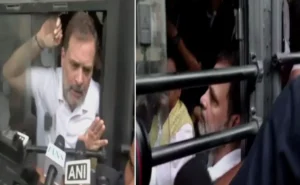
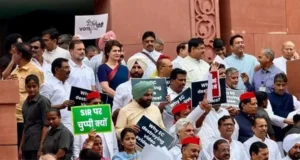
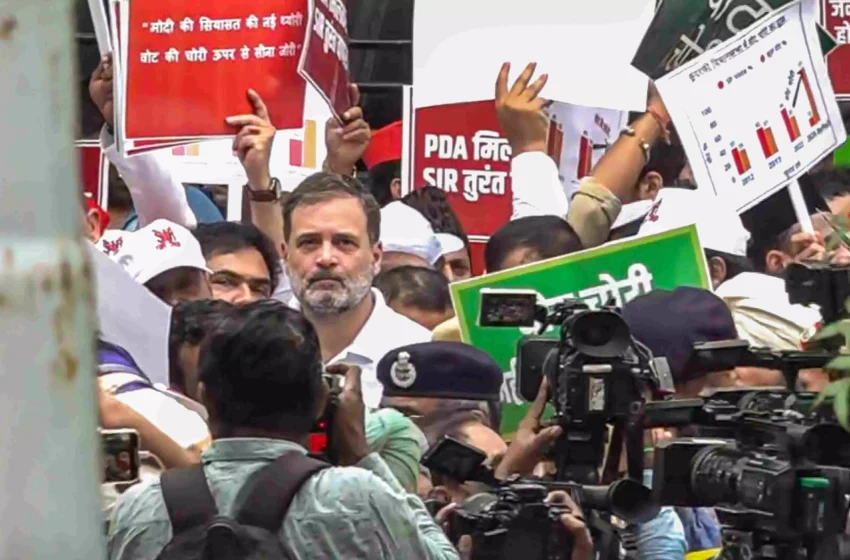
    Rahul Gandhi and Election Commission 2025 : On August 11, 2025, Rahul Gandhi, alongside other INDIA bloc leaders including Priyanka Gandhi Vadra, Sanjay Raut, and Sagarika Ghose, led a protest march from Parliament to the ECI office in New Delhi. The march opposed the Special Intensive Revision (SIR) of voter lists in Bihar, ahead of the Bihar Assembly elections scheduled for October-November 2025. The opposition alleged that the SIR, requiring citizenship proof and other documents, was a deliberate attempt to disenfranchise marginalized groups, including Muslims, Dalits, and backward communities. The Delhi Police halted the march near Transport Bhawan, detaining several leaders, including Rahul Gandhi. He described the protest as a defense of the Constitution and the principle of “one person, one vote,” accusing the ECI of colluding with the Bharatiya Janata Party (BJP) to manipulate voter lists. Rahul stated, “This is institutional theft. There will come a time when we will catch you.”

    Allegations of Voter Fraud in Karnataka

    Rahul Gandhi and Election Commission 2025 : On August 7, 2025, Rahul Gandhi held a press conference in Bengaluru, followed by the “Vote Adhikar Rally” at Freedom Park on August 8, where he alleged significant voter fraud in the 2024 Lok Sabha elections in Karnataka’s Mahadevapura Assembly constituency (part of Bangalore Central Lok Sabha seat). He claimed over 1 lakh votes were manipulated through:

    • Duplicate voters: 11,965 cases.
    • Fake or invalid addresses: 40,009 instances.
    • Bulk registrations at single addresses: 10,452 cases, including a single-room house with 80 voters and a brewery listed as a residential address with 68 voters.
    • Invalid photos: 4,132 cases.
    • Misuse of Form 6: 33,692 instances.
    Rahul Gandhi and Election Commission 2025
    Rahul Gandhi and Election Commission 2025

    Rahul Gandhi and Election Commission 2025 : He cited specific examples, such as “House Number 0” entries and a 70-year-old woman, Shakun Rani, allegedly registered and voting twice. The ECI, through Karnataka’s Chief Electoral Officer, issued a notice on August 11, 2025, refuting these claims. The ECI stated that Shakun Rani denied voting twice and that the document Rahul presented was not issued by the polling officer. The ECI demanded that Rahul provide evidence under oath or apologize, warning of legal action under the Bharatiya Nyaya Sanhita (BNS) and Representation of the People Act, 1950, for false allegations or forged documents. Rahul responded, “My word is my oath,” asserting that the data was sourced from the ECI itself and that they had not denied the anomalies.

    Internal Congress Tensions in Karnataka

    Rahul Gandhi’s voter fraud allegations led to internal friction within the Karnataka Congress. On August 11, 2025, Karnataka Cooperation Minister K.N. Rajanna resigned after his comments on the issue displeased the Congress high command. Rajanna, a close ally of Chief Minister Siddaramaiah, criticized the party for not addressing voter list irregularities during its own tenure in Karnataka, stating, “One should remember that voter lists were revised when our own government was at the helm.” This drew backlash from Deputy CM D.K. Shivakumar’s faction, who accused Rajanna of anti-party activities. The Congress leadership rejected Siddaramaiah’s plea to retain Rajanna, exposing internal divisions.

    Lok Sabha Speech and Controversy

    Rahul Gandhi and Election Commission 2025 : During the 2025 Parliament Budget Session (February 2025), Rahul Gandhi’s Lok Sabha speech on February 3 sparked significant controversy. He criticized the government on issues including the Make-in-India campaign, alleged Chinese troop presence in India, discrepancies in voter lists, and Prime Minister Narendra Modi’s invitation to US President Joe Biden. He described President Droupadi Murmu’s address as a “laundry list” of government achievements, lacking vision. The BJP condemned his remarks as an attempt to undermine government efforts, escalating political tensions.

    Criticism of Budget 2025

    Rahul Gandhi labeled the 2025 Union Budget, presented by Finance Minister Nirmala Sitharaman, as a “band-aid on a bullet wound.” He argued that the budget failed to innovatively address India’s economic challenges amid global uncertainty, particularly in areas like unemployment and inflation.

    Delhi Election Campaign Launch

    On January 13, 2025, Rahul Gandhi launched the Congress’s Delhi election campaign with a public rally in Seelampur, Northeast Delhi. The party positioned him as a strong advocate for national issues, focusing on youth employment, women’s rights, and social equity to appeal to voters ahead of the Delhi Assembly elections.

    Rahul Gandhi and Election Commission 2025
    Rahul Gandhi and Election Commission 2025

    Rahul Gandhi and Election Commission : Legal Challenges

    Rahul Gandhi and Election Commission 2025 faced multiple legal challenges in 2025. He was granted bail in a defamation case in Nashik, Maharashtra, over remarks about Vinayak Damodar Savarkar. Additionally, he and Sonia Gandhi were charged in a money laundering case linked to the National Herald newspaper. The Congress dismissed these cases as politically motivated attempts to target opposition leaders.

    Political Strategy and Public Engagement

    Throughout 2025, Rahul Gandhi emphasized issues like youth employment, women’s rights, agricultural reforms, and digital education, advocating for inclusive governance and a new leadership model. His participation in international forums, such as the Bharat Summit 2025 in Hyderabad and the Paris Climate Conference, bolstered his global and domestic image as a progressive leader.

    Also Read This : Zakir Khan : The Sakht Launda Who Won India’s Heart with Laughter

    Rahul Gandhi and  Election Commission active opposition leadership in 2025, particularly his confrontations with the Election Commission over voter list revisions and alleged fraud, has solidified his role as a key figure in Indian politics. His focus on voter rights, economic policies, and social issues, combined with his vocal criticism of the government, ensures that he remains a central figure in shaping India’s political landscape. His activities and statements are likely to continue influencing national discourse as the Bihar and other state elections approach.