Tag: Jaish-e-Mohammad

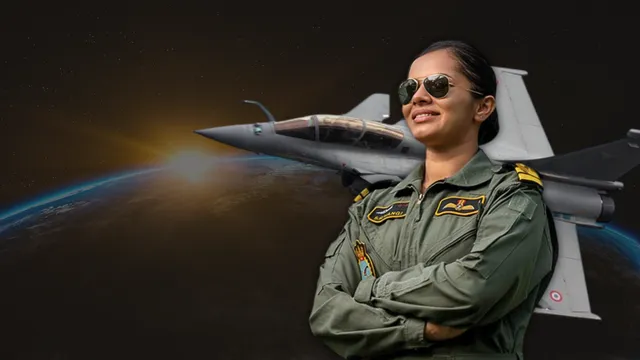
  • Meet Flight Lieutenant Shivangi Singh : India’s Trailblazing Rafale Pilot

    Meet Flight Lieutenant Shivangi Singh : India’s Trailblazing Rafale Pilot

    Flight Lieutenant Shivangi Singh, born in 1995 in Phulwariya, Varanasi, Uttar Pradesh, is the first and only woman pilot to fly India’s Rafale fighter jet. Growing up in a modest family, with her father Kumareshwar Singh running a tours and travels business and her mother Seema Singh working as a teacher, Shivangi’s passion for aviation was sparked early. Visits to the Indian Air Force Museum in Delhi with her maternal grandfather, a retired Army colonel, fueled her dream of flying. A graduate of Banaras Hindu University, she joined the 7 UP Air Squadron NCC, setting the stage for her Air Force career.

    Breaking Barriers in the Indian Air Force

    Commissioned into the Indian Air Force (IAF) in December 2017 as part of its second batch of women fighter pilots, Shivangi initially flew the MiG-21 Bison, a challenging aircraft requiring exceptional piloting skills. Stationed at a Rajasthan border base, she trained alongside Wing Commander Abhinandan Varthaman, a national hero known for downing a Pakistani F-16 in 2019. In 2020, after rigorous conversion training, Shivangi was selected to pilot the Rafale, joining the 17 Squadron “Golden Arrows” in Ambala, Punjab. Her selection marked a historic milestone as the first woman to fly India’s advanced multi-role fighter jet.

    Achievements and Recognition

    Flight Lieutenant Shivangi Singh career is studded with firsts. In 2022, she became the second woman fighter pilot to feature in the IAF’s Republic Day tableau, showcasing the Rafale alongside other advanced aircraft. In 2023, she participated in Exercise Orion in France, the IAF’s first overseas deployment of Rafale jets, earning praise for her skill in multinational wargames. She has also flown missions over eastern Ladakh amid tensions with China, demonstrating the Rafale’s reliability in high-stakes operations. Known as “Rafale Rani,” Shivangi’s journey culminated in her leading the IAF tableau at the 2022 Republic Day parade.
    Flight Lieutenant Shivangi Singh
    Flight Lieutenant Shivangi Singh

    Role in Operation Sindoor

    During the ongoing India-Pakistan tensions under Operation Sindoor, sparked by a terror attack in Pahalgam on April 22, 2025, Shivangi’s expertise as a Rafale pilot has been critical. With the IAF on high alert, her role in the Golden Arrows squadron underscores India’s aerial dominance, particularly in countering Pakistani missile and drone attacks. Her experience in high-intensity missions positions her as a key asset in maintaining air superiority.

    Also Read This: India-Pakistan Tensions Escalate Under Operation Sindoor

    Vision and Impact

    Lieutenant  Shivangi Singh aspires to become an astronaut, eyeing ISRO’s upcoming manned space mission. In interviews, she emphasizes gender equality in the IAF, noting that training and responsibilities are identical for men and women. “I succeeded in a field long reserved for men, and if I can do it, anyone can,” she told AFP. Her story inspires countless young women, proving that determination and skill can shatter glass ceilings. Shivangi’s message to aspiring pilots is clear: “Believe in yourself and dream big.”
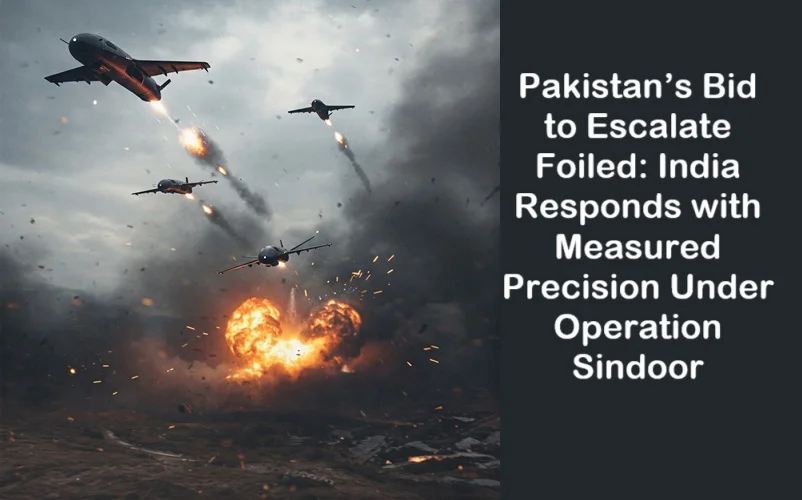
  • India-Pakistan Tensions Escalate Under Operation Sindoor

    India-Pakistan Tensions Escalate Under Operation Sindoor

    Operation Sindoor : On April 22, 2025, a horrific terror attack in Pahalgam, Jammu and Kashmir, claimed the lives of 26 civilians, igniting a fresh wave of conflict between India and Pakistan. The attack, attributed to Pakistan-based terror group Jaish-e-Mohammad, prompted India to launch Operation Sindoor, a series of precision airstrikes targeting terror infrastructure across the border. This blog explores the unfolding crisis, its implications, and the delicate balance of power in the region.


    View this post on Instagram


    A post shared by AVSPOST (@avspost)

    `

    Operation Sindoor: India’s Decisive Response

    India’s military response was swift and calculated. Airstrikes hit nine terror launchpads in Pakistan and Pakistan-occupied Kashmir (PoK), neutralizing key Jaish-e-Mohammad operatives, including Abdul Rauf Azhar, a notorious figure linked to the IC-814 hijacking and the 2019 Pulwama attack. The Indian Air Force, leveraging advanced intelligence, ensured minimal collateral damage while crippling terror networks. The operation underscored India’s zero-tolerance policy toward cross-border terrorism, with the government emphasizing its right to self-defense.

    Pakistan’s Retaliation and India’s Defense

    Pakistan retaliated aggressively, launching missiles and drones targeting military installations in 15 Indian cities across Jammu, Punjab, Gujarat, and Rajasthan. However, India’s state-of-the-art S-400 air defense system proved formidable, intercepting missiles and downing drones with precision. A significant blow came when Indian forces shot down a Pakistani F-16 jet near Sargodha and disabled Pakistan’s air defense radar in Lahore. These actions highlighted India’s technological and strategic superiority, though the human cost of the conflict remains a grim reality.

    India-Pakistan Tensions : operation sindoor
    India-Pakistan Tensions : operation sindoor

    The Human and Strategic Toll

    The escalation has not been without loss. At least 16 civilians, including women and children, and one Indian soldier have been killed in the crossfire. Blackouts have been enforced in border states, and 24 airports in northern India are closed, disrupting over 400 flights. The Indian government has banned live media coverage of military operations to curb panic and misinformation, while security measures have been tightened nationwide. On the Pakistani side, unverified reports suggest heavy casualties, adding to the regional instability.

    A Call for De-escalation

    The international community has responded with urgency. U.S. Secretary of State Marco Rubio has engaged both nations, urging restraint and dialogue. Former U.S. President Donald Trump described the conflict as a “tit-for-tat” cycle, expressing hope for resolution. Domestically, voices like PDP leader Mehbooba Mufti have called for diplomacy over military action, emphasizing the suffering in Jammu and Kashmir. The situation remains volatile, with the Indian Air Force on high alert and Pakistan signaling readiness for further retaliation.

    Also Read This: India-Pakistan conflict 

    Looking Ahead

    As tensions simmer, the India-Pakistan conflict under Operation Sindoor serves as a stark reminder of the fragile peace in South Asia. While India’s military prowess has sent a strong message, the path to lasting stability lies in addressing the root causes of terrorism and fostering diplomatic engagement. For now, the region holds its breath, hoping cooler heads prevail in this high-stakes standoff.