Tag: Iran US War

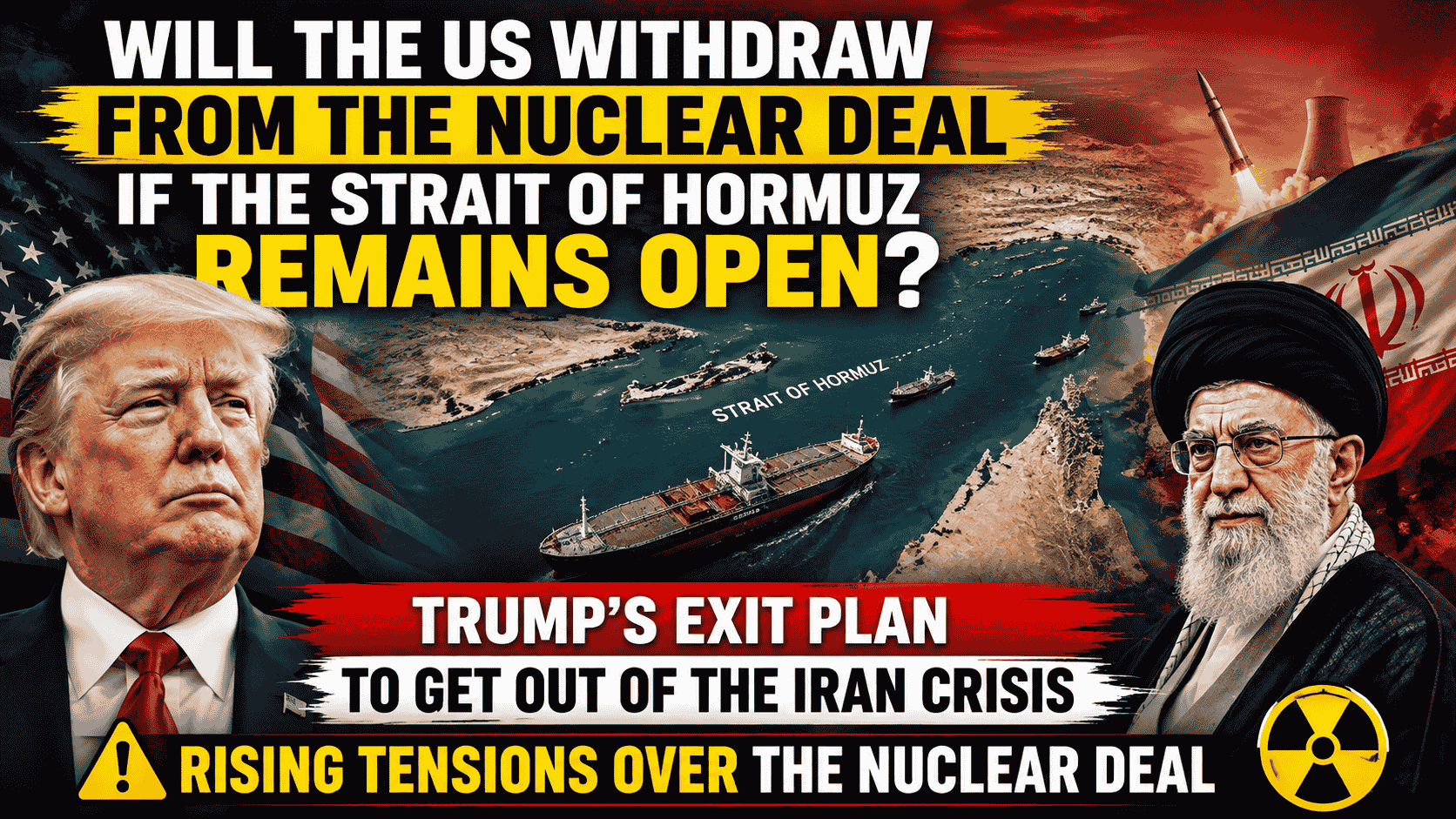
  • Will the US withdraw from the nuclear deal if the Strait of Hormuz remains open? Trump’s exit plan to get out of the Iran crisis; rising tensions over

    Will the US withdraw from the nuclear deal if the Strait of Hormuz remains open? Trump’s exit plan to get out of the Iran crisis; rising tensions over

    The Strait of Hormuz, focus on America’s strategy. Amid ongoing tensions in the Middle East, the Strait of Hormuz has once again become the centre of global politics and energy security. The growing confrontation between Iran and its adversaries has heightened concerns in international markets. In this context, discussions have intensified about America’s potential strategy: if the situation normalises and the Hormuz route remains open, could Washington move towards withdrawing from the nuclear deal with Iran?

    Given Donald Trump’s role in American politics, this question becomes even more significant. The Trump administration’s foreign policy has previously been known for its hardline stance towards Iran. Therefore, the search for an exit plan to emerge from the current crisis is being seen as a strategic signal.

    Is America trying to extricate itself from the Iran conflict?

    Analysts believe that the US is currently looking for ways to avoid getting directly entangled in a prolonged military confrontation. Escalating tensions with Iran not only increase regional instability but also impact oil supplies, maritime trade and the global economy. For this reason, the security and openness of the Strait of Hormuz have become an international priority.

    If this maritime route remains fully open and functional, a new diplomatic situation could arise for the United States. Some experts believe that in such circumstances, Washington may try to revisit the nuclear deal with Iran under tougher conditions in order to maintain pressure on Tehran.

    Will the US withdraw from the nuclear deal if the Strait of Hormuz remains open? Trump’s exit plan to get out of the Iran crisis; rising tensions over
    Will the US withdraw from the nuclear deal if the Strait of Hormuz remains open? Trump’s exit plan to get out of the Iran crisis; rising tensions over

    Questions raised again over the nuclear deal

    The Iran nuclear deal has long been a subject of global controversy. The agreement’s aim was to keep Iran’s nuclear programme under control, but mutual distrust between the US and Iran repeatedly weakened it. During Trump’s tenure, the United States decided to withdraw from the deal, after which the situation became even more complicated.

    Now, with fresh tensions in the region, there are fears that America may adopt a new strategy of diplomatic pressure in exchange for temporary peace or maritime security. If the Strait of Hormuz remains open and oil supplies are not disrupted, it could also send a message that the US intends to redefine economic and political pressure on Iran.

    Why is the Strait of Hormuz so important?

    The Strait of Hormuz is one of the world’s most sensitive maritime routes. It connects the Persian Gulf to the Gulf of Oman and the Arabian Sea. A large share of the world’s crude oil and gas passes through this route. Any disruption here directly affects international energy prices.

    This is why the United States, European countries and several Gulf nations remain highly vigilant about the security of this waterway. Iran also views the strait as a source of strategic leverage, which increases its ability to exert pressure in the event of any confrontation.

    Trump’s stance and a possible exit plan

    A key aspect of Donald Trump’s foreign policy has been his preference for avoiding long and costly military campaigns. However, his approach towards Iran has often been aggressive. If the United States now wants to avoid getting drawn into a major conflict, preparing an exit plan is considered natural.

    Will the US withdraw from the nuclear deal if the Strait of Hormuz remains open? Trump’s exit plan to get out of the Iran crisis; rising tensions over
    Will the US withdraw from the nuclear deal if the Strait of Hormuz remains open? Trump’s exit plan to get out of the Iran crisis; rising tensions over

    This exit plan would not mean merely a military withdrawal, but also the creation of diplomatic and economic arrangements to contain the crisis. These could include maritime security agreements, regional cooperation, and limited yet effective pressure on Iran.

    Impact on global markets and diplomacy

    Any form of instability in the Middle East is immediately reflected in global markets. Oil prices, shipping costs and investor sentiment are directly affected. If the Strait of Hormuz remains open, markets may experience some relief. But if tensions escalate, an energy crisis and economic uncertainty could deepen.

    At the diplomatic level too, America will have to strike a balance. On one hand, it must reassure its allies about security; on the other, it must avoid a confrontation with Iran that could push the entire region towards war. This is why every move by Washington is now being watched with extreme caution.

    What could happen next?

    In the coming days it will become clear in which direction America wants to take the Iran crisis. If the situation calms down and the maritime route returns to normal, a new political debate over the nuclear deal could intensify. On the other hand, if tensions rise, the US may have to choose between greater toughness or greater flexibility in its strategy.

    Also Read This : Iran could strengthIran control Strait of Hormuz : discussions underway about collecting up to 7% toll from commercial ships

    For now, one thing is certain: the situation in the Strait of Hormuz is no longer just a regional issue, but has become a decisive point for global energy, diplomacy and security. America’s next move could change this entire equation.


    View this post on Instagram


    A post shared by AVSPOST (@avspost)

  • Iran-US War : Has Iran Admitted Defeat? Trump’s Claim – Pleaded to Stop Attacks, Iran Itself Extended the Hand for Talks

    Iran-US War : Has Iran Admitted Defeat? Trump’s Claim – Pleaded to Stop Attacks, Iran Itself Extended the Hand for Talks

    Iran-US War : Long-standing tensions between Iran and the United States are once again in the headlines. US President Donald Trump has claimed that Iran pleaded to stop the attacks and itself took the initiative for talks. Trump’s statement has sparked a fresh debate over the current diplomatic situation in West Asia.

    According to Trump, after recent pressure and military action, Iran tried to reduce tensions and expressed a willingness to open a path for dialogue with the United States. However, no immediate official confirmation of this claim came from the Iranian side, which has made the situation even more complicated.

    What Does Trump’s Statement Mean?

    In American politics and international diplomacy, Trump’s statements are often viewed as strategic messages. This time too, his claim is being seen not just as a statement but as a commentary on the regional balance of power. If Iran has indeed given a signal for talks, it could mean that, amid rising military and economic pressure, it is exploring diplomatic options.

    Iran-US War : Has Iran Admitted Defeat? Trump’s Claim – Pleaded to Stop Attacks, Iran Itself Extended the Hand for Talks
    Iran-US War : Has Iran Admitted Defeat? Trump’s Claim – Pleaded to Stop Attacks, Iran Itself Extended the Hand for Talks

    This claim is also important in the context of Iran-US tensions because a lack of trust between the two countries has persisted for a long time. Issues such as the nuclear program, regional influence, sanctions, and military activities have continuously affected relations between the two nations.

    Has Iran Really Shown Softness?

    After Trump’s statement, the biggest question is whether Iran has actually shown softness or whether this is merely a strategy to build political pressure. Experts on international affairs believe that at such times both sides try to display their strength on public platforms. While the US sends a message of increasing pressure, Iran wants to maintain its image of sovereignty and resistance.

    If Iran has appealed to stop the attacks, it could be a sign that it wants to limit the confrontation rather than escalate it further. On the other hand, it is also possible that this is a diplomatic move to test the possibilities of talks.

    Iran-US War : Rising Stir in West Asia

    Iran-US War : The impact of Iran-US tensions is not limited to these two countries alone. Its effects are felt across West Asia. Oil markets, maritime trade, security arrangements, and regional alliances are directly affected by this tension. Any new military development or diplomatic statement can also impact global markets.

    According to experts, if both sides move toward talks, it could be a positive step toward reducing instability in the region. But if military activities continue alongside the rhetoric, the tensions could deepen further.

    Iran-US War : Has Iran Admitted Defeat? Trump’s Claim – Pleaded to Stop Attacks, Iran Itself Extended the Hand for Talks
    Iran-US War : Has Iran Admitted Defeat? Trump’s Claim – Pleaded to Stop Attacks, Iran Itself Extended the Hand for Talks

    How Strong Are the Chances of Talks?

    In international diplomacy, the beginning of talks often comes not from public statements but from discussions happening behind the scenes. Trump’s claim could be a signal that some informal dialogue is already underway. However, until both sides officially confirm any process, it can only be seen as a possible indication.

    The possibility of talks amid Iran-US tensions will depend on how much both countries accept each other’s conditions. The US may emphasize security concerns and regional influence, while Iran may demand relief from sanctions and respectful treatment.

    Diplomacy or Strategic Pressure?

    Iran-US War : Trump’s statement could be both a diplomatic message and a strategic statement for domestic politics. During election atmospheres or political competition in the US, claims related to foreign policy are often made to project an image of tough leadership. In such a situation, it will be important to see whether any concrete diplomatic initiative follows this statement in the coming days.

    For now, it is clear that tensions in relations between Iran and the United States have not ended yet. But if a real window for talks opens, it could be significant for regional stability.

    Also Read This : Tensions in West Asia Reach Boiling Point : Iranian Minister Arrives in Pakistan, US Continues Bombing on 10th

    Iran-US War : Trump’s claim has once again brought Iran-US tensions to the center of international discussion. Whether Iran has truly admitted defeat or this is just pressure politics will become clear in the coming time. For now, the world’s eyes are fixed on whether any concrete dialogue begins beyond the rhetoric or not.


    View this post on Instagram


    A post shared by AVSPOST (@avspost)

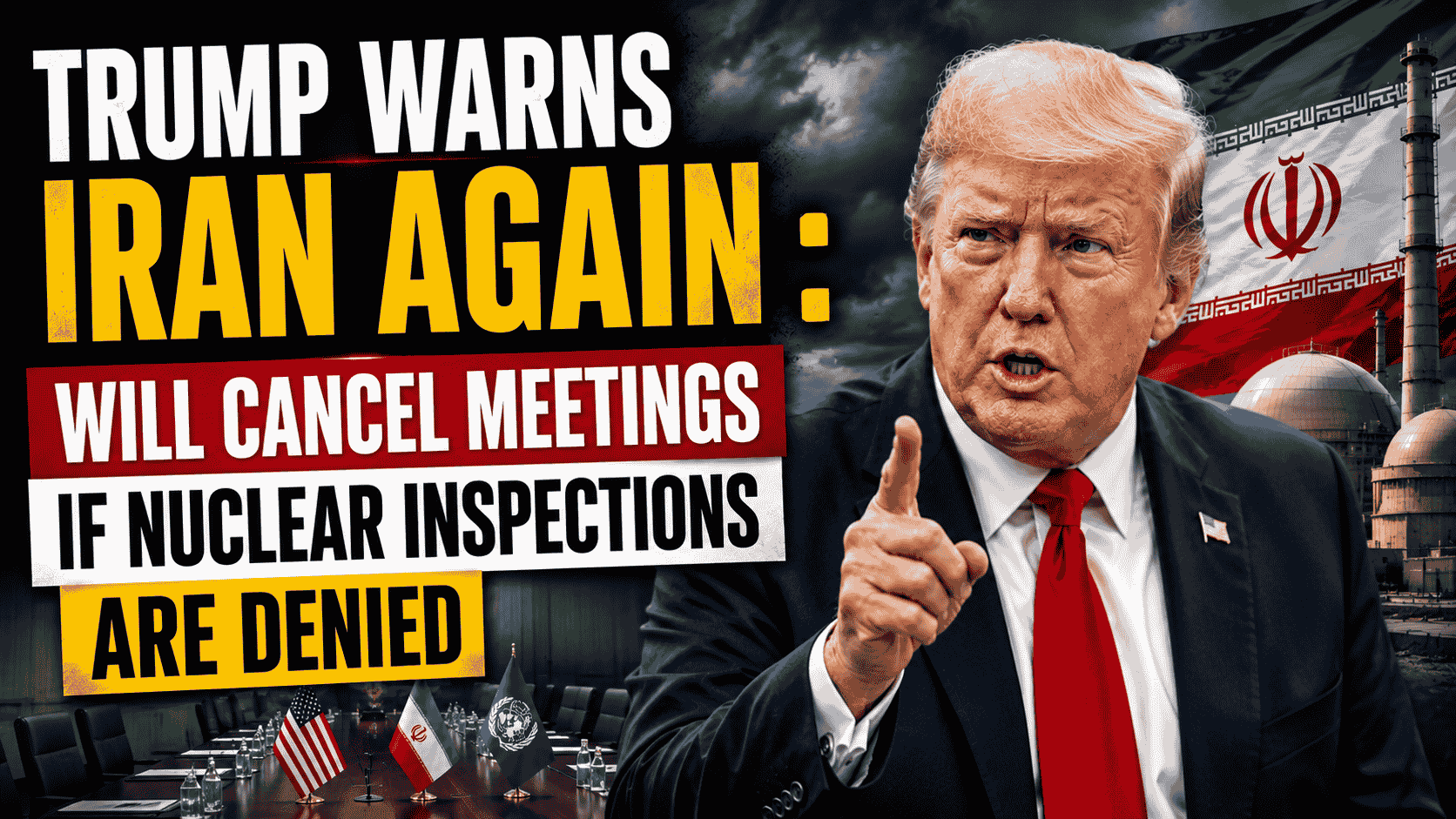
  • Trump Warns Iran Again : Will Cancel Meetings if Nuclear Inspections Are Denied

    Trump Warns Iran Again : Will Cancel Meetings if Nuclear Inspections Are Denied

    Trump Warns Iran : Former US President Donald Trump has once again issued a strong warning to Iran. He stated that if Tehran refuses to allow inspections by the International Atomic Energy Agency (IAEA), he will cancel the meetings with Iran. Following Trump’s statement, the already existing tension in West Asia has deepened further.

    This statement comes at a time when global concerns regarding Iran’s nuclear program continue to persist. The United States and its allies have long demanded that Iran demonstrate transparency and allow inspections under international rules. Trump’s threat to Iran has once again created a stir in diplomatic circles.

    Why IAEA Inspections Are Important

    The IAEA (International Atomic Energy Agency) is responsible for monitoring nuclear activities and ensuring that they are being used for peaceful purposes. Questions have been raised about Iran’s nuclear program for a long time, especially since it came under the scanner of Western countries over its enrichment program.

    Trump Warns Iran Again : Will Cancel Meetings if Nuclear Inspections Are Denied
    Trump Warns Iran Again : Will Cancel Meetings if Nuclear Inspections Are Denied

    If any country avoids IAEA inspections, fears grow in the international community that it may be moving towards developing nuclear weapons. This is why any refusal regarding inspections escalates the diplomatic crisis.

    Trump’s Firm Stance and Strong Message

    Trump clearly said that if Iran does not cooperate on inspections, talks will not move forward. According to him, meetings are only meaningful if Iran shows transparency and adheres to international standards.

    Trump’s statement is being seen as a strategy to put pressure on Iran. It also signals that America’s position on the nuclear issue remains extremely tough. However, such public warnings often weaken the possibilities of dialogue.

    Rising Tension in West Asia

    West Asia is already grappling with several geopolitical challenges. The Gaza conflict, regional security concerns, distrust between Iran and Western countries, and issues related to energy supply make the region highly sensitive. In such a situation, a dispute over nuclear inspections can take the form of a major crisis.

    Experts believe that if dialogue between Iran and America breaks down, it will not only affect regional security but will also impact the global oil market and international diplomacy.

    Trump Warns Iran Again : Will Cancel Meetings if Nuclear Inspections Are Denied
    Trump Warns Iran Again : Will Cancel Meetings if Nuclear Inspections Are Denied

    Trump Warns Iran : Options Before Iran

    Trump Warns Iran Again : Iran currently has two major paths. First, it can increase cooperation for IAEA inspections and assure the international community that its nuclear program is peaceful. Second, it can continue with its current stance and face Western pressure, which may increase the risk of sanctions and isolation.

    Diplomatic analysts say that adopting a completely confrontational path could be risky for Iran. On the other hand, if it shows some flexibility, room for negotiations may remain open.

    Why This Statement Is Significant

    Trump Warns Iran : Trump’s statement is not just a political remark; it is linked to the nuclear deal, regional security, and international trust. Whenever tensions rise between Iran and Western countries, its effects are felt globally.

    Also Read This : Trump Waives Sanctions on Iran Crude Oil : 60-Day Relief – Benefits for India, Impact on Fuel Prices & Global Oil Market

    Therefore, Trump’s threat to Iran is being viewed not merely as a statement, but as a signal of potential diplomatic confrontation in the coming days. All eyes are now on whether Iran shows any flexibility on inspections or whether this dispute deepens further.

    In June 2026, amid ongoing US-Iran negotiations to finalize a peace deal following recent conflicts, President Donald Trump claimed Iran had agreed to comprehensive IAEA nuclear inspections “long into the future (Infinity!!!)” as a key condition for talks. However, Iranian officials strongly denied this, stating no such agreement was made and no IAEA visits are currently planned, especially to sites damaged in previous strikes. This contradiction has added uncertainty to the 60-day negotiation window, with Trump Warns Iran he would cancel meetings if inspections are refused.


    View this post on Instagram


    A post shared by AVSPOST (@avspost)