Tag: Indian Air Force

  • Meet Flight Lieutenant Shivangi Singh : India’s Trailblazing Rafale Pilot

    Meet Flight Lieutenant Shivangi Singh : India’s Trailblazing Rafale Pilot

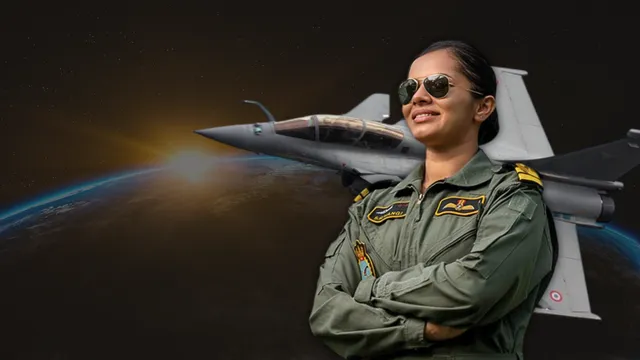
    Flight Lieutenant Shivangi Singh, born in 1995 in Phulwariya, Varanasi, Uttar Pradesh, is the first and only woman pilot to fly India’s Rafale fighter jet. Growing up in a modest family, with her father Kumareshwar Singh running a tours and travels business and her mother Seema Singh working as a teacher, Shivangi’s passion for aviation was sparked early. Visits to the Indian Air Force Museum in Delhi with her maternal grandfather, a retired Army colonel, fueled her dream of flying. A graduate of Banaras Hindu University, she joined the 7 UP Air Squadron NCC, setting the stage for her Air Force career.

    Breaking Barriers in the Indian Air Force

    Commissioned into the Indian Air Force (IAF) in December 2017 as part of its second batch of women fighter pilots, Shivangi initially flew the MiG-21 Bison, a challenging aircraft requiring exceptional piloting skills. Stationed at a Rajasthan border base, she trained alongside Wing Commander Abhinandan Varthaman, a national hero known for downing a Pakistani F-16 in 2019. In 2020, after rigorous conversion training, Shivangi was selected to pilot the Rafale, joining the 17 Squadron “Golden Arrows” in Ambala, Punjab. Her selection marked a historic milestone as the first woman to fly India’s advanced multi-role fighter jet.

    Achievements and Recognition

    Flight Lieutenant Shivangi Singh career is studded with firsts. In 2022, she became the second woman fighter pilot to feature in the IAF’s Republic Day tableau, showcasing the Rafale alongside other advanced aircraft. In 2023, she participated in Exercise Orion in France, the IAF’s first overseas deployment of Rafale jets, earning praise for her skill in multinational wargames. She has also flown missions over eastern Ladakh amid tensions with China, demonstrating the Rafale’s reliability in high-stakes operations. Known as “Rafale Rani,” Shivangi’s journey culminated in her leading the IAF tableau at the 2022 Republic Day parade.
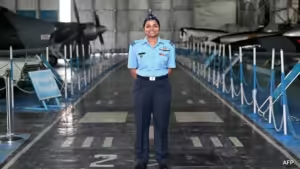
    Flight Lieutenant Shivangi Singh
    Flight Lieutenant Shivangi Singh

    Role in Operation Sindoor

    During the ongoing India-Pakistan tensions under Operation Sindoor, sparked by a terror attack in Pahalgam on April 22, 2025, Shivangi’s expertise as a Rafale pilot has been critical. With the IAF on high alert, her role in the Golden Arrows squadron underscores India’s aerial dominance, particularly in countering Pakistani missile and drone attacks. Her experience in high-intensity missions positions her as a key asset in maintaining air superiority.

    Also Read This: India-Pakistan Tensions Escalate Under Operation Sindoor

    Vision and Impact

    Lieutenant  Shivangi Singh aspires to become an astronaut, eyeing ISRO’s upcoming manned space mission. In interviews, she emphasizes gender equality in the IAF, noting that training and responsibilities are identical for men and women. “I succeeded in a field long reserved for men, and if I can do it, anyone can,” she told AFP. Her story inspires countless young women, proving that determination and skill can shatter glass ceilings. Shivangi’s message to aspiring pilots is clear: “Believe in yourself and dream big.”
  • Operation Sindoor : India’s Precision Strike Against Terror After Pahalgam Attack

    Operation Sindoor : India’s Precision Strike Against Terror After Pahalgam Attack

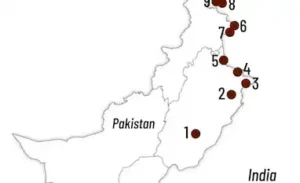
    Operation Sindoor was a series of pre-dawn precision military strikes conducted by the Indian Armed Forces on May 7, 2025, targeting nine terrorist infrastructure sites in Pakistan and Pakistan-occupied Jammu and Kashmir (PoK). The operation was a retaliatory response to the Pahalgam terror attack on April 22, 2025, which killed 25 Indians and one Nepali citizen, including newlywed men singled out based on their religion. The strikes were executed jointly by the Indian Army, Navy, and Air Force, marking the first time since the 1971 war that all three services collaborated against Pakistan in such a manner.

    Operation Sindoor

    Operation Sindoor : Key Details

    • Objective: Neutralize terror camps linked to groups like Jaish-e-Mohammed (JeM), Lashkar-e-Taiba (LeT), and Hizbul Mujahideen, which were planning and directing attacks against India. Specific targets included JeM’s headquarters in Bahawalpur and LeT’s base in Muridke.
    • Execution: The operation used precision weapons, including beyond-visual-range and standoff cruise missiles, ensuring no Pakistani military facilities were hit to maintain a non-escalatory approach. The strikes were described as “focused, measured, and restrained” by the Indian Ministry of Defence.
    • Locations: Nine sites were targeted, including Markaz Subhan Allah (Bahawalpur, JeM), Markaz Taiba (Muridke, LeT), and others in Gulpur, Bhimber, Chak Amru, Bagh, Kotli, Sialkot, and Muzaffarabad.
    • Significance of the Name: “Sindoor” (vermilion) holds cultural significance in Hinduism, symbolizing the marital bond of Hindu women and the warrior spirit (as a tilak worn by warriors). The name was chosen to humanize the victims of the Pahalgam attack, particularly referencing the loss of newlywed men, whose widows, like Himanshi Narwal, became symbols of the tragedy. It underscored India’s resolve to avenge the attack while honoring its cultural and warrior ethos.
    For every drop of sindoor lost, a strike answered.
    Operation Sindoor  : For every drop of sindoor lost, a strike answered.
    • Leadership: Prime Minister Narendra Modi monitored the operation overnight, having granted the armed forces full operational freedom to decide the mode, targets, and timing. National Security Advisor Ajit Doval spearheaded the strategy, briefing international counterparts, including U.S. NSA Marco Rubio, post-operation.
    • Impact: The Indian Army declared “Justice is served. Jai Hind!” post-strikes, with all targets successfully neutralized. Pakistan reported civilian casualties (three to nine deaths, per varying claims) and condemned the strikes as an “act of war,” alleging attacks on civilian areas like a mosque in Bahawalpur. India denied these claims, asserting only terror sites were targeted. Pakistan retaliated with ceasefire violations along the Line of Control (LoC), causing civilian deaths and injuries in Jammu and Kashmir.
    • Aftermath: Airspaces in northern India and Pakistan were temporarily closed, affecting commercial flights. Schools and colleges in border districts like Jammu, Poonch, and Rajouri were shut, and India activated air defense units. Diplomatic briefings were conducted with global powers, and the UN Security Council held closed-door discussions, urging de-escalation.
    Operation Sindoor
    Operation Sindoor

    Cultural and Strategic Message:

    The codename “Operation Sindoor” was a deliberate choice, reflecting both the human cost of the Pahalgam attack and India’s warrior resolve. It highlighted the personal tragedies, such as widows losing their sindoor (a symbol of a living husband), and positioned the strikes as a heroic, culturally rooted response to terrorism. The operation was praised domestically for its precision and restraint, with leaders like Defence Minister Rajnath Singh and Congress’s Jairam Ramesh expressing support, while Pakistan’s denials of terror involvement were criticized internationally.

    Operation Sindoor
    Operation Sindoor

    Sources:

    • India Today, May 7, 2025
    • The Times of India, May 7, 2025
    • The Hindu, May 7, 2025
    • Hindustan Times, May 7, 2025
    • NDTV, May 7, 2025
    • Deccan Herald, May 7, 2025
    • ANI and PTI posts on X, May 7, 2025

    Also Read This: Civil Defence Drills Ordered

    Operation Sindoor : The operation underscored India’s zero-tolerance policy toward cross-border terrorism while navigating complex regional tensions, with ongoing diplomatic and military developments expected to shape the aftermath.