
Tag: Economic Growth

  • India’s GDP Surge : Q4 2024-25 Growth and Global Economic Rise

    India’s GDP Surge : Q4 2024-25 Growth and Global Economic Rise

    India’s GDP growth continues to capture global attention, with the latest figures for Q4 FY 2024-25 (January–March 2025) reflecting a robust economic performance. This blog explores India’s recent GDP achievements, key drivers behind the growth, its new status as the world’s fourth-largest economy, and the challenges and opportunities shaping its GDP trajectory.

    India's GDP Surge
    India’s GDP Surge

    Q4 2024-25: A Strong GDP Performance

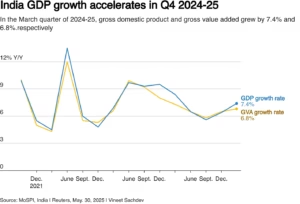
    India’s GDP grew by an impressive 7.4% in the fourth quarter of FY 2024-25, exceeding market expectations. Key factors driving this GDP growth include:

    • Agricultural Boost: Favorable monsoons and rising rural demand significantly enhanced agricultural contributions to GDP.
    • Service Sector Exports: The IT and services sectors, critical to India’s GDP, thrived due to strong global demand for digital and tech solutions.
    • Domestic Consumption: Accounting for over 56% of GDP, resilient consumer spending underscored the strength of India’s domestic market.

    For the full fiscal year 2024-25, GDP growth is estimated at 6.5%, slightly below the National Statistical Office’s earlier projection of 6.6% but aligning with the Reserve Bank of India’s forecast. This steady GDP growth highlights India’s resilience amid global economic challenges.
    India's GDP Surge : Q4 2024-25 Growth
    India’s GDP Surge : Q4 2024-25 Growth

    A Global GDP Milestone

    In a historic achievement, India has surpassed Japan to become the world’s fourth-largest economy in 2025, with a nominal GDP of $4.19 trillion, according to IMF data cited by NITI Aayog CEO BVR Subrahmanyam. This GDP milestone is driven by:

    • Structural Reforms: Initiatives like “Make in India” have bolstered India’s GDP by positioning it as a global manufacturing hub.
    • Government Investment: Strategic spending on infrastructure has been a key contributor to GDP growth.
    • Demographic Advantage: India’s young, dynamic workforce continues to fuel GDP expansion.

    This places India’s GDP behind only the United States, China, and Germany, cementing its status as a global economic powerhouse.

    Challenges to Sustained GDP Growth

    Despite the remarkable GDP growth, challenges persist:

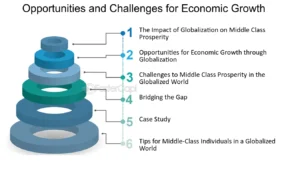
    • Low Per Capita GDP: At $2,880, India’s per capita GDP ranks 144th globally, signaling that economic gains are not yet equitable.
    • Infrastructure Needs: Sustained investment in transportation, digital connectivity, and urban development is critical to support GDP growth.
    • Equitable Development: Bridging disparities and fostering innovation are essential to ensure GDP growth benefits all segments of society.

    Addressing these challenges will be crucial for sustaining and expanding India’s GDP in the long term.
    Challenges to Sustained GDP Growth
    Challenges to Sustained GDP Growth

    India’s GDP : Future GDP Outlook

    The economic outlook remains promising. Inflation is projected to ease to 4.3% in 2025, within the Reserve Bank of India’s target range, creating a stable environment for GDP growth. With ongoing reforms, a focus on manufacturing, and a vibrant services sector, India’s GDP is poised for continued expansion.

    Also Read This : India’s Digital Address System : Revolutionizing Locations with DIGIPIN

    India’s GDP growth of 7.4% in Q4 2024-25 and its rise to the world’s fourth-largest economy with a GDP of $4.19 trillion mark a transformative moment. While challenges like low per capita GDP and infrastructure gaps remain, India’s economic reforms and resilient domestic market set the stage for sustained GDP growth. As India continues to strengthen its global economic standing, its GDP trajectory will remain a key indicator to watch.

  • Sensex, Nifty: 3 Reasons Why the Stock Market is Rising Today

    Sensex, Nifty: 3 Reasons Why the Stock Market is Rising Today

    Sensex and Nifty Show Gains

    Sensex and Nifty saw an uptrend today as GDP growth stood at 6.2%, aligning with expectations. February auto sales data was strong, providing market support. Additionally, a decline in Foreign Institutional Investors (FIIs) selling out and a drop in US bond yields strengthened the market.

    Sensex and Nifty Performance

    • Sensex reached 73,593.26, gaining 395.16 points (0.54%) at closing.
    • Nifty traded at 22,243.85, rising by 119.15 points (0.54%).
    • Most Asian markets were also trading higher, with Japan’s Nikkei leading with a 1.4% rise.
    Sensex, Nifty
     Nifty

    3 Main Reasons Behind the Stock Market Rally

    1. GDP Growth in Line with Expectations

    • India’s GDP grew by 6.2% in the December quarter, up from 5.6% in the September quarter.
    • HSBC reported that previous GDP figures were revised upward, indicating strong economic growth.

    2. Strong Performance in the Automobile Sector

    • February auto sales data exceeded expectations.
    • Companies like Mahindra & Mahindra (M&M) and Eicher Motors performed well, boosting investor confidence.

    3. Decline in Foreign Institutional Investors (FIIs) Selling

    • High stock valuations and attractive US bond yields led to recent FII selling in the Indian market.
    • However, the US 10-year bond yield has now fallen to 4.21%, which may reduce FII selling.
    FIIs
    FIIs

    Long-Term Investment Opportunity in Sensex

    V.K. Vijayakumar, Chief Investment Strategist at Geojit Financial Services, stated,
    “The recent correction in Sensex presents a great opportunity for long-term investors to buy high-quality stocks.”

    Also Read This: Stock market: meaning, basics and guide of stock market. Best investment strategies and market update.

    He also mentioned that while predicting the market bottom is difficult, now is a good time for long-term investors to start investing without worrying about short-term volatility.

    • Sensex and Nifty surged due to GDP growth, strong auto sales, and reduced FII selling.
    • Current market corrections offer a golden opportunity for investors to buy high-quality stocks.
  • Space Tourism 2025: Epic Adventures Beyond Earth The Thrill & Wonder of Space Tourism”

    Space Tourism 2025: Epic Adventures Beyond Earth The Thrill & Wonder of Space Tourism”

    Space tourism, once a concept confined to the realm of science fiction, has now become an emerging industry poised to revolutionize travel beyond Earth. With private companies like SpaceX, Blue Origin, and Virgin Galactic pioneering commercial spaceflight, the dream of ordinary individuals venturing into space is becoming a reality. As technological advancements and commercial investments continue to push the boundaries, space tourism is expected to reshape human experiences and exploration in unprecedented ways.

    Space Tourism

    The Evolution of Space Tourism

    The idea of space tourism dates back to the 20th century when the Apollo missions ignited public fascination with space travel. However, it was not until 2001 that the first space tourist, Dennis Tito, a wealthy entrepreneur, paid $20 million for a journey to the International Space Station (ISS) aboard a Russian Soyuz spacecraft. Since then, interest in space tourism has grown exponentially, leading to the development of dedicated commercial spaceflight programs.

    In recent years, companies have made significant strides in developing reusable spacecraft to make space travel more accessible. Virgin Galactic, founded by Richard Branson, focuses on suborbital flights, offering passengers a brief yet exhilarating experience of weightlessness and a view of Earth from space. Blue Origin, led by Jeff Bezos, has also conducted successful suborbital flights with its New Shepard rocket. Meanwhile, SpaceX, founded by Elon Musk, has set its sights on orbital and even interplanetary tourism, with missions designed to take private citizens around the Moon and beyond.

    The Technology Behind Space Tourism

    Advancements in aerospace technology have played a crucial role in the feasibility of space tourism. Reusable rocket technology, pioneered by SpaceX’s Falcon 9 and Blue Origin’s New Shepard, has significantly reduced launch costs. Additionally, innovations in spacecraft design, propulsion systems, and life-support technology have enhanced the safety and comfort of space travel.

    The development of space habitats is another crucial aspect of commercial space travel. Companies like Axiom Space and Bigelow Aerospace are working on commercial space stations that could serve as hotels in orbit. These space habitats would allow tourists to experience extended stays in microgravity, participate in scientific research, or simply enjoy the breathtaking views of Earth from space.

    The Cost of Space Tourism

    Despite remarkable advancements, space tourism remains a luxury experience, primarily accessible to the ultra-wealthy. A suborbital flight with Virgin Galactic costs around $450,000 per ticket, while trips to the ISS through private missions facilitated by SpaceX and Axiom Space can exceed $50 million per person.

    However, with continued advancements in technology and increasing competition among spaceflight companies, costs are expected to decrease over time. Just as air travel evolved from an expensive privilege to a widely accessible mode of transportation, space tourism could follow a similar trajectory, opening the doors for a broader demographic in the future.

    The Impact of Space Tourism

    Space tourism is expected to have profound implications across various domains, including science, economy, and the environment.

    1. Scientific Advancements

    Commercial space travel provides new opportunities for scientific research. Space tourists and private astronauts can contribute to experiments in microgravity, medical research, and Earth observation. The growing interest in space travel may also accelerate the development of new technologies, benefiting fields such as materials science, robotics, and artificial intelligence.

    2. Economic Growth

    The space tourism industry is projected to generate billions of dollars in revenue over the coming decades. The emergence of spaceports, spacecraft manufacturing, and ancillary services will create new job opportunities and stimulate economic growth. Additionally, tourism-driven investments could fuel advancements in other space-related sectors, including asteroid mining and planetary exploration.

    3. Environmental Concerns

    Despite its potential benefits, space tourism raises concerns about environmental sustainability. Rocket launches generate carbon emissions and contribute to atmospheric pollution. While some companies are exploring eco-friendly propulsion systems, the long-term impact of frequent spaceflights on Earth’s climate remains uncertain. As the industry expands, balancing innovation with environmental responsibility will be critical.

    The Future of Space Tourism

    Looking ahead, space tourism is expected to evolve from brief suborbital flights to longer, more immersive experiences. Some potential future developments include:

    • Lunar Tourism: Companies like SpaceX and Blue Origin have ambitious plans to send private citizens around the Moon, with the possibility of lunar landings in the future.
    • Space Hotels: Companies are investing in the development of orbital hotels, where tourists can stay for days or even weeks, experiencing life in space.
    • Mars Exploration: Elon Musk’s vision of colonizing Mars includes the possibility of tourists traveling to the Red Planet, marking a new era of interplanetary tourism.
    • Space Elevators: Although still a theoretical concept, space elevators could revolutionize space travel by providing an alternative to traditional rocket launches, reducing costs, and increasing accessibility.

    Conclusion

    The commercialization of space travel is an exciting and transformative development that brings humanity closer to realizing the dream of becoming an interplanetary species. While challenges such as cost, safety, and environmental concerns remain, continued innovation and investment in space tourism hold the promise of making space travel an integral part of human experience. As space tourism advances, it has the potential to reshape not only the way we explore the cosmos but also how we perceive our place in the universe.

    ALSO READ THIS: Music in the Digital Age: The Bright Future of Music in the Digital Age (2025)