Tag: Artificial Intelligence

  • AI Pragya : UP advances in AI, emerging as a tech model in education, security, and agriculture

    AI Pragya : UP advances in AI, emerging as a tech model in education, security, and agriculture

    ‘AI Pragya’ initiative empowering youth, farmers, teachers, and govt staff with new tech skills

    AI driving innovations from women’s safety to smart farming and justice systems in UP

    Lucknow to become India’s first AI City with Rs 10,732 crore AI ecosystem development

    Over 10 lakh people being trained in AI with support from Microsoft, Google, and Intel

    Uttar Pradesh is no longer just the most populous state of India, it is fast emerging as a leader in shaping the country’s future through Artificial Intelligence (AI). Under the leadership of Chief Minister Yogi Adityanath, the state government has integrated AI into governance, education, agriculture, security, and healthcare, creating new benchmarks in public welfare.
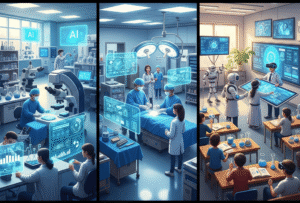
    Widespread participation of Artificial Intelligence in health, research and education
    AI Pragya : Widespread participation of Artificial Intelligence in health, research and education

    A permanent framework for AI is being prepared at the policy level

    From initiatives like ‘AI Pragya’ to ‘UP Agris’, collaborations with IBM and Chandigarh University, and plans to develop Lucknow as an AI City, Uttar Pradesh is building a robust digital economy focused on transparency, productivity, and efficiency in citizen services. Aligning with the Government of India’s Vision 2047, the state’s AI policy and skill development programs highlight that UP is not just a consumer of technology but an emerging hub of innovation.

    AI Revolution in Uttar Pradesh: Shaping a Future-Ready State

    Artificial Intelligence is fast becoming the backbone of governance and development in Uttar Pradesh. By integrating AI into youth-centric policies, agriculture, education, and public services, the state is fostering a future-ready, tech-savvy population. With a clear vision, UP is positioning itself as a national and global leader in technology-driven growth.

    The state government is working on a draft AI policy in line with Vision 2047. Through AI bootcamps, officials from 30 departments have been trained to use AI effectively in government processes. To make the Direct Benefit Transfer (DBT) system more accurate and transparent, AI-based fraud detection and data analytics have also been introduced in some areas.

    A permanent framework for AI is being prepared at the policy level
    AI Pragya : A permanent framework for AI is being prepared at the policy level

    Lucknow moves towards becoming the country’s first AI city

    Under the IndiaAI Mission approved in March 2024, a massive AI ecosystem worth Rs 10,732 crore is being developed in Lucknow. It will include 10,000 GPUs, multi-modal language models, and an AI innovation center. This investment is 67% higher than any other technology infrastructure in the country. Additionally, an AI-based traffic management system is being proposed for Lucknow, while Varanasi is already in the process of implementing an AI-enabled smart traffic system.

    AI Pragya Yojana: Foundation stone of digital efficiency

    Under UP’s flagship initiative AI Pragya, more than 10 lakh youths, teachers, gram pradhans, government employees, and farmers are being trained in AI, machine learning, data analytics, and cybersecurity in partnership with tech giants like Microsoft, Intel, Google, and Guvi. The goal is to train 1.5 lakh people every month, with industry-ready certifications included in the program.

    New role of Artificial Intelligence in women safety and law and order

    In 17 municipal corporations and Gautam Buddh Nagar, AI-powered systems such as CCTV surveillance, facial recognition, number plate tracking, and SOS alert systems have been implemented. These are directly integrated with the 112 helpline and police control rooms. Additionally, in 70 prisons, the ‘Jarvis’ AI monitoring system is active, ensuring 24×7 surveillance of inmate activities.

    New role of Artificial Intelligence in women safety and law and order
    AI Pragya : New role of Artificial Intelligence in women safety and law and order

    Agriculture system is getting empowered with AI

    Under the UP Agris Project, launched with World Bank support and an investment of Rs 4,000 crore, 10 lakh farmers are being connected to AI-based technologies such as smart irrigation, drone mapping, pest detection, and digital market access. The initiative also involves 10,000 women’s self-help groups as active partners.

    AI Boosts Land and Mining Reforms in UP

    In the Revenue Department, satellite imaging and AI algorithms are being used for land consolidation and record management. This has enabled accurate digital mapping, transparent land distribution, and reduction of disputes. To protect mineral resources, 57 unmanned AI/IoT-enabled check gates have been set up across 25 districts. Illegal mining is being monitored using RFID tags, geofencing, and AI camera-equipped weighbridges.
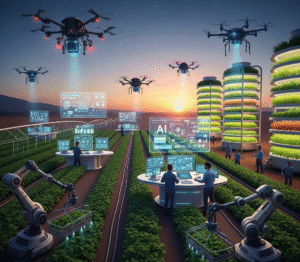
    Agriculture system is getting empowered with AI
    AI Pragya : Agriculture system is getting empowered with AI

    Also Read This : What is the NISAR Mission? Know its Features, Launch Date, Objectives, and Technical Specifications

    AI Driving Healthcare and Education in UP

    In healthcare, the country’s first AI-based breast cancer screening center has been established in Fatehpur. Additionally, under an MoU between AKTU and IBM, free AI and cloud computing courses have been launched in 500 colleges. AI and machine learning are also being increasingly used in pharmaceutical research and health data analytics. An AI-driven question bank has been introduced to ensure fair and transparent police recruitment examinations.
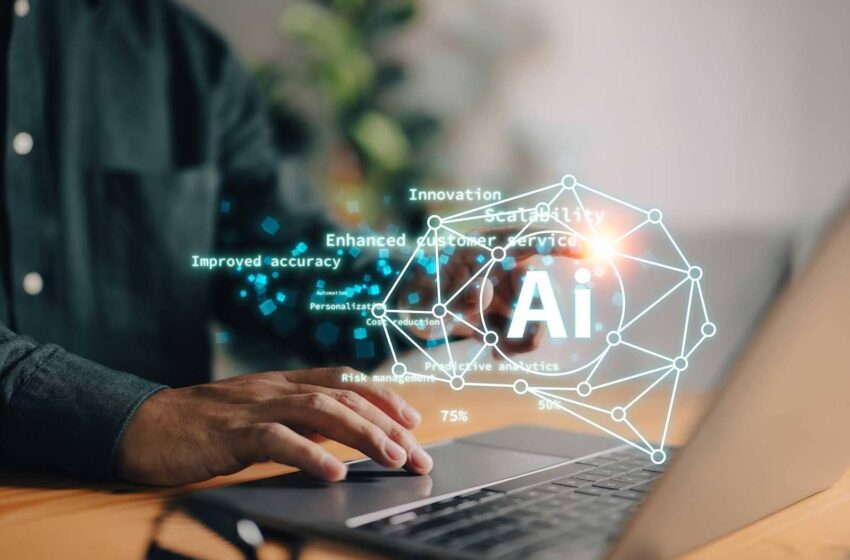
  • Artificial intelligence: what is it, how does it work, its benefits, difficulties and future.

    Artificial intelligence: what is it, how does it work, its benefits, difficulties and future.

    Artificial intelligence: It is refers to the simulation of human intelligence in machines that are programmed to think, learn, and problem-solve. It allows machines to perform tasks that typically require human intelligence, such as understanding natural language, recognizing patterns, and making decisions. It is creating systems that can analyze data, learn from it, and then use that knowledge to perform tasks on their own. The most common examples of AI we interact with daily include virtual assistants like Siri and Alexa, recommendation engines on Netflix or Amazon, and even self-driving cars.

    What is Artificial intelligence?
    What is Artificial intelligence?

    What are different types of Artificial intelligence?

    Some different types of AI are as follows:

    • Narrow AI (Weak AI) for examples: Virtual assistants like Siri, Google Assistant,  Alexa and recommendation systems on platforms like Netflix or Amazon. It also comes in Self-driving cars and image recognition software.
    • General AI (Strong AI) for example: AI researchers.
    • Super intelligent AI, While still hypothetical, some experts predict that Super intelligent AI could eventually be developed.

      What are different types of Artificial intelligence?
      What are different types of Artificial intelligence?

    How does Artificial intelligence work?

    AI works in the following ways:

    AI works by processing large amounts of data using algorithms to identify patterns and make decisions. It starts by collecting and cleaning data, then uses machine learning models to learn from this data. Its systems continuously improve over time through feedback, becoming more accurate and efficient at performing tasks. Its key technologies are machine learning, natural language processing, and computer vision enables AI to handle everything from language translation to facial recognition, with the ability to adapt and learn from new information.

    How does Artificial intelligence work?
    How does Artificial intelligence work?

    What are the benefits and importance of AI?

    Some of its benefits and importance of Artificial Intelligence are:

    • It has an Increased Efficiency and Automation, AI automates repetitive tasks, reducing time and effort for humans, leading to faster and more efficient operations.
    • It has improved Decision-Making by AI uses data to make accurate predictions and decisions, reducing human error and enhancing business outcomes.
    • It has Personalized Solutions like healthcare, AI helps personalize treatments, predict patient outcomes, and improve diagnostic accuracy.
    • It is Cost Reduction by automating processes and increasing productivity, AI can reduce operational costs for businesses.
    • It is innovation and problem solving skills like AI fosters innovation by solving complex problems in fields like finance, education, and engineering.

      What are the benefits and importance of AI?
      What are the benefits and importance of AI?
    • It enhances Productivity as AI frees up humans from routine tasks, allowing them to focus on creative and strategic work.
    • It has Driving Technological Advancements like AI powers emerging technologies like self-driving cars, smart homes, and virtual assistants, shaping the future of industries.
    • It has Global Impact as AI has the potential to address major challenges in areas such as climate change, healthcare, and resource management.
    • It has 24/7 Availability as AI systems can operate around the clock without fatigue, providing continuous support and service.
    • It has Scalability as AI can scale solutions efficiently, handling large amounts of data and processes that would be impossible for humans alone.

    What are the challenge and difficulties of Artificial intelligence?

    Some of its challenges and difficulties are:

    • It has Data Privacy and Security issue as AI systems require vast amounts of data, raising concerns about how personal information is collected, stored, and used, making privacy protection a critical issue.
    • It is Bias and Discrimination problem as AI systems can inherit biases present in the data they’re trained on, leading to unfair decisions or reinforcing societal inequalities.
    • It creates Job Displacement as AI automates tasks traditionally performed by humans, there are concerns about job loss and the need for workers to reskill and adapt to new roles.
    • It has Lack of Transparency Many AI systems, especially deep learning models, operate in a “black box” manner, where it’s difficult to understand how decisions are made, leading to accountability and trust issues.
    • It has a High Costs of Development issues like developing advanced AI systems requires significant resources, both in terms of computing power and skilled professionals, making it expensive to create and maintain.

      What are the challenge and difficulties of Artificial intelligence?
      What are the challenge and difficulties of Artificial intelligence?
    • It creates a Ethical Concerns as AI becomes more integrated into society, ethical questions arise regarding its use in military applications, surveillance, and decision-making in critical areas like healthcare.
    • It has Dependence on Data Quality as AI systems are only as good as the data they are trained on. Inaccurate or incomplete data can lead to incorrect predictions or biased outcomes.
    • It has Regulation and Governance. There is currently a lack of clear, global regulations governing AI development, raising concerns about misuse, especially in areas like autonomous weapons or surveillance.
    • It has limited Understanding and Trust. Many people don’t fully understand how AI works, leading to skepticism and fear, especially as AI begins to play more significant roles in society.
    • It has Technological Uncertainty as AI technologies, particularly those aiming for General AI or Superintelligence, are still in early stages, with uncertain long-term consequences and development paths.

    Where can we use tools and platforms of AI?

    Where can we use tools and platforms of AI?:
    Where can we use tools and platforms of AI?

    We can use AI tools and platforms in several areas like Healthcare, Finance, Retail, E-commerce, Transportation, Logistics, Education, Manufacturing, Customer service, Human resource, security, Marketing and Advertising.

    Also Read This: Smart Glass: what is it, it’s features, benefits, challenges, Its importance in 2025 and future.

  • Supply Chain Excellence: 7 Proven Strategies for Unmatched Growth

    Supply Chain Excellence: 7 Proven Strategies for Unmatched Growth

    Supply Chain Excellence: Transforming Global Logistics, The global supply chain is the backbone of modern commerce, connecting manufacturers, suppliers, and consumers across the world. Over the past decade, technological advancements and innovative strategies have significantly improved efficiency, transparency, and resilience in supply chain operations. From artificial intelligence to blockchain, the latest innovations are reshaping the landscape of global logistics. This article explores key supply chain innovations, their impact, and the future of logistics management.

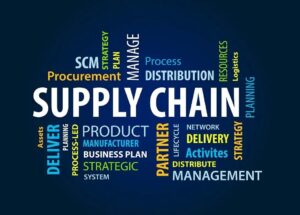
    Supply Chain

    1. Artificial Intelligence and Machine Learning

    Artificial intelligence (AI) and machine learning (ML) are revolutionizing supply chain management. These technologies enhance demand forecasting, optimize inventory management, and improve decision-making processes. AI-powered predictive analytics help businesses anticipate market trends, reduce waste, and minimize costs.

    AI in Demand Forecasting

    Traditional demand forecasting methods rely on historical sales data, which can be inaccurate due to market fluctuations. AI algorithms analyze vast datasets, incorporating variables such as weather patterns, economic indicators, and social media trends to provide accurate demand predictions. Companies like Amazon and Walmart use AI-driven systems to streamline inventory replenishment, reducing stockouts and overstock situations.

    AI in Logistics and Route Optimization

    AI also plays a crucial role in logistics and transportation. Smart algorithms optimize delivery routes, considering factors like traffic conditions, fuel consumption, and delivery schedules. For example, UPS uses an AI-driven system called ORION (On-Road Integrated Optimization and Navigation) to reduce delivery times and fuel costs, saving millions annually.

    1. Blockchain for Transparency and Security

    Blockchain technology is enhancing supply chain transparency and security by providing a tamper-proof, decentralized ledger for recording transactions. This innovation improves traceability, reduces fraud, and enhances trust among stakeholders.

    Applications in Supply Chain

    • Product Authentication: Companies like IBM and Walmart use blockchain to track food products from farm to store shelves, ensuring authenticity and reducing contamination risks.
    • Smart Contracts: Automated contracts ensure compliance and expedite payments when predefined conditions are met, reducing delays and disputes.
    • Fraud Prevention: Blockchain minimizes the risk of counterfeit goods entering the supply chain by verifying product origins and authenticity.

    1. Internet of Things (IoT) and Real-Time Tracking

    IoT is transforming supply chain visibility by enabling real-time tracking of goods, improving efficiency, and reducing losses. IoT sensors collect data on temperature, humidity, location, and handling conditions, ensuring product integrity.

    IoT Applications in Logistics

    • Cold Chain Management: Perishable goods like pharmaceuticals and food products require precise temperature control. IoT sensors monitor conditions in real-time, alerting stakeholders to deviations.
    • Fleet Management: GPS-enabled IoT devices track shipments, optimize routes, and enhance vehicle maintenance through predictive analytics.
    • Warehouse Automation: Smart warehouses use IoT-enabled robotics for automated picking, packing, and inventory management, reducing human error and operational costs.

    1. Robotics and Automation

    Automation and robotics are revolutionizing warehouse and distribution center operations, improving efficiency and reducing labor costs. Advanced robotics perform tasks such as picking, packing, and sorting with greater accuracy and speed.

    Robotics in Warehousing

    • Automated Guided Vehicles (AGVs): Used in warehouses to transport goods autonomously, reducing reliance on manual labor.
    • Robotic Picking Systems: AI-powered robotic arms handle picking and packing operations, increasing speed and reducing errors.
    • Collaborative Robots (Cobots): Work alongside human workers to improve productivity and safety.

    1. Sustainable Supply Chain Innovations

    Sustainability is becoming a core focus in supply chain management, with businesses adopting eco-friendly practices to reduce carbon footprints and waste.

    Green Supply Chain Practices

    • Electric and Autonomous Vehicles: Companies like Tesla and Amazon are investing in electric and self-driving trucks to reduce emissions.
    • Sustainable Packaging: Businesses are transitioning to biodegradable and recyclable packaging materials.
    • Reverse Logistics: Companies implement recycling programs and refurbishing initiatives to reduce waste and promote a circular economy.

    1. Digital Twins and Simulation Modeling

    A digital twin is a virtual replica of a supply chain, allowing businesses to simulate scenarios and optimize processes. By leveraging real-time data, companies can identify bottlenecks, forecast disruptions, and improve operational efficiency.

    Benefits of Digital Twins

    • Risk Management: Predict and mitigate potential disruptions before they occur.
    • Process Optimization: Improve warehouse layouts, production schedules, and transportation routes.
    • Cost Reduction: Identify inefficiencies and implement cost-saving measures.

    1. 3D Printing and On-Demand Manufacturing

    3D printing is reshaping supply chains by enabling localized, on-demand production. This innovation reduces lead times, minimizes waste, and eliminates the need for large inventories.

    Impact of 3D Printing

    • Localized Manufacturing: Reduces dependency on global supply chains by enabling production closer to demand centers.
    • Customization: Allows businesses to create tailored products with minimal costs.
    • Reduced Waste: Traditional manufacturing generates excess materials, whereas 3D printing produces only what is needed.

    The Future of Supply Chain Innovations

    The future of supply chain management will be shaped by continued advancements in AI, blockchain, IoT, automation, and sustainability. Businesses that adopt these innovations will gain a competitive edge by improving efficiency, reducing costs, and enhancing customer satisfaction. As technology evolves, supply chains will become more agile, transparent, and resilient, ensuring seamless global trade.

    Conclusion

    Supply chain innovations are transforming global logistics, driving efficiency, transparency, and sustainability. By leveraging AI, blockchain, IoT, robotics, and digital twins, companies can optimize operations and navigate challenges in an increasingly complex world. As technology continues to evolve, the supply chain landscape will undergo further transformation, offering new opportunities for businesses to thrive in the digital era.

    ALSO READ THIS: “Ed Sheeran 2025: Record-Breaking Hits, Once-in-a-Lifetime Tour! and The Ultimate Live Experience!”