Category: World

  • Trump son linked company strikes drone deal with Pakistan Army : agreement reached even on initial order

    Trump son linked company strikes drone deal with Pakistan Army : agreement reached even on initial order

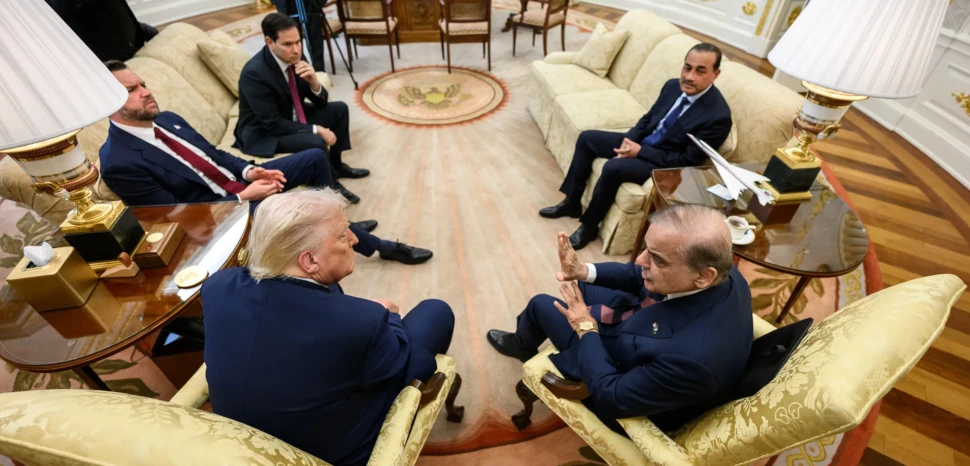
    Trump son linked company signs MoU with Pakistan Army on drone deal, An American company connected to the drone industry has signed an important agreement with the Pakistan Army. The deal also includes an order for the initial supply of drones. The most talked-about aspect is that this company is soon going to join a firm in which both sons of US President Donald Trump are reported to have a stake. Because of this, the agreement is no longer limited to the defence sector alone but has also become a subject of discussion in international business and political circles.

    This agreement has come at a time when demand for military technology, surveillance capabilities and drone systems is continuously rising around the world. The pact with the Pakistan Army signals that the race for defence modernisation in South Asia could intensify further. Drone technology is no longer limited only to surveillance; it is now also considered important in logistics, border security, disaster management and strategic operations.

    What is special about this deal?

    The biggest feature of this agreement is that it is not merely the signing of a memorandum of understanding; an initial order is also included. This means it is not just a deal based on future possibilities but one that is moving forward at a practical level. Usually, such agreements are considered the beginning of larger defence cooperation, after which different stages of supply, training, maintenance and technical support emerge.

    Trump son linked company strikes drone deal with Pakistan Army : agreement reached even on initial order
    Trump son linked company strikes drone deal with Pakistan Army : agreement reached even on initial order

    According to sources, the American drone company that signed the MoU with the Pakistan Army is soon going to link up with a company in which both of Donald Trump’s sons have a stake. This very connection makes the deal more sensitive. It also raises the question of whether this is merely a business expansion or whether broader strategic interests are also involved.

    Why is drone technology becoming the centre of defence policy?

    In the past few years, drones have changed the picture of modern warfare and security systems. Earlier, there was dependence on traditional aircraft or ground patrols for surveillance; now drones provide more accurate information at lower cost. Capabilities such as border surveillance, identification of suspicious activities, real-time mapping of sensitive areas and rapid response have made them extremely useful.

    For a country like Pakistan, where security challenges are multi-dimensional, the importance of drone technology increases further. A purchase of this kind at the army level shows that it is moving ahead in the direction of modernising its surveillance and strike capabilities. However, questions are also raised about regional imbalance and security competition with regard to such deals.

    Why has the link with the Trump family become a topic of discussion?

    A political colour has also been added to this deal because the related company is soon going to be associated with a firm in which both of Trump’s sons are reported to have a stake. In American politics, the Trump family’s name has already been in the headlines due to controversies related to business, branding and investments. Therefore, the linking of any foreign military deal with this network naturally draws attention.

    Trump son linked company strikes drone deal with Pakistan Army : agreement reached even on initial order
    Trump son linked company strikes drone deal with Pakistan Army : agreement reached even on initial order

    Experts believe that when the names of political families or high-profile business groups get attached to a defence deal, issues such as transparency, conflict of interest and regulatory oversight arise. This is why the agreement is being viewed not merely as a corporate deal but as a multi-layered development.

    Trump son : What does this deal mean for Pakistan?

    For the Pakistan Army, this agreement can be considered a step in the direction of technological upgradation. Drone systems can help it enhance surveillance, border management and operational efficiency. Along with the initial order, it also indicates that the scope of this cooperation could expand in the future.

    However, in defence deals, not only procurement but also training, maintenance, spare parts and software support are important. If this partnership progresses further, long-term technical relations could develop between the two sides.

    Potential impact at the international level

    This deal could give rise to a new debate involving America, Pakistan and regional security equations. On one hand, it can be seen as business expansion and defence cooperation; on the other, it also sends out a geopolitical message. Strict rules apply in many countries on the export of drone technology, so the regulatory aspects of this deal will also be watched.

    Also Read This : BRICS Summit 2026 : Important Modi-Putin Meeting Begins in Delhi, Bilateral Talks Also Scheduled with Pezeshkian

    Trump son : Overall, the Pakistan Army drone deal is not just a defence agreement; it shows a combination of business interests, political relations and regional security. In the coming days, as more details related to this agreement emerge, its real strategic importance will become clearer.


    View this post on Instagram
     

    A post shared by AVSPOST (@avspost)

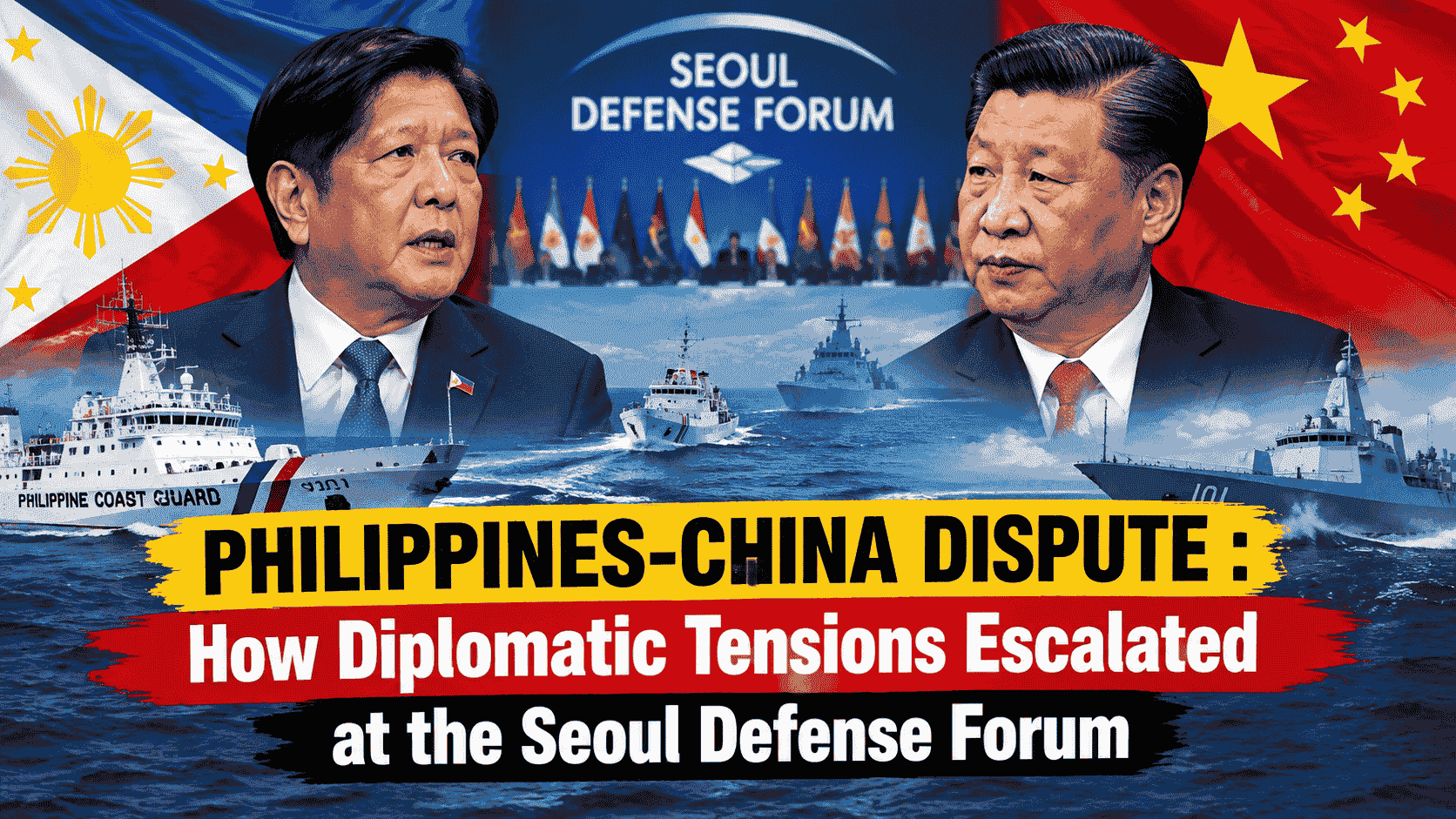
  • Philippines-China Dispute : How Diplomatic Tensions Escalated at the Seoul Defense Forum

    Philippines-China Dispute : How Diplomatic Tensions Escalated at the Seoul Defense Forum

    Philippines-China Dispute Intensifies During Defense Forum in Seoul, The ongoing Philippines-China dispute over the South China Sea has once again become the focus of diplomatic tension. This time, the issue is not linked to any maritime confrontation or military activity, but to sharp language used during a defense forum held in Seoul. Amid the discussions, China handed a written note to Philippine Defense Secretary Gilberto C. Teodoro, detailing Beijing’s position.

    The incident made headlines because Teodoro publicly read out the note and then delivered the Philippines’ response. This move not only drew the attention of the representatives present on the stage but also made the existing tensions between the two countries even more evident.

    What Happened in Seoul?

    At the defense dialogue held in Seoul, representatives from various countries were sharing views on international security, regional stability, and maritime disputes. During this, a note from China was given to the Philippine Defense Secretary. The note contained China’s perspective and claims regarding the South China Sea.

    Philippines-China Dispute : How Diplomatic Tensions Escalated at the Seoul Defense Forum
    Philippines-China Dispute : How Diplomatic Tensions Escalated at the Seoul Defense Forum

    Instead of concealing or ignoring the note, Gilberto C. Teodoro read it out on the stage itself. After that, he reiterated the Philippines’ position, stating that Manila would not compromise on its maritime rights and sovereignty. The entire episode also sparked debate about the boundaries of diplomatic protocol.

    Why Is the South China Sea the Center of the Dispute?

    The South China Sea is a highly important maritime region in Asia, through which a large portion of international trade passes. The area also holds potential for oil, gas, and fishery resources. China claims a large part of this region, while several other countries, including the Philippines, assert their own maritime rights.

    For this reason, the area has long been a source of regional tension. The Philippines says that China’s activities interfere in its exclusive economic zone. On the other hand, China cites its historical claims.

    How Did the Diplomatic Language Become So Sharp?

    According to experts, in recent years the Philippines-China dispute has not remained limited to maritime boundaries alone; it has also intensified in political and diplomatic language. The rhetoric between the two countries has steadily grown tougher.

    Philippines-China Dispute : How Diplomatic Tensions Escalated at the Seoul Defense Forum
    Philippines-China Dispute : How Diplomatic Tensions Escalated at the Seoul Defense Forum

    The Philippines’ current policy has been to openly challenge China’s claims. China, for its part, shows no willingness to back down from its stance. Therefore, when the two sides come face to face on any international platform, the tone of the language also becomes sharp.

    Why Did Reading the Note on Stage Become a Topic of Discussion?

    In diplomatic meetings, differences are generally expressed in formal and restrained language. However, Teodoro’s public reading of the note was considered an unusual step. It sent the message that the Philippines is not only challenging China’s position but is also not hesitant to bring it out into the open.

    This strategy can be seen as part of the Philippines’ broader policy of continually raising the South China Sea issue before the international community.

    What Is the Philippines’ Response?

    The Philippines states that it will defend its rights on the basis of international law and maritime rules. Manila has long argued that China’s expansive maritime claims violate its legitimate rights.

    Teodoro’s reaction also reinforces this stance. He indicated that the Philippines will not yield to pressure and will maintain a clear and firm position regarding its maritime territory.

    Philippines-China Dispute : How Diplomatic Tensions Escalated at the Seoul Defense Forum
    Philippines-China Dispute : How Diplomatic Tensions Escalated at the Seoul Defense Forum

    Why Is This Matter Important for China?

    Philippines-China Dispute : China considers the South China Sea extremely important for its strategic security and regional influence. Its naval presence and surveillance systems in the region have steadily increased. Open opposition from countries like the Philippines therefore becomes a diplomatic challenge for Beijing.

    China does not want this dispute to be established as a narrative against it on international platforms. That is why it immediately reacts to any statement or incident that appears to weaken its claims.

    Also Read This : Attack soon on Iran’s nuclear bunker? Trump issues major threat by mentioning Pickaxe Mountain

    The Seoul incident shows that the Philippines-China dispute is no longer merely an issue of maritime boundaries; it has also become a major subject of regional diplomacy. Further such confrontations may be seen in the coming period, especially when the two countries face each other on any multilateral platform.

    For now, it is clear that tensions over the South China Sea are becoming more complex rather than easing. The sharpness of diplomatic language indicates that both sides remain firm in their respective positions, and no softening is currently visible.


    View this post on Instagram


    A post shared by AVSPOST (@avspost)

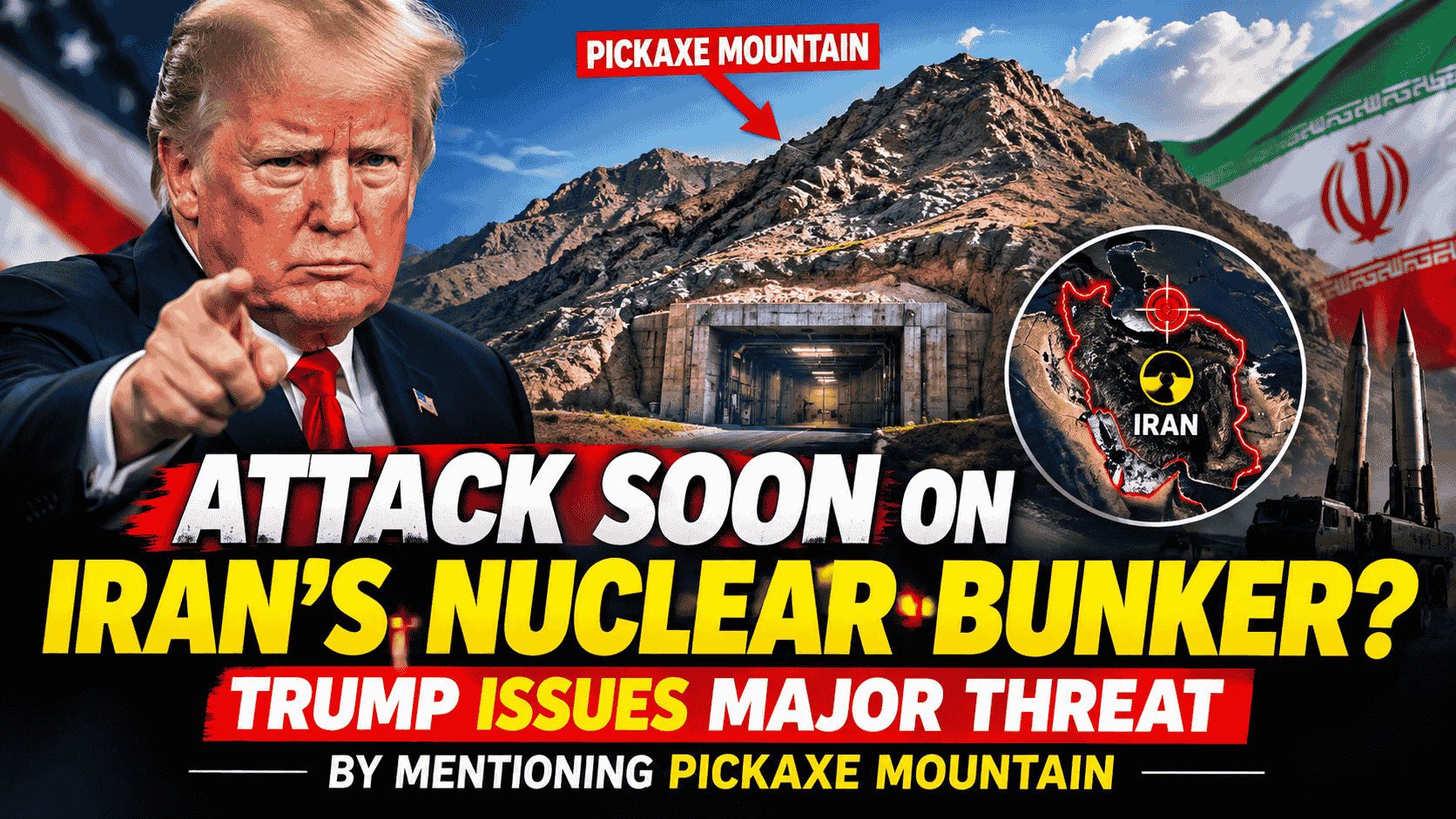
  • Attack soon on Iran’s nuclear bunker? Trump issues major threat by mentioning Pickaxe Mountain

    Attack soon on Iran’s nuclear bunker? Trump issues major threat by mentioning Pickaxe Mountain

    Trump’s new threat regarding Iran’s nuclear bunker, Former US President Donald Trump has issued a new threat by naming Pickaxe Mountain, a highly sensitive site linked to Iran’s nuclear programme. His statement has further deepened the already ongoing tensions in West Asia. Trump’s remarks are being viewed as a possible signal of a potential attack on Iran’s nuclear bunker.

    Pickaxe Mountain is among the select Iranian sites that are considered to have a direct connection to the country’s nuclear infrastructure. So far, the United States and Israel have not directly targeted this location, but Trump’s latest statement has sparked a fresh debate on this possibility.

    Why is Pickaxe Mountain important?

    Pickaxe Mountain is regarded as one of Iran’s most sensitive and secure nuclear sites. It is located in a mountainous region, where strong security and underground structures make it a difficult target for military attack. This is why it is considered a key part of Iran’s nuclear programme.

    Attack soon on Iran’s nuclear bunker? Trump issues major threat by mentioning Pickaxe Mountain
    Attack soon on Iran’s nuclear bunker? Trump issues major threat by mentioning Pickaxe Mountain

    According to experts, an attack on such sites is not merely a military action; its impact can extend to regional stability, diplomacy and the global energy market. Given the existing tensions between Iran and Western countries, this kind of threat is being taken very seriously.

    Trump’s statement increases tension

    The way Trump mentioned Pickaxe Mountain in his statement indicated that US policy towards Iran’s nuclear infrastructure could once again become aggressive. However, it is not clear whether this statement signals an imminent military action or is simply a strategy to create political pressure.

    Nevertheless, such language is being seen as a warning for Iran. Trump has long been known for adopting a tough stance against Iran. During his previous term, steps such as the US withdrawal from the Iran nuclear deal and the tightening of sanctions had significantly heightened tensions between the two countries.

    Renewed discussion on Iran’s nuclear bunker programme

    Iran’s nuclear programme has long been a subject of international dispute. Western countries fear that Iran could advance its nuclear capabilities in a military direction under the guise of civilian energy needs. Iran, however, has consistently claimed that its nuclear programme is for peaceful purposes.

    In this context, any mention of sites like Pickaxe Mountain could trigger a major diplomatic crisis. Experts believe that if such sites were attacked, Iran could retaliate, raising the risk of conflict spreading across the entire region.

    Attack soon on Iran’s nuclear bunker? Trump issues major threat by mentioning Pickaxe Mountain
    Attack soon on Iran’s nuclear bunker? Trump issues major threat by mentioning Pickaxe Mountain

    Questions over US and Israeli strategy

    Until now, the United States and Israel have not directly targeted this particular Iranian site. Several reasons are cited for this, including the site’s geographical security, the potential for retaliation, and fear of international reaction.

    But Trump’s statement has raised the question of whether military options regarding Iran’s nuclear bunkers could again be considered in the future. If that happens, it would not only affect Iran-US relations but also place Israel and other regional powers in a new challenge.

    Diplomacy or confrontation?

    Analysts believe that such threats are often also used to send political messages. Trump’s statement could have an impact at three levels — domestic politics, international pressure and security strategy. However, any aggressive statement on a sensitive issue like Iran can turn into real tension.

    For now, the world’s attention is on whether this is merely a political threat or the beginning of a major military development in West Asia. With the name of Pickaxe Mountain coming to the fore, concerns over Iran’s nuclear sites have deepened further.

    What could happen next

    If the United States and its allies increase pressure on Iran, Tehran could also adopt a hard line in response. This is bound to affect nuclear talks, regional security and global diplomacy.

    Also Read This : PM Modi’s Diplomatic Move During Kyrgyzstan Visit : India’s New Strategy in Iran, Armenia and Central Asia

    For the time being, Trump’s threat has made it clear that Iran’s nuclear programme remains one of the most sensitive issues in international politics. And when it comes to Iran’s nuclear bunker, even a single statement can mark the start of a major crisis.


    View this post on Instagram


    A post shared by AVSPOST (@avspost)

  • PM Modi’s Diplomatic Move During Kyrgyzstan Visit : India’s New Strategy in Iran, Armenia and Central Asia

    PM Modi’s Diplomatic Move During Kyrgyzstan Visit : India’s New Strategy in Iran, Armenia and Central Asia

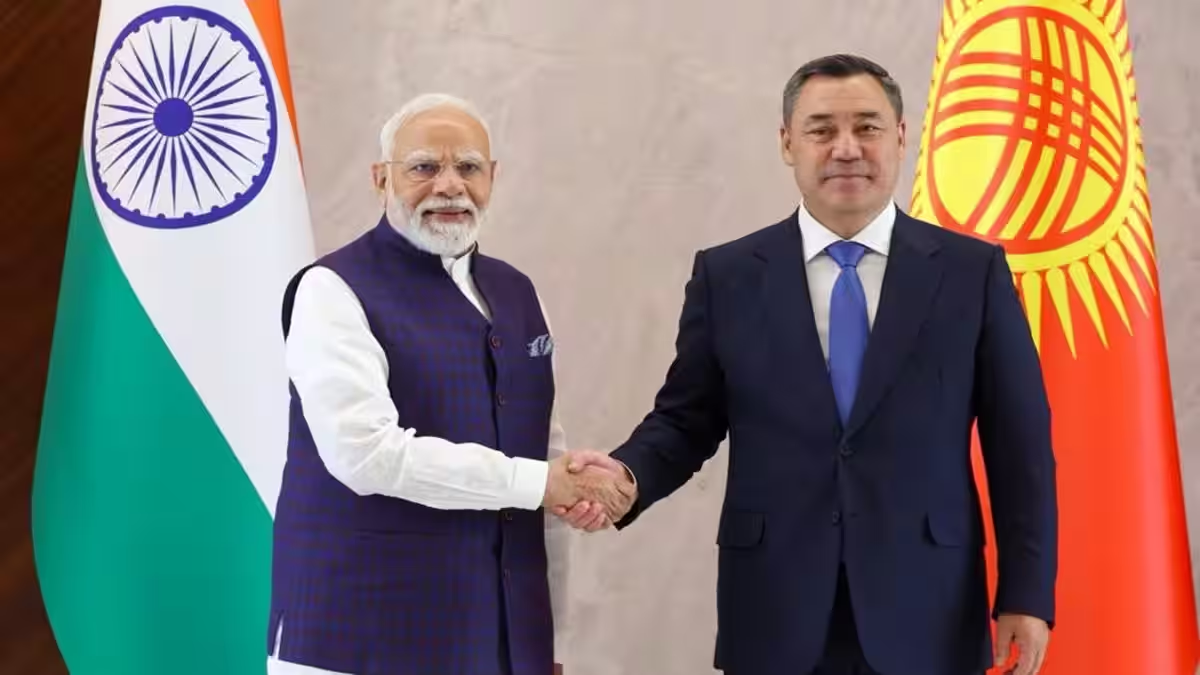
    PM Modi’s Kyrgyzstan Visit : PM Modi’s diplomatic activism in Kyrgyzstan is being seen as a major move by India amid changing regional equations. Prime Minister Modi’s visit to Kyrgyzstan is not being viewed merely as a formal state visit, but as an important part of India’s broader foreign policy and regional strategy. The meetings held during this visit with top leaders of Iran, Armenia and Kyrgyzstan indicate that India wants to further strengthen its role in the geopolitical equations of Central Asia and its neighbourhood.

    This timing is particularly significant because a new defence agreement between Saudi Arabia, Pakistan and Türkiye has also emerged during the same period. In this context, India’s diplomatic activities are being seen as a balanced and counter-strategy aimed at safeguarding its interests and expanding its influence in the region.

    India’s Growing Interest in Central Asia

    Central Asia has long been an important region in India’s foreign policy. From the perspective of energy resources, trade routes, security cooperation and connectivity, this region holds strategic importance for India. Strengthening relations with countries like Kyrgyzstan not only makes India more active on regional platforms but also helps in balancing the influence of countries like China and Pakistan.

    PM Modi’s Diplomatic Move During Kyrgyzstan Visit : India’s New Strategy in Iran, Armenia and Central Asia
    PM Modi’s Diplomatic Move During Kyrgyzstan Visit : India’s New Strategy in Iran, Armenia and Central Asia

    Among the leaders PM Modi met during his Kyrgyzstan visit, the discussions with representatives of Iran and Armenia are considered especially significant. Iran is an important partner for India in terms of the Chabahar Port and access to Afghanistan, while new dimensions of defence and technological cooperation are opening up with Armenia.

    Why Dialogue with Iran and Armenia is Important

    India-Iran relations are not limited to bilateral trade alone. Both countries share common interests on issues such as regional connectivity, energy security and the situation in Afghanistan. High-level meetings in this context help India build a strong diplomatic bridge between West Asia and Central Asia.

    Meanwhile, India’s cooperation with Armenia has grown rapidly in recent years. The supply of defence equipment, training and strategic dialogue have given this relationship a new direction. The discussions held during PM Modi’s Kyrgyzstan visit signal that India is prioritising its relations with smaller but strategically important countries.

    Injecting New Energy into Relations with Kyrgyzstan

    Kyrgyzstan is an important partner for India in Central Asia. Cooperation between the two countries has steadily increased in the fields of education, health, defence, trade and cultural exchange. India has always viewed its relationship with Kyrgyzstan as a reliable and long-term partnership.

    During this visit, emphasis was placed on further advancing mutual cooperation. At the diplomatic level, the message was also conveyed that India stands for stability, development and multilateral cooperation in Central Asia.


    View this post on Instagram
     

    A post shared by AVSPOST (@avspost)

    Impact of the Saudi-Pakistan-Türkiye Defence Agreement

    The recent defence agreement in regional politics has created new challenges and strategic needs for India. The growing military and political alignment between Saudi Arabia, Pakistan and Türkiye is being viewed as a matter of concern for India. In this situation, India’s increasing dialogue with Iran, Armenia and Central Asian countries is a balancing step.

    It is clear that India is no longer merely adopting a reactive policy; rather, it is shaping its diplomacy by taking potential equations into account in advance. PM Modi’s Kyrgyzstan visit can be seen as part of this approach, where India has actively and clearly advanced its interests.

    New Confidence in India’s Foreign Policy

    Over the past few years, India’s foreign policy has become more active, multi-layered and strategic. India is no longer limited to relations with major countries alone, but is also building deep ties with those countries that can play an important role in regional balance.

    PM Modi’s diplomatic activities in Kyrgyzstan are an example of this change. India is now looking at its interests by connecting Central Asia, West Asia and South Asia. This not only strengthens its global image but also opens new opportunities on the fronts of security, energy and trade.

    Also Read This : PM Modi Awarded Uzbekistan’s Highest Honour : Key Agreements Reached on Uranium Supply and Strategic Cooperation

    The high-level meetings held during the Kyrgyzstan visit indicate that India will further intensify regional diplomacy in the coming times. By increasing cooperation with countries like Iran, Armenia and Kyrgyzstan, India is building a network that will give it greater strength in the changing global scenario.

    It is clear that PM Modi’s Kyrgyzstan visit is not just a tour, but part of India’s long-term strategy aimed at increasing influence in Central Asia, creating new partners, and responding to regional challenges.

  • PM Modi Awarded Uzbekistan’s Highest Honour : Key Agreements Reached on Uranium Supply and Strategic Cooperation

    PM Modi Awarded Uzbekistan’s Highest Honour : Key Agreements Reached on Uranium Supply and Strategic Cooperation

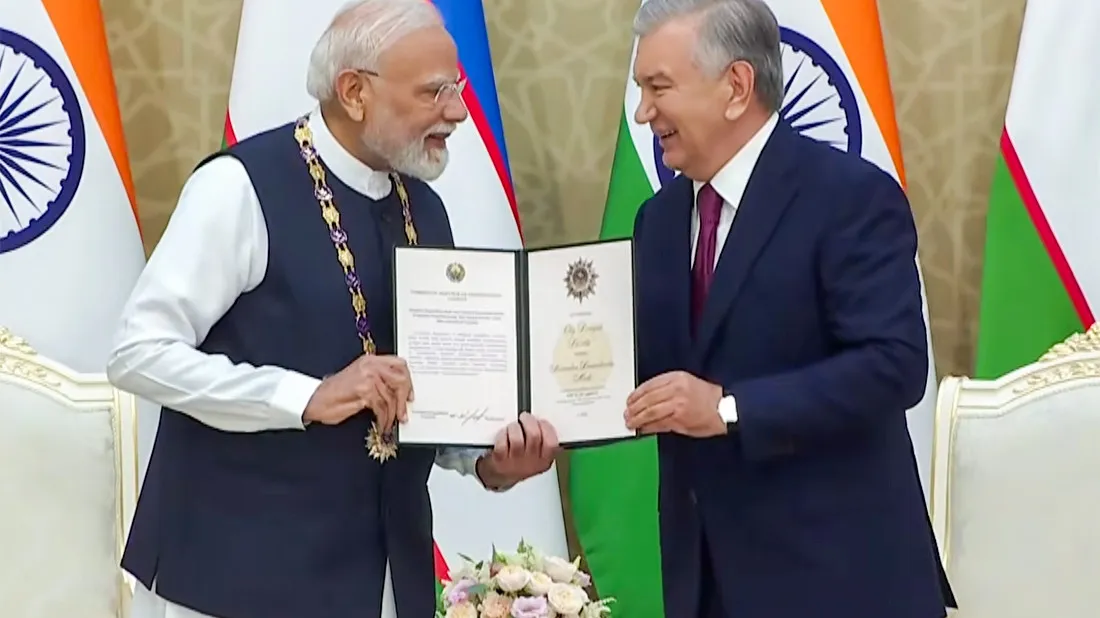
    PM Modi Awarded Uzbekistan’s Highest Honour : Prime Minister Narendra Modi’s visit to Uzbekistan has given a new direction to diplomatic relations between India and Central Asia. On Sunday, during bilateral talks with Uzbekistan’s President Shavkat Mirziyoyev, the two leaders held detailed discussions on enhancing cooperation, energy security, trade, investment, and strategic partnership. The most significant highlight of the meeting was the conferment of Uzbekistan’s highest civilian honour on Prime Minister Modi, which is being seen as a symbol of the growing closeness between the two countries.


    View this post on Instagram


    A post shared by AVSPOST (@avspost)

    This honour has been awarded at a time when India and Uzbekistan are moving ahead to further strengthen partnership in the areas of regional stability, economic cooperation, and energy resources. Prime Minister Modi’s visit is not only important from a diplomatic perspective but is also expected to impart fresh momentum to India’s Central Asia policy.

    Issues Discussed During the Bilateral Talks

    In the meeting with President Shavkat Mirziyoyev, Prime Minister Modi discussed various dimensions of cooperation between the two countries. The focus of the talks remained on expanding commercial relations, broadening investment opportunities, strengthening education and technical collaboration, and advancing partnership in the fields of energy and mineral resources.

    Discussions were also held specifically on the supply of uranium, which is considered extremely important from the perspective of India’s long-term energy strategy. India is continuously working to enhance its nuclear energy capacity, and in this context, cooperation with a resource-rich country like Uzbekistan is strategically significant.

    Talks Centred on Energy Security

    Cooperation in the energy sector between India and Uzbekistan has long been a subject of discussion. Uzbekistan is known for its mineral resources, particularly uranium. The discussions on energy security during Prime Minister Modi’s visit indicate that India is moving towards diversifying its energy sources for the future.

    PM Modi Awarded Uzbekistan’s Highest Honour
    PM Modi Awarded Uzbekistan’s Highest Honour

    Experts believe that, given the global geopolitical situation, it is essential for India to explore reliable and long-term options for energy supply. In this regard, partnership with Uzbekistan can help provide stability to India’s energy needs.

    PM Modi Awarded Uzbekistan’s Highest Honour

    PM Modi Awarded Uzbekistan’s Highest Honour : During the bilateral talks, Prime Minister Narendra Modi was awarded Uzbekistan’s highest honour. This recognition is also a reflection of India’s rising global stature and Prime Minister Modi’s active international diplomacy.

    The honour is not merely a formal achievement but also a symbol of the growing trust and mutual respect in India-Uzbekistan relations. Over the past few years, both countries have continuously strengthened cooperation in areas such as defence, trade, culture, education, and health.

    Expanding Scope of India-Uzbekistan Relations

    India and Uzbekistan share deep historical and cultural ties. Located in Central Asia, Uzbekistan is a strategically important partner for India. The region is significant not only from the perspective of trade routes but also for anti-terrorism cooperation, regional security, and connectivity.

    Prime Minister Modi’s visit is expected to open new avenues of contact and cooperation between the two countries. Through commercial agreements, investment promotion, and technical collaboration, both economies can benefit.

    PM Modi Awarded Uzbekistan’s Highest Honour : Key Agreements Reached on Uranium Supply and Strategic Cooperation
    PM Modi Awarded Uzbekistan’s Highest Honour : Key Agreements Reached on Uranium Supply and Strategic Cooperation

    Emphasis Also on Connectivity and Investment

    The meeting also discussed enhancing connectivity, which can give a boost to trade between India and Central Asia. Better transport and logistics networks will not only facilitate the movement of goods but also strengthen regional economic integration.

    In addition, investment opportunities for Indian companies in Uzbekistan were also considered. There are extensive possibilities for cooperation in sectors such as pharmaceuticals, IT, agriculture, education, and energy.

    New Direction to Strategic Partnership

    PM Modi Awarded Uzbekistan’s Highest Honour : Prime Minister Modi’s visit to Uzbekistan signals that India continues to prioritise Central Asia in its foreign policy. Through this visit, India has conveyed the message that it values long-term, reliable, and practical relations with regional partners.

    Also Read This : Strait of Hormuz Mines : Trump Claims All Mines Removed, Issues Fresh Warning to Iran

    Developments such as uranium supply, energy cooperation, and the conferment of the highest honour make this visit particularly significant. Concrete outcomes of these discussions are expected in the coming period, which could further strengthen relations between India and Uzbekistan.

    PM Modi Awarded Uzbekistan’s Highest Honour : Overall, PM Modi’s visit to Uzbekistan is not just a formal state visit but a step that could elevate strategic, economic, and energy cooperation to a new height.

  • Strait of Hormuz Mines : Trump Claims All Mines Removed, Issues Fresh Warning to Iran

    Strait of Hormuz Mines : Trump Claims All Mines Removed, Issues Fresh Warning to Iran

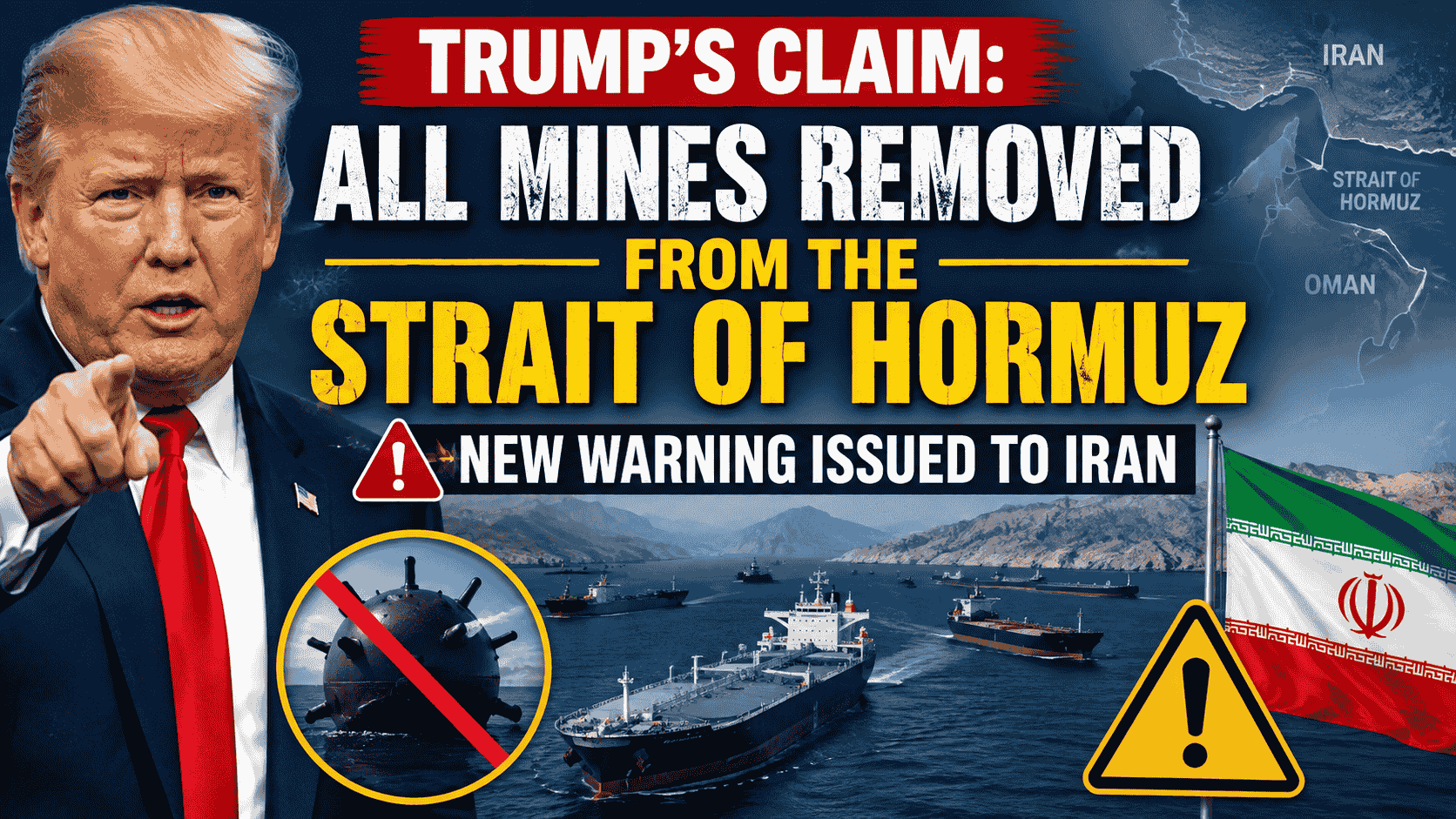
    The Strait of Hormuz mines issue has once again captured global attention. Former U.S. President Donald Trump recently claimed that all naval mines placed in the Strait of Hormuz have been completely removed. At the same time, he issued a strong warning to Iran, stating that any attempt to re-lay mines in this vital waterway would lead to serious consequences.

    This statement has reignited discussions about maritime security, oil supply risks, and rising tensions in West Asia. Although the claim has not been independently verified, the focus on Strait of Hormuz mines highlights how sensitive this narrow passage remains for the world’s energy markets.

    Why the Strait of Hormuz Matters So Much

    The Strait of Hormuz is a narrow sea lane connecting the Persian Gulf to the Arabian Sea and the Indian Ocean. It is one of the most important oil transit chokepoints on the planet.

    Trump’s Claim: All Mines Removed from the Strait of Hormuz; New Warning Issued to Iran
    Trump’s Claim: All Mines Removed from the Strait of Hormuz; New Warning Issued to Iran

    Every day, millions of barrels of crude oil from Saudi Arabia, Iran, Iraq, Kuwait, the United Arab Emirates, and other Gulf nations pass through this route. Experts estimate that nearly 20% of the world’s seaborne oil trade moves through the Strait of Hormuz.

    Any disruption caused by Strait of Hormuz mines, military activity, or conflict can quickly push global oil prices higher, increase shipping insurance costs, and create supply chain delays.

    Trump’s Claim on Strait of Hormuz Mines

    According to Trump, security measures in the strategic waterway have been strengthened and the existing threats from mines have been largely neutralized. He stated that all Strait of Hormuz mines have been cleared, reducing immediate risks to commercial shipping.

    However, no independent confirmation from the U.S. military, regional governments, or international monitoring agencies has been made public so far. Despite the lack of verification, the statement has drawn significant attention because of the high stakes involved.

    Fresh Warning to Iran

    Along with the claim about mine clearance, Trump delivered a direct warning to Iran. He made it clear that any future attempt to plant mines in the Strait of Hormuz would not be tolerated and would result in severe consequences.

    This warning comes at a time when political and military tensions between the United States and Iran remain elevated. Analysts note that such strong statements often serve both strategic and political purposes — signaling strength abroad while reinforcing a tough stance on national security at home.

    Trump’s Claim: All Mines Removed from the Strait of Hormuz; New Warning Issued to Iran
    Trump’s Claim: All Mines Removed from the Strait of Hormuz; New Warning Issued to Iran

    Potential Impact of Strait of Hormuz Mines on Global Markets

    The presence or even the threat of Strait of Hormuz mines can create major economic ripple effects:

    • Oil price spikes – Markets react quickly to any perceived risk in the Gulf.
    • Higher shipping and insurance costs – Vessel operators may demand higher premiums or avoid the route.
    • Supply delays – Alternative routes are longer and more expensive.
    • Pressure on importing nations – Countries heavily dependent on Gulf oil face increased costs that can eventually reach consumers.

    Energy markets already factor in geopolitical risks. Renewed talk of mines in the Strait of Hormuz only adds to existing uncertainty.

    Regional Tensions and the Bigger Picture

    West Asia continues to experience complex security dynamics. The Strait of Hormuz sits at the center of these tensions. Any military movement, statement, or incident in this area is closely watched by governments, oil traders, and shipping companies worldwide.

    Trump’s remarks about Strait of Hormuz mines underline a larger reality: this waterway is not just a shipping lane. It is a critical junction of energy security, military strategy, and global politics.

    Also Read This : Trump Strait of Hormuz : President’s Shocking Claim of “NEW U.S. Territory” Sparks Global Debate

    What Happens Next?

    All eyes are now on Iran’s response and any official statements from the United States or regional powers. If tensions escalate through further statements or actions, concerns over maritime safety and energy supplies could grow.

    For now, Trump’s claim that all Strait of Hormuz mines have been removed remains unverified. Yet the discussion itself is a reminder of how vulnerable global oil flows remain to developments in this narrow but vital strait.


    View this post on Instagram


    A post shared by AVSPOST (@avspost)

  • Trump Strait of Hormuz : President’s Shocking Claim of “NEW U.S. Territory” Sparks Global Debate

    Trump Strait of Hormuz : President’s Shocking Claim of “NEW U.S. Territory” Sparks Global Debate

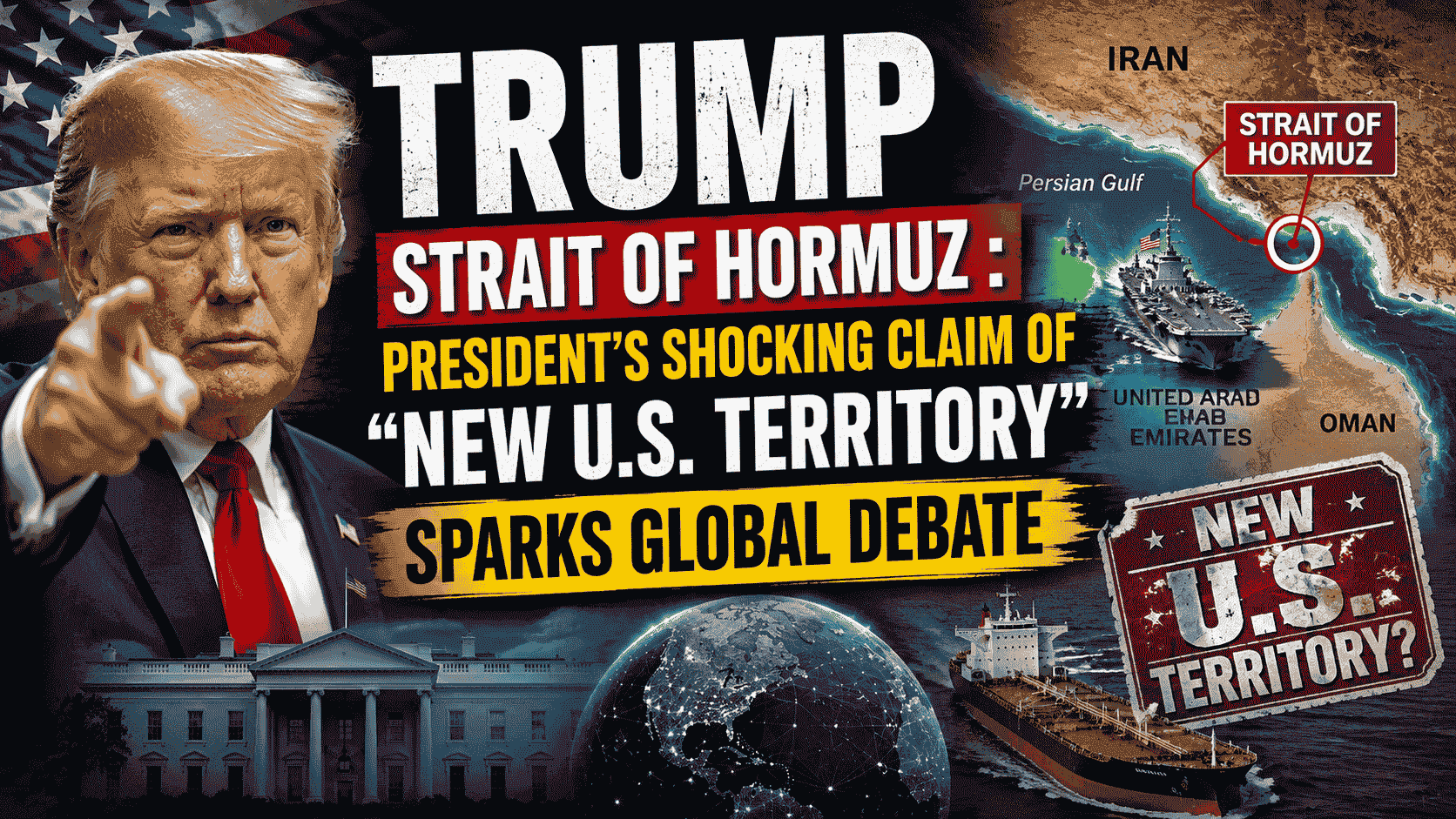
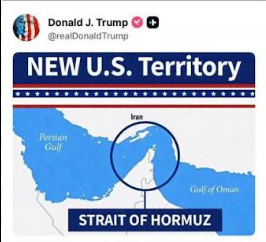
    Trump Strait of Hormuz controversy erupts after President Donald Trump posts a map on Truth Social calling the strategic waterway a “NEW U.S. Territory.” Read the full details, implications, and global reactions.

    In a surprising move that has captured worldwide attention, Trump Strait of Hormuz became the top trending topic after US President Donald Trump shared a map of the vital waterway on Truth Social and labeled it “NEW U.S. Territory.” The post has triggered intense discussions among diplomats, energy experts, and geopolitical analysts.

    What Exactly Did Trump Post About the Strait of Hormuz?

    On Tuesday, President Trump uploaded a map of the Strait of Hormuz on his Truth Social account. In the accompanying text, he referred to the narrow sea passage as America’s new territory. This unexpected claim immediately went viral and placed the Trump Strait of Hormuz statement under the global spotlight.

    While the post appears symbolic, many observers believe it carries deeper political and strategic messaging, especially given the sensitive nature of the region.

    Trump’s Shocking Claim of “NEW U.S. Territory” Sparks Global Debate
    Trump’s Shocking Claim of “NEW U.S. Territory” Sparks Global Debate

    Why the Strait of Hormuz Matters So Much

    The Strait of Hormuz sits between Iran and Oman and serves as one of the most critical maritime chokepoints in the world. A significant portion of the world’s crude oil and liquefied natural gas (LNG) passes through this narrow waterway every day.

    Any disruption or heightened tension in the Strait of Hormuz can rapidly affect:

    • Global oil prices
    • Shipping insurance costs
    • Energy security for major economies
    • International maritime trade routes

    This is why the Trump Strait of Hormuz claim is being treated with extreme seriousness by energy markets and governments alike.

    Geopolitical Implications of Trump’s Statement

    Analysts are divided over the intention behind the post. Some view it as pure political theater, while others see it as a deliberate signal aimed at Iran and other regional players.

    Trump Strait of Hormuz
    Trump Strait of Hormuz : New US Territory

    Key concerns raised by experts include:

    • Potential escalation in US-Iran tensions
    • Increased security worries among Gulf countries
    • Questions of international law and sovereignty
    • Possible impact on regional stability

    Under international law, no country can unilaterally claim the Strait of Hormuz as its territory. The waterway remains a vital international passage governed by long-standing maritime norms.

    Impact on Energy Markets and Maritime Security

    History shows that even minor threats or rhetoric surrounding the Strait of Hormuz can cause oil prices to spike. Shipping companies often raise insurance premiums, and tanker routes face delays whenever tensions rise.

    If the Trump Strait of Hormuz narrative gains further traction, markets could react quickly. Energy analysts are already monitoring the situation closely for any signs of real policy changes or military posturing.

    What Happens Next?

    So far, official reactions from the White House, Gulf nations, and international bodies have been limited. However, the coming days will be crucial. Diplomats and foreign policy experts will watch closely to see whether this remains a social media statement or evolves into something more substantial.

    Trump Strait of Hormuz : New US Territory
    Trump Strait of Hormuz : New US Territory

    The Trump Strait of Hormuz episode once again highlights how a single post from the US President can reshape global conversations about energy security, maritime freedom, and geopolitical power.

    Also Read This : US National debt crosses $40 trillion for the first time; rising liabilities heighten economic concerns

    Whether intended as a strategic message or a provocative social media move, President Trump’s claim has successfully put the world’s most important oil transit route back into the spotlight. The Trump Strait of Hormuz story continues to unfold, and its long-term impact on international relations remains to be seen.

    What are your thoughts on this development? Do you think this claim will lead to real policy changes or remain limited to social media? Share your views in the comments below.


    View this post on Instagram
     

    A post shared by AVSPOST (@avspost)

  • Iran’s President Masoud Pezeshkian to Visit India, Will Participate in New Delhi BRICS Summit 2026

    Iran’s President Masoud Pezeshkian to Visit India, Will Participate in New Delhi BRICS Summit 2026

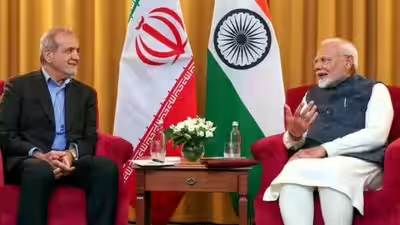
    Iran’s President Masoud Pezeshkian will come to India in September to take part in the BRICS Summit being held in New Delhi. This visit is taking place at a time when geopolitical tensions continue to persist in West Asia and international discussions on regional stability are intensifying. Iran’s President Masoud Pezeshkian India visit is considered important not only from a diplomatic perspective but also in terms of India-Iran relations and Iran’s active engagement on the BRICS platform.

    Iran’s participation in the BRICS Summit is occurring at a time when the group’s expansion and its global influence continue to grow. India will assume the BRICS chairmanship in 2026, which is why the upcoming summit holds strategic significance for New Delhi as well. Iran’s presence on this platform will underline its growing role on regional and global issues.

    Diplomatic Activity to Increase at the BRICS Summit

    The summit in New Delhi will be important in several respects, as discussions are expected on issues such as economic cooperation among member countries, energy security, trade expansion, and the multilateral system. Iran’s participation may also intensify talks on the situation in West Asia, energy markets, maritime security, and regional peace.

    Iran’s President Masoud Pezeshkian to Visit India, Will Participate in New Delhi BRICS Summit 2026
    Iran’s President Masoud Pezeshkian to Visit India, Will Participate in New Delhi BRICS Summit 2026

    Iran has long viewed multilateral forums such as BRICS as platforms that strengthen the voice of the Global South. In this context, Masoud Pezeshkian’s visit to India is seen as part of Tehran’s strategy to make its presence on international platforms more effective.

    Focus on India’s Role Amid Tensions in West Asia

    Iran’s President Masoud Pezeshkian visit comes at a time when concerns over tension, conflict, and instability in West Asia remain high. Iran has already indicated that it expects India to play a constructive role in promoting regional peace and reducing tensions. India’s foreign policy has always been based on dialogue, balance, and diplomacy, so Iran’s expectation is also viewed as an important diplomatic opportunity for New Delhi.

    India-Iran relations are not limited to the political level alone. Opportunities for cooperation continue to exist between the two countries in areas such as energy, trade, transport, and regional connectivity. Projects like the Chabahar Port have also played a role in strengthening the strategic partnership between the two nations. In this light, the possibility of bilateral talks between the two leaders during the BRICS Summit could also be significant.

    Iran’s President Masoud Pezeshkian Visit India : A New Diplomatic Chapter in India-Iran Relations

    Masoud Pezeshkian’s visit to India is being viewed as a new diplomatic chapter in India-Iran relations. Amid changing circumstances in West Asia, India’s balanced approach positions it as a potential interlocutor. Iran’s expectation of a positive role from India in the peace process indicates that the space for trust and dialogue between the two countries remains strong.

    Iran’s participation on the BRICS platform also signals that it is moving toward strengthening alternative global partnerships amid Western pressures. India, a key member of BRICS and set to assume its chairmanship in 2026, can play an important role in this process.

    Iran’s President Masoud Pezeshkian to Visit India, Will Participate in New Delhi BRICS Summit 2026
    Iran’s President Masoud Pezeshkian to Visit India, Will Participate in New Delhi BRICS Summit 2026

    BRICS and India’s Strategic Priorities

    Iran’s President Masoud Pezeshkian : BRICS is no longer merely a grouping of emerging economies; it has become an influential platform for global economic and political discourse. For India, this forum offers an opportunity to advance its priorities on issues such as trade, investment, technology, energy, and reform of global governance.

    Before assuming the chairmanship in 2026, this summit will provide India an opportunity to demonstrate its diplomatic preparedness and leadership capacity. The presence of Iran’s President can make the summit even more significant, especially when issues such as regional stability, energy supply, and multilateral cooperation remain prominent on the global agenda.

    Also Read This : Independence Day Quote 2026 : Inspiring Quotes and Messages for India’s 80th Independence Day

    Overall, Iran’s President Masoud Pezeshkian visit to India is not merely formal participation in a summit; it is also a signal of the changing diplomatic equations among India, Iran, and BRICS. The summit in New Delhi can send important messages on the situation in West Asia, regional peace, and multilateral cooperation. India’s role, Iran’s expectations, and the growing global relevance of BRICS make this visit particularly significant.


    View this post on Instagram


    A post shared by AVSPOST (@avspost)

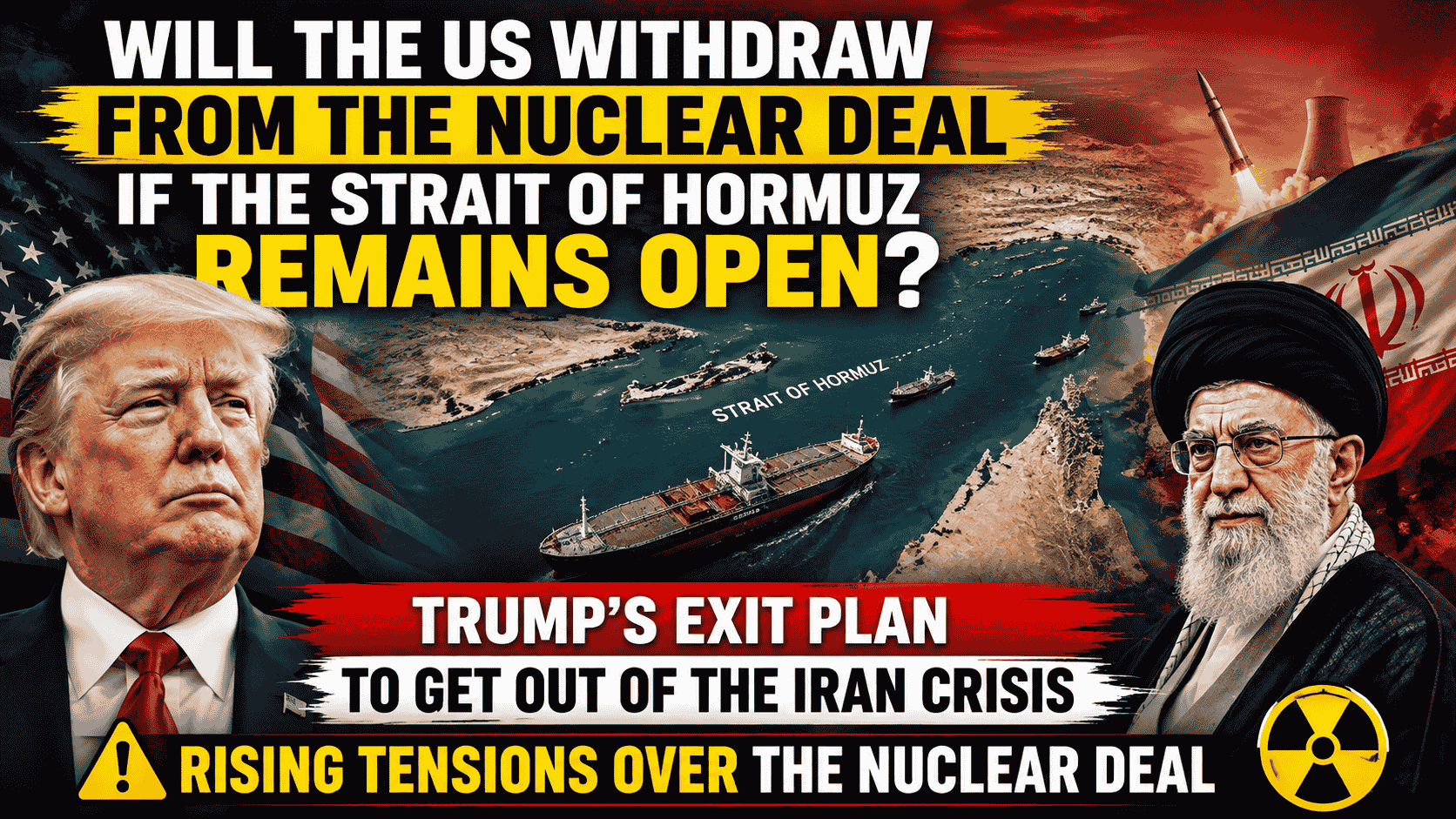
  • Will the US withdraw from the nuclear deal if the Strait of Hormuz remains open? Trump’s exit plan to get out of the Iran crisis; rising tensions over

    Will the US withdraw from the nuclear deal if the Strait of Hormuz remains open? Trump’s exit plan to get out of the Iran crisis; rising tensions over

    The Strait of Hormuz, focus on America’s strategy. Amid ongoing tensions in the Middle East, the Strait of Hormuz has once again become the centre of global politics and energy security. The growing confrontation between Iran and its adversaries has heightened concerns in international markets. In this context, discussions have intensified about America’s potential strategy: if the situation normalises and the Hormuz route remains open, could Washington move towards withdrawing from the nuclear deal with Iran?

    Given Donald Trump’s role in American politics, this question becomes even more significant. The Trump administration’s foreign policy has previously been known for its hardline stance towards Iran. Therefore, the search for an exit plan to emerge from the current crisis is being seen as a strategic signal.

    Is America trying to extricate itself from the Iran conflict?

    Analysts believe that the US is currently looking for ways to avoid getting directly entangled in a prolonged military confrontation. Escalating tensions with Iran not only increase regional instability but also impact oil supplies, maritime trade and the global economy. For this reason, the security and openness of the Strait of Hormuz have become an international priority.

    If this maritime route remains fully open and functional, a new diplomatic situation could arise for the United States. Some experts believe that in such circumstances, Washington may try to revisit the nuclear deal with Iran under tougher conditions in order to maintain pressure on Tehran.

    Will the US withdraw from the nuclear deal if the Strait of Hormuz remains open? Trump’s exit plan to get out of the Iran crisis; rising tensions over
    Will the US withdraw from the nuclear deal if the Strait of Hormuz remains open? Trump’s exit plan to get out of the Iran crisis; rising tensions over

    Questions raised again over the nuclear deal

    The Iran nuclear deal has long been a subject of global controversy. The agreement’s aim was to keep Iran’s nuclear programme under control, but mutual distrust between the US and Iran repeatedly weakened it. During Trump’s tenure, the United States decided to withdraw from the deal, after which the situation became even more complicated.

    Now, with fresh tensions in the region, there are fears that America may adopt a new strategy of diplomatic pressure in exchange for temporary peace or maritime security. If the Strait of Hormuz remains open and oil supplies are not disrupted, it could also send a message that the US intends to redefine economic and political pressure on Iran.

    Why is the Strait of Hormuz so important?

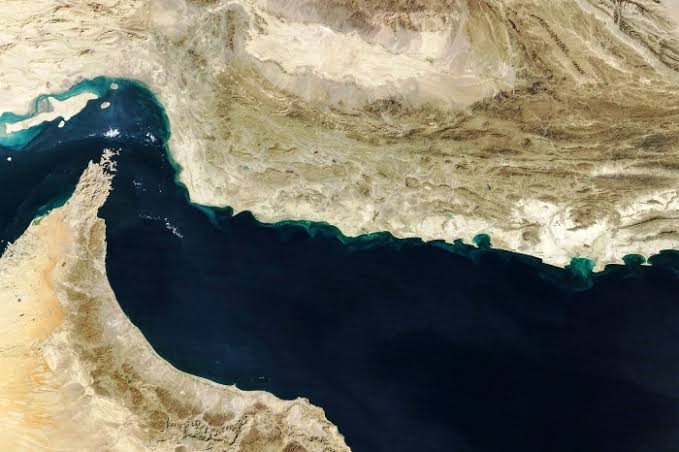
    The Strait of Hormuz is one of the world’s most sensitive maritime routes. It connects the Persian Gulf to the Gulf of Oman and the Arabian Sea. A large share of the world’s crude oil and gas passes through this route. Any disruption here directly affects international energy prices.

    This is why the United States, European countries and several Gulf nations remain highly vigilant about the security of this waterway. Iran also views the strait as a source of strategic leverage, which increases its ability to exert pressure in the event of any confrontation.

    Trump’s stance and a possible exit plan

    A key aspect of Donald Trump’s foreign policy has been his preference for avoiding long and costly military campaigns. However, his approach towards Iran has often been aggressive. If the United States now wants to avoid getting drawn into a major conflict, preparing an exit plan is considered natural.

    Will the US withdraw from the nuclear deal if the Strait of Hormuz remains open? Trump’s exit plan to get out of the Iran crisis; rising tensions over
    Will the US withdraw from the nuclear deal if the Strait of Hormuz remains open? Trump’s exit plan to get out of the Iran crisis; rising tensions over

    This exit plan would not mean merely a military withdrawal, but also the creation of diplomatic and economic arrangements to contain the crisis. These could include maritime security agreements, regional cooperation, and limited yet effective pressure on Iran.

    Impact on global markets and diplomacy

    Any form of instability in the Middle East is immediately reflected in global markets. Oil prices, shipping costs and investor sentiment are directly affected. If the Strait of Hormuz remains open, markets may experience some relief. But if tensions escalate, an energy crisis and economic uncertainty could deepen.

    At the diplomatic level too, America will have to strike a balance. On one hand, it must reassure its allies about security; on the other, it must avoid a confrontation with Iran that could push the entire region towards war. This is why every move by Washington is now being watched with extreme caution.

    What could happen next?

    In the coming days it will become clear in which direction America wants to take the Iran crisis. If the situation calms down and the maritime route returns to normal, a new political debate over the nuclear deal could intensify. On the other hand, if tensions rise, the US may have to choose between greater toughness or greater flexibility in its strategy.

    Also Read This : Iran could strengthIran control Strait of Hormuz : discussions underway about collecting up to 7% toll from commercial ships

    For now, one thing is certain: the situation in the Strait of Hormuz is no longer just a regional issue, but has become a decisive point for global energy, diplomacy and security. America’s next move could change this entire equation.


    View this post on Instagram
     

    A post shared by AVSPOST (@avspost)

  • Iran could strengthIran control Strait of Hormuz : discussions underway about collecting up to 7% toll from commercial ships

    Iran could strengthIran control Strait of Hormuz : discussions underway about collecting up to 7% toll from commercial ships

    Iran control Strait of Hormuz : Concerns grow over Iran’s grip on the Strait of Hormuz The ongoing tensions between Iran and the United States have once again become a cause for concern for global maritime trade. The latest discussion centers on the possibility that Iran could further strengthen its control over the Strait of Hormuz. If this happens, the prospect of collecting a toll or fee from commercial ships is also emerging. According to reports, this fee could be as high as 7 percent, which could have a major impact on international shipping and energy supplies.
    The Strait of Hormuz is one of the world’s most important sea routes. It is the primary pathway for the movement of crude oil and LNG from the Gulf countries. Any form of control, pressure, or fee system on this route could immediately affect global markets.

    Why is the Strait of Hormuz important?

    The Strait of Hormuz is strategically extremely significant because it connects the Persian Gulf to the Arabian Sea. A large portion of the world’s oil trade passes through this route. If any country’s influence increases here, not only would shipping costs rise, but oil prices could also surge.
    According to experts, a large number of oil tankers and cargo ships pass through this route daily. Therefore, reports of any kind of toll or additional fee being imposed here could create instability in the global energy market.

    Iran control Strait of Hormuz
    Iran control Strait of Hormuz

    What could Iran’s potential strategy be?

    It is believed that Iran could use its geographical advantage to increase economic and strategic pressure on the maritime route. The discussion of collecting tolls from commercial ships is being seen in this context. If such a system is implemented, it would place an additional burden on ship owners and international logistics companies.
    The impact of any such policy would not remain limited to the shipping sector alone. It could also affect oil-importing countries, industrial production, transportation costs, and ultimately consumer prices.

    What does a 7 percent toll mean?

    The 7 percent toll mentioned in reports is considered a significantly high figure for maritime trade. If a fee is charged at this rate on any ship or cargo, the overall transportation cost would rise substantially.
    Experts say that the impact of such a fee would be particularly severe on those countries that depend on this route for energy imports. In addition, insurance companies could also raise premiums if risks increase, further driving up total costs.

    What impact could this have on global markets?

    Rising tensions over the Strait of Hormuz could directly affect oil prices. Markets are already sensitive to geopolitical uncertainties. If Iran takes any concrete steps regarding tolls or control over this route, crude oil prices could rise sharply.
    Furthermore, problems such as delays in shipping routes, increased insurance costs, and disruptions in the supply chain could also emerge. This could put pressure on the import-export trade of Asia, Europe, and other regions.
    Uncertainty heightened by US-Iran tensions
    Tensions between Iran and the United States have persisted for a long time. Differences between the two countries run deep on issues of regional security, nuclear matters, and sanctions. Against this backdrop, every piece of news related to the Strait of Hormuz is taken seriously at the international level.
    Analysts believe that Iran could use this strategic route as a means of applying pressure. However, any aggressive action could trigger a strong global response and further escalate regional tensions.
    Why is discussion of this news increasing?
    Discussion of this news has intensified because the Strait of Hormuz is not merely a sea route but a cornerstone of global energy security. Any change here could affect markets around the world.
    The conclusion is that if Iran moves toward collecting tolls from commercial ships, its impact on maritime trade, oil prices, and the global supply chain could become clearly visible. For now, the world’s attention remains fixed on this entire development.