Category: Top News

  • Philippines-China Dispute : How Diplomatic Tensions Escalated at the Seoul Defense Forum

    Philippines-China Dispute : How Diplomatic Tensions Escalated at the Seoul Defense Forum

    Philippines-China Dispute Intensifies During Defense Forum in Seoul, The ongoing Philippines-China dispute over the South China Sea has once again become the focus of diplomatic tension. This time, the issue is not linked to any maritime confrontation or military activity, but to sharp language used during a defense forum held in Seoul. Amid the discussions, China handed a written note to Philippine Defense Secretary Gilberto C. Teodoro, detailing Beijing’s position.

    The incident made headlines because Teodoro publicly read out the note and then delivered the Philippines’ response. This move not only drew the attention of the representatives present on the stage but also made the existing tensions between the two countries even more evident.

    What Happened in Seoul?

    At the defense dialogue held in Seoul, representatives from various countries were sharing views on international security, regional stability, and maritime disputes. During this, a note from China was given to the Philippine Defense Secretary. The note contained China’s perspective and claims regarding the South China Sea.

    Philippines-China Dispute : How Diplomatic Tensions Escalated at the Seoul Defense Forum
    Philippines-China Dispute : How Diplomatic Tensions Escalated at the Seoul Defense Forum

    Instead of concealing or ignoring the note, Gilberto C. Teodoro read it out on the stage itself. After that, he reiterated the Philippines’ position, stating that Manila would not compromise on its maritime rights and sovereignty. The entire episode also sparked debate about the boundaries of diplomatic protocol.

    Why Is the South China Sea the Center of the Dispute?

    The South China Sea is a highly important maritime region in Asia, through which a large portion of international trade passes. The area also holds potential for oil, gas, and fishery resources. China claims a large part of this region, while several other countries, including the Philippines, assert their own maritime rights.

    For this reason, the area has long been a source of regional tension. The Philippines says that China’s activities interfere in its exclusive economic zone. On the other hand, China cites its historical claims.

    How Did the Diplomatic Language Become So Sharp?

    According to experts, in recent years the Philippines-China dispute has not remained limited to maritime boundaries alone; it has also intensified in political and diplomatic language. The rhetoric between the two countries has steadily grown tougher.

    Philippines-China Dispute : How Diplomatic Tensions Escalated at the Seoul Defense Forum
    Philippines-China Dispute : How Diplomatic Tensions Escalated at the Seoul Defense Forum

    The Philippines’ current policy has been to openly challenge China’s claims. China, for its part, shows no willingness to back down from its stance. Therefore, when the two sides come face to face on any international platform, the tone of the language also becomes sharp.

    Why Did Reading the Note on Stage Become a Topic of Discussion?

    In diplomatic meetings, differences are generally expressed in formal and restrained language. However, Teodoro’s public reading of the note was considered an unusual step. It sent the message that the Philippines is not only challenging China’s position but is also not hesitant to bring it out into the open.

    This strategy can be seen as part of the Philippines’ broader policy of continually raising the South China Sea issue before the international community.

    What Is the Philippines’ Response?

    The Philippines states that it will defend its rights on the basis of international law and maritime rules. Manila has long argued that China’s expansive maritime claims violate its legitimate rights.

    Teodoro’s reaction also reinforces this stance. He indicated that the Philippines will not yield to pressure and will maintain a clear and firm position regarding its maritime territory.

    Philippines-China Dispute : How Diplomatic Tensions Escalated at the Seoul Defense Forum
    Philippines-China Dispute : How Diplomatic Tensions Escalated at the Seoul Defense Forum

    Why Is This Matter Important for China?

    Philippines-China Dispute : China considers the South China Sea extremely important for its strategic security and regional influence. Its naval presence and surveillance systems in the region have steadily increased. Open opposition from countries like the Philippines therefore becomes a diplomatic challenge for Beijing.

    China does not want this dispute to be established as a narrative against it on international platforms. That is why it immediately reacts to any statement or incident that appears to weaken its claims.

    Also Read This : Attack soon on Iran’s nuclear bunker? Trump issues major threat by mentioning Pickaxe Mountain

    The Seoul incident shows that the Philippines-China dispute is no longer merely an issue of maritime boundaries; it has also become a major subject of regional diplomacy. Further such confrontations may be seen in the coming period, especially when the two countries face each other on any multilateral platform.

    For now, it is clear that tensions over the South China Sea are becoming more complex rather than easing. The sharpness of diplomatic language indicates that both sides remain firm in their respective positions, and no softening is currently visible.


    View this post on Instagram


    A post shared by AVSPOST (@avspost)

  • 80th Independence Day 2026 : Celebrating Freedom, Vande Mataram & Viksit Bharat at Red Fort

    80th Independence Day 2026 : Celebrating Freedom, Vande Mataram & Viksit Bharat at Red Fort

    India proudly celebrated its 80th Independence Day on 15 August 2026 with unmatched patriotic fervour across the nation. The historic Red Fort in New Delhi once again became the centre of national pride as Prime Minister Narendra Modi unfurled the Tricolour and addressed the country, marking not only 80 years of independence but also 150 years of the national song Vande Mataram.

    Historic Firsts at the Red Fort on 80th Independence Day

    This year’s 80th Independence Day celebrations carried special significance. For the first time in the history of Independence Day events at the Red Fort, Vande Mataram was rendered by an Army band while guests sang along. The national song was followed by the flag hoisting and the National Anthem, synchronised with a 21-gun salute fired by the 1721 Field Battery using indigenous 105mm Light Field Guns.

    Floral decorations on the ramparts beautifully displayed the national flag flanked by “Vande Mataram” in Hindi. After the Rashtriya Salute, two Indian Air Force Mi-17 helicopters showered flower petals—one carrying the Tricolour and the other a flag depicting Vande Mataram—creating a memorable visual spectacle.


    View this post on Instagram

     

    A post shared by AVSPOST (@avspost)

    PM Modi’s Vision for a Self-Reliant and Developed India

    Addressing the nation from the ramparts of the Red Fort on the 80th Independence Day, Prime Minister Narendra Modi strongly emphasised the need for self-reliance. He stated that India must not remain dependent on other countries and should strengthen its own capabilities through initiatives like Make in India and Vocal for Local. “We have to become self-reliant,” the Prime Minister declared, linking this resolve to the larger goal of Aatmanirbhar Bharat.

    A major highlight of the speech was the announcement of a new target under the Lakhpati Didi initiative. Having already surpassed the earlier goal of three crore women achieving an annual household income of ₹1 lakh or more, the government now aims to create six crore Lakhpati Didis. This move is expected to bring transformative change to the rural economy by empowering women.

    Key Announcements on 80th Independence Day

    Prime Minister Modi unveiled several forward-looking initiatives focused on youth, technology, education, sports, and strategic sectors:

    • Nationwide AI skilling programme for one crore youth
    • Free online coaching for competitive examinations
    • Civil defence reforms
    • Nationwide sports talent hunt for children
    • Expansion of semiconductor manufacturing
    • Ambitious new targets for nuclear power generation

    These announcements reflect the government’s focus on preparing India’s young population for the future while strengthening national capabilities in critical areas.

    80th Independence Day 2026 : Celebrating Freedom, Vande Mataram & Viksit Bharat at Red Fort
    80th Independence Day 2026 : Celebrating Freedom, Vande Mataram & Viksit Bharat at Red Fort

    Nationwide Celebrations and Messages of Unity

    The spirit of the 80th Independence Day resonated across states. In West Bengal, Suvendu Adhikari linked the vision of Viksit Bharat by 2047 with the goal of a prosperous West Bengal. Celebrations were held with full enthusiasm in Punjab, Haryana, and Chandigarh, with governors and chief ministers hoisting the national flag and paying tributes to freedom fighters.

    Internationally, Bangladesh extended warm greetings to the people of India, remembering the sacrifices of freedom fighters and highlighting the themes of friendship, harmony, and prosperity.

    From Freedom to Viksit Bharat 2047

    The 80th Independence Day was not just a day of celebration but a moment of reflection and renewed commitment. Connecting the spirit of Vande Mataram with the aspirations of over 140 crore Indians, Prime Minister Modi reiterated the collective journey towards Viksit Bharat by 2047.

    Also Read This : Iran’s President Masoud Pezeshkian to Visit India, Will Participate in New Delhi BRICS Summit 2026

    As India enters its 81st year of independence, the message from the Red Fort remains clear: self-reliance, empowerment of women and youth, technological advancement, and national unity will continue to guide the country forward.

    Jai Hind!

  • Food Safety : Egg Adulteration, How Safe is Your Food? New Report on Eggs Raises Questions

    Food Safety : Egg Adulteration, How Safe is Your Food? New Report on Eggs Raises Questions

    Food Safety : India’s kitchens are turning into crime scenes—not because of knives or gas stoves, but because of the food we trust every day. From bread laced with hazardous chemicals to milk diluted with detergent and spices dyed with textile colors, the rot runs deep. Now even eggs are under suspicion, after a report found banned, DNA-damaging compounds in a popular “clean, cruelty-free” brand. What is the solution to this problem? Let’s dive deep into this issue in this blog and discuss practical remedies.

    The Food Safety Crisis in India : Spotlight on the Eggoz Egg Scandal

    India’s food supply chain is plagued by adulteration and contamination, turning everyday staples into potential health hazards. Recent reports highlight milk adulterated with detergents, spices dyed with textile colors, and bread laced with harmful chemicals—these issues are eroding trust in basic foods. The latest alarm comes from a December 2025 lab test by consumer awareness group Trustified, which detected traces of two banned antibiotics—nitrofuran and nitroimidazole—in a batch of eggs from Eggoz, a brand marketed as “antibiotic-free,” “clean,” and “cruelty-free.” These compounds are genotoxic (DNA-damaging) and linked to cancer risks, banned in many countries with zero-tolerance policies, though India’s Food Safety and Standards Authority (FSSAI) allows trace levels.

    Food Safety : Egg Adulteration
    Food Safety : Egg Adulteration

    Eggoz has affirmed compliance with FSSAI norms, denied antibiotic use, and commissioned independent NABL-accredited lab tests for transparency. But this isn’t an isolated incident—it’s symptomatic of weak enforcement, opaque supply chains, and profit-driven shortcuts in poultry farming, where such drugs are sometimes illegally used to boost production and prevent infections. The good news? Solutions exist at individual, industry, and policy levels. Below, practical steps inspired by expert recommendations and ongoing discussions are outlined.

    Solutions to Tackle Food Adulteration : Ensuring Safer Food

    Addressing this requires a multi-pronged approach: empowering consumers, pressuring brands, and demanding systemic reform. Let’s explore these levels in detail.

    Consumer-Level Actions  

    Start by choosing transparent, verified sources. Prioritize brands or local farms that share public lab test reports, third-party audits, and details on feed or antibiotic practices. Don’t rely solely on labels like “organic” or “antibiotic-free” without proof. Additionally, opt for short supply chains—buy from trusted local vendors, farmers’ markets, or direct-from-farm deliveries to minimize contamination risks. Stay informed and report issues: Use apps like FSSAI’s Food Safety Compliance or Trustified for real-time alerts, and report suspicious products via the National Consumer Helpline (1915). These steps reduce exposure to adulterated batches by favoring accountability over marketing hype, while local sourcing cuts out intermediaries where tampering often occurs. Practically, scan QR codes on packaging for traceability, test small batches at home (e.g., using online adulteration kits for milk or spices), and source eggs from certified organic farms under NPOP (National Programme for Organic Production).

    Industry-Level Reforms 

    Demand routine third-party testing from brands, including residue checks for antibiotics or heavy metals, with results published publicly. Encourage the adoption of sustainable farming: Shift poultry operations to antibiotic alternatives like probiotics, vaccines, and better biosecurity. Enhance supply chain visibility by using blockchain or digital tracking from farm to table. These measures build trust and catch issues early, as seen in Eggoz’s post-scandal pivot to extra testing. Global benchmarks, like the EU’s zero-tolerance policy, significantly slash contamination rates. To implement, petition brands via social media (e.g., #SafeEggsNow), support FSSAI’s “FoSCoS” certifications for traceable products, and urge quick-commerce platforms (like Blinkit or Zepto) to rigorously vet suppliers.

    Food Safety : Egg Adulteration
    Food Safety : Egg Adulteration

    Policy and Regulatory Changes 

    Strengthen FSSAI enforcement—align with international zero-tolerance standards for genotoxic residues, ramp up random audits, and impose harsher penalties (current fines are often too low to deter). Invest in monitoring infrastructure: Expand lab networks for nationwide testing and train more food safety officers. Launch awareness campaigns—tie government education on spotting adulteration to school curricula and media drives. Weak oversight enables lapses, such as FSSAI’s tolerance levels allowing trace contaminants. Stricter rules could mirror successes in dairy regulation after the 2012 scandals. Practical steps include advocating for FSSAI reforms on platforms like Change.org, supporting the Food Safety Amendment Bill under discussion in 2025 for tougher adulteration penalties, and pushing subsidies for safe farming tech to make compliance affordable.

    Also Read This : 5 Dreamy Honeymoon Destinations in India Under Rs 20000 : Romantic Escapes on a Shoestring Budget

    Eggs—and food in general—aren’t inherently unsafe; the problem lies in inconsistent quality control. Begin with personal choices, like sourcing desi breed eggs from nearby gaushalas, to immediately lower risks while broader changes take hold. Long-term, collective pressure on regulators and brands will clean up the system—after all, a safer kitchen starts with informed diners. If you’re in India, check FSSAI’s portal for certified products and join consumer groups like Trustified for updates. What’s one step you’ll take today?

  • Astronomer CEO Controversy: Coldplay Concert Sparks Speculation

    Astronomer CEO Controversy: Coldplay Concert Sparks Speculation

    Astronomer CEO : A fleeting moment captured at a Coldplay concert at Gillette Stadium in Boston on July 16, 2025, has catapulted Astronomer and its CEO, Andy Byron, into an unexpected public relations storm. During the event, a “kiss cam” segment spotlighted Byron in a close embrace with Astronomer’s Chief People Officer, Kristin Cabot, triggering widespread speculation of an extramarital affair. Dubbed “ColdplayGate” across social media, the incident has sparked debates about workplace ethics and leadership accountability at the $1.2–1.3 billion tech unicorn. Below, we delve into the details of this unfolding controversy and its potential ramifications.

    Astronomer CEO and Chief People Officer, Kristin Cabot
    Astronomer CEO and Chief People Officer, Kristin Cabot

    Who is Andy Byron? 

    Astronomer CEO : Andy Byron is the Chief Executive Officer of Astronomer, a New York-based data infrastructure company renowned for its data orchestration platform powered by Apache Airflow. Since taking the helm as CEO in July 2023, Byron has driven significant growth, notably securing a $93 million Series D funding round in May 2025, which cemented Astronomer’s status as a unicorn with a valuation between $1.2 and $1.3 billion. His strategic leadership has positioned Astronomer as a key player in the competitive data infrastructure market. Byron’s estimated net worth, derived from a 1–5% equity stake in the company, is speculated to range from $12 million to $65 million, though precise figures remain private. He is married to Megan Kerrigan Byron, and they have two children.

    Astronomer CEO : Andy Byron
    Astronomer CEO : Andy Byron

    Astronomer CEO : The Viral Incident

    The controversy erupted when the concert’s jumbotron displayed Byron and Cabot during the kiss cam, a playful tradition encouraging couples in the audience to kiss. The pair appeared visibly uncomfortable—Byron ducked out of view, while Cabot shielded her face. Coldplay’s lead singer, Chris Martin, amplified the moment with a lighthearted remark: “Either they’re having an affair or they’re very shy.” The scene was recorded and rapidly spread across platforms like TikTok and X, garnering millions of views. Posts on X fueled the narrative, with some users alleging Byron confessed to infidelity and others claiming his wife, Megan Kerrigan Byron, removed his surname from her Facebook profile before deactivating her account. These claims remain unverified.

    Astronomer CEO : The Viral Incident
    Astronomer CEO : The Viral Incident

    Astronomer and Its Leadership

    Under Byron’s leadership, Astronomer has solidified its reputation as a leader in data orchestration. Kristin Cabot, as Chief People Officer, is responsible for shaping the company’s workplace culture, making the allegations particularly sensitive given her role. The viral video has prompted criticism of Astronomer’s corporate environment, with some X users labeling it “toxic.” Unsubstantiated reports suggest another employee, recently promoted by Cabot, was present at the concert and aware of the alleged affair, further intensifying scrutiny of the company’s leadership dynamics. These claims, however, lack confirmation.

    Astronomer and Its Leadership
    Astronomer and Its Leadership

    The Fallout

    As of July 18, 2025, at 4:36 PM IST, neither Byron, Cabot, nor Astronomer has issued an official statement addressing the incident. A fabricated apology attributed to Byron circulated online but was promptly debunked by the company. Ry Walker, Astronomer’s former CEO and co-founder, who departed in 2022, distanced himself from the controversy, stating, “I have no involvement in ColdplayGate and haven’t been part of Astronomer for years.” The absence of an official response has allowed speculation to flourish, with social media driving narratives of infidelity and workplace misconduct.

    Byron is married with two children, while Cabot’s current marital status is unclear, though she was previously married to Kenneth C. Thornby. The personal nature of the allegations, combined with the public nature of the concert setting, has transformed this into a high-profile scandal for a tech company of Astronomer’s stature.

    Astronomer CEO : Andy Byron
    Astronomer CEO : Andy Byron

    Implications for Astronomer

    The incident raises critical questions about workplace relationships and leadership accountability. While no concrete evidence confirms an affair, the optics of a CEO and Chief People Officer appearing together in such a context have sparked ethical concerns. Investors and employees may question the impact on Astronomer’s reputation, particularly as the company competes in the fast-evolving data infrastructure sector.

    The controversy underscores the amplifying power of social media, where a private moment can escalate into a corporate crisis. With millions engaging with the story online, Astronomer faces mounting pressure to address the situation transparently. Whether this leads to leadership changes, policy revisions, or a formal statement remains uncertain.

    Astronomer CEO : Andy Byron
    Astronomer CEO : Andy Byron

    Also Read This : Exploring Old Trafford Ground : The Theatre of Dreams

    Astronomer CEO : As the narrative continues to unfold, Astronomer’s response—or lack thereof—will be closely watched. Will the company tackle the allegations head-on, or opt to ride out the storm in silence? For now, the incident serves as a stark reminder of the blurred boundaries between personal conduct and professional responsibility in the era of viral media.

  • Air India Crash Today: Flight AI171 Goes Down After Takeoff in Ahmedabad

    Air India Crash Today: Flight AI171 Goes Down After Takeoff in Ahmedabad

    Air India Crash Today :  Flight AI171, a Boeing 787, crashed post-takeoff in Ahmedabad’s Meghani Nagar. Carrying 242, it issued a “Mayday” before impact, killing at least 30. Rescue operations continue; AAIB investigates. Airport closed. Helplines: 1800 5691 444, 9974111327.

    Catastrophic Crash Shakes Ahmedabad

    AnAir India Crash : Boeing 787-8 Dreamliner, operating as Flight AI171 from Ahmedabad to London Gatwick, crashed shortly after takeoff from Sardar Vallabhbhai Patel International Airport at 1:38 p.m. IST (8:08 a.m. GMT). The aircraft plummeted into the Meghani Nagar residential area, causing widespread devastation. The flight carried 242 passengers and crew, including 169 Indian nationals, 53 Britons, seven Portuguese, and one Canadian. At least 30 fatalities have been confirmed, with the death toll likely to rise.

    Air India Boeing 787 Crashes After Takeoff in Ahmedabad
    Air India Crash Today

    Distress Call and Immediate Aftermath

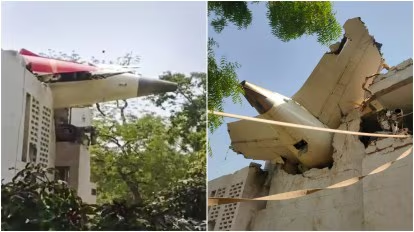
    Flightradar24 and air traffic control reported a “Mayday” distress signal from the aircraft seconds before it vanished from radar. Eyewitnesses saw the plane struggling to climb, falling from 625–825 feet and erupting into flames upon impact. Black smoke billowed from the crash site near a doctors’ hostel in Meghaninagar, where debris, including the plane’s tail, remains embedded in a building. The tragedy has left the community reeling.

    Emergency Response Overwhelmed

    More than 400 Central Industrial Security Force (CISF) personnel, firefighters, and medical teams are responding at the scene, extinguishing fires and searching for survivors. Local hospitals are swamped, with reports of “chaos” as they treat critically injured victims. Over 100 bodies have been recovered, including medical students killed when the plane hit their hostel. Rescue efforts continue amid challenging conditions.

    Air India Boeing 787 Crashes After Takeoff in Ahmedabad
    Air India Crash Today

    Boeing’s Safety Record Under Scrutiny

    This is the first fatal crash of a Boeing 787 Dreamliner, a model with nearly 5 million flights since 2011. The incident has sparked renewed concerns about Boeing’s safety standards, with shares dropping over 7% in pre-market trading, erasing $10 billion in market value. A 2024 whistleblower report citing production issues, including faulty electrical inspections on the 787, has fueled speculation about potential mechanical failures.

    Air India Crash : Investigation Launched

    India’s Aircraft Accident Investigation Bureau (AAIB) and Directorate General of Civil Aviation (DGCA) are leading the investigation, with Boeing likely to provide technical support. Early theories include loss of thrust, lift problems, or a bird strike, but no cause has been confirmed. Investigators will analyze flight data recorders and the aircraft’s maintenance history to determine the factors behind the crash.

    Air India Boeing 787 Crashes After Takeoff in Ahmedabad
    Air India Crash Today

    Leaders Express Grief

    Prime Minister Narendra Modi shared his condolences, saying, “The tragedy in Ahmedabad has stunned and saddened us.” UK Prime Minister Keir Starmer described the scenes as “devastating,” and Buckingham Palace confirmed King Charles III is being briefed. Air India has set up a passenger hotline (1800 5691 444) and an emergency helpline (9974111327) for affected families.

    Also Read This: Meta AI in Defence : How Meta is Revolutionizing Military Tech with AR & AI

    Airport Operations Halted

    Sardar Vallabhbhai Patel International Airport has suspended all operations following the crash. Passengers are urged to contact their airlines for updates. As one of India’s deadliest aviation disasters in recent years, this tragedy has left the nation in mourning while questions about aviation safety loom large.

  • Colonel Sofiya Qureshi : Trailblazing Indian Army Officer, Peacekeeper, and Hero of Operation Sindoor

    Colonel Sofiya Qureshi : Trailblazing Indian Army Officer, Peacekeeper, and Hero of Operation Sindoor

    Born in 1974 in Vadodara, Gujarat, Colonel Sofiya Qureshi grew up in a family steeped in military tradition. Her grandfather and father, Taj Mohammad, served in the Indian Army, instilling in her a sense of duty and patriotism. Raised with secular values, Sofiya traces her lineage to a great-grandmother who fought alongside Rani Laxmibai in the 1857 revolt. She and her twin sister, Shyna Sunsara, were educated at Kendriya Vidyalaya, EME, in Vadodara. Sofiya excelled academically, earning a B.Sc. in Chemistry and an M.Sc. in Biochemistry from Maharaja Sayajirao University (MSU), Baroda. She briefly worked as an assistant lecturer at MSU and was enrolled in a Ph.D. program before choosing a military career, inspired by her grandmother’s stories of valor.

    Military Career (1999–Present)

    Colonel Sofiya Qureshi joined the Indian Army in 1999 through the Officers Training Academy (OTA) in Chennai, commissioned into the Corps of Signals. Her career spans over two decades, marked by pioneering leadership, operational excellence, and contributions to peacekeeping.

    • Early Service and Operations: As a young officer, Sofiya earned commendations for her role in counter-insurgency operations on the Punjab border during Operation Parakram (2001–2002), a tense military standoff following the Parliament attack. She also provided critical communication support during flood relief operations in Northeast India, showcasing her versatility.
    • UN Peacekeeping Mission (2006): Sofiya served as a military observer in the United Nations Peacekeeping Mission in the Democratic Republic of Congo. Over her six-plus years in peacekeeping roles, she contributed to ceasefire monitoring, humanitarian aid, and protecting vulnerable populations, particularly women and children. A notable act was reuniting a missing Congolese child with her family, earning local admiration.
    • Historic Leadership (2016): In 2016, as a Lieutenant Colonel, Sofiya made history as the first Indian woman officer to lead a 40-member Indian Army contingent at Exercise Force 18, a multinational military exercise in Pune involving ASEAN Plus countries. As the only female contingent commander among 18 nations, she earned praise from then-Lt. Gen. Bipin Rawat for her strategic acumen and leadership.
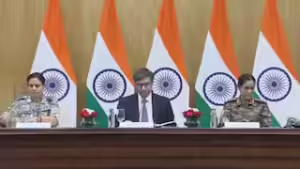
    • Operation Sindoor (2025): Promoted to Colonel, Sofiya gained national prominence for leading the media briefing alongside Wing Commander Vyomika Singh and Foreign Secretary Vikram Misri after India’s precision strikes on nine terrorist hideouts in Pakistan and Pakistan-occupied Kashmir. The operation, a response to the April 22, 2025, Pahalgam terror attack, was a success, and Sofiya’s articulate briefing emphasized justice for victims and countered Pakistani misinformation.
    Colonel Sofiya Qureshi
    Colonel Sofiya Qureshi

    Colonel Sofiya Qureshi : Personal Life

    Colonel Sofiya Qureshi is married to Colonel Tajuddin Bagewadi, an officer in the Mechanised Infantry from Konnur village, Belagavi, Karnataka. The couple met while serving in Jhansi and married in 2015. They have a son, Sameer, who is preparing to join the Air Force. Her twin sister, Shyna Sunsara, is a model and film producer in Mumbai. Sofiya’s family emphasizes unity and service, with her father stating, “We are first Indians and then Hindus or Muslims.” Despite her public profile, Sofiya maintains privacy, and fake social media accounts claiming to be hers have been debunked.

    Colonel Sofiya Qureshi
    Colonel Sofiya Qureshi

    Legacy and Public Perception

    Colonel Sofiya Qureshi is celebrated as a trailblazer for women in the Indian armed forces, embodying gender equality in high-stakes roles. Her leadership in Operation Sindoor and Exercise Force 18 has made her a household name, particularly in Vadodara and Belagavi, where she is honored as a local hero. However, some critiques highlight the use of her image to bolster nationalist narratives, occasionally overshadowing broader conflict-related issues. Her calm, authoritative presence and dedication to service continue to inspire, cementing her as a symbol of resilience and empowerment.

    Also Read This: Meet Flight Lieutenant Shivangi Singh : India’s Trailblazing Rafale Pilot

  • India-Pakistan Tensions Escalate Under Operation Sindoor

    India-Pakistan Tensions Escalate Under Operation Sindoor

    Operation Sindoor : On April 22, 2025, a horrific terror attack in Pahalgam, Jammu and Kashmir, claimed the lives of 26 civilians, igniting a fresh wave of conflict between India and Pakistan. The attack, attributed to Pakistan-based terror group Jaish-e-Mohammad, prompted India to launch Operation Sindoor, a series of precision airstrikes targeting terror infrastructure across the border. This blog explores the unfolding crisis, its implications, and the delicate balance of power in the region.


    View this post on Instagram

     

    A post shared by AVSPOST (@avspost)

    `

    Operation Sindoor: India’s Decisive Response

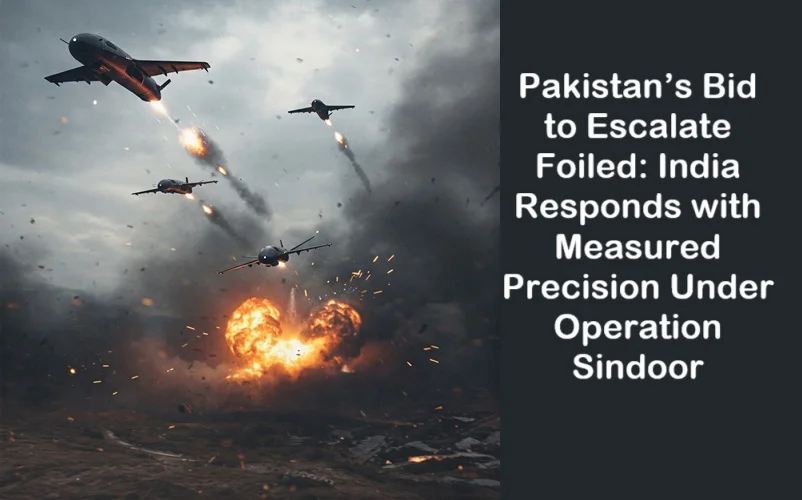
    India’s military response was swift and calculated. Airstrikes hit nine terror launchpads in Pakistan and Pakistan-occupied Kashmir (PoK), neutralizing key Jaish-e-Mohammad operatives, including Abdul Rauf Azhar, a notorious figure linked to the IC-814 hijacking and the 2019 Pulwama attack. The Indian Air Force, leveraging advanced intelligence, ensured minimal collateral damage while crippling terror networks. The operation underscored India’s zero-tolerance policy toward cross-border terrorism, with the government emphasizing its right to self-defense.

    Pakistan’s Retaliation and India’s Defense

    Pakistan retaliated aggressively, launching missiles and drones targeting military installations in 15 Indian cities across Jammu, Punjab, Gujarat, and Rajasthan. However, India’s state-of-the-art S-400 air defense system proved formidable, intercepting missiles and downing drones with precision. A significant blow came when Indian forces shot down a Pakistani F-16 jet near Sargodha and disabled Pakistan’s air defense radar in Lahore. These actions highlighted India’s technological and strategic superiority, though the human cost of the conflict remains a grim reality.

    India-Pakistan Tensions : operation sindoor
    India-Pakistan Tensions : operation sindoor

    The Human and Strategic Toll

    The escalation has not been without loss. At least 16 civilians, including women and children, and one Indian soldier have been killed in the crossfire. Blackouts have been enforced in border states, and 24 airports in northern India are closed, disrupting over 400 flights. The Indian government has banned live media coverage of military operations to curb panic and misinformation, while security measures have been tightened nationwide. On the Pakistani side, unverified reports suggest heavy casualties, adding to the regional instability.

    A Call for De-escalation

    The international community has responded with urgency. U.S. Secretary of State Marco Rubio has engaged both nations, urging restraint and dialogue. Former U.S. President Donald Trump described the conflict as a “tit-for-tat” cycle, expressing hope for resolution. Domestically, voices like PDP leader Mehbooba Mufti have called for diplomacy over military action, emphasizing the suffering in Jammu and Kashmir. The situation remains volatile, with the Indian Air Force on high alert and Pakistan signaling readiness for further retaliation.

    Also Read This: India-Pakistan conflict 

    Looking Ahead

    As tensions simmer, the India-Pakistan conflict under Operation Sindoor serves as a stark reminder of the fragile peace in South Asia. While India’s military prowess has sent a strong message, the path to lasting stability lies in addressing the root causes of terrorism and fostering diplomatic engagement. For now, the region holds its breath, hoping cooler heads prevail in this high-stakes standoff.

  • Blue Origin: what is it, its latest project (NS-31 mission) details, and more.

    Blue Origin: what is it, its latest project (NS-31 mission) details, and more.

    Blue Origin: Blue Origin is an American private aerospace company founded in September 2000, in Kent, Washington, USA by Jeff Bezos, the founder of Amazon. Its mission is to make space travel more accessible and sustainable with the long-term goal of enabling millions of people to live and work in space. It is one of the leading companies in the new space race, along with SpaceX and Virgin Galactic. It is helping push the boundaries of what’s possible in commercial spaceflight, space tourism, and future space colonization.

    Blue Origin
    Blue Origin

    What is the slogan of this company?

    The slogan of Blue Origin is “Gradatim Ferociter,” which is Latin for “Step by Step, Ferociously.” It reflects the company’s philosophy of making steady, determined and progress toward space exploration.

    What is the slogan of this company?
    What is the slogan of this company?

    Details on its latest project?

    On April 14, 2025, Blue Origin launched its NS-31 mission, marking a historic milestone with the first all-female crew since 1963. The flight used the reusable New Shepard suborbital rocket, which took the crew beyond the Kármán line—62 miles (100 km) above Earth, the internationally recognized boundary of space. During the 11-minute journey, the crew experienced weightlessness and breathtaking views of Earth. This was the 31st New Shepard flight and the 11th with a human crew. Designed for space tourism, New Shepard offers short trips to space, with refundable deposits around $150,000; auctioned seats have sold for millions. Blue Origin also invites special guests on board.

    Blue Origin launched its NS-31 mission, marking a historic milestone with the first all-female crew
    Blue Origin launched its NS-31 mission, marking a historic milestone with the first all-female crew

    In January 2025, Blue Origin also successfully launched its New Glenn rocket—a massive, reusable rocket standing 320 feet tall and capable of carrying up to 45 metric tons to low Earth orbit. Aimed to fly at least 25 times per booster, it positions Blue Origin as a strong competitor to SpaceX’s Falcon 9. New Glenn will also support Amazon’s Project Kuiper, which aims to provide global internet service, competing with SpaceX’s Starlink. These developments highlight Blue Origin’s dual focus on space tourism and orbital missions.

    Who all are involved in this project?

    This mission marked the 11th crewed flight for Blue Origin’s New Shepard program, which focused on space tourism. It was a historic mission as it featured an all-female crew after 1963. It consists of six members such as Aisha Bowe, Amanda Nguyễn, Gayle King, Katy Perry, Kerianne Flynn, and Lauren Sánchez.

    Who all are involved in this project?
    Who all are involved in this project?

    How did Katy Perry respond to this project?

    Katy Perry is one of the six crew members of the blue origins NS-31 mission. She has always been interested in topics like astronomy stars and space. Which made her very excited for this project. She has said that this mission could be an important movement for future commercial space travel. She has got courage and fearlessness to do this mission for the girls who are watching her and especially for her daughter.

    How did Katy Perry respond to this project?
    How did Katy Perry respond to this project?

    How long is this project?

    The duration NS-31 flight was around 10-11 minutes. Whereas this project has been in development and operation for a very long period of time. The first test flight of a New Shepard vehicle was on April 29, 2015, the first crewed flight (NS-16) took place on July 20, 2021, and on April 15, 2025, the New Shepard program is ongoing, with NS-31 being the latest crewed mission (the 11th crewed flight and the 31st overall flight for the program.

    How long is this project?
    How long is this project?

    What is the impact and future of Blue Origin and this project?

    The NS-31 mission was particularly symbolic and impactful due to its all-female crew, marking a significant moment for inclusivity in spaceflight and celebrating the contributions of women from various fields. The future of Blue Origin and the New Shepard project appears promising with expectations of increased flight frequency as the company aims to make space tourism more regular and accessible. It cost remains a key challenge.

    What is the impact and future of Blue Origin and this project?
    What is the impact and future of Blue Origin and this project?

    A major priority will be reducing suborbital flight costs through economies of scale, technological advancements, and operational efficiencies. The future missions may also feature more diverse participants, including citizen scientists, educators, and artists. Additionally, lessons and technologies developed through the New Shepard program are expected to contribute to other Blue Origin initiatives, such as the New Glenn orbital rocket and the Blue Moon lunar lander.

    Whereas, the suborbital space tourism market grows more competitive with rivals like Virgin Galactic, this rivalry may drive further innovation in passenger experience, safety, and comfort. The New Shepard focuses on short-duration suborbital flights, it serves as a foundational step in Blue Origin’s broader vision of building a sustainable “road to space,” enabling greater use of space resources and supporting more people living and working in space in the future.

    Also Read This: Amarnath Yatra 2025: Details on the Amarnath yatra, significance, guidelines, and registration process.

  • Amarnath Yatra 2025: Details on the Amarnath yatra, significance, guidelines, and registration process.

    Amarnath Yatra 2025: Details on the Amarnath yatra, significance, guidelines, and registration process.

    Amarnath Yatra 2025: The Amarnath Yatra is a famous annual pilgrimage in India undertaken by Hindu devotees to the Amarnath Cave Temple in the union territory of Jammu and Kashmir. It’s one of the holiest shrines in Hinduism, dedicated to Lord Shiva.

    Amarnath Yatra 2025
    Amarnath Yatra 2025

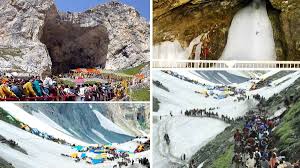
    The Amarnath Cave is located at an altitude of about 3,888 meters (12,756 ft) in the Himalayas. It’s known for the naturally occurring ice Shiva Lingam, which is considered a manifestation of Lord Shiva. The pilgrimage takes place annually during the Shravan month (July–August), lasting about 45 days. The specific dates vary each year based on the Hindu calendar. There are two main routes for this yatra:  Pahalgam Route (traditional and longer) and Baltal Route (shorter but steeper).

    What is the history and significance of this yatra?

    The history and significance of this yatra are:

    The cave is believed to be discovered by a shepherd named Buta Malik in the 15th century. According to legend, a saint gave him a bag of coal, which turned into gold when he returned home. When he went back to thank the saint, he found the Amarnath Cave instead. The references of the cave and yatra are also found in ancient texts, which is indicating that it was a place of worship for centuries.

    It is believed that Lord Shiva chose this secluded cave to reveal the secret of immortality (Amar Katha) to Goddess Parvati. To ensure secrecy, he left behind all companions and symbols – Nandi (his bull), the moon, the snake, Ganga, and even his son, Lord Ganesh and created the cave for privacy.

    The history and significance of this yatra
    The history and significance of this yatra

    Apart from this the Ice Shiva Lingam, The naturally formed ice stalagmite in the cave resembles a Shiva Lingam and waxes and wanes with the phases of the moon, which is seen as a divine miracle. It is a Symbol of Devotion and Endurance, Pilgrims undertake a difficult trek through mountains, braving cold, altitude, and terrain, as an act of faith, devotion, and penance.

    There is a Communal Harmony, as local Muslim communities in the region, especially the Malik family, have helped manage and support the yatra, which is showing a long-standing tradition of interfaith cooperation.

    When will this yatra begin and till what time?

    The Yatra is scheduled to start from July 3, 2025 and it will remain open till August 9, 2025. This Yatra will remain open for 38 days this year. Whereas, the registration process will start for April 14, 2025.

    When will this yatra begin and till what time?
    When will this yatra begin and till what time?

    What are the rules and guidelines to attend Amarnath Yatra 2025?

    Some rules and guidelines to attend Amarnath Yatra 2025 are:

    • You must register through the official Shri Amarnath Shrine Board (SASB) website or designated bank branches. To receive a Yatra Permit only after successful registration.
    • You must have a Compulsory Health Certificate (CHC) from an authorized doctor/hospital. Specially for people from the aged 13 to 70 years. Apart from this Pregnant women beyond 6 weeks are not permitted.
    • Physical Fitness is very important, Start preparing at least a month before. You should be able to walk 4-5 km daily in hilly areas.
    • You must Carry the Right Essentials like Warm clothes, waterproof jacket, gloves, sturdy shoes, Torch, water bottle, dry fruits/snacks, and basic medicines. Apart from this No plastic items allowed, as they are banned to protect the environment.

      Some rules and guidelines to attend Amarnath Yatra 2025
      Some rules and guidelines to attend Amarnath Yatra 2025
    • You must follow the Official Route, Use only the two approved routes Pahalgam or Baltal and Stay only at authorized camps and shelters.
    • You must Maintain Cleanliness and Discipline, by keeping the environment clean
    • You should also Avoid alcohol, smoking, and non-vegetarian food while travelling.
    • You should respect the local customs and fellow pilgrims.

    How can we register for this Amarnath Yatra 2025?

    For Online Registration:

    • First Go to the official website: Shri Amarnath Shrine Board (SASB).
    • Then Click on “Yatra 2025 Registration” (or the latest year’s link).
    • Then Fill in the Online Registration Form with your Personal details (Name, Age, ID proof, etc.)
    • Then select the route preference (Pahalgam or Baltal)
    • Then select the Travel date and Upload your Compulsory Health Certificate issued by an approved doctor.
    • Then Pay the registration fee (usually ₹150–₹200 per person).
    • Download and print your Yatra Permit Slip.

      How can we register for this Amarnath Yatra 2025
      How can we register for this Amarnath Yatra 2025

    For Offline Registration:

    • You can also register at selected branches of: Punjab National Bank (PNB), Jammu & Kashmir Bank and YES Bank.
    • Then filled registration form and submit Original CHC, Government-issued ID proof and Registration fee.
    • The bank will issue a Yatra Permit after verifying your documents.
    • Permits are limited per day and per route, so register early.
    • Keep a copy of your permit and ID with you during the yatra.

    Apart from this you can also book helicopter services through the SASB website after registration.

    Also Read This: Sheikh Hamdan bin Mohammed Al Maktoum: Who is he, his lifestyle, family, work, hobbies and more.

  • Myanmar Earthquake: The details on 7.1 magnitude earthquake in Myanmar.

    Myanmar Earthquake: The details on 7.1 magnitude earthquake in Myanmar.

    Myanmar Earthquake: According to the recent report Myanmar and its surrounding regions like Thailand and Bangkok are affected by the 7.1 magnitude earthquake. There was a lot of destruction and loss of property. Apart from this there were also several dead’s around a thousand people.Details on Myanmar Earthquake.

    Details on how and when the Myanmar Earthquake occurred.

    The earthquake happened on March 28 2025 at morning around 12:50 MMT. It occurred at a 7.7 magnitude on rector scale. The epicenter of the earthquake was in Myanmar and it affected the area of approximately 10 km depth and 6 miles.

    Details on how and when the earthquake occurred.
    Details on how and when the earthquake occurred.

    What are the causes and impact of this earthquake?

    Some of the causes and impact of the earthquake is:

    • Around 1600 people were injured or dead.
    • There was widespread destruction of building properties and infrastructures.
    • There was also the destruction of bridges, roads and many buildings.
    • Several people were displaced in the requirement of emergency Shelters.

      What are the causes and impact of this earthquake?
      What are the causes and impact of this earthquake?
    • There is a shortage of medical supplies in AIDS.
    • There is also a problem in rescuing people.
    • The earthquake also has affected neighboring countries like Thailand I am Bangkok.
    • The region is experiencing shock and other stabilized damages.

    Was Myanmar prepared for this earthquake.

    No, the country was not prepared for the earthquake as many urban areas were not designed in a way which was not prepared for the seismic activities and more. Apart from which there was infrastructure vulnerability, limited preparedness, political factors and more which led to large destruction.

    Was Myanmar prepared for this earthquake.
    Was Myanmar prepared for this earthquake.

    The government response on Myanmar Earthquake.

    After the earthquake the Myanmar government declared: a national emergency, military involvement, internal assistance, relief or Aid program. Apart from this the Indian government has also launched the operation of “Brahma” to provide humanitarian assistance like medicine, forces and supplies for the country. Many other countries like China and Russia have also taken steps to provide it to the country. The United Nations required supplies and aids to the country.The government response on Myanmar Earthquake.

    Can there be any future distraction.

    Yes, Myanmar is still at risk of destruction in the future like aftershocks, weekend infrastructure, geological instability, landslides humanitarian prices and more problems and ricks.

    Can there be any future distraction.
    Can there be any future distraction.

    Also Read This: Kiara Advani: Details on her childhood, family, relationship, career and achievements.