Category: State

  • Whispers of the Wind: Unveiling the Enchanting Hawa Mahal in Jaipur

    Whispers of the Wind: Unveiling the Enchanting Hawa Mahal in Jaipur

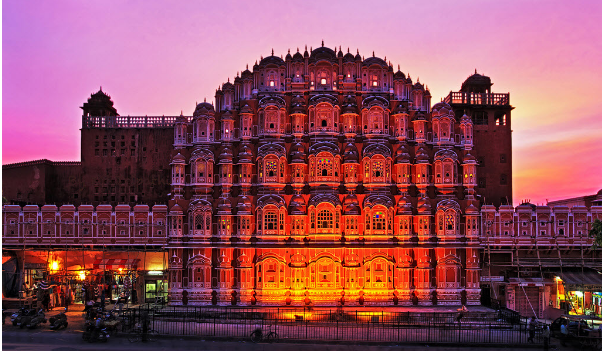
    Hawa Mahal : Imagine standing in the heart of a bustling pink city, gazing up at a honeycomb of delicate windows that seem to dance with the desert breeze. That’s Hawa Mahal for you—a five-story facade that’s less a palace and more a poetic veil between the royal past and the vibrant present. Nestled in the chaotic charm of Jaipur, Rajasthan’s “Pink City,” this architectural gem has whispered secrets of intrigue, tradition, and ingenuity for over two centuries. If you’re a history buff, an architecture aficionado, or just someone who loves a good story wrapped in sandstone, join me as we step through its lattice screens and into a world frozen in time.

    The Royal Veil: A Peek into Hawa Mahal’s Storied Past

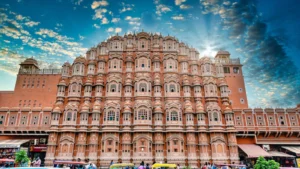
    Built in 1799 by Maharaja Sawai Pratap Singh, the grandson of Jaipur’s visionary founder Maharaja Jai Singh II, Hawa Mahal wasn’t designed for grand banquets or opulent thrones. No, this was a sanctuary for the women of the royal zenana—the secluded quarters where queens, princesses, and attendants lived under the purdah system. From behind its 953 intricately carved jharokhas (overhanging enclosed balconies), they could catch glimpses of the world outside: colorful street processions, lively festivals, and the everyday rhythm of the city below. It was a clever compromise between isolation and curiosity, allowing the royals to stay hidden while staying connected.
    Hawa Mahal
    Hawa Mahal

    The palace’s name, meaning “Palace of Winds,” is no poetic flourish. Jaipur’s scorching summers demanded innovation, and Hawa Mahal delivered. Cool breezes funneled through those tiny windows like nature’s own air conditioning, turning the structure into a living testament to the Kachwaha dynasty’s blend of Rajput valor and Mughal finesse. Under the guidance of architect Lal Chand Ustad, it rose as part of the sprawling City Palace complex, yet stands alone like a blushing sentinel on the edge of Badi Chaupar. Over the years, it has witnessed the ebb and flow of empires, from the princely states to independent India, evolving from a private viewpoint into a public icon that draws wanderers from across the globe.

    What strikes me most about its history isn’t just the dates and dynasties—it’s the human element. Picture the rustle of silk saris against stone walls, the muffled laughter of hidden observers, and the faint echo of elephant processions. Hawa Mahal isn’t just stone; it’s a silent storyteller of lives veiled in mystery.

    A Symphony in Sandstone: The Architectural Poetry of Hawa Mahal

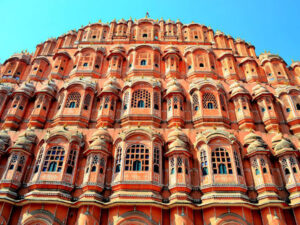
    If Jaipur is a canvas painted in rose-tinted hues, Hawa Mahal is the masterpiece that steals the show. Towering 53 meters high, its facade unfurls like a frozen honeycomb, each level adorned with progressively more windows—fewer at the base, blooming into a frenzy at the top for optimal airflow. Crafted from the region’s signature pink sandstone (locally sourced and quarried to perfection), the structure glows ethereally at dawn and dusk, especially during the monsoon when the air hums with petrichor.

    Step closer, and the details will leave you breathless. Floral motifs of lotuses and peacocks intertwine with geometric Islamic patterns, a harmonious nod to the syncretic influences of Rajput and Mughal eras. Those jharokhas aren’t mere holes; they’re sculpted screens with overhanging cornices that cast playful shadows, turning the wall into a living tapestry. Inside, it’s a different tale—narrow corridors wind upward via steep staircases, revealing sparse chambers that feel more like a high-rise beehive than a lavish lair. There’s no vast Durbar Hall here; the magic is in the restraint, the clever use of space to prioritize ventilation over volume.
    Hawa Mahal
    Hawa Mahal

    Fun fact: The pyramid-like shape isn’t accidental. It mimics Lord Krishna’s crown, a divine touch that infuses the secular with the sacred. In an age before fans or AC units, this design was revolutionary—passive cooling at its finest, a lesson in sustainable living we could all borrow from today. Wandering its innards, I couldn’t help but marvel at how something so visually extravagant serves such a practical purpose. It’s architecture that breathes, literally.

    A Morning with the Winds: Experiencing Hawa Mahal Up Close

    My first encounter with Hawa Mahal was at sunrise, when the city still slumbers under a golden haze. Arriving via a rickety auto-rickshaw through the labyrinthine lanes of the old city, I crossed the road to the iconic viewpoint—a spot where the palace’s full glory unfolds like a postcard come to life. From here, it’s a riot of pink perforations against the sky, perfect for that Instagram-worthy silhouette (though trust me, the real charm is in the details you can’t capture in a single frame).

    Entry is straightforward and affordable, with tickets that let you roam freely from 9 AM to 4:30 PM most days. Opt for an early visit to beat the heat and the hordes—by noon, the place buzzes with school groups and selfie sticks. Inside, a small museum on the ground floor houses artifacts like antique jewelry and faded photographs, offering a tangible link to the zenana’s whispers. Climb those stairs (wear comfy shoes; they’re no joke), and emerge onto balconies where the wind truly comes alive, tousling your hair as you peer down at the bazaar’s awakening chaos.

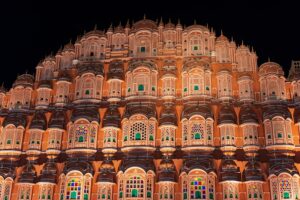
    Pro tip: Bring a hat and water—Rajasthan’s sun doesn’t discriminate. And if you’re there in the cooler months (October to March, ideally), linger for the subtle play of light through the lattices; it’s like watching a kaleidoscope shift in slow motion. Evenings bring a quieter vibe, with the palace bathed in the warm glow of street lamps, hinting at the festivals that light it up during Diwali or Teej.

    Echoes Beyond the Walls: Jaipur’s Treasures Just a Stone’s Throw Away

    Hawa Mahal doesn’t exist in isolation; it’s the gateway to Jaipur’s soul. Mere steps away lies the majestic City Palace, where royal courtyards and museums spill secrets of the maharajas’ opulent lives. Venture a short stroll to Jantar Mantar, the UNESCO-listed observatory whose massive sundials and star charts feel like stepping into a cosmic playground designed by an 18th-century genius.
    Hawa Mahal
    Hawa Mahal

    For a dose of local flavor, lose yourself in Chandpole Bazaar, where vendors hawk everything from block-printed textiles to silver jhumkas that jingle like temple bells. It’s here that Jaipur’s sensory overload hits: the spice-scented air, the haggling symphony, the flash of turquoise and crimson saris. Pair your Hawa Mahal jaunt with a thali at a nearby dhaba—think dal baati churma that warms you from the inside out—and you’ve got the makings of an unforgettable day.

    Final Breeze: Why Hawa Mahal Still Captivates

    In a world racing toward glass skyscrapers and smart cities, Hawa Mahal stands as a gentle reminder of beauty born from necessity. It’s not just a monument; it’s a bridge to a time when architecture whispered rather than shouted, when winds carried stories across veiled divides. Whether you’re tracing the footsteps of forgotten queens or simply seeking a cool respite from the desert heat, this palace invites you to pause, peer, and ponder.

    Also Read This : WhatsApp vs Arattai : The Ultimate Messaging App Showdown for India in 2025

    Jaipur’s Pink City pulses with such wonders, but Hawa Mahal ? It’s the heartbeat. If life’s veils ever feel too thick, head to the Palace of Winds—let it remind you that sometimes, the best views come from looking out, unseen.
  • MIZORAM MEMORANDUM: ASSAM RIFLES, SINGING OF MEMORANDUN(MoA), RELOCATION OF HEADQUARTAR FROM AIZAWAL TO ZOKHAWSANG, SHIFTING AND VACATING OF AREAS.

    MIZORAM MEMORANDUM: ASSAM RIFLES, SINGING OF MEMORANDUN(MoA), RELOCATION OF HEADQUARTAR FROM AIZAWAL TO ZOKHAWSANG, SHIFTING AND VACATING OF AREAS.

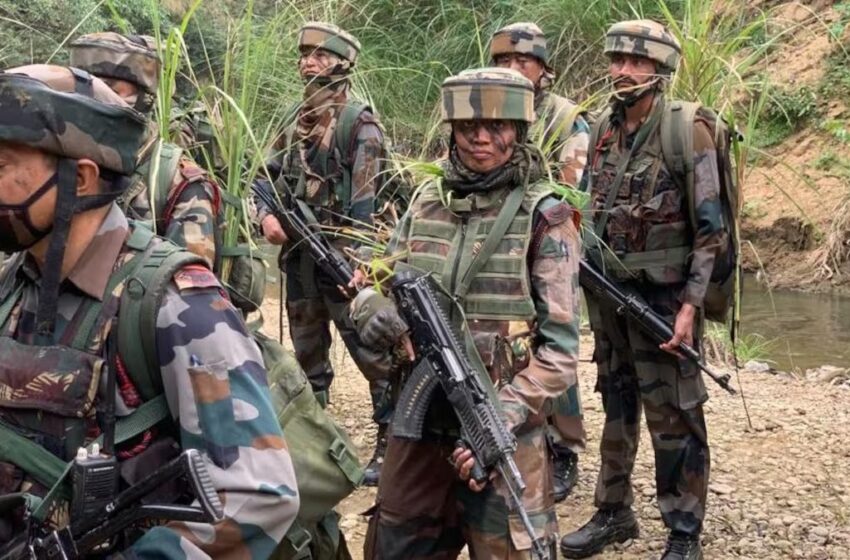
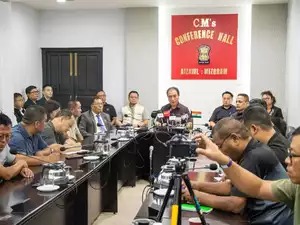
    Mizoram Memorandum: The government of Mizoram and assam singed a memorandum on 26 October 2024 in Mizoram house, New Delhi for relocation of assam riffles from Aizawl to Zokhawsang. During the singing of memorandum CM of Mizoram Lalduhoma was also presented in the house. This memorandum(MoA) was signed by valaldina fanai (commissioner and secretary to the government of Mizoram) and Lieutenant General Vikas Lakhera. The Mizoram government will take over the land by April 2025 as per the memorandum.

    What does the memorandum contain?

    It contains Assam rifles agreement of land handovers; HQ areas return by Assam and Mizoram land gaining reports are some things which are included in the Mizoram memorandum(MoA).

    MIZORAM MEMORANDUM
    MIZORAM MEMORANDUM

    Shifting of Assam Rifles from Mizoram land by April 2025.

    After several discussion the following areas where finalized this includes, the Places that will come under Assam after the implementation of the memorandum will be HQ 23 sector (95.88 acres), Chitte river and Dhobi nallah (62.8 acres), Assam rifles church (0.63 acres), Babutlang , and zarkawt (0.453 acres). whereas Mizoram will take over the land such as Lammual, Battalion, Quarter, war memorial and mandir area. In the process Mizoram government will also pay depreciated cost to assam rifles by April 2025 and all places will be handed over by assam in the following process.

    MIZORAM MEMORANDUM Assam rifles
    MIZORAM MEMORANDUM Assam rifles

    Chief Minister of Mizoram on the memorandum and the process of shifting.

    The Memorandum of Agreement (MoA) is singed in my presences and the process of the memorandum is start from April 2025.In this the Assam Rifles will soon vacant the area and are headquarter of Mizoram will move from Aizawl to Zokhawsang. Whereas, the relocation is not possible immediately as some complex at zokhawsang is yet to discuss and complete.

    He also said that the land and building vacated by the Assam rifles will be reserved for the public use as per the Restriction of use of Transferred Land Act 2022.

    Also Read This: India and China Trade relation, LAC agreement, and border sharing issue.

    MIZORAM MEMORANDUM
    MIZORAM MEMORANDUM

    What happened before the memorandum was singed?

    The Union Home Ministry had directed the paramilitary force to shift to the Zokhawsang bases by May 31 on February 2019, but due to delay in the process assam rifles alleged certain infrastructure and facilities. on the other hand, zokhawsang complex was also inaugurated by Amit Shah on April last year.

    Report By:- Enakshi Dasgupta

  • UP & India well-equipped to compete with global leaders in readymade garment industry: CM Yogi Adityanath

    UP & India well-equipped to compete with global leaders in readymade garment industry: CM Yogi Adityanath

    CM Yogi Adityanath: Inaugurates Silk Expo; honours 16 farmers, entrepreneurs, institutions, and designers with the prestigious Pandit Deendayal Upadhyaya Resham Ratna Award.

    UP the first state in the country to come up with a policy for traditional products, says CM

    Lucknow, October 22

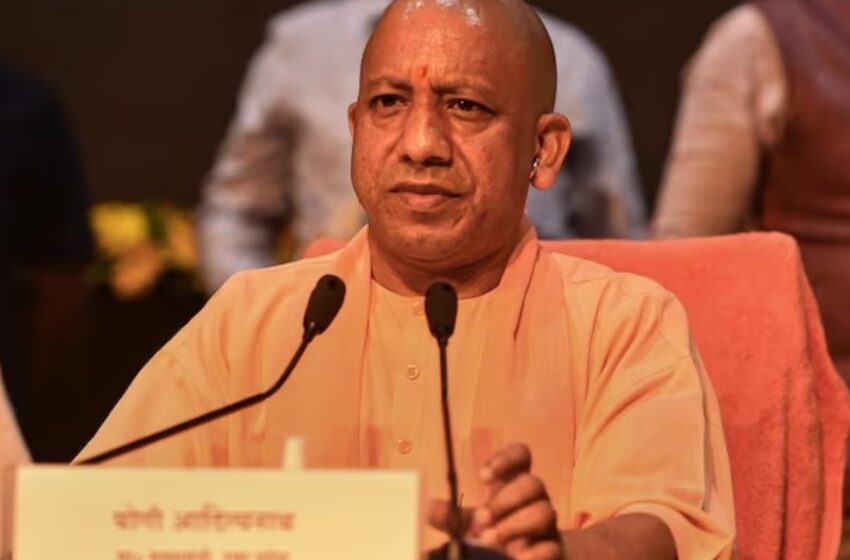
    CM Yogi Adityanath, on Tuesday, said that Uttar Pradesh and India at large, have both the potential and resources to compete with the major global players in readymade garments.

    CM Yogi Adityanath also releases the latest edition of ‘Resham Mitra’ magazine; expo to conclude on October 28

    Inaugurating the Silk Expo at the Indira Gandhi Pratishthan, which runs from October 22 to 28, the Chief Minister said, “Small nations worldwide have established a strong presence in the readymade garment industry, even with limited resources and opportunities. We, on the other hand, have both the potential and resources.”

    He added: “If a significant portion of the workforce, especially women, is engaged in silk production, processing, readymade garments, designing, marketing, and packaging, Uttar Pradesh and India can emerge as global leaders in the garment industry.”

    He urged stakeholders to leverage the initiatives taken by the state government to realize this vision.

    The CM Yogi Adityanath  highlighted a remarkable achievement in silk production, which has increased 84-fold under the current administration. “A day will come when Uttar Pradesh will be recognized among the top states in the country for silk production,” he added.

    CM Yogi Adityanath Resham Mitra' magazine;
    CM Yogi Adityanath Resham Mitra’ magazine;

    Farmers and entrepreneurs had to suffer due to the misdeeds of previous governments: CM Yogi Adityanath

    He also released the ‘Resham Mitra’ magazine and honored 16 farmers, entrepreneurs, institutions, and designers with the Pt. Deendayal Upadhyaya Resham Ratna Samman. Following the ceremony, he toured the exhibition.

    CM Yogi Adityanath highlighted that since the BJP government came to power in 2017, Uttar Pradesh has taken significant steps to promote traditional products. The state became the first in India to implement a dedicated policy for traditional crafts, identifying a unique product for each of its 75 districts under the “One District, One Product” (ODOP) initiative.

    By linking ODOP with market access, design, and packaging, the initiative has not only created employment, but also boosted the export of traditional goods. Today, all 75 districts have distinct GI-tagged products recognized across the country, he pointed out.

    The Chief Minister emphasized the potential for further growth, particularly through the famous sarees of Varanasi, Bhadohi, and Mubarakpur. He encouraged efforts to make the Silk Expo a platform for advancing Uttar Pradesh’s prospects in this sector.

    Referring to the age-old slogan of “roti, kapda aur makaan” (food, clothing, and shelter), CM Yogi stressed that while air and water are essential for life, the need for food, clothing, and shelter is equally fundamental.

    He noted that clothing not only meets a basic need but also serves as a vital means to boost farmers’ income and generate employment. Uttar Pradesh, with its population of 25 crores, has a vast potential in silk production, and while progress has been made in recent years, much more remains to be achieved to match the state’s immense possibilities.

    Chief Minister Yogi Adityanath urged people to explore the vast potential for development within Uttar Pradesh. He pointed out that places like Varanasi, Bhadohi, and Azamgarh, known for their silk sarees such as those from Mubarakpur, hold significant promise.

    “The central and state governments are making concerted efforts to develop silk clusters in these regions. Varanasi silk sarees, a popular choice for auspicious occasions nationwide, have seen increased demand following the expansion of Kashi Vishwanath Dham, which has attracted more devotees and tourists. The establishment of a Trade Facilitation Center at the Varanasi Expo Mart has further boosted this traditional industry”, CM Yogi asserted.

    He highlighted the progress of entrepreneurs associated with the saree industry in Mubarakpur and the silk clusters in Mirzapur, Varanasi, and Bhadohi, indicating that the sector has considerable growth potential.

    The upcoming PM Mitra Park, a large textile hub on the Lucknow-Hardoi border, will cover 1,000 acres and host various textile-related industries, showcasing Uttar Pradesh’s potential in this field, he noted.

    However, the Chief Minister emphasized the need for local raw material production to support these initiatives. He encouraged farmers to participate, noting that the central government offers several schemes for their benefit.

    Furthermore, he called on the relevant departments to organize symposiums, seminars, and outreach programs in every district to inform progressive farmers about these schemes and connect them with training and processing programs.

    This initiative aims to enhance opportunities, not just in the Gorakhpur division but also in Varanasi, Mirzapur, Lucknow, Devipatan, Basti, and Azamgarh.

    CM Yogi Adityanath: Resham Mitra
    CM Yogi Adityanath: Resham Mitra

    CM Yogi Adityanath highlighted that Uttar Pradesh, with its nine climatic zones, offers a unique opportunity to develop and promote diverse agricultural products across different regions. The state has immense potential, especially in areas like Varanasi and Azamgarh, which have been hubs for the silk industry since ancient times.

    He emphasized the importance of locally linking silk production and processing with the textile industry to ensure affordable raw materials, which would naturally lower costs and make products more accessible to meet market demand. The government, he assured, will support training initiatives, and assist in raw material procurement, processing, marketing, and design.

    The CM Yogi Adityanath pointed out that farmers and entrepreneurs in Uttar Pradesh have long been connected to traditional crafts, but faced setbacks due to the neglect of previous governments, which failed to provide proper incentives, design support, and packaging for their products. This challenge extended beyond silk to all traditional industries.

    Today, the state showcases a variety of unique products: Bhadohi’s carpets, Gorakhpur’s terracotta, Varanasi’s numerous GI-tagged items, leather goods from Agra and Kanpur, Moradabad’s brassware, Firozabad’s glass, and sports equipment from Meerut.

    These products represent Uttar Pradesh’s rich heritage and provide a platform for youth and entrepreneurs to advance through traditional industries, he pointed out.

    The Chief Minister called for a rapid expansion of silk clusters in regions with the potential, urging the relevant departments to collaborate with farmers who could act as “silk friends,” helping to realize this potential and position Uttar Pradesh as a strong competitor among other states.

    He stressed the importance of timely incentives to better showcase the state’s capabilities to the world. The upcoming PM Mitra Textiles Park in Lucknow is poised to play a key role in furthering these opportunities.

    CM Yogi Adityanath emphasized that silk garments are rooted in indigenous technology, and there is a need to continuously upgrade and adapt this technology. He pointed out the evolution from the traditional hand-operated spinning wheel for khadi, to electric-powered versions, which increased efficiency five to ten times with the rise in electricity use. To further reduce energy costs, solar-powered spinning wheels have now been introduced.

    Similarly, silk production must integrate modern processing techniques and align with updated spinning programs, the CM emphasized. He highlighted that alongside daily activities, these initiatives can promote women’s self-reliance at the local level. Such efforts are progressing in line with Prime Minister Modi’s vision for women’s empowerment under the Mission Shakti initiative.

    On this occasion, MSME Minister Rakesh Sachan, Chief Secretary Manoj Kumar Singh, Agriculture Production Commissioner Monica S. Garg, Member Secretary Central Silk Board New Delhi P. Shivkumar, Additional Chief Secretary (Silk) BL Meena, Director (Silk) Sunil Kumar Verma etc. were present.

    Also Read This: Chief Minister Yogi Adityanath: Derogatory remarks against deities, great men, or saints of any caste, or faith are unacceptable, but anarchy in the name of protest will also not be tolerated.

    Honor given by CM Yogi Adityanath

    The Chief Minister awarded the Pandit Deendayal Upadhyaya Silk Ratna Award to 16 farmers, entrepreneurs, institutions, and designers. They were honored with the first prize of Rs 50,000 and the second prize of Rs 25,000, along with a memento, and a citation.

    1- Cocoon Production Award: Jagram (Bahraich) got the first prize, whereas Mala Devi from Kushinagar got the second.

    2- Lifetime Achievement Award: Dr. NV Chaudhary, Director, Central Tasar Research and Training Institute, Central Silk Board, Ranchi (Jharkhand) got the first prize, while Haseen Ahmed Ansari M/s Qasim Silk Emporium Varanasi got the second prize.

    3- The first prize in the best-designed silk-made garment was given to Angika Kushwaha of Ramnagar Varanasi and the second to Sarvesh Kumar Srivastava (Varanasi). Ranjana Srivastava received the award on Sarvesh’s behalf.

    4- Best designing in other silk-made products: Mukhtar Ahmed (Bhadohi) got the first prize and Iftikhar Ahmed (Azamgarh) got the second.

    5- Innovation in silk finished product textile: First prize was given to Aditi Jaggi Rastogi of Hazratganj, Lucknow, and second to Mrs. Sangeeta Basant, Kanya Mahavidyalaya, Varanasi.

    6- Top Cocoon Seller – First Prize in Yarn Sales – First prize went to Shashi Shukla of Pilibhit and the Second to Rajnath Verma of Sonbhadra.

    7- Top Textile Seller – Silk Finished Product – First Prize was bagged by Viresh Shah (Varanasi), and the Second Prize by Pankaj Shah (Varanasi).

    8- Innovation in Cocoon Production – First prize to went to P. Shivkumar IFS, Member Secretary Central Silk Board and the Second Prize to Dasharathi Behera, Deputy Secretary Technical, Central Silk Board, New Delhi.

  • Yogi govt gears up to hold the most magnificent and unique Deepotsav celebrations to date 

    Yogi govt gears up to hold the most magnificent and unique Deepotsav celebrations to date 

    Yogi govt:-

    Deepotsav 2024

    Yogi govt:- Cultural dept to set up 10 stages at Deepotsav to recreate the ‘Treta Yuga’

    Preparations are in full swing for the first Deepotsav following the consecration of Shri Ram Lalla

    Ayodhya, October 21

    The countdown to Deepotsav 2024 has begun, with preparations in full swing for the grand celebration in Ayodhya. This year marks the eighth edition of Deepotsav, and it’s set to be more spectacular and unique than ever. 

    Yogi govt:- Under the leadership of  Chief Minister Yogi Adityanath, efforts are underway to transform Ayodhya into a reflection of Treta Yuga, allowing visitors to experience the purity and spirituality of Lord Shri Ram’s era. 

    The expansion of Ram Ki Paadi is in progress, where millions of lamps will illuminate the banks, and the entire city is being adorned with decorations.

    The Culture Department is constructing 10 cultural platforms for the event, including three major and seven smaller stages. These platforms will showcase glimpses of Treta Yuga using modern technology. 

    A grand exhibition in Ramkatha Park will bring various episodes of the Ramayana to life through advanced visual techniques, enabling devotees to closely experience significant moments from the epic.

    The Ayodhya Municipal Corporation and the Culture Department are collaborating to ensure a grand spectacle. While the Municipal Corporation is focused on cleaning and beautifying the city, the Culture Department is decorating monasteries, temples, and other religious sites. 

    Yogi govt:- Special efforts are being made to create a spiritually uplifting and majestic atmosphere for all devotees. 

    This year, the Gorakhpur-Lucknow road connecting Ayodhya to the state capital is getting a special makeover for Deepotsav. The route will feature live depictions of key events from the Ramayana, with scenes to be displayed along both sides, enhancing the sanctity and significance of the celebration.

    Deepotsav 2024 will take place from October 28 to 30, featuring a vibrant lineup of cultural programs alongside the shimmering display of lamps throughout Ayodhya. The main venue, Ram Ki Paidi, will be magnificently decorated, with millions of lamps illuminating the site. 

    Yogi govt
    Yogi govt

    Yogi govt:- The cultural platforms to be built are the following:

    The Culture Department has planned to build 10 cultural platforms across the city, the main places of which are as follows:

    Ram Katha Park: Modern technology-based exhibition will be organized here.

    Guptar Ghat: A large cultural stage will be constructed here.

    Badi Devkali: A major stage will also be built here.

    Naya Ghat: Here will be the largest stage during Deepotsav.

    Ram Ghat: Will see holding of a variety of cultural programs.

    Small stages will also be set up at Birla Dharamshala, Bharat Kund, Tulsi Udyan, Bhajan Sandhya Sthal, Naka Hanuman Garhi, Bus Adda Bypass, and Dharma Path. 

    Deepotsav 2024 marks the first celebration since the enthronement of Lord Shri Ram in the grand temple, adding even greater significance to the festival. 

    Under the leadership of the Yogi govt, efforts are underway around the clock to transform Ayodhya into a reflection of Treta Yuga.

  • Uttar Pradesh: Yogi govt to rejuvenate 21 warehouses across 10 districts to enhance UP’s storage capacity

    Uttar Pradesh: Yogi govt to rejuvenate 21 warehouses across 10 districts to enhance UP’s storage capacity

    Uttar Pradesh

    Uttar Pradesh State Warehousing Corporation to revitalize warehouses in Fatehpur, Gorakhpur, Etawah, Farrukhabad, Mahoba, Hardoi, Ghazipur, Shahjahanpur, Bulandshahr and Ghaziabad

    Blueprint for warehouse rejuvenation prepared, Rs 15.14 crore allocated

    Lucknow, 

    As part of its efforts to increase Uttar Pradesh’s storage capacity, the Yogi government has prepared a strategic blueprint for the comprehensive rejuvenation of 21 warehouses across 10 districts, allocating a budget of Rs 15.14 crore for the project. 

    The rejuvenation project is aligned with Chief Minister Yogi Adityanath’s vision of bolstering the state’s warehousing infrastructure.  

    The Uttar Pradesh State Warehousing Corporation will spearhead the initiative, focusing on modernizing infrastructure, as well as repairing and enhancing the storage capacity of these facilities to meet future storage needs of the state. 

    Selected warehouses undergoing transformation are located in districts such as Fatehpur, Gorakhpur, Etawah, Farrukhabad, Mahoba, Hardoi, Ghazipur, Shahjahanpur, Bulandshahr, and Ghaziabad. 

    In tandem with warehouse modernization, the state government is also advancing major logistics projects. The Multi Modal Logistics Hub (MMLH), functioning as a dry port, is being developed on 823 acres in Dadri, Greater Noida, with an investment of Rs 7,064 crore. 

    To complement this hub, a Multi Modal Transport Hub (MMTH) is being constructed in Bodaki, Greater Noida, enhancing connectivity and positioning Uttar Pradesh as a logistical powerhouse.  

    Uttar Pradesh CM Yogi
    Uttar Pradesh CM Yogi

    Under the action plan, 4 godowns in Bulandshahr and 6 godowns in Shahjahanpur will be renovated. More than Rs. 3 crore will be spent on the renovation of 3 godowns located in Part-A, Part-B and Part-C in the new market of Bulandshahr. 

    At the same time, development work will be completed in the godown located in Secunderabad of Bulandshahr with an amount of Rs. 44.46 lakh. 

    Similarly, preparations have also been made for the renovation of 6 warehouses located in Jamour of Shahjahanpur. Construction and development work will be completed by spending Rs. 1.9 crore in the godown located in Part-A of Jamour-A, Rs. 67.34 lakh in Part-B of Jamour-A, Rs. 73.36 lakh in Part-C of Jamour-A, Rs. 1.16 crore in Part-A of Jamour-C, Rs. 97.23 lakh in Part-B of Jamour-C and Rs. 26.09 lakh in Part-C of Jamour-C.

    In line with Chief Minister Yogi’s vision, the detailed action plan for warehouse rejuvenation includes a transformation of two godowns each in Gorakhpur, Ghazipur, and Etawah.

    The warehouse located in GIDA Industrial Area of Gorakhpur will be rejuvenated at a cost of Rs 1.35 crore while the one in Chauri-Chaura will be rejuvenated at a cost of Rs 39.60 lakh. The warehouses in Jangipur Part-A and Part-B of Ghazipur will be rejuvenated at a cost of Rs 26.25 lakh and Rs 1.31 crore respectively.

    Similarly, the rejuvenation process will be completed at Sarai Aisar in Etawah at a cost of Rs 39.68 lakh and at Bharthana at a cost of Rs 18.22 lakh. 

    Also Read This: Uttar Pradesh: Yogi govt to soon appoint 33 Udyami Mitras to boost investment in UP

    Apart from this, all the construction, maintenance and development works in the warehouses will be completed at a cost of Rs 18.39 lakh in Jahanabad of Fatehpur, Rs 32.32 lakh in Khimsepur of Farrukhabad, Rs 24.69 lakh in Jaitpur of Mahoba, Rs 50.10 lakh in Sahibabad of Ghaziabad district and Rs 1.12 crore in Sandila of Hardoi.

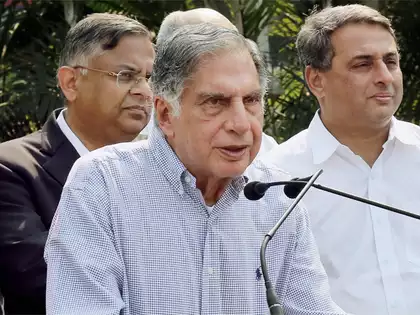
  • Ratan tata’s health deteriorated admitted to Mumbai hospital

    Ratan tata’s health deteriorated admitted to Mumbai hospital


    Ratan Tata, one of India’s most prestigious and respected industrialists, has recently been admitted to a hospital in Mumbai due to ill health. Ratan Tata 86 former chairman of Tata group, as soon as the news of his deteriorating health came, there was a wave of concern among his fans and supporters people from all over the country are praying for his speedy recovery.

    Ratan Tata and the TATA group: revolutionizing healthcare in Indian 

    Ratan Tata: On hearing the name of Ratan Tata, the image of an eminent personality of India industry and business emerges but his contributions are not limited to business only. Under his leadership the data group has not only made significant contributions in the economic sector but has also done important work for social upliftment and welfare. His contribution to the health care sector is a prime example of this. Ratan Tata and the TATA group have given a new direction to India healthcare providing better and affordable Medical services to millions of people.

    Ratan Tata

    Ratan Tata : Tata Groups beginning and contribution to health care

    History of the TATA group it was founded by Jamshedji Tata in 1868 and since then the group has been striving for the upliftment of Indian society. The foundation of the TATA group was not based on business alone, but on service and development of society. Jamshedji Tata believe that the duty of an industrialist is not only to earn profit but also to contribute to the development of the country and society. The Tata groups contribution to the health care sector goes back several decades Tata memorial hospital was established in 1941, which is today considered leading institute for cancer treatment.

    Ratan Tata: Expansion of health services under the leadership of Ratan Tata

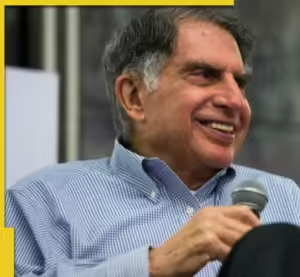
    Ratan Tata took charge of the TATA group in 1991 and since then he has been taking the groups reason forward under his leadership the data group has launched many new initiatives in the health care sector. Ratan Tata believes that every person should have access to quality and affordable Medical services, no matter what social or economic class he or she belongs to.

    Ratan Tata

    They have established many modern hospitals and medical centers with state-of-the-art equipment and medical facilities. Along with this, he has also started many programs to provide health services to the rural and background areas of India.

  • Uttar Pradesh: Yogi govt to soon appoint 33 Udyami Mitras to boost investment in UP

    Uttar Pradesh: Yogi govt to soon appoint 33 Udyami Mitras to boost investment in UP

    Invest UP has successfully completed the transparent selection process for 33 Udyami Mitras, aligning with CM Yogi’s vision

    Uttar Pradesh: The Yogi government is set to further enhance the ease of doing business in Uttar Pradesh by appointing 33 Udyami Mitras. In line with Chief Minister Yogi Adityanath’s vision to promote investment in the state, Invest UP has successfully completed the selection process for 20 newly created positions and 13 previously vacant posts. These Udyami Mitras will be appointed on a contractual basis for one year. 

    The selection process, which involved a written examination and interviews, was conducted with full transparency and based on merit. This new batch of Udyami Mitras follows CM Yogi’s earlier initiative in 2023 when 102 Udyami Mitras were deployed for the first time. Their role is to act as a crucial link between investors and the government, resolving challenges and ensuring smooth coordination.

    With the addition of 33 more Udyami Mitras, the state’s efforts to simplify the investment process and attract more entrepreneurs will gain further momentum, reinforcing Uttar Pradesh’s growing reputation as an investment-friendly destination.

    Uttar Pradesh CM Yogi

    Read Also This: Uttar Pradesh: Kushinagar bananas winning hearts from Punjab to Kashmir

    Uttar Pradesh: 33 Udyami Mitras selected for one-year contract, training and appointments to follow soon

    The selected candidates can check their results by visiting the official website of Invest UP. The list of 33 successful candidates includes names like Pulkit Tyagi, Anshuman Pratap Singh, Pranav Mishra, Devesh Kumar Yadav, Santosh Rathore, Ujjwal Gaur, Shahrukh Salim, Divyans Kumar Ojha, Amol Tripathi, Atul Bajpai, Dilip Singh Tomar, Sudhanshu Singh, Tushar Singh, Lalit Mohan Joshi, Nupur Upadhyay, Shivangi Singh, Akash Kumar Rai, Ayush Gupta, Akshit Nautiyal, Kuldeep Singh, Toshendra Kumar Mishra, Rohit Kumar, Meet Madhur, Saurabh Kumar, Arpit Singh, Gaurav Raj Singh, Abhin Mishra, Kamod Singh Yadav, Durgesh Singh, Manish Tiwari, Puneet Sharma, Ishani Srivastava and Yashi Chauhan.  

    Additionally, Invest UP will also handle the training process for all these candidates, after which they will be ready for their appointments as Udyami Mitras.

  • Kolkata: Questions on CBI investigation even after witnesses, evidence and polygraph test!

    Kolkata: Questions on CBI investigation even after witnesses, evidence and polygraph test!

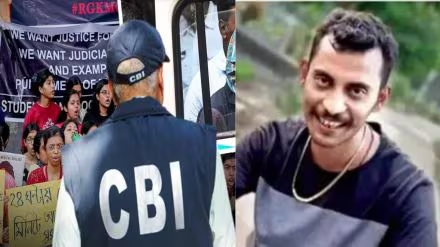
    Kolkata: Questions are being raised continuously on the CBI investigation in a complex and sensitive case going on in RG Kar Medical College. That this matter is not limited only to the legal and political real In fact the general public related to this has also started considering that even after a long investigation of 58 days, the statement of the witnesses and the CCTV footage and important procedures like polygraph test have been adopted. Then the CBI investigation is telling the same story which is the local police had already told this has raised up big question on this matter whether the CBI investigation is fair or not or is there something wrong in it?

    Kolkata

    What Kolkata police had told in just 24 hours. The CBI team took 58 days to tell the same truth. Whatever happened to the junior doctor at Kolkata’s RG kar Medical College hospital the CBI has first field a charge sheet in a special code in Kolkata in the case, this is exactly what the Kolkata police had said earlier according to the charge seat, the unit of the was rape not gang raped and there is only one of used in this crime- Sanjay Rai.

    CCTV footage truth or misinterpretation?

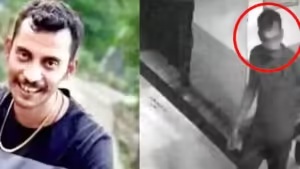
    CCTV footage is one of the most important evidence in this case which has been collected to investigate the recordings of several rooms in the crime scene and its surrounding areas, this footage can be helpful in authenticating the activities of the criminals and the events at the time of the case. Could Yet the public and some experts believe that the CCTV footage has not been captured properly and that many important clips have been ignored and are being misrepresented.

    CCTV footage is the most reliable way to verify the actual events and their accuracy in an investigation, but when doubts arise about it, questions are raised about the direction of the investigation and the process used in it

    Kolkata

    Kolkata: Trust in polygraph test?

    CBI in Kolkata has conducted light detector test of 12 people related to this case, the purpose of polygraph test is to check whether a person is lying in his statements or telling the truth. It is a scientific process, which is used. only then it is affected, when it is applied correctly, and its results are seen objectively.

    In this case, questions are also being raised regarding the results of the light detector test, that many people believe that the light detector test has been done only as a formality. And its results have not been taken seriously, whatever truth may have come out in this training is not being included in the investigation if the results of the light detector test have not been brought into the investigation properly, and this will compromise the impartiality of the investigation. But it has a deep impact.

  • Jammu and Kashmir: Omar Abdulla advice for better coordination with the center and the Governor

    Jammu and Kashmir: Omar Abdulla advice for better coordination with the center and the Governor

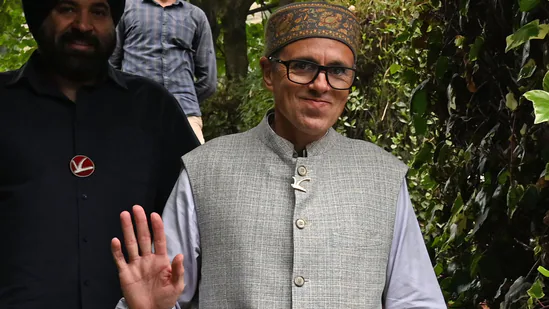
     Jammu and Kashmir: Formal CM says I hope the prime minister will be a normal person and will leave up to the promise of restoring statehood emphasize the need to improve relations with the people.

    Jammu and Kashmir is a special state of India whose political status and constitutional structure is quite different from other states of the country. Maintaining administrative and political stability in this sensitive region has always been a challenging task.

    Former chief minister of Jammu and Kashmir Omar Abdullah has suggested that the next chief minister of Jammu and Kashmir needs to build healthy and balance relationship with the central government and the Raj bhavan

    Jammu and Kashmir: Implicit in his advice is the importance of coordination between politics and administration, which is necessary not only for the development of the state bird also for the well-being and security of its citizen.

    Jammu and Kashmir

    Jammu and Kashmir: Political situation and challenges

    The political history of Jammu and Kashmir is very complex, and politics here has always been marked by controversy and instability. After the removal of article 370 there where many changes in the situation of Jammu and Kashmir also this was a big political move, but it resulted in many new aspects in the politics and administration of the state. An important challenge is to take the state towards stability and development by creating coordination between the center and the Governor.

    Omar Abdulla who has been the former chief minister of Jammu and Kashmir understand. This situation is  very well he has always said that the chief minister of the state should maintain a positive and healthy relationship with the centre Government and the Governor to maintain stability in the state.

    Jammu and Kashmir

    Also Read This: Jammu and Kashmir Election: Congress leader Ghulam Ahmad Mir’s big claim “alliance in Jammu and Kashmir will cross 50”


    Jammu and Kashmir: why is coordination with the centre important?

    It is important for a chief minister to maintain good relation with the centre Government especially when the state is going through special situation. Given the situation in Jammu and Kashmir, it becomes even more important that there is coordination between the centre and state government. This is not only increase political stability but will also provide necessary resources and policies for peace and development in the state.


  • Uttar Pradesh: Kushinagar bananas winning hearts from Punjab to Kashmir

    Uttar Pradesh: Kushinagar bananas winning hearts from Punjab to Kashmir

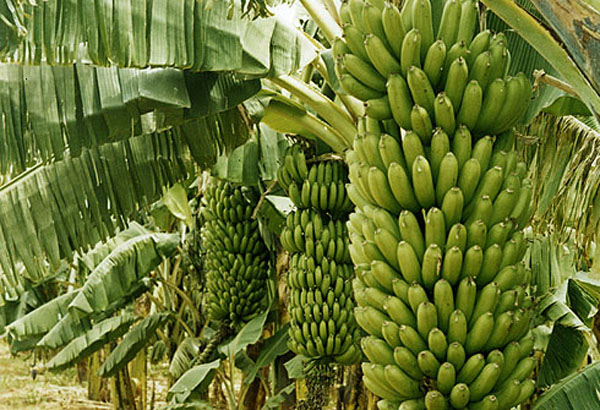
    Uttar Pradesh: Kushinagar bananas, grown in the revered land of Buddha’s Mahaparinirvana and designated as a One District One Product (ODOP) by the Yogi government, have captivated taste buds from Punjab to Kashmir.

    From Uttar Pradesh to Bihar and Nepal: Kushinagar bananas gain widespread popularity 

    These sweet bananas are distributed widely to major cities such as Delhi, Meerut, Ghaziabad, Chandigarh, Ludhiana, and Bhatinda. Their popularity extends beyond Uttar Pradesh, with strong demand across all districts of the Gorakhpur division, as well as in Kanpur, Nepal, and Bihar, where they enjoy a dedicated fan base.

    According to Ashok Rai, in charge of the Kushinagar Krishi Vigyan Kendra, affiliated to the Indian Council of Agricultural Research, local farmers grow bananas for both fruit and vegetable purposes, with 70% of the cultivation area dedicated to fruits and 30% to vegetables. 

    Uttar Pradesh

    The G-9 variety is most popular for consumption, while Robusta is preferred for vegetable use. Banana cultivation covers around 16,000 hectares in the district.

    Notably, banana cultivation and processing has surged in Kushinagar with the ODOP status granted to it by the Uttar Pradesh government.  Voluntary organizations are producing banana juice, chips, flour, pickles, and even products like mats, baskets, and slippers made from banana fiber. These products are seeing growing demand and enthusiasm. 

    Ashok Rai explains that in 2007, banana cultivation in Kushinagar was limited to just 500 hectares. Today, it has expanded 32 times to nearly 16,000 hectares with the ODOP designation. Additionally, the government subsidies approximately Rs 31,000 per hectare to farmers for cultivating bananas.

    Kushinagar, part of the Gorakhpur division, has a major market for fruits and vegetables. Initially, only a few farmers from Kushinagar would bring their bananas to sell in this market. Due to the high quality of the fruit, some traders from Gorakhpur began purchasing bananas directly from the farms in Kushinagar. 

    The bananas are being supplied to Delhi, Meerut, Ghaziabad, Chandigarh, Ludhiana, and Bhatinda 

    These traders, who had established connections with counterparts in Kashmir, Punjab, and Delhi to trade apples, kinnow, and other produce, helped spread the fame of Kushinagar bananas to distant markets. Today, Kushinagar bananas are supplied to major cities, including Kashmir, Bhatinda, Ludhiana, Chandigarh, Kanpur, Delhi, Ghaziabad, and Meerut.

    Noticing the increasing interest of local farmers in banana cultivation, former District Magistrate Umesh Mishra initiated efforts to grant banana farming the status of an industry. He convened meetings with bankers and directed them to offer easy loans to banana growers through various central and state government schemes. 

    Uttar Pradesh

    Read Also This: Uttar Pradesh: Banana emerges as a more profitable alternative to traditional crops in Purvanchal and Awadh regions with Yogi govt’s support

    Murlidhar Dixit from Sirsiyan Dixit and Mrityunjay Mishra from Bharwalia  are prominent banana farmers whose produce is distributed to major cities across the state and country through commission agents. According to them, the peak season for banana sales is just before Navratri, driven by the festive demand.

    Banana farming is labor-intensive. The process involves digging pits for planting, applying fertilizers, planting saplings, regular irrigation, crop protection, and harvesting of ripe fruit. Additionally, the tasks of loading, unloading, and transporting the produce generate significant employment opportunities.

    Dr S.P. Singh, a vegetable scientist at Krishi Vigyan Kendra Belipar (Gorakhpur), advises that the ideal time for planting bananas is in February or during July-August. To minimize risks, farmers cultivating on a large scale are advised to plant in both seasons.