Category: Politics

  • Sonia Gandhi autobiography ‘Belonging’ sparks political battle; Congress alleges pressure, BJP hits back

    Sonia Gandhi autobiography ‘Belonging’ sparks political battle; Congress alleges pressure, BJP hits back

    Sonia Gandhi autobiography ‘Belonging’ once again at the centre of political debate, The political temperature has risen over former Congress president Sonia Gandhi’s autobiography Belonging. Sharp exchanges have begun between Congress and the BJP over the book’s alleged publication and related material. Congress has alleged that pressure was put on the institution linked to the book’s publication, while the BJP has completely rejected these charges and accused Congress of staging a political drama.

    This controversy has surfaced at a time when the country’s politics is already divided on several issues. Sonia Gandhi’s public image, her political journey, and her role in Congress leadership have always been subjects of discussion. Now the issue linked to her autobiography has also taken on a political colour.

    Congress’s claim: Pressure was put on the publisher

    Congress leaders say that unnecessary pressure was exerted in connection with the publication of Belonging or certain parts related to it. The party alleges that this is not merely a book but an attempt to present Sonia Gandhi’s life, struggles, and political journey, which is being dragged into controversy.

    Sonia Gandhi autobiography ‘Belonging’ sparks political battle; Congress alleges pressure, BJP hits back
    Sonia Gandhi autobiography ‘Belonging’ sparks political battle; Congress alleges pressure, BJP hits back

    Congress also says that such attempts raise questions about freedom of expression and the autonomy of writers and publishers. According to the party, if a situation of pressure arises over any autobiography, it goes against democratic values.

    Sonia Gandhi autobiography: Sonia Gandhi’s image and political legacy

    Sonia Gandhi is among those prominent figures in Indian politics whose life and leadership have always aroused curiosity. Born in Italy, Sonia Gandhi charted a long journey in Indian politics and provided leadership to Congress during several important periods. Her autobiography is being viewed against this backdrop.

    Congress supporters believe that Belonging is not just the story of a private life but a document of a public life that deeply influenced Indian politics. For this reason, every controversy linked to this book acquires political significance.

    BJP’s counter-attack: Congress is playing the politics of sympathy

    On the other hand, the BJP has rejected Congress’s allegations and said that the party is unnecessarily blowing up this issue. BJP leaders say that Congress uses such matters every time to garner political sympathy.

    The BJP’s argument is that if any process related to the book is underway, it should be viewed under institutional and commercial rules, not as a political conspiracy. The party has also said that Congress has developed the habit of seeing a conspiracy in every issue.

    Why is this controversy important?

    This matter is also important because it involves not just a book but also an ideological and narrative battle between the two major political parties. On one side, Congress is linking it to expression and personal history; on the other, the BJP is calling it political drama.

    Sonia Gandhi autobiography ‘Belonging’ sparks political battle; Congress alleges pressure, BJP hits back
    Sonia Gandhi autobiography ‘Belonging’ sparks political battle; Congress alleges pressure, BJP hits back

    Sonia Gandhi autobiography often bring out the unspoken layers of public life. Therefore, when a book by a top political personality becomes a topic of discussion, everything related to it becomes part of the national debate. The Sonia Gandhi autobiography Belonging controversy also falls into this category.

    Expectations from the book and political signals

    Political analysts had various expectations from Sonia Gandhi’s autobiography. It was believed that the book could throw new light on her private life, her connection with Indian society, Congress leadership, and political challenges. But now the discussion has become more focused on the controversy surrounding the book than on its content.

    Experts believe that such controversies also affect the public image of the book. At the same time, they give political parties an opportunity to send messages to their respective support bases. While Congress is calling it the politics of pressure, the BJP is dismissing it as issueless politics.

    Also Read This : Strait of Hormuz Mines : Trump Claims All Mines Removed, Issues Fresh Warning to Iran

    Sonia Gandhi autobiography : For now, political statements on the entire matter are likely to continue. If more facts related to the book come out, the controversy could deepen further. Even if the matter remains limited only to allegations and counter-allegations, it is clear that Sonia Gandhi’s autobiography has once again created a stir in national politics.

    Overall, the Sonia Gandhi autobiography Belonging controversy has shown that in Indian politics, books do not remain merely literature; they sometimes become part of the battle over power, image, and narrative.


    View this post on Instagram


    A post shared by AVSPOST (@avspost)

  • Tamil Nadu Election Results 2026 : Vijay’s TVK Shatters Dravidian Duopoly with 108 Seats

    Tamil Nadu Election Results 2026 : Vijay’s TVK Shatters Dravidian Duopoly with 108 Seats

    Tamil Nadu Election Results 2026 : In a landmark political shift, actor-turned-politician Joseph Vijay’s Tamilaga Vettri Kazhagam (TVK) has emerged as the single largest party in the Tamil Nadu Assembly Elections 2026. Contesting its maiden election, TVK secured 108 seats in the 234-member Assembly, falling just 10 short of the majority mark but successfully ending the long-standing dominance of the DMK-AIADMK duopoly.

    Final Seat Tally – Tamil Nadu Election Results 2026

    • TVK: 108 seats
    • DMK: 59 seats
    • AIADMK: 47 seats
    • INC (Congress): 5 seats
    • PMK: 4 seats
    • VCK: 2 seats
    • CPI & CPI(M): 2 seats each
    • IUML and Others: Remaining seats

    The DMK-led alliance managed around 73 seats, while the AIADMK front stood at approximately 53 seats.

    Tamil Nadu Election Results 2026
    Tamil Nadu Election Results 2026

    Key Highlights

    • Vijay’s Strong Debut: Vijay won both seats he contested — Perambur and Tiruchirappalli East — with impressive margins.
    • Anti-Incumbency Wave: Outgoing Chief Minister M.K. Stalin lost from his Kolathur constituency. Several senior DMK ministers and heavyweights also suffered defeats.
    • AIADMK’s Setback: The party recorded one of its lowest tallies in recent years.
    • Urban and Youth Support: TVK performed exceptionally well in urban and semi-urban areas, driven by strong backing from young voters seeking change.

    Government Formation Updates

    TVK has formally staked claim to form the government. In a major development, the Congress has extended support to Vijay’s party after he reached out. Congress leaders have indicated willingness to join the government and are likely to seek cabinet representation.

    Vijay is now actively seeking the support of VCK (Viduthalai Chiruthaigal Katchi) and other smaller parties including the Left and PMK to comfortably cross the majority line. Coalition negotiations are progressing, and with Congress’s backing already in place, TVK is strongly positioned to form the next government.

    Vijay is expected to be invited by the Governor shortly to take oath as Chief Minister.

    Tamil Nadu Election Results 2026
    Tamil Nadu Election Results 2026

    A New Chapter in Tamil Nadu Politics

    The Tamil Nadu Election Results 2026 represent a historic turning point. For the first time in decades, a third force has broken the bipolar politics of the state. TVK’s campaign, which focused on youth employment, welfare schemes, anti-corruption measures, and Tamil pride, clearly connected with voters.

    This result also underscores the rising power of new political entrants and the shifting preferences of Tamil Nadu’s electorate, especially the younger generation.

    Also Read This : Sonam Zomba Defends Strawweight Title with Dominant Submission Win at MFN 18

    As Tamil Nadu enters a new political era under TVK, all eyes will be on the formation of the cabinet, key policy decisions, and how the coalition government addresses the state’s challenges.


    View this post on Instagram

     

    A post shared by AVSPOST (@avspost)

  • Union Budget 2026 highlights : Key announcements from FM Nirmala Sitharaman

    Union Budget 2026 highlights : Key announcements from FM Nirmala Sitharaman

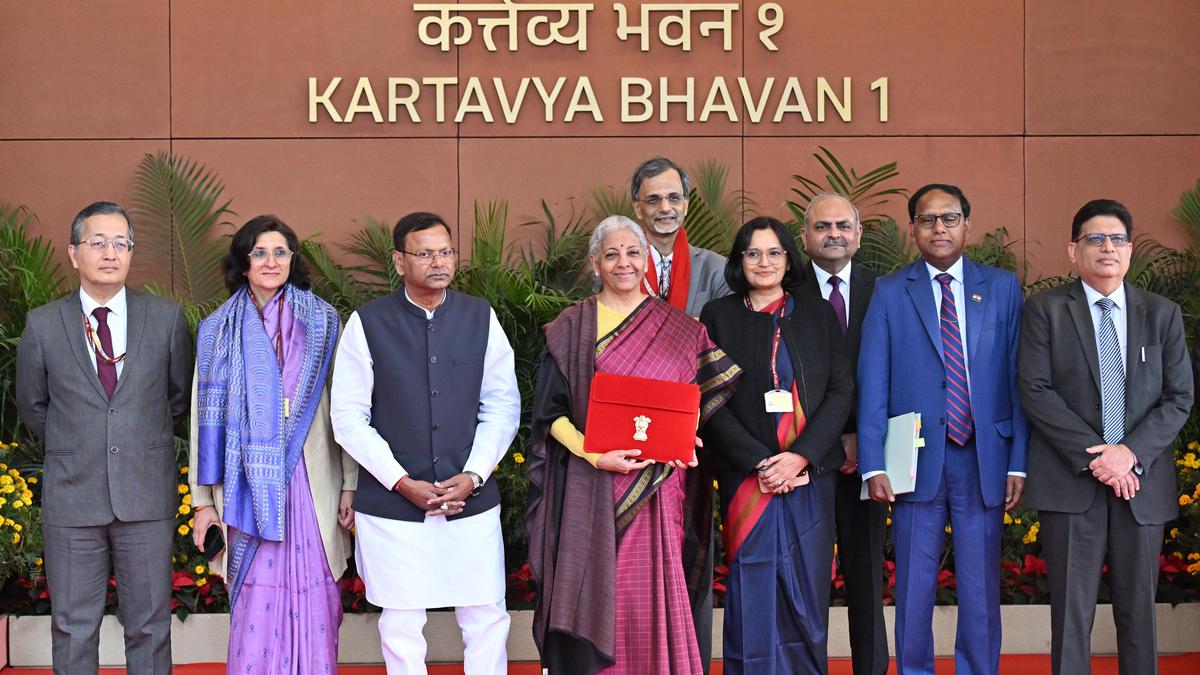
    Union Budget 2026 highlights : The Union Budget 2026-27, presented by Finance Minister Nirmala Sitharaman on February 1, 2026, marks her ninth consecutive budget speech. Tabled in Parliament on a Sunday for the first time in India’s history, this “Yuva Shakti-driven” budget emphasizes the government’s commitment to the poor, underprivileged, and disadvantaged. It draws inspiration from three core Kartavyas (duties):

    • Accelerate and sustain economic growth by boosting productivity, competitiveness, and resilience amid global volatility.
    • Fulfill people’s aspirations and build their capacities to make them strong partners in India’s prosperity.
    • Align with the vision of Sabka Saath, Sabka Vikas — ensuring every family, community, region, and sector has access to resources, amenities, and opportunities.

    Described as a budget of “reforms over rhetoric” and “action over ambivalence,” it prioritizes structural reforms, fiscal discipline, moderate inflation, sustained ~7% growth, and continued public investment to advance toward Viksit Bharat (Developed India).


    View this post on Instagram
     

    A post shared by AVSPOST (@avspost)

    Fiscal Framework : Prudence Meets Momentum

    The budget 2026 maintains a strong focus on capital expenditure while progressing toward fiscal consolidation.

    • Public Capital Expenditure (Capex): Raised to ₹12.2 lakh crore (approximately 4.4% of GDP) — the highest-ever allocation — up from ₹11.2 lakh crore in BE 2025-26, to sustain infrastructure momentum and crowd in private investment.
    • Fiscal Deficit: Targeted at 4.3% of GDP for FY 2026-27 (down from 4.4% in RE 2025-26).
    • Debt-to-GDP Ratio: Projected at 55.6% in BE 2026-27 (from 56.1% in RE 2025-26), with a long-term goal of 50 ± 1% by 2030.
    • Total Budget Size: Approximately ₹53.5 lakh crore.
    • Non-Debt Receipts and Total Expenditure: Estimated at ₹36.5 lakh crore and ₹53.5 lakh crore, respectively.
    • Net Tax Receipts: Around ₹28.7 lakh crore.

    These parameters reflect continued fiscal prudence while prioritizing growth-enabling investments.

    Budget 2026 : Manufacturing, Infrastructure, and Beyond

    Budget 2026 : Under the first Kartavya, the budget proposes interventions in six major areas:

    • Scaling Up Manufacturing in 7 strategic and frontier sectors.
    • Rejuvenating Legacy Industrial Sectors.
    • Creating Champion MSMEs — including a ₹10,000 crore SME Growth Fund.
    • Powerful Push to Infrastructure.
    • Long-Term Energy Security and reduced critical import dependencies.
    • Developing City Economic Regions (CERs).


    View this post on Instagram
     

    A post shared by AVSPOST (@avspost)


    Notable announcements include:

    • Biopharma Shakti: ₹10,000 crore over 5 years for domestic biologics and biosimilars production.
    • India Semiconductor Mission (ISM) 2.0: Launch to strengthen equipment, materials, design, and supply chains.
    • Electronics Components Manufacturing Scheme: Outlay increased to ₹40,000 crore.
    • Rare Earth Corridors: Support in states like Odisha, Kerala, Andhra Pradesh, and Tamil Nadu.
    • Infrastructure Highlights:
    • 7 high-speed rail corridors (e.g., Mumbai-Pune, Pune-Hyderabad, Hyderabad-Bengaluru, Hyderabad-Chennai, Chennai-Bengaluru, Delhi-Varanasi, Varanasi-Siliguri).
    • New dedicated freight corridors (including east-west).
    • Operationalization of 20 new National Waterways over 5 years.
    • Seaplane Viability Gap Funding (VGF) to boost indigenous manufacturing.
    • Infrastructure Risk Guarantee Fund for private developers.
    • City Economic Regions: ₹5,000 crore per CER over 5 years.
    • Defence: Record allocation (all-time high of around ₹7.85 lakh crore, up ~15%; capex hiked significantly, e.g., ~21% in some reports to ₹5.9 lakh crore).
    • Other Sectors:
    • Tourism: Upskilling 10,000 guides; reduced TCS on overseas tours; development of 15 archaeological sites; first Global Big Cat Summit; Khelo India Mission for sports skilling and employment.
    • AVGC (Animation, Visual Effects, Gaming, Comics — Orange Economy): AVGC Content Creator Labs in 15,000 schools and 500 colleges.
    • Agriculture: Dhan-Dhaanya Krishi Yojana for high-yield crops; Bharat-Vistaar AI tool.
    • Textiles: Integrated programme with mega parks and export support.


    View this post on Instagram

     

    A post shared by AVSPOST (@avspost)

    Tax and Customs Reforms : Simplification and Relief

    Budget 2026 : No changes to income tax slabs were announced, continuing stability from prior budgets. Key updates include:

    • New Income Tax Act, 2025: Effective from April 1, 2026, with simplified rules.
    • Middle-Class Reliefs: TCS cuts, new dividend deductions, nil deduction certificates for small taxpayers, ITR filing extension to August 31 for non-audit cases, rationalized penalties/prosecutions, and provident fund rule updates.
    • Securities Transaction Tax (STT): Increased on futures (e.g., to 0.05% from 0.02%).
    • Customs Duties:
    • Reduced from 20% to 10% on personal imports.
    • Exemptions/reductions on capital goods for lithium-ion cells, critical minerals, cancer medicines, sports equipment, leather goods, and seafood.
    • Some items (imported alcohol, coffee) may become costlier.
    • Other: Tax holidays for foreign cloud providers till 2047; MAT reforms; safe harbour enhancements for IT services; buyback taxed as capital gains.

    Overall Assessment

    The Union Budget 2026 – 27 is a continuity-focused, producer-centric document that doubles down on capex-led growth, manufacturing self-reliance, infrastructure, and inclusive reforms rather than short-term populist measures. It aims to build resilience against global uncertainties while empowering youth, MSMEs, and underserved sections.

  • Bihar Assembly Election Result 2025 : NDA’s Historic Landslide Victory Explained

    Bihar Assembly Election Result 2025 : NDA’s Historic Landslide Victory Explained

    Bihar Assembly Election Result 2025 : In the heart of India’s bustling political arena, Bihar has once again delivered a resounding verdict that echoes far beyond its borders. As the dust settles on the 2025 Assembly elections, the National Democratic Alliance (NDA), spearheaded by the Bharatiya Janata Party (BJP) and its steadfast ally Janata Dal (United) [JD(U)], has scripted a chapter of history. With over 200 seats in the bag out of 243, this isn’t just a win—it’s a landslide that redefines the state’s trajectory. Prime Minister Narendra Modi captured the essence of this victory in a single, powerful line: “Good governance has won. Development has won.”

    Picture this: Seven phases of polling from late October to early November, a voter turnout hovering above 70%, and millions queuing up under the winter sun to cast their ballots. By midday on counting day, the trends were clear. The NDA surged ahead, comfortably crossing the majority mark of 122 seats and then some. JD(U), led by the evergreen Nitish Kumar, is eyeing around 70 seats, while the BJP dominates with over 110. Smaller partners like Chirag Paswan’s Lok Janshakti Party (Ram Vilas) and Jitan Ram Manjhi’s Hindustani Awam Morcha chipped in with crucial tallies, pushing the alliance’s total into uncharted territory.

    Bihar Assembly Election Result : For context, rewind to 2019 when the NDA scraped through with 125 seats. This time, they’ve shattered that record, leaving the opposition Mahagathbandhan (MGB)—a coalition of Rashtriya Janata Dal (RJD), Congress, and Left parties—reeling at a projected 40 seats. It’s a humbling moment for RJD’s young turk Tejashwi Yadav, who fought valiantly but couldn’t stem the tide. In his concession, he called it a “setback but not the end,” a nod to the resilience that’s kept his party afloat through tougher storms.

    Bihar Assembly Election Result 2025
    Bihar Assembly Election Result 2025

    Bihar Assembly Election Result : So, what fueled this NDA juggernaut? Let’s break it down.

    The Development Dividend

    Bihar Assembly Election Result : Bihar’s voters aren’t just voting for parties anymore; they’re investing in promises of progress. The NDA’s campaign was a masterclass in highlighting tangible gains: gleaming expressways slicing through rural heartlands, new airports connecting forgotten towns, and housing schemes under initiatives like PM Awas Yojana putting roofs over thousands of heads. Modi’s rallies painted a vision of “Viksit Bihar”—a developed Bihar—tapping into aspirations that transcend caste lines. In a state long plagued by migration and unemployment, these pledges landed like a lifeline.

    Caste Calculus Mastered

    Politics in Bihar is a chessboard of communities, and the NDA played it like grandmasters. Smart seat-sharing ensured that non-Yadav Other Backward Classes (OBCs), Extremely Backward Classes (EBCs), upper castes, Dalits, and Mahadalits felt represented. Nitish Kumar’s knack for balancing these equations, honed over decades, proved invaluable. The opposition’s reliance on Yadav-Muslim consolidation held firm in pockets but crumbled elsewhere, unable to counter the NDA’s broad-based appeal.

    Women: The Silent Swing Vote

    Bihar Assembly Election Result : Here’s a game-changer: women’s turnout hit record highs, and they leaned heavily towards the NDA. Policies on safety, empowerment, and the continuation of the liquor ban resonated deeply. From self-help groups to scholarships for girls, the alliance positioned itself as the guardian of Bihar’s daughters. In a state where gender dynamics often tip the scales, this was no small feat.

    Nitish’s Steady Hand and Modi’s Magic

    Nitish Kumar, the “Sushasan Babu” (good governance man), shed his image of flip-flops to emerge as the anti-chaos anchor. His narrative of ending “jungle raj”—the lawlessness of yesteryears—struck a chord with those weary of the past. Add to that Modi’s star power: mega-rallies, fiery speeches, and a personal connect that turned battlegrounds into strongholds. The duo’s chemistry was electric, proving that national leadership can still sway state polls.

    Bihar Assembly Election Result 2025
    Bihar Assembly Election Result 2025

    Bihar Assembly Election Result : Voices from the Victory Lap

    Bihar Assembly Election Result : Modi’s post-win gratitude was heartfelt: “Gratitude to each and every person of Bihar for blessing the NDA with a historical and unparalleled victory. This mandate gives us renewed strength to serve the people and work for Bihar.” He didn’t stop at thanks—pledges for more infrastructure, youth skilling, and women’s welfare followed suit.

    Nitish Kumar, ever the pragmatist, declared, “This is a victory for Bihar’s 13 crore people. We will accelerate development.” Even allies like Chirag Paswan beamed with pride, their parties punching above their weight.

    On the flip side, whispers of concern linger. Critics argue that beneath the gloss of growth, challenges like job creation and flood management persist. Will this mandate translate into real relief for the masses, or will it be another cycle of rhetoric? Only time—and Nitish’s third (or is it fourth?) term—will tell.

    Bihar’s Next Chapter

    Bihar Assembly Election Result : This Bihar sweep isn’t isolated; it’s a booster shot for the NDA ahead of the 2029 Lok Sabha showdown. A stronger foothold here means more leverage in Delhi’s corridors, potentially unlocking floods of central funds for the state. For Bihar, it signals stability after years of coalition drama. But governance isn’t a sprint—it’s a marathon. The real test begins now: delivering on the dreams that 13 crore Biharis have dared to dream.

    Also Read This : UP Transport Department WhatsApp Chatbot : Get Driving License & Vehicle Details Instantly

    What do you think? Is this the dawn of a new Bihar, or just another political plot twist? Drop your thoughts in the comments below—I’d love to hear from fellow election junkies. Until next time, keep watching the pulse of politics.

  • IPS Officer Anjana Krishna : Standing Firm Against Political Pressure in Maharashtra

    IPS Officer Anjana Krishna : Standing Firm Against Political Pressure in Maharashtra

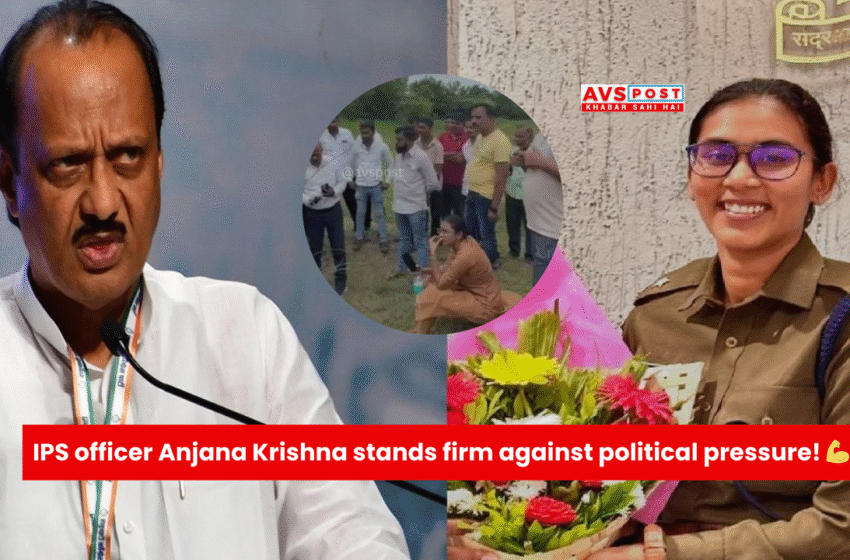
    In a recent incident that has sparked widespread debate, IPS officer Anjana Krishna, a Sub-Divisional Police Officer (SDPO) in Solapur, Maharashtra, found herself at the center of a controversy involving Maharashtra Deputy Chief Minister and Nationalist Congress Party (NCP) leader Ajit Pawar. A viral video allegedly showing Pawar pressuring Krishna to halt action against illegal murrum excavation in Kurdu village has brought the issue of political interference in law enforcement into sharp focus. This blog delves into the incident, explores Anjana Krishna’s role, and examines the broader implications for law enforcement and governance in Maharashtra.

    The Incident: A Clash of Duty and Power
    IPS officer Anjana Krishna : The Incident, A Clash of Duty and Power

    The Incident: A Clash of Duty and Power

    Two days ago, IPS officer Anjana Krishna was leading an operation in Kurdu village, Solapur, targeting illegal murrum excavation—a material critical for road construction but often extracted unlawfully, causing environmental and economic harm. Acting on local complaints, Krishna’s team was cracking down on this illegal activity when she received a call, allegedly from Ajit Pawar. In the now-viral video, Pawar is heard saying, “Itna daring hua hai kya?” (Have you become so daring?) after Krishna reportedly asked him to contact her directly rather than through an intermediary’s phone.

    This remark, perceived by many as condescending or intimidating, has ignited a firestorm of criticism. It raises questions about the extent to which political leaders exert influence over law enforcement officers who are simply doing their jobs. Krishna’s response, maintaining her professionalism in the face of such pressure, underscores her commitment to upholding the law, making her a focal point in this unfolding controversy.

    Who is IPS Officer Anjana Krishna?

    While little is publicly known about IPS officer Anjana Krishna personal background due to the limited information available, her actions in this incident paint a picture of a determined and principled officer. As an SDPO, Krishna is responsible for maintaining law and order in her jurisdiction, a role that often involves navigating complex social and political dynamics. Her decision to act on complaints of illegal murrum excavation demonstrates her dedication to addressing issues that affect local communities and the environment. Facing pressure from a senior political figure like Ajit Pawar, Krishna’s reported composure highlights the resilience required of IPS officers in such high-stakes situations.

    IPS officer Anjana Krishna
    IPS officer Anjana Krishna

    The Larger Context: Illegal Mining in Maharashtra

    Illegal murrum and sand mining have long plagued Maharashtra, driven by the high demand for construction materials and often shielded by powerful political and economic interests. Kurdu village is just one of many sites where such activities thrive, often with tacit support from local power structures. Reports from the Ministry of Mines and state investigations have repeatedly flagged unregulated mining as a major issue, with environmental degradation, loss of public revenue, and community displacement as consequences. IPS officer Anjana Krishna’s intervention in Kurdu village was a direct challenge to this entrenched system, making her a target for political pushback.

    Political Interference or Systemic Failure?

    The incident involving IPS officer Anjana Krishna brings two critical issues to the forefront:

    1. Political Interference in Law Enforcement: Ajit Pawar’s alleged attempt to influence Krishna’s actions suggests a troubling trend where political leaders feel emboldened to intervene in lawful operations. The phrase “Itna daring hua hai kya?” carries an undertone of authority that many interpret as an attempt to undermine an officer’s autonomy. This is particularly concerning in a state like Maharashtra, where political patronage in sectors like mining is well-documented. The defense offered by NCP leaders Sunil Tatkare and Revenue Minister Chandrashekhar Bawankule, who claimed Pawar’s tone was “normal,” has done little to quell public outrage, as the video speaks for itself.
    2. Challenges Faced by Law Enforcement: Krishna’s actions show that law enforcement officers are willing to take on illegal activities, even in the face of significant risks. However, incidents like this expose the vulnerabilities officers face when their decisions are challenged by powerful figures. The pressure exerted on Krishna could deter other officers from acting decisively in similar situations, potentially weakening the rule of law. This incident underscores the need for institutional mechanisms to protect officers from such interference and ensure they can perform their duties without fear of reprisal.
    The incident involving IPS officer Anjana Krishna
    The incident involving IPS officer Anjana Krishna

    Public Reaction and the Role of Social Media

    The viral nature of the video has amplified public awareness of this issue. Social media platforms, including X, have been abuzz with discussions about IPS officer Anjana Krishna’s courage and the audacity of political interference. Many netizens have praised Krishna for standing her ground, while others have criticized Pawar for what they see as an abuse of power. This incident has also reignited debates about the need for transparency and accountability in governance, with calls for stricter measures to curb political overreach.

    Implications for Maharashtra’s Governance

    The controversy surrounding IPS officer Anjana Krishna has far-reaching implications:

    1. Erosion of Public Trust: When senior leaders are seen pressuring law enforcement, it undermines public confidence in both the government and the police. Citizens may begin to question whether the system prioritizes justice or political interests.
    2. Need for Institutional Reforms: This incident highlights the urgent need for reforms to shield law enforcement from political influence. Independent oversight bodies, stricter anti-corruption laws, and clear protocols for handling such interactions could empower officers like Krishna to work without fear.
    3. Empowering Officers: Krishna’s stand is a reminder of the importance of supporting law enforcement officers who uphold the law against powerful interests. Recognizing and protecting such officers is crucial for maintaining the integrity of the system.

    IPS officer Anjana Krishna’s confrontation with political pressure in Kurdu village is more than just a single incident—it’s a window into the challenges faced by law enforcement in Maharashtra. Her courage in addressing illegal murrum excavation, despite alleged interference from a figure as influential as Ajit Pawar, is a testament to the dedication of officers who strive to uphold justice. However, this episode also exposes the systemic issues that allow such interference to occur in the first place.

    Also Read This : Inspector Zende Review : A Gripping Tale of Justice and Intrigue

    IPS officer Anjana Krishna : To move forward, Maharashtra needs stronger safeguards to protect its officers and ensure that political power does not override the rule of law. Whether through stricter laws, independent oversight, or a cultural shift in governance, the goal must be to create an environment where officers like Anjana Krishna can perform their duties without fear or favor. What are your thoughts on this issue? Should the focus be on punishing political interference, or is a broader overhaul of the system needed? Share your views below.

  • Rahul Gandhi and Election Commission 2025 : Protests, Voter Fraud Allegations, and Political Showdown

    Rahul Gandhi and Election Commission 2025 : Protests, Voter Fraud Allegations, and Political Showdown

    Rahul Gandhi and Election Commission, the Leader of the Opposition in the Lok Sabha, has been a pivotal figure in Indian politics in 2025, particularly in his interactions with the Election Commission of India (ECI). His vocal criticism of electoral processes, combined with his broader political activities, has kept him at the forefront of national discourse. Below is an updated summary of his key political activities and engagements with the ECI as of August 11, 2025

    Rahul Gandhi and Election Commission 2025
    Rahul Gandhi and Election Commission 2025

    Protest Against Voter List Revision in Bihar

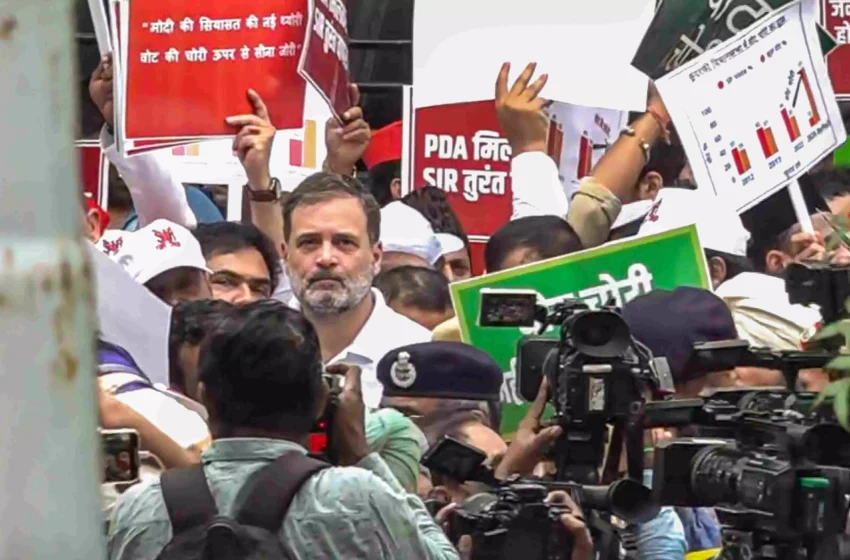
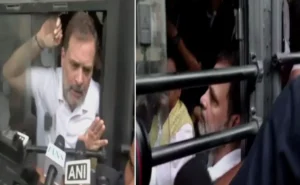
    Rahul Gandhi and Election Commission 2025 : On August 11, 2025, Rahul Gandhi, alongside other INDIA bloc leaders including Priyanka Gandhi Vadra, Sanjay Raut, and Sagarika Ghose, led a protest march from Parliament to the ECI office in New Delhi. The march opposed the Special Intensive Revision (SIR) of voter lists in Bihar, ahead of the Bihar Assembly elections scheduled for October-November 2025. The opposition alleged that the SIR, requiring citizenship proof and other documents, was a deliberate attempt to disenfranchise marginalized groups, including Muslims, Dalits, and backward communities. The Delhi Police halted the march near Transport Bhawan, detaining several leaders, including Rahul Gandhi. He described the protest as a defense of the Constitution and the principle of “one person, one vote,” accusing the ECI of colluding with the Bharatiya Janata Party (BJP) to manipulate voter lists. Rahul stated, “This is institutional theft. There will come a time when we will catch you.”

    Allegations of Voter Fraud in Karnataka

    Rahul Gandhi and Election Commission 2025 : On August 7, 2025, Rahul Gandhi held a press conference in Bengaluru, followed by the “Vote Adhikar Rally” at Freedom Park on August 8, where he alleged significant voter fraud in the 2024 Lok Sabha elections in Karnataka’s Mahadevapura Assembly constituency (part of Bangalore Central Lok Sabha seat). He claimed over 1 lakh votes were manipulated through:

    • Duplicate voters: 11,965 cases.
    • Fake or invalid addresses: 40,009 instances.
    • Bulk registrations at single addresses: 10,452 cases, including a single-room house with 80 voters and a brewery listed as a residential address with 68 voters.
    • Invalid photos: 4,132 cases.
    • Misuse of Form 6: 33,692 instances.
    Rahul Gandhi and Election Commission 2025
    Rahul Gandhi and Election Commission 2025

    Rahul Gandhi and Election Commission 2025 : He cited specific examples, such as “House Number 0” entries and a 70-year-old woman, Shakun Rani, allegedly registered and voting twice. The ECI, through Karnataka’s Chief Electoral Officer, issued a notice on August 11, 2025, refuting these claims. The ECI stated that Shakun Rani denied voting twice and that the document Rahul presented was not issued by the polling officer. The ECI demanded that Rahul provide evidence under oath or apologize, warning of legal action under the Bharatiya Nyaya Sanhita (BNS) and Representation of the People Act, 1950, for false allegations or forged documents. Rahul responded, “My word is my oath,” asserting that the data was sourced from the ECI itself and that they had not denied the anomalies.

    Internal Congress Tensions in Karnataka

    Rahul Gandhi’s voter fraud allegations led to internal friction within the Karnataka Congress. On August 11, 2025, Karnataka Cooperation Minister K.N. Rajanna resigned after his comments on the issue displeased the Congress high command. Rajanna, a close ally of Chief Minister Siddaramaiah, criticized the party for not addressing voter list irregularities during its own tenure in Karnataka, stating, “One should remember that voter lists were revised when our own government was at the helm.” This drew backlash from Deputy CM D.K. Shivakumar’s faction, who accused Rajanna of anti-party activities. The Congress leadership rejected Siddaramaiah’s plea to retain Rajanna, exposing internal divisions.

    Lok Sabha Speech and Controversy

    Rahul Gandhi and Election Commission 2025 : During the 2025 Parliament Budget Session (February 2025), Rahul Gandhi’s Lok Sabha speech on February 3 sparked significant controversy. He criticized the government on issues including the Make-in-India campaign, alleged Chinese troop presence in India, discrepancies in voter lists, and Prime Minister Narendra Modi’s invitation to US President Joe Biden. He described President Droupadi Murmu’s address as a “laundry list” of government achievements, lacking vision. The BJP condemned his remarks as an attempt to undermine government efforts, escalating political tensions.

    Criticism of Budget 2025

    Rahul Gandhi labeled the 2025 Union Budget, presented by Finance Minister Nirmala Sitharaman, as a “band-aid on a bullet wound.” He argued that the budget failed to innovatively address India’s economic challenges amid global uncertainty, particularly in areas like unemployment and inflation.

    Delhi Election Campaign Launch

    On January 13, 2025, Rahul Gandhi launched the Congress’s Delhi election campaign with a public rally in Seelampur, Northeast Delhi. The party positioned him as a strong advocate for national issues, focusing on youth employment, women’s rights, and social equity to appeal to voters ahead of the Delhi Assembly elections.

    Rahul Gandhi and Election Commission 2025
    Rahul Gandhi and Election Commission 2025

    Rahul Gandhi and Election Commission : Legal Challenges

    Rahul Gandhi and Election Commission 2025 faced multiple legal challenges in 2025. He was granted bail in a defamation case in Nashik, Maharashtra, over remarks about Vinayak Damodar Savarkar. Additionally, he and Sonia Gandhi were charged in a money laundering case linked to the National Herald newspaper. The Congress dismissed these cases as politically motivated attempts to target opposition leaders.

    Political Strategy and Public Engagement

    Throughout 2025, Rahul Gandhi emphasized issues like youth employment, women’s rights, agricultural reforms, and digital education, advocating for inclusive governance and a new leadership model. His participation in international forums, such as the Bharat Summit 2025 in Hyderabad and the Paris Climate Conference, bolstered his global and domestic image as a progressive leader.

    Also Read This : Zakir Khan : The Sakht Launda Who Won India’s Heart with Laughter

    Rahul Gandhi and  Election Commission active opposition leadership in 2025, particularly his confrontations with the Election Commission over voter list revisions and alleged fraud, has solidified his role as a key figure in Indian politics. His focus on voter rights, economic policies, and social issues, combined with his vocal criticism of the government, ensures that he remains a central figure in shaping India’s political landscape. His activities and statements are likely to continue influencing national discourse as the Bihar and other state elections approach.

  • Vijay Mallya 2025 Comeback: Podcast Buzz, RCB Glory & India Return Debate

    Vijay Mallya 2025 Comeback: Podcast Buzz, RCB Glory & India Return Debate

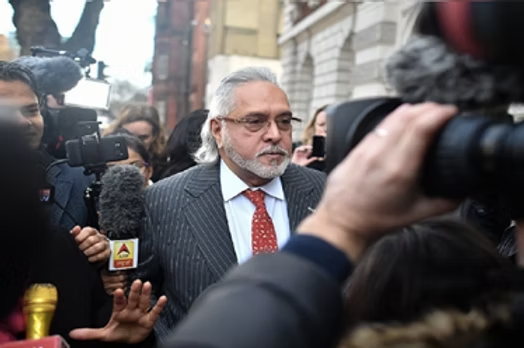
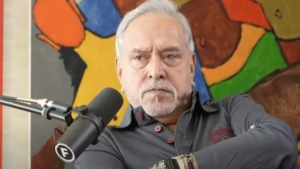
    Vijay Mallya, the flamboyant businessman once celebrated as the “King of Good Times,” has re-entered the public eye in June 2025 with a viral four-hour podcast hosted by YouTuber Raj Shamani. Living in the UK as a fugitive since 2016, Mallya faces fraud and money laundering charges over ₹9,000 crore in loan defaults tied to the collapse of Kingfisher Airlines. His recent statements, coupled with ongoing legal battles and the Royal Challengers Bengaluru (RCB) IPL victory, have reignited debates about his legacy, guilt, and potential return to India. This blog explores the latest developments surrounding Mallya, his podcast revelations, and the public’s polarized reactions.

    The Podcast: A Rare Public Appearance

    On June 5, 2025, Mallya broke nearly a decade of silence in a podcast titled “Vijay Mallya Podcast: Rise and Downfall of Kingfisher Airlines, Loans & RCB.” The episode, amassing nearly 3 million views, saw Mallya address the collapse of Kingfisher Airlines, his legal troubles, and his role in founding RCB. He apologized to former Kingfisher employees, blaming the 2008 global financial crisis and rejected downsizing proposals for the airline’s failure. Mallya also discussed the iconic Kingfisher Calendar, crediting it for launching stars like Deepika Padukone and Katrina Kaif, and revealed the business-driven motive behind buying RCB to promote his Royal Challenge whisky brand.

    The Podcast :
    The Podcast : Vijay Mallya

    Legal Battles and Extradition Woes

    Mallya remains embroiled in legal challenges. In April 2025, he lost a UK High Court appeal against a bankruptcy order for over ₹11,101 crore owed to Indian banks, including the State Bank of India. He claims banks recovered ₹14,131 crore from his assets, exceeding the original ₹6,203 crore debt, and argues this should clear his dues. However, Indian authorities maintain fraud and money laundering charges, with extradition efforts ongoing since his 2016 departure. Mallya insists he informed then-Finance Minister Arun Jaitley before leaving India, a claim sparking political controversy after Congress MP Pawan Khera criticized Jaitley’s initial denial.

    The Fugitive Label: Mallya’s Defense

    Mallya vehemently denies the “thief” label, accepting the “fugitive” tag but arguing he left India on a pre-scheduled trip and stayed abroad due to fears of unfair detention. He told Shamani, “I didn’t run away… where is the ‘chor’ coming from?” Citing European Convention on Human Rights rulings on India’s detention conditions, he expressed willingness to return if assured a fair trial and dignified existence. Mallya also claimed he made four settlement offers between 2012 and 2015, all rejected by banks, and accused authorities of selective justice.

    Mallya’s Defense
    Vijay Mallya Defense

    RCB’s IPL Win and Mallya’s Legacy

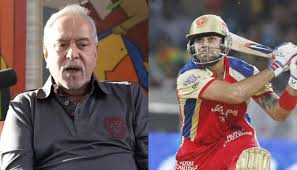
    The timing of Mallya’s podcast, shortly after RCB’s 2025 IPL victory, has fueled speculation about a calculated PR move. Mallya, who bought RCB for $112 million in 2008, revealed he bid for three IPL franchises and handpicked Virat Kohli after spotting him in the U-19 World Cup. While he takes pride in RCB’s success, some question whether he’s leveraging the win to reshape his image. The franchise, now valued at over ₹1,000 crore, has moved on since Mallya’s exit from United Spirits Limited.

    Public and Political Reactions

    Public sentiment, reflected on X, is deeply divided. Supporters like industrialist Harsh Goenka argue Mallya’s dues are settled, pointing to ₹14,100 crore recovered against a ₹6,203 crore debt, and question why larger defaulters face less scrutiny. Critics, however, highlight the 10,000 jobs lost and investors affected by Kingfisher’s collapse, viewing Mallya as a symbol of privilege who fled justice. Politically, his claim of informing Jaitley has reignited debates, with opposition leaders like Pawan Khera using it to criticize the government. One X user quipped, “RCB winning the IPL and Mallya’s podcast—2025 is wild!”

    Vijay Mallya
    Vijay Mallya

    What’s Next for Mallya?

    Mallya’s current life in the UK is described as “semi-retired,” with properties in England, France, and the U.S. His extradition battle continues, with India pursuing him through countries where he holds assets. The podcast has sparked discussions about whether it’s a genuine attempt to clear his name or a strategic move to regain public favor. As legal proceedings drag on, Mallya’s story remains a complex mix of business ambition, financial collapse, and legal defiance.

    Also Read This : Google Photos New Features 2025 : Smarter Editing, Easy Sharing & AI Search Upgrades

    Vijay Mallya re-emergence via the viral podcast has brought his saga back into focus, blending nostalgia for his “King of Good Times” era with ongoing controversies. While he defends his actions and seeks a fair trial, the Indian government and public remain divided on his culpability. As RCB celebrates its IPL triumph and Mallya fights his legal battles, his story underscores the fine line between business failure and alleged fraud. Whether he returns to India or remains a fugitive, Mallya’s narrative continues to captivate and polarize.

  • “Ramji Lal Suman: 7 Strong Accomplishments of a Visionary Leader

    “Ramji Lal Suman: 7 Strong Accomplishments of a Visionary Leader

    Ramji Lal Suman: A Comprehensive Biography Born in Bahardoi village, Hathras district, Uttar Pradesh, on July 25, 1950, Ramji Lal Suman is a well-known Indian politician who has worked for more than 40 years. His commitment to public service is demonstrated by his path from student activism to becoming a well-known leader in the Samajwadi Party (SP) and holding several terms in both houses of the Indian Parliament. Legislative Research for PRS.

    Ramji Lal Suman

    Childhood and Schooling

    Suman was raised in a modest household and finished his elementary schooling in his hometown. After completing his secondary schooling in Hathras, he enrolled at Agra College, Agra University, where he graduated with a Bachelor of Arts (B.A.) in 1971–72 and a Bachelor of Laws (LL.B.) in 1980–81. Suman showed a strong interest in social issues and governance during his time in college by getting actively involved in student politics.

    Beginning Activism and Entering Politics

    During the 1975–1977 Emergency period, which was imposed by then-Prime Minister Indira Gandhi, Suman’s political activism increased. He was imprisoned for his dissent as a vocal opponent of the Emergency. Suman’s dedication to social justice and democratic principles catapulted him into mainstream politics after his release.

    Ramji Lal Suman

    A Career in Parliament

    Suman ran as a Janata Party candidate from the Firozabad constituency in Uttar Pradesh in the 1977 general elections at the age of 26. His election signalled the start of a lengthy and significant career in parliament. In 1989, he was re-elected as a Janata Dal member from Firozabad. From 1990 to 1991, he was in Prime Minister Chandra Shekhar’s cabinet as the Minister of State for Child Development, Women’s Welfare, and Labour Welfare. ​

    Suman became a member of the newly established Samajwadi Party in 1992, which was led by Mulayam Singh Yadav. He served consecutive terms in the 13th and 14th Lok Sabhas after winning the Firozabad seat in the 1999 and 2004 general elections as an SP candidate. During his tenure, he focused on social welfare issues and actively participated in parliamentary debates.​

    Suman was nominated for the Rajya Sabha by the Samajwadi Party in February 2024. On April 3, 2024, he was elected without opposition and took office as a Member of Parliament in the Upper House.

    Ramji Lal Suman

    Positions in the Samajwadi Party

    Ramji Lal Suman has played a crucial role in the Samajwadi Party outside of his parliamentary responsibilities. He has served as National General Secretary since 1996, making a substantial contribution to the party’s organisational growth and strategy. His influence and dedication to the party’s fundamental principles are highlighted by his longstanding affiliation with it.​

    Individual Life

    Suman is wed to Rem Lata Suman; together they have three daughters and one son. Ranjeet Suman, his son, is political as well and has followed in his father’s footsteps. The family lives in Uttar Pradesh’s Agra.

     Ramji Lal Suman
    Ramji Lal Suman

    Disputes

    Following his comments regarding historical figure Rana Sanga during a Rajya Sabha session in March 2025, Suman found himself at the centre of a political controversy. The statement brought attention to the difficulties and scrutiny that frequently come with a career in public service, sparking discussions and criticism from a variety of sources. ​

    Contributions and Legacy

    Ramji Lal Suman’s political journey reflects a steadfast dedication to democratic principles and social welfare. Suman has continuously supported the underprivileged and worked for inclusive development, starting in his early years as a student activist against authoritarianism and continuing in his capacities as a legislator and minister. The political landscape of Uttar Pradesh has been permanently altered by his vast experience and leadership within the Samajwadi Party.

    Suman continues to be a prominent voice in Indian politics as he serves in the Rajya Sabha, promoting social justice and fair development.

    ALSO READ THIS: Tuhin Kanta Pandey: Powering India’s Financial Growth with 35+ Years of Excellence”

  • Abu Azmi controversy: details on the controversy, why it started and other details.

    Abu Azmi controversy: details on the controversy, why it started and other details.

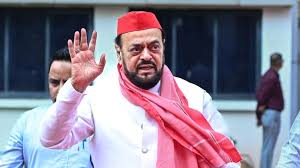
    Abu Azmi controversy: On Monday March 3, 2025 Abu Azmi said a statement about Aurangzeb in his statement he said that we are being taught the wrong history about Aurangzeb and he was a great ruler and administrator. When further some reporters ask him that if he was a cruel ruler, he defended him and said no he has done some great work in the past. Statements also include things about Shivaji Maharaj and Sambhaji Maharaj.

     DETAILS ON Abu Azmi controversy
    DETAILS ON Abu Azmi controversy

    When he was further asked about the fight between the two Kings, he said that the fight was about two kings and kingdoms not about Hindu and Muslim. These statements let to Spark controversy against him.

    Who is Abu Azmi?

    Abu Asim Azmi is an Indian politician from the Samajwadi Party (SP) and a prominent Muslim leader in Maharashtra. He is known for his outspoken views on social, religious, and political issues.

    Who is Abu Azmi?
    Who is Abu Azmi?

    He is a businessman-turned-politician who has played a key role in Muslim representation within Maharashtra politics, especially in areas like Mumbai, Thane, and Azamgarh (Uttar Pradesh).

    What is the reason behind Abu Azmi controversy?

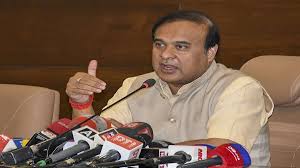
    This controversy started with Abu Azmi reacting to Assam CM Himanta Biswa Sarma. He got upset with the statement of Assam CM. At an event Himanta  said “Aurangzeb wanted to finish the Hindu religion but, in that place, Aurangzeb got finished. He also said Hindu religion always exists while remaining existing.

    Assam CM Himanta Biswa Sarma
    Assam CM Himanta Biswa Sarma

    Reacting to this statement Abu Azmi said the history is teaching false about Aurangzeb, he further added that Aurangzeb has made several temples and he also extended his rule till Afghanistan. He also said that people are dragging him into Hindu- Muslim topics to spoil his name.

    The charges set on him after the controversy.

    The Abu Azmi controversy, led his suspension from the Maharashtra Assembly. This has also triggered several politicians and other communities. these politicians are saying that he should resigned from his post.

    How are other politicians reacting on it?

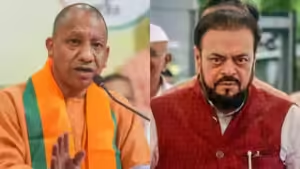
    Yogi Adityanath on the comment:

    Yogi Adityanath slammed Abu Azmi and said from praising Aurangzeb, calling him his idol and accepting Mughal rule. He also further said that he is praising Aurangzeb but cursing the Maha Kumbh event. He also said that he should be expelled from the SP party and apologise for his statement publicly. They should spend Azami in UP for treatment.

    Yogi Adityanath on the comment
    Yogi Adityanath on the comment

    Akhilesh Yadav on Abu Azmi controversy:

    Akhilesh Yadav mocked the suspension, claiming it was done on the base of ideology and negative thoughts of the BJP. He also said that the truth can’t be changed.

    Shiv sena on Abu Azami:

    Shiv sena members also said that the Abu Azmi statement was wrong and should be suspended.

    Also Read This: Delimitation: Details note on the topic Delimitation and how it is related case in Tamil Nadu.

  • Delimitation: Details note on the topic Delimitation and how it is related case in Tamil Nadu.

    Delimitation: Details note on the topic Delimitation and how it is related case in Tamil Nadu.

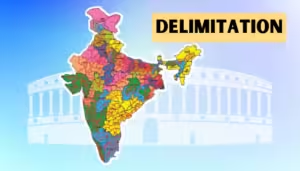
    Delimitation: The Delimitation means an act of setting and defining boundaries. Apart from this in a political context it means Defining or redrawing the boundaries of an electoral constituency.

    what is Delimitation?
    what is it?

    Why is Delimitation needed?

    The need for it is as follows: –

    1. It ensures equal representation with fundamental principles like “one person, one vote”.
    2. It reflects by changing the population. In this case it ensures that the electoral boundaries remain up to date with these changes and prevent some areas from being over or underrepresented.
    3. It maintains and creates fairness; it helps to maintain a level playing field for all political parties and candidates.

      The need for delimitation
      The need for it.
    4. It avoids political biasness.
    5. It create a perfect balance between urban and rural population.
    6. It strengthens our democracy.

    How to achieve it?

    The steps to achieve it are as follows: –

    1. By establishing a Delimitation Authority. A dedicated, independent Delimitation Commission or Election Commission is usually set up.
    2. Defining the Criteria for Delimitation like Population, Geographical Factors, Administrative Boundaries, Social and Cultural Considerations.
    3. By using Census Data for Fair Representation.
    4. By drafting and public consultation.
    5. By Finalizing and Implementing Changes.
    6. The Periodic Review and Adjustments.

    What are the impacts of Delimitation?

    It has both positive and negative impacts, some of them are as follows: –

    Positive Impact Delimitation:

    1. It ensures Equal Representation.
    2. It Strengthens Democracy.
    3. It improves Electoral Transparency and Legitimacy.
    4. It adapts to Population Shifts.
    5. It reduces Political Manipulation.
    6. It encourages Balanced Development.

      It has both positive and negative impacts
      It has both positive and negative impacts

    Negative Impacts Delimitation:

    1. It has Political Controversies and Resistance.
    2. It has risk political biasness.
    3. It has disruption in Local Governance.
    4. It has legal Disputes and Delays
    5. It has administrative and logistical Challenges.

    The Challenges of it.

    It is essential for fair electoral representation, but it comes with several challenges.

    The Challenges of Delimitation.
    The Challenges of it.

    It has several challenges like: –

    1. Political challenges.
    2. Administrative challenges.
    3. Legal challenges.
    4. Social challenges.
    5. Cultural challenges.

    Details on Delimitation in Tamil Nadu.

    Tamil Nadu is in a strong opposition to the upcoming delimitation process. It is because they are fearing drastically reducing its parliamentary representation.

    Details on Delimitation in Tamil Nadu.
    Details on it in Tamil Nadu.

    Apart from this the state is also having a successful control in their population growth as they are worried about the population biased redistribution of seeds. They also fear that the state with a higher growth rate will get favors.

    Also Read This: Vicky Kushal: Details on family, relationship, childhood, career and achievements.

    The Chief Minister M.K. Stalin on Tamil Nadu case.

    The Chief Minister M.K. Stalin has also put a strong voice and opposition against the same. The Tamil Nadu assembly has passed resolutions against the delimitation process. Apart from all this it also highlighting a growing north-south political divide on this issue.

    Chief Minister M.K. Stalin
    Chief Minister M.K. Stalin