Category: News

  • New US Visa Rules for Students : Why Return Before September 15? Impact on Indian Students

    New US Visa Rules for Students : Why Return Before September 15? Impact on Indian Students

    New US Visa Rules for Students : Concerns have risen among Indian and other international students studying in the United States due to potential changes in student visa rules. Under the new regulations, students are being advised to be more cautious regarding their status and travel plans. The date 15 September is being widely discussed, as many students are being advised to return to the US around this timeframe.

    This change is particularly important for students who are currently outside the US for summer breaks, internships, research programs, or family reasons. The key question is whether they must return within the stipulated period, and whether any delay could affect their visa or immigration status.

    Why is the 54-day timeline in the news?

    The 54-day timeline is under discussion in the context of the new visa rules because many students are planning their return within this period. Typically, students must reach their campus before the start of the new semester at US universities. If a student returns later than the scheduled time, they may face issues related to admission, record updates, or immigration procedures.

    New US Visa Rules for Students
    New US Visa Rules for Students

    Experts recommend that students promptly check their I-20, SEVIS records, and visa status. Any negligence could impact their ability to continue studies in the US in the future.

    Which students will be affected by the new rules?

    New US Visa Rules for Students : These rules are likely to primarily affect students on F-1 or M-1 visas. Indian students form one of the largest groups of international students in the US, so the impact of this change is expected to be significant and widespread.

    It will particularly affect students who:

    1. Returned to India during summer vacation.
    2. Are planning to reach the US before the new semester begins.
    3. Are in the process of visa renewal or documentation.
    4. Are traveling for research, internships, or coursework.

    All such students must pay special attention to their travel plans and university instructions.

    Why has concern increased among Indian students?

    A large number of Indian students pursue higher education in the US, especially in fields like engineering, computer science, management, healthcare, and research. Any change in visa rules directly affects the studies, travel, and career plans of thousands of students.

    Another major reason for concern is that many students are already navigating visa appointments, document verification, and university reporting procedures. If the deadline becomes stricter, they may need to urgently revise their flight bookings, accommodation, and campus joining plans.

    New US Visa Rules for Students : Why Return Before September 15? Impact on Indian Students
    New US Visa Rules for Students : Why Return Before September 15? Impact on Indian Students

    What should students do?

    New US Visa Rules for Students : Indian students studying in the US are being advised to immediately contact their university’s International Student Office. Additionally, they must verify the validity of all visa-related documents.

    Essential Steps:

    1. Regularly check official university emails and notices.
    2. Verify the validity of your I-20 and passport.
    3. Confirm any updates in your SEVIS record.
    4. Review your visa status before travel.
    5. In case of delay, obtain written guidance from the university.

    Experts emphasize that students should rely on official instructions rather than rumors. In situations involving changes to visa rules, the most important thing is to gather accurate information in time and make decisions accordingly.

    New US Visa Rules for Students : Is this a permanent change?

    New US Visa Rules for Students : There is still some confusion among students regarding these changes. In many cases, the interpretation of visa rules, administrative processes, and university guidelines may vary. Therefore, it is important to understand that every student’s situation is unique.

    Depending on the student’s course, semester start date, or immigration status, the impact of the rules may differ. This is why students are advised to seek personalized guidance.

    Also Read This : Tensions in West Asia Reach Boiling Point : Iranian Minister Arrives in Pakistan, US Continues Bombing on 10th

    New US Visa Rules for Students serve as an important alert for Indian students studying in the United States. The growing concern around the 15 September deadline and the 54-day timeline highlights that students must prepare their travel and documentation well in advance. Returning to the US on time, following university instructions, and relying on official information are the safest steps in this situation.

    As more clarity emerges on the rules, students will need to adjust their plans accordingly to ensure there is no negative impact on their studies or visa status.


    View this post on Instagram
     

    A post shared by AVSPOST (@avspost)

  • Tensions in West Asia Reach Boiling Point : Iranian Minister Arrives in Pakistan, US Continues Bombing on 10th

    Tensions in West Asia Reach Boiling Point : Iranian Minister Arrives in Pakistan, US Continues Bombing on 10th

    Tensions in West Asia : West Asia is once again passing through a phase of severe tension. On one hand, an Iranian minister has arrived in Pakistan, sparking new discussions about regional diplomacy. On the other, the United States has continued its bombing campaign for the 10th consecutive day. This sequence of events has further heightened concerns about security, stability, and peace across the region.

    Amid rapidly changing circumstances, the question is becoming more urgent: when will the tensions in West Asia finally subside? With military actions, retaliatory statements, and regional diplomacy unfolding simultaneously, the impact on ordinary people continues to grow.

    Why is the Iranian Minister’s Visit to Pakistan Significant?

    Tensions in West Asia : The visit of the Iranian minister to Pakistan is being considered highly important. It comes at a time when instability persists on multiple fronts in the region. Issues such as border security, trade, energy cooperation, and regional politics have long been under discussion between Pakistan and Iran.

    Tensions in West Asia Reach Boiling Point : Iranian Minister Arrives in Pakistan, US Continues Bombing on 10th
    Tensions in West Asia Reach Boiling Point : Iranian Minister Arrives in Pakistan, US Continues Bombing on 10th

    Experts believe that the purpose of this visit is not only to strengthen bilateral relations but also to develop a common stance on the deteriorating situation in West Asia. At a time when conflicts are escalating, dialogue and coordination between neighboring countries become even more crucial.

    Tensions in West Asia : The Visit May Also Carry a Diplomatic Message

    In diplomatic circles, it is also being viewed as a strong diplomatic signal. When reports of wars and attacks continue to emerge from the region, high-level meetings indicate that countries prefer to seek the path of dialogue rather than military confrontation.

    However, in the current tense atmosphere, the impact of any meeting will only become visible when there is a reduction in violence and attacks on the ground.

    US Continuous Bombing Raises Concerns

    Tensions in West Asia : On the other hand, the United States’ bombing for the 10th consecutive day has further complicated the situation. The ongoing strikes are deepening military tensions in the region, and fears of retaliatory actions persist.

    Such actions not only expand the scope of the conflict but also seriously affect civilian safety, infrastructure, and the humanitarian situation. The international community is continuously appealing for restraint, but the ground reality remains extremely fragile.

    Regional Impact of Continuous Attacks

    According to analysts, the sustained bombing is not affecting just one country but the stability of the entire West Asia region. Energy supplies, sea routes, commercial activities, and diplomatic relations could all be impacted by this tension.

    If the conflict drags on longer, it could also affect global markets. Direct effects may be seen on oil prices, transportation costs, and security strategies.


    View this post on Instagram


    A post shared by AVSPOST (@avspost)

    Why Are Hopes for Peace Weakening?

    In the current situation, hopes for peace are diminishing because military operations continue on one side, while credible dialogue appears lacking on the other. To stop any conflict, ceasefire, mediation, and mutual trust are essential — but all three currently appear weak in the region.

    Many countries in West Asia are grappling with their own interests and security concerns. In such a scenario, the impact of any single event can spread across the entire region. This is why every new attack, every new visit, and every statement is making international headlines.

    What Could Happen Next?

    Tensions in West Asia : The situation in West Asia in the coming days will largely depend on how effective diplomatic efforts prove to be and to what extent military actions are reduced. If regional powers and global players actively work to de-escalate tensions, the situation may be brought under control.

    At present, both the visit of the Iranian minister to Pakistan and the continued US bombing demonstrate that West Asia stands at a highly sensitive juncture. The path to peace is not easy, but dialogue and restraint may be the biggest ways out of this crisis.

    Also Read This : West Asia Tensions Put Pressure on Crude Prices; Mixed Sentiment in Asian Markets

    The ongoing tensions in West Asia have once again proven that regional stability cannot be maintained through military strength alone, but only through diplomacy, trust, and restraint. With the Iran-Pakistan dialogue and US military actions in the background, the world’s attention is now fixed on the next steps.

  • India’s First Private Rocket : Skyroot Aerospace Makes History with Vikram-1 Launch

    India’s First Private Rocket : Skyroot Aerospace Makes History with Vikram-1 Launch

    In a landmark achievement for India’s space industry, Skyroot Aerospace has successfully launched India’s first private rocket into orbit. Named Vikram-1, this mission — codenamed “Mission Aagaman” — marks a new era in Indian space exploration, where private companies are now capable of developing and launching orbital-class rockets.

    On July 18, 2026, the 20–24 metre tall Vikram-1 rocket lifted off from the Satish Dhawan Space Centre in Sriharikota, making India one of the few nations with proven private orbital launch capability.

    What Makes This Launch Historic?

    The successful flight of India’s first private rocket is more than just a technical milestone. It represents the growing strength of India’s private space ecosystem and the fruition of government policies that opened up the sector to startups.

    India’s First Private Rocket: Skyroot Aerospace Makes History with Vikram-1 Launch
    India’s First Private Rocket: Skyroot Aerospace Makes History with Vikram-1 Launch

    Skyroot Aerospace, a Hyderabad-based startup founded by former ISRO scientists, designed and built the Vikram-1 entirely in India. The rocket features an all-carbon composite structure, advanced solid rocket motors, and 3D-printed components — showcasing world-class indigenous technology.

    Mission Aagaman : Key Highlights

    • Rocket: Vikram-1 (four-stage orbital launch vehicle)
    • Payload Capacity: Up to 350 kg to Low Earth Orbit
    • Orbit Targeted: Approximately 450 km altitude at 60° inclination
    • Payloads: Included satellites and technology demonstrators from Indian startups (Grahaa Space, Cosmoserve) and Germany’s Dcubed, along with Skyroot’s own SCOPE satellite.

    The primary objective of this maiden flight was to collect real-time flight data on propulsion, stage separation, guidance, navigation, and control systems. This data will be crucial for refining future commercial launches.

    Significance for India

    The launch of India’s first private rocket strengthens the country’s position in the global small satellite launch market. With increasing demand for dedicated and responsive launches, Skyroot aims to offer cost-effective and rapid access to space for both domestic and international customers.

    Prime Minister Narendra Modi congratulated the Skyroot team, stating that this achievement will inspire countless young Indians to dream bigger in science and innovation.


    View this post on Instagram


    A post shared by AVSPOST (@avspost)

    India’s First Private Rocket : The Road Ahead

    This success is just the beginning. Skyroot has already announced plans for an upgraded variant, Vikram-1U, with higher payload capacity. With more test flights planned, the company is gearing up for regular commercial operations in the coming years.

    The successful debut of India’s first private rocket not only boosts national pride but also signals to the world that India is serious about becoming a major player in the global space economy, projected to reach $600 billion in the near future.

    Also Read This : West Asia Tensions Put Pressure on Crude Prices; Mixed Sentiment in Asian Markets

    The launch of Vikram-1 by Skyroot Aerospace will be remembered as the moment when India’s private space sector truly arrived. As India’s first private rocket soars into the skies, it carries with it the dreams and ambitions of a new generation of Indian space entrepreneurs.

  • Russia Doomsday Aircraft : What is it, how special is it, and how does it differ from the American Doomsday Aircraft?

    Russia Doomsday Aircraft : What is it, how special is it, and how does it differ from the American Doomsday Aircraft?

    Russia Doomsday AircraftAmid rising US-Iran tensions, global attention has intensified on Russia’s secretive Doomsday aircraft. This is not an ordinary military plane, but a highly advanced airborne command center designed to maintain the country’s military command in the air during extreme crises, nuclear attacks, or large-scale disasters. This is why it is also called a “Doomsday Plane” or “Survivable” aircraft.

    The biggest feature of these aircraft is their ability to securely operate the country’s military and political leadership even if ground-based command centers are destroyed or rendered inoperable. This is why they are considered one of the most critical components of national security.

    What is a Doomsday Aircraft ?

    A Doomsday Aircraft is a specially modified military aircraft equipped with advanced communication systems, secure control rooms, satellite links, encrypted networks, and the capability for very long-duration flights. Its purpose is to keep top national leadership safe and connected during wars, nuclear crises, or major national emergencies.

    Russia Doomsday Aircraft
    Russia Doomsday Aircraft

    These aircraft are designed to maintain contact with the army, air force, navy, and other command structures even if ground bases are destroyed. In many cases, the plane functions as a temporary airborne military headquarters.

    Key Features of These Aircraft

    1. Robust Communication Systems: Doomsday planes have the ability to connect via satellites, radio, and secure digital networks.
    2. Extended Flight Endurance: They are built to remain airborne for long periods and can continue missions by refueling in the air if necessary.
    3. Electronic Protection: These planes are equipped with special technologies to protect against electronic jamming, cyber attacks, and enemy surveillance.
    4. Command and Control Systems: They include facilities for issuing military orders, making strategic decisions, and maintaining emergency communications.
    5. Prepared for Nuclear Crises: Most importantly, these aircraft are designed to keep national command operational even in extreme scenarios like nuclear war.

    Why did Russia send its Doomsday Aircraft to Iran?

    The news of Russia deploying its Doomsday plane has raised questions about why this step was taken. According to experts, the deployment of such aircraft usually signals an unusual security situation, heightened military alertness, or strategic preparation. In the atmosphere of growing US-Iran tensions, this move could make the regional situation even more sensitive.

    However, the real purpose behind deploying any Doomsday plane is often not publicly disclosed. It is possible that this was part of an exercise, a diplomatic signal, or military preparedness. But one thing is certain: the mere presence of such aircraft sends a strong message that the country is ready for any emergency.

    Russia Doomsday Aircraft
    Russia Doomsday Aircraft

    How is Russia’s plane different from the American Doomsday Aircraft?

    Both the United States and Russia possess Doomsday plane capabilities, but there are differences in their platforms, technology, and operational style. America’s most well-known Doomsday plane is the E-4B Nightwatch, known as the National Emergency Airborne Command Post. It serves as a secure airborne command post for the US President, defense leadership, and military command.

    Russia’s Doomsday planes fall into the same category, but their design, communication systems, and mission profiles may differ. Russia typically uses these specialized command aircraft for controlling strategic nuclear forces and ensuring continuity of national leadership.

    Main Differences Between American and Russian Doomsday Aircraft

    • Platform: American planes are often Boeing-based, while Russia uses its own domestic military aircraft platforms.
    • Role: Both aim to maintain command and control, but their operational structures and strategic priorities can differ.
    • Technical Architecture: There are differences in communication, security, and electronic defense systems due to each country’s distinct technological approaches.
    • Strategic Message: Both the US E-4B and Russia’s Doomsday plane symbolize power projection and crisis management.
    Main Differences Between American and Russian Doomsday Aircraft
    Main Differences Between American and Russian Doomsday Aircraft

    Which Countries Have Doomsday Aircraft?

    Only a few countries possess Doomsday plane capabilities. These include the United States, Russia, China, and to some extent other nuclear or advanced military powers. However, each country’s aircraft differs in technology, capability, and level of secrecy.

    Such aircraft are rarely seen publicly because their deployment and capabilities are tied to national security. This is why information about them is limited and often based on estimates.

    Why does the importance of these aircraft increase?

    Whenever global tensions rise, discussion about Doomsday planes intensifies. This is because these aircraft are not just military equipment but part of a national survival strategy. In times of crisis, they ensure that leadership continuity is not broken and that retaliatory actions or crisis management can continue.

    The discussion surrounding Russia’s secretive Doomsday plane signals how important these platforms are in the global security landscape. Their presence amid US-Iran tensions conveys not just a technical but also a strategic and political message.

    Also Read This : West Asia Tensions Put Pressure on Crude Prices; Mixed Sentiment in Asian Markets

    Doomsday planes are among the most secretive and powerful military capabilities in modern warfare and crisis management. Whether it is Russia’s Doomsday plane or America’s E-4B Nightwatch, both serve the same purpose — keeping the command system alive during any disaster or war. This is why these aircraft are counted among the world’s most important military assets.


    View this post on Instagram
     

    A post shared by AVSPOST (@avspost)

  • West Asia Tensions Put Pressure on Crude Prices; Mixed Sentiment in Asian Markets

    West Asia Tensions Put Pressure on Crude Prices; Mixed Sentiment in Asian Markets

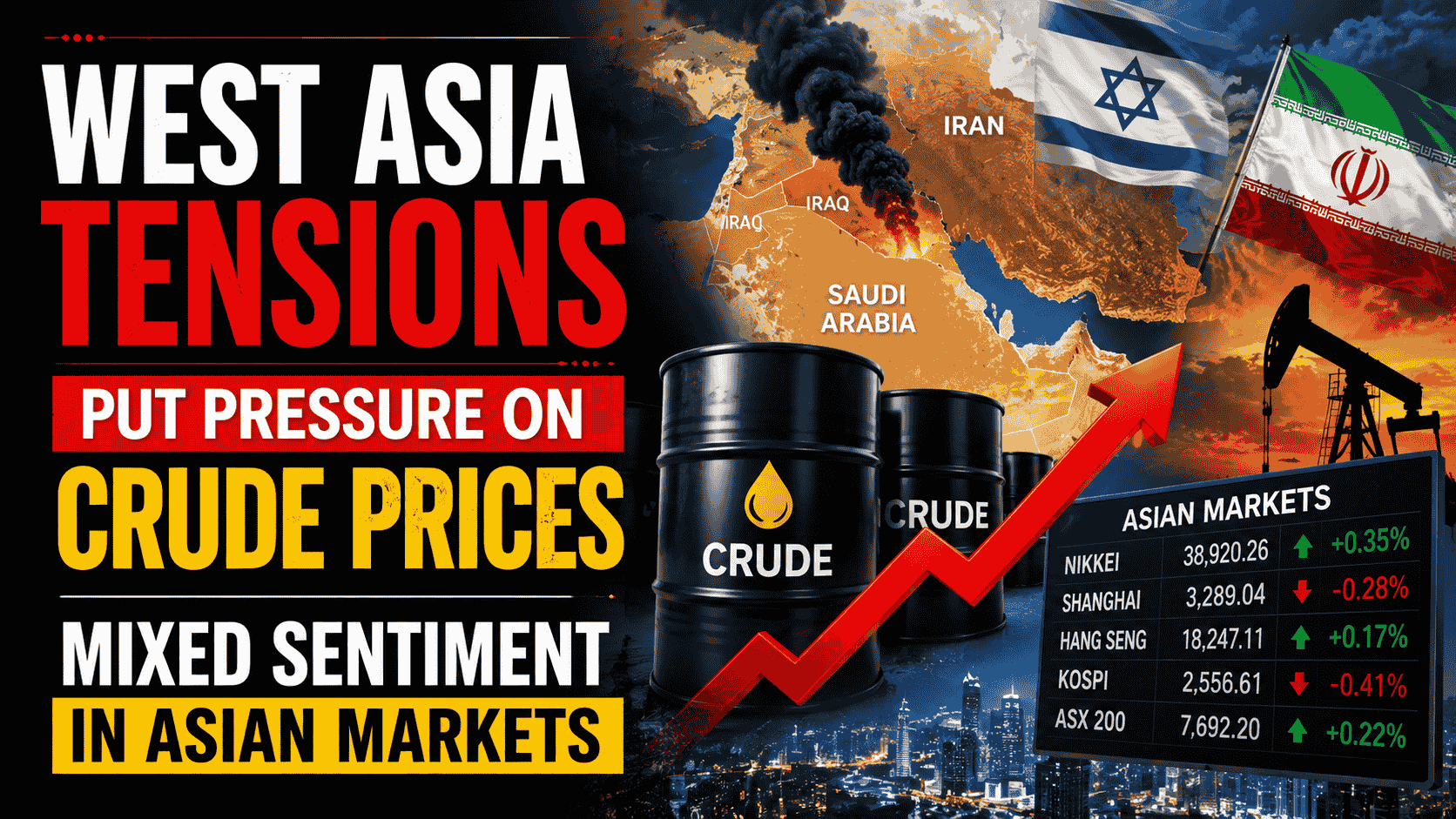
    West Asia tensions increase pressure on crude oil prices. Rising conflicts and geopolitical uncertainty in West Asia have intensified volatility in global energy markets. Crude oil prices have once again climbed higher as investors fear potential supply disruptions. The oil market was already closely watching signals related to demand, production, and interest rates, but the regional tensions have added an extra risk premium to prices.

    Analysts believe that if the conflict deepens, it could impact sea routes, supply chains, and export activities. This is the reason behind the current strength in crude oil prices. For energy traders, this situation is creating short-term volatility along with medium-term uncertainty.

    Why have oil prices risen?

    West Asia tensions : The biggest reason for the rise in oil prices is supply risk. West Asia is a key center for global oil supply, and any instability in the region immediately affects international markets. Investors are cautious that if tensions escalate, it could impact production, transportation, and exports.

    Additionally, there is an ongoing fear in the market that any pressure on energy infrastructure could limit the availability of crude oil. In such a scenario, traders increase buying in anticipation of future price rises, leading to gains in both spot and futures markets.

    West Asia Tensions Put Pressure on Crude Prices; Mixed Sentiment in Asian Markets
    West Asia Tensions Put Pressure on Crude Prices; Mixed Sentiment in Asian Markets

    Mixed Trends in Asian Markets Tensions

    West Asia tensions : Amid the turmoil in the oil market, Asian stock markets showed mixed trading. Several markets faced pressure in the early session, but some recovery was seen later. Tokyo and Seoul markets opened with losses, though they saw some improvement as trading progressed.

    On one hand, investors adopted a cautious stance due to geopolitical tensions, while on the other, buying in technology stocks and select sectors provided support to the markets. This situation indicates that global markets are not yet showing a clear directional trend.

    Recovery in Tokyo and Seoul After Early Declines

    The initial declines in major Asian markets like Tokyo and Seoul were primarily due to weakness in global risk sentiment. Investors typically shift toward safe-haven assets during such times, leading to increased selling in equity markets.

    However, as the day progressed, some investors viewed the dip as a buying opportunity. This resulted in partial recovery in both markets. It signals that market participants are still assessing the severity of the situation and are waiting for confirmation of any major trend.

    West Asia Tensions Put Pressure on Crude Prices; Mixed Sentiment in Asian Markets
    West Asia Tensions Put Pressure on Crude Prices; Mixed Sentiment in Asian Markets

    Potential Impact on Global Markets

    West Asia tensions : The impact of tensions in West Asia is not limited to oil alone. It can also affect inflation, transportation costs, industrial production, and central bank policies. If crude oil prices remain high for a prolonged period, fuel and logistics costs could rise, potentially increasing inflationary pressure in many countries.

    High energy prices also affect consumer spending, which can slow down economic growth. This is why investors are closely monitoring the movement in oil prices.

    Impact on Dollar and Bond Markets

    West Asia tensions : During such periods, the US dollar can strengthen as global investors move toward safe-haven assets. There is also likely to be increased demand for government bonds. This risk-averse behavior can put pressure on stock markets, especially in economies that are heavily dependent on energy imports.

    What are the signals for investors?

    Market experts say that investors should remain cautious in the current environment. If crude prices rise further, costs could increase in sectors such as energy, transportation, and chemicals. On the other hand, oil and gas companies may benefit.

    In the short term, market direction will primarily depend on developments in West Asia, crude oil supply risks, and global risk sentiment. If tensions ease, oil prices may see some softening. However, if the situation worsens, markets could experience further volatility.

    Also Read This : Trump’s Loaded and Locked Statement : What Does It Signal? Why Has It Caused a Stir Amid US-Iran Tensions?

    West Asia tensions : The escalating conflict in West Asia has once again demonstrated how quickly geopolitical events can influence global energy markets. The rise in oil prices and the mixed performance in Asian markets are signs of this uncertainty. In the coming days, investors’ attention will remain focused on the direction of the conflict, supply risks, and the reaction of international markets.


    View this post on Instagram


    A post shared by AVSPOST (@avspost)

  • Trump’s Loaded and Locked Statement : What Does It Signal? Why Has It Caused a Stir Amid US-Iran Tensions?

    Trump’s Loaded and Locked Statement : What Does It Signal? Why Has It Caused a Stir Amid US-Iran Tensions?

    Trump’s Loaded and Locked Statement : A statement by US President Donald Trump has created a new wave of activity in international politics. He said that missiles for Iran are “loaded and locked.” Following this remark, questions have arisen about its real meaning and whether the United States is preparing for military action against Iran.

    This statement comes at a time when tensions between the US and Iran are already very high. The security situation in West Asia remains extremely sensitive, and the impact of any sharp statement is being felt at the global level.

    What Does Trump’s ‘Loaded and Locked’ Statement Mean?

    In military language, “loaded and locked” means that weapons are fully prepared and positioned in the final stage to be fired at the target. In simple terms, it can be understood as: the preparation for an attack is complete, and action can be taken as soon as the order is given.

    Trump’s statement is being viewed in this context — that the US is ready to increase pressure on Iran or carry out a possible retaliatory action. However, such statements also carry political meaning, so it would not be correct to see it only as a military declaration.

    Trump's Loaded and Locked Statement : What Does It Signal? Why Has It Caused a Stir Amid US-Iran Tensions?
    Trump’s ‘Loaded and Locked’ Statement : What Does It Signal? Why Has It Caused a Stir Amid US-Iran Tensions?

    Why Have US-Iran Tensions Increased?

    For some time now, relations between Iran and the United States have remained continuously tense. There has been deep disagreement between the two countries on issues such as Iran’s nuclear program, regional influence, sanctions, and US military presence in West Asia.

    The US has long accused Iran of destabilizing regional stability. On the other hand, Iran claims that the US puts pressure on its sovereignty and tries to weaken it through economic sanctions.

    Political Implications of Trump’s Statement

    Trump’s ‘Loaded and Locked’ Statement : Donald Trump is known for his aggressive and direct political statements. His remark is being seen not just as a military warning, but also as a political message.

    According to experts, such statements are often made to gain an upper hand in domestic politics, diplomatic pressure, and international negotiations. The purpose is to signal to the other side that the United States is not in the mood to back down.

    Is This a Direct Signal of an Attack?

    Trump’s ‘Loaded and Locked’ Statement : At present, this statement cannot be considered a direct declaration of war. But it is clear that the US wants to send a strong message to Iran. The use of words like “loaded and locked” shows that the situation is serious and tensions could escalate at any time.

    In such circumstances, the role of diplomatic dialogue becomes even more important. If the path of talks closes, instability in the region could increase further.

    What Could Be the Impact on West Asia?

    Trump’s ‘Loaded and Locked’ Statement : The growing tension between Iran and the US does not remain limited to just these two countries. Its effects can be felt across West Asia, the oil market, global trade, and the security architecture.

    If the situation worsens, there could be increased pressure on sea routes, energy supplies, and regional cooperation. This is why the international community takes such statements seriously.

    What Do Experts Think?

    Trump’s ‘Loaded and Locked’ Statement : Political analysts believe that Trump’s statement may be part of a strategy of pressure. Its aim is to convey to Iran that America is ready to respond to any aggressive activity by it.

    However, it is also true that such statements often escalate tensions rather than reduce them. When there is already distrust between two countries, even one sharp word can make the situation more complicated.

    Also Read This : US-Iran Tensions Ease : Temporary Halt on Military Action After High-Level Qatar Talks

    Trump’s ‘Loaded and Locked’ Statement is not just a military phrase, but also a strong political message. It means that the United States is adopting a highly cautious and aggressive stance toward Iran.

    It will now be important to see whether this statement influences future diplomatic talks or deepens tensions further in West Asia. One thing is clear: words like these send major signals in international politics, and their impact reaches far and wide.


    View this post on Instagram

     

    A post shared by AVSPOST (@avspost)

  • Scaloni’s Strong Reply to World Cup Fixing Allegations :  Major Update on Messi’s Fitness

    Scaloni’s Strong Reply to World Cup Fixing Allegations :  Major Update on Messi’s Fitness

    Ahead of the FIFA World Cup quarterfinal, Argentina head coach Lionel Scaloni has firmly addressed the World Cup fixing allegations surrounding his team. In a press conference before the crucial clash against Switzerland, Scaloni categorically rejected all claims of match-fixing and favoritism.

    The World Cup fixing allegations gained significant traction on social media and in football circles in recent days, with many suggesting Argentina was receiving undue advantages in the tournament. However, Scaloni dismissed these World Cup fixing allegations as completely baseless.

    Why Scaloni Called the World Cup Fixing Allegations Unfounded

    Scaloni stated that in a high-stakes tournament like the World Cup, every match undergoes intense scrutiny and every decision is reviewed thoroughly. He emphasized that spreading World Cup fixing allegations at this level is unfair and can negatively impact team morale.

    Scaloni Called the World Cup Fixing Allegations
    Scaloni Called the World Cup Fixing Allegations

    The experienced coach made it clear that Argentina’s success so far is purely the result of hard work, discipline, tactical preparation, and team unity — not due to any external favors as suggested in the World Cup fixing allegations.

    Focus Remains on Switzerland Quarterfinal

    Despite the noise around the World Cup fixing allegations, Scaloni insisted that his team is fully focused on the quarterfinal match against Switzerland. He acknowledged that in the knockout stages, one small mistake can end the campaign, so the team has worked extensively on both defensive solidity and attacking patterns.

    Big Update on Lionel Messi’s Fitness

    Scaloni also provided a positive update regarding Lionel Messi’s fitness. He confirmed that the medical team is closely monitoring Messi’s condition and that the captain is making good progress toward recovery. The final decision on his participation will be made shortly before the match.

    Fans will be relieved to hear that Messi is close to being available, as his presence significantly boosts Argentina’s chances in this high-pressure quarterfinal.

    Scaloni’s Strong Reply to World Cup Fixing Allegations :  Major Update on Messi’s Fitness
    Major Update on Messi’s Fitness

    Why This Match Matters for Argentina

    A victory against Switzerland would take Argentina into the semifinals and strengthen their title ambitions. Under Scaloni’s guidance, the team has displayed excellent balance between defense, midfield control, and creative attacking play.

    Also Read This : Neymar Retirement : The End of an Era for Brazil’s Greatest Modern Star

    Message from Scaloni Amid World Cup Fixing Allegations

    Scaloni’s clear and confident statements have sent a strong message amid the World Cup fixing. He urged everyone to focus on the football rather than baseless rumors. With high confidence and solid preparation, Argentina appears ready to face Switzerland in what promises to be a thrilling quarterfinal encounter.


    View this post on Instagram


    A post shared by AVSPOST (@avspost)

  • Heavy Fall in Asian Markets : Kospi and Nikkei Crash; Oil Prices Rise Due to US-Iran Tensions — What Will Be the Impact on India?

    Heavy Fall in Asian Markets : Kospi and Nikkei Crash; Oil Prices Rise Due to US-Iran Tensions — What Will Be the Impact on India?

    Asian Markets Crash : Asian stock markets are witnessing a sharp decline today. Rising tensions between the US and Iran, along with fears of a breakdown in peace agreements, have increased investor concerns. As a result, major Asian indices like Kospi, Nikkei, and others are under pressure. Risk aversion has intensified in the market, and investors are shifting towards safer assets.

    Why Are Asian Markets Falling?

    The biggest reason for uncertainty in global markets is geopolitical tension. The deteriorating situation between the US and Iran has made investors cautious. Whenever international tensions rise, equity markets are directly affected. Asian markets have not been spared either, with selling pressure visible from the opening trade.

    Asian Markets Crash
    Asian Markets Crash

    Experts believe that if the tensions escalate further, it could impact the supply of crude oil. This is why oil prices have risen sharply. The effect of expensive oil is not limited to energy companies alone — it also affects transportation, manufacturing, and consumer spending.

    Pressure on Kospi and Nikkei

    South Korea’s Kospi and Japan’s Nikkei both opened in the red. The heaviest pressure was seen on shares of technology, auto, and export-oriented companies. Concerns over global demand and rising crude oil prices have weakened investor sentiment.

    In export-dependent markets like Japan and South Korea, the strength of the US dollar and rising raw material costs have also become major worries. Foreign investors are adjusting their portfolios to reduce risk.

    What Does the Rise in Oil Prices Mean?

    An increase in oil prices has an immediate impact on the global economy. When crude oil becomes expensive, companies’ production costs rise, and the prices of products reaching consumers can also go up. This increases inflationary pressure and makes policy decisions difficult for central banks.

    If crude oil prices remain high for a prolonged period, it could also affect the recovery of Asian markets. Investors are currently waiting for any positive signals, but volatility is likely to persist in the present environment.

    What Will Be the Impact on India?

    The biggest question now is: what will happen in India? Indian stock markets are also influenced by global cues. If the decline in Asian markets continues and oil prices keep rising, domestic markets could also come under pressure. Sectors such as Oil & Gas, Aviation, Paints, Chemicals, and Logistics are likely to see a negative impact.

    Heavy Fall in Asian Markets : Kospi and Nikkei Crash; Oil Prices Rise Due to US-Iran Tensions
    Heavy Fall in Asian Markets : Kospi and Nikkei Crash; Oil Prices Rise Due to US-Iran Tensions

    India is a major importer of crude oil, so higher oil prices could widen the trade deficit. The rupee may also face pressure. If the rupee weakens, foreign investors’ sentiment could deteriorate further. However, some sectors like IT and Pharma may perform relatively better during periods of global uncertainty.

    What Are the Signals for Investors?

    Market experts advise investors to avoid taking excessive risks at this time. It would be better to focus on companies with strong fundamentals amid short-term volatility. Caution is necessary in sectors directly affected by rising oil prices.

    Additionally, keeping an eye on global developments is crucial. Indicators such as US-Iran tensions, crude oil prices, the Dollar Index, and foreign investment flows could determine the direction of the markets in the coming days.

    Also Read This : Elon Musk Wealth Drops Sharply in 13 Days : What Changed from Trillionaire to Billionaire Again?

    Selling pressure currently dominates Asian Markets, and investors’ attention is fixed on international developments. If tensions ease, a relief rally in the markets is possible. But if the situation worsens, the decline could deepen further.


    View this post on Instagram


    A post shared by AVSPOST (@avspost)

  • US-Iran Tensions Ease : Temporary Halt on Military Action After High-Level Qatar Talks

    US-Iran Tensions Ease : Temporary Halt on Military Action After High-Level Qatar Talks

    In a significant diplomatic development amid longstanding US-Iran tensions, both countries have agreed to temporarily suspend military actions. The breakthrough came after high-level talks held in Qatar, marking a positive step toward de-escalation in the Middle East.

    The agreement to pause any aggressive military moves as long as dialogue continues has been welcomed by international observers. This development offers a much-needed breather in the volatile region, where US-Iran tensions have repeatedly raised fears of direct confrontation in recent months.

    Key Details of the Agreement

    According to sources, during the Qatar-mediated discussions, both sides committed to avoiding military escalation while talks remain active. This temporary halt on military action is seen as a strategic move to prevent accidental conflict and create space for meaningful diplomacy.

    US-Iran tensions have been fueled for years by issues including Iran’s nuclear program, economic sanctions, regional proxy conflicts, and mutual distrust. The latest understanding reached in Qatar is being viewed as the first concrete step toward rebuilding confidence between the two nations.

    US-Iran Tensions Ease : Temporary Halt on Military Action After High-Level Qatar Talks
    US-Iran Tensions Ease : Temporary Halt on Military Action After High-Level Qatar Talks

    Qatar’s Crucial Mediating Role

    Qatar once again proved its value as a reliable diplomatic bridge. The Gulf nation successfully hosted the high-level meeting, providing a neutral and secure environment for sensitive discussions. Many analysts credit Qatar’s effective mediation for making this progress possible in the face of deep US-Iran tensions.

    What This Means for Regional Stability

    The temporary suspension of military activities is expected to have a calming effect across the Middle East. US-Iran tensions have historically impacted global oil prices, maritime security, and the stability of neighboring countries. A reduction in immediate threats could open the door for future negotiations on broader issues such as energy security, humanitarian concerns, and long-term regional peace.

    Experts believe that if both sides maintain restraint, this agreement could serve as a foundation for more structured and formal talks in the coming months.

    Also Read This : Elon Musk Wealth Drops Sharply in 13 Days : What Changed from Trillionaire to Billionaire Again?

    While the current agreement is temporary, its political and diplomatic significance is substantial. All eyes are now on the next round of discussions. The big question remains whether this positive momentum can help transform the deeply rooted US-Iran tensions into a sustainable diplomatic process.

    The high-level talks in Qatar and the resulting temporary halt on military action represent a rare positive development in US-Iran tensions. While challenges remain, this moment highlights the power of dialogue in resolving even the most complex international disputes. The world will be watching closely to see if this fragile progress can lead to lasting peace in one of the most strategically important regions.


    View this post on Instagram

     

    A post shared by AVSPOST (@avspost)

  • Elon Musk Wealth Drops Sharply in 13 Days : What Changed from Trillionaire to Billionaire Again?

    Elon Musk Wealth Drops Sharply in 13 Days : What Changed from Trillionaire to Billionaire Again?

    Elon Musk Wealth Drops : Elon Musk’s net worth has witnessed a dramatic shift within just 13 days. The world’s most talked-about billionaire, whose wealth was recently fueling discussions of him becoming the first trillionaire, is now back in the billionaire category. This rapid decline has surprised investors, market analysts, and the entire tech industry.

    The big question is: what exactly happened in such a short time that caused such a massive hit to Musk’s fortune? The answer lies in the weakness in Tesla’s shares, broader market volatility, and fluctuating investor confidence in his companies.

    Where Did the Biggest Loss Occur?

    The largest portion of Elon Musk’s wealth is tied to Tesla. His net worth is heavily dependent on Tesla stock, and any drop in the company’s share price directly impacts his total wealth. In this recent decline, the biggest damage came from the fall in Tesla’s market valuation.

    Elon Musk Wealth Drops Sharply in 13 Days : What Changed from Trillionaire to Billionaire Again?
    Elon Musk Wealth Drops Sharply in 13 Days : What Changed from Trillionaire to Billionaire Again?

    Increased selling pressure on Tesla shares brought down the company’s market capitalization, resulting in a sharp drop in Musk’s net worth. Additionally, broad pressure on the tech sector, uncertainty around interest rates, and reduced risk appetite among investors further worsened the situation.

    What Changed in 13 Days?

    Over the past 13 days, several shifts occurred in global markets. Pressure mounted on U.S. tech stocks, competition intensified in the electric vehicle sector, and investor expectations for Tesla weakened somewhat. All these factors combined to affect Musk’s wealth.

    Experts note that when a large part of a billionaire’s wealth is concentrated in a single company’s shares, even a modest decline in that stock can cause a difference of billions of dollars. This is exactly what happened with Musk. The drop in Tesla’s valuation quickly pulled down his net worth.

    From Trillionaire Talk to Billionaire Level

    Elon Musk Wealth Drops : There has long been discussion about Elon Musk potentially becoming the world’s first trillionaire in the future. However, this prediction depends on the performance of his companies, especially Tesla and SpaceX. The recent decline has shown that even such enormous wealth remains highly sensitive to market movements.

    While the possibility of becoming a trillionaire may not have disappeared, this drop has made it clear that Musk’s wealth is not stable. It fluctuates continuously with market sentiment, company performance, and investor confidence.

    Tesla’s Role is the Most Critical

    The biggest reason for the ups and downs in Elon Musk’s wealth is Tesla itself. The company’s sales, production, margins, and future guidance directly affect its share price. When Tesla’s results fall short of expectations or negative news emerges, it immediately shows up in Musk’s net worth.

    Elon Musk Wealth Drops Sharply in 13 Days: What Changed from Trillionaire to Billionaire Again?
    Elon Musk Wealth Drops Sharply in 13 Days: What Changed from Trillionaire to Billionaire Again?

    In recent times, competition in the electric vehicle market has increased significantly. Several global companies are giving Tesla tough competition. This has made investors more cautious about the company’s future growth. This is why pressure built on Tesla’s shares, leading to a decline in Musk’s wealth.

    Impact of SpaceX and Other Investments

    Elon Musk Wealth Drops : Although Tesla forms the bulk of Musk’s wealth, he also holds significant stakes in high-value private companies like SpaceX. His ownership of X and other ventures are also part of his financial profile. However, because Tesla is publicly traded, changes in its share price have the fastest and most visible impact on his net worth.

    Valuations of private companies like SpaceX are typically updated periodically, so their effect doesn’t appear immediately in public net worth calculations. In contrast, daily movements in Tesla’s stock directly influence Musk’s total wealth.

    What Does This Mean for Investors?

    Elon Musk’s recent wealth decline is not just about one individual’s net worth — it also signals the sensitivity of the market. It highlights how highly concentrated wealth structures can be extremely risky.

    For investors, this serves as a lesson that excessive dependence on a single company or sector can significantly increase risk. Even a giant like Tesla is not immune to market pressures.

    Elon Musk Wealth Drops : What Lies Ahead?

    Elon Musk Wealth Drops : If Tesla improves its performance, accelerates work on new products, and regains market confidence, Musk’s wealth could see another surge. However, current conditions suggest that volatility in his net worth may continue.

    Also Read This : Trump Warns Iran Again : Will Cancel Meetings if Nuclear Inspections Are Denied

    Elon Musk Wealth Drops Overall, this case of decline in Elon Musk’s wealth demonstrates how even the fortunes of the world’s richest people are closely tied to stock market movements. This change in just 13 days is an important signal for both investors and the market.


    View this post on Instagram


    A post shared by AVSPOST (@avspost)