Category: News

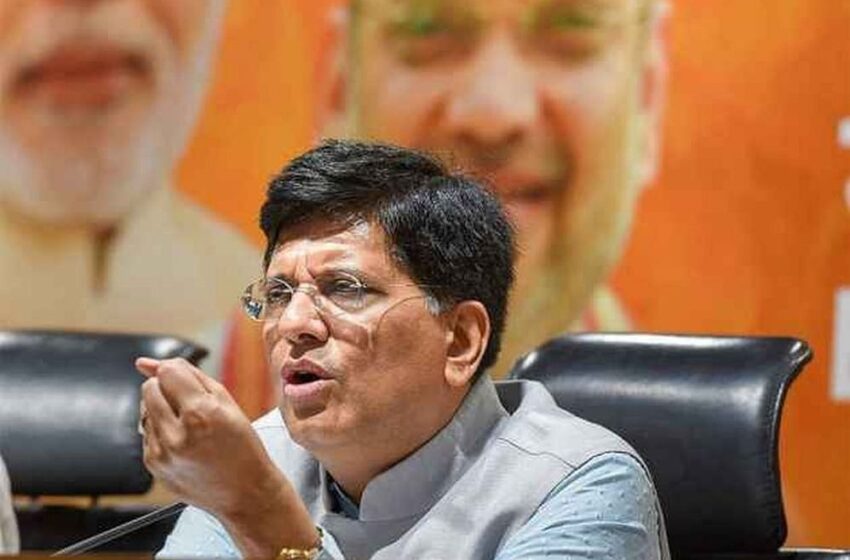
  • Union Minister of Commerce and Industry Shri Piyush Goyal attends 7th Future Investment Initiative in Riyadh, Saudi Arabia

    Union Minister of Commerce and Industry Shri Piyush Goyal attends 7th Future Investment Initiative in Riyadh, Saudi Arabia

    Union Minister of Commerce and Industry, Consumer Affairs, Food and Public Distribution, and Textiles, Shri Piyush Goyal attended the 7th Edition of Future Investment Initiative (FII) in Riyadh from 24th to 25th October 2023. He met several dignitaries from the host country of Kingdom of Saudi Arabia (KSA) including the Energy Minister His Royal Highness (HRH) Prince Abdul Aziz Bin Salman Al-Saud, Commerce Minister His Excellency (H.E.) Majid bin Abdullah AlKassabi, and Investment Minister H.E. Khalid A. Al Falih.

    Shri Piyush Goyal addressed the 7th Edition of FII in one of the plenary sessions titled “The Coming Investment Mandate”. He also co-chaired a conclave session on the theme “From Risk to Opportunity: Strategies for Emerging Economies in the New Industrial Policy Era” along with the KSA Investment Minister. This was followed by a bilateral meeting where the two respective ministers deliberated expansion of investment across diverse sectors to foster economic growth and further enhance strategic partnership between the two countries.

    Shri Goyal also held bilateral meetings with KSA Commerce Minister H.E. Majid bin Abdullah AlKassabi, Industry and Mineral Resources Minister H.E. Bandar bin Ibrahim AlKhorayef, CEO NEOM Mr. Nadhmi Al Nasr, and Governor Public Investment Fund (PIF) H.E. Yassir Rummayyan. Discussions pertained to improvement in bilateral relations, especially in the field of commerce and industry.

    The Minister participated in the Business Round Table organized at the Federation of Saudi Chambers, and highlighted the multiple opportunities offered by India. The growing trade between the two countries reached an all-time high of USD 52.75 billion in FY 2022-23. The conference aimed at further strengthening the economic partnership between the two countries. The Confederation of Indian Industry and the Federation of Saudi Chambers of Commerce signed a Memorandum of Understanding (MoU) in the presence of the Minister to further enhance commercial partnership.

    Shri Piyush Goyal met Mr. Ajay Banga, President of the World Bank and prominent business leaders on the sidelines of the FII. He held interactive sessions with the Indian business leaders and the Indian community living in KSA, both constituting a respectable part of the Saudi economy.

    KSA is one of India’s most important strategic partners. Cooperation between the two countries can also be witnessed with the establishment of India-Saudi Arabia Strategic Partnership Council (SPC). Established in 2019, it aims to enhance the relationship between the two countries and has two main pillars: the ‘Committee on Political, Security, Social, and Cultural Cooperation’ and the ‘Committee on Economy and Investments’. India is the fourth country with which Riyadh has formed such a partnership, after the UK, France, and China.

    In this context, the presence of the Shri Goyal in the 7th FII laid the foundation for further enhancement of bilateral ties and cooperation between the two countries in various fields.
  • Assembly Election 2023: Election Commission Announces Schedule, Polls between 7-30 and counting on December 3

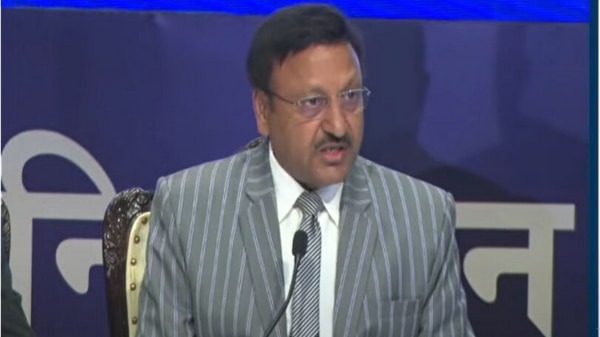
    Assembly Election 2023: Election Commission Announces Schedule, Polls between 7-30 and counting on December 3

    Assembly Election 2023:The Election Commission of India has unveiled the election schedule for five states, namely Madhya Pradesh, Rajasthan, Telangana, Mizoram, and Chhattisgarh. Here’s a breakdown of the election details:

    Election Schedule:

    • Madhya Pradesh, Rajasthan, Telangana, and Mizoram will have elections in a single phase.
    • Chhattisgarh will have elections in two phases.

    Voting Dates:

    • Mizoram, Madhya Pradesh, and Chhattisgarh (Phase 1): 7th November 2023.
    • Chhattisgarh (Phase 2): 17th November 2023.
    • Rajasthan: 23rd November 2023.
    • Telangana: 30th November 2023.

    Counting of Votes:

    • The counting of votes for all states will take place on 3rd December 2023.

    Voter Statistics:

    • Mizoram: 8.52 lakh voters.
    • Chhattisgarh: 2.03 crore voters.
    • Madhya Pradesh: 5.6 crore voters.
    • Rajasthan: 5.25 crore voters.
    • Telangana: 3.17 crore voters.

    Youth Participation:

    • Approximately 60 lakh first-time voters aged 18-19 will participate in these elections.
    • Over 2900 polling stations will be managed by young individuals to inspire young voters.

    Significance:

    • CEC Rajiv Kumar emphasized that these state elections hold unique significance as they are the final assembly elections before the national elections in 2024.
    • He assured that the Election Commission of India (ECI) is committed to ensuring free, fair, and inducement-free elections in these five states.

    Current Governance:

    • Madhya Pradesh: Bhartiya Janata Party (BJP)
    • Rajasthan: Congress party
    • Chhattisgarh: Congress party
    • Telangana: Bharat Rashtra Samithi (BRS)
    • Mizoram: Mizo National Front (MNF)

    This announcement sets the stage for a crucial electoral process in these states, shaping the political landscape before the 2024 National Elections.

  • Union Minister Dr. Jitendra Singh Reviews Progress of Special Campaign 3.0

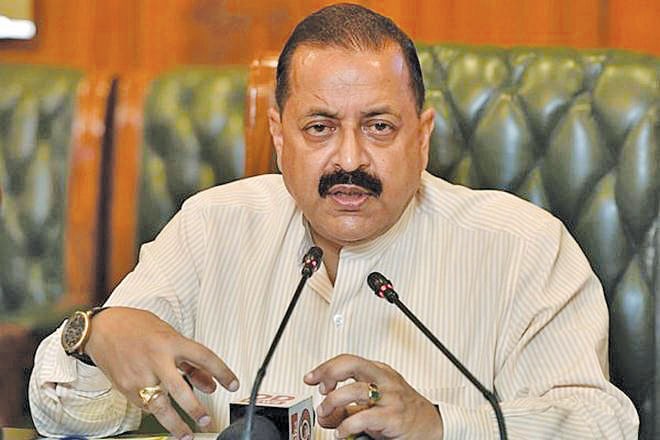
    Union Minister Dr. Jitendra Singh Reviews Progress of Special Campaign 3.0

    Union Minister of State (Independent Charge) Science & Technology, MoS PMO, Personnel, Public Grievances, Pensions, Atomic Energy and Space, Dr. Jitendra Singh, reviewed the progress of week 1 of Special Campaign 3.0 being implemented in all Government offices of India and appreciated the progress achieved in minimizing Pendency and Institutionalizing Swacchata in the period October 2-7, 2023.

    Dr. Jitendra Singh said massive participation is being witnessed across Ministries/Departments and their field/outstation offices. He reiterated the focus of the campaign is to cover offices with public interface. He urged Ministries/Departments to adopt saturation approach in the implementation of the Campaign to cover all outstation offices/defence establishments and PSUs in all parts of the country.

    The Special Campaign 3.0 in its first week, has been holistic in size and scale witnessed widespread participation from offices across the country. More than 42000 sites have been covered and 4000 tweets have been issued from all Ministries/Departments highlighting the progress of the campaign in field offices/PSUs/ Defence Establishment/Missions and posts. The efforts of thousands of officials and citizens have created a mass movement for Swacchata in Government offices.

    The Special Campaign 3.0 has been reviewed by Cabinet Ministers, Ministers of State and Secretaries to the Government of India providing leadership and guidance in implementation. In first week of the implementation phase, the Department of Posts has conducted the cleanliness campaign in 12785 sites, the Ministry of Road Transport and Highways in 11588 sites, the Department of School Education and Literacy in 8652 sites, Department of Military Affairs in 3000 sites and Department of Fertilizers in 1585 sites.

    The Progress of Special Campaign 3.0 is monitored on a dedicated portal (https://scdpm.nic.in/) on a daily basis. Regular review meetings are held under the Chairmanship of Secretary DARPG with nodal officers to review the progress of the campaign. The Special Campaign 3.0 has gained significant traction in social media with over 4,000 tweets by Ministries/Departments, 250 tweets by DARPG handle, 300 infographics on #SpecialCampaign3.0 and issue of 115 PIB statements.

    In the 1st week of Special Campaign 3.0 from 2nd-7th October, 2023, the following progress has been achieved:

    S No. Parameter Progress achieved as on 7th October, 2023
    1. Swachhata Campaign sites 42,072
    2. Records management files reviewed (physical files + e-Files) 7,70,448
    3 Public grievances + Appeals redressed 66,641
    4. Revenue earned (Rs. In Cr) 28.23
    5. Space freed (lakh sq.ft) 7.75
    6. MP’s references 743

    Amongst the best practices that emerged in first week of Special Campaign 3.0:

    1. Central Board of Direct Taxes – Launch of I-GoT on CPGRAMS of CBDT by Hon’ble Finance Minister
    2. Department of Administrative Reforms & Public Grievances – Launch of Intelligent Grievance Monitoring System (IGMS) 2.0 by Dr. Jitendra Singh, Hon’ble MoS PP on 29th  September, 2023
    3. Department of Agriculture and Farmer’s Welfare – Vertical Gardens at Krishi Bhawan
    4. Ministry of Skill Development & Entrepreneurship – Elephant Statue from plastic bottles at ITI Behrampur
    5. Department of Higher Education, Ministry of Education – Check dams from plastic waste at VNIT, Nagpur
    6. Department of Scientific & Industrial Research – Recycling on wheels to efficiently extract precious metals from shredded e-waste
    7. Department of Telecom – Painting competition for children on the theme “Swachhata in daily life”
    1. State Bank of India (Department of Financial Services)- Display of Special Campaign 3.0 Banner at SBI, PBB Sector 14 Panchkula Haryana giving wide publicity to the campaign amongst citizens
    2. Department of School Education & Literacy, Ministry of Education – Shramdaan in Swachhata Campaign by CBSE school students by cleaning up their surroundings and spreading message of cleanliness and sustainability.

    Dr. Jitendra Singh appreciated the reduction in pendency over the years through adoption of Special Campaign and called on all officials to sustain the momentum to achieve 50% targets by end of Week 2. Special Campaign 3.0 concludes on October 31st, 2023 with beginning of Evaluation phase in 1st week of November.

  • Gandhi Jayanti 2023: A One-Hour Volunteer Tribute to Bapu: ‘SwachhAnjali’

    Gandhi Jayanti 2023: A One-Hour Volunteer Tribute to Bapu: ‘SwachhAnjali’

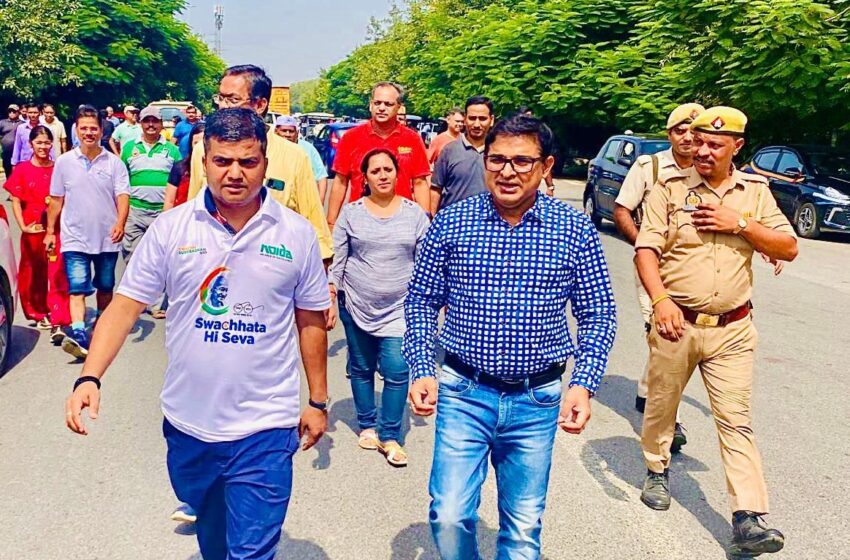
    Gandhi Jayanti 2023: District Magistrate Manish Kumar Varma dedicated one hour of voluntary service to Bapu in the ‘SwachhAnjali’ sector-137 area near Felix Hospital on Sunday morning at 10 AM, on the eve of Mahatma Gandhi Jayanti. Clean India is a collective responsibility. DM Manish Kumar Varma stated, ‘Understanding the importance of cleanliness is a matter of pride for our society because cleanliness is a crucial step toward a healthy and prosperous India.’ Dr. D.K. Gupta also emphasized the significance of cleanliness in relation to health, saying, ‘Cleanliness is not only essential for our immediate environment but also extremely important for our health. Through cleanliness, we can keep diseases at bay and enjoy a healthy and happy life. Therefore, all of us should commit to understanding the importance of cleanliness and its connection to health.’

    Dr. D.K. Gupta, the founder of Felix Hospital, highlighted the necessity of cleanliness for better health. In this regard, everyone should adopt cleanliness, and it is also essential to raise awareness about cleanliness among others. Cleanliness means keeping the surroundings clean, which is of utmost importance. It’s not just about cleaning our homes but also keeping our neighborhoods clean. In our culture and religion, cleanliness holds special importance. Cleanliness keeps both the body and mind healthy. If we don’t maintain cleanliness around us, there’s a fear of diseases spreading. The more dirt there is around us, the harder it is for us to stay healthy, and we will face various health-related issues. We should clean our surroundings, including our homes, gardens, and neighborhoods. It’s the duty of every citizen to avoid littering and dispose of waste properly.

    Mahatma Gandhi also emphasized cleanliness. In these challenging times of the COVID-19 pandemic, people are giving more priority to cleanliness and regularly washing their hands. Despite people being aware of the importance of cleanliness, they often neglect small things, like littering while traveling in vehicles, which is wrong. Many roads have litter strewn around, which spreads filth. This not only affects us but also harms animals. For example, plastic waste on the streets can be mistakenly ingested by cows, leading to their death. To make life beautiful and healthy, it’s necessary to keep our bodies, homes, and surroundings clean. Just as we keep our bodies clean, which is essential, maintaining cleanliness in our surroundings is also crucial. It’s essential to educate children about the importance of cleanliness. Everyone should understand the significance of cleanliness and practice it. People should keep their surroundings clean, just like they keep their homes clean. Morning prayers at religious places also involve the worship of cleanliness. In such places, people should refrain from littering and dispose of waste properly. Cleanliness of the mind and body helps a person succeed in life and aids in contemplation and meditation. Other prominent individuals who participated in this program included Dr. Rashmi Gupta, Abhishek Gupta, Payal Bhayana, Vinod Joshi, Daljit Chopra, Satpal Sharma, Akhil Chaturvedi, Hemant Kumar, and Reema Chauhan, who contributed to this event after understanding the importance of cleanliness.”

  • India will show the world a new path on biofuel through Global Biofuels Alliance: Petroleum Minister Shri Hardeep Singh Puri

    India will show the world a new path on biofuel through Global Biofuels Alliance: Petroleum Minister Shri Hardeep Singh Puri

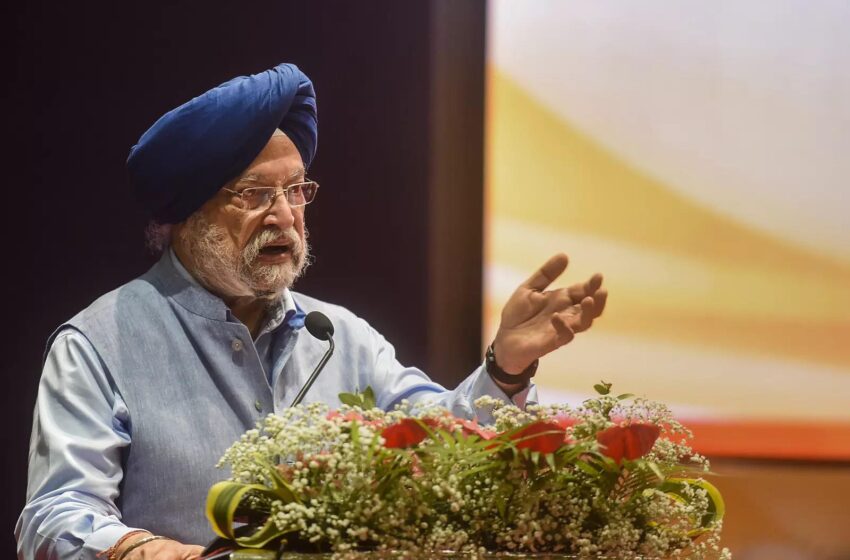
    #Petroleum Minister Shri Hardeep Singh Puri: India will show the world a new path on biofuels through Global Biofuels Alliance, stated Shri Hardeep Singh Puri, Minister of Petroleum & Natural Gas and Housing & Urban Affairs. Expressing his views through a series of posts on social media platform ‘X’ the Minister noted that following the mantra of ‘Vasudhaiva Kutumbakam’, this effort of Prime Minister Shri Narendra Modi will definitely reduce the dependence on petrol and diesel across the world.

    Creating history in the global energy sector, Prime Minister Shri Narendra Modi announced the launch of Global Biofuels Alliance (GBA) on the sidelines of the G20 Summit yesterday. 19 countries and 12 international organisations have already agreed to join the alliance.

    GBA is an India-led Initiative to develop an alliance of Governments, International organizations and Industry to facilitate adoption of biofuels. Bringing together the biggest consumers and producers of biofuels to drive biofuels development and deployment, the initiative aims to position biofuels as a key to energy transition and contribute to jobs and economic growth.

    Shri Hardeep Puri observed that world’s quest for cleaner & greener energy has gained historic momentum with launch of GBA on sidelines of the G20 Summit.

    The Indian Petroleum and Natural Gas Minister expressed his gratitude to Ms Jennifer Granholm, Secretary of Department of Energy, US; Mr. Alexandre Silveira, Energy Minister of Brazil; & Dr Evandro Gussi President & CEO of UNICA Brazil for germinating the seeds of forming Global Biofuels Alliance.

    Shri Hardeep Singh Puri noted that the visionary Global Biofuels Alliance supported by G20 Nations & energy related global organisations like International Energy Agency (IEA), International Civil Aviation Organization (ICAO), World Economic Forum (WEO), and World LPG Association among others will strengthen global biofuels trade & best practices allowing the members to successfully face the Energy Quadrilemma. This will bolster the transformation of our farmers from ‘Annadatas to Urjadatas’ as an additional source of income. In last 9 year we have given ₹71,600 cr to our farmers. With E20 implementation by 2025, India will save about ₹45,000 cr in oil imports & 63 MT of oil annually, he added.

    GBA will support worldwide development and deployment of sustainable biofuels by offering capacity-building exercises across the value chain, technical support for national programs and promoting policy lessons-sharing. It will facilitate mobilizing a virtual marketplace to assist industries, countries, ecosystem players and key stakeholders in mapping demand and supply, as well as connecting technology providers to end users. It will also facilitate development, adoption and implementation of internationally recognized standards, codes, sustainability principles and regulations to incentivize biofuels adoption and trade.

    The initiative will be beneficial for India at multiple fronts. GBA as a tangible outcome of the G20 presidency, will help strengthen India’s position globally. Moreover, the alliance will focus on collaboration and will provide additional opportunities to Indian industries in the form of exporting technology and exporting equipment. It will help accelerate India’s existing biofuels programs such as PM-JIVANYojna, SATAT, and GOBARdhan scheme, thereby contributing to increased farmers’ income, creating jobs and overall development of the Indian ecosystem. The global ethanol market was valued at USD 99.06 billion in 2022 and is predicted to grow at a CAGR of 5.1% by 2032 and surpass USD 162.12 billion by 2032. As per IEA, there will be 3.5-5x biofuels growth potential by 2050 due to Net Zero targets, creating a huge opportunity for India.

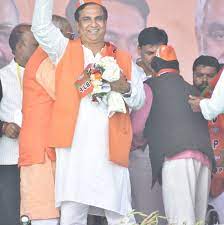
  • A P Pathak: Paving the Way for Bureaucratic Excellence to Political Leadership in West Champaran

    A P Pathak: Paving the Way for Bureaucratic Excellence to Political Leadership in West Champaran

    A P Pathak, a former bureaucrat with an illustrious career in the Indian government, has emerged as a prominent leader within the Bharatiya Janata Party (BJP). His journey from the bureaucratic corridors to the political arena has been marked by his unwavering dedication to social welfare through the Babu Dham Trust in the West Champaran district. With his recent affiliation with the BJP, Pathak’s growing influence and positive rapport with key party leaders have ignited discussions about his potential role in national politics, including a prospective opportunity to contest the Valmikinagar Lok Sabha seat.

    A Bureaucrat’s Transformation: A P Pathak’s transition from a seasoned bureaucrat to a dynamic political leader has been nothing short of remarkable. Having served in various capacities within the Indian government, his shift to the political spectrum was driven by a desire to effectuate change at a grassroots level. Throughout his tenure as a bureaucrat, Pathak’s commitment to public welfare and community development laid the foundation for his later engagement in politics.

    Social Upliftment through Babu Dham Trust: Pathak’s involvement in social initiatives gained prominence through the Babu Dham Trust, an organization he has tirelessly championed in the West Champaran district. Through this platform, he has orchestrated and spearheaded numerous initiatives aimed at addressing critical societal issues such as education, healthcare, and poverty alleviation. The trust’s consistent efforts and impactful projects have endeared Pathak to the local population, solidifying his reputation as a catalyst for positive change.

    Joining the BJP and Building Bridges: A P Pathak’s decision to join the BJP has garnered widespread attention and intrigue. His established rapport with key leaders within the party speaks volumes about his dedication and potential contribution. Pathak’s alignment with the BJP’s ideology and values has positioned him as a promising addition to the party’s ranks. His ability to bridge his bureaucratic experience with political aspirations presents a unique blend of skills that can drive meaningful progress.

    Prospects for the Future: Pathak’s affiliation with the BJP has sparked conversations about his future role in national politics. As discussions abound, there is a growing sentiment that he could be a strong contender for the Valmikinagar Lok Sabha seat. His extensive work in the West Champaran district, combined with his understanding of governance, presents a compelling case for Pathak to represent the BJP in a larger capacity.

    From Bureaucrat to BJP Leader, Championing Social Causes in West Champaran: A P Pathak’s transformative journey from a bureaucrat to a BJP leader exemplifies his commitment to societal betterment. Through his active engagement with the Babu Dham Trust and his recent foray into politics, he has carved a unique path that resonates with both grassroots initiatives and larger political aspirations. As Pathak’s association with the BJP evolves, the prospect of his candidacy for the Valmikinagar Lok Sabha seat underscores his potential to effect meaningful change on a broader scale.

  • Prime Minister attributes India’s rise to 5th largest economy in the world to efforts of 140 crore people of India

    Prime Minister attributes India’s rise to 5th largest economy in the world to efforts of 140 crore people of India

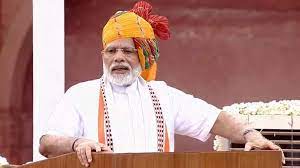
    Addressing from the ramparts of Red Fort on the 77th Independence Day, Prime Minister Shri Narendra Modi attributed the rise of India from 10th to 5th  largest economy in the world to the efforts of 140 crore people of India. He said this has happened because this Government stopped leakages, created a strong economy, and spent maximum money for the welfare of the poor.

    Prime Minister Shri Modi stated, “Today I want to tell the people that when the country becomes economically prosperous, it does not fill the treasury; it increases capacity of the nation and its peoples. Results will automatically come if the Government pledges to spend every penny towards the welfare of its citizens. 10 years ago, the Government of India used to send Rs. 30 lakh crore to the States. In the last 9 years, this figure has reached Rs. 100 lakh crore. Seeing these numbers, you will feel that such big transformation has happened with big increase in capacity!”

    On the front of self-employment, Shri Modi said, “More Rs. 20 lakh crore have been given to the youth for self-employment for their occupation. 8 crore people have started new business and not only that, every businessman has given employment to one or two people. Therefore, 8 crore citizens benefitting from the (Pradhan Mantri) Mudra Yojana have the ability to provide employment to 8-10 crore new people.”

    Referring to COVID-19 Pandemic, Shri Modi said, “MSMEs were not allowed to go bankrupt with the help of loans worth Rs. 3.5 lakh crore in the crisis of Corona virus. They were not allowed to die, they were given strength.”

    On the new and aspiring middle class, Shri Modi said, “When poverty reduces in the country, the power of the middle class increases a lot. And I assure you with guarantee that in the coming five years the country will take its place in the first three world economies. Today the 13.5 crore people have come out of poverty to become the strength of the middle class. When the purchasing power of the poor increases, the business power of the middle class increases. When the purchasing power of the village increases, the economic system of the town and city runs at a faster pace. This interconnected is our economic cycle. We want to move ahead by giving it strength.”

    Additionally, the Prime Minister said, “When the (exemption) limit of income tax is increased from Rs. 2 lakh to Rs. 7 lakh, then the biggest benefit is to the salaried class, especially to the middle class.”

    Referring to the recent problems faced by the world collectively, the Prime Minister said, “The world has not yet emerged from COVID-19 Pandemic, and the war created a new problem. Today, the world is facing the crisis of inflation.”

    Talking about fighting inflation, the Prime Minister said, “India has tried its best to control inflation. We cannot think that our things are better than the world, I have to take more steps in this direction to minimise the burden of inflation on my countrymen. My efforts will continue to tame inflation.”

  • President of India in Odisha; graces the foundation day celebration of Jnanaprabha mission at Bhubaneswar

    President of India in Odisha; graces the foundation day celebration of Jnanaprabha mission at Bhubaneswar

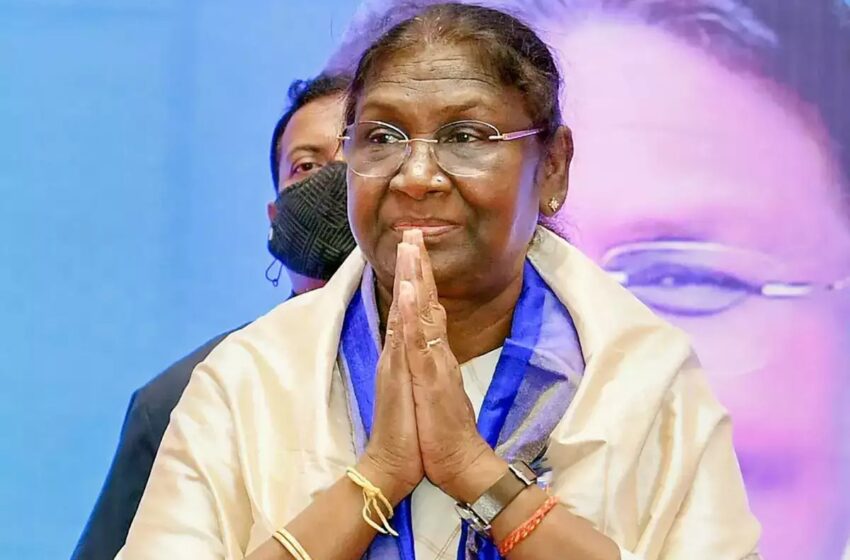
    The President of India, Smt Droupadi Murmu graced and addressed the Foundation Day Celebration of Jnanaprabha Mission at Bhubaneswar today (February 10, 2023).

    Addressing the gathering, the President said that she was happy to be part of the Foundation Day celebration of the Jnanaprabha Mission which is established with the aim of awakening the power and potential of mother and building a healthy human society. She said that it is a matter of pride that this Mission has been named after the mother of Paramahansa Yogananda Ji who was his inspiration.

    The President said that our sages taught us to consider mother, father, teacher and guest as God. But do we adopt this teaching in our lives? This is a big question. Are children taking proper care of their parents? Often, sad stories of elderly parents appear in the newspapers. She said that merely addressing parents as God and worshiping their pictures is not spirituality. Caring about parents and respecting them is important. She urged all to adopt the service of senior citizens, elders and sick as their vow of life. She said that this is human religion.

    Noting the fact that the Jnanaprabha Mission is active in popularizing the ‘Kriya Yoga’, the President said that whatever be the form – Yoga is an ancient science and spiritual practice of India, whose objective is to create a healthy human society. Prevention is better than cure for a healthy life. If we remain ‘Yog-yukt’ (associated with Yoga), we can remain ‘Rog-mukt’ (free from diseases). Through yoga, we can attain a healthy body and peaceful mind. In today’s world materialistic happiness is not beyond the reach, but peace of mind may be beyond the reach of many. For them, Yoga is the only way to find peace of mind.

    The President said that our materialistic expectations and aspirations are increasing, but we are gradually turning away from the spiritual side of our life. Earth’s resources are limited, but the desires of humans are limitless. The present world is witnessing the unusual behaviour of nature which is reflected in climate change and increase in the temperature of the earth. To give a secure future to our next generation, a nature-friendly lifestyle is essential. In Indian tradition, the Universe is one and integral. Human being is only a small part of this Universe. No matter how much progress we have made progress in science, we are not the master of nature, but its children. We should be grateful to nature. We should adopt a lifestyle in harmony with nature.

  • Parliament News: Step Taken By Union Government To Increase Water Availability and Conservation

    Parliament News: Step Taken By Union Government To Increase Water Availability and Conservation

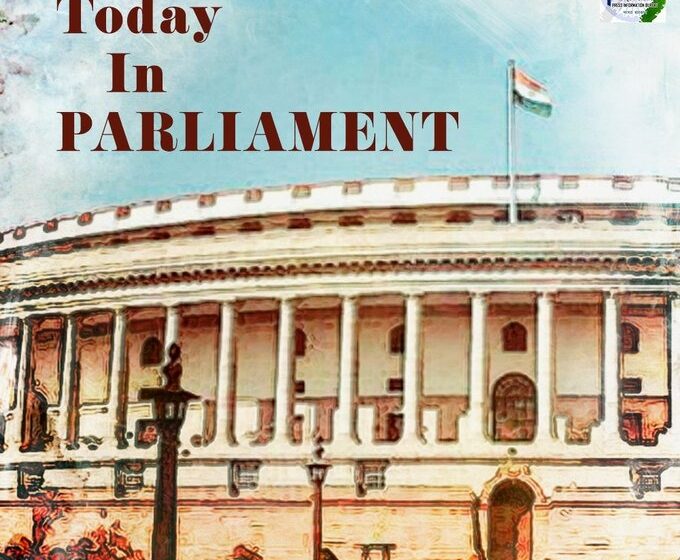
    Parliament News: The Government of India has initiated number of steps and launched various schemes/ programmes for making availability of water, its conservation and distribution. The details of some of the major schemes/ programmes are as under:

    (i) National Water Mission has been launched with the objective of conservation of water, minimizing wastage and ensuring its more equitable distribution both across and within States through integrated water resources development and management.

    Under this mission, a campaign namely “Sahi Fasal” has also been initiated to nudge farmers to favour agricultural crops which consume less water and to use water more efficiently in agriculture, as a part of demand side management.

    Also, to promote dialogue and information sharing among participants on variety of water related topics, a monthly seminar series – “Water Talk” has been initiated with intended to create awareness, build capacities of stakeholders and to encourage people to become active participants in the conservation and saving of water.

    (ii) Atal Bhujal Yojana, a Central Sector Scheme, with focus on community participation, demand side interventions and convergence of ongoing schemes for sustainable ground water management is being implemented from 1 April 2020 in seven States – Gujarat, Haryana, Karnataka, Madya Pradesh, Maharashtra, Rajasthan and Uttar Pradesh.

    (iii) Har Khet Ko Pani (HKKP), a component of Pradhan Mantri Krishi Sinchai Yojana (PMKSY), Repair, Renovation and Restoration (RRR) of Water Bodies Scheme was launched which aims to revive irrigation potential by improvement and restoration of water bodies by enhancing the tank storage capacity, along with other multiple objectives such as ground water recharge, increased availability of drinking water, improvement of catchment of tank commands etc.

    (iv) The Atal Mission for Rejuvenation and Urban Transformation (AMRUT) was launched by the Government of India on June 25, 2015 in selected 500 cities and towns across the country for a period of 5 years i.e. from FY 2015-2016 to FY 2019-2020, which has been extended for completing the grounded projects. The Mission focuses on the development of basic urban infrastructure in the Mission cities in the sectors of water supply, sewerage & septage management, storm water drainage, green spaces & parks and non-motorized urban transport.

    (v)   Jal Jeevan Mission-Har Ghar Jal is being implemented by Government of India, in partnership with States since August, 2019, which aims at providing potable water in adequate quantity (55 litres per capita per day) of prescribed quality (BIS:10500) on regular and long-term basis to every rural household through tap water connection, by 2024.

    At the time of announcement of Jal Jeevan Mission in August 2019, 3.23 Crore (17%) rural households were reported to have tap water connections. So far, as reported by States/UTs as on 06.02.2023, around 7.87 Crore rural households have been provided with tap water connections in last three and half years under JJM. Thus, as on 06.02.2023, out of 19.36 Crore rural households in the country, around 11.10 Crore (57%) households are reported to have tap water supply in their homes.

    (vi) Jal Shakti Abhiyan-I (JSA-I) was launched in 2019 in 256 water stressed districts to promote water conservation and water resource management by focusing on accelerated implementation of five target interventions, viz., water conservation and rainwater harvesting, renovation of traditional and other water bodies/ tanks, reuse and recharge of bore wells, watershed development and intensive afforestation.

    In 2021, “Jal Shakti Abhiyan: Catch the Rain” (JSA:CTR) was initiated with the theme “Catch the Rain – Where it Falls When it Falls” to cover all the blocks of all districts (rural as well as urban areas) across the country. The focused interventions for JSA includes water conservation and rainwater harvesting, renovation of traditional and other water bodies/ tanks, reuse and recharge of borewells, watershed development and intensive afforestation.

    Some other steps taken by the Central Government to control ground water depletion and promote rain water harvesting/conservation are available at the URL:

    http://jalshakti-dowr.gov.in/sites/default/files/Steps_to_control_water_depletion_Feb2021.pdf

    Furthermore, 15th Finance Commission in its report for 2021-22 to 2025-26, has earmarked 60 percent of the tied grants for water and sanitation related activities of which 50 percent is water component to be utilised by Rural Local Bodies/ Panchayati Raj Institutions (PRI).

    This information was given by the Minister of State for Jal Shakti, Shri Prahlad Singh Patel in a written reply in Lok Sabha today.

  • Union Budget 2023: The budget will prove to be a milestone in ensuring the best health facilities- Dr. D K Gupta

    Union Budget 2023: The budget will prove to be a milestone in ensuring the best health facilities- Dr. D K Gupta

    Union Budget 2023: In the budget, Union Finance Minister Nirmala Sitharaman has given the health sector particular attention. A national ecosystem for digital health will also be built, and it will use an open platform. According to Dr. DK Gupta of Felix Hospital, 157 new nursing colleges would be constructed concurrently with the 157 medical colleges that were already founded in 2014. By 2047, a mission will be established to end sickle cell anemia. In the impacted tribal communities, 7 crore persons up to 40 years old would be screened. The government is working extremely hard to eradicate this illness (anemia). There will be new initiatives for pharmaceutical research being developed. Research funding will be promoted. Public and commercial medical institutions will have access to facilities in a few of the ICMR’s laboratories for research. In the Union Budget for 2022–2023, the Ministry of Health and Family Welfare received Rs 86,200 crore. Comparing this to Rs 73,932 crore in FY 2020–21, there was a growth of around 16.5 percent. Unique health identities, the digital health provider and facility registries, and open access to medical facilities. The country’s mental health will be strengthened thanks to this funding, which will also boost research and give the general people access to the best medical facilities. To handle the present pandemic, hospitals with enhanced treatment are required. To increase this industry’s level of independence, we must improve health services, expand new technologies, and prioritize research. On a national scale, we require funding for this. For outbreaks like the Corona, we must be extremely well-prepared. To accomplish this, the health industry has to have a robust infrastructure. To boost the healthcare system, we also need skilled labor. Healthcare isn’t mentioned all that much in the budget, if at all. This number is less than one, which may surprise you. In comparison to the World Health Organization’s criteria, this is substantially lower. There is a severe lack of doctors in the nation. Only 1,40,000 allopathic physicians practiced in the nation in 2018. The same is true for nurses and other medical specialists. Recently, various actions were done to increase the number of medical student seats. Hospitals can be found in both the public and private sectors in major cities. In medium-sized and small cities, it is challenging. There, it will be necessary to persuade the private sector to fund hospitals. Investment is necessary for the total domestic manufacture of medical supplies and raw materials. Healthcare is a kind of sector in which technology is constantly changing. The fact that new items are always being developed makes it crucial for those working in this industry to be skilled. Businesses should spend more money on healthcare training. For this, the industry is asking for incentives. Systems for providing healthcare should be networked as well. Any data from hospitals, both public and private, as well as diagnostic facilities, can be found in a data center in real-time. This will keep track of any modifications to the disease’s pattern. A step in this direction is the National Digital Health Mission’s initiative. In the upcoming budget, plans are anticipated to be made to reinforce it. In India, a sizable portion of the population lacks health insurance. However, the Ayushman scheme is altering the situation. The underprivileged groups in society are receiving their rewards. The provision of clean water to individuals is crucial for their health. There must be cleanliness where people reside.