Category: News

  • Tata Chemicals Share Fall : Why the Stock Plunged Over 11% Amid Tata Sons Boardroom Dispute

    Tata Chemicals Share Fall : Why the Stock Plunged Over 11% Amid Tata Sons Boardroom Dispute

    On Friday, the Tata Chemicals share fall caught the attention of the entire market as the stock crashed more than 11%. The sharp decline was not limited to one company — several Tata group stocks also faced heavy selling pressure. The main reason behind this sudden weakness is the ongoing boardroom dispute at Tata Sons related to the reappointment of N. Chandrasekaran as Executive Chairman.

    Why Did the Tata Chemicals Share Fall Happen?

    The Tata Chemicals share fall of over 11% was one of the steepest declines among Tata group companies. Investors reacted strongly to reports of disagreement within Tata Sons over leadership continuity. Even though there was no major change in Tata Chemicals’ day-to-day business performance, the market often responds emotionally to group-level uncertainty.

    When questions arise about top leadership in a large conglomerate like Tata, the impact is usually felt across multiple listed companies. This is exactly what triggered the Tata Chemicals share fall and broader weakness in the group’s stocks.

    Tata Chemicals Share Fall : Why the Stock Plunged Over 11% Amid Tata Sons Boardroom Dispute
    Tata Chemicals Share Fall : Why the Stock Plunged Over 11% Amid Tata Sons Boardroom Dispute

    The Root Cause: Tata Sons Boardroom Dispute

    The controversy centres on the reappointment of N. Chandrasekaran, the current face of Tata group’s leadership. During his tenure, the group has taken several important strategic decisions. Differences at the board level over his next term have created uncertainty about the group’s future direction, capital allocation, and long-term strategy.

    Investors take such developments seriously because stable leadership is closely linked to business expansion and investor confidence. This uncertainty played a major role in the Tata Chemicals share fall and pressure on other Tata group companies.

    Impact on Other Tata Group Stocks

    Apart from the sharp Tata Chemicals share fall, other Tata group companies also saw selling pressure. Market participants fear that if the boardroom dispute at Tata Sons continues for long, it could affect the overall image and investor trust in the group.

    In the stock market, events related to a prestigious business house often have a wide impact. Investors look not only at current financial results but also at future strategic clarity — something that is currently under a cloud.

    Tata Chemicals Share Fall : Why the Stock Plunged Over 11% Amid Tata Sons Boardroom Dispute
    Tata Chemicals Share Fall : Why the Stock Plunged Over 11% Amid Tata Sons Boardroom Dispute

    What Should Investors Keep in Mind?

    Market experts suggest that the Tata Chemicals share fall should be viewed as a reaction to leadership-related news rather than a fundamental problem in the company’s business. If the dispute is resolved quickly, a recovery in the stock is possible. However, prolonged uncertainty could keep pressure on Tata Chemicals and other group stocks.

    Long-term investors should watch how Tata Sons handles the situation. A strong brand, diversified portfolio, and clear leadership usually help restore confidence over time.

    Also Read This : Pinaka Multi-Barrel Rocket Launcher : India’s Indigenous Artillery Powerhouse

    What Next After the Tata Chemicals Share Fall?

    All eyes are now on the next developments at Tata Sons. A quick resolution of the boardroom dispute could bring stability back to Tata group stocks, including Tata Chemicals. On the other hand, if differences escalate, the Tata Chemicals share fall may not remain a one-day event.


    View this post on Instagram
     

    A post shared by AVSPOST (@avspost)

  • Trump son linked company strikes drone deal with Pakistan Army : agreement reached even on initial order

    Trump son linked company strikes drone deal with Pakistan Army : agreement reached even on initial order

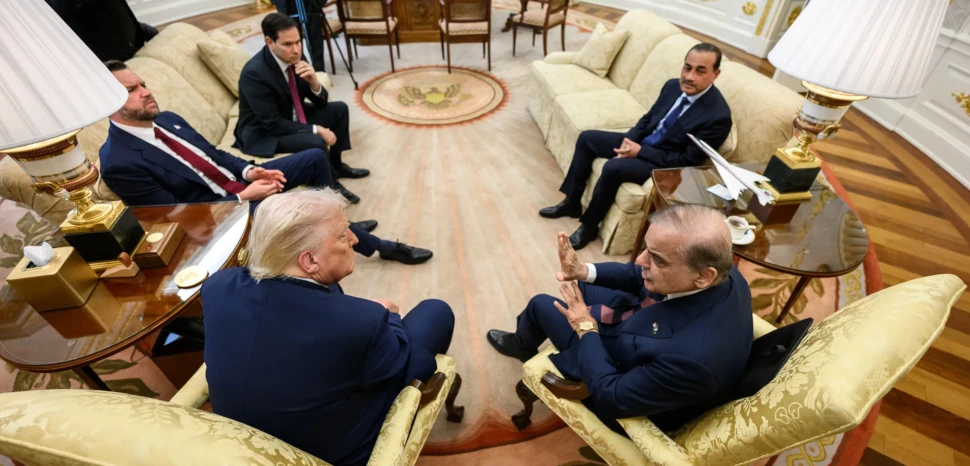
    Trump son linked company signs MoU with Pakistan Army on drone deal, An American company connected to the drone industry has signed an important agreement with the Pakistan Army. The deal also includes an order for the initial supply of drones. The most talked-about aspect is that this company is soon going to join a firm in which both sons of US President Donald Trump are reported to have a stake. Because of this, the agreement is no longer limited to the defence sector alone but has also become a subject of discussion in international business and political circles.

    This agreement has come at a time when demand for military technology, surveillance capabilities and drone systems is continuously rising around the world. The pact with the Pakistan Army signals that the race for defence modernisation in South Asia could intensify further. Drone technology is no longer limited only to surveillance; it is now also considered important in logistics, border security, disaster management and strategic operations.

    What is special about this deal?

    The biggest feature of this agreement is that it is not merely the signing of a memorandum of understanding; an initial order is also included. This means it is not just a deal based on future possibilities but one that is moving forward at a practical level. Usually, such agreements are considered the beginning of larger defence cooperation, after which different stages of supply, training, maintenance and technical support emerge.

    Trump son linked company strikes drone deal with Pakistan Army : agreement reached even on initial order
    Trump son linked company strikes drone deal with Pakistan Army : agreement reached even on initial order

    According to sources, the American drone company that signed the MoU with the Pakistan Army is soon going to link up with a company in which both of Donald Trump’s sons have a stake. This very connection makes the deal more sensitive. It also raises the question of whether this is merely a business expansion or whether broader strategic interests are also involved.

    Why is drone technology becoming the centre of defence policy?

    In the past few years, drones have changed the picture of modern warfare and security systems. Earlier, there was dependence on traditional aircraft or ground patrols for surveillance; now drones provide more accurate information at lower cost. Capabilities such as border surveillance, identification of suspicious activities, real-time mapping of sensitive areas and rapid response have made them extremely useful.

    For a country like Pakistan, where security challenges are multi-dimensional, the importance of drone technology increases further. A purchase of this kind at the army level shows that it is moving ahead in the direction of modernising its surveillance and strike capabilities. However, questions are also raised about regional imbalance and security competition with regard to such deals.

    Why has the link with the Trump family become a topic of discussion?

    A political colour has also been added to this deal because the related company is soon going to be associated with a firm in which both of Trump’s sons are reported to have a stake. In American politics, the Trump family’s name has already been in the headlines due to controversies related to business, branding and investments. Therefore, the linking of any foreign military deal with this network naturally draws attention.

    Trump son linked company strikes drone deal with Pakistan Army : agreement reached even on initial order
    Trump son linked company strikes drone deal with Pakistan Army : agreement reached even on initial order

    Experts believe that when the names of political families or high-profile business groups get attached to a defence deal, issues such as transparency, conflict of interest and regulatory oversight arise. This is why the agreement is being viewed not merely as a corporate deal but as a multi-layered development.

    Trump son : What does this deal mean for Pakistan?

    For the Pakistan Army, this agreement can be considered a step in the direction of technological upgradation. Drone systems can help it enhance surveillance, border management and operational efficiency. Along with the initial order, it also indicates that the scope of this cooperation could expand in the future.

    However, in defence deals, not only procurement but also training, maintenance, spare parts and software support are important. If this partnership progresses further, long-term technical relations could develop between the two sides.

    Potential impact at the international level

    This deal could give rise to a new debate involving America, Pakistan and regional security equations. On one hand, it can be seen as business expansion and defence cooperation; on the other, it also sends out a geopolitical message. Strict rules apply in many countries on the export of drone technology, so the regulatory aspects of this deal will also be watched.

    Also Read This : BRICS Summit 2026 : Important Modi-Putin Meeting Begins in Delhi, Bilateral Talks Also Scheduled with Pezeshkian

    Trump son : Overall, the Pakistan Army drone deal is not just a defence agreement; it shows a combination of business interests, political relations and regional security. In the coming days, as more details related to this agreement emerge, its real strategic importance will become clearer.


    View this post on Instagram


    A post shared by AVSPOST (@avspost)

  • Inauguration of Hindi Pakhwada 2026 at Defence Estate Office, Delhi Circle

    Inauguration of Hindi Pakhwada 2026 at Defence Estate Office, Delhi Circle

    Hindi Pakhwada 2026 : The inauguration of Hindi Pakhwada 2026 was held today at the Defence Estate Office, Delhi Circle. On this occasion, Dr. Vivek Shandilya Dixit, Assistant Professor at South Asian University (SAARC University), New Delhi, was present as the Chief Guest.

    During the programme, Dr. Vivek Shandilya Dixit delivered an insightful and informative lecture on the topic “Official Language Hindi and the Changing Nature of Language: Legacy of the Older Generation and Expression of the New Generation.” He highlighted the changes taking place in the form of language with the changing times, the rich heritage of Hindi, and the role of Hindi in the expression of the new generation.

    Inauguration of Hindi Pakhwada 2026 at Defence Estate Office, Delhi Circle
    Inauguration of Hindi Pakhwada 2026 at Defence Estate Office, Delhi Circle

    Defence Estate Officer, Delhi Circle, Shri Varun Kalia, and Official Language In-charge Shri Mayank Dwivedi, along with other officers and employees of the office, were present on the occasion.

    Messages issued by the Hon’ble Defence Minister and the Hon’ble Home Minister on the occasion of Hindi Diwas were also read out during the programme. Officers and employees were urged to make greater use of the official language Hindi and to effectively implement Hindi in official work.

    Various Hindi competitions and official language-related activities will be organised in the office during Hindi Pakhwada. On this occasion, Defence Estate Officer Shri Varun Kalia informed that a Hasya Kavi Sammelan (Humorous Poetry Conference) will also be organised on 24 September 2026 under Hindi Pakhwada, which will promote interest and enthusiasm for the Hindi language through humour and satire.

    Also Read This : New Delhi Declaration : Key Outcomes of BRICS Summit 2026 and India’s Vision for a Multipolar World

    The objective of Hindi Pakhwada 2026 is to encourage the use of the official language Hindi in official work as well as to promote awareness, creativity, and interest in Hindi among officers and employees.


    View this post on Instagram

     

    A post shared by AVSPOST (@avspost)

  • New Delhi Declaration : Key Outcomes of BRICS Summit 2026 and India’s Vision for a Multipolar World

    New Delhi Declaration : Key Outcomes of BRICS Summit 2026 and India’s Vision for a Multipolar World

    The New Delhi Declaration, adopted at the 18th BRICS Summit 2026 in India, marks a defining moment for the Global South. Hosted by Prime Minister Narendra Modi at Bharat Mandapam in New Delhi on September 12-13, 2026, the summit brought together leaders including Chinese President Xi Jinping, Russian President Vladimir Putin, Iranian President Masoud Pezeshkian, and other BRICS partners. Against the backdrop of geopolitical tensions, the Russia-Ukraine conflict, West Asia instability, and shifting global trade dynamics, the New Delhi Declaration outlines a clear path toward resilience, innovation, cooperation, and sustainability.

    What is the New Delhi Declaration?

    The New Delhi Declaration is the official outcome document of the BRICS Summit 2026. It reflects India’s chairmanship priorities and the collective aspirations of the expanded “Greater BRICS” grouping, which represents nearly 50% of the world’s population, around 40% of global GDP, and more than 25% of world trade. The declaration emphasizes inclusive global growth, multipolarity, and a rules-based international order free from double standards.

    New Delhi Declaration : Key Outcomes of BRICS Summit 2026 and India’s Vision for a Multipolar World
    New Delhi Declaration : Key Outcomes of BRICS Summit 2026 and India’s Vision for a Multipolar World

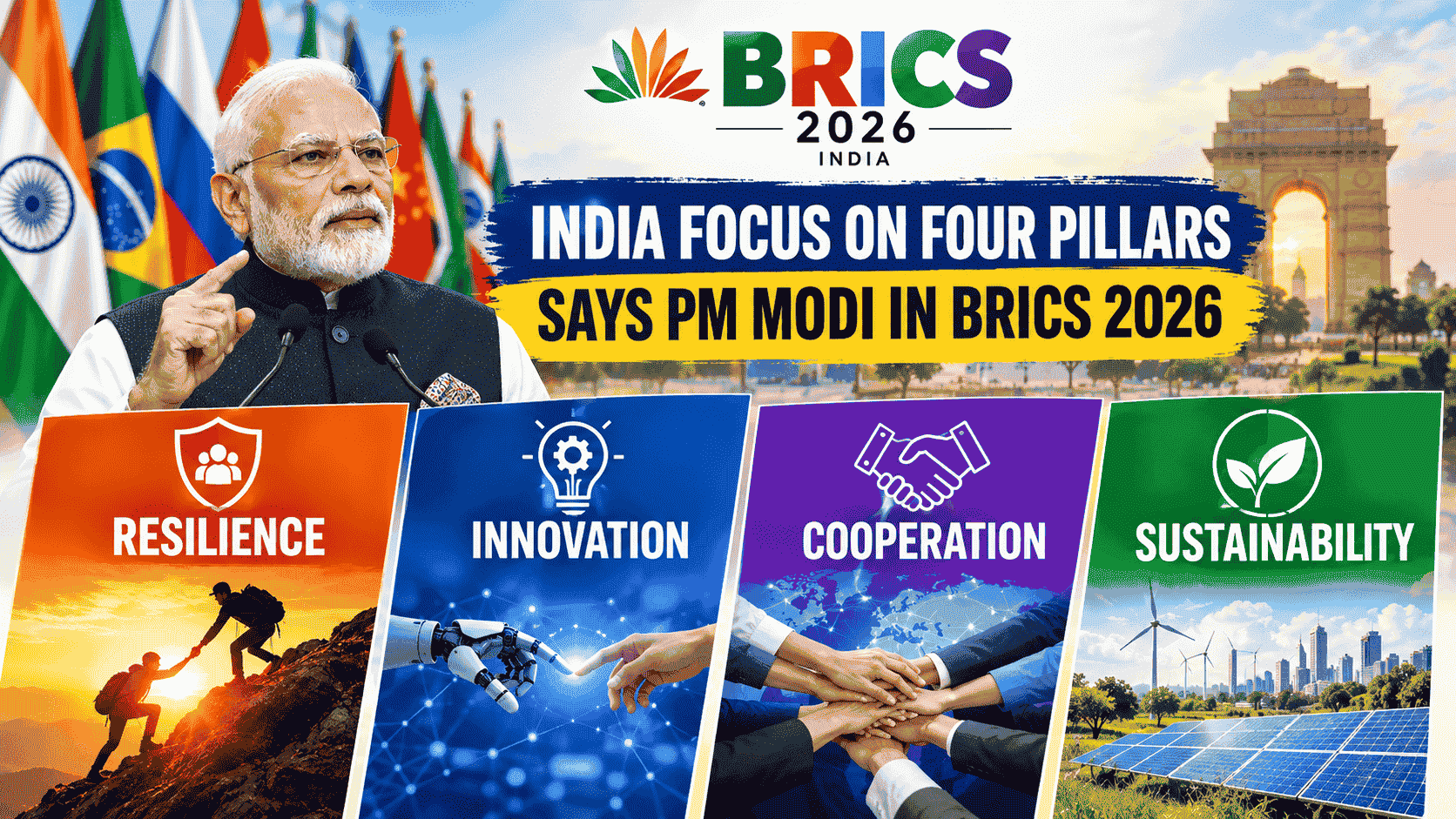
    Prime Minister Narendra Modi, while addressing the concluding session, underlined that BRICS must rise through cooperation and inclusive growth for the sake of humanity. He highlighted India’s focus on four core pillars that form the foundation of the New Delhi Declaration:

    • Resilience – Building economic and institutional strength to withstand global shocks
    • Innovation – Advancing technology, including artificial intelligence, for shared benefit
    • Cooperation – Strengthening partnerships across the Global South
    • Sustainability – Promoting environmentally responsible and equitable development

    Major Highlights of the New Delhi Declaration

    1. Opposition to Weaponisation of Technology and Critical MineralsA standout element of the New Delhi Declaration is the strong caution against the weaponisation of technology and critical minerals. PM Modi warned that such practices threaten shared progress and prosperity. The declaration calls for open, inclusive, and equitable access to technology and resources, ensuring that innovation serves development rather than division.
    1. Open-Source AI and Digital CooperationChinese President Xi Jinping proposed the creation of an “open-source AI zone” for BRICS countries. The New Delhi Declaration supports cooperation in large language models, AI development, and digital public infrastructure. This initiative aims to prevent technological monopolies and empower the Global South with accessible, collaborative AI tools.
    1. Strengthening Multipolarity and the Global SouthThe declaration positions BRICS as a stabilising force in a world undergoing profound changes. It reaffirms commitment to sovereign equality, non-interference, peaceful dispute resolution, and the equal application of international law. Leaders stressed that the Global South must play a greater role in shaping global governance.
    1. Economic Cooperation and Supply Chain StabilityThe New Delhi Declaration prioritises maintaining stable industrial and supply chains, cultivating integrated markets, upgrading traditional industries, and fostering emerging and future industries. It encourages innovation incubators and practical economic collaboration among Greater BRICS nations.
    1. Peace and Dialogue InitiativesOn the sidelines, both Prime Minister Narendra Modi and President Xi Jinping offered their good offices for peace talks on Ukraine. The Kremlin welcomed this readiness. While the declaration itself focuses on broader principles of peaceful resolution of conflicts, these diplomatic signals reinforce the summit’s constructive spirit.
    New Delhi Declaration : Key Outcomes of BRICS Summit 2026 and India’s Vision for a Multipolar World
    New Delhi Declaration : Key Outcomes of BRICS Summit 2026 and India’s Vision for a Multipolar World

    Why the New Delhi Declaration Matters

    The New Delhi Declaration comes at a critical juncture. With the United Nations Security Council widely viewed as paralysed and global power dynamics shifting, BRICS under India’s leadership has projected itself as a platform for practical cooperation rather than confrontation. The document balances ambition with pragmatism—advancing technology and trade while safeguarding sovereignty and sustainability.

    By hosting the summit and shaping the New Delhi Declaration, India has reinforced its role as a bridge between major powers and the wider Global South. The emphasis on resilience, innovation, cooperation, and sustainability offers a people-centric alternative to fragmented global approaches.

    Also Read This : BRICS Summit 2026 : Important Modi-Putin Meeting Begins in Delhi, Bilateral Talks Also Scheduled with Pezeshkian

    The New Delhi Declaration sets the tone for BRICS engagement in the years ahead. As the grouping continues to expand its influence, the commitments made in New Delhi on open-source AI, critical minerals, inclusive growth, and multipolarity will be closely watched. For India, the successful hosting of the 2026 summit and the adoption of this landmark declaration strengthen its credentials as a responsible global stakeholder committed to a more balanced and equitable world order.

    The message from Bharat Mandapam is clear: through unity, innovation, and shared purpose, BRICS can contribute meaningfully to global stability and prosperity. The New Delhi Declaration stands as a testament to that vision.


    View this post on Instagram


    A post shared by AVSPOST (@avspost)

  • BRICS Summit 2026 : Important Modi-Putin Meeting Begins in Delhi, Bilateral Talks Also Scheduled with Pezeshkian

    BRICS Summit 2026 : Important Modi-Putin Meeting Begins in Delhi, Bilateral Talks Also Scheduled with Pezeshkian

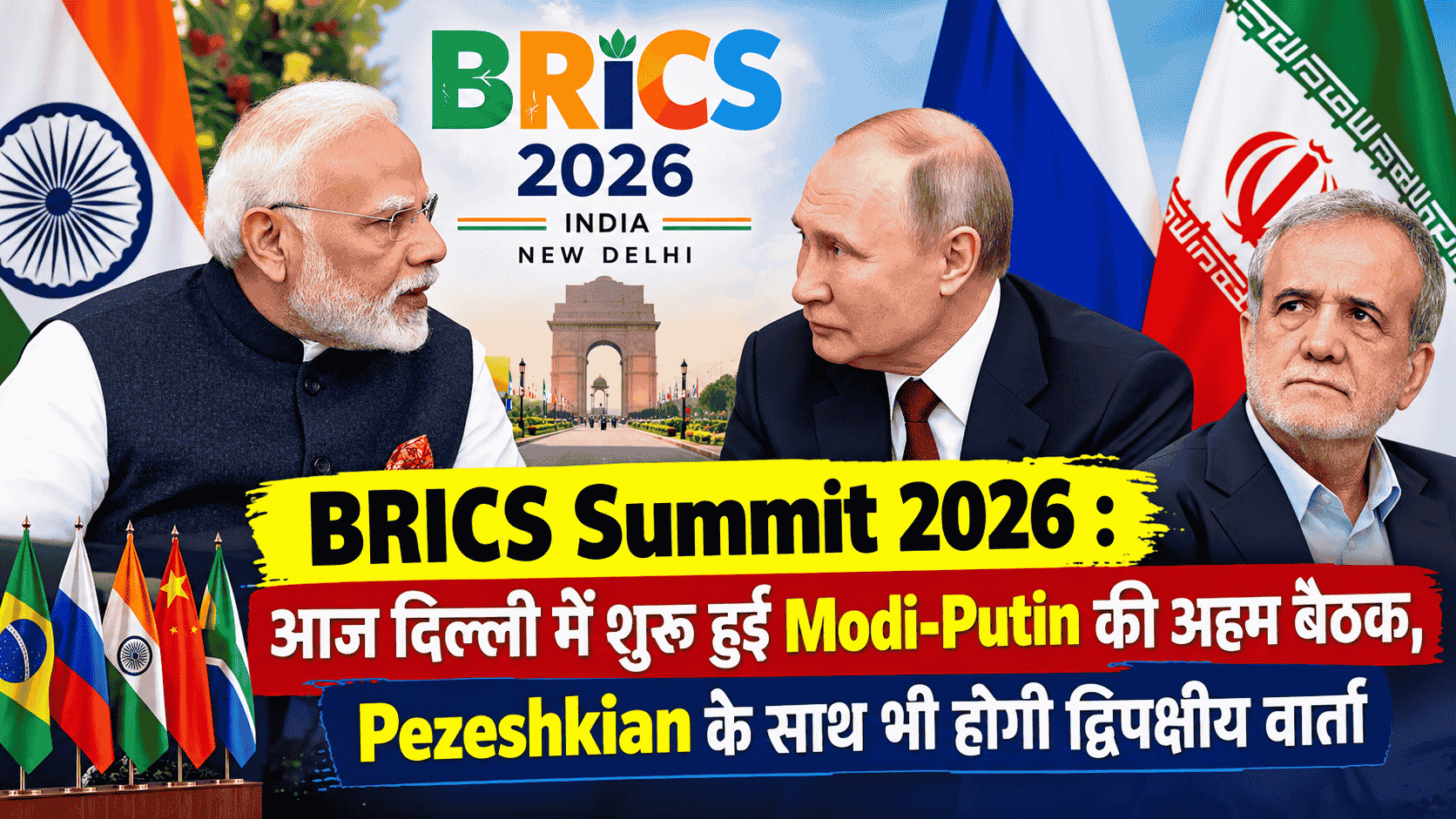
    BRICS Summit 2026 : A Major Platform for Global Diplomacy in Delhi, Preparations for the BRICS Summit 2026 in Delhi are complete, and the world’s eyes are now fixed on India’s capital. This important conference, being held at Bharat Mandapam, will see discussions on several major issues related to global politics, the economy, and strategic cooperation. Amid the summit, the bilateral meeting between Prime Minister Narendra Modi and Russian President Vladimir Putin has already begun. This is being regarded as the most significant diplomatic event of the summit.

    In this high-level meeting, the two leaders are expected to hold detailed discussions on subjects such as trade, energy, defence cooperation, regional stability, and multilateral partnership. India and Russia have long shared strong relations, and this meeting is considered even more important in the current global circumstances.

    Putin and Pezeshkian Arrive in Delhi

    Russian President Vladimir Putin and Iranian President Masoud Pezeshkian have arrived in Delhi to participate in the BRICS Summit 2026. The presence of both leaders has further enhanced the strategic importance of the conference. During the summit, a bilateral meeting between Prime Minister Modi and Pezeshkian is also proposed, in which issues such as energy, regional connectivity, trade, and international cooperation may be discussed.

    BRICS Summit 2026 : Important Modi-Putin Meeting Begins in Delhi, Bilateral Talks Also Scheduled with Pezeshkian
    BRICS Summit 2026 : Important Modi-Putin Meeting Begins in Delhi, Bilateral Talks Also Scheduled with Pezeshkian

    Iran’s participation also underlines the role of West Asia on the BRICS platform. The talks between India and Iran could open up new possibilities regarding connectivity and trade corridors.

    World’s Attention Also on Xi Jinping’s India Visit

    Another major development linked to the summit is Chinese President Xi Jinping’s visit to India. He is coming to India after seven years, which has generated considerable international curiosity about this visit. The presence of major countries such as India, China, and Russia on a platform like BRICS could influence global equations.

    Experts believe that the impact of the meetings held during this summit will not remain limited only to BRICS countries; it could also affect global trade, energy security, and geopolitical balance.

    What Issues Will Be on the Agenda

    Several important topics will be discussed during the BRICS Summit 2026. These primarily include trade, energy, defence, connectivity, and global cooperation. In addition, subjects such as mutual investment among member countries, digital cooperation, strengthening of supply chains, and the role of developing countries are also expected to be on the agenda.

    Through this platform, India is trying to convey the message that the voice of developing countries should be strengthened in a multipolar world. The joint participation of BRICS countries can play an important role in advancing the interests of the Global South.

    BRICS Summit 2026 : Important Modi-Putin Meeting Begins in Delhi, Bilateral Talks Also Scheduled with Pezeshkian
    BRICS Summit 2026 : Important Modi-Putin Meeting Begins in Delhi, Bilateral Talks Also Scheduled with Pezeshkian

    Strict Security Arrangements at Bharat Mandapam

    Given this major international event, strict security arrangements have been put in place in Delhi. Traffic arrangements in and around Bharat Mandapam have also been specially controlled so that there is no disruption in VVIP movement and summit activities.

    Delhi Police, security agencies, and the administration have jointly prepared a comprehensive security cordon. Traffic diversions have been implemented on several routes in the capital, and the public has been appealed to use alternative routes.

    Why the Modi-Putin Meeting Is Special

    The meeting between Prime Minister Modi and President Putin is important in several ways. Amid current global tensions, uncertainty in the energy markets, and the need for defence cooperation, this meeting could give a new direction to India-Russia relations. The two countries have had a long-standing strategic partnership, and the BRICS platform provides an opportunity to further strengthen this relationship.

    This meeting is taking place at a time when the world is facing various economic and political challenges. In such a scenario, India’s role as a balanced and influential global power is emerging even more prominently.

    What Are the Expectations from BRICS Summit 2026

    There is hope that the BRICS Summit 2026 will open new avenues of cooperation among member countries. Through this conference, India wants to advance the agenda of development, inclusivity, and global partnership. Important agreements and announcements may emerge from the bilateral and multilateral meetings held during the summit.

    Also Read This : Philippines-China Dispute : How Diplomatic Tensions Escalated at the Seoul Defense Forum

    This summit taking place in Delhi not only reflects India’s diplomatic capability but also shows that the country is now prepared to play a decisive role on global platforms. The presence of leaders such as PM Modi, Putin, Pezeshkian, and Xi Jinping is making this event historic.


    View this post on Instagram


    A post shared by AVSPOST (@avspost)

  • Sheetal Devi Wins Gold : World Archery Para Series 2026 Champion in Dramatic Shoot-Off

    Sheetal Devi Wins Gold : World Archery Para Series 2026 Champion in Dramatic Shoot-Off

    World Archery Para Series 2026 : Sheetal Devi, the 19-year-old Indian para-archery star and reigning world champion, claimed her first individual World Archery Para Series title by winning gold in the women’s compound event at Stage 3 in Ahmedabad (5–9 September 2026). The home favourite defeated Kazakhstan’s Aizada Seidan in a tense shoot-off after the final finished level at 144-144, sealing victory with a perfect 10 against Seidan’s 9.

    This victory at the Sabarmati Riverfront venue marked a landmark moment for the armless archer from Jammu and Kashmir and capped a dominant performance on home soil during India’s first hosting of a World Archery Para Series stage.

    World Archery Para Series 2026 : How the Final Unfolded

    Sheetal entered the eliminations as the top seed after a season-best qualification score of 698, which also improved her own Asian record by one point. She progressed strongly:

    • Round of 16: Beat Slovakia’s Liliana Lacova 147-142
    • Quarter-finals: Defeated Great Britain’s Jessica Stretton 145-142
    • Semi-finals: Overcame fellow Indian Sarita 145-143
    Sheetal Devi Wins Gold : World Archery Para Series 2026 Champion
    Sheetal Devi Wins Gold : World Archery Para Series 2026 Champion

    In the gold-medal match, both archers stayed locked for much of the contest. After five ends ended 144-all, the shoot-off decided the champion. Sheetal held her nerve under pressure from the home crowd and delivered the perfect 10.

    She also contributed to a mixed-team world record earlier in the event, partnering with Rakesh Kumar to score 1,400 points in compound mixed team qualification (surpassing their previous mark of 1,399 set at the Paris 2024 Paralympics). Sheetal later added a bronze in the compound mixed team with Toman Kumar.

    India’s Strong Haul

    India finished the competition with an impressive 15 medals (4 gold, 3 silver, 8 bronze) and placed second on the medal table. Other Indian golds included men’s compound doubles (Toman Kumar & Shyam Sunder Swami), men’s recurve doubles (Harvinder Singh & Vijay Sundi), and recurve mixed team (Bhawna & Harvinder Singh).

    Sheetal Devi Wins Gold : World Archery Para Series 2026 Champion
    Sheetal Devi Wins Gold : World Archery Para Series 2026 Champion

    Who Is Sheetal Devi?

    Born without arms, Sheetal shoots with her feet and has become one of India’s most inspiring para-athletes. She made history as the first woman without arms to win a para-archery world title at the 2025 World Archery Para Championships in Gwangju. A Paris 2024 Paralympic mixed-team bronze medallist (with Rakesh Kumar) and current world No. 1, she continues to raise the bar while preparing to defend titles at the Aichi-Nagoya 2026 Asian Para Games.

    Her composure in high-pressure situations, technical excellence, and rapid rise have made her a role model in para-sports and a source of national pride.

    Also Read This : Ariha Pangambam Creates History : First Indian to Win Gold at Asian Aerobic Gymnastics Championships 2026

    This home gold strengthens Sheetal Devi position as a leading contender heading into major events later in 2026. Her combination of record-breaking qualification performances and clutch finals shooting underscores why she is regarded as one of the brightest talents in para-archery worldwide.

    Sheetal Devi’s triumph in Ahmedabad is more than a medal—it is another chapter in an extraordinary story of determination, skill, and inspiration.


    View this post on Instagram
     

    A post shared by AVSPOST (@avspost)

  • Attack soon on Iran’s nuclear bunker? Trump issues major threat by mentioning Pickaxe Mountain

    Attack soon on Iran’s nuclear bunker? Trump issues major threat by mentioning Pickaxe Mountain

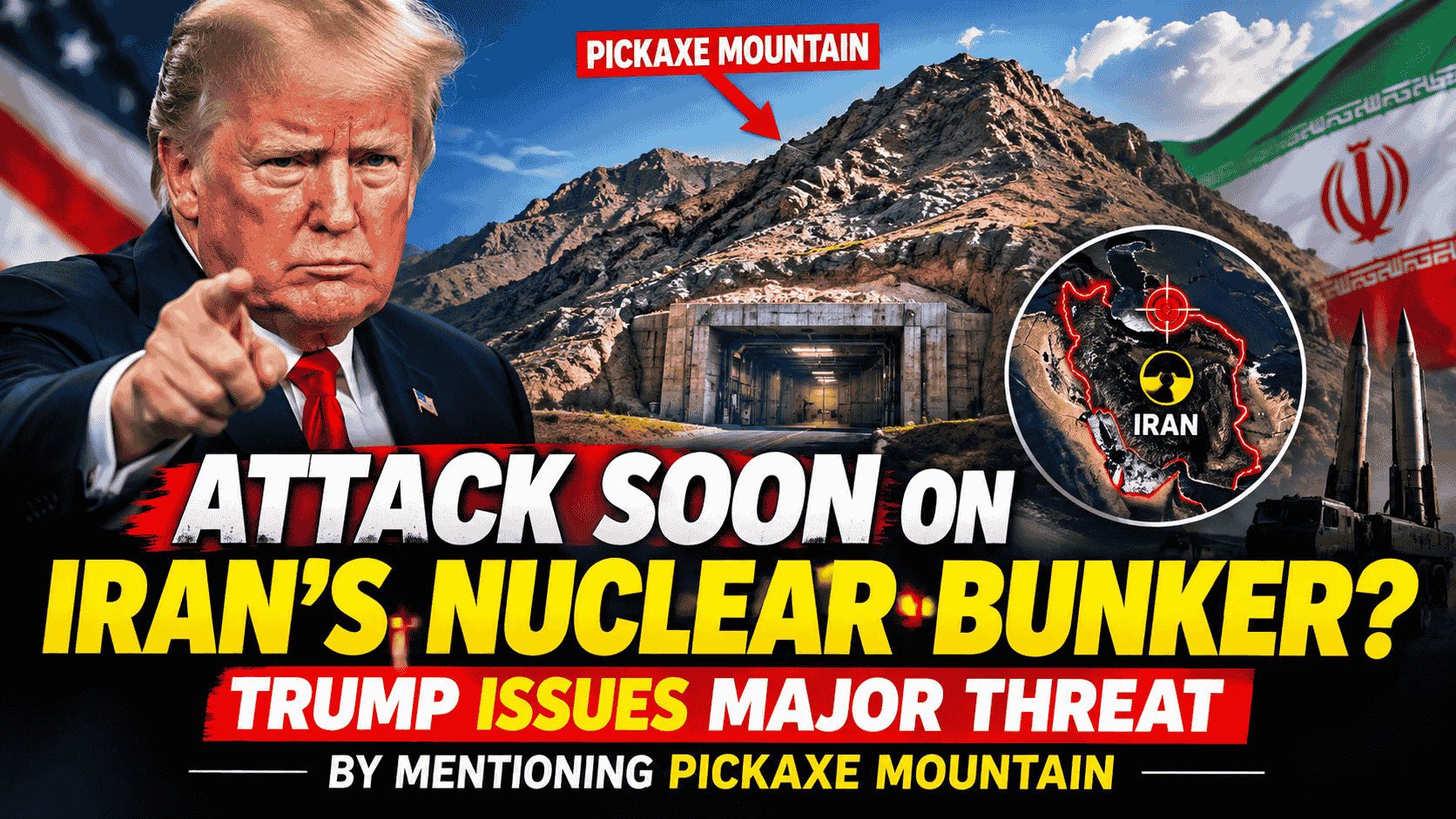
    Trump’s new threat regarding Iran’s nuclear bunker, Former US President Donald Trump has issued a new threat by naming Pickaxe Mountain, a highly sensitive site linked to Iran’s nuclear programme. His statement has further deepened the already ongoing tensions in West Asia. Trump’s remarks are being viewed as a possible signal of a potential attack on Iran’s nuclear bunker.

    Pickaxe Mountain is among the select Iranian sites that are considered to have a direct connection to the country’s nuclear infrastructure. So far, the United States and Israel have not directly targeted this location, but Trump’s latest statement has sparked a fresh debate on this possibility.

    Why is Pickaxe Mountain important?

    Pickaxe Mountain is regarded as one of Iran’s most sensitive and secure nuclear sites. It is located in a mountainous region, where strong security and underground structures make it a difficult target for military attack. This is why it is considered a key part of Iran’s nuclear programme.

    Attack soon on Iran’s nuclear bunker? Trump issues major threat by mentioning Pickaxe Mountain
    Attack soon on Iran’s nuclear bunker? Trump issues major threat by mentioning Pickaxe Mountain

    According to experts, an attack on such sites is not merely a military action; its impact can extend to regional stability, diplomacy and the global energy market. Given the existing tensions between Iran and Western countries, this kind of threat is being taken very seriously.

    Trump’s statement increases tension

    The way Trump mentioned Pickaxe Mountain in his statement indicated that US policy towards Iran’s nuclear infrastructure could once again become aggressive. However, it is not clear whether this statement signals an imminent military action or is simply a strategy to create political pressure.

    Nevertheless, such language is being seen as a warning for Iran. Trump has long been known for adopting a tough stance against Iran. During his previous term, steps such as the US withdrawal from the Iran nuclear deal and the tightening of sanctions had significantly heightened tensions between the two countries.

    Renewed discussion on Iran’s nuclear bunker programme

    Iran’s nuclear programme has long been a subject of international dispute. Western countries fear that Iran could advance its nuclear capabilities in a military direction under the guise of civilian energy needs. Iran, however, has consistently claimed that its nuclear programme is for peaceful purposes.

    In this context, any mention of sites like Pickaxe Mountain could trigger a major diplomatic crisis. Experts believe that if such sites were attacked, Iran could retaliate, raising the risk of conflict spreading across the entire region.

    Attack soon on Iran’s nuclear bunker? Trump issues major threat by mentioning Pickaxe Mountain
    Attack soon on Iran’s nuclear bunker? Trump issues major threat by mentioning Pickaxe Mountain

    Questions over US and Israeli strategy

    Until now, the United States and Israel have not directly targeted this particular Iranian site. Several reasons are cited for this, including the site’s geographical security, the potential for retaliation, and fear of international reaction.

    But Trump’s statement has raised the question of whether military options regarding Iran’s nuclear bunkers could again be considered in the future. If that happens, it would not only affect Iran-US relations but also place Israel and other regional powers in a new challenge.

    Diplomacy or confrontation?

    Analysts believe that such threats are often also used to send political messages. Trump’s statement could have an impact at three levels — domestic politics, international pressure and security strategy. However, any aggressive statement on a sensitive issue like Iran can turn into real tension.

    For now, the world’s attention is on whether this is merely a political threat or the beginning of a major military development in West Asia. With the name of Pickaxe Mountain coming to the fore, concerns over Iran’s nuclear sites have deepened further.

    What could happen next

    If the United States and its allies increase pressure on Iran, Tehran could also adopt a hard line in response. This is bound to affect nuclear talks, regional security and global diplomacy.

    Also Read This : PM Modi’s Diplomatic Move During Kyrgyzstan Visit : India’s New Strategy in Iran, Armenia and Central Asia

    For the time being, Trump’s threat has made it clear that Iran’s nuclear programme remains one of the most sensitive issues in international politics. And when it comes to Iran’s nuclear bunker, even a single statement can mark the start of a major crisis.


    View this post on Instagram


    A post shared by AVSPOST (@avspost)

  • Spinal Cord Injury Day 2026 and National Injury Prevention Week : A Platform for Awareness, Over 500 People Participated

    Spinal Cord Injury Day 2026 and National Injury Prevention Week : A Platform for Awareness, Over 500 People Participated

    Spinal Cord Injury Day 2026 and National Injury Prevention Week : Wheelchair Rally and Awareness Campaign in Delhi, In Delhi, more than 350 people took out a wheelchair rally, spreading the message of injury prevention. 22 National Spine Care Societies and Sri Balaji Action Medical Institute emphasized better treatment and rehabilitation.

    During the fourth edition of Spinal Cord Injury Day 2026 and National Injury Prevention Week, more than 500 people participated and spread the message of awareness. Among them, over 100 wheelchair users joined the wheelchair sports rally. Cultural programs, inclusive health check-up camps, and wheelchair rallies will also be organized in the coming days. People affected by spinal cord injury, along with doctors, healthcare professionals, caregivers, students, volunteers, and the general public, participated in the events. Sri Balaji Action Medical Institute contributed by providing healthcare support for these events as well as other central programs held throughout the week.

    Spinal Cord Injury Day 2026 : Wheelchair Rally Held on 5 September

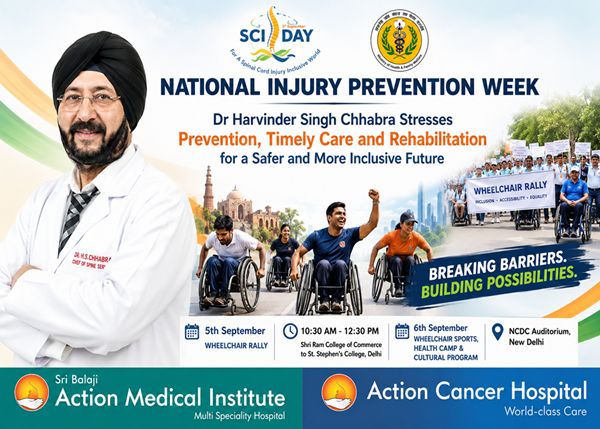
    The wheelchair rally organized on 5 September was the main attraction of the program. More than 350 people took part in it. This included 100 wheelchair users and 250 other participants. The aim of the rally was to create awareness about injury prevention, better facilities for all, and equal participation in society. The rally started at 10:30 a.m. from Khalsa College and concluded at St. Stephen’s College in the North Campus of Delhi University.

    Spinal Cord Injury Day 2026 and National Injury Prevention Week : A Platform for Awareness, Over 500 People Participated
    Spinal Cord Injury Day 2026 and National Injury Prevention Week : A Platform for Awareness, Over 500 People Participated

    Participating Societies and Support

    The program was organized under the guidance of the Directorate General of Health Services (DGHS), Ministry of Health and Family Welfare, Government of India. 22 National Spine Care Societies came together for the prevention of spinal cord injuries and better treatment. Among them, the Spinal Cord Society, Association of Spine Surgeons of India, Spine Wellness and Care Foundation, and Hamsa Rehab participated in the event, while 18 other societies extended their support. Sri Balaji Action Medical Institute provided healthcare support for these programs and other central events throughout the week. In addition, all 22 societies also organized programs for the prevention of spinal cord injuries and awareness in different parts of the country.

    Programs on 6 September: Health Check-up, Sports, and Cultural Events

    Under the program, an inclusive health check-up camp will be organized on 6 September at the National Centre for Disease Control (NCDC) Auditorium from 10:00 a.m. to 1:00 p.m. Wheelchair users and other participants will receive health check-ups along with consultation from doctors. After this, wheelchair sports will be held from 2:00 p.m. to 3:30 p.m. These will include competitions such as wheelchair table tennis, boccia, wheelchair racing, and wheelchair hurdles. A cultural program will take place from 3:30 p.m. to 5:30 p.m., featuring wheelchair dance and professional wheelchair stunt performances. Through these events, the talent and courage of wheelchair users will be showcased, along with the message of equal participation in society. It will also be highlighted how sports and community support can help in rehabilitation and a better quality of life. The program will also be live-streamed so that more people can join.

    Spinal Cord Injury Day 2026 and National Injury Prevention Week : A Platform for Awareness, Over 500 People Participated
    Spinal Cord Injury Day 2026 and National Injury Prevention Week : A Platform for Awareness, Over 500 People Participated

    Message from Dr. Harvinder Singh Chhabra

    Dr. Harvinder Singh Chhabra, Chief of the Spine and Rehabilitation Centre at Sri Balaji Action Medical Institute, President of the Spinal Cord Society, Chairman of the Spine Wellness and Care Foundation, and Coordinator of National Injury Prevention Week, said: “By increasing awareness and adopting safe practices, many spinal cord injuries can be prevented. If an injury occurs, timely treatment, proper rehabilitation, and continuous support can help a person live life again with dignity and self-reliance. Our aim is not only to prevent injuries but also to create a better environment so that people affected by spinal cord injury can also lead meaningful and happy lives.”

    Special Focus on Road Safety

    Special emphasis was also placed on road safety during the campaign. According to the Ministry of Road Transport and Highways (MoRTH), in the year 2021, 16,397 people lost their lives in road accidents due to not wearing seat belts. This included 8,438 drivers and 7,959 passengers. This figure shows how important it is to follow essential safety measures like wearing seat belts on the road.

    Activities of National Injury Prevention Week

    National Injury Prevention Week began on 1 September. On the first day, online poster and slogan competitions were organized on the themes “Prevention of Spinal Cord Injury” and “Yes, We Can.” On 2 September, the spine team of Sri Balaji Action Medical Institute presented a street play on injury prevention.


    View this post on Instagram


    A post shared by AVSPOST (@avspost)

    On 3 September, awareness programs related to spinal cord injury were organized. These included awareness talks, inclusive dance, and wheelchair-related activities. Experts also held a panel discussion on the topic “How to Make the Lives of People Affected by Spinal Cord Injury Happy, Meaningful, and Better.” On 4 September, a webinar was held on “The Power of the Mind,” which discussed mental strength, psychological recovery, and adapting to new circumstances after spinal cord injury.

    Also Read This : National Injury Prevention Week: Dr Harvinder Singh Chhabra Stresses Prevention, Timely Care and Rehabilitation

    The week-long event will conclude on 7 September with a webinar on injury prevention. It will emphasize the need for injury prevention, timely treatment, rehabilitation, and continuous social support. The main objective is to improve the treatment and quality of life of people affected by spinal cord injury and to give them the opportunity for full and respectful participation in society.

  • National Injury Prevention Week: Dr Harvinder Singh Chhabra Stresses Prevention, Timely Care and Rehabilitation

    National Injury Prevention Week: Dr Harvinder Singh Chhabra Stresses Prevention, Timely Care and Rehabilitation

    New Delhi, September 4, 2026: #National Injury Prevention Week, A week-long awareness campaign on injury prevention and spinal cord injuries is underway in the national capital, bringing together healthcare professionals, people living with spinal cord injuries, caregivers, students, volunteers and members of the community.

    The fourth edition of National Injury Prevention Week, being observed from September 1 to 7, is being organised under the aegis of the Directorate General of Health Services (DGHS), Ministry of Health and Family Welfare, Government of India. The initiative aims to raise awareness about preventing avoidable injuries and improving access to timely treatment, rehabilitation and long-term support for people with spinal cord injuries.

    The campaign has been organised in association with 22 national spine care societies from across India and includes sports and cultural activities, seminars, webinars, panel discussions, competitions, a street play and a wheelchair rally.

    Dr Harvinder Singh Chhabra
    Dr Harvinder Singh Chhabra

    Awareness activities held during the week

    The programme began on September 1 with an online poster competition on “Prevention of Spinal Cord Injuries” and a slogan competition on “Yes, We Can.”

    On September 2, members of the Spine Team at Sri Balaji Action Medical Institute conducted a Nukkad Natak to communicate messages related to injury prevention and spinal cord injury awareness through community theatre.

    The September 3 pre-event included talks on spinal cord injury awareness, an inclusive dance performance, a Nukkad Natak and wheelchair activities. An online panel discussion later in the day focused on the medical, psychological and social aspects of life after spinal cord injury, including rehabilitation, mental well-being, social participation and quality of life.

    A webinar titled “The Power of the Mind” is being held on September 4, focusing on psychological recovery, resilience and adaptation following spinal cord injury.

    Wheelchair rally planned for September 5

    As part of the campaign, a wheelchair rally is scheduled to be held on September 5 in the North Campus of the University of Delhi.

    The rally will start from Shri Ram College of Commerce at 10:30 am and conclude at St. Stephen’s College. According to the organisers, more than 350 participants, including around 100 wheelchair users and 250 able-bodied participants, are expected to take part.

    The rally is aimed at promoting inclusion, accessibility, road safety and awareness about spinal cord injury prevention.

    The organisers have also planned an audio-visual presentation on spinal cord injury prevention later in the evening.

    Sports, health camp and cultural programme on September 6

    A larger programme is scheduled for September 6 at the National Centre for Disease Control (NCDC) Auditorium, where more than 500 people, including over 100 wheelchair users, are expected to participate.

    An Inclusive Health Check-up Camp will be held from 10 am to 1 pm, offering health screening and consultations for wheelchair users and other participants.

    The health camp will be followed by wheelchair sporting activities from 2 pm to 3:30 pm. The events will include Wheelchair Table Tennis, Boccia, Wheelchair Racing and Wheelchair Hurdles.

    A cultural programme is scheduled from 3:30 pm to 5:30 pm, featuring wheelchair dance performances and professional wheelchair stunt demonstrations.

    According to the organisers, the programme is intended to highlight the role of sports, culture and community participation in rehabilitation and improving the quality of life of people living with spinal cord injuries. The event will also be streamed live.

    Focus on prevention and rehabilitation

    Dr Harvinder Singh Chhabra, Chief of the Spine and Rehabilitation Centre at Sri Balaji Action Medical Institute, President of the Spinal Cord Society, Chairman of the Spine Wellness & Care Foundation and Coordinator for National Injury Prevention Week, said the campaign aims to reinforce the message that many injuries, including spinal cord injuries, can be prevented.

    “Many injuries, including spinal cord injuries, can be prevented, and when they do occur, people can rebuild their lives through timely medical care, comprehensive rehabilitation and sustained social support,” he said.

    Dr Chhabra said Spinal Cord Injury Day was conceptualised to create awareness about prevention while also highlighting that people who sustain spinal cord injuries can lead happy, meaningful and fulfilling lives with appropriate medical management and rehabilitation.

    He also stressed the need for early intervention, wider access to rehabilitation and an environment that enables people with spinal cord injuries to live with dignity, independence and purpose.

    Road safety message

    Road safety is also an important part of the injury prevention campaign.

    According to data reported by the Ministry of Road Transport and Highways (MoRTH), 16,397 people were killed in road accidents in 2021 due to not wearing seat belts. The figure included 8,438 drivers and 7,959 passengers.

    The organisers said such figures highlight the importance of simple preventive measures, including consistent use of seat belts and greater awareness of road safety.

    National Injury Prevention Week to conclude on September 7

    The week-long campaign is scheduled to conclude on September 7 with a webinar focusing on injury prevention.

    The initiative seeks to shift the conversation around spinal cord injuries beyond medical treatment alone, with greater emphasis on rehabilitation, accessibility, social participation and inclusion.

    By bringing together healthcare professionals, people with disabilities, caregivers, students, volunteers and the wider community, the campaign aims to promote safer environments and support people living with spinal cord injuries in leading independent and meaningful lives.

  • PM Modi’s Diplomatic Move During Kyrgyzstan Visit : India’s New Strategy in Iran, Armenia and Central Asia

    PM Modi’s Diplomatic Move During Kyrgyzstan Visit : India’s New Strategy in Iran, Armenia and Central Asia

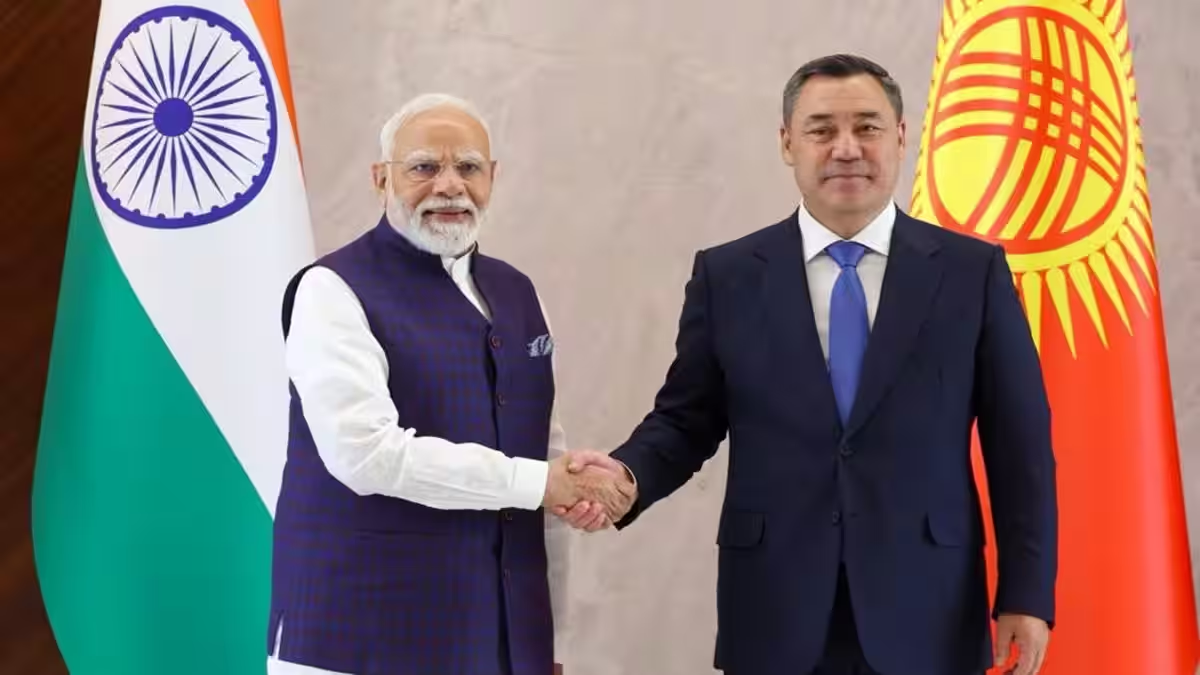
    PM Modi’s Kyrgyzstan Visit : PM Modi’s diplomatic activism in Kyrgyzstan is being seen as a major move by India amid changing regional equations. Prime Minister Modi’s visit to Kyrgyzstan is not being viewed merely as a formal state visit, but as an important part of India’s broader foreign policy and regional strategy. The meetings held during this visit with top leaders of Iran, Armenia and Kyrgyzstan indicate that India wants to further strengthen its role in the geopolitical equations of Central Asia and its neighbourhood.

    This timing is particularly significant because a new defence agreement between Saudi Arabia, Pakistan and Türkiye has also emerged during the same period. In this context, India’s diplomatic activities are being seen as a balanced and counter-strategy aimed at safeguarding its interests and expanding its influence in the region.

    India’s Growing Interest in Central Asia

    Central Asia has long been an important region in India’s foreign policy. From the perspective of energy resources, trade routes, security cooperation and connectivity, this region holds strategic importance for India. Strengthening relations with countries like Kyrgyzstan not only makes India more active on regional platforms but also helps in balancing the influence of countries like China and Pakistan.

    PM Modi’s Diplomatic Move During Kyrgyzstan Visit : India’s New Strategy in Iran, Armenia and Central Asia
    PM Modi’s Diplomatic Move During Kyrgyzstan Visit : India’s New Strategy in Iran, Armenia and Central Asia

    Among the leaders PM Modi met during his Kyrgyzstan visit, the discussions with representatives of Iran and Armenia are considered especially significant. Iran is an important partner for India in terms of the Chabahar Port and access to Afghanistan, while new dimensions of defence and technological cooperation are opening up with Armenia.

    Why Dialogue with Iran and Armenia is Important

    India-Iran relations are not limited to bilateral trade alone. Both countries share common interests on issues such as regional connectivity, energy security and the situation in Afghanistan. High-level meetings in this context help India build a strong diplomatic bridge between West Asia and Central Asia.

    Meanwhile, India’s cooperation with Armenia has grown rapidly in recent years. The supply of defence equipment, training and strategic dialogue have given this relationship a new direction. The discussions held during PM Modi’s Kyrgyzstan visit signal that India is prioritising its relations with smaller but strategically important countries.

    Injecting New Energy into Relations with Kyrgyzstan

    Kyrgyzstan is an important partner for India in Central Asia. Cooperation between the two countries has steadily increased in the fields of education, health, defence, trade and cultural exchange. India has always viewed its relationship with Kyrgyzstan as a reliable and long-term partnership.

    During this visit, emphasis was placed on further advancing mutual cooperation. At the diplomatic level, the message was also conveyed that India stands for stability, development and multilateral cooperation in Central Asia.


    View this post on Instagram


    A post shared by AVSPOST (@avspost)

    Impact of the Saudi-Pakistan-Türkiye Defence Agreement

    The recent defence agreement in regional politics has created new challenges and strategic needs for India. The growing military and political alignment between Saudi Arabia, Pakistan and Türkiye is being viewed as a matter of concern for India. In this situation, India’s increasing dialogue with Iran, Armenia and Central Asian countries is a balancing step.

    It is clear that India is no longer merely adopting a reactive policy; rather, it is shaping its diplomacy by taking potential equations into account in advance. PM Modi’s Kyrgyzstan visit can be seen as part of this approach, where India has actively and clearly advanced its interests.

    New Confidence in India’s Foreign Policy

    Over the past few years, India’s foreign policy has become more active, multi-layered and strategic. India is no longer limited to relations with major countries alone, but is also building deep ties with those countries that can play an important role in regional balance.

    PM Modi’s diplomatic activities in Kyrgyzstan are an example of this change. India is now looking at its interests by connecting Central Asia, West Asia and South Asia. This not only strengthens its global image but also opens new opportunities on the fronts of security, energy and trade.

    Also Read This : PM Modi Awarded Uzbekistan’s Highest Honour : Key Agreements Reached on Uranium Supply and Strategic Cooperation

    The high-level meetings held during the Kyrgyzstan visit indicate that India will further intensify regional diplomacy in the coming times. By increasing cooperation with countries like Iran, Armenia and Kyrgyzstan, India is building a network that will give it greater strength in the changing global scenario.

    It is clear that PM Modi’s Kyrgyzstan visit is not just a tour, but part of India’s long-term strategy aimed at increasing influence in Central Asia, creating new partners, and responding to regional challenges.